

P0012 on 2007-2009 Toyota Tundra 4.7L V8: Cam Timing Over-Retarded Causes and Fixes
On a 2007-2009 Tundra with the 4.7L V8, P0012 is most often caused by low or dirty engine oil. Before buying parts, check your oil. If the oil is clean and full, the next most likely cause is a failing Oil Control Valve (OCV) for Bank 1 (passenger side), which is an affordable part and a straightforward DIY replacement.
- This guide applies ONLY to the 2007-2009 Tundra with the 4.7L V8 engine.
- Always check your engine oil level and condition first. Low or dirty oil is the #1 cause of P0012.
- The code refers to Bank 1, which is the PASSENGER side of the engine.
- The most likely failed part is the Oil Control Valve (OCV), which can be easily diagnosed by swapping it with the driver's side OCV.
- Unlike newer Tundras, this engine has a timing belt that requires replacement at regular intervals.
What's Unique About the 2007-2009 Toyota Tundra
The 4.7L 2UZ-FE in this Tundra generation is known for its durability but uses a timing belt, not a chain. This is a critical distinction, as a stretched or improperly installed timing belt with a 90,000-mile service interval is a direct mechanical cause for this code, whereas many other engines would point to chain issues. Furthermore, the VVT-i system in this engine is highly dependent on clean oil and adequate pressure to function, making regular oil changes with a quality filter a crucial preventative measure against this specific code.
Symptoms You May Notice
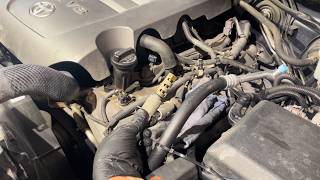
- Check Engine Light is on 🎬 Watch: A quick overview of fixing the P0012 code
- Rough or unstable idle
- Engine may stall at low speeds
- Reduced engine power and acceleration
- Decreased fuel economy
- Difficulty starting the engine
- Rattling noises from the engine area.
- Replacing the Camshaft Position Sensor. While a sensor can fail, it is less common for it to cause a P0012 code without also setting a sensor-specific fault code (like P0340). The issue is more often mechanical or hydraulic (oil-related).
Most Likely Causes
- Low or Dirty Engine Oil 🔴 High Probability The VVT-i system is hydraulic and requires clean oil at the correct pressure to operate the cam phasers. Sludge or low levels will impede its function, preventing the camshaft from advancing to the commanded position.
How to confirm: Check the engine oil dipstick for level and examine the oil's color and consistency. If it's low, black, or sludgy, this is your likely cause.
Typical fix: Perform an engine oil and filter change using the manufacturer-recommended 5W-30 oil and a quality filter.
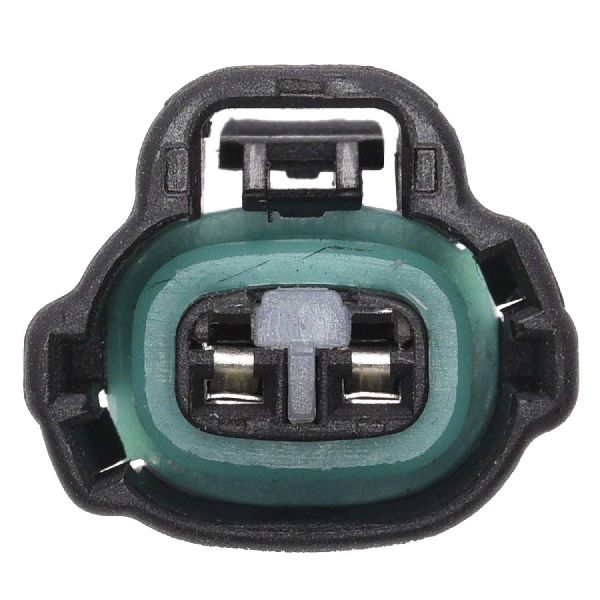
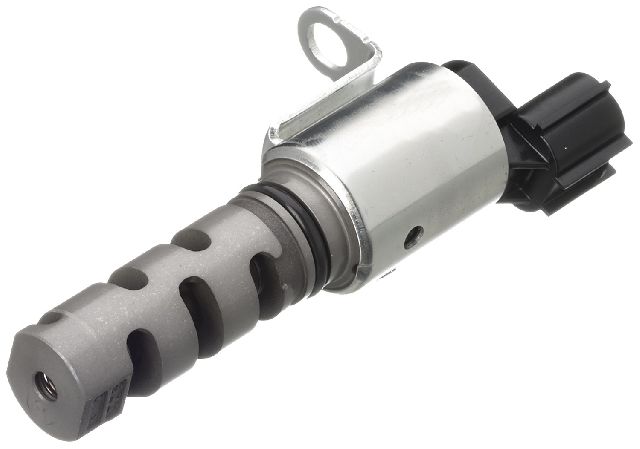
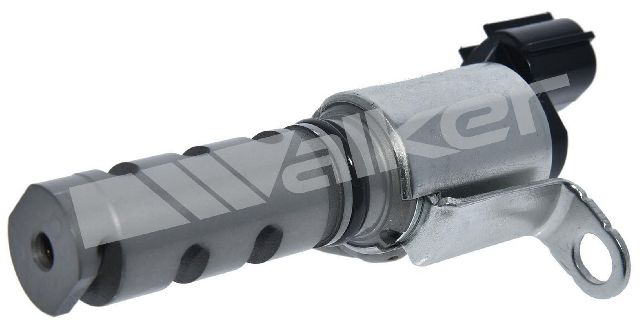
Est. part cost: $40-$80 - Failing Oil Control Valve (OCV) / VVT Solenoid 🔴 High Probability → Shop Engine Variable Valve Timing (VVT) Solenoid The OCV can become clogged with sludge from infrequent oil changes or can fail electrically over time, preventing it from properly directing oil to the cam phaser. It's a very common failure point for VVT-i related codes.
How to confirm: Swap the Bank 1 (passenger side) OCV with the Bank 2 (driver side) OCV. Clear the codes and drive. If the code returns as P0022 (for Bank 2), the OCV is faulty. You can also test its resistance with a multimeter (should be 6.9-7.9 ohms at 68°F/20°C) or apply 12V power to see if the internal plunger clicks.
Typical fix: Replace the Bank 1 Oil Control Valve. It is held in by a single 10mm bolt and is easily accessible on the front of the passenger-side cylinder head.
Est. part cost: $50-$150 - Stretched or Slipped Timing Belt 🟡 Medium Probability → Shop Engine Timing Chain The 2UZ-FE uses a timing belt with a service interval of approximately 90,000 miles. As the belt ages, it can stretch or the tensioner can weaken, causing it to jump a tooth on the cam gear, which physically retards the timing.
How to confirm: This requires a visual inspection of the timing marks on the camshaft and crankshaft pulleys, which involves partial engine disassembly. This is often diagnosed after ruling out oil and OCV issues.
Typical fix: Replace the timing belt, tensioner, and associated pulleys. It is also common practice to replace the water pump at the same time. A popular, high-quality kit for this job is the Aisin TKT-021.
Est. part cost: $200-$400 for a full kit
Rare But Worth Checking
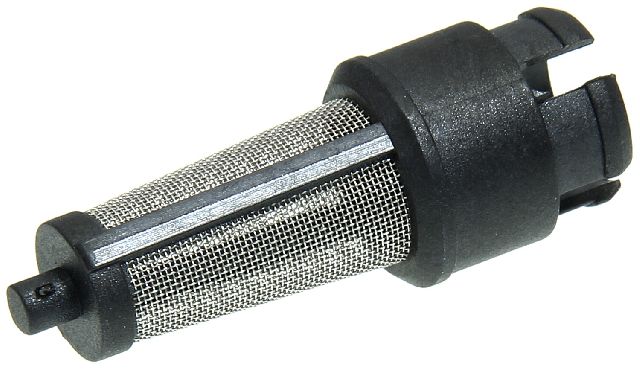
- Clogged Oil Control Valve Filter: → Shop Engine Variable Valve Timing (VVT) Solenoid There is a small, thimble-shaped filter screen for the OCV located in the cylinder head, underneath a 14mm banjo bolt or plug near the OCV. It can become clogged with debris, starving the OCV of oil. It's an inexpensive part to replace if you are already servicing the OCVs.
- Failing Camshaft Timing Gear (VVT-i Actuator): → Shop Engine Camshaft The actuator itself can fail or become clogged internally with sludge, preventing it from changing the cam timing correctly. This is a more complex and expensive repair.
- Poor Quality or Collapsed Oil Filter: → Shop Engine Oil Filter Adapter A cheap or defective oil filter can collapse internally or have a faulty anti-drainback valve, restricting oil flow to the entire engine, including the VVT-i system, especially on startup.
Diagnosis Steps
- Check the engine oil level and condition. If it is low, dark, or sludgy, perform an oil and filter change, clear the code, and drive the vehicle to see if the code returns.
- If the oil is fine, locate the Oil Control Valves (OCVs) on the front of each cylinder head. Bank 1 is on the passenger side, Bank 2 is on the driver's side.
- Swap the Bank 1 and Bank 2 OCVs. They are identical parts. Clear the codes and drive the vehicle.
- If the code changes to P0022 (Bank 2), the OCV you moved to the driver's side is faulty and must be replaced.
- If the P0012 code returns, the issue is not the OCV. The next step is to inspect the small OCV filter screen for clogs. It is located in the cylinder head near the OCV, under a 14mm bolt.
- If the filter is clean, the next logical step is to verify the mechanical timing by inspecting the timing belt and its alignment marks. This is an involved job often done when other causes are ruled out.
- If the timing belt is correctly aligned and tensioned, the final suspect is the camshaft timing gear (actuator) itself, which may be clogged or mechanically failed.
Parts You'll Likely Need
- Engine Oil Control Valve (VVT Solenoid)
(OEM #15340-0F010)— This solenoid is the most common part to fail or get clogged, directly causing the over-retarded timing condition for Bank 1. The part number 15340-0F010 supersedes 15340-50011.
Trusted brands: Toyota (OEM), Aisin, Denso
OEM price range: $120-$180
Aftermarket price range: $40-$90 - Timing Belt Kit
(OEM #TKT-021 (Aisin Kit))— If the timing belt has stretched or jumped a tooth, it must be replaced. This is a standard maintenance item that directly causes this code if it fails or is overdue for service.
Trusted brands: Aisin, Gates, Continental
OEM price range: $300-$450
Aftermarket price range: $150-$250
Related Codes That Often Appear With This One
- P0022 — If P0012 and P0022 (Bank 2 Over-Retarded) appear together, it strongly suggests a systemic issue like very low/dirty oil, a collapsed oil filter, or a problem with the timing belt affecting both banks.
Technical Service Bulletins (TSBs) & Recalls
- EG037-04 (superseded) / updated TSB June 28, 2007: Provides official identification for engine banks, confirming Bank 1 contains cylinder #1 and is on the passenger side for the 2UZ-FE.
Platform-Specific Known Issues
- A user on Tundras.com with a 2007 4.7L reported solving a P0012 and P0022 by replacing both OCVs and cleaning the OCV filters, which were found to be completely clogged with sludge, highlighting the importance of checking these small filters.
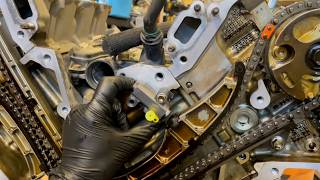
- In a YouTube video by 'Binh-Tuner with Kids', the presenter fixed a P0012 code after cleaning sludge out of the VVT-i gear (phaser) itself, demonstrating that internal clogging of the phaser is a possible, though more involved, cause.
Mechanic-Grade Diagnostic Values
- Oil Control Valve (OCV) Coil Resistance — expected: 6.9 to 7.9 Ω at 68°F (20°C). Failure: A reading of 0 Ω (short), infinite Ω (open), or a value significantly outside the specified range.
- Camshaft Position Sensor Resistance (2-wire VR type) — expected: 835 to 1,400 Ω (cold, -10 to 50°C) or 1,060 to 1,645 Ω (hot, 50 to 100°C). Failure: Resistance is outside the specified range or is infinite (open circuit).
- Camshaft Position Sensor AC Voltage Output (while cranking/running) — expected: Approximately 0.1V AC at idle, with voltage increasing as RPMs rise (e.g., to 0.4V at 3,000 RPM).. Failure: No AC voltage is generated while the engine is turning, or the voltage is erratic.
- ECM DTC Set Logic — expected: The difference between the target camshaft angle and the actual camshaft angle is less than 5 degrees of camshaft angle (°CA).. Failure: Code P0012 sets when the ECM detects the actual camshaft angle is more than 5 °CA retarded from the target angle for a specified duration (typically a few seconds).
Scan Tool Commands That Help
- Toyota Techstream: Active Test: Control the VVT System (Bank 1) / VVT CTRL B1 — After confirming oil level and electrical integrity, use this command with the engine idling. It forces the OCV to activate. A functional system will cause the engine to run rough or stall. If there is no change in idle quality, it confirms a mechanical or hydraulic fault (bad OCV, clogged passages, or stuck VVT gear).
Wiring & Ground Locations
- Main Engine Grounds — There are primary ground points on the rear of each cylinder head, near where the engine mates to the transmission. Another ground strap connects from the body to the frame in the engine bay.. A poor ground can cause erratic voltage signals for all engine sensors, including the Camshaft Position Sensor and the ECM's control of the OCV, potentially triggering false codes.
- OCV Filter Plug — On the 2UZ-FE, the small screen filter is located inside the cylinder head, accessible by removing a 14mm bolt located near the OCV itself, just under the valve cover.. This is the direct oil feed to the OCV. If this filter is clogged with sludge, the OCV will not receive enough oil pressure to operate the VVT gear, directly causing an over-retarded condition.
- Engine Harness (Chafe Point) — The wiring harness for the camshaft position sensor on the 4.7L V8 is sometimes misrouted after a timing belt service and can rub against the serpentine belt or pulleys.. A damaged wire can cause an open or short in the sensor circuit, leading to related codes and preventing the ECM from accurately reading the camshaft position.
Real Owner Repair Stories
- Tundras.com forum user (2021 Toyota Tundra (3UR-FE engine, but same VVT principle)) — Check Engine Light with code P0012 appeared at only 23 miles on a brand-new truck.
❌ Tried (didn't work) Dealership cleared the code, but it returned immediately., A 'learning value reset' was performed, but the code came back.
✅ What actually fixed it A technician found and cleaned out manufacturing debris ('junk') that was lodged in the Bank 1 VVT oil control valve. The code did not return after the cleaning. - TacomaWorld forum user (2011 Toyota Tacoma V6 (similar VVT system)) — Persistent P0012 code.
❌ Tried (didn't work) Code was constant through 5 engine starts after appearing.
✅ What actually fixed it The owner suspected sludge was knocked loose from a recent oil change with high-mileage oil. They added 5oz of Seafoam to the crankcase, drove for 20 minutes, then performed a complete oil and filter change. The Check Engine Light cleared on its own and did not return. - Tundras.com forum user (2010 Tundra (engine not specified, but detailed costly misdiagnosis)) — Recurring P0012 code, though the truck ran fine.
❌ Tried (didn't work) A shop performed a '$5,092 timing belt change/rebuild', which did not fix the problem.
✅ What actually fixed it After the expensive timing belt job failed to fix the issue, swapping the OCVs confirmed a faulty solenoid was the true cause. The story highlights the extreme cost of misdiagnosing this code by skipping the simple OCV swap test.
OEM Part Supersession History
15340-50011→15340-0F010— Updated design or manufacturer revision for the Oil Control Valve.N/A→15678-31010— Part number for the OCV filter screen applicable to the 4.7L 2UZ-FE engine.
Heads up: Do not confuse with part number 15678-46020, which is for different Toyota engines.
Model Year Variations Within This Range
- 2007-2009: The 4.7L 2UZ-FE engine uses a 2-wire Variable Reluctance (VR) type Camshaft Position Sensor. Diagnosis involves checking resistance and AC voltage output. This differs from the 3-wire Hall Effect sensors found on other Tundra engines (like the 5.7L 3UR-FE), which are tested by checking for a 5V reference, ground, and a digital signal.
Diagnostic Flowchart
Other Known Issues on This Vehicle
Issues unrelated to this code that are worth knowing about as an owner of this generation:
- Secondary Air Injection System (SAIS) Failure 🔴 High — Extremely common, often between 80,000-150,000 miles. Failure of pumps/valves due to moisture intrusion forces the truck into 'limp mode'. (Ref: Toyota issued a Warranty Enhancement Program (CSP ZT2) and TSBs like T-SB-0160-11 & T-SB-0144-14.)
- Cracked Exhaust Manifolds 🟠 Medium — Common after 100,000 miles. The cast iron manifolds develop cracks, causing an audible 'ticking' noise, especially when the engine is cold.
- Frame Rust / Corrosion 🔴 High — A significant issue, especially for vehicles in cold climates with road salt. Led to recalls and warranty extensions for inspection and potential frame replacement. (Ref: Recalls and Limited Service Campaigns (LSC) were issued for various model years, including some 2nd generation Tundras.)
- Water Pump Failure 🟠 Medium — A common coolant leak source. It is driven by the timing belt and is standard practice to replace during a timing belt service.
Used vs. New Parts: Buying Guide for This Vehicle
When a used part is the smart pick: An Oil Control Valve (OCV) from a documented low-mileage donor vehicle can be a cost-effective option. However, it is critical to test the part before installation.
Donor-vehicle mileage cap: roughly under 80000 miles for the part to have meaningful remaining life.
What to inspect on the donor part:
- Verify the donor vehicle's mileage.
- Inspect the OCV's screen for any metallic debris or heavy sludge.
- Test the resistance with a multimeter; it should be within the 6.9-7.9 ohm specification.
- Briefly apply 12V power to the terminals to confirm the internal plunger makes an audible 'click'.
OEM-only on this vehicle (don't cheap out):
- Timing Belt and Tensioner: The risk of catastrophic engine damage from a low-quality timing belt failure is too high. Use the OEM kit or a kit from the original manufacturer.
- Camshaft Timing Gear (VVT Actuator): This is a precision component. Due to the high cost of labor to access it, using a new OEM part is the only recommended path to ensure longevity.
Aftermarket brands forum-validated for this vehicle:
- Aisin: The original equipment manufacturer for the timing belt kit (TKT-021) and water pump.
- Denso: The original equipment manufacturer for the Oil Control Valves and Camshaft Position Sensors.
- Gates / Continental: Reputable brands for timing belt kits if an Aisin kit is not available.
Brands owners have reported issues with on this vehicle:
- Unbranded 'white-box' oil filters. A collapsed filter can cause this code and starve the entire engine of oil.
- No-name, cheapest-available electronic sensors and solenoids from online marketplaces, as they have high failure rates.
Real Owner Stories
Aggregated from forums and TSBs cited above. Mileages and costs reflect what owners reported in those sources.
2010 Tundra SR5 4.7L V8 — 152000 miles
Symptoms: Check engine light went on and off several times; vehicle continued to drive fine.
What fixed it: The owner initially performed a timing belt change/rebuild and swapped solenoids, but the code returned, suggesting a persistent solenoid or electrical issue.
Cost: $5,000-$5,100
Source hint: TundraTalk.net
2007 Tundra 4.7L V8
Symptoms: P0012 and P0022 codes present simultaneously. NHTSA ODI #10579431 describes a similar case where a technician found both P0012 and P0022 codes and had to activate both VVT systems to diagnose the over-retarded timing on both banks.
What fixed it: Replacing both Oil Control Valves (OCVs) and cleaning the OCV filters which were found to be completely clogged with sludge.
Source hint: Tundras.com
2007 Toyota 4Runner 2UZ-FE 4.7L V8 — ~125000 miles
Symptoms: P0012 code triggered; users on platform-mate forums noted this is common for the engine type.
What fixed it: Checking oil levels and replacing the Oil Control Valve (OCV).
Source hint: 4Runners.com
2005-2007 Toyota Tundra 4.7L V8
Symptoms: P0012 code; internal sludge buildup.
What fixed it: Cleaning sludge out of the VVT-i gear (phaser) itself.
Source hint: YouTube video by 'Binh-Tuner with Kids'
Documented NHTSA Reports
- An owner reported in NHTSA ODI #10326139 that their vehicle was found to be 1 quart low on oil with a leak from the VVTI line; the technician found codes P0024 and P0012 and had to replace both VVTI cams, housings, gear, and various gaskets to resolve the malfunction.
- NHTSA ODI #11302625 notes a case where the check engine light illuminated with code P0012 every 1,000 miles, but technicians were initially unable to find a fault after resetting the code.
- A report in NHTSA ODI #10914131 describes a vehicle failing an emissions test specifically due to code P0012 indicating the "A" camshaft position timing was over-retarded on Bank 1.
- NHTSA ODI #11508837 describes a situation where the check engine light, VSC light, and 4WD light appeared simultaneously with code P0012, which the owner attributed to a known design issue.
Related OBD-II Codes
Frequently Asked Questions
Which side of my 2UZ-FE engine is Bank 1 for the P0012 code?
Can I test the Oil Control Valve (OCV) on my Tundra before buying a new one?
Is there a specific timing belt kit recommended for the 4.7L V8 to prevent timing-related codes?
My Tundra has a ticking noise and a P0012; are they related?
Does the 2UZ-FE have any filters I should check besides the main oil filter?
Is the P0012 code covered by the Secondary Air Injection System (SAIS) warranty enhancement?
Helpful Videos
We Have This Part in Stock


The information in this article is provided for general reference and educational purposes only. Vehicle specifications, procedures, and part compatibility can vary by production date, trim level, and region. Always consult your vehicle's factory service manual and verify part numbers before purchasing or performing repairs. Safety-critical components such as airbags, seat belts, and braking systems should be installed by a qualified professional.
- Toyota Tundra:
- 🧭 Diagnostic Flowchart
- 🎬 Helpful Videos
- 🛍️ Shop This Part
- What's Unique About the 2007-2009 Toyota Tundra
- Symptoms You May Notice
- Most Likely Causes
- Rare But Worth Checking
- Diagnosis Steps
- Parts You'll Likely Need
- Related Codes That Often Appear With This One
- Technical Service Bulletins (TSBs) & Recalls
- Platform-Specific Known Issues
- Mechanic-Grade Diagnostic Values
- Scan Tool Commands That Help
- Wiring & Ground Locations
- Real Owner Repair Stories
- OEM Part Supersession History
- Model Year Variations Within This Range
- Other Known Issues on This Vehicle
- Used vs. New Parts: Buying Guide for This Vehicle
- Real Owner Stories
- 2010 Tundra SR5 4.7L V8 — 152000 miles
- 2007 Tundra 4.7L V8
- 2007 Toyota 4Runner 2UZ-FE 4.7L V8 — ~125000 miles
- 2005-2007 Toyota Tundra 4.7L V8
- Documented NHTSA Reports
- Related OBD-II Codes
- Frequently Asked Questions
- 🎟️ Get 5% Off