

P0012 on 2006-2014 VW Golf: 'A' Camshaft Position Timing Over-Retarded Causes & Fixes
On a 2006-2014 VW Golf, code P0012 is most often caused by low or dirty engine oil, or a failing camshaft adjuster magnet (VVT solenoid). However, on 2.0T TSI engines (CCTA/CBFA), it can be a critical early warning for a failing timing chain tensioner, a well-documented issue that can lead to catastrophic engine failure. A repair can cost over $1,500. Always check your oil level and condition first, as the VVT system is oil-dependent.
- For any engine in this Golf, the first and easiest step is to check your engine oil. Low or dirty oil is a primary cause of P0012.
- If you own a GTI or a model with the 2.0T TSI engine, treat this code with extra caution. It can be a warning sign of a failing timing chain tensioner, a repair that must be done to avoid catastrophic engine failure.
- A common and relatively easy DIY fix is replacing the Camshaft Adjuster Magnet (VVT solenoid), which often gets clogged or fails.
- Listen for a brief rattling sound from the engine when you start it cold. This is a classic symptom of a slack timing chain and means you should have the tensioner inspected immediately.
- Do not ignore this code. At best, your fuel economy and performance will suffer. At worst, you risk severe and expensive engine damage.
What's Unique About the 2006-2014 Volkswagen Golf
The 2006-2014 Golf spans the Mk5 and Mk6 generations, which used several different engines. On the popular 2.0T TSI engine (engine codes CCTA, CBFA) found in GTI models, this code is a notorious red flag for a failing timing chain tensioner. Early versions of the tensioner were prone to premature failure, which could cause the timing chain to jump, leading to catastrophic engine damage from piston-to-valve contact. While the code can also point to simpler issues like a bad solenoid, the high stakes of a potential tensioner failure make immediate and proper diagnosis critical on these specific engines. Another known issue on TSI engines is the camshaft bridge screen, which can disintegrate and send debris into oil passages, causing VVT-related codes.
Generation note: This range covers the Volkswagen Golf Mk5 (2006-2009) and Mk6 (2010-2014). The most significant difference relates to the 2.0T TSI engine (EA888 Gen1/Gen2) found primarily in the GTI. Early versions of this engine (approx. through 2012) are particularly known for a faulty timing chain tensioner design that was later updated. The 2.5L 5-cylinder engine, common in base models, is generally less prone to this specific tensioner failure but can still experience P0012 due to oil issues or faulty VVT components like the N205 solenoid.
Symptoms You May Notice
- Check Engine Light illuminated
- Rough idle or stalling
- Engine is difficult to start, especially during cold starts
- Loss of power and sluggish acceleration
- Decreased fuel economy
- Rattling noise from the engine, especially on startup (a key sign of timing chain issues).
- Engine hesitation when pressing the accelerator.
- Replacing the camshaft position sensor when the root cause is a mechanical timing issue (stretched chain/bad tensioner) or an oil pressure problem (bad VVT solenoid).
- Replacing the VVT solenoid (N205) when the actual issue is a clogged camshaft bridge screen restricting oil flow to the solenoid.
Most Likely Causes
- Low, Incorrect, or Dirty Engine Oil 🔴 High Probability The Variable Valve Timing (VVT) system is hydraulically operated by engine oil. Incorrect viscosity (e.g., using 5W-20 instead of required 5W-40), low levels, or sludge from extended oil change intervals can clog small passages and prevent the camshaft phasers from adjusting timing correctly.
How to confirm: Check the oil level on the dipstick and examine the oil's condition. Ensure the viscosity matches the manufacturer's specification (e.g., VW 502 00 approved 5W-40 for many TSI engines).
Typical fix: Perform an oil and filter change using a high-quality, VW-approved oil and a new filter. Clear codes and re-test.
Est. part cost: $50-$100 - Failed Camshaft Adjuster Magnet (VVT Solenoid / N205) 🔴 High Probability → Shop Engine Camshaft This solenoid, also known as the N205 valve, controls oil flow to the camshaft adjuster. It's a common failure point, either by getting clogged with debris from infrequent oil changes or failing electrically.
How to confirm: A mechanic can command the solenoid with a scan tool to check its operation. It can also be removed and tested for resistance, which should typically be between 10-18 Ω for some VW models. Visually inspect for a clogged screen on the solenoid itself.
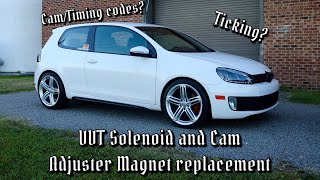
Typical fix: Replace the Camshaft Adjuster Magnet. 🎬 See this walkthrough on replacing the VVT solenoid and magnet. It is often recommended to use an OEM part.
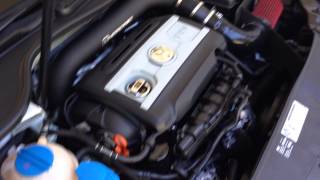
Est. part cost: $40-$150 - Failed Timing Chain Tensioner or Stretched Timing Chain (Especially 2.0T TSI) 🟡 Medium Probability → Shop Engine Timing Chain The original timing chain tensioner on many EA888 2.0T TSI engines (CCTA/CBFA codes) is a well-documented weak point that can fail without warning. Failure allows the chain to become slack, causing timing to retard and often producing a rattling noise on startup. 🎬 Listen to this example of a failing timing chain rattle.
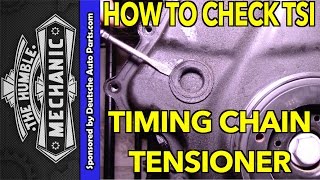
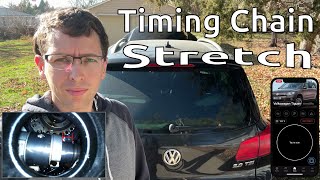
How to confirm: Listen for a rattling noise on startup. A mechanic can visually check the tensioner's extension through a small green or black plug on the lower timing cover. 🎬 Watch how to check chain stretch using a scan tool. If the tensioner piston is extended significantly (many 'ribs' showing), the chain and tensioner are worn and require replacement. An advanced scan tool can also check cam/crank correlation values (Measuring Block 93 on some tools).
Typical fix: Replace the timing chain, tensioner, and all associated guides and hardware with the latest revised parts. This is a significant repair.
Est. part cost: $400-$800
Rare But Worth Checking
- Failed Camshaft Position Sensor (G40): → Shop Engine Camshaft Position Sensor This sensor reports the camshaft's position to the ECM. While it can fail, it's more common for the issue to be mechanical (timing) or hydraulic (oil pressure/solenoid). A faulty sensor is a less common cause for P0012 compared to the VVT system components.
- Clogged Oil Passages or Camshaft Bridge Screen: → Shop Engine Camshaft On TSI engines, a screen on the camshaft support bridge can break apart, sending plastic and metal debris into oil passages. This can starve the camshafts of oil or clog the VVT solenoid, leading to P0012 and other timing codes. The OEM fix was often to simply remove the screen, while aftermarket solutions offer a more robust all-metal screen.
- Failed Camshaft Phaser (Adjuster): → Shop Engine Camshaft The mechanical adjuster itself, located on the end of the camshaft, can fail or get stuck in one position. This is less common than solenoid or oil pressure issues and is a more expensive repair.
Diagnosis Steps
- Verify the code with an OBD-II scanner.
- Check the engine oil level and condition. If low, dirty, or the wrong viscosity, correct this first, clear the code, and see if it returns. This is the most common and cheapest fix.
- Listen for any rattling noises from the engine, especially during a cold start. A rattle strongly suggests a timing chain/tensioner issue on TSI engines.
- Using an advanced scan tool (like VCDS), check the live data for camshaft phase angle deviation (e.g., Measuring Block 93). A deviation of more than a few degrees at idle indicates a problem.
- Inspect the wiring and connector for the Camshaft Adjuster Magnet (VVT solenoid/N205) for any damage, corrosion, or oil contamination.
- Test the VVT solenoid. This can be done by checking resistance with a multimeter (typically 10-18 Ω) or by commanding it with a scan tool and listening for a click. You can also remove it and apply 12V to see if the internal piston actuates.
- For 2.0T TSI engines, the next step is to visually inspect the timing chain tensioner. Remove the inspection plug on the lower timing cover and use a mirror and light to see how far the tensioner is extended. If it's extended past 6-7 'notches', the chain is stretched.
- If the tensioner is the old, failure-prone design, it should be replaced with the updated version regardless of extension as a preventative measure.
- If the solenoid, oil, and timing chain/tensioner appear to be in good condition, further investigation into the camshaft bridge screen or the phaser itself may be required.
Parts You'll Likely Need
- Camshaft Adjuster Magnet (VVT Solenoid)
(OEM #06L109257F (latest revision, supersedes 06L109257B, 06J109257E, etc.))— This electro-hydraulic valve is a very common failure point, getting stuck or clogged and preventing proper oil flow for timing adjustments.
Trusted brands: Bosch, Pierburg (OEM supplier), INA
OEM price range: $100-$180
Aftermarket price range: $40-$90 - Timing Chain Kit
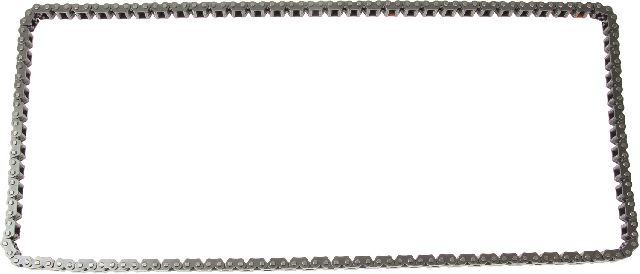
(OEM #06K109467K (Updated Tensioner))— Required if the timing chain has stretched or the tensioner has failed, which is a significant issue on 2.0T TSI engines. The kit typically includes the chain, the updated tensioner (06K109467K), and guide rails.
Trusted brands: INA (OEM supplier), FCP Euro Kit, ECS Tuning Kit
OEM price range: $500-$800
Aftermarket price range: $300-$500 - Camshaft Bridge
(OEM #06H103144K)— The integrated oil screen on the original bridge is prone to tearing and sending debris through the VVT system, causing oil pressure and timing control issues.
Trusted brands: Volkswagen (Genuine OEM), Dorman OE FIX (Upgraded all-metal screen)
OEM price range: $150-$250
Aftermarket price range: $100-$180
Related Codes That Often Appear With This One
- P0011 — This code is for 'Timing Over-Advanced'. Seeing it with P0012 can indicate an erratic VVT system, a failing N205 solenoid that is sticking, or a significant mechanical timing issue.
- P0016 — This code indicates 'Crankshaft/Camshaft Position Correlation'. When seen with P0012, it strongly points towards a jumped or stretched timing chain, as the ECM is seeing a direct mismatch between the two key rotating assemblies.
- P000A — This code means "'A' Camshaft Position Slow Response". It often accompanies P0011 or P0012 and points to sludgy oil or a failing VVT solenoid that is preventing the camshaft from adjusting its timing as quickly as the ECM commands.
Technical Service Bulletins (TSBs) & Recalls
- While no specific TSB for P0012 was found, numerous TSBs exist for related issues that cause the code. For example, VW TSBs related to updating engine software (ECU reflash) can sometimes address incorrect fault monitoring parameters. TSBs also exist for the timing chain tensioner issue, extending warranty coverage for some vehicles, though many are now outside the coverage window.
Platform-Specific Known Issues
- The timing chain tensioner on early EA888 2.0T TSI engines (engine codes CCTA, CBFA, up to ~2012) is known to fail without warning, causing the timing chain to jump teeth. This can result in bent valves and catastrophic engine failure. Code P0012 can be an early symptom of the tensioner beginning to fail or the chain starting to stretch.
- The camshaft bridge on the 2.0T TSI engine contains an oil screen that is prone to breaking. Debris can travel downstream and clog the N205 VVT solenoid or oil passages, causing timing-related fault codes.
Mechanic-Grade Diagnostic Values
- Camshaft Adjuster Magnet (N205) Resistance — expected: 10-18 Ω. Failure: A reading outside this range, or an open/short circuit, indicates a faulty solenoid coil.
- VCDS Measuring Block 93 (Camshaft Phase Adaptation) — expected: Between -4.0° and +4.0° at warm idle. Failure: A value consistently exceeding +/- 5 degrees strongly indicates a stretched timing chain or other mechanical timing issue. Some forums note values approaching -4.5° can already be associated with startup rattle.
- Engine Oil Pressure (2.0T TSI, Hot Idle) — expected: 1.2 - 2.1 bar (17.4 - 30.5 psi). Failure: Pressure below this range can starve the VVT system, leading to timing codes. Low pressure points to issues like a worn oil pump, clogged pickup tube, or internal leaks.
- Camshaft Position Sensor (G40) Supply Voltage — expected: ~5.0 Volts. Failure: No voltage or significantly low voltage points to a wiring issue or a fault in the ECM's 5V reference circuit.
Scan Tool Commands That Help
- VCDS / ODIS: Output Test: Camshaft Adjustment Valve (N205) — This is a primary functional test. The tool commands the N205 solenoid to actuate, and the technician should hear or feel a distinct click. A lack of clicking confirms a dead solenoid or a wiring circuit issue, helping to quickly isolate the problem.
- VCDS / ODIS: Basic Settings - Group 094 (Camshaft Adjustment) — This function runs a comprehensive test of the VVT system's ability to advance and retard timing. It requires a specific procedure (holding the brake and accelerator to initiate). A 'not OK' result confirms a functional problem within the VVT system, pointing away from a simple sensor fault and towards a mechanical or hydraulic issue like a stuck phaser, bad solenoid, or low oil pressure.
Wiring & Ground Locations
- Ground Point 15 — On the cylinder head of the engine.. This is a primary engine ground. A poor connection here can cause erratic behavior from various engine sensors, including the Camshaft Position Sensor (G40) and Crankshaft Position Sensor (G28), leading to incorrect timing data and fault codes like P0012.
- N205 Solenoid Connector — The 2-pin connector on the Camshaft Adjuster Magnet itself, located on the upper timing cover.. This is the direct connection for testing the solenoid. Pin 1 should have battery voltage with the ignition on, and Pin 2 is the control signal from the ECM. Testing here can differentiate between a bad solenoid, a wiring break, or an ECM driver issue.
- Engine Block Ground — A ground connection (designated as '18' in some diagrams) on the engine block itself.. Similar to the cylinder head ground, this ensures the entire engine assembly has a solid ground path to the chassis and battery. Intermittent or poor grounding can cause unpredictable electronic faults.
Real Owner Repair Stories
- Ross-Tech Forums user (2003 VW Beetle 1.8T (Similar VVT system principles)) — Persistent P0012 code.
❌ Tried (didn't work) Initial VCDS scan showed a phase position of -5.0°KW, indicating a timing issue., A functional test of the cam tensioner passed, suggesting the solenoid and basic function were okay.
✅ What actually fixed it The user replaced only the cam chain tensioner assembly after discovering the plastic guide pads on the original tensioner were worn down by about 1mm. Despite the chain itself not being replaced, the new tensioner with fresh guides resolved the P0012 code.
OEM Part Supersession History
06H109467T (and earlier revisions)→06K109467K— The original timing chain tensioner design was prone to premature failure of its ratcheting mechanism, which could allow the chain to go slack suddenly, leading to jumped timing and catastrophic engine failure. The updated 06K109467K part features a much more robust design to prevent this failure.
Heads up: The old-style tensioners should always be replaced with the new style as a preventative measure on any pre-2013 TSI engine, even if it has not yet failed.06H103144J (and earlier)→06H103144K— The original camshaft bridge included a plastic and metal mesh screen that was prone to disintegrating. The official VW TSB eventually recommended simply removing the screen. Aftermarket solutions, like the Dorman OE FIX, offer a redesigned bridge with a robust, all-metal, laser-welded screen to prevent this failure mode.
Model Year Variations Within This Range
- 2008-2012 (approx.): Models in this range with the 2.0T TSI engine are highly likely to have the original, failure-prone timing chain tensioner. Vehicles from 2013 onwards are more likely to have the updated, more reliable tensioner from the factory, though chain stretch can still occur.
Diagnostic Flowchart
Real Owner Stories
Aggregated from forums and TSBs cited above. Mileages and costs reflect what owners reported in those sources.
Volkswagen Golf TSI
Symptoms: Received OBD-II codes P0012 and P0016 simultaneously.
What fixed it: The community identified the timing chain tensioner as the likely culprit requiring replacement.
Source hint: VWVortex.com thread titled 'P0016 and P0012... Cam chain tensioner?'
Volkswagen Golf GTI
Symptoms: Experienced engine running issues and received a P0012 code shortly after attempting a repair.
What fixed it: Replaced the N205 valve (VVT solenoid) to address initial running issues, highlighting the diagnostic complexity when P0012 appeared afterward.
Source hint: GolfGTIForum.co.uk thread titled 'P0012 after N205 valve replacement'
Related OBD-II Codes
Frequently Asked Questions
Is the timing chain tensioner issue on my 2006-2014 Golf covered under warranty or a recall?
What type of engine oil should I use to prevent P0012 on my Golf TSI?
How can I check if my 2.0T TSI timing chain tensioner is failing before it causes engine damage?
What is the N205 valve on my Volkswagen, and how does it relate to code P0012?
Can I use VCDS to diagnose the P0012 code on my Golf?
My early EA888 2.0T TSI engine has code P0012. Should I be worried about bent valves?
Helpful Videos

We Have This Part in Stock



The information in this article is provided for general reference and educational purposes only. Vehicle specifications, procedures, and part compatibility can vary by production date, trim level, and region. Always consult your vehicle's factory service manual and verify part numbers before purchasing or performing repairs. Safety-critical components such as airbags, seat belts, and braking systems should be installed by a qualified professional.
- Volkswagen Golf:
- 🧭 Diagnostic Flowchart
- 🎬 Helpful Videos
- 🛍️ Shop This Part
- What's Unique About the 2006-2014 Volkswagen Golf
- Symptoms You May Notice
- Most Likely Causes
- Rare But Worth Checking
- Diagnosis Steps
- Parts You'll Likely Need
- Related Codes That Often Appear With This One
- Technical Service Bulletins (TSBs) & Recalls
- Platform-Specific Known Issues
- Mechanic-Grade Diagnostic Values
- Scan Tool Commands That Help
- Wiring & Ground Locations
- Real Owner Repair Stories
- OEM Part Supersession History
- Model Year Variations Within This Range
- Real Owner Stories
- Volkswagen Golf TSI
- Volkswagen Golf GTI
- Related OBD-II Codes
- Frequently Asked Questions
- 🎟️ Get 5% Off