

P0013 on 2012-2018 Audi A6 3.0L V6: Exhaust Cam Actuator Circuit Causes & Fixes
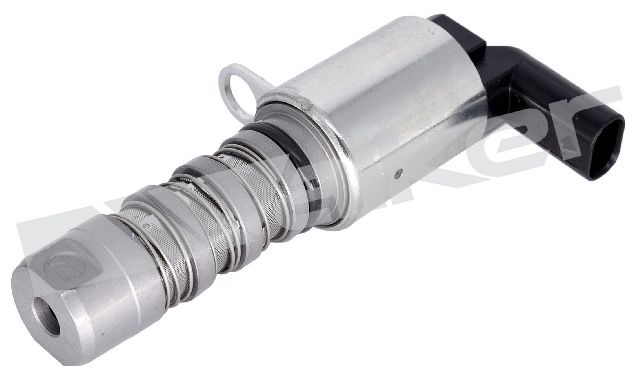
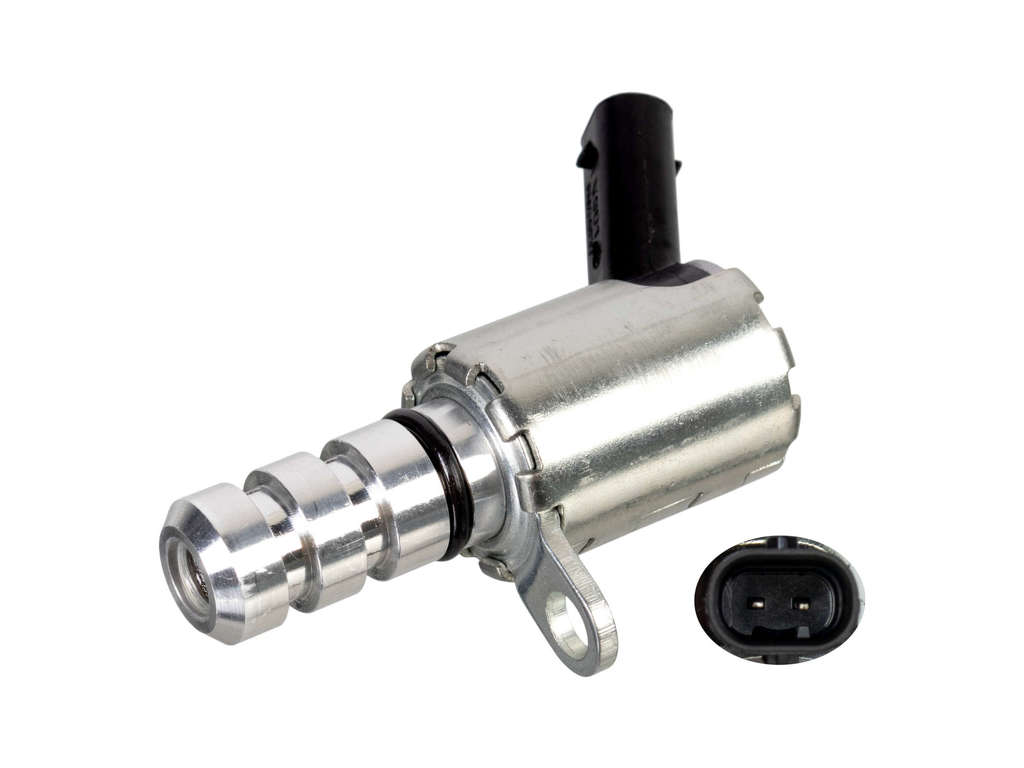
On a 2012-2018 Audi A6 3.0T, code P0013 almost always points to a faulty exhaust camshaft position actuator solenoid on the passenger-side of the engine or low/dirty engine oil. The solenoid, part number 06E109257P (or its successor 06E109257J), is the culprit. Replacing it is a common, 15-minute DIY fix costing between $45 and $180 for the part.
- P0013 on the 3.0T almost always means the passenger-side exhaust VVT solenoid has failed.
- Always check your engine oil level and condition first; low or dirty oil is a known cause of VVT problems.
- The most likely fix is replacing the Camshaft Adjuster Solenoid (Part # 06E109257P or 06E109257J), which is a very accessible and simple DIY job.
- A definitive diagnosis can be made by swapping the suspect solenoid with the intake solenoid on the same bank and seeing if the code changes to P0010.
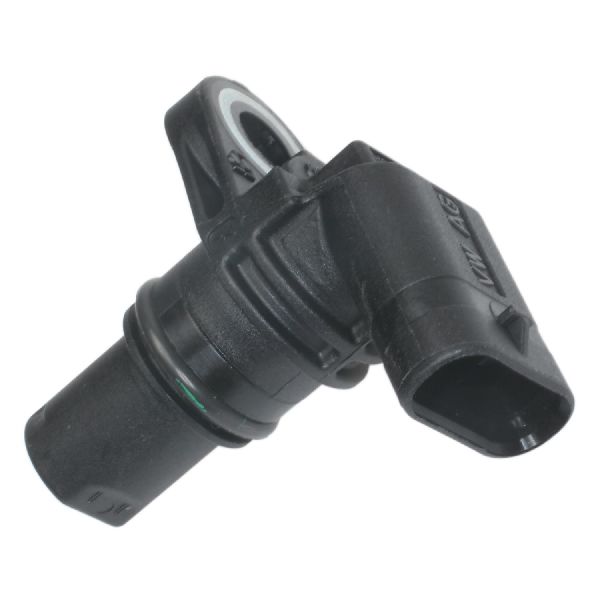
- Do not confuse the actuator solenoid with the camshaft position sensor; they are different parts and P0013 points to the solenoid circuit.
- Ignoring this code can lead to poor performance, bad fuel economy, and potentially more severe engine damage if the timing is significantly affected.
What's Unique About the 2012-2018 Audi A6
The Audi 3.0L TFSI engine uses a sophisticated Variable Valve Timing (VVT) system that relies heavily on clean oil and correct oil pressure to function. While a P0013 code is often a straightforward electrical fault with the control solenoid, this engine is particularly sensitive to oil maintenance. Debris can clog the fine mesh screens on the solenoids, impeding oil flow and triggering faults. Ignoring VVT-related codes can lead to performance issues, and it's worth noting that major timing system repairs on this platform, such as timing chain replacement, are known to be exceptionally expensive engine-out jobs.
Symptoms You May Notice
- Check Engine Light illuminated
- Rough or unstable idle
- Reduced engine power and poor acceleration
- Decreased fuel economy
- Engine may hesitate or stall
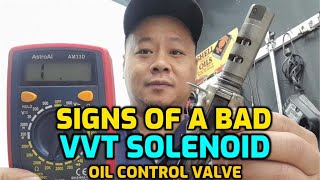
- Rattling noise from the engine bay on occasion 🎬 Watch: Common symptoms and how to test for VVT failure
- Replacing the camshaft position *sensor* (G40/G163) instead of the camshaft position actuator *solenoid* (N205). The sensor reads the camshaft's position, while the solenoid (actuator) is commanded by the ECM to adjust it. P0013 specifically points to the actuator's electrical circuit.
Most Likely Causes
- Faulty Exhaust Camshaft Position Actuator Solenoid (Bank 1) 🔴 High Probability → Shop Engine Camshaft The solenoid (also called an Oil Control Valve or N205 valve) can fail electrically due to an internal open circuit in its coil, or it can become clogged and stuck from oil sludge or debris. This is a very common failure point on this engine.
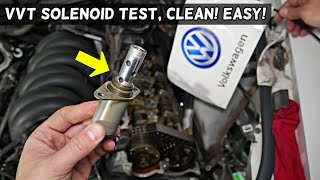
How to confirm: Test the solenoid's resistance with a multimeter; it should be within a specific range, typically 6.9-7.9 ohms for this application. An open circuit (infinite resistance) confirms failure. 🎬 See a step-by-step guide on testing solenoid resistance The most definitive DIY test is to swap the Bank 1 exhaust solenoid with the Bank 1 intake solenoid. Clear codes and run the engine. If the code changes to P0010 ('A' Camshaft Position Actuator Circuit), the solenoid is confirmed bad.
Typical fix: Replace the Bank 1 (passenger side) exhaust camshaft position actuator solenoid. It is the lower of the two solenoids on the front of the passenger-side cylinder head cover.
Est. part cost: $45-$180 - Low, Dirty, or Incorrect Engine Oil 🟡 Medium Probability The VVT system is hydraulic and requires clean oil at the proper level and pressure to operate. Sludge or debris can clog the fine mesh screens on the solenoid, impeding its function and triggering a circuit fault if the valve gets stuck.
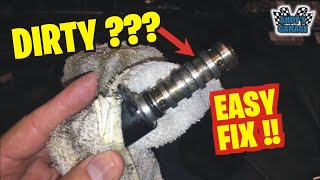
How to confirm: Check the engine oil level using the MMI system (as most of these cars lack a physical dipstick). Inspect the oil's condition and service history. If it is dark, sludgy, or past its service interval, this is a likely contributor. 🎬 Watch: How to clean oil control valves and solenoids
Typical fix: Perform an engine oil and filter change using an OEM-approved oil (e.g., 5W-40 or 5W-30 meeting VW 502 00 spec). Clear codes and re-evaluate.
Est. part cost: $80-$200 - Wiring or Connector Issue ⚪ Low Probability The wiring harness to the solenoid can become brittle and damaged from engine heat and vibration over time, or the connector pins can corrode, leading to an open circuit.
How to confirm: Visually inspect the electrical connector and wiring going to the Bank 1 exhaust VVT solenoid. Unplug it and check for corrosion, oil contamination, or pushed-out pins. Use a multimeter to check for continuity and voltage between the ECM and the solenoid connector.
Typical fix: Repair the damaged section of wiring or clean/replace the electrical connector pigtail.
Est. part cost: $15-$60
Rare But Worth Checking
- Failing Camshaft Adjuster or Timing Components: → Shop Engine Camshaft In rare cases, an internal mechanical issue with the camshaft adjuster (phaser) or related timing components could cause the solenoid to work improperly, leading to a circuit code. TSB 2027969/5 discusses issues with cam actuators that can cause fault codes, though these are typically 'implausible signal' codes rather than open circuit codes. This is an unlikely cause for P0013 and should only be considered after all other causes are ruled out.
- Failing Engine Control Module (ECM): This is a very rare cause. The ECM's internal driver for the solenoid circuit can fail, but all other potential causes should be exhaustively ruled out before considering ECM replacement.
Diagnosis Steps
- Read the fault codes with an OBD-II scanner to confirm P0013 is the primary code.
- Check the engine oil level and condition via the MMI. If low, dirty, or overdue, perform an oil and filter change with VW 502 00 spec oil, clear the code, and see if it returns.
- Locate the 'B' (Exhaust) Camshaft Position Actuator Solenoid on Bank 1. This is the lower of the two solenoids on the front of the passenger-side cylinder head cover.
- Inspect the solenoid's electrical connector for damage, corrosion, or loose pins. Check the nearby wiring for any signs of fraying or heat damage.
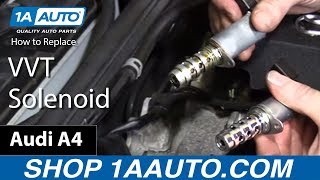
- Definitive Test (Solenoid Swap): Unplug both the intake (upper) and exhaust (lower) solenoids on Bank 1. Unbolt them (one T30 Torx bolt each). Swap their positions. Clear the codes and run the engine. If the code changes to P0010 (Intake 'A' Camshaft Position Actuator Circuit), the solenoid you moved to the intake position is faulty and needs replacement.
- Resistance Test: If you don't swap them, unplug the suspect solenoid and measure the resistance across its two pins with a multimeter. A reading between 6.9 and 7.9 ohms is expected. An open circuit (infinite resistance) or a reading far outside this range indicates a failed solenoid.
- If the solenoid tests good and the swap test doesn't isolate the issue, check for power (12V) and ground at the solenoid's connector with the ignition on.
- If all the above checks out, the issue may be a more complex wiring problem between the solenoid and the ECM, or a rare internal ECM fault.
Parts You'll Likely Need
- Camshaft Adjuster Solenoid (VVT Solenoid / Oil Control Valve)
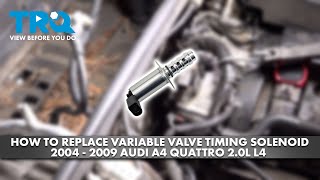
(OEM #06E109257P (superseded by 06E109257J))— This solenoid is the most common failure point for a P0013 circuit code. It either fails electrically or becomes clogged with oil debris.
Trusted brands: Audi (Genuine OEM), INA (Often the OEM supplier), Bosch, Vaico, Dorman
OEM price range: $120-$180
Aftermarket price range: $45-$90
Related Codes That Often Appear With This One
- P0014 — P0014 ('B' Camshaft Position - Timing Over-Advanced or System Performance) can appear with P0013 if the solenoid is stuck or responding incorrectly, causing a mechanical timing issue in addition to the electrical circuit fault.
Technical Service Bulletins (TSBs) & Recalls
- TSB 2027969/5: While not directly for P0013, this TSB addresses related issues with camshaft actuators causing 'implausible signal' faults. It points to potential mechanical issues within the valve lift system, representing a much deeper and rarer cause than a simple solenoid failure.
Platform-Specific Known Issues
- Owner Experience: Quick DIY Fix: An owner on the Audizine forums with a 2014 A6 3.0T reported getting code P0013. They purchased the OEM solenoid (06E109257P) and replaced it in their garage in under 20 minutes using basic tools. The check engine light was cleared and did not return, confirming the solenoid was the sole issue.
- Dealer vs. Indy vs. DIY Cost: On AudiWorld forums, a user reported a dealer quote of over $400 to diagnose and replace the solenoid for a P0013 code. Another user confirmed they bought the part for under $100 and performed the swap themselves in 15 minutes, highlighting the significant cost savings of a DIY approach for this specific code.
Diagnostic Flowchart
Other Known Issues on This Vehicle
Issues unrelated to this code that are worth knowing about as an owner of this generation:
- PCV Valve (Crankcase Breather) Failure 🔴 High — Common failure around 60,000-100,000 miles. Requires supercharger removal for replacement, making it a labor-intensive job.
- Water Pump & Thermostat Failure 🔴 High — Plastic components are prone to cracking and leaking, especially on earlier models (pre-2013). Failure can lead to overheating. (Ref: Subject of multiple warranty extensions and a class-action lawsuit for certain model years.)
- Intake Valve Carbon Buildup 🟠 Medium — A consequence of direct injection. Performance degradation is noticeable every 40,000-60,000 miles. Requires manual cleaning (walnut blasting) for removal.
- Engine Mount Failure 🟠 Medium — Hydraulic mounts are known to leak and collapse, typically around 60,000-100,000 miles, causing excessive engine vibration at idle.
- Timing Chain Tensioner Wear 🔴 High → Shop Engine Timing Chain — Less common than on other Audi engines but still a concern. A rattling noise on startup is the primary symptom. Repair is an engine-out procedure and extremely expensive.
Real Owner Stories
Aggregated from forums and TSBs cited above. Mileages and costs reflect what owners reported in those sources.
2014 Audi A6 3.0T
Symptoms: Check engine light illuminated with code P0013.
What fixed it: Purchased and replaced the OEM solenoid (06E109257P).
Source hint: Audizine Forums - 'P0013 code'
2012-2018 Audi A6 3.0L V6 TFSI
Symptoms: P0013 code triggered; dealer quoted over $400 for the repair.
What fixed it: DIY replacement of the solenoid in 15 minutes using a part costing under $100.
Cost: $45-$100
Source hint: AudiWorld Forums - 'Engine mount nightmare'
Related OBD-II Codes
Frequently Asked Questions
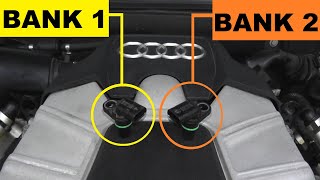
Which side of the engine is Bank 1 on my Audi A6 3.0T?
Where is the 'B' Camshaft Position Actuator Solenoid located on the 3.0L TFSI engine?
What is the correct replacement part number for the solenoid causing P0013?
Does TSB 2027969/5 specifically cover the P0013 fault code?
What resistance should I see when testing the N205 valve with a multimeter?
What oil specification should I use to prevent VVT issues like P0013?
Helpful Videos

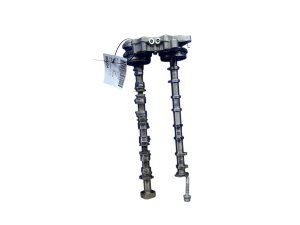
Used OEM Parts in Stock
New Aftermarket Parts Available


The information in this article is provided for general reference and educational purposes only. Vehicle specifications, procedures, and part compatibility can vary by production date, trim level, and region. Always consult your vehicle's factory service manual and verify part numbers before purchasing or performing repairs. Safety-critical components such as airbags, seat belts, and braking systems should be installed by a qualified professional.
- Audi A6:
- 🧭 Diagnostic Flowchart
- 🎬 Helpful Videos
- 🛍️ Shop This Part
- What's Unique About the 2012-2018 Audi A6
- Symptoms You May Notice
- Most Likely Causes
- Rare But Worth Checking
- Diagnosis Steps
- Parts You'll Likely Need
- Related Codes That Often Appear With This One
- Technical Service Bulletins (TSBs) & Recalls
- Platform-Specific Known Issues
- Other Known Issues on This Vehicle
- Real Owner Stories
- 2014 Audi A6 3.0T
- 2012-2018 Audi A6 3.0L V6 TFSI
- Related OBD-II Codes
- Frequently Asked Questions
- 🎟️ Get 5% Off