

P0013 on 2011-2017 Buick Regal 2.4L: Exhaust VVT Solenoid Circuit Fault Guide
On a 2011-2017 Buick Regal with the 2.4L engine, code P0013 is almost always caused by a failed exhaust camshaft position actuator solenoid. This is a very common and inexpensive DIY repair, with the part costing between $25 and $60. Always check your engine oil level first, as low or dirty oil is a primary cause of this failure on these oil-consuming Ecotec engines.
- The most likely cause of P0013 on a 2.4L Regal is a failed exhaust camshaft position actuator solenoid.
- Before replacing any parts, always check the engine oil level and condition first. Low or dirty oil is a leading contributor to this code on these specific engines.
- This is a very DIY-friendly repair that can be done in under 30 minutes with basic tools (a 10mm socket).
- For long-term reliability, it is best practice to replace both the intake and exhaust solenoids at the same time, as recommended by GM.
What's Unique About the 2011-2017 Buick Regal
The 2.4L Ecotec engine used in this generation of the Buick Regal is known for having issues with its Variable Valve Timing (VVT) system. The primary reason for P0013 is often linked to the engine's tendency to consume oil, a problem so widespread it led to class-action lawsuits for platform mates like the Chevrolet Equinox and GMC Terrain. This oil consumption can lead to low oil levels or dirty, sludgy oil, which starves the VVT solenoids of the clean, pressurized oil they need to function. This causes the fine mesh screens on the solenoids to clog and the internal coil to fail electrically from stress. As a result, failure of the camshaft position actuator solenoids is an extremely common maintenance item on these vehicles.
Symptoms You May Notice
- Check Engine Light is on
- Rough or unstable engine idle
- Engine may stall at low speeds or when coming to a stop
- Reduced engine power and poor acceleration
- Decreased fuel economy
- Hard starting
- Engine hesitation
- Replacing the camshaft position *sensor* instead of the camshaft position actuator *solenoid*. These are two different parts. P0013 specifically refers to the solenoid (also called an oil control valve).
Most Likely Causes
- Failed Exhaust Camshaft Position Actuator Solenoid 🔴 High Probability → Shop Engine Camshaft These solenoids are a widely documented high-failure item on the 2.4L Ecotec engine, often due to clogging from oil sludge or an internal wire breaking, creating an open circuit. GM TSB 17-NA-098 was issued specifically to address this common failure. Additionally, manufacturer Bulletin #18369 notes that the exhaust camshaft position actuator solenoid valve may break, causing the Malfunction Indicator Lamp to illuminate and the driver to experience rough engine idling or reduced engine torque.
How to confirm: Swap the exhaust solenoid (rear position, often with a black connector) with the intake solenoid (front position, often gray). Clear the codes and drive. If the code changes to P0010 (Intake Camshaft Position Actuator Circuit), the solenoid is confirmed bad. Alternatively, test the solenoid's resistance with a multimeter; a good solenoid should read around 8-15 ohms, while a bad one will often read much higher (kilo-ohms) or show an open circuit (infinite resistance).
Typical fix: Replace the exhaust camshaft position actuator solenoid. It is highly recommended by GM and experienced technicians to replace both the intake and exhaust solenoids at the same time as a set.
Est. part cost: $25-$60 - Low or Dirty Engine Oil 🟡 Medium Probability The 2.4L Ecotec engine has a well-documented history of excessive oil consumption due to piston ring design, which can lead to dangerously low oil levels if not checked frequently. Low or sludgy oil is a primary cause of VVT solenoid failure.
How to confirm: Check the engine oil dipstick. The level should be between the 'add' and 'full' marks. Inspect the oil's color and consistency; if it is black, thick, or sludgy, it needs to be changed. When removing the solenoid, inspect its screens for sludge or metal debris.
Typical fix: Perform an engine oil and filter change using the manufacturer-specified 5W-30 synthetic oil. If the solenoid screens are clogged with sludge, they may need to be cleaned or replaced.
Est. part cost: $50-$100 - Damaged Wiring or Electrical Connector ⚪ Low Probability The plastic locking tabs on the solenoid connectors can become brittle from engine heat cycles and break during service, leading to a poor connection.
How to confirm: Visually inspect the wiring harness and connector for the exhaust VVT solenoid. Look for any signs of frayed wires, melting, or corrosion on the connector pins. Use a multimeter to check for proper voltage and ground at the connector with the key on.
Typical fix: Repair the damaged section of the wiring harness or replace the connector pigtail.
Est. part cost: $15-$30
Rare But Worth Checking
- Stretched Timing Chain: → Shop Engine Timing Chain While P0013 is an electrical code, it can sometimes appear alongside performance codes like P0016 and P0017 if a stretched timing chain is the root cause, especially on high-mileage engines or those run with low oil. The 2.4L Ecotec is known for timing chain issues, often caused by failing tensioners or plastic guides breaking apart due to poor lubrication from low oil levels. A rattling noise on startup is a key symptom.
- Faulty Engine Control Module (ECM): This is extremely rare and should only be considered after all other possibilities (solenoid, oil, wiring) have been definitively ruled out.
Diagnosis Steps
- Check the engine oil level and condition. If it is low or dirty, perform an oil and filter change before proceeding. This alone can sometimes resolve the issue.
- Inspect the electrical connector and wiring going to the exhaust camshaft position actuator solenoid (the one closer to the firewall) for any visible damage, such as broken clips or frayed wires.
- Using a scan tool, clear the codes. Drive the vehicle to see if the P0013 code returns.
- If the code returns, the simplest diagnostic test is to swap the exhaust solenoid with the intake solenoid (the one closer to the front of the vehicle). They are identical parts but may have different color connectors (e.g., black for exhaust, gray for intake).
- Clear the codes again and drive the vehicle. If the code changes to P0010 (Intake Camshaft Position Actuator Circuit Fault), the solenoid you moved is faulty and needs to be replaced.
- If the code P0013 returns after the swap, the problem is likely in the wiring or the ECM. Test the solenoid's circuit for proper voltage and ground.
- As an alternative to swapping, you can test the resistance of the solenoid with a multimeter. Disconnect the solenoid and measure the resistance between its two pins. A reading between 8-15 ohms is typical for a good solenoid. A reading of infinity (open) or in the thousands of ohms (kΩ) indicates a failed solenoid.
Parts You'll Likely Need
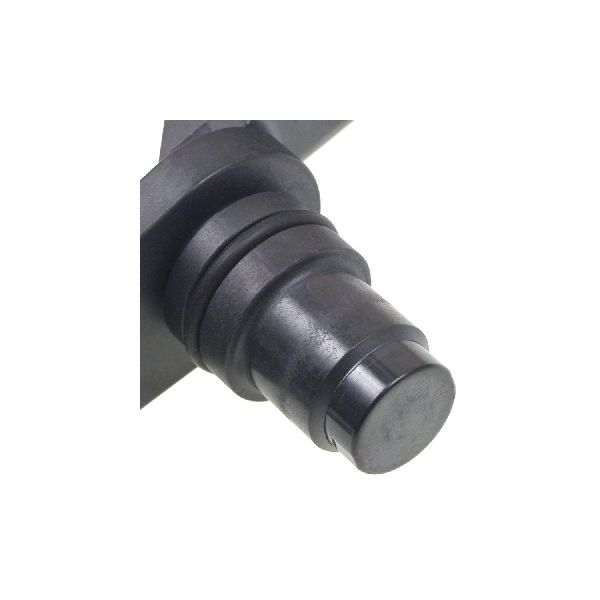
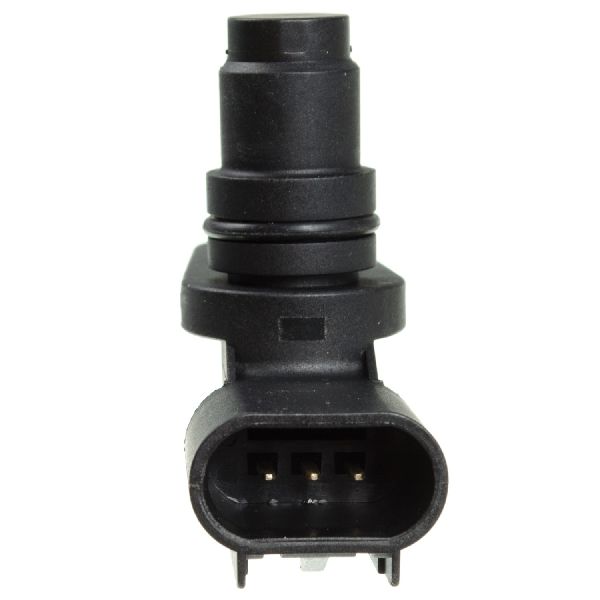
- Exhaust Camshaft Position Actuator Solenoid
(OEM #12655421)— This is the most common part to fail, causing the P0013 electrical circuit code. GM has superseded this part number; the latest replacement is often 12679100.
Trusted brands: ACDelco, Delphi, Dorman
OEM price range: $40-$70
Aftermarket price range: $20-$50 - Intake Camshaft Position Actuator Solenoid
(OEM #12655420)— It is highly recommended to replace both solenoids at the same time, as they are the same age and subject to the same wear and oil conditions. GM TSB 17-NA-098 explicitly advises replacing them as a pair. The latest OEM replacement is often 12679099.
Trusted brands: ACDelco, Delphi, Dorman
OEM price range: $40-$70
Aftermarket price range: $20-$50
Related Codes That Often Appear With This One
- P0014 — P0014 indicates an issue with the exhaust camshaft's timing performance (over-advanced). The electrical circuit fault of P0013 often causes the mechanical performance fault of P0014, and they frequently appear together.
- P0010 — This is the equivalent circuit code for the intake ('A') camshaft solenoid. It will typically appear if you swap a faulty exhaust solenoid to the intake position as a diagnostic step.
- P0016/P0017 — These are crankshaft/camshaft correlation codes. If you see P0013 along with P0016 or P0017, it could indicate a more serious mechanical timing issue, such as a stretched timing chain, and warrants immediate investigation.
Technical Service Bulletins (TSBs) & Recalls
- GM TSB 17-NA-098: Advises replacing both intake and exhaust camshaft position actuator solenoids together to address codes like P0010, P0011, P0013, and P0014, which can cause rough running, hesitation, or stalling. It also recommends verifying the ECM has the latest software.
- Bulletin #18369: Confirms that a broken exhaust camshaft position actuator solenoid valve will set DTC P0013 and may result in reduced engine torque and rough idling.
Platform-Specific Known Issues
- Metal Shavings on Solenoid Screen: Some owners report finding fine metal shavings on the screens of the old solenoids upon removal. While this can be from normal wear, it can also be an early indicator of timing chain guide wear, a known issue with the 2.4L Ecotec. If shavings are present, monitor for any startup rattle.
Mechanic-Grade Diagnostic Values
- Camshaft Position Actuator Solenoid Resistance — expected: 8 to 13 Ohms. Failure: A reading significantly outside this range, such as 60,000-100,000 Ohms (60-100 kΩ) or an open circuit (OL), indicates a failed solenoid. Wiggling the connector pins during the test can reveal intermittent internal breaks.
- Voltage at Solenoid Connector (Key On) — expected: Greater than 11 Volts on the power supply wire.. Failure: No voltage or low voltage indicates a problem in the wiring harness or a fuse, not the solenoid itself.
Scan Tool Commands That Help
- GDS2 (GM Global Diagnostic System 2) or equivalent professional scan tool: Camshaft Position Actuator Control — This bidirectional command allows a technician to manually activate the exhaust VVT solenoid. When commanded on, the engine idle should become rough or stumble, confirming the solenoid is mechanically responding to the command. If the engine note doesn't change, it points to a clogged solenoid or a blocked oil passage, even if the solenoid tests good electrically.
Wiring & Ground Locations
- ECM (Engine Control Module) — In the engine compartment on the driver's side, appearing as a silver metal box with several large electrical connectors.. The ECM provides the power and control signal to the VVT solenoid. If the solenoid and its direct wiring test good, the fault may lie within the ECM's internal driver circuit, requiring testing at the ECM connector pins.
- Engine Block Ground Strap — A braided strap or thick wire connecting the engine block or cylinder head to the vehicle's frame or firewall.. While P0013 is a specific circuit code, a poor main engine ground can cause a variety of unpredictable electrical issues and codes. Verifying this ground is clean and tight is a fundamental step in diagnosing any engine control circuit fault.
Real Owner Repair Stories
- Reddit user on r/AskAMechanic (2013 Chevrolet Equinox 2.4L Ecotec (same engine and VVT system)) — Poor acceleration, rough idle, stalling, strange engine sounds.
❌ Tried (didn't work) Tune-up (spark plugs, air filter), Oil change
✅ What actually fixed it Initially, replacing both intake and exhaust VVT solenoids fixed the symptoms and a P0010 code. However, after 300 miles, the symptoms returned with a P0013 code, indicating the new exhaust solenoid failed or there is an underlying wiring/ECM issue. This highlights that even new parts can fail, or the root cause may be deeper than just the solenoid itself. - BAT Auto Technical Forum (2011 Chevrolet Equinox 2.4L, 54.1k miles) — Intermittent Check Engine Light, car ran fine otherwise.
❌ Tried (didn't work) Waiting for the code to clear on its own (it would, but then return).
✅ What actually fixed it The owner tested the exhaust solenoid with a multimeter and found a resistance of around 100 Ohms, far exceeding the specification of ~12 Ohms. Replacing the single faulty solenoid resolved the P0013 code. This confirms the high failure rate and the accuracy of resistance testing for diagnosis.
OEM Part Supersession History
12655421→12679100— Standard part revision and improvement by the manufacturer.
Diagnostic Flowchart
Other Known Issues on This Vehicle
Issues unrelated to this code that are worth knowing about as an owner of this generation:
- Excessive Oil Consumption 🔴 High — Very common across all model years. Caused by faulty piston ring design, leading to oil blow-by. Can consume as much as 1 quart per 1,000 miles. (Ref: GM offered Special Coverage Adjustments for some platform mates (e.g., Chevy Equinox) but not consistently for the Regal.)
- Stretched Timing Chain & Failed Guides 🔴 High → Shop Engine Timing Chain — Common on engines over 75,000-100,000 miles, often accelerated by poor lubrication from excessive oil consumption. A startup rattle is the primary warning sign. (Ref: PIP4716F (for platform mates) notes that startup rattle with codes can indicate timing chain issues.)
- Clogged PCV Orifice in Intake Manifold 🟠 Medium → Shop Engine Intake Manifold — A known issue where a small PCV orifice clogs, increasing crankcase pressure and causing the rear main seal to fail and leak oil. (Ref: TSB 14882 (Special Coverage))
- High-Pressure Fuel Pump (HPFP) Failure 🟠 Medium — The direct-injection fuel pump, driven by the camshaft, can fail. A common failure mode involves the internal seal leaking, allowing gasoline to dilute the engine oil, which accelerates wear on timing components.
Used vs. New Parts: Buying Guide for This Vehicle
When a used part is the smart pick: Never. VVT solenoids are a high-failure item and are inexpensive to buy new. The labor to replace a faulty used part that fails shortly after installation negates any small cost savings.
What to inspect on the donor part:
- Not applicable as used parts are not recommended.
OEM-only on this vehicle (don't cheap out):
- While not strictly OEM-only, using genuine ACDelco solenoids is highly recommended for longevity and to avoid repeat failures that can occur with lower-quality aftermarket parts.
Aftermarket brands forum-validated for this vehicle:
- ACDelco (OEM)
- Delphi
- Standard Motor Products (SMP)
- Dorman
Brands owners have reported issues with on this vehicle:
- No-name, unbranded solenoids from online marketplaces should be avoided due to inconsistent quality control, which can lead to premature failure.
Real Owner Stories
Aggregated from forums and TSBs cited above. Mileages and costs reflect what owners reported in those sources.
2011 Buick Regal 2.4L
Symptoms: Check engine light with P0013 code, stalling, and jerking when the vehicle was stopped.
What fixed it: The initial solenoid replacement did not fix the issue, highlighting that while the solenoid is common, other issues can be present.
Source hint: ScannerDanner Forum
2011 Buick Regal 2.4L Ecotec
Symptoms: P0013 code present; upon removal, the old exhaust solenoid had 'caked metal shavings' on the screens.
What fixed it: Exhaust Camshaft Actuator Solenoid Replacement.
Source hint: YouTube - '2011 Buick Regal 2.4L Ecotec P0013 Exhaust Camshaft Actuator Solenoid Replacement'
2010-2017 Chevrolet Equinox 2.4L L4
Symptoms: P0013/P0014 codes and rough running linked to the same 2.4L Ecotec oil consumption issues.
What fixed it: Variable Valve Timing Camshaft Solenoid replacement.
Source hint: YouTube - 'Fixing P0013 P0014 Variable Valve Timing Camshaft Solenoid Chevy Malibu...2.4l'
Related OBD-II Codes
Frequently Asked Questions
Is there a specific technical service bulletin for the P0013 code on my 2011-2017 Buick Regal 2.4L?
Can I just replace the exhaust solenoid, or do I need to do both on my Regal?
Why does my 2.4L Ecotec engine keep throwing VVT codes like P0013?
I found metal shavings on the solenoid screen during replacement; what does this mean for my Buick?
How can I tell if the solenoid is actually bad before buying a new one?
Could my stalling and rough idle be caused by something other than the solenoid?
Helpful Videos
![How to Fix P0013 Engine Code in 4 Minutes [2 DIY Methods / Only $6.63]](https://img.youtube.com/vi/t8TG_Q7QhvI/mqdefault.jpg)

We Have This Part in Stock



The information in this article is provided for general reference and educational purposes only. Vehicle specifications, procedures, and part compatibility can vary by production date, trim level, and region. Always consult your vehicle's factory service manual and verify part numbers before purchasing or performing repairs. Safety-critical components such as airbags, seat belts, and braking systems should be installed by a qualified professional.
- Buick Regal:
- 🧭 Diagnostic Flowchart
- 🎬 Helpful Videos
- 🛍️ Shop This Part
- What's Unique About the 2011-2017 Buick Regal
- Symptoms You May Notice
- Most Likely Causes
- Rare But Worth Checking
- Diagnosis Steps
- Parts You'll Likely Need
- Related Codes That Often Appear With This One
- Technical Service Bulletins (TSBs) & Recalls
- Platform-Specific Known Issues
- Mechanic-Grade Diagnostic Values
- Scan Tool Commands That Help
- Wiring & Ground Locations
- Real Owner Repair Stories
- OEM Part Supersession History
- Other Known Issues on This Vehicle
- Used vs. New Parts: Buying Guide for This Vehicle
- Real Owner Stories
- 2011 Buick Regal 2.4L
- 2011 Buick Regal 2.4L Ecotec
- 2010-2017 Chevrolet Equinox 2.4L L4
- Related OBD-II Codes
- Frequently Asked Questions
- 🎟️ Get 5% Off