

P0013 on 2012-2017 Buick Verano 2.4L: Exhaust Camshaft Actuator Circuit Causes and Fixes
On a 2012-2017 Buick Verano with the 2.4L engine, code P0013 is almost always caused by a failed exhaust camshaft position actuator solenoid. This is an extremely common failure, often triggered by the engine's tendency to consume oil. Before replacing the solenoid, check that your engine oil is clean and at the correct level, as low or dirty oil is a primary contributing factor. A new solenoid is an inexpensive part and the repair is very DIY-friendly, typically taking less than 30 minutes.
- For code P0013 on a 2.4L Verano, always check your engine oil level and condition first.
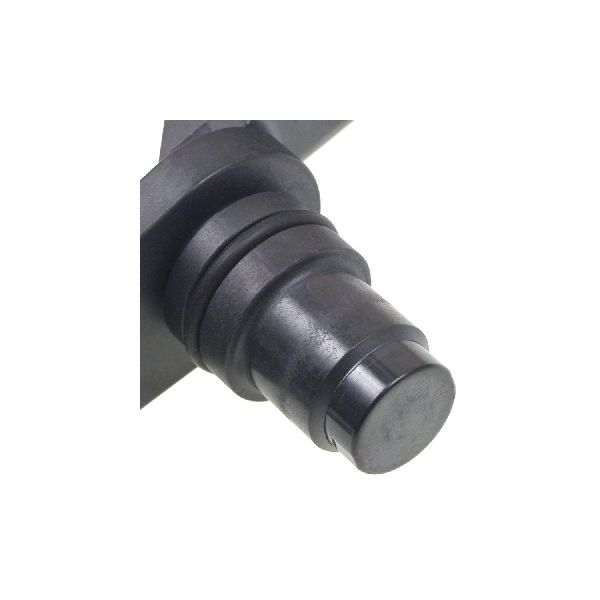
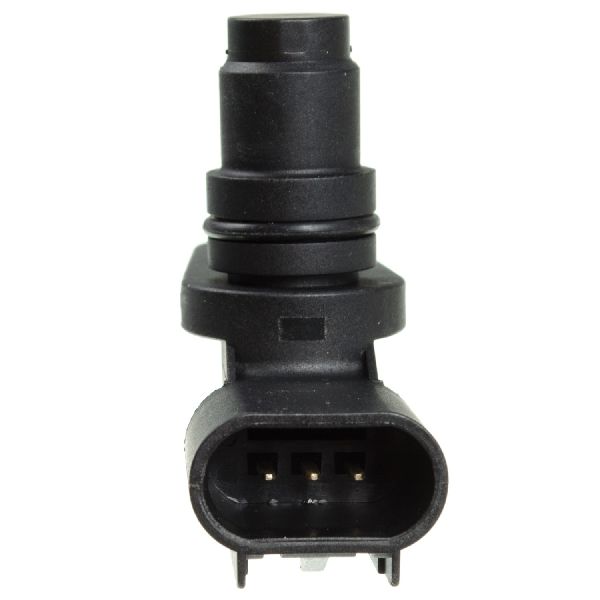
- The most likely cause is a failed exhaust camshaft position actuator solenoid (Part No. 12655421).
- This is a very simple and inexpensive DIY repair, typically requiring only a 10mm socket and about 20-30 minutes.
- A quick way to confirm a bad solenoid is to swap it with the intake solenoid and see if the trouble code changes to P0010.
- It is often recommended to replace both intake and exhaust solenoids at the same time for long-term reliability.
What's Unique About the 2012-2017 Buick Verano
The 2.4L Ecotec engine (RPOs LAF, LEA) used in the Verano and its platform-mates (Chevy Equinox, GMC Terrain) is notorious for excessive oil consumption. This is often due to a piston ring design flaw that allows oil to burn off, a problem acknowledged by GM in service bulletins like TSB 13-06-01-003G. The VVT system is hydraulic and extremely sensitive to oil level and condition. Low or sludgy oil clogs the fine mesh screens on the VVT solenoids or starves them of the pressure needed to operate, directly causing them to fail and trigger codes like P0013. Because of this deep-rooted issue, any VVT-related code on this specific vehicle must start with an immediate and thorough check of the engine oil level and condition.
Symptoms You May Notice
- Check Engine Light is on
- Rough engine idle
- Engine stalling, especially at low speeds or when stopping
- Poor acceleration and loss of power
- Reduced fuel economy
- Engine hesitation
- Rattling noise from the engine on startup (may indicate a more serious timing chain issue)
- Replacing the camshaft position *sensor* instead of the camshaft position *actuator solenoid*. These are two distinct parts. The P0013 code specifically refers to the actuator solenoid circuit, not the sensor.
Most Likely Causes
- Failed Exhaust Camshaft Position Actuator Solenoid 🔴 High Probability → Shop Engine Camshaft This is a very common failure point on the 2.4L Ecotec engine, often failing around 100,000 miles. The internal coil windings can fail, creating an open circuit, or the valve's small mesh screens can become clogged with oil sludge, impeding its mechanical function.
How to confirm: The easiest test is to swap the exhaust solenoid (rear, often with a black connector) with the identical intake solenoid (front, often with a gray connector). Clear the codes and drive the car. If the code changes to P0010 (Intake Camshaft Position Actuator Circuit), the solenoid is confirmed bad. You can also test the resistance of the solenoid's two pins with a multimeter; a healthy one should read around 8-13 ohms, while a failed one will often read as an open circuit (infinite resistance).
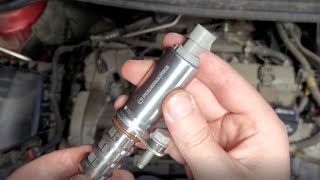
Typical fix: Replace the exhaust camshaft position actuator solenoid. It is held in by a single 10mm bolt and is located on top of the engine. 🎬 See this step-by-step guide to replacing the actuator solenoids. Per GM TSB 17-NA-098, it is highly recommended to replace both the intake and exhaust solenoids as a set.
Est. part cost: $20-$50 - Low or Dirty Engine Oil 🔴 High Probability The 2.4L Ecotec is known to consume more than 1 quart of oil every 2,000 miles. The oil life monitor is often not a reliable indicator of the actual oil level. The VVT system is hydraulic and relies entirely on clean oil at the proper pressure. Low or sludgy oil is a primary cause of VVT faults.
How to confirm: Physically check the engine oil dipstick for the level and inspect the oil's color and consistency. If the level is low (the dipstick may be completely dry if down by ~1.25 quarts or more) or the oil is dark and thick, this is a likely contributing factor.
Typical fix: Perform an engine oil and filter change using the manufacturer-specified grade of oil (5W-30 synthetic blend or full synthetic). Clear the codes and see if the problem returns. Some owners report the code disappearing after simply topping off the oil. 🎬 Watch: Why low oil is the most common P0013 cause.
Est. part cost: $40-$80 - Damaged Wiring or Connector ⚪ Low Probability
How to confirm: Visually inspect the electrical connector and wiring harness leading to the exhaust VVT solenoid. Look for any signs of corrosion on the pins, oil contamination inside the connector, or frayed/broken wires. Use a multimeter to check for voltage at the connector.
Typical fix: Clean the connector terminals with electrical contact cleaner or repair the damaged section of the wiring harness.
Est. part cost: $5-$25
Rare But Worth Checking
- Failing Engine Control Module (ECM): This is extremely rare. The ECM should only be considered a potential cause after all other possibilities, including the solenoid, oil, and wiring, have been definitively ruled out.
- Stretched Timing Chain: → Shop Engine Timing Chain While P0013 is an electrical code, it can sometimes appear alongside timing performance codes (like P0014) when the underlying issue is a stretched timing chain, a known problem for this engine, especially when run with low oil. A rattling noise on startup is a key symptom.
Diagnosis Steps
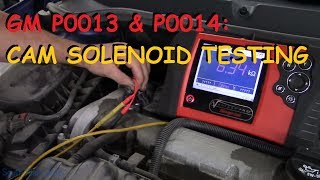
- Read the trouble codes with an OBD-II scanner to confirm P0013 is present. 🎬 Watch: A diagnostic walkthrough for P0013 and P0014 codes.
- CRITICAL: Immediately check the engine oil level and condition. If low or dirty, perform an oil and filter change, clear the codes, and re-test. This alone may solve the problem.
- Locate the two camshaft actuator solenoids on top of the engine, under the plastic engine cover. The exhaust solenoid is the rear one (closer to the firewall) and usually has a black connector. The intake is the front one, usually with a gray connector.
- Inspect the electrical connector for the exhaust solenoid for damage, corrosion, or oil intrusion.
- For a definitive test, swap the exhaust solenoid with the intake solenoid. They are identical parts. Clear the codes and drive the vehicle.
- If the code changes to P0010 (Intake 'A' Camshaft Position Actuator Circuit), the solenoid you moved is faulty and needs to be replaced.
- If the P0013 code returns, the problem lies in the wiring to the exhaust solenoid or, rarely, the ECM. Test for power and ground at the solenoid's connector.
- When removing the solenoid(s), inspect the small metal screens for sludge or debris. Clogged screens are a clear sign of an oil quality issue.
- If the solenoid was confirmed bad, replace it with a new part. It is strongly recommended by GM TSB 17-NA-098 to replace both intake and exhaust solenoids at the same time.
Parts You'll Likely Need
- Exhaust Camshaft Position Actuator Solenoid
(OEM #12655421 (superseded by 12679100))— This is the most common part to fail, causing the P0013 electrical circuit code. The part number has been updated by GM.
Trusted brands: ACDelco (OEM), Delphi, Dorman (917-216)
OEM price range: $35-$50
Aftermarket price range: $20-$40 - Intake Camshaft Position Actuator Solenoid
(OEM #12655420 (superseded by 12679099))— Though not the direct cause of P0013, it is highly recommended to replace this part at the same time as the exhaust solenoid per TSB 17-NA-098, as they wear at similar rates.
Trusted brands: ACDelco (OEM), Delphi, Dorman (917-215)
OEM price range: $35-$50
Aftermarket price range: $20-$40
Related Codes That Often Appear With This One
- P0014 — P0014 indicates 'Exhaust Camshaft Position Timing Over-Advanced or System Performance'. It often appears with P0013 because the electrical circuit fault (P0013) prevents the solenoid from working, leading to a mechanical performance/timing problem (P0014). TSB 17-NA-098 lists these codes together.
- P0010 — P0010 is the equivalent circuit code for the Intake ('A') camshaft actuator. It will appear after swapping a faulty exhaust solenoid to the intake position during diagnosis, confirming the solenoid is the problem.
- P0011 — This is the intake-side performance code, equivalent to P0014. It can be triggered by the same root cause of low/dirty engine oil that affects the entire VVT system. TSB 17-NA-098 also lists this code.
Technical Service Bulletins (TSBs) & Recalls
- TSB 17-NA-098: Addresses rough running, hesitation, stalling, and VVT codes (P0010, P0011, P0013, P0014). Recommends replacing both camshaft actuator solenoids with updated part numbers (12679099 for intake, 12679100 for exhaust) and checking for ECM software updates.
- TSB 13-06-01-003G: While not for P0013 directly, this TSB is critical context. It details the procedure for diagnosing and repairing the excessive oil consumption issue (piston and ring replacement) that is a root cause of VVT solenoid failure on this engine.
- Bulletin #18369: A manufacturer service bulletin for a related model (Buick Regal) notes that the exhaust camshaft position actuator solenoid valve may break, causing the Malfunction Indicator Lamp to illuminate and DTC P0013 to set, potentially resulting in rough engine idling or reduced engine torque.
Platform-Specific Known Issues
- General Motors issued Technical Service Bulletin (TSB) 17-NA-098 for rough running, hesitation, stalling, and codes P0010, P0011, P0013, or P0014 on 2.4L engines. The bulletin's official correction is to replace both the intake and exhaust camshaft position actuator solenoid valves and verify the ECM has the latest software calibration.
Mechanic-Grade Diagnostic Values
- Camshaft Position Actuator Solenoid Resistance — expected: 8-13 Ohms between the two pins. A new, cold ACDelco part may read around 10.7 Ohms.. Failure: An open circuit (OL / infinite resistance), a short (near zero Ohms), or a very high and fluctuating reading (e.g., >1 kOhm) indicates a failed solenoid.
- ECM Ground Circuit Resistance — expected: Less than 1.0 Ohm.. Failure: Resistance greater than 1.0 Ohm indicates a poor ground connection that can cause various electrical faults.
- Solenoid Control Circuit Voltage Check — expected: Ignition voltage must be greater than 11V for the ECM to run the diagnostic and set the code.. Failure: While specific pin voltage isn't cited, using a test light while activating the solenoid with a scan tool can confirm if the ECM is sending power and ground signals. If the light doesn't blink, a wiring or ECM driver issue is present.
Scan Tool Commands That Help
- GDS2 (GM Global Diagnostic System 2) / Tech2: Camshaft Position Actuator Test / Cam Solenoid Control — This bidirectional control allows a technician to command the solenoid on and off with the key on or engine running. It is used to verify the ECM driver and wiring are functional. If the command is sent and the engine stumbles (when running), it also confirms the phaser is mechanically responding.
- GDS2 (GM Global Diagnostic System 2): Service Programming System (SPS) — After replacing the solenoids, TSB 17-NA-098 recommends using this function to verify the Engine Control Module (ECM) has the latest software calibration, as updates may have been released to improve VVT system operation.
Wiring & Ground Locations
- Exhaust VVT Solenoid Connector — On top of the engine's valve cover, at the rear, closer to the firewall. It is typically a black plastic connector.. This is the primary connection point for the component flagged by P0013. It should be checked for corrosion, oil contamination, and a secure fit.
- PCM Ground Stud — On the engine block, tucked under the alternator and just above the A/C compressor, mounted on a stud.. A poor ground at this location can cause erratic behavior from the PCM, including false sensor codes and incorrect operation of output drivers like the VVT solenoid circuit. Resistance from the ECM connector's ground pin to the battery negative terminal should be under 1.0 ohm.
Real Owner Repair Stories
- YouTube channel 'South Main Auto Repair Avoca' (2014 Buick Verano 2.4L) — Check Engine Light with codes P0013 and P0014.
❌ Tried (didn't work) The technician immediately identified the circuit code (P0013) as the root cause of the performance code (P0014) and did not pursue other diagnoses first.
✅ What actually fixed it A multimeter test confirmed the exhaust solenoid had a resistance of over 6,000 Ohms, while the good intake solenoid was 14 Ohms. Replacing the faulty exhaust solenoid with a new ACDelco part (which tested at 10.7 Ohms) resolved the codes. The technician explicitly warned viewers not to buy Dorman brand solenoids for this repair. - Reddit user in r/AskAMechanic (2013 Chevrolet Equinox 2.4L Ecotec) — Rough idle, poor acceleration, stalling. Initially code P0010.
❌ Tried (didn't work) A general tune-up (spark plugs, filters, oil change) did not fix the symptoms., Replacing both intake and exhaust camshaft solenoids initially fixed the symptoms and cleared the P0010 code.
✅ What actually fixed it The problem returned after 300 miles, but this time with code P0013. The final fix was not posted, but the story is a valuable example of how a new aftermarket part can fail very quickly, causing the same code to reappear and potentially misleading a mechanic to suspect a more complex wiring issue.
OEM Part Supersession History
12655421→12679100— Part has been updated by the manufacturer for improved reliability or manufacturing process.12628348, 12646784→12655421— Previous part numbers that were consolidated into the 12655421 part number before its own supersession.
Model Year Variations Within This Range
- 2012-2017: The 2012-2017 Buick Verano uses the LEA variant of the 2.4L Ecotec engine. Unlike the earlier LAF engine (2010-2011 in other GM models), the LEA features variable valve timing on both the intake and exhaust camshafts. This is why a P0013 (exhaust circuit) is a relevant code for this vehicle, whereas it would not appear on an LAF engine which only had intake VVT.
Diagnostic Flowchart
Other Known Issues on This Vehicle
Issues unrelated to this code that are worth knowing about as an owner of this generation:
- Excessive Engine Oil Consumption 🔴 High — Very common, especially in 2012-2014 models. Often starts around 60,000-80,000 miles. Consumption can exceed 1 quart per 2,000 miles. (Ref: TSB 13-06-01-003G addresses this by outlining an oil consumption test and piston/ring replacement as the fix.)
- Stretched Timing Chain 🔴 High → Shop Engine Timing Chain — Often a direct consequence of the oil consumption issue, as low oil levels starve the hydraulic tensioner. Can occur from 80,000 miles onward, often signaled by a startup rattle. (Ref: TSB PIP4716F notes that a startup rattle with VVT codes can indicate a timing chain problem.)
- Clogged PCV Orifice in Intake Manifold 🟠 Medium → Shop Engine Intake Manifold — A known issue on the 2.4L Ecotec where a small, fixed orifice in the plastic intake manifold becomes clogged, leading to high crankcase pressure, increased oil consumption, and potential seal failure. (Ref: Special Coverage Adjustment (SCA) 14882 was issued for some platform mates to address this.)
- Powertrain and Electrical Malfunctions 🟠 Medium — Complaints include alternator/charging system defects, faulty control modules, and an issue where the key can be removed without the transmission being in Park (2016-2017 models). (Ref: A recall was issued for the key removal issue to replace the key cylinder lock housing.)
Used vs. New Parts: Buying Guide for This Vehicle
When a used part is the smart pick: For this specific repair, a used part from a junkyard is NOT recommended. The VVT solenoids are a known high-failure-rate item on the 2.4L Ecotec engine, and the cost of a new, warrantied OEM or quality aftermarket part is very low. The risk of purchasing a used solenoid that is already failing or near the end of its service life is extremely high.
What to inspect on the donor part:
- Not applicable as used parts are not recommended for this repair.
OEM-only on this vehicle (don't cheap out):
- Camshaft Position Actuator Solenoid
Aftermarket brands forum-validated for this vehicle:
- ACDelco (OEM)
- Delphi (often an OEM supplier)
Brands owners have reported issues with on this vehicle:
- Dorman: Experienced technicians have specifically reported premature failures with Dorman-branded VVT solenoids on this engine platform, advising against their use to avoid repeat repairs.
Real Owner Stories
Aggregated from forums and TSBs cited above. Mileages and costs reflect what owners reported in those sources.
2012 Buick Verano 2.4L — 82000 miles
Symptoms: The owner reported receiving codes P0013 and P0014 simultaneously, indicating a timing error on the exhaust side.
What fixed it: The context suggests the diagnostic path for these codes involves replacing the camshaft actuator solenoids as per TSB 17-NA-098.
Source hint: Reddit r/AskMechanics - '2012 Buick Verano Camshaft Timing Error'
2012-2014 Buick Verano 2.4L — ~70000 miles
Symptoms: Excessive engine oil consumption exceeding 1 quart per 2,000 miles, leading to VVT system faults.
What fixed it: Oil consumption test and subsequent piston and ring replacement as outlined in TSB 13-06-01-003G.
Source hint: TSB 13-06-01-003G
Related OBD-II Codes
Frequently Asked Questions
Does TSB 17-NA-098 apply to my 2012-2017 Buick Verano with the 2.4L engine?
I have a P0013 code and hear a rattling noise when I start my Verano; what does that mean?
Which solenoid do I need to replace for a P0013 code on my Verano?
Can low oil levels cause the P0013 code on a Buick Verano?
What are the specific part numbers recommended by GM for this repair?
Is there a known issue with the intake manifold that affects oil consumption and VVT codes?
Helpful Videos

We Have This Part in Stock



The information in this article is provided for general reference and educational purposes only. Vehicle specifications, procedures, and part compatibility can vary by production date, trim level, and region. Always consult your vehicle's factory service manual and verify part numbers before purchasing or performing repairs. Safety-critical components such as airbags, seat belts, and braking systems should be installed by a qualified professional.
- Buick Verano:
- 🧭 Diagnostic Flowchart
- 🎬 Helpful Videos
- 🛍️ Shop This Part
- What's Unique About the 2012-2017 Buick Verano
- Symptoms You May Notice
- Most Likely Causes
- Rare But Worth Checking
- Diagnosis Steps
- Parts You'll Likely Need
- Related Codes That Often Appear With This One
- Technical Service Bulletins (TSBs) & Recalls
- Platform-Specific Known Issues
- Mechanic-Grade Diagnostic Values
- Scan Tool Commands That Help
- Wiring & Ground Locations
- Real Owner Repair Stories
- OEM Part Supersession History
- Model Year Variations Within This Range
- Other Known Issues on This Vehicle
- Used vs. New Parts: Buying Guide for This Vehicle
- Real Owner Stories
- 2012 Buick Verano 2.4L — 82000 miles
- 2012-2014 Buick Verano 2.4L — ~70000 miles
- Related OBD-II Codes
- Frequently Asked Questions
- 🎟️ Get 5% Off