

P0013 on 2010-2016 Cadillac SRX 3.6L: Exhaust Camshaft Solenoid Circuit Causes and Fixes
On the 2010-2016 Cadillac SRX with the 3.6L V6, code P0013 is almost always caused by a failed Bank 1 Exhaust Camshaft Position Actuator Solenoid. This is a common and affordable DIY repair, with the part costing between $30 and $80. Bank 1 is the cylinder bank against the firewall.
- P0013 on your SRX almost certainly means you need a new Bank 1 (firewall side) exhaust camshaft actuator solenoid.
- Before buying parts, check your engine oil. Low or dirty oil can cause this code.
- This is a very DIY-friendly repair that requires basic tools and can be done in under 30 minutes.
- Do not replace the camshaft position sensor; the problem is with the solenoid that controls the camshaft.
- The correct OEM part number is 12655421, which has been updated by GM to part number 12679100.
What's Unique About the 2010-2016 Cadillac SRX
While P0013 is a generic code, on the GM 3.6L LFX engine, it's a very common fault pointing directly to the camshaft actuator solenoids. These components are known to fail from electrical faults internally or become clogged due to oil condition. Unlike some platforms where wiring or computer issues are more common, the fix for a P0013 on this SRX is overwhelmingly a straightforward solenoid replacement. It's important not to confuse this with the more severe timing chain issues that also affect this engine, which typically set different codes like P0008, P0009, or P0017. An isolated P0013 is almost never a timing chain problem.
Symptoms You May Notice
- Check Engine Light (Malfunction Indicator Lamp) is on
- Rough or unstable idle
- Engine hesitation or stumbling during acceleration
- Reduced engine power and torque
- Poor fuel economy
- Difficulty starting the engine
- Engine may stall
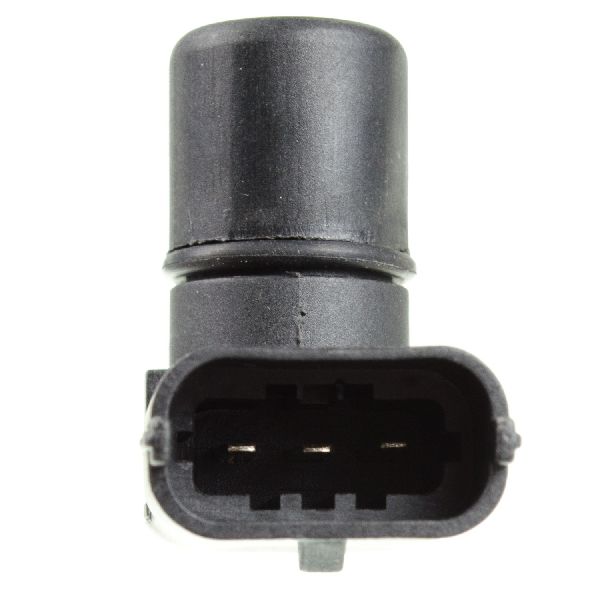
- Replacing the Camshaft Position *Sensor*. The code P0013 refers to the actuator *solenoid* circuit, not the position sensor. The sensor is what reports the position, while the solenoid is what controls it. Replacing the sensor will not fix this code.
Most Likely Causes
- Failed Bank 1 Exhaust Camshaft Position Actuator Solenoid 🔴 High Probability → Shop Engine Camshaft These solenoids operate in hot engine oil and are known to fail either electrically from internal shorts/broken wires or by becoming clogged with oil sludge and debris. This is a very common failure part on many GM vehicles.
How to confirm: The most common DIY diagnostic is to swap the Bank 1 exhaust solenoid with the Bank 1 intake solenoid. Clear the codes and drive. If the code changes to P0010 (Intake 'A' Camshaft Position Actuator Solenoid Circuit Bank 1), the original exhaust solenoid is faulty. A multimeter can also be used to test the resistance of the solenoid, which should be between 4.8-5.2 ohms at 77°F 🎬 Watch: A quick guide on diagnosing common VVT solenoid failures. (25°C).
Typical fix: Replace the Bank 1 exhaust camshaft position actuator solenoid. It is held in by a single 10mm bolt and is accessible on top of the valve cover on the firewall side of the engine. 🎬 Watch: How to identify Bank 1 and the solenoid locations.
Est. part cost: $30-$80 - Low, Old, or Dirty Engine Oil 🟡 Medium Probability The VVT system is hydraulic and relies on clean oil at the proper pressure. The 3.6L LFX can consume oil, and long intervals between oil changes can lead to sludge that clogs the fine mesh screens on the solenoids, impeding their function.
How to confirm: Check the engine oil level on the dipstick and inspect its condition. If the level is low or the oil is dark, gritty, or sludgy, it is a likely cause or contributing factor.
Typical fix: Perform an engine oil and filter change using a full synthetic 5W-30 oil that meets GM's dexos1 specification. Clear the code and see if it returns.
Est. part cost: $40-$100 - Damaged Wiring or Connector ⚪ Low Probability
How to confirm: Visually inspect the wiring harness and electrical connector for the Bank 1 exhaust solenoid. Look for signs of corrosion, oil contamination, bent pins, or frayed wires. Use a multimeter to check for continuity to ground on the low reference circuit and for proper voltage from the ECM.
Typical fix: Repair the damaged section of the wiring harness or clean/replace the electrical connector.
Est. part cost: $5-$50
Rare But Worth Checking
- Faulty Engine Control Module (ECM): This is extremely rare. The ECM should only be considered after all other possibilities, including solenoids and wiring, have been exhaustively tested and ruled out.
Diagnosis Steps
- Check the engine oil level and condition. If low or dirty, perform an oil and filter change with GM-specified 5W-30 dexos1 oil. Clear the code and re-test.
- If the oil is fine, locate the Bank 1 (firewall side) camshaft actuator solenoids. The exhaust solenoid is typically the rearmost of the two on the valve cover.
- Inspect the electrical connector and wiring to the exhaust solenoid for any damage, corrosion, or oil saturation.
- To confirm a bad solenoid, swap the exhaust solenoid with the intake solenoid on the same bank. They are identical parts.
- Clear the codes with a scanner and drive the vehicle. If the code changes to P0010, the solenoid you moved is bad.
- If the code P0013 returns after the swap, the issue is likely in the wiring or, very rarely, the ECM. Test the harness for continuity and proper voltage.
- Replace the faulty solenoid with a new part. It is recommended to apply fresh engine oil to the 🎬 See this step-by-step solenoid replacement guide for GM engines. O-rings before installation and ensure the mounting surface is clean.
- Clear the code and verify the repair.
Parts You'll Likely Need
- Exhaust Camshaft Position Actuator Solenoid (Bank 1)
(OEM #12655421, superseded by 12679100)— This is the most common failure point for code P0013 on this engine, due to either internal electrical failure or clogging. The original part number 12655421 has been superseded by 12679100.
Trusted brands: ACDelco (GM Genuine), Delphi, Dorman
OEM price range: $40-$70
Aftermarket price range: $25-$50
Related Codes That Often Appear With This One
- P0010 — Intake 'A' Camshaft Position Actuator Solenoid Circuit (Bank 1). This can appear if the intake solenoid is also failing or if a diagnostic swap was performed.
- P0014 — Exhaust 'B' Camshaft Position - Timing Over-Advanced (Bank 1). This is a performance code, whereas P0013 is a circuit code. They can appear together if the solenoid is failing in a way that affects both its electrical integrity and its mechanical function.
Technical Service Bulletins (TSBs) & Recalls
- 17-NA-098: Mentions that DTCs P0010, P0013, P0011, or P0014 may be caused by camshaft position actuator solenoid valve failure and recommends replacing both solenoids on the affected bank. It also advises verifying the ECM has the latest software calibration after replacement.
Platform-Specific Known Issues
- GM issued a special coverage bulletin (#15824) for some other models with similar engines for this exact code, indicating a known issue of internal broken wires in the solenoid. While not explicitly for the SRX LFX, it highlights the prevalence of this specific part failure in the GM family.
- The 3.6L LFX engine can be prone to timing chain stretch, but this typically sets codes like P0008, P0009, P0017, or P0021. An isolated P0013 is almost never indicative of a timing chain problem.
Mechanic-Grade Diagnostic Values
- Camshaft Position (CMP) Actuator Solenoid Resistance — expected: 4.8-5.2 ohms at 25°C (77°F). Failure: A reading outside this range, or an open/infinite reading, indicates a failed solenoid.
- Solenoid Low Reference Circuit to Ground — expected: Less than 1.0 ohm. Failure: Greater than 1.0 ohm indicates an open or high resistance in the ground circuit between the solenoid connector and the ECM.
- Solenoid Control Circuit Voltage (with test lamp) — expected: Test lamp connected between control and ground circuits should turn ON and OFF when commanding the solenoid from 0-20 degrees with a scan tool.. Failure: If the lamp does not illuminate or does not flash, it indicates a problem in the control circuit wiring or the ECM driver.
Scan Tool Commands That Help
- GDS2 / Tech2 (or equivalent professional scan tool): CMP Actuator Solenoid Output Control — This bidirectional test allows a technician to command the solenoid to a specific angle (e.g., 20 degrees) while the engine is running. If the engine stumbles or stalls, it confirms the solenoid is mechanically functioning and oil passages are clear. If there is no change in engine operation, it points to a failed solenoid, a clog, or a circuit issue.
- GDS2 / Tech2 (or equivalent professional scan tool): CMP Variance (Live Data) — While performing the output control test, monitoring the 'CMP Variance' PID shows the difference between the desired and actual camshaft angle. The value should increment for a few seconds and then return to zero. If it does not, or if it stays high, it indicates a problem with the VVT system's response.
Wiring & Ground Locations
- Bank 1 Exhaust CMP Actuator Solenoid Connector — On the Bank 1 (firewall side) valve cover, the rearmost of the two VVT solenoid connectors.. This is the primary connection point for testing the solenoid's resistance and checking for voltage/ground from the ECM. Pin A is the low reference (ground) circuit, and Pin B is the control circuit.
- Engine Harness Grounds — The LFX engine family has three smaller ground connections for the engine wiring harness located on the cylinder heads, in addition to the main battery-to-block ground.. A loose or corroded ground on the cylinder head can directly cause high resistance in the low reference circuit for the VVT solenoids, leading to intermittent or persistent circuit codes like P0013.
Real Owner Repair Stories
- YouTube Comment (Chevy Colorado with 3.6L engine (platform mate)) — Check Engine Light with code P0019 (related VVT code).
❌ Tried (didn't work) Preparing to replace the VVT solenoids.
✅ What actually fixed it The owner noticed the vehicle voltage on the dash display was low (12.6V). After cleaning the battery terminals, the voltage returned to normal (14.7V), and the check engine light went out and did not return. This suggests that low system voltage can trigger VVT circuit codes.
OEM Part Supersession History
12628348, 12646784, 12655421→12679100— GM regularly updates service parts to integrate new materials and technologies for improved durability and performance. The original solenoids were known for internal wire breakage.
Heads up: The intake and exhaust solenoids are physically identical and interchangeable for diagnostic purposes, though they have different part numbers for ordering (Intake is 12679099). All part numbers for the exhaust solenoid are cross-compatible.
Model Year Variations Within This Range
- 2012-2016: The 3.6L LFX engine was introduced in the SRX for the 2012 model year, replacing the 3.0L LF1. The LFX features redesigned cylinder heads with integrated exhaust manifolds, a composite intake manifold, and updated timing components compared to the earlier LLT engine found in other GM models. These changes mean that some parts, like exhaust manifolds, are not interchangeable with earlier 3.6L versions.
Diagnostic Flowchart
Other Known Issues on This Vehicle
Issues unrelated to this code that are worth knowing about as an owner of this generation:
- Premature Timing Chain Stretch 🔴 High → Shop Engine Timing Chain — Common on 3.0L and 3.6L engines, especially those with extended oil change intervals. Often appears between 70,000 and 120,000 miles. Sets codes P0008, P0017. (Ref: Multiple TSBs exist, e.g., #12-06-01-009G, and GM had special coverage programs for some models.)
- Headlight Seal Failure and Moisture Intrusion 🟠 Medium — Very common across all model years. Seals fail, allowing water/condensation into the headlight assembly, which can destroy the expensive HID ballast and bulb. (Ref: Subject of multiple TSBs (e.g., 01-08-42-001K) and class-action lawsuits.)
- Cadillac CUE Infotainment System Failure 🟠 Medium — Extremely common. The touchscreen becomes unresponsive, delaminates, or registers 'ghost' touches, making climate, audio, and navigation controls unusable. (Ref: GM issued extended warranty coverage for some vehicles under program #N182169181.)
- Rear Suspension Toe Link Failure 🔴 High — Affects all 2010-2015 models. The adjustable rear toe link could loosen or separate, causing a loss of vehicle control. (Ref: NHTSA Campaign #21V473000 (GM Recall #N212340980). The fix involves replacing the adjustable links with non-adjustable ones.)
- EVAP Purge Valve Failure 🟡 Low — A very common failure item on the 3.6L engine, causing a P0496 code. The primary symptom is difficulty starting the engine immediately after refueling.
Used vs. New Parts: Buying Guide for This Vehicle
When a used part is the smart pick: Almost never. Given the low cost of new, high-quality aftermarket solenoids (around $30-$50) and the fact that failure is due to internal electrical faults or sludge accumulation, installing a used solenoid is a significant risk for a small savings. A repeat failure is highly likely.
Donor-vehicle mileage cap: roughly under 30000 miles for the part to have meaningful remaining life.
What to inspect on the donor part:
- Verify the donor vehicle had documented, regular oil changes.
- Inspect the screens on the used solenoid; they must be perfectly clean with no signs of sludge or debris.
- Test the resistance of the used solenoid with a multimeter before purchase; it must be within the 4.8-5.2 ohm specification.
OEM-only on this vehicle (don't cheap out):
- Engine Control Module (ECM)
Aftermarket brands forum-validated for this vehicle:
- ACDelco (GM Genuine or Professional series)
- Delphi
Brands owners have reported issues with on this vehicle:
- Unnamed, no-brand parts from online marketplaces should be avoided, as their internal coil quality and durability are questionable.
Real Owner Stories
Aggregated from forums and TSBs cited above. Mileages and costs reflect what owners reported in those sources.
2010-2016 Cadillac SRX 3.6L V6
Symptoms: Owners on cadillacforums.com reported the Check Engine Light appearing with P0013. Many emphasized that the repair was a simple DIY task.
What fixed it: Replacing the Bank 1 exhaust solenoid resolved the issue.
Source hint: cadillacforums.com threads regarding second-gen SRX P0013
2015 Chevrolet Traverse 3.6L LFX
Symptoms: The vehicle exhibited symptoms common to the 3.6L engine platform, requiring access to the firewall side (Bank 1) of the engine to reach the actuator.
What fixed it: Replacement of the camshaft position actuator solenoid.
Source hint: YouTube - '2015 Chevy Traverse How to fix code p0013'
2010-2016 Cadillac SRX 3.6L V6 — ~95000 miles
Symptoms: Timing chain stretch issues often appearing between 70,000 and 120,000 miles, though P0013 specifically is usually the solenoid.
What fixed it: Replacing the solenoid is the primary fix for P0013, whereas timing chain issues require much more extensive work.
Source hint: Vehicle_specific_issues and known_issues regarding 3.6L timing chain and solenoid prevalence
Related OBD-II Codes
Frequently Asked Questions
Does TSB 17-NA-098 apply to my Cadillac SRX if I have a P0013 code?
Can I swap parts to diagnose P0013 on my 3.6L LFX engine?
Is P0013 a sign that my SRX's timing chain has stretched?
Where is the Bank 1 exhaust solenoid located on the SRX 3.6L?
What kind of oil should I use to prevent VVT issues like P0013 in my Cadillac?
Is there a special coverage bulletin for the P0013 solenoid failure?
Helpful Videos


We Have This Part in Stock


The information in this article is provided for general reference and educational purposes only. Vehicle specifications, procedures, and part compatibility can vary by production date, trim level, and region. Always consult your vehicle's factory service manual and verify part numbers before purchasing or performing repairs. Safety-critical components such as airbags, seat belts, and braking systems should be installed by a qualified professional.
- Cadillac SRX:
- 🧭 Diagnostic Flowchart
- 🎬 Helpful Videos
- 🛍️ Shop This Part
- What's Unique About the 2010-2016 Cadillac SRX
- Symptoms You May Notice
- Most Likely Causes
- Rare But Worth Checking
- Diagnosis Steps
- Parts You'll Likely Need
- Related Codes That Often Appear With This One
- Technical Service Bulletins (TSBs) & Recalls
- Platform-Specific Known Issues
- Mechanic-Grade Diagnostic Values
- Scan Tool Commands That Help
- Wiring & Ground Locations
- Real Owner Repair Stories
- OEM Part Supersession History
- Model Year Variations Within This Range
- Other Known Issues on This Vehicle
- Used vs. New Parts: Buying Guide for This Vehicle
- Real Owner Stories
- 2010-2016 Cadillac SRX 3.6L V6
- 2015 Chevrolet Traverse 3.6L LFX
- 2010-2016 Cadillac SRX 3.6L V6 — ~95000 miles
- Related OBD-II Codes
- Frequently Asked Questions
- 🎟️ Get 5% Off