

P0013 on 2012-2015 Chevrolet Captiva Sport 3.0L: Exhaust Cam Actuator Circuit Fixes
On the 3.0L V6 Captiva Sport, code P0013 almost always points to a faulty Bank 1 Exhaust Camshaft Actuator Solenoid, often caused by low or dirty oil. Bank 1 is the firewall side. Expect to pay $40-$80 for an OEM solenoid and 1-2 hours of labor due to tight access. Before replacing parts, check your oil level and condition, as this is a primary cause.
- P0013 on this vehicle means there's an electrical problem with the exhaust VVT solenoid on the rear cylinder bank (Bank 1).
- Before buying any parts, check your engine oil. Low or dirty oil is a primary cause of this code.
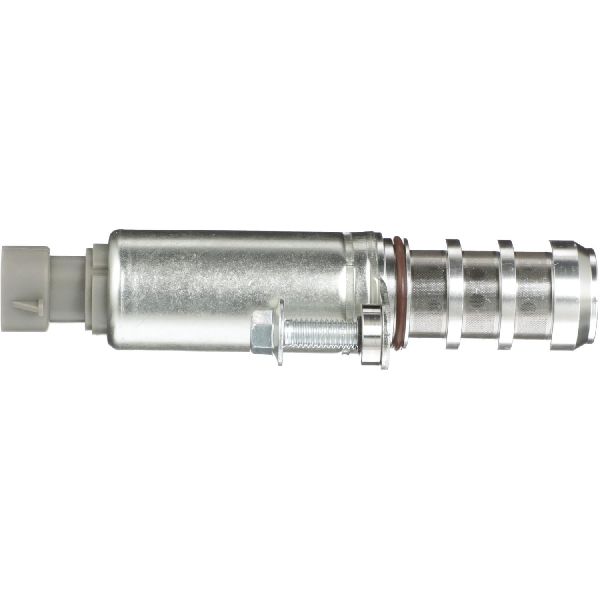
- The most likely failed part is the VVT solenoid itself. The OEM part number is 12636175.
- A good DIY diagnostic is to swap the exhaust and intake solenoids on Bank 1. If the code changes to P0010, you've confirmed the solenoid is bad.
- Be prepared for a difficult repair if doing it yourself; the Bank 1 solenoids are in a very tight space against the firewall.
What's Unique About the 2012-2015 Chevrolet Captiva Sport
The Chevrolet Captiva Sport with the 3.0L V6 LF1 engine is a platform mate to the Chevrolet Equinox, GMC Terrain, and Cadillac SRX, all of which share the GM 'High Feature' V6 engine architecture and are known for VVT system issues. The primary cause is often not just electrical failure but the system's extreme sensitivity to oil level and quality. While these engines are also infamous for stretched timing chains (often indicated by codes like P0008 or P0017), a circuit-specific code like P0013 points overwhelmingly to the solenoid itself 🎬 Watch: A detailed breakdown of the P0013 circuit code or its wiring, frequently exacerbated by degraded oil or low oil levels. The Bank 1 (rear bank) solenoids are significantly harder to access than Bank 2 due to the transverse engine layout, which can increase labor time and cost for this repair.
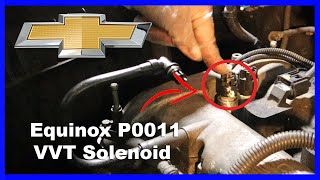
🎬 See this walkthrough for replacing solenoids on the 3.0L V6Symptoms You May Notice
- Check Engine Light is on
- Rough or unstable idle
- Engine hesitation or stumbling on acceleration
- Reduced fuel economy
- Loss of engine power
- Engine stalling
- Rattling noise from the engine, especially on startup
- Replacing the Camshaft Position Sensor. The code P0013 specifically points to the actuator *circuit*, not the sensor. The sensor is often working correctly by reporting the timing anomaly caused by the faulty actuator solenoid. Replacing the sensor will not fix a P0013 code.
Most Likely Causes
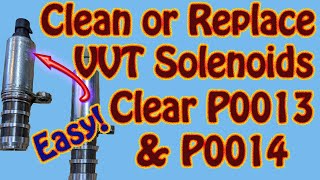
- Faulty Bank 1 Exhaust Camshaft Actuator Solenoid 🔴 High Probability → Shop Engine Camshaft These solenoids are a very common failure point on GM's High Feature V6 engines. They can fail electrically (internal open or short) or become clogged with sludge and debris from the engine oil, impeding their mechanical function.
How to confirm: Swap the Bank 1 exhaust solenoid with the Bank 1 intake solenoid (they are identical parts). Clear the codes and drive. If the code changes to P0010 ('A' Camshaft Position Actuator Circuit), the solenoid is confirmed faulty. Alternatively, test the solenoid's resistance with a multimeter; it should be between 8 and 13 ohms. You can also apply 12V directly to the solenoid's pins to see if it 'clicks' open and closed.
Typical fix: Replace the Bank 1 exhaust camshaft actuator solenoid. It is highly recommended to use a genuine GM/ACDelco part and to replace the engine oil and filter simultaneously.
Est. part cost: $40-$80 - Low or Dirty Engine Oil 🔴 High Probability The VVT system is hydraulic and requires clean oil at the correct pressure to function. The LF1 engine, like other High Feature V6s, is known for oil consumption. Extended oil change intervals allow sludge to build up, which clogs the fine mesh screens on the solenoids, causing them to stick or respond slowly.
How to confirm: Check the engine oil level on the dipstick. If it's below the 'full' mark, top it off. Inspect the oil's color and consistency; if it is dark, thick, or sludgy, it's a likely contributor. Many owners report these codes appearing when the oil is even a quart low.
Typical fix: Perform an engine oil and filter change using a full synthetic 5W-30 oil that meets GM's dexos1 specification. Clear the codes and drive the vehicle to see if P0013 returns. This simple step resolves the issue in many cases.
Est. part cost: $50-$100 - Damaged Wiring or Poor Connection 🟡 Medium Probability The wiring harness for the Bank 1 solenoid is routed in a tight, high-heat area at the rear of the engine bay, making it susceptible to heat-related brittleness, damage, and oil contamination over time. A manufacturer service bulletin for similar GM models, Bulletin #GCUS-9-2816, notes that P0013 may set specifically as a result of an internal broken wire in the actuator solenoid valve control circuit.
How to confirm: Unplug the connector and visually inspect it and the wiring harness leading to the Bank 1 exhaust solenoid. Look for any frayed or broken wires, corrosion on the pins, oil saturation inside the connector, or a loose fit.
Typical fix: Repair the damaged section of wiring. If the connector itself is damaged or oil-soaked, replace the connector pigtail. Ensure the connection is clean, dry, and secure.
Est. part cost: $10-$30
Rare But Worth Checking
- Stretched Timing Chain: → Shop Engine Timing Chain While a major known issue on the LF1 engine, a stretched timing chain typically triggers correlation codes like P0008, P0009, P0016, P0017, P0018, or P0019. If you only have P0013, the timing chain is not the primary suspect. However, if P0013 appears with these other codes, the timing chain system is the root problem.
- Faulty Engine Control Module (ECM): This is extremely rare. The ECM's solenoid driver circuit could fail, but this should only be considered after all other possibilities (solenoid, wiring, oil) have been exhaustively ruled out by a professional technician.
Diagnosis Steps
- Verify the code with an OBD-II scanner. Note any other codes present, especially P0014 or timing correlation codes (P0008, P0017).
- Check Engine Oil First. This is the most critical and easiest step. Check the oil level and condition. If it is low, dirty, or past its change interval, perform an oil and filter change with full synthetic 5W-30 dexos-approved oil. Clear codes and re-test. This alone may solve the problem.
- Locate the Bank 1 (firewall side) camshaft actuator solenoids. There are two: intake ('A') and exhaust ('B'). The exhaust solenoid is typically the one further towards the outside of the cylinder head.
- Inspect the electrical connector and wiring going to the exhaust solenoid. Check for damage, corrosion, or oil saturation. Ensure the connector is fully seated.
- If wiring appears intact, perform a solenoid swap. Unplug and unbolt both the intake and exhaust solenoids on Bank 1. Swap their positions (they are identical).
- Clear the codes and drive the vehicle. If the code changes to P0010 (Intake Camshaft Position Actuator Circuit), the solenoid you moved is confirmed to be faulty and needs replacement.
- If the P0013 code returns after the swap, the problem is not the solenoid itself but is likely in the wiring harness for that specific circuit or, rarely, the ECM. At this point, use a multimeter to test for 12V power and ground at the connector with the key on, and check for continuity between the connector and the ECM.
- If the solenoid is confirmed bad, replace it with a new, high-quality part (ACDelco is recommended). It's wise to replace the engine oil and filter at the same time to give the new part a clean environment to operate in.
Parts You'll Likely Need
- Engine Variable Valve Timing (VVT) Solenoid
(OEM #12636175)— This is the component that fails electrically or gets clogged, directly causing the P0013 circuit code. On the 3.0L V6, the intake and exhaust solenoids are the same part.
Trusted brands: ACDelco (GM Genuine), Delphi, Dorman (917-219)
OEM price range: $55-$85
Aftermarket price range: $25-$50
Related Codes That Often Appear With This One
- P0014 — P0014 indicates 'Exhaust Camshaft Position Timing Over-Advanced'. A malfunctioning solenoid circuit (P0013) can cause the camshaft to get stuck in a position that is over-advanced relative to what the ECM has commanded, triggering P0014. It's common to see both codes together.
- P0010 — This code for the 'Intake Camshaft Position Actuator Circuit (Bank 1)' might appear if you are using the swap-and-test diagnostic method. If you swap the suspected bad exhaust solenoid with the intake solenoid and P0010 appears, you have confirmed the solenoid is the faulty component.
Technical Service Bulletins (TSBs) & Recalls
- Bulletin #GCUS-9-2816: This manufacturer bulletin notes that P0013 (Exhaust Camshaft Position Actuator Solenoid Valve Control Circuit) may set as a result of an internal broken wire.
- PIP5096C: Addresses related VVT performance codes (P0011, P0014, P0021, P0024) on this engine. It suggests that if no other issue is found, replacing the solenoid with an updated service part may be necessary, confirming solenoids are a known issue. It advises against simply swapping solenoids as a final repair.
- 12-06-01-009D: While focused on timing chain codes (P0008, etc.), this bulletin lists the 2012 Captiva and 2010-2012 Equinox/Terrain with the LF1 engine as being affected by timing chain issues, reinforcing the importance of oil maintenance highlighted by this code.
Platform-Specific Known Issues
- The GM 3.0L V6 engine is known for premature timing chain wear, which can be exacerbated by running the engine with low or dirty oil. While P0013 is a solenoid code, it can be an early warning of poor oil condition that could lead to more severe timing chain problems.
- Accessing the Bank 1 (firewall side) solenoids is significantly more difficult than accessing the Bank 2 (radiator side) solenoids, requiring removal of the engine cover and air intake ducting for better access. On some platform mates, removal of the engine mount is required for clearance.
- TSB PIP5096C addresses related performance codes (P0011, P0014, P0021, P0024) and advises technicians that if no other cause is found, a new 'service' solenoid from a different supplier should be installed, acknowledging a potential issue with the original parts. It specifically warns *not* to just swap solenoids from another location as a permanent fix.
Mechanic-Grade Diagnostic Values
- Camshaft Position Actuator Solenoid Resistance — expected: 8 to 13 Ohms at ~68°F (20°C).. Failure: An open circuit (infinite resistance), a short (near 0 ohms), or a fluctuating reading when wiggling the connector pins indicates a faulty solenoid.
- VVT Solenoid Harness Connector Voltage (Key On, Engine Off) — expected: One of the two pins should show battery voltage (~12V) when tested against a good engine ground.. Failure: No voltage suggests a problem with the power supply circuit, such as a blown fuse or a break in the wire.
- VVT Solenoid Control Circuit Voltage (Key On, Engine Off) — expected: The control circuit (the non-power wire) is pulled-up to a low current voltage and should read approximately 1.5-4.5 V.. Failure: Voltage equal to battery voltage indicates a short to voltage. A reading of 0V could indicate a short to ground.
- Scan Tool Live Data: Desired vs. Actual Camshaft Angle — expected: When the engine is running, the 'Desired' and 'Actual' camshaft position angles for Bank 1 Exhaust should closely match each other as RPM changes.. Failure: A large discrepancy between the desired and actual values, or the actual value being stuck at 0 or another number, indicates the phaser is not moving as commanded. This confirms a performance issue, often caused by the circuit fault (P0013).
Scan Tool Commands That Help
- GDS2 / Tech2 (or equivalent high-end scan tool): Camshaft Position Actuator Solenoid Control / Actuation Test — This bidirectional command allows the technician to manually command the solenoid ON and OFF while the engine is running. You can monitor the 'Desired' vs 'Actual' cam angle PIDs to see if the camshaft responds. If the angle changes when commanded, the solenoid and phaser are mechanically functional, pointing the diagnosis toward an intermittent wiring or ECM issue. If it doesn't respond, it confirms a failure in the solenoid, wiring, or oil flow.
Wiring & Ground Locations
- ECM (K20) — Located in the engine compartment, typically near the driver's side strut tower or firewall on this platform.. The ECM provides the power and control signal to the VVT solenoid. All circuit tests ultimately lead back to the ECM's connectors.
- Bank 1 Exhaust VVT Solenoid Connector — On the Bank 1 (firewall side) cylinder head. It is a 2-pin connector attached to the top of the solenoid.. This is the primary point for testing. Pin 1 is the control circuit from the ECM, and Pin 2 is the ignition voltage supply.
- G102 / G103 / G110 — These are major engine and body ground points located on the engine block, cylinder head, or on the cowl/frame rail in the engine bay.. A poor engine ground can cause erratic voltage and unpredictable behavior in various electronic components, including the ECM's driver circuits. While not a direct cause of a specific circuit code, verifying major grounds are clean and tight is a crucial step in diagnosing any electrical fault.
Real Owner Repair Stories
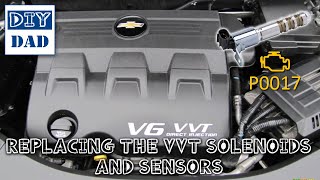
- YouTube user 'Ask DIY Dad' (Chevrolet Equinox with 3.0L V6 (platform mate)) — Check Engine Light with code P0017 (a correlation code, but diagnosis is related).
❌ Tried (didn't work) Shop replaced one solenoid for $500, which did not fix the problem.
✅ What actually fixed it The owner replaced the remaining original solenoids AND the camshaft position *sensors* himself. After replacing the sensors, the code was resolved. This suggests that while P0013 is a circuit code for the solenoid, a failing sensor can sometimes contribute to or be part of a larger system-wide VVT problem that gets misdiagnosed. - NHTSA ODI #11104701 — An owner reported not getting the amount of power they should receive when pressing on the gas, believing the timing was off due to a P0013 actuator circuit issue.
- NHTSA ODI #11184298 — One owner noted that after replacing a solenoid for P0013, the code returned in less than a week along with a P0014 code.
Diagnostic Flowchart
Other Known Issues on This Vehicle
Issues unrelated to this code that are worth knowing about as an owner of this generation:
- Premature Timing Chain Stretch 🔴 High → Shop Engine Timing Chain — Common, especially on vehicles with over 70,000 miles or with a history of extended oil change intervals. Often presents as a rattle on startup and codes P0008, P0017. (Ref: TSB 12-06-01-009D, Special Coverage Adjustment 11340C (expired))
- Excessive Oil Consumption 🟠 Medium — Frequently reported by owners, sometimes as much as 1 quart every 1,000-2,000 miles. Caused by piston ring design and PCV system issues. NHTSA ODI #11495760 describes a significant oil leak of approximately 2 drops per second where the engine light was on for a week prior with codes P0013 and P0014.
- Transmission Failure / Rough Shifting 🟠 Medium — Some owners report early transmission failures or issues like rough shifting and slipping, sometimes requiring complete replacement before 100,000 miles.
- Carbon Buildup on Intake Valves 🟡 Low — As a direct-injection (DI) engine, the LF1 is susceptible to carbon buildup on the back of the intake valves over time, which can cause rough idle and misfires at higher mileage (80,000+ miles).
- Wheel Bearing Failure 🟡 Low — Some owner reports indicate premature failure of front wheel bearings, sometimes multiple times on the same vehicle.
Used vs. New Parts: Buying Guide for This Vehicle
When a used part is the smart pick: A used wiring harness pigtail from a junkyard is a perfectly acceptable and cost-effective fix if only the connector is damaged. A used Engine Control Module (ECM) can also be a viable option, but it MUST be professionally reprogrammed with the vehicle's VIN.
Donor-vehicle mileage cap: roughly under 80000 miles for the part to have meaningful remaining life.
What to inspect on the donor part:
- For a VVT solenoid, avoid any from an engine that has visible sludge buildup under the oil cap.
- For a wiring connector, ensure the plastic is not brittle and the locking tab is intact. Check for corrosion or oil saturation on the pins.
- For an ECM, check that the casing is not damaged and there are no signs of water intrusion around the connectors.
OEM-only on this vehicle (don't cheap out):
- Engine Variable Valve Timing (VVT) Solenoid
Aftermarket brands forum-validated for this vehicle:
- ACDelco (GM Genuine)
- Delphi
Brands owners have reported issues with on this vehicle:
- Unbranded, 'white-box' solenoids from online marketplaces are frequently reported to fail quickly or be dead-on-arrival.
Real Owner Stories
Aggregated from forums and TSBs cited above. Mileages and costs reflect what owners reported in those sources.
2010-2012 Chevrolet Equinox 3.0L LF1 V6
Symptoms: The owner experienced recurring P0013 and P0014 codes. The vehicle was documented to have VVT system vulnerabilities linked to oil condition.
What fixed it: Replacing the solenoids with updated service parts as suggested by TSB PIP5096C, rather than just swapping them between positions.
Source hint: TSB PIP5096C and platform-mate data for 2010-2012 Chevrolet Equinox / GMC Terrain
2011 Chevrolet Equinox 2.4L
Symptoms: Recurring P0013/P0014 codes even after replacing solenoids; owner was confused between actuator solenoid codes and sensor codes.
What fixed it: The discussion reinforced that P0013 specifically points to the solenoid circuit rather than the camshaft position sensor.
Source hint: SOLVED! - CHEVY EQUINOX Camshaft Position Sensor Code - GMTNation
2012 Chevrolet Captiva Sport 3.0L V6
Symptoms: Rattling noise from the engine on startup, rough idle, and reduced fuel economy with a Check Engine Light.
What fixed it: Replacing the Bank 1 exhaust camshaft actuator solenoid with a genuine GM/ACDelco part and performing a full synthetic oil change.
Source hint: Article Context - Common Causes and Symptoms for LF1 engine
NHTSA Reported Repair Costs
Symptoms: Check engine light on with codes P0010 and P0013.
What fixed it: According to NHTSA ODI #11403341, an owner was quoted between $1,200 and $1,500 to service the intake and exhaust camshaft position actuator circuits.
Source hint: NHTSA ODI #11403341
Related OBD-II Codes
Frequently Asked Questions
I have a 2012 Chevrolet Captiva Sport with the 3.0L V6; does TSB 12-06-01-009D apply to my vehicle?
Can I just swap the solenoids on my LF1 engine to fix the P0013 code permanently?
Why is it so much harder to reach the Bank 1 solenoids on my Captiva Sport compared to Bank 2?
What specific oil should I use in my 2012-2015 Captiva 3.0L to prevent VVT codes like P0013?
Is P0013 a sign that my timing chain is about to fail?
Helpful Videos

We Have This Part in Stock


The information in this article is provided for general reference and educational purposes only. Vehicle specifications, procedures, and part compatibility can vary by production date, trim level, and region. Always consult your vehicle's factory service manual and verify part numbers before purchasing or performing repairs. Safety-critical components such as airbags, seat belts, and braking systems should be installed by a qualified professional.
- Chevrolet Captiva Sport:
- 🧭 Diagnostic Flowchart
- 🎬 Helpful Videos
- 🛍️ Shop This Part
- What's Unique About the 2012-2015 Chevrolet Captiva Sport
- Symptoms You May Notice
- Most Likely Causes
- Rare But Worth Checking
- Diagnosis Steps
- Parts You'll Likely Need
- Related Codes That Often Appear With This One
- Technical Service Bulletins (TSBs) & Recalls
- Platform-Specific Known Issues
- Mechanic-Grade Diagnostic Values
- Scan Tool Commands That Help
- Wiring & Ground Locations
- Real Owner Repair Stories
- Other Known Issues on This Vehicle
- Used vs. New Parts: Buying Guide for This Vehicle
- Real Owner Stories
- 2010-2012 Chevrolet Equinox 3.0L LF1 V6
- 2011 Chevrolet Equinox 2.4L
- 2012 Chevrolet Captiva Sport 3.0L V6
- NHTSA Reported Repair Costs
- Related OBD-II Codes
- Frequently Asked Questions
- 🎟️ Get 5% Off