

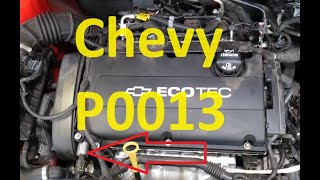
P0013 on 2014-2019 Chevy Silverado 1500 5.3L: Exhaust Cam Actuator Circuit Causes and Fixes
For a 2014-2019 Silverado 1500 with a 5.3L engine, code P0013 is most often caused by a faulty exhaust camshaft position actuator solenoid on the driver's side (Bank 1). Before replacing parts, check your engine oil level and condition. A new ACDelco solenoid costs around $30-$60 and is a DIY-friendly fix.
- P0013 is an electrical circuit code for the driver's side exhaust VVT solenoid.
- Always check your engine oil first. Low, old, or incorrect (non-0W-20) oil is a primary cause of this code.
- The most likely failed part is the VVT solenoid itself. It is relatively inexpensive and accessible for DIY replacement.
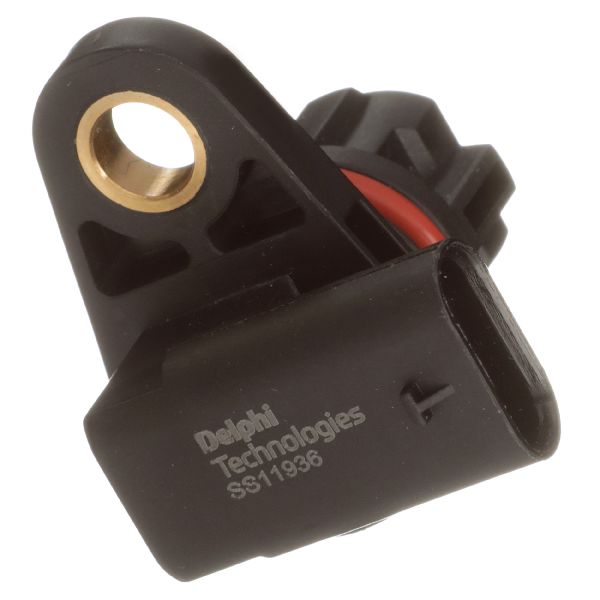
- Do not confuse the actuator solenoid with the camshaft position sensor; replacing the sensor will not fix this code.
- If you also have a P0014 code, it further points to the solenoid as the root cause.
- A definitive, no-cost diagnostic is to swap the exhaust solenoid with the intake solenoid on the same bank and see if the code changes to P0010.
What's Unique About the 2014-2019 Chevrolet Silverado 1500
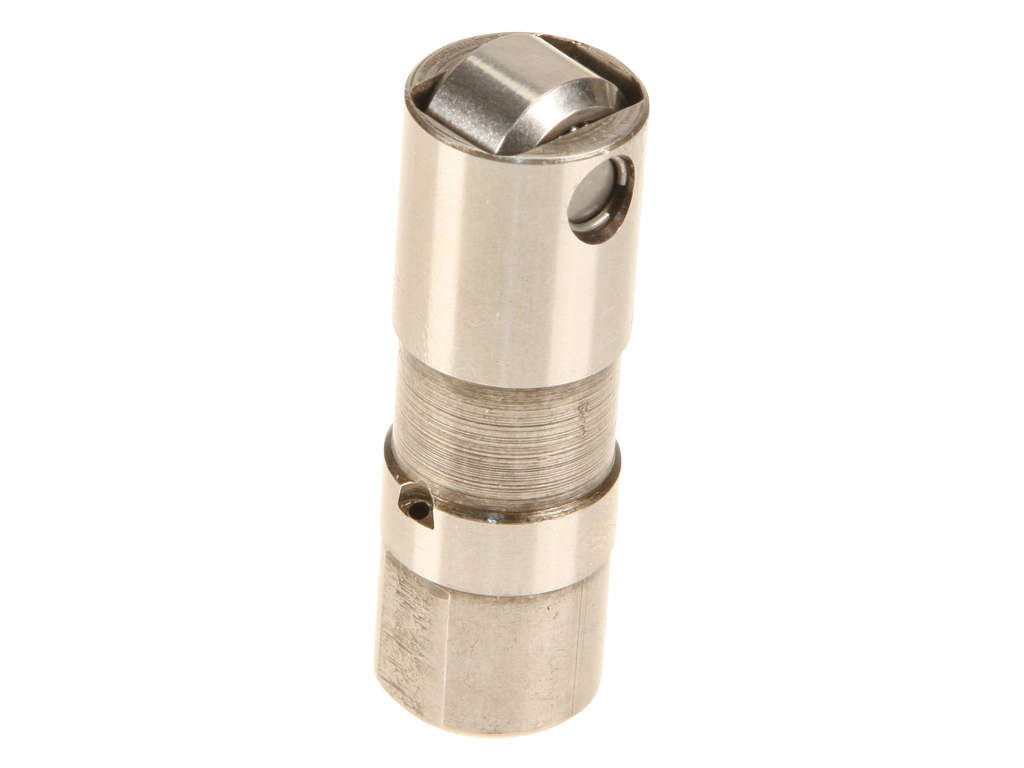
The Gen V 5.3L L83 engine in these Silverado trucks has a Variable Valve Timing (VVT) system that is highly dependent on clean, correct-viscosity engine oil (specifically 0W-20 Dexos-rated synthetic) to function properly. Furthermore, these engines are known for potential issues with Active Fuel Management (AFM) lifters, which can fail and introduce metallic debris into the oiling system. This debris can easily clog the fine mesh screens on the VVT solenoids, leading to oil starvation and triggering codes like P0013.
🎬 Watch: A quick overview of P0013 causes and fixes.Generation note: The 2014-2019 year range primarily covers the K2XX generation of the Silverado 1500. However, the 2019 model year was a split, with Chevrolet also introducing the new T1XX generation. This guide is specific to the K2XX models (including the 2019 'LD' or 'Limited' model) equipped with the 5.3L L83 V8 engine.
Symptoms You May Notice
- Check Engine Light is on
- Rough engine idle
- Engine hesitation or stalling, especially at low speeds
- Reduced engine power and acceleration
- Decreased fuel economy
- Engine makes a ticking or rattling noise
- Replacing the camshaft position sensor. This code is for the actuator solenoid circuit, not the sensor itself. The sensor is reporting correctly that there is a problem with the control system.
Most Likely Causes
- Faulty Bank 1 Exhaust Camshaft Position Actuator Solenoid 🔴 High Probability → Shop Engine Camshaft The solenoids contain fine mesh screens that can become clogged with oil sludge or debris over time, especially from AFM lifter issues. They can also fail internally from an electrical short or open circuit, which is common.
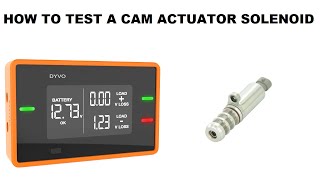
How to confirm: Test the solenoid's resistance with a multimeter (typically 8-13 ohms for GM). You can also apply 12V power and a ground to the solenoid's terminals; a healthy solenoid will produce an audible 'click'. A definitive test is swapping it with the intake solenoid on the same bank (the L83 uses four identical solenoids). If the code changes to P0010 (Intake 'A' Camshaft Position Actuator Circuit), the solenoid is confirmed bad.
Typical fix: Replace the Bank 1 (driver's side) exhaust camshaft position actuator solenoid. It is recommended by some TSBs to replace both intake and exhaust solenoids on the affected bank at the same time.
Est. part cost: $30 - $60 - Low, Dirty, or Incorrect Viscosity Engine Oil 🔴 High Probability The L83's VVT system is hydraulic and extremely sensitive to oil pressure and cleanliness. Using oil other than the specified 0W-20 Dexos-rated synthetic can cause the solenoids to respond slowly or stick, triggering a circuit fault.
How to confirm: Check the engine oil dipstick. The level should be full and the oil should be a clean, amber color, not black and sludgy.
Typical fix: Perform an engine oil and filter change using a full synthetic 0W-20 oil that meets GM's Dexos specification and a quality oil filter.
Est. part cost: $50 - $100 - Wiring or Connector Damage 🟡 Medium Probability The wiring harness to the solenoid can become brittle from heat cycles or damaged, leading to an open or short circuit. GM has also noted issues with harnesses chafing on engine components.
How to confirm: Visually inspect the electrical connector and wiring going to the Bank 1 exhaust VVT solenoid. Look for frayed wires, corrosion on the pins, or a loose connection. Gently pull on the individual wires at the connector to ensure they are secure.
Typical fix: Repair the damaged section of wiring or replace the connector pigtail.
Est. part cost: $10 - $30
Rare But Worth Checking
- Clogged Oil Passages: If the engine has suffered a significant mechanical failure, such as a collapsed AFM lifter, metal debris can clog the oil passages leading to the VVT solenoids and cam phasers. This can cause persistent VVT codes even after replacing the solenoids. An engine flush may be required.
- Faulty Engine Control Module (ECM): This is very uncommon. The ECM's internal driver for the solenoid circuit can fail. This should only be considered after all other possibilities, including wiring, have been exhaustively tested.
Diagnosis Steps
- Verify the code with an OBD-II scanner.
- Check the engine oil level and condition. If it is low, dirty, or the wrong type, perform an oil and filter change with full synthetic 0W-20 Dexos-spec oil. Clear the code and see if it returns.
- Inspect the electrical connector and wiring for the Bank 1 (driver's side) exhaust VVT solenoid. Ensure it is securely connected and free of corrosion or damage. Check for chafing against other engine parts.
- Disconnect the solenoid and test its resistance using a multimeter. A reading outside the manufacturer's specification (typically 8-13 ohms for GM) indicates a faulty solenoid. An open circuit (OL) or short (near 0 ohms) confirms failure.
- If resistance is good, you can briefly apply a 12V power source and ground to the solenoid pins to check for an audible click, which indicates the internal plunger is moving.
- A no-cost, definitive test is to swap the Bank 1 exhaust solenoid with the Bank 1 intake solenoid (they are identical parts). Clear the codes and drive. If the code changes to P0010, the solenoid is bad.
- If the solenoid tests good, check for 12V at the connector with the key on. Then, check the integrity of the control wire from the connector back to the ECM.
- If the solenoid is suspect, replace it, clear the codes, and test drive.
Parts You'll Likely Need
- Camshaft Position Actuator Solenoid (Exhaust, Bank 1)
(OEM #12681018, 12679099)— This solenoid is the most common component to fail for a P0013 code, either due to electrical failure or clogging from oil contaminants. The L83 engine uses four identical solenoids for intake and exhaust on both banks. Part number 12681018 is a common service replacement.
Trusted brands: ACDelco, Delphi, Standard Motor Products 🎬 Watch: Step-by-step guide to replacing the actuator solenoid valve.
OEM price range: $40-$70
Aftermarket price range: $25-$50
Related Codes That Often Appear With This One
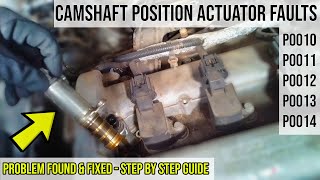
- P0014 — P0014 indicates a performance or timing position issue with the same camshaft (Bank 1 Exhaust). Seeing P0013 (circuit fault) and P0014 (performance fault) together strongly suggests the solenoid is either electrically bad or mechanically stuck, preventing the camshaft from moving as commanded.
- P0010 — This is the circuit code for the intake solenoid on the same bank. If you swap the intake and exhaust solenoids for diagnosis and the P0013 code becomes a P0010, you have confirmed the solenoid is the faulty component.
Technical Service Bulletins (TSBs) & Recalls
- TSB 17-NA-098: Addresses rough running, hesitation, and codes P0010, P0011, P0013, or P0014. It notes the cause may be camshaft position actuator solenoid valve failure and recommends replacing both the intake and exhaust solenoids on the affected bank.
- TSB 18-NA-307: While primarily for P0014, this TSB is relevant as it describes a condition where the engine wiring harness can chafe on the camshaft cover, causing an electrical short that could also trigger P0013.
- Bulletin #18369: A manufacturer service bulletin notes that the camshaft position actuator solenoid valve may break, causing the Malfunction Indicator Lamp to illuminate and DTC P0013 to set. The driver may experience rough engine idling or reduced engine torque.
Platform-Specific Known Issues
- Owner Experience: Oil Change Fix: Multiple owners on forums report that their first step was an oil and filter change with the correct Dexos-spec 0W-20 oil, which in some cases resolved the P0013/P0014 codes, highlighting the system's sensitivity to oil condition.
- Owner Experience: Solenoid Swap Diagnosis: A common diagnostic story on forums like SilveradoSierra.com involves an owner with P0013 swapping the driver's side exhaust solenoid with the driver's side intake solenoid. After clearing codes and driving, the truck then throws a P0010 code, confirming the original solenoid was the sole cause of the problem.
Mechanic-Grade Diagnostic Values
- Camshaft Position Actuator Solenoid Resistance — expected: 8 to 13 Ohms. Failure: A reading of infinite resistance (Open Loop) or near zero Ohms (short) indicates a failed solenoid. Some sources give a wider general range of 5-25 ohms, but 8-13 is more specific to GM.
- Voltage at Solenoid Connector (Key On, Engine Off) — expected: 12V (B+) on the power supply wire.. Failure: No voltage suggests a problem with the fuse or the power supply circuit from the ECM.
- Solenoid Control Circuit (with Noid Light or Lab Scope) — expected: A pulsing signal or varying duty cycle when the engine is running and RPMs are changed, or when commanded by a scan tool.. Failure: No signal from the ECM indicates a wiring problem or a faulty ECM driver.
Scan Tool Commands That Help
- GDS2 (GM Global Diagnostic System 2): Camshaft Position Actuator Control — This bidirectional command allows a technician to directly command the ECM to activate the Bank 1 Exhaust solenoid. You can command it to a specific percentage (e.g., 0%, 50%, 100%) and observe the engine's response and the change in Camshaft Position data PIDs. If the engine's idle changes and the cam angle PID responds, it confirms the ECM, wiring, and solenoid are electrically functional, pointing towards a mechanical/hydraulic issue (like oil flow). If there is no response, it points to an electrical fault in the circuit or solenoid.
Wiring & Ground Locations
- Bank 1 Exhaust VVT Solenoid Connector — On the front of the driver's side cylinder head, the rearmost of the two solenoids.. This is the primary connection point to test. The two pins are for the 12V power supply and the ECM control ground. Check for oil contamination, corrosion, or loose pins here first.
- G103 — Typically located on the front of the passenger side cylinder head on Gen IV V8s, but on Gen V L83, engine grounds are consolidated. A primary engine-to-chassis ground is on the left (driver's) side, rear of the engine compartment, often a braided strap from the cylinder head to the firewall. Another key ground is on the left front of the engine block.. The ECM and its sensors/actuators rely on a clean engine ground. While a bad ground here would likely cause multiple codes, a loose or corroded G103 can cause intermittent and strange electrical behavior, including faults in actuator circuits. It's a critical point to check for tightness and corrosion when chasing electrical gremlins.
Real Owner Repair Stories
- GM-Trucks.com forum user (2015 Chevrolet Silverado 5.3L) — Check Engine Light with code P0013. Truck ran fine otherwise.
❌ Tried (didn't work) Replaced the Bank 1 exhaust VVT solenoid with a new ACDelco part., Performed an oil and filter change.
✅ What actually fixed it The user traced the wiring harness from the solenoid and found it was rubbing against a sharp edge on the front of the engine block near the power steering pump bracket. The insulation on one wire was worn through, causing an intermittent short to ground. Repairing the wire with solder and heat shrink and securing the harness away from the sharp edge permanently resolved the code.
Documented NHTSA Reports
- An owner reported in NHTSA ODI #11321403 that at 7,473 miles, the reduced engine power light came on while driving with diagnostic code P0013, requiring replacement of the exhaust camshaft position actuator.
- NHTSA ODI #11495760 describes a vehicle with 79,000 miles that displayed error codes P0013 and P0014 for one week prior to a significant oil leak failure.
- According to NHTSA ODI #11184298, an owner reported that the P0013 component was replaced, but less than one week later, the system triggered a P0014 code.
- NHTSA ODI #11403341 notes an instance where a vehicle displayed both P0010 (intake actuator circuit) and P0013 (exhaust actuator circuit) simultaneously, requiring service to the actuator circuits.
OEM Part Supersession History
12633123→12679099, then 12681018, and later 12734067 which was then superseded back by 12681018.— GM has released multiple revisions of this solenoid, likely to improve durability, screen design, and resistance to oil contamination. The current recommended service part is typically 12681018.
Heads up: All listed part numbers are physically and electrically interchangeable for the L83 engine. The key is to use the latest available revision for the best longevity.
Model Year Variations Within This Range
- 2019: The 2019 model year was a transition. The 'Silverado 1500 LD' (Classic) continued using the K2XX platform and L83 engine, to which this guide applies. The all-new T1XX platform Silverado 1500 introduced the L84 5.3L engine, which uses Dynamic Fuel Management (DFM) instead of AFM and has different engine management, though the VVT solenoids are similar.
Diagnostic Flowchart
Other Known Issues on This Vehicle
Issues unrelated to this code that are worth knowing about as an owner of this generation:
- AFM/DFM Lifter Failure 🔴 High — Widespread issue, particularly in 2014-2021 models. Can occur as early as 60,000 miles, leading to ticking noises, misfires, and potentially catastrophic engine damage.
- Torque Converter Shudder (8-Speed 8L90/8L45 Transmission) 🟠 Medium — Very common in 2015-2019 models with the 8-speed transmission. Causes a vibration or 'rumble strip' feeling at highway speeds (40-70 mph). (Ref: TSB 18-NA-355 (Recommends fluid flush with Mobil 1 LV ATF HP))
- Cracked Dashboard Near Instrument Cluster or Passenger Airbag 🟡 Low — Extremely common cosmetic issue on the K2XX platform. Cracks typically develop over time from sun exposure and heat cycles.
- A/C Condenser Failure 🟠 Medium — Common failure point where the condenser develops leaks, causing the A/C system to stop blowing cold air. Often requires replacement of the condenser.
- Excessive Oil Consumption 🟠 Medium — Affects a significant percentage of 5.3L L83 engines, sometimes linked to piston ring issues. Some owners report consuming over a quart of oil between changes. (Ref: Speerly v. GM Class Action Lawsuit)
Used vs. New Parts: Buying Guide for This Vehicle
When a used part is the smart pick: Never. A used VVT solenoid is a significant gamble. The failure mode is often internal clogging or electrical breakdown from heat cycles, both of which are invisible. The part is inexpensive new, and the labor is minimal, so there is no financial or practical reason to install a used solenoid with an unknown history.
What to inspect on the donor part:
- Not applicable, do not buy used.
OEM-only on this vehicle (don't cheap out):
- While not strictly 'OEM-only', using a genuine ACDelco or Delphi (often the OEM supplier) solenoid is highly recommended. The price difference is minimal, and the quality control is critical for this component.
Aftermarket brands forum-validated for this vehicle:
- ACDelco (Genuine GM)
- Delphi
Brands owners have reported issues with on this vehicle:
- Unknown, no-name brands from online marketplaces. Forum discussions are filled with stories of cheap aftermarket solenoids failing within weeks or months, or being dead-on-arrival.
Real Owner Stories
Aggregated from forums and TSBs cited above. Mileages and costs reflect what owners reported in those sources.
2014-2019 Chevrolet Silverado 1500 5.3L L83
Symptoms: The owner experienced P0013 and P0014 codes and noted the system's sensitivity to oil condition.
What fixed it: An oil and filter change using the correct Dexos-spec 0W-20 oil.
Source hint: vehicle_specific_issues: Owner Experience: Oil Change Fix
2014-2019 Chevrolet Silverado 1500 5.3L L83
Symptoms: The truck was throwing a P0013 code.
What fixed it: The owner swapped the driver's side exhaust solenoid with the driver's side intake solenoid; when the code changed to P0010, they replaced the original solenoid.
Source hint: SilveradoSierra.com thread cited in 'Owner Experience: Solenoid Swap Diagnosis'
2014-2019 Chevrolet Silverado 1500 5.3L L83
Symptoms: P0013 code present.
What fixed it: Replacing the solenoid with ACDelco part #12681018.
Source hint: Reddit (r/Silverado)
Related OBD-II Codes
Frequently Asked Questions
Does TSB 17-NA-098 apply to my Silverado if I have a P0013 code?
Can I use any 5W-30 oil in my L83 engine to clear this code?
Is there a specific ACDelco part number recommended for the solenoid replacement?
Could a wiring issue cause P0013 instead of a bad solenoid?
How can I be sure the solenoid is the problem before buying a new one?
Why does my Silverado make a ticking noise along with the P0013 code?
Helpful Videos


We Have This Part in Stock


The information in this article is provided for general reference and educational purposes only. Vehicle specifications, procedures, and part compatibility can vary by production date, trim level, and region. Always consult your vehicle's factory service manual and verify part numbers before purchasing or performing repairs. Safety-critical components such as airbags, seat belts, and braking systems should be installed by a qualified professional.
- Chevrolet Silverado 1500:
- 🧭 Diagnostic Flowchart
- 🎬 Helpful Videos
- 🛍️ Shop This Part
- What's Unique About the 2014-2019 Chevrolet Silverado 1500
- Symptoms You May Notice
- Most Likely Causes
- Rare But Worth Checking
- Diagnosis Steps
- Parts You'll Likely Need
- Related Codes That Often Appear With This One
- Technical Service Bulletins (TSBs) & Recalls
- Platform-Specific Known Issues
- Mechanic-Grade Diagnostic Values
- Scan Tool Commands That Help
- Wiring & Ground Locations
- Real Owner Repair Stories
- Documented NHTSA Reports
- OEM Part Supersession History
- Model Year Variations Within This Range
- Other Known Issues on This Vehicle
- Used vs. New Parts: Buying Guide for This Vehicle
- Real Owner Stories
- 2014-2019 Chevrolet Silverado 1500 5.3L L83
- 2014-2019 Chevrolet Silverado 1500 5.3L L83
- 2014-2019 Chevrolet Silverado 1500 5.3L L83
- Related OBD-II Codes
- Frequently Asked Questions
- 🎟️ Get 5% Off