

P0013 on 2011-2019 Ford Explorer 3.5L: Exhaust Camshaft Actuator Circuit Causes and Fixes
This code points to an electrical fault with the exhaust VCT solenoid on the firewall side of the engine (Bank 1). Before replacing parts, check your engine oil level and condition, as low or dirty oil is a primary cause. If the oil is fine, the VCT solenoid itself has likely failed. Access is difficult, requiring removal of the valve cover. Expect to pay $40-$90 for an OEM solenoid.
- P0013 is an electrical circuit code for the exhaust VCT solenoid on the rear (firewall side) bank of the engine.
- Always check your engine oil level and condition first. Low or dirty oil is the most common trigger for this code.
- The most likely failed part is the VCT solenoid itself. Test its resistance with a multimeter before replacing.
- Do not confuse the 2-wire VCT solenoid with the 3-wire camshaft position sensor.
- Be aware that replacing the Bank 1 solenoid is a difficult DIY job due to poor access and requires removing the valve cover.
What's Unique About the 2011-2019 Ford Explorer
On the Ford 3.5L 'Cyclone' V6, the variable camshaft timing (Ti-VCT) system is highly dependent on clean oil and correct oil pressure. Unlike some other vehicles where this code might point to more complex issues, on the Explorer it is most often traced back to either degraded engine oil or a failed VCT solenoid. The key challenge for this specific code (P0013) is the physical location of the Bank 1 (rear) solenoids, which are tucked against the firewall under the valve cover and are significantly harder to access than the Bank 2 solenoids at the front of the engine bay.
Symptoms You May Notice
- Check Engine Light is on
- Rough engine idle
- Hesitation or stumbling during acceleration
- Reduced engine power
- Decreased fuel economy
- Engine may stall in some cases
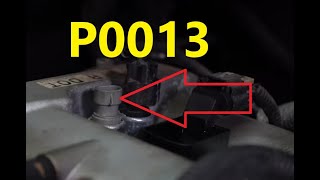
- Replacing the Camshaft Position *Sensor* instead of the VCT *Solenoid*. The sensor is a 3-wire component that reads camshaft position, while the solenoid is a 2-wire actuator that controls it. P0013 specifically relates to the actuator solenoid circuit. 🎬 Watch: A breakdown of P0013 causes and common fixes.
Most Likely Causes
- Low, Dirty, or Incorrect Viscosity Engine Oil 🔴 High Probability The Ford Ti-VCT system is hydraulic and extremely sensitive to oil pressure and cleanliness. Sludge or low levels can prevent the solenoids from operating correctly.
How to confirm: Check the engine oil dipstick. If the oil is below the 'add' line, very dark, thick, or past its recommended change interval, this is the most likely culprit.
Typical fix: Perform an engine oil and filter change using the Ford-specified 5W-20 synthetic blend oil and a quality filter, such as Motorcraft.
Est. part cost: $40-$80 - Faulty Bank 1 Exhaust VCT Solenoid 🔴 High Probability The solenoid is an electromagnetic coil that can fail internally over time, creating an open or shorted circuit. This is the most common component failure for a P0013 code.
How to confirm: Disconnect the solenoid and measure the resistance between its two pins with a multimeter. A healthy solenoid should read between 5 and 15 Ohms. An infinite reading (OL) means it's open and needs replacement.
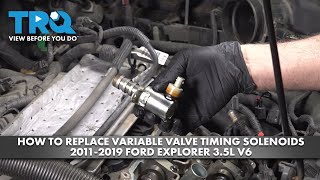
Typical fix: Replace the Bank 1 exhaust VCT solenoid. Since access requires removing the valve cover, it is often recommended to replace both the intake and exhaust solenoids on Bank 1 🎬 See this walkthrough for replacing the Bank 1 VCT solenoids. at the same time.
Est. part cost: $40-$90 - Damaged Wiring or Electrical Connector 🟡 Medium Probability
How to confirm: Visually inspect the wiring harness and connector going to the Bank 1 exhaust VCT solenoid. Look for signs of corrosion, oil saturation, pushed-out pins, or wires that are frayed or melted from contact with hot engine components.
Typical fix: Repair the damaged section of wiring or replace the connector pigtail. Clean any corrosion from the connector terminals.
Est. part cost: $15-$50
Rare But Worth Checking
- Clogged VCT Solenoid Screens: The solenoids have small filter screens that can get clogged with sludge or debris, preventing proper oil flow. Sometimes, removing and cleaning the solenoid can restore function, although replacement is often a more reliable fix.
- Failed Camshaft Phaser: → Shop Engine Camshaft While P0013 is an electrical code, a mechanically stuck or failed cam phaser can sometimes cause erratic electrical readings. This is less common and is usually accompanied by other timing performance codes (like P0014) or a distinct engine rattle.
- Faulty Powertrain Control Module (PCM): In very rare cases, the fault may lie within the PCM's internal driver circuit for the solenoid. This should only be considered after all other possibilities have been exhaustively ruled out.
Diagnosis Steps
- Check Engine Oil: Before any other step, verify the engine oil level is correct and the oil is clean. If low or dirty, perform an oil change, clear the code, and see if it returns.
- Inspect Connector and Wiring: Locate the Bank 1 (rear) exhaust VCT solenoid. Unplug its electrical connector and inspect for corrosion, oil contamination, or damaged pins. Trace the wiring as best as possible for any visible damage.
- Test the Solenoid: Set a multimeter to the Ohms (Ω) setting. Measure the resistance across the two pins on the solenoid itself. A reading between 5-15 Ohms is typical for a good solenoid, with Ford's specific target being 6.9-7.9 Ohms. A reading of 'OL' or infinite resistance indicates a failed, open solenoid.
- Check for Voltage: If the solenoid's resistance is good, turn the ignition to the 'On' position (engine off). Use a multimeter to carefully check for 12V power at one of the pins in the wiring harness connector.
- Swap Solenoids (Optional): For a definitive test, you can swap the suspect exhaust solenoid with the intake solenoid on the same bank. Clear the codes and run the engine. If the code changes to P0010 (Intake Camshaft Position Actuator Circuit Bank 1), the solenoid is confirmed to be faulty.
- Professional Diagnosis: If the solenoid, wiring, and oil are all good, the issue may be a clogged oil passage, a mechanical problem with the cam phaser, or a PCM fault, which may require professional diagnosis.
Parts You'll Likely Need
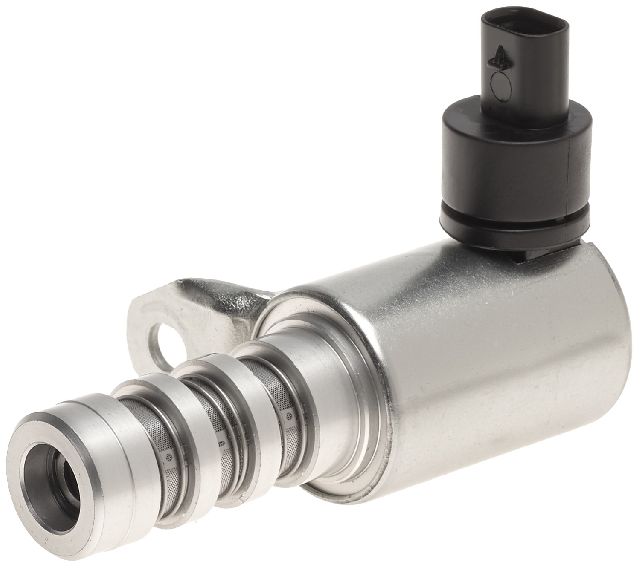
- Engine Variable Valve Timing (VCT) Solenoid
(OEM #7T4Z-6M280-C)— This solenoid is the most common part to fail for this specific electrical circuit code. The internal coil windings can break, causing an open circuit.
Trusted brands: Motorcraft, Dorman
OEM price range: $40-$90
Aftermarket price range: $25-$60 - Valve Cover Gasket Kit (Bank 1 / Rear / Left Side)
(OEM #AA5Z-6584-A)— Accessing the Bank 1 (rear) VCT solenoids on the 3.5L V6 requires removing the valve cover. The gasket must be replaced to prevent oil leaks upon reassembly.
Trusted brands: Motorcraft, Fel-Pro, Victor Reinz
OEM price range: $50-$80
Aftermarket price range: $30-$50
Related Codes That Often Appear With This One
- P0014 — P0014 indicates a mechanical timing performance issue ('Over-Advanced') with the same camshaft. An electrical fault (P0013) can prevent control, causing the camshaft to get stuck in a position that triggers the performance code.
- P0023 — This is the identical circuit fault but for Bank 2 (front/radiator side). If both codes appear together, it strongly suggests a systemic problem like severe oil contamination or a shared electrical issue affecting both banks.
- P0010, P0020, P0023 — If all four VCT circuit codes appear at once, along with possible O2 sensor heater codes (P0135, P0141, P0155, P0161), the root cause is almost certainly a blown fuse for the shared power circuit, such as fuse F76 in the under-hood fuse box on similar Ford platforms.
Technical Service Bulletins (TSBs) & Recalls
- SSM 50067: While not for P0013 specifically, this TSB notes that various VCT codes on Ford engines can be caused by small debris causing the VCT solenoid to stick, advising a diagnostic cycling test before replacement.
- TSB 14-0130 / 16-0166: Not related to P0013, but a critical platform issue. These bulletins address exhaust odors entering the cabin and provide procedures for sealing body panels and reprogramming the HVAC system.
Platform-Specific Known Issues
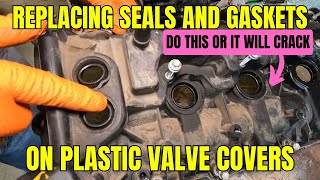
- Access to the Bank 1 (firewall side) VCT solenoids is very difficult. The repair often requires removing the upper intake manifold 🎬 Watch: The easiest way to remove these Ford valve covers. and other components to reach the rear valve cover, which significantly increases labor time compared to the easily accessible Bank 2 solenoids.
- Ford has issued TSBs (like SSM 50067) for similar VCT codes on these engines, noting that small debris in the oil can cause the solenoids to stick. This reinforces the importance of regular oil changes with the correct oil.
- This engine family features an internal, timing-chain-driven water pump. A failure of this pump can introduce coolant into the engine oil, which can not only cause catastrophic engine failure but also damage sensitive VCT components like the solenoids.
Mechanic-Grade Diagnostic Values
- VCT Solenoid Internal Resistance — expected: 6.9 to 7.9 Ohms at 68°F (20°C). A general acceptable range is 5-15 Ohms.. Failure: A reading of 0 Ohms (short circuit) or infinite/OL (open circuit) indicates a failed solenoid.
- VCT Solenoid Connector Voltage (Key On, Engine Off) — expected: Approximately 12V (Battery Voltage) on the power supply pin.. Failure: No voltage or significantly low voltage points to a problem in the power supply circuit, such as a blown fuse, a bad connection, or a wiring issue.
- Scan Tool PID: VCT_EXH_ERR1 (Bank 1 Exhaust Cam Angle Error) — expected: Should be near 0 degrees at a stable hot idle.. Failure: A consistent error value outside a small +/- degree range indicates a timing deviation that can be caused by a non-responsive solenoid.
- Engine Oil Pressure (at hot idle) — expected: A minimum of 15 PSI at hot idle is required for proper VCT function.. Failure: Pressure below 15 PSI can cause VCT system malfunctions and trigger various codes.
Scan Tool Commands That Help
- Ford IDS / FORScan / High-End Scan Tool: Control the VVT Exhaust Linear (Bank 1) / VCT Solenoid Active Test — This bidirectional command allows the technician to manually cycle the VCT solenoid while the engine is running. If the engine idle becomes rough or stalls when the solenoid is commanded ON (e.g., to 100%), it confirms the solenoid is mechanically capable of actuating. If there is no change in idle, the solenoid is likely stuck, clogged, or has failed internally. This test helps distinguish a bad solenoid from a wiring problem.
Wiring & Ground Locations
- VCT Solenoid Connector (Bank 1) — Under the Bank 1 (rear/firewall side) valve cover, connected to the intake (white/gray connector) and exhaust (black connector) solenoids.. This is the primary point for testing voltage and resistance. The connector itself can become brittle from heat, contaminated with oil, or have its pins pushed out, causing an open or short circuit.
- G104 / G105 — G104 is often on the right (passenger) side of the engine compartment, near the fender apron. G105 is often on the top right side of the engine itself.. These are primary engine and PCM ground points. A poor or corroded ground connection at these locations can cause erratic voltage and faulty signals for sensors and actuators, including the VCT solenoids, leading to incorrect operation and fault codes.
Real Owner Repair Stories
- Mustang6G.com forum user (Ford Mustang (similar VCT system)) — P0013 code present.
❌ Tried (didn't work) Replaced the VCT solenoid.
✅ What actually fixed it The user found that the reluctor wheel, which is pressed onto the camshaft and read by the position sensor, had come loose and could be spun by hand. This required a full camshaft replacement to fix the issue, as the solenoid itself was not the root cause.
OEM Part Supersession History
7T4Z-6M280-A, 7T4Z-6M280-AA, 7T4Z-6M280-B→7T4Z-6M280-C— Likely internal improvements for durability and increased resistance to sticking from oil debris.
Heads up: All previous versions are directly replaced by 7T4Z-6M280-C and are physically and electrically compatible. It is always best practice to use the latest revision.
Model Year Variations Within This Range
- 2011-2019: While the 3.5L Ti-VCT V6 was the standard engine throughout the generation, there were no major changes to the VCT solenoid design or the diagnostic procedure for P0013 within this range. The 2016 model year refresh was primarily cosmetic and did not alter the core engine components relevant to this code.
Diagnostic Flowchart
Other Known Issues on This Vehicle
Issues unrelated to this code that are worth knowing about as an owner of this generation:
- Internal Water Pump Failure 🔴 High — Common on engines over 100,000 miles. Failure can be catastrophic.
- PTU (Power Transfer Unit) Failure 🔴 High — Common in AWD models. Fluid can overheat and degrade, leading to gear failure. (Ref: G-0000163 (related procedure))
- Exhaust Odor / CO Intrusion in Cabin 🔴 High — Widespread on 2011-2017 models, subject of a major investigation. (Ref: TSB 14-0130, TSB 16-0166, TSB 17-0044)
- Electronic Throttle Body Malfunction 🟠 Medium — A common failure point on 5th generation models. (Ref: Ford Customer Satisfaction Program 13N03)
- Rear Suspension Toe Link Fracture 🔴 High — Common enough to trigger multiple recalls (e.g., 19S17, 20S22) on 2011-2017 models. (Ref: NHTSA Recalls 19V435000, 20V262000)
Used vs. New Parts: Buying Guide for This Vehicle
When a used part is the smart pick: For this repair, using used parts is generally not recommended. The primary failure parts are the VCT solenoid and valve cover gasket, which are inexpensive and wear-items. A used wiring harness pigtail from a junkyard could be a cost-effective option if only the connector is damaged.
Donor-vehicle mileage cap: roughly under 60000 miles for the part to have meaningful remaining life.
What to inspect on the donor part:
- For a wiring pigtail, ensure the plastic is not brittle and the locking tab is intact.
- Check for any signs of corrosion on the connector pins.
- Verify there is enough wire length to splice into the existing harness properly.
OEM-only on this vehicle (don't cheap out):
- VCT Solenoid: While some aftermarket brands are acceptable, Motorcraft (OEM) solenoids have the highest reliability and are strongly recommended given the high labor cost to access them on Bank 1.
Aftermarket brands forum-validated for this vehicle:
- Gaskets: Fel-Pro, Victor Reinz
- Solenoids: Dorman (often considered a budget-friendly alternative to OEM)
Brands owners have reported issues with on this vehicle:
- No-name, unbranded VCT solenoids from online marketplaces should be avoided. The risk of premature failure is high, and the labor to replace a failed part again outweighs any initial cost savings.
Real Owner Stories
Aggregated from forums and TSBs cited above. Mileages and costs reflect what owners reported in those sources.
2014 Ford Explorer AWD
Symptoms: Complete failure of the Power Transfer Unit (PTU).
What fixed it: Replacement of the PTU due to overheated and degraded fluid.
Source hint: https://www.reddit.com/r/MechanicAdvice/comments/yzy16k/2014_ford_explorer_case_of_the_broken_ptu/
2014 Ford Explorer
Symptoms: Exhaust fumes entering the cabin, particularly under heavy acceleration.
What fixed it: Dealer repair attempts involving sealing body seams and reprogramming the climate control per TSBs.
Source hint: https://www.carcomplaints.com/Ford/Explorer/2014/exhaust_system/exhaust_fumes_in_cab.shtml
Ford Explorer 3.5L V6 Cyclone — ~100000 miles
Symptoms: Internal water pump failure leading to coolant leaking into the engine oil.
What fixed it: Proactive replacement of the water pump during a timing chain service to prevent engine seizure.
Source hint: vehicle_specific_issues
Related OBD-II Codes
Frequently Asked Questions
Does SSM 50067 apply to my Ford Explorer's P0013 code?
Why is the labor for Bank 1 VCT solenoid replacement so much higher on my 3.5L Explorer?
Can I use any engine oil to fix the P0013 code on my Ti-VCT engine?
Is there a risk of coolant contaminating my oil and causing VCT issues on this vehicle?
Should I replace both solenoids on Bank 1 if only the exhaust solenoid is failing?
Are the exhaust fumes I smell in my 2014 Explorer related to the P0013 code?
Helpful Videos
Used OEM Parts in Stock
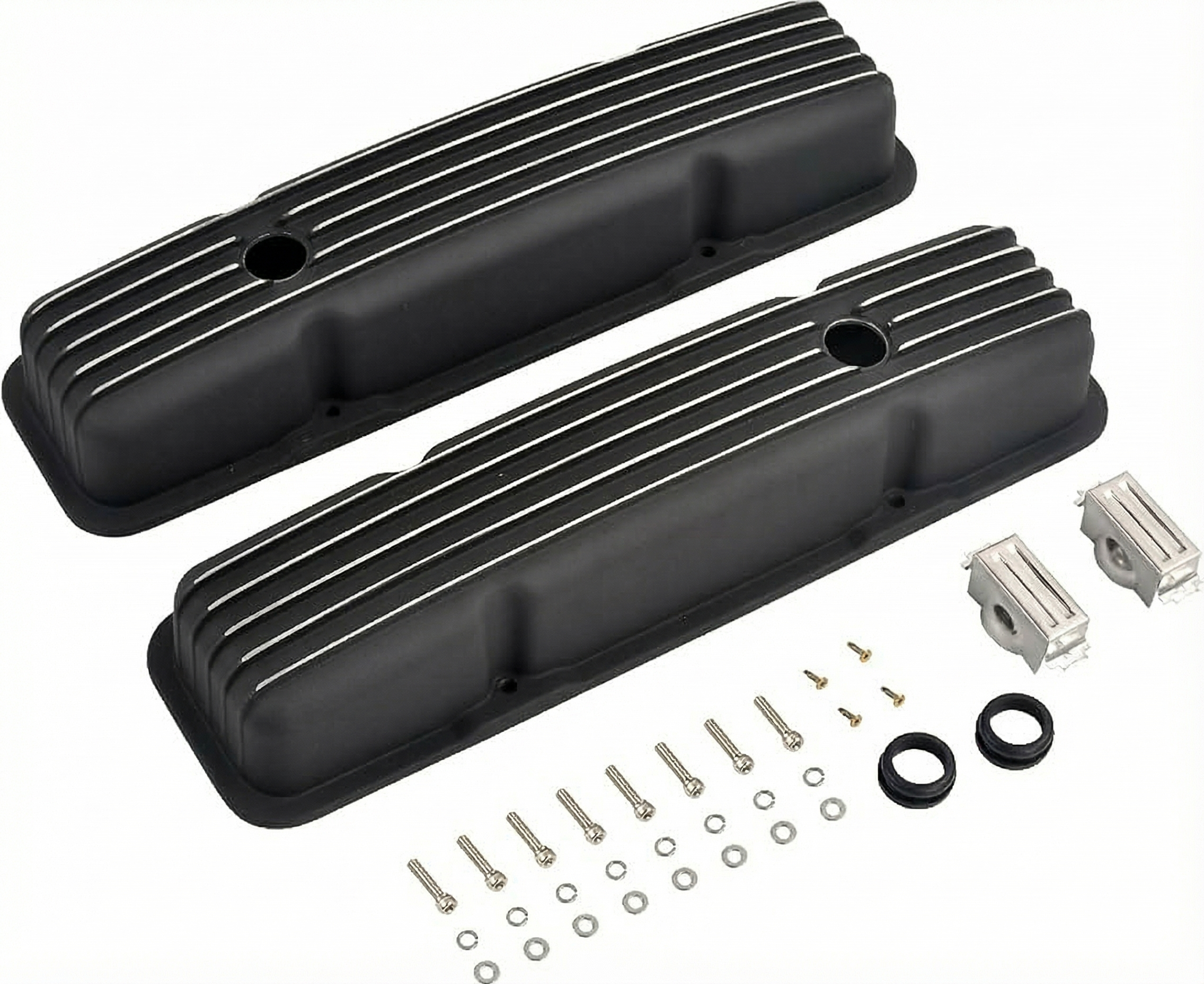
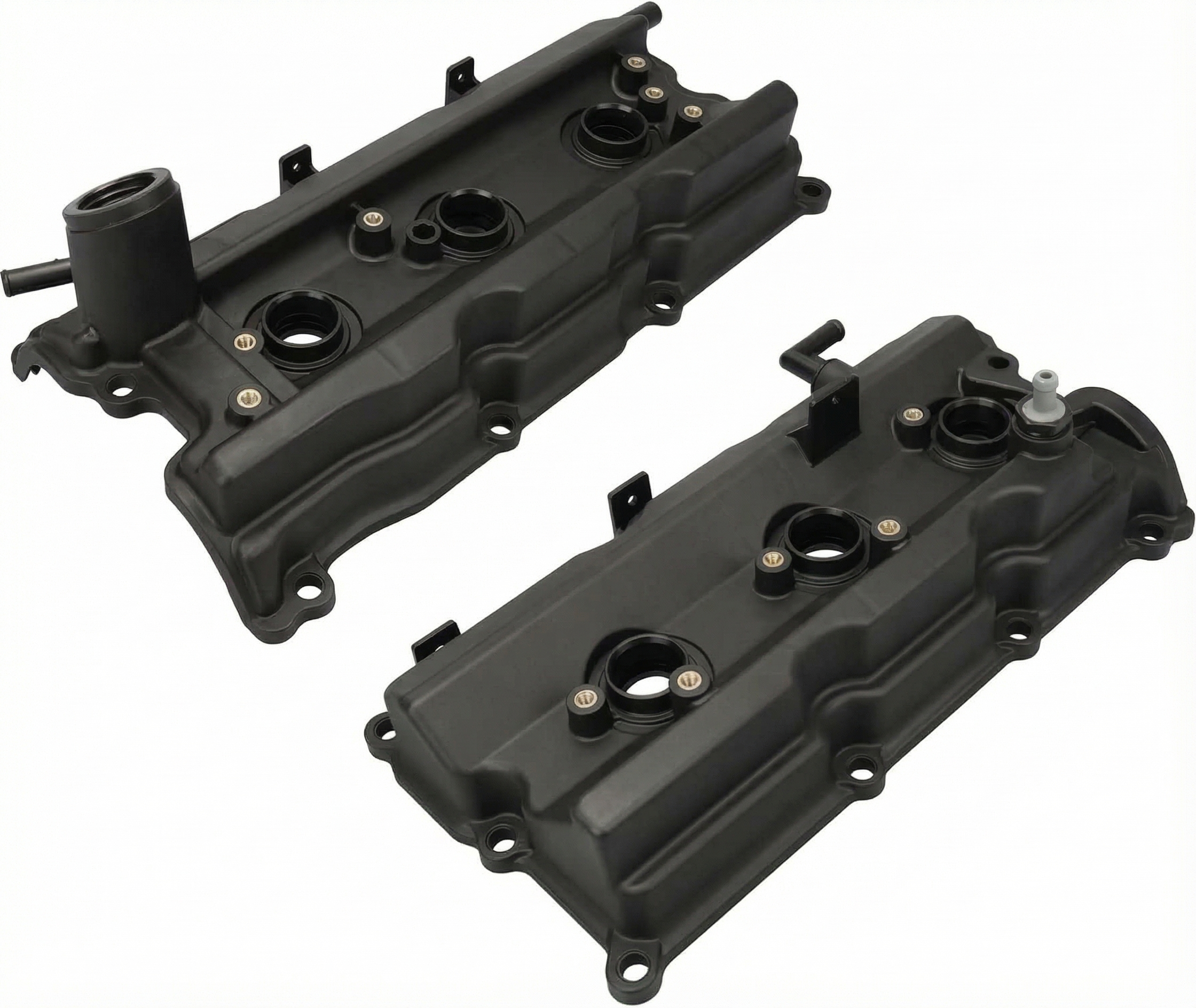
New Aftermarket Parts Available

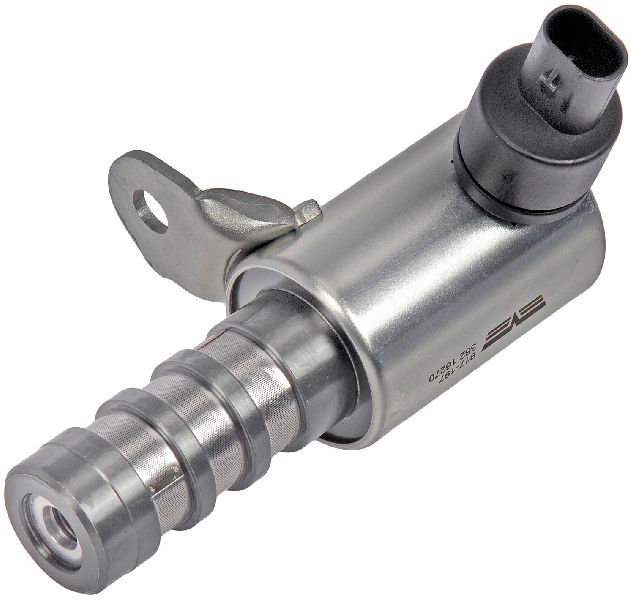
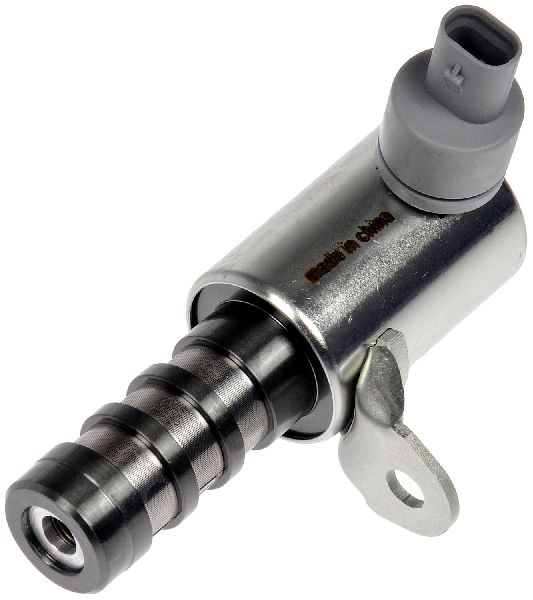

The information in this article is provided for general reference and educational purposes only. Vehicle specifications, procedures, and part compatibility can vary by production date, trim level, and region. Always consult your vehicle's factory service manual and verify part numbers before purchasing or performing repairs. Safety-critical components such as airbags, seat belts, and braking systems should be installed by a qualified professional.
- Ford Explorer:
- 🧭 Diagnostic Flowchart
- 🎬 Helpful Videos
- 🛍️ Shop This Part
- What's Unique About the 2011-2019 Ford Explorer
- Symptoms You May Notice
- Most Likely Causes
- Rare But Worth Checking
- Diagnosis Steps
- Parts You'll Likely Need
- Related Codes That Often Appear With This One
- Technical Service Bulletins (TSBs) & Recalls
- Platform-Specific Known Issues
- Mechanic-Grade Diagnostic Values
- Scan Tool Commands That Help
- Wiring & Ground Locations
- Real Owner Repair Stories
- OEM Part Supersession History
- Model Year Variations Within This Range
- Other Known Issues on This Vehicle
- Used vs. New Parts: Buying Guide for This Vehicle
- Real Owner Stories
- 2014 Ford Explorer AWD
- 2014 Ford Explorer
- Ford Explorer 3.5L V6 Cyclone — ~100000 miles
- Related OBD-II Codes
- Frequently Asked Questions
- 🎟️ Get 5% Off