

P0013 on 2014-2019 Ford Fiesta 1.0L EcoBoost: Exhaust VVT Solenoid and Wet Belt Guide
P0013 on a 1.0L EcoBoost Fiesta indicates an electrical fault with the exhaust VVT solenoid. The most common cause is a failed solenoid, often due to oil contamination from a degrading 'wet' timing belt. Always check oil quality first; replacing the solenoid costs ~$40-$90 for the part. Ignoring this code is risky, as it can be an early symptom of belt failure that leads to catastrophic engine damage.
- P0013 on the 1.0L EcoBoost Fiesta is an electrical fault code for the exhaust VVT solenoid.
- Before replacing any parts, always check the engine oil. Low, old, or incorrect-spec oil is a primary cause of VVT issues on this engine.
- The most likely failed part is the VCT solenoid itself, which is relatively inexpensive and easy to replace.
- This code can be an early warning of a degrading 'wet' timing belt. If you find rubber debris in the oil pan, a much more extensive repair is required immediately to prevent engine failure.
- A simple and effective diagnostic is to swap the intake and exhaust VCT solenoids to see if the trouble code follows the part.
What's Unique About the 2014-2019 Ford Fiesta
The 1.0L EcoBoost engine has a unique and critical design feature: a 'wet' timing belt (also called Belt-in-Oil or BIO) that runs inside the engine, lubricated by oil. These belts are known to degrade over time, shedding rubber particles into the engine oil. This debris can clog the oil pickup tube and, more commonly, the fine mesh screens of the VCT solenoids, leading to restricted oil flow, solenoid failure, and codes like P0013. Therefore, this code on a Fiesta 1.0L is often an early warning sign of a more serious timing belt issue that can lead to oil starvation and catastrophic engine failure if ignored.
Symptoms You May Notice
- Check Engine Light is on
- Rough or unstable idle
- Hesitation or loss of power during acceleration
- Decreased fuel economy
- Engine stalling
- In severe cases related to wet belt failure, a rattling noise on cold starts or an oil pressure warning light may appear.
- Difficulty starting the engine
- Replacing the camshaft position sensor. This code specifically points to an electrical fault in the actuator solenoid's *circuit*, not the position sensor itself.
Most Likely Causes
- Failing Exhaust VCT Solenoid (Oil Control Valve) 🔴 High Probability The solenoids are highly susceptible to clogging from debris shed by the engine's 'wet' timing belt. They can also fail electrically or leak oil through their housing into the electrical connector, a common fault on these engines.
How to confirm: Inspect the solenoid's electrical connector for oil. Use a multimeter to check the solenoid's resistance (a typical reading is 6-12 Ohms). A reading outside this range indicates failure. A highly effective diagnostic trick is to swap the identical intake and exhaust VCT solenoids; if the code changes to P0010 (intake circuit), the solenoid is faulty.
Typical fix: Replace the exhaust VCT solenoid and change the engine oil 🎬 See this step-by-step VVT solenoid replacement guide and filter.
Est. part cost: $40-$90 - Low, Dirty, or Incorrect Engine Oil 🔴 High Probability The VCT system is entirely dependent on oil pressure and cleanliness. The 'wet' timing belt design makes this engine particularly sensitive to oil quality and change intervals. Using oil that does not meet the specific Ford WSS-M2C948-B 5W-20 specification can accelerate belt degradation and lead to sludge.
How to confirm: Check the oil level on the dipstick. Inspect the oil for darkness, sludge, or a gritty texture. For a definitive check, remove the oil pan and inspect the oil pump pickup strainer for black rubber particles from the timing belt.
Typical fix: Perform an engine oil and filter change using the manufacturer-specified oil. If rubber particles are found, a full timing belt and oil pump belt replacement is required to prevent engine failure.
Est. part cost: $30-$60 for an oil change, $400-$700+ for a wet belt kit. - Damaged Wiring or Faulty Connector 🟡 Medium Probability The wiring harness to the VCT solenoid can become brittle from heat cycles or damaged. Oil leaking from a faulty solenoid can also contaminate and ruin the electrical connector and pigtail, causing an open or short circuit.
How to confirm: Visually inspect the wiring for any signs of chafing, breaks, or corrosion. Check for a secure connection at the solenoid. Use a multimeter to test for proper voltage and ground at the connector with the key on.
Typical fix: Repair the damaged section of the wiring harness or replace the connector pigtail.
Est. part cost: $15-$40 for a pigtail connector.
Rare But Worth Checking
- Degrading 'Wet' Timing Belt: → Shop Engine Timing Chain While oil contamination is the common cause, the belt degradation itself is the root problem. If you find rubber particles in the oil, this is a critical issue. P0013 is often the first symptom before a catastrophic failure that can destroy the engine.
- Faulty Powertrain Control Module (PCM): This is very rare. The PCM's internal driver for the VCT solenoid circuit can fail. This should only be considered after all other possibilities (solenoid, wiring, oil quality) have been thoroughly ruled out.
Diagnosis Steps
- Check the engine oil level and condition. If it is low, dark, or sludgy, perform an oil and filter change with Ford-spec WSS-M2C948-B 5W-20 oil. Clear the code and see if it returns.
- Inspect the electrical connector on the exhaust VCT solenoid (the 'B' solenoid). Look for any signs of oil inside the connector, which indicates the solenoid's internal seal has failed and is a common point of failure.
- If the connector is clean, disconnect it and use a multimeter to test the resistance across the two pins on the solenoid. A normal reading is typically between 6 and 12 ohms. An open circuit (infinite resistance) or a short (near zero resistance) indicates a bad solenoid.
- A highly effective test is to swap the exhaust VCT solenoid with the identical intake VCT solenoid. Clear the codes and drive the vehicle. If the code changes to P0010 (Intake Camshaft Position Actuator Circuit), the solenoid you moved is confirmed to be faulty and needs replacement.
- If the solenoid tests good, inspect the wiring harness for damage. Check for power (battery voltage) and ground at the connector with the ignition on.
- If the code persists and you suspect a wet belt issue, the most definitive step is to drain the oil and remove the oil pan to inspect the oil pump pickup screen for black rubber particles. If debris is present, the timing belt and oil pump belt must be replaced immediately to prevent engine seizure.
Parts You'll Likely Need
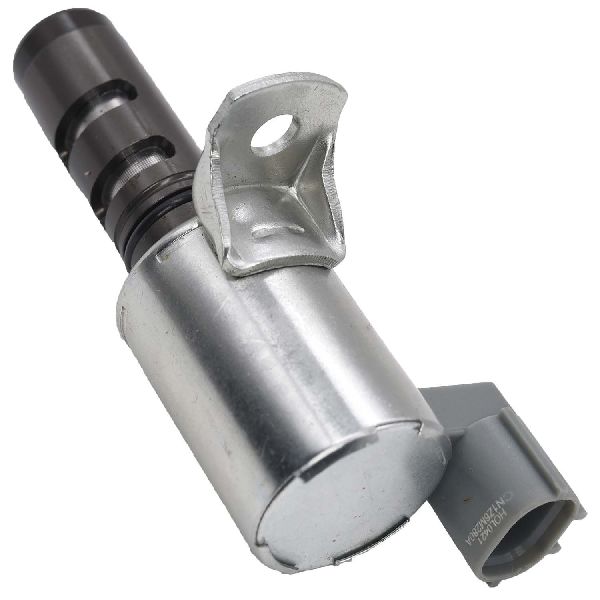
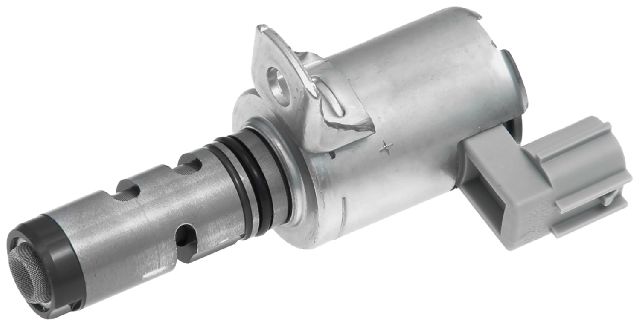
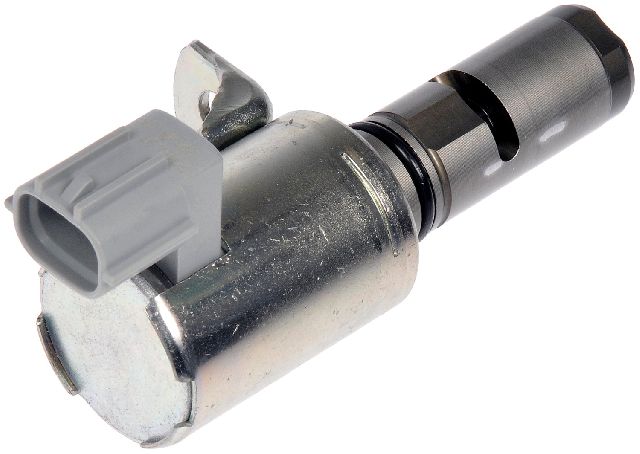
- Engine Variable Valve Timing (VVT) Solenoid
(OEM #CM5Z-6M280-G)— This is the most common part to fail, either electrically or by getting clogged with debris from oil contamination, directly causing the P0013 circuit code.
Trusted brands: Motorcraft, Dorman, NGK, Standard Motor Products
OEM price range: $70-$90
Aftermarket price range: $40-$75 - Ford Specification Engine Oil (5W-20 WSS-M2C948-B) — Correct oil is critical for the health of the VCT system and the 'wet' timing belt. An oil change is a required first step and may resolve the issue if it's caused by contamination or breakdown.
Trusted brands: Motorcraft Synthetic Blend, Castrol Magnatec Professional, Mobil Super 3000 Formula F
OEM price range: $8-$12 per quart
Aftermarket price range: $7-$10 per quart
Related Codes That Often Appear With This One
- P0010 — This is the identical circuit fault code for the intake ('A') VCT solenoid. If both appear together, it strongly suggests a common problem like severe oil contamination, low oil pressure, or a shared wiring issue.
- P0014 — This code indicates a mechanical timing problem (over-advanced) with the exhaust camshaft. A sticking VCT solenoid can cause both the electrical circuit fault (P0013) and the resulting mechanical timing error (P0014). Always fix P0013 first.
- P0016 — This indicates a crankshaft/camshaft correlation error. On the 1.0L EcoBoost, this code is a very strong indicator of a degraded wet belt that has caused the base engine timing to shift, which is a severe, engine-threatening issue.
Technical Service Bulletins (TSBs) & Recalls
- While no TSB is specific *only* to P0013 on the Fiesta, Ford has issued related bulletins. TSB SSM 48423 and SSM 50067 address VVT codes (like P0011/P0012) on many models including those with the 1.0L engine, often caused by 'small debris causing the VCT solenoid to stick'. This corroborates the diagnosis that oil contamination is a primary factory-recognized cause for VVT system faults.
Platform-Specific Known Issues
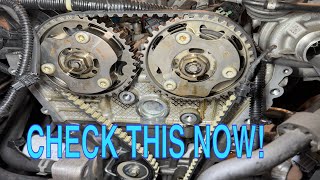
- The primary issue for the 1.0L EcoBoost is the timing-belt-in-oil 🎬 Watch: Real-world example of a failing wet belt at 49k miles ('wet belt') design. The belt degrades over time, contaminating the oil with rubber particles. This debris clogs the oil pickup tube and VCT solenoids, leading to oil pressure problems and VVT system fault codes like P0013. This is a well-documented design flaw that requires strict adherence to oil specifications and change intervals to mitigate.
- Owner Experience: On fordownersclub.com, a user with a 2023 Fiesta experiencing a P0013 code was immediately advised by another user to check for oil leaking through the VCT solenoid into the wiring loom, calling it a 'common fault'. This highlights that even on newer models, the solenoid itself remains a primary failure point.
Mechanic-Grade Diagnostic Values
- VCT Solenoid Internal Resistance — expected: 6.9 to 12 Ohms. Failure: A reading of infinite resistance (open circuit) or near-zero resistance (short circuit). Some sources suggest a slightly wider range of 5-15 Ohms.
- VCT Solenoid Connector Voltage (Key On, Engine Off) — expected: One pin should have battery voltage (approx. 12V), the other is the control wire from the PCM.. Failure: No voltage on the power pin indicates a wiring or fuse issue. The control wire is pulse-width modulated by the PCM when the engine is running.
- Live Data VCT Advance Error PID (using Ford IDS or equivalent) — expected: Should hover around 0° at idle and during steady-state driving.. Failure: A consistent difference of more than +/- 5° for an extended period indicates a mechanical or hydraulic problem with the VCT system (phaser or oil flow), not just the solenoid circuit.
Scan Tool Commands That Help
- Ford IDS (Integrated Diagnostic System): VCT Advance Error PID Monitoring — To diagnose if the fault is purely electrical (P0013) or if there's an underlying mechanical timing/phaser issue. If the solenoid circuit is repaired but drivability issues persist, monitoring the VCT error PIDs can reveal if the camshaft is not reaching its commanded position, pointing to a clogged phaser or oil pressure problem.
- Ford IDS (Integrated Diagnostic System): Solenoid Duty Cycle PID Monitoring — When diagnosing intermittent issues or comparing bank-to-bank (on V-engines). For the 1.0L, you can compare the intake and exhaust solenoid duty cycles. If the PCM is commanding a high duty cycle to the exhaust solenoid with little to no change in cam angle (monitored via VCT error PID), it suggests the solenoid is stuck or oil flow is blocked.
Wiring & Ground Locations
- Exhaust VCT Oil Control Solenoid — On the 1.0L EcoBoost, the exhaust solenoid is located on the left front of the cylinder head (when facing the engine from the front of the car).. This is the component whose electrical circuit is monitored. Its location is needed for visual inspection, resistance testing, and replacement.
- Intake VCT Oil Control Solenoid — On the 1.0L EcoBoost, the intake solenoid is located on the right front of the cylinder head (when facing the engine from the front of the car).. Its location is critical for the common diagnostic step of swapping the intake and exhaust solenoids to see if the fault code follows the part.
- Engine Block Ground — A primary engine ground connection point is typically located on the engine block near the starter motor or on a motor mount bolt. Another key ground point is often found on the chassis underneath the battery tray.. A poor engine ground can cause a variety of electrical issues, including intermittent circuit fault codes like P0013. Verifying this connection is clean and tight is a fundamental step in diagnosing any electrical fault.
Real Owner Repair Stories
- Ford Owners Club Forum (2023 Ford Fiesta EcoBoost) — P0013 fault code appeared, especially in the morning when the engine was cold.
❌ Tried (didn't work) The owner took it to an independent garage who was concerned it might be a wet belt issue and referred them to a Ford dealer.
✅ What actually fixed it A senior forum member immediately diagnosed the likely cause as a common fault where oil leaks through the VCT solenoid's body and contaminates the electrical connector and wiring loom. The advice was to unplug the VCT solenoids and inspect for oil intrusion.
OEM Part Supersession History
CM5Z-6M280-D→CM5Z-6M280-F, then CM5Z-6M280-G— Standard part revision and improvement by the manufacturer.
Heads up: The latest part number, CM5Z-6M280-G, is the correct replacement for the earlier versions (-D and -F) for the specified vehicle range. Some sources also show a European OEM number of CM5G-6M280-FA which cross-references.
Model Year Variations Within This Range
- 2019 onwards (approx.): Around 2019, Ford began phasing in a heavily revised version of the 1.0L EcoBoost engine, primarily for emissions and fuel economy. A major change was the replacement of the timing 'wet belt' with a more conventional timing chain. While the VCT solenoids and their function remain similar, a later model Fiesta is less likely to suffer from P0013 caused by wet belt debris. However, the oil pump may still use a wet belt.
Diagnostic Flowchart
Other Known Issues on This Vehicle
Issues unrelated to this code that are worth knowing about as an owner of this generation:
- Premature 'Wet Belt' (Timing Belt) Degradation 🔴 High — Common, especially on vehicles with poor oil service history or incorrect oil type. Can occur as early as 60,000 miles, leading to catastrophic engine failure.
- Cooling System Failures (Degas Hose/Coolant Pipes) 🔴 High — A well-documented issue where plastic coolant pipes, particularly the degas tank hose, can become brittle, crack, and cause rapid coolant loss, leading to engine overheating.
- Carbon Buildup on Intake Valves 🟡 Low — Common to all Gasoline Direct Injection (GDI) engines like the 1.0L EcoBoost. Over many miles (typically 80,000+), it can lead to rough idling and a gradual loss of performance.
- Turbocharger Failure 🟠 Medium — Not widespread, but reports exist of premature turbo failure, sometimes linked to oil starvation/contamination issues stemming from wet belt debris or coolant line problems.
Used vs. New Parts: Buying Guide for This Vehicle
When a used part is the smart pick: A used wiring pigtail/connector from a junkyard is a perfectly acceptable and cost-effective repair if the original is damaged by heat or oil contamination. A complete used engine is the only economical choice if the original engine failed catastrophically due to wet belt failure.
Donor-vehicle mileage cap: roughly under 80000 miles for the part to have meaningful remaining life.
What to inspect on the donor part:
- For a wiring pigtail, ensure there are several inches of wire past the connector, and check that the plastic isn't brittle and the locking tab is intact.
- For a complete used engine, look for one from a later model year (2018+) if possible. Ask for maintenance records to verify regular oil changes with the correct spec oil. Avoid engines that show heavy external oil leaks or signs of severe overheating (discolored plastic/metal).
OEM-only on this vehicle (don't cheap out):
- Engine Variable Valve Timing (VVT) Solenoid
Aftermarket brands forum-validated for this vehicle:
- Motorcraft (OEM)
Brands owners have reported issues with on this vehicle:
- Unnamed, no-brand 'white box' solenoids from online marketplaces are a significant gamble. Given the critical function and the relatively low cost of a quality OEM part, it is not worth the risk of premature failure.
Real Owner Stories
Aggregated from forums and TSBs cited above. Mileages and costs reflect what owners reported in those sources.
2023 Ford Fiesta 1.0L EcoBoost
Symptoms: Check engine light on with code P0013.
What fixed it: Checking for oil leaking through the VCT solenoid into the wiring loom, which is described as a common fault.
Source hint: fordownersclub.com: Thread '2023 Fiesta Fault code P0013'
Ford Focus 1.0L EcoBoost
Symptoms: Engine won't start properly and throwing code P0013.
What fixed it: Occurred after an engine swap; diagnostic focus on the VCT circuit.
Source hint: Reddit r/Ford: Thread 'Help Needed: Ford Focus 1.0 EcoBoost – Code P0013 + Engine Won't Start Properly'
Related OBD-II Codes
Frequently Asked Questions
Can I use any 5W-20 oil in my 1.0L EcoBoost Fiesta to clear the P0013 code?
Is there a quick way to tell if my P0013 code is caused by a bad solenoid or a wiring issue?
I see oil inside the electrical connector of my exhaust VCT solenoid. Is this normal?
Do TSBs SSM 48423 or SSM 50067 apply to my P0013 fault?
Could a rattling noise on cold starts be related to my P0013 code?
What should I look for if I drop the oil pan to investigate this code?
Helpful Videos

We Have This Part in Stock


The information in this article is provided for general reference and educational purposes only. Vehicle specifications, procedures, and part compatibility can vary by production date, trim level, and region. Always consult your vehicle's factory service manual and verify part numbers before purchasing or performing repairs. Safety-critical components such as airbags, seat belts, and braking systems should be installed by a qualified professional.
- Ford Fiesta:
- 🧭 Diagnostic Flowchart
- 🎬 Helpful Videos
- 🛍️ Shop This Part
- What's Unique About the 2014-2019 Ford Fiesta
- Symptoms You May Notice
- Most Likely Causes
- Rare But Worth Checking
- Diagnosis Steps
- Parts You'll Likely Need
- Related Codes That Often Appear With This One
- Technical Service Bulletins (TSBs) & Recalls
- Platform-Specific Known Issues
- Mechanic-Grade Diagnostic Values
- Scan Tool Commands That Help
- Wiring & Ground Locations
- Real Owner Repair Stories
- OEM Part Supersession History
- Model Year Variations Within This Range
- Other Known Issues on This Vehicle
- Used vs. New Parts: Buying Guide for This Vehicle
- Real Owner Stories
- 2023 Ford Fiesta 1.0L EcoBoost
- Ford Focus 1.0L EcoBoost
- Related OBD-II Codes
- Frequently Asked Questions
- 🎟️ Get 5% Off