

P0013 on 2012-2018 Ford Focus: Exhaust Camshaft Solenoid Circuit Causes and Fixes
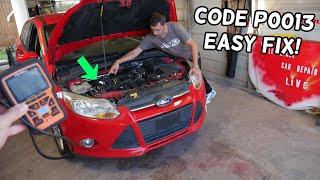
On a 2012-2018 Ford Focus, P0013 most often means the exhaust camshaft position actuator solenoid (a VVT solenoid) has failed or its wiring is damaged. Expect to pay $25-$75 for the part and $200-$350 for a shop to replace it, as the valve cover must be removed on the 2.0L engine.
- P0013 on your Focus points to an electrical issue with the exhaust VVT solenoid.
- The most likely fix is replacing the exhaust VVT solenoid, but always check the wiring and oil level first.
- On the 2.0L engine, be prepared for a more intensive repair, as the valve cover must be removed to access the solenoid.
- Using the correct, clean engine oil is critical for the health of the VVT system.
- Do not replace the camshaft position sensor for this code; focus on the solenoid and its circuit.
What's Unique About the 2012-2018 Ford Focus
For the popular 2.0L GDI engine in this Focus generation, replacing the VVT solenoids is more involved than on many other vehicles. The solenoids are located underneath the valve cover, meaning the cover must be removed to access and replace them. This increases labor time and cost compared to engines where the solenoids are externally mounted. Additionally, early models (2012-2014) were subject to a TSB regarding wiring harness chafing near the G103 ground on top of the engine, which makes checking the wiring a critical diagnostic step.
Symptoms You May Notice
- Check Engine Light is on
- Rough or unstable idle
- Engine hesitation or loss of power, especially during acceleration
- Decreased fuel economy
- Engine may be difficult to start
- Engine stalling
- Replacing the camshaft position sensor. The P0013 code is for the actuator solenoid circuit, not the position sensor circuit. While they work together, this code specifically points to an electrical fault with the solenoid.
- Replacing the VVT solenoid without testing it or the circuit first. The problem could be a simple wiring issue or a bad connector, which is a much cheaper fix.
Most Likely Causes
- Faulty Exhaust VVT Solenoid (Oil Control Valve) 🔴 High Probability The solenoid is an electro-mechanical part that operates in hot engine oil and has a finite lifespan. Internal coil windings can fail, creating an open circuit. Another common failure is for engine oil to leak through the body of the solenoid itself and contaminate the electrical connector, causing a poor connection.
How to confirm: After confirming power and ground at the connector, the most reliable test is to measure the resistance of the solenoid's two pins with a multimeter. A healthy solenoid should read between 6.9 and 7.9 ohms at 68°F (20°C). A reading of infinite (open circuit) or one far outside this range confirms a bad solenoid. Also inspect the connector for any signs of oil intrusion.
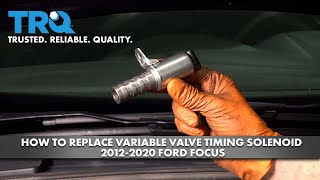
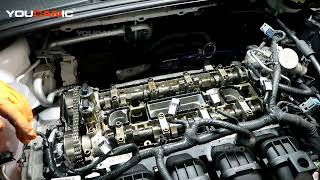
Typical fix: Replace the exhaust VVT solenoid. On the 2.0L GDI engine, this requires removing the valve cover for access. 🎬 Watch: A complete walkthrough of the solenoid replacement process. It is often recommended to replace both intake and exhaust solenoids at the same time, along with the valve cover gasket.
Est. part cost: $25-$75 - Wiring Harness or Connector Damage 🟡 Medium Probability A Technical Service Bulletin (TSB 18-2062) for 2012-2014 Focus models with the 2.0L engine points to potential for the engine wiring harness to chafe near ground G103 on top of the engine, which can cause shorts or open circuits. Connectors can also become brittle from heat cycles or contaminated with oil, leading to intermittent connections.
How to confirm: Visually inspect the wiring harness leading to the exhaust VVT solenoid for any signs of fraying, melting, or damage, paying close attention to the area near the G103 ground stud. Unplug the connector and check for corroded, bent, or oil-fouled pins. Use a multimeter to check for continuity from the PCM to the solenoid connector.
Typical fix: Repair the damaged section of wire or replace the connector pigtail. Ensure the harness is properly secured and add protective convolute or tape to prevent future chafing, as instructed by the TSB.
Est. part cost: $10-$40 - Dirty, Low, or Incorrect Engine Oil ⚪ Low Probability The VVT system is hydraulic and highly dependent on oil pressure and cleanliness. Extended oil change intervals can lead to sludge buildup that clogs the fine mesh screens on the VVT solenoids, impeding their mechanical function. While P0013 is an electrical code, low oil pressure can sometimes trigger a variety of VVT-related faults.
How to confirm: Check the oil level on the dipstick and note its color and condition. If the oil is very dark, sludgy, or below the minimum level, this could be a contributing factor. This is a maintenance issue that can cause component failure.
Typical fix: Perform an engine oil and filter change using the correct viscosity oil (e.g., 5W-20 for the 2.0L GDI). If the solenoid is clogged, it may need to be removed for cleaning or replacement.
Est. part cost: $30-$80
Rare But Worth Checking
- Faulty Powertrain Control Module (PCM): This is very uncommon. The PCM should only be considered after all other possibilities, including wiring and the solenoid itself, have been thoroughly tested and ruled out.
- Corrupted or Outdated PCM Software: In some instances, a PCM software glitch can cause false diagnostic codes. A dealership or qualified shop can check if any software updates are available for your vehicle's PCM that address VVT logic.
Diagnosis Steps
- Check the engine oil level and condition. Ensure it is full and clean. Top up or change if necessary.
- Scan for other codes. Note any other codes that may provide clues (e.g., P0010 for the intake solenoid).
- Inspect the wiring. Visually inspect the wiring harness and connector for the exhaust VVT solenoid. On 2012-2014 models, pay special attention to the harness area near the G103 ground on top of the engine for chafing. Check the connector for breaks, corrosion, or oil contamination.
- Test the solenoid circuit. If access is possible, disconnect the solenoid and use a multimeter to check for battery voltage at the connector with the key on. This confirms the power supply to the circuit.
- Test the solenoid resistance. Measure the resistance across the two pins of the solenoid itself. A correct reading should be between 6.9 and 7.9 ohms at 68°F (20°C). An open circuit (infinite resistance) or a reading far from spec indicates a failed solenoid.
- If the solenoid and wiring test good, the issue may be mechanical (clogged passages) or, in very rare cases, a faulty PCM or outdated software.
Parts You'll Likely Need
- Exhaust Variable Camshaft Timing (VCT) Solenoid
(OEM #CM5E-6C525-CC (also listed as 7M5G-6L713-AE))— This solenoid is the most common point of failure for the P0013 code, either due to an internal electrical fault, mechanical clogging, or oil leaking through the part into the connector.
Trusted brands: Motorcraft (OEM), Dorman (p/n 917-250), Standard Motor Products (SMP) (p/n VVT419)
OEM price range: $50-$80
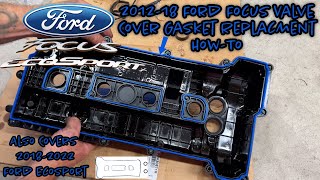
Aftermarket price range: $25-$50 - Valve Cover Gasket Set — Required for the 2.0L GDI engine because the valve cover must be removed to access the VVT solenoids. The gasket is a one-time use part and must be replaced to prevent oil leaks. 🎬 Watch: Step-by-step guide to replacing the valve cover gasket.
Trusted brands: Fel-Pro, Mahle, Motorcraft
OEM price range: $40-$60
Aftermarket price range: $20-$40
Related Codes That Often Appear With This One
- P0010 — P0010 is the equivalent circuit fault code for the intake ('A') camshaft VVT solenoid. It is common to see both if there is a shared wiring problem (like the harness chafing mentioned in TSB 18-2062) or if both solenoids are failing around the same time.
- P0014 — P0014 ('B' Camshaft Position - Timing Over-Advanced) is a performance code, not a circuit code. It can appear with P0013 if the solenoid's electrical fault causes it to fail in a way that affects timing, but P0013 points specifically to the electrical circuit fault.
Technical Service Bulletins (TSBs) & Recalls
- TSB 18-2062: '2.0L GDI - Various Drivability Concerns And/Or Illuminated Malfunction Indicator Lamp (MIL)'. Addresses potential for wiring harness chafing on 2012-2014 2.0L GDI models, leading to numerous DTCs. The fix involves inspecting, repairing, and adding protective shielding to the harness.
Platform-Specific Known Issues
- On 2.0L GDI engines, the VVT solenoids are located under the valve cover, which makes replacement a 1.5-2.5 hour job that requires replacing the valve cover gasket as well.
- TSB 18-2062 notes that 2012-2014 Focus models (built on or before 4-Feb-2014 for automatic, 19-Feb-2014 for manual) can have wiring harnesses chafe near the G103 ground stud, causing various electrical faults including P0013.
- Recall 23S64 was issued for 2016-2018 Focus models with the 1.0L engine for a failing oil pump belt. A loss of oil pressure from this issue can cause catastrophic engine damage and may present with various VVT-related codes due to lack of oil pressure.
Mechanic-Grade Diagnostic Values
- VCT Solenoid Connector Voltage — expected: Battery Voltage (approx. 12V) on the power supply pin with Key On, Engine Off.. Failure: No voltage or significantly low voltage indicates a problem with the power supply circuit (fuse, relay, or wiring).
- VCT Solenoid Resistance — expected: 6.9 to 7.9 ohms at 68°F (20°C).. Failure: Infinite resistance (open circuit) or a reading significantly outside the specified range indicates a failed solenoid coil.
- VCT Advanced Error PID (Live Data) — expected: Should be near 0° (within +/- 5°) when the engine is in closed-loop operation and not under heavy load.. Failure: A large, persistent error value when the system should be stable can indicate a mechanical problem (phaser) or a solenoid that is not responding correctly to PCM commands.
Scan Tool Commands That Help
- Ford IDS (Integrated Diagnostic System): VCT Solenoid Output State Control / Bi-Directional Activation — This function allows a technician to command the VCT solenoid on and off or to a specific duty cycle while the engine is running at idle. If the engine idle stumbles or changes when the solenoid is commanded, it confirms the solenoid is mechanically capable of actuating and affecting oil flow. If there is no change in idle, the solenoid is likely stuck, clogged, or there's an oil pressure issue. This helps distinguish between a circuit fault (P0013) and a mechanical/hydraulic problem.
Wiring & Ground Locations
- VCT Solenoid Connector — On the 2.0L GDI, the connectors are on top of the valve cover, but the solenoids themselves are underneath it. For the 1.0L EcoBoost, they are on the side of the timing chain housing.. This connector is a common failure point. Oil can leak through the solenoid body and contaminate the pins, causing a poor connection. The plastic can also become brittle and break. Pin 1 is typically the 12V power supply, and Pin 2 is the control wire (ground-side switched) from the PCM.
- G103 — On the 2.0L GDI, this ground is a stud located on the top left side of the engine (driver's side), near the valve cover, where several ground wires attach. It is specifically cited in TSB 18-2062.. This is the specific ground point where the wiring harness was found to chafe on 2012-2014 models. A poor connection here can cause erratic electrical behavior for multiple components, including the VCT solenoids.
- Main Chassis/Transmission Ground — A primary ground strap runs from the negative battery terminal area to a post on the driver's side strut tower, and another important ground connects to the transmission bell housing.. While not specific to the VCT circuit, a poor main engine or transmission ground can cause a host of seemingly unrelated electrical issues and drivability problems. A clean, tight connection is critical for all PCM-controlled components to function correctly.
Real Owner Repair Stories
- Reddit user in r/FordFocus (2017 Ford Focus 1.0L EcoBoost) — Car would not start after replacing the slave cylinder.
❌ Tried (didn't work) Retracing steps from the transmission work.
✅ What actually fixed it The user discovered a forgotten ground wire that was supposed to bolt to the transmission bell housing. Cleaning the contact surfaces and properly securing this main ground wire resolved the no-start condition. This highlights how a main ground issue can cause major electrical problems.
Model Year Variations Within This Range
- 2012 - Early 2014: These model years are specifically called out in TSB 18-2062 for a potential wiring harness chafe near the G103 ground stud. Later models had revised harness routing or protection, making this specific failure point less likely.
Diagnostic Flowchart
Used vs. New Parts: Buying Guide for This Vehicle
When a used part is the smart pick: For this repair, using used parts is generally not recommended for the solenoids themselves. However, a used connector pigtail or a section of wiring harness from a junkyard vehicle can be a cost-effective solution if the original wiring is damaged.
Donor-vehicle mileage cap: roughly under 80000 miles for the part to have meaningful remaining life.
What to inspect on the donor part:
- For wiring: Check for flexibility; avoid any harnesses that are stiff, brittle, or have cracked insulation.
- For connectors: Inspect for intact locking tabs, no corrosion on pins, and no signs of oil contamination.
- Verify the donor vehicle was not involved in a front-end collision that could have stressed the harness.
OEM-only on this vehicle (don't cheap out):
- VVT Solenoid: While high-quality aftermarket options exist, using the OEM Motorcraft part is the safest bet to ensure correct calibration and longevity. Electronic components like this are often a gamble with cheaper aftermarket brands.
Aftermarket brands forum-validated for this vehicle:
- Dorman (specifically their 'OE FIX' line, which often re-engineers parts to correct original design flaws)
- Standard Motor Products (SMP)
Brands owners have reported issues with on this vehicle:
- Unnamed, 'white-box' parts from online marketplaces should be avoided. Forum discussions frequently mention issues with cheap, no-name solenoids failing quickly or not performing to spec right out of the box.
Real Owner Stories
Aggregated from forums and TSBs cited above. Mileages and costs reflect what owners reported in those sources.
Ford Focus 1.0 EcoBoost
Symptoms: Getting error code P0013. The car won't start properly — the starter spins, fuel is flowing, but the engine doesn't run.
What fixed it: A commenter suggested the issue was likely the 'B' Camshaft position Actuator solenoid and recommended getting a new one.
Source hint: Reddit r/FordFocus
2014 Ford Focus 2.0L
Symptoms: The P0013 code returned even after cleaning the electrical connector.
What fixed it: The owner suspected the connector pigtail itself was faulty due to a poor connection and ordered a replacement pigtail to fix the issue, believing the solenoid was still good.
Source hint: Reddit r/Ford - 2014 ford focus P0013 dtc
Ford Focus (common issue)
Symptoms: A common cause for P0013 across many Ford engines is oil leaking through the body of the VCT solenoid itself.
What fixed it: The cause was identified as oil leaking through the VCT solenoid body and contaminating the electrical connector and wiring loom, indicating the solenoid needed replacement.
Source hint: Ford Owners Club - 2023 Fiesta Fault code P0013
Related OBD-II Codes
Frequently Asked Questions
Where is the exhaust VVT solenoid located on my 2014 Focus 2.0L GDI?
I have a 2013 Focus with code P0013. Could the wiring be the problem?
What is the correct resistance for the exhaust VVT solenoid on a Ford Focus?
My 2017 Focus has the 1.0L engine and a P0013 code. Is there a related recall?
If I'm replacing the exhaust VVT solenoid, should I replace anything else at the same time?
Can low or dirty oil cause the P0013 code on my Focus?
Helpful Videos
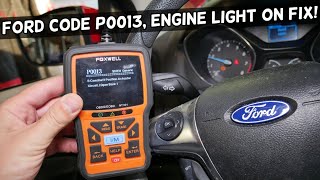
We Have This Part in Stock

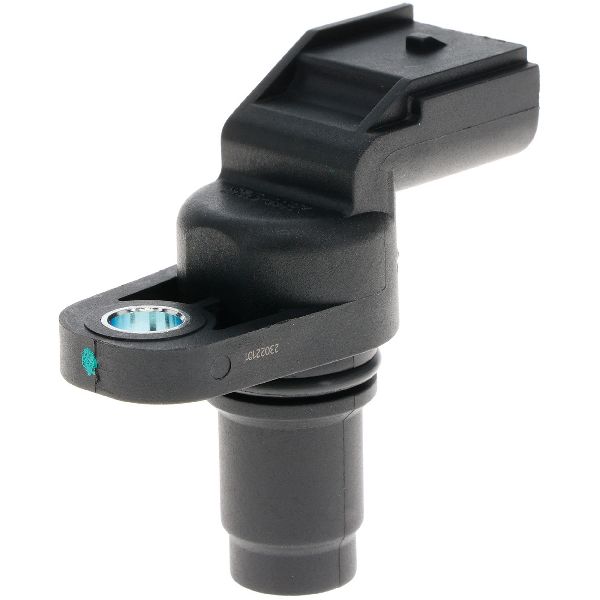
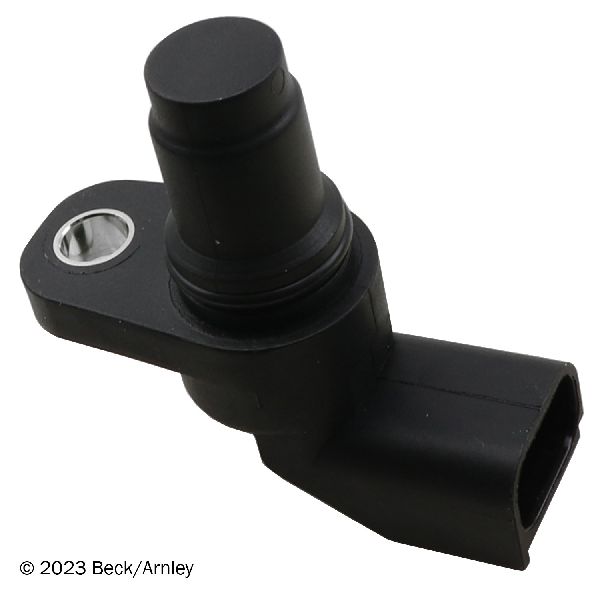

The information in this article is provided for general reference and educational purposes only. Vehicle specifications, procedures, and part compatibility can vary by production date, trim level, and region. Always consult your vehicle's factory service manual and verify part numbers before purchasing or performing repairs. Safety-critical components such as airbags, seat belts, and braking systems should be installed by a qualified professional.
- Ford Focus:
- 🧭 Diagnostic Flowchart
- 🎬 Helpful Videos
- 🛍️ Shop This Part
- What's Unique About the 2012-2018 Ford Focus
- Symptoms You May Notice
- Most Likely Causes
- Rare But Worth Checking
- Diagnosis Steps
- Parts You'll Likely Need
- Related Codes That Often Appear With This One
- Technical Service Bulletins (TSBs) & Recalls
- Platform-Specific Known Issues
- Mechanic-Grade Diagnostic Values
- Scan Tool Commands That Help
- Wiring & Ground Locations
- Real Owner Repair Stories
- Model Year Variations Within This Range
- Used vs. New Parts: Buying Guide for This Vehicle
- Real Owner Stories
- Ford Focus 1.0 EcoBoost
- 2014 Ford Focus 2.0L
- Ford Focus (common issue)
- Related OBD-II Codes
- Frequently Asked Questions
- 🎟️ Get 5% Off