

P0013 on 2013-2020 Ford Fusion: Exhaust VVT Solenoid Circuit Causes and Fixes
On a 2013-2020 Ford Fusion, code P0013 almost always points to a failed exhaust camshaft position actuator solenoid (VVT solenoid). This is often caused by dirty oil or simple electronic failure. Replacing the solenoid is a common, DIY-friendly fix, with the part costing between $25 and $80.
- P0013 on a Ford Fusion points to an electrical fault in the exhaust VVT solenoid circuit.
- Before replacing parts, always check your engine oil level and condition first, as low or dirty oil is a common cause.
- The most likely fix is replacing the exhaust VVT solenoid, which is an affordable and accessible part on most Fusion engines, though it is under the valve cover on some 2.0L models.
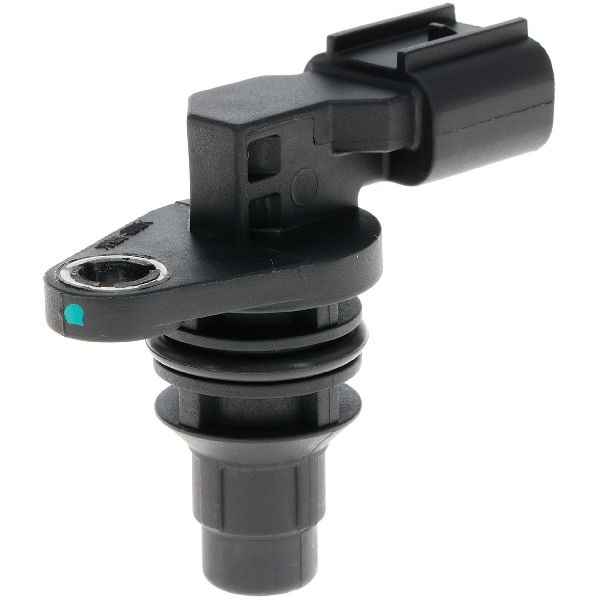
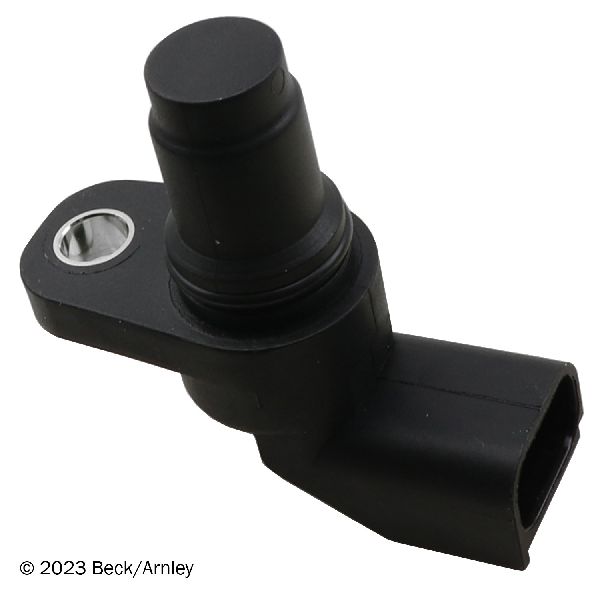
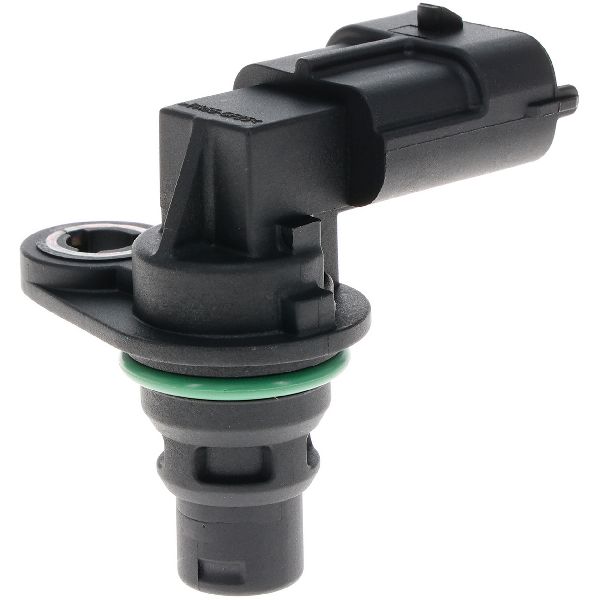
- Do not confuse the VVT solenoid (actuator) with the camshaft position sensor; they are different parts.
- If you also have a P0014 code, fixing the P0013 issue will almost certainly clear both.
What's Unique About the 2013-2020 Ford Fusion
The second-generation Ford Fusion (2013-2020) used several different four-cylinder engines, including the 1.5L, 1.6L, and 2.0L EcoBoost, and the naturally aspirated 2.5L Duratec. While the P0013 code points to the same component on all of them—the exhaust VVT solenoid—the part's location and accessibility can vary. On some 2.0L EcoBoost and 2.0L Hybrid engines, the solenoids are located under the valve cover, making replacement a more involved job compared to other engines where they are externally mounted and easily accessible. This turns a quick, 15-minute fix into a 2-3 hour job that also requires replacing the valve cover gasket.
Symptoms You May Notice
- Check Engine Light is on
- Rough or uneven idle
- Hesitation or loss of power during acceleration
- Decreased fuel economy
- Engine may stall or be hard to start
- Engine rattling noise, especially at startup
- Replacing the Camshaft Position Sensor. P0013 is a circuit code for the VVT solenoid (actuator), not the sensor that reads the camshaft's position. Replacing the sensor will not fix this code.
Most Likely Causes
- Failed Exhaust VVT Solenoid (Oil Control Valve) 🔴 High Probability These solenoids can fail electronically due to an internal short or open circuit in the coil, or they can become mechanically stuck from oil sludge and contaminants. This is a very common failure point on many modern engines, including those in the Fusion.
How to confirm: Check the solenoid's resistance with a multimeter; it should be within the manufacturer's specified range (typically 6-12 ohms). An open circuit (infinite resistance) or a short (very low resistance) indicates a failed solenoid. You can also swap the exhaust and intake solenoids (if they are identical parts) and see if the code changes to P0010, which would confirm the solenoid is the faulty component.
Typical fix: Replace the exhaust VVT solenoid. It is often recommended to replace both intake and exhaust solenoids at the same time, as the second one may fail soon after the first.
Est. part cost: $25-$80 - Low or Dirty Engine Oil 🟡 Medium Probability The VVT system is hydraulic and relies on clean oil at the proper pressure to function. Infrequent oil changes can lead to sludge buildup that clogs the fine mesh screens on the VVT solenoids, restricting oil flow and causing this code. Using the incorrect oil viscosity can also cause issues.
How to confirm: Check the engine oil level on the dipstick and inspect its condition. If the oil is low, black, or sludgy, it needs to be changed. This is the first and most important check before replacing any parts.
Typical fix: Perform an engine oil and filter change using the manufacturer-specified grade of oil (e.g., SAE 5W-20 or 5W-30 depending on the engine).
Est. part cost: $40-$70 - Damaged Wiring or Corroded Connector ⚪ Low Probability Engine vibrations and heat can cause the wiring harness leading to the solenoid to become brittle, frayed, or shorted over time. Oil or moisture can also contaminate the electrical connector, leading to a poor connection and an open/short circuit condition.
How to confirm: Visually inspect the wiring and connector for any signs of damage, burning, or corrosion. Use a multimeter to check for proper voltage and ground at the connector with the key on. Wiggle the harness while testing to see if the connection is intermittent.
Typical fix: Repair the damaged section of wiring or clean/replace the electrical connector.
Est. part cost: $5-$50
Rare But Worth Checking
- Faulty Powertrain Control Module (PCM): This is extremely rare. All other possibilities, especially the solenoid and its circuit, should be exhaustively tested before considering PCM replacement.
Diagnosis Steps
- Check the engine oil level and condition. Top off or change the oil if it is low or dirty. This is the most critical first step.
- Inspect the electrical connector and wiring going to the exhaust VVT solenoid (Bank 1, 'B' position) for any visible damage, corrosion, or loose connections.
- Using a multimeter, check the resistance of the VVT solenoid. A typical reading for a good solenoid is between 6 and 12 ohms. An open circuit (infinite resistance) or a short (very low resistance) indicates a failed solenoid.
- If the resistance is within spec, check for battery voltage on the power wire to the solenoid's connector with the ignition on.
- If possible, use a capable scan tool to command the solenoid on and off to verify its operation. You may hear a clicking sound from the solenoid if it is working.
- As a final confirmation, swap the exhaust solenoid with the intake solenoid (if they are the same part number). Clear the codes and run the engine. If the code changes to P0010 (for the intake solenoid), the original exhaust solenoid is confirmed to be faulty.
- If the solenoid and wiring are good, consider cleaning the solenoid's passages and screen with brake cleaner or electrical contact cleaner before resorting to replacement.
Parts You'll Likely Need
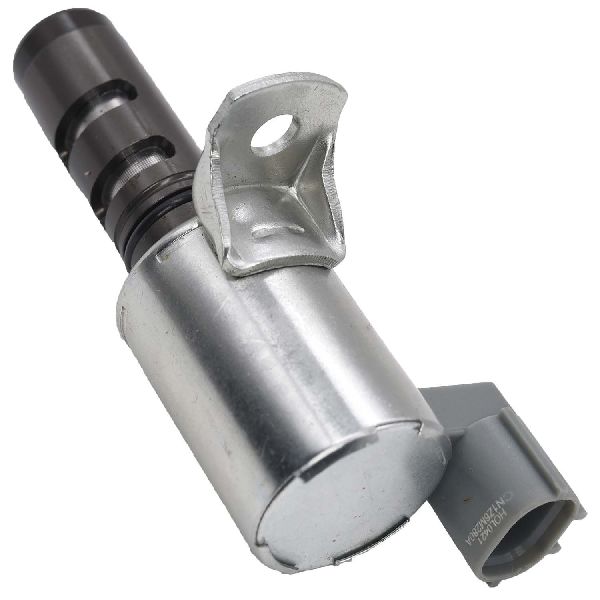
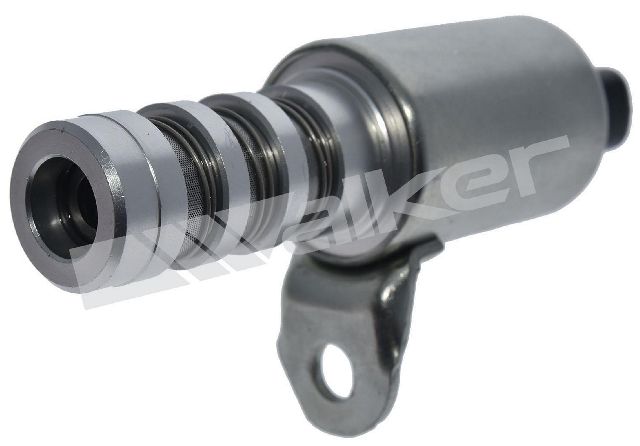
- Variable Valve Timing (VVT) Solenoid / Camshaft Position Actuator Solenoid (Exhaust)
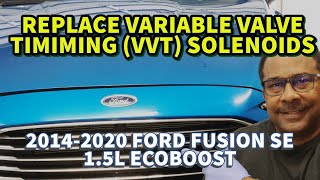
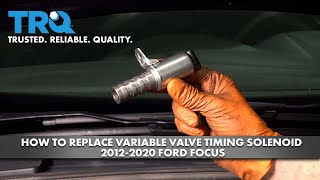
(OEM #CN1Z-6M280-F (For 1.5L/1.6L EcoBoost) 🎬 Watch: Step-by-step VVT solenoid replacement on a 1.5L Fusion)— This is the most common component to fail, either electrically or by getting clogged with debris, directly causing the P0013 circuit code.
Trusted brands: Motorcraft, Dorman, Delphi, Standard Motor Products
OEM price range: $60-$120
Aftermarket price range: $25-$80
Related Codes That Often Appear With This One
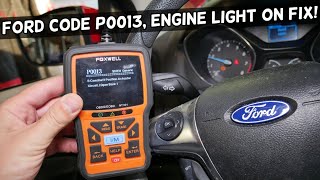
- P0014 — P0014 ('B' Camshaft Position - Timing Over-Advanced) often appears with P0013. The P0013 indicates an electrical circuit fault, which prevents the solenoid from working, causing the mechanical timing performance issue reported by P0014. Fixing the P0013 issue will typically resolve both codes. 🎬 Watch: Common causes and cheap fixes for P0013 and P0014
- P0010 — P0010 is the equivalent circuit code for the intake ('A') camshaft solenoid. Seeing both codes together could point to a shared power or ground issue, a blown fuse, or a systemic problem like severe oil sludging affecting both solenoids.
Technical Service Bulletins (TSBs) & Recalls
- SSM 50067: While not for P0013 specifically, this TSB notes that various VCT-related DTCs on 2015-2021 Ford vehicles can be caused by small debris causing the VCT solenoid to stick. It recommends using a scan tool to cycle the solenoid to try and dislodge debris before replacement.
- SSM 47170: An earlier TSB with similar advice to SSM 50067, confirming this is a known potential issue related to oil contamination.
Platform-Specific Known Issues
- On some 2.0L EcoBoost engines, the VVT solenoids are located under the valve cover. This increases repair complexity and cost, as the valve cover must be removed and the gasket replaced. This contrasts with the 2.5L engine where the solenoids are externally accessible.
Mechanic-Grade Diagnostic Values
- VVT (VCT) Solenoid Resistance — expected: 6.9 to 7.9 ohms at 68°F (20°C). Failure: A reading of infinite resistance (OL) indicates an open circuit, while a reading significantly outside the specified range indicates a faulty coil.
- VVT (VCT) Solenoid Connector Voltage — expected: Approximately 12V (Battery Voltage) on the power supply pin with Key On, Engine Off.. Failure: No voltage or significantly low voltage points to a problem in the power supply circuit, such as a blown fuse or damaged wiring.
- VCT Advanced Error PID (Live Scan Tool Data) — expected: Close to 0° (+/- 5°) when the engine is at a stable, warm idle.. Failure: A value that is consistently high, low, or erratic indicates the camshaft is not at its commanded position, which could be due to a faulty solenoid, phaser, or low oil pressure.
Scan Tool Commands That Help
- Ford IDS (or equivalent professional scan tool): VCT Solenoid On/Off Command or Cycle Test — This bidirectional command is used to manually activate the solenoid. A technician listens for an audible 'click' from the solenoid and watches for a change in engine idle quality. This confirms if the solenoid is mechanically responding to electrical commands. It is also used, as per Ford TSBs, to attempt to dislodge small debris that may be causing the solenoid to stick before replacing the part.
Wiring & Ground Locations
- Fuse F8 — In the under-hood fuse box (Battery Junction Box). It is typically located in a row of fuses directly under a larger relay.. This fuse supplies power to the VVT solenoids. If this fuse is blown, neither the intake nor exhaust solenoid will receive power, which can trigger P0013 and/or P0010.
- G103 Ground Stud (Potential Chafe Point) — On top of the engine, often near the engine wiring harness.. While documented in a TSB for the Ford Focus with a similar engine, the engine wiring harness can chafe against this ground stud. This can cause a short or open in the VVT solenoid circuit, directly leading to code P0013. It's a valuable inspection point if direct testing of the solenoid and connector shows no faults.
Real Owner Repair Stories
- Reddit r/MechanicAdvice (2016 Ford F-350 with 6.2L engine) — Engine running very poorly, P0013 code, and misfire codes on cylinders 2, 3, and 4.
❌ Tried (didn't work) Replacing the VVT solenoid in both banks., Replacing all spark plugs.
✅ What actually fixed it The consensus from experienced technicians was a high probability of a stretched timing chain. The P0013 circuit code was likely a symptom of the underlying mechanical timing failure, as the PCM's commands to the solenoid were not resulting in the expected camshaft movement. - Reddit r/FordFocus (Ford Focus 1.0 EcoBoost) — P0013 code and a no-start condition after an engine swap.
❌ Tried (didn't work) Replacing the VVT solenoid.
✅ What actually fixed it The owner replaced the solenoid, and the engine almost started but then died. The suggested root cause from other users was a mechanical timing issue, as the EcoBoost engines are known for timing belt problems that can lead to a loss of compression and trigger various timing-related codes.
OEM Part Supersession History
CN1Z-6M280-A, CN1Z-6M280-C→CN1Z-6M280-F— Standard part revision and improvement by the manufacturer.
Heads up: The newer -F revision is the correct service part and is backward compatible with vehicles that originally used the -A or -C revisions for the 1.5L and 1.6L EcoBoost engines.
Model Year Variations Within This Range
- 2013-2014: Some early models in this range were equipped with the 1.6L EcoBoost engine.
- 2014-2020: Most models after 2014 were equipped with the 1.5L EcoBoost engine, which replaced the 1.6L. Both engines use the same VVT solenoid (part number CN1Z-6M280-F).
- 2013-2020 (2.0L EcoBoost & Hybrid): On the 2.0L engines, the VVT solenoids are located under the valve cover, significantly increasing the labor time and cost for replacement compared to the 1.5L, 1.6L, and 2.5L engines where they are externally accessible.
Diagnostic Flowchart
Other Known Issues on This Vehicle
Issues unrelated to this code that are worth knowing about as an owner of this generation:
- Coolant Intrusion in 1.5L & 2.0L EcoBoost Engines 🔴 High — A known issue where a design flaw in the engine block can lead to cracks between cylinders, causing coolant to leak into the combustion chamber. This often leads to misfires and requires a long block replacement. (Ref: TSB 19-2346)
- Degrading Shifter Cable Bushing 🟠 Medium — The bushing that attaches the shifter cable to the transmission can degrade and detach, causing the vehicle to be in a different gear than what the shifter indicates. This can lead to a rollaway risk if the vehicle is not actually in Park. (Ref: Recall 18S20, 22V-413)
- Steering Gear Motor Bolt Corrosion 🔴 High — In regions where road salt is used, the bolts securing the electric power steering gear motor can corrode and fracture, leading to a loss of power steering assist. (Ref: Recall 19S26)
- Harsh or Delayed Automatic Transmission Shifting 🟡 Low — Some owners report issues with the 6F35 automatic transmission, including harsh shifts or delays in engagement. Often related to software or fluid condition.
Used vs. New Parts: Buying Guide for This Vehicle
When a used part is the smart pick: For a VVT solenoid, buying a used part is not recommended. The part is relatively inexpensive new, and a used solenoid may be clogged with sludge or near the end of its electronic life from the donor vehicle. The labor cost, especially on 2.0L engines, makes it unwise to risk installing a used part.
Donor-vehicle mileage cap: roughly under 30000 miles for the part to have meaningful remaining life.
What to inspect on the donor part:
- Ensure the screen is perfectly clean and free of any metallic debris.
- Check that the electrical connector is not cracked, corroded, or full of oil.
- If possible, test the resistance with a multimeter before purchase to ensure it's within the 6.9-7.9 ohm specification.
OEM-only on this vehicle (don't cheap out):
- While not strictly OEM-only, using a Motorcraft (OEM) VVT solenoid is the safest choice for reliability and correct performance. Some aftermarket parts may not meet the same quality standards.
Aftermarket brands forum-validated for this vehicle:
- Standard Motor Products (SMP)
- Delphi
- Hitachi
Brands owners have reported issues with on this vehicle:
- Some owners have reported premature failures with lower-cost, unbranded solenoids. Dorman is a widely available option, but some comparisons show noticeable differences in material and construction quality versus the OEM part.
Real Owner Stories
Aggregated from forums and TSBs cited above. Mileages and costs reflect what owners reported in those sources.
2013-2020 Ford Fusion (Second Generation)
Symptoms: Owners on FordFusionForum.com discussed the P0013 code appearing and debated whether it was a DIY-friendly fix.
What fixed it: Many owners confirmed that replacing the solenoid or performing a thorough oil change/engine flush resolved the P0013 code.
Source hint: FordFusionForum.com
2015-2021 Ford Fusion
Symptoms: VCT-related DTCs caused by small debris causing the VCT solenoid to stick.
What fixed it: Using a scan tool to cycle the solenoid to try and dislodge debris before resorting to replacement.
Source hint: SSM 50067
Related OBD-II Codes
Frequently Asked Questions
I have a 2016 Ford Fusion with the 2.0L EcoBoost; why is the P0013 repair more expensive for me than the 2.5L engine?
Is there a TSB for VCT solenoid issues on my 2017 Fusion?
Can I just swap parts to see if the exhaust solenoid is actually bad?
Could my P0013 code be related to the coolant intrusion issue on my 1.5L EcoBoost?
What should I check first on my Fusion before buying a new solenoid?
Should I replace both solenoids at once on my Fusion?
Helpful Videos

We Have This Part in Stock

The information in this article is provided for general reference and educational purposes only. Vehicle specifications, procedures, and part compatibility can vary by production date, trim level, and region. Always consult your vehicle's factory service manual and verify part numbers before purchasing or performing repairs. Safety-critical components such as airbags, seat belts, and braking systems should be installed by a qualified professional.
- Ford Fusion:
- 🧭 Diagnostic Flowchart
- 🎬 Helpful Videos
- 🛍️ Shop This Part
- What's Unique About the 2013-2020 Ford Fusion
- Symptoms You May Notice
- Most Likely Causes
- Rare But Worth Checking
- Diagnosis Steps
- Parts You'll Likely Need
- Related Codes That Often Appear With This One
- Technical Service Bulletins (TSBs) & Recalls
- Platform-Specific Known Issues
- Mechanic-Grade Diagnostic Values
- Scan Tool Commands That Help
- Wiring & Ground Locations
- Real Owner Repair Stories
- OEM Part Supersession History
- Model Year Variations Within This Range
- Other Known Issues on This Vehicle
- Used vs. New Parts: Buying Guide for This Vehicle
- Real Owner Stories
- 2013-2020 Ford Fusion (Second Generation)
- 2015-2021 Ford Fusion
- Related OBD-II Codes
- Frequently Asked Questions
- 🎟️ Get 5% Off