

P0013 on 2011-2015 Kia Optima 2.0T: Exhaust Camshaft Actuator Circuit Causes and Fixes
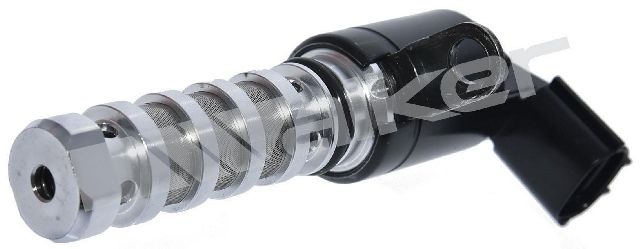
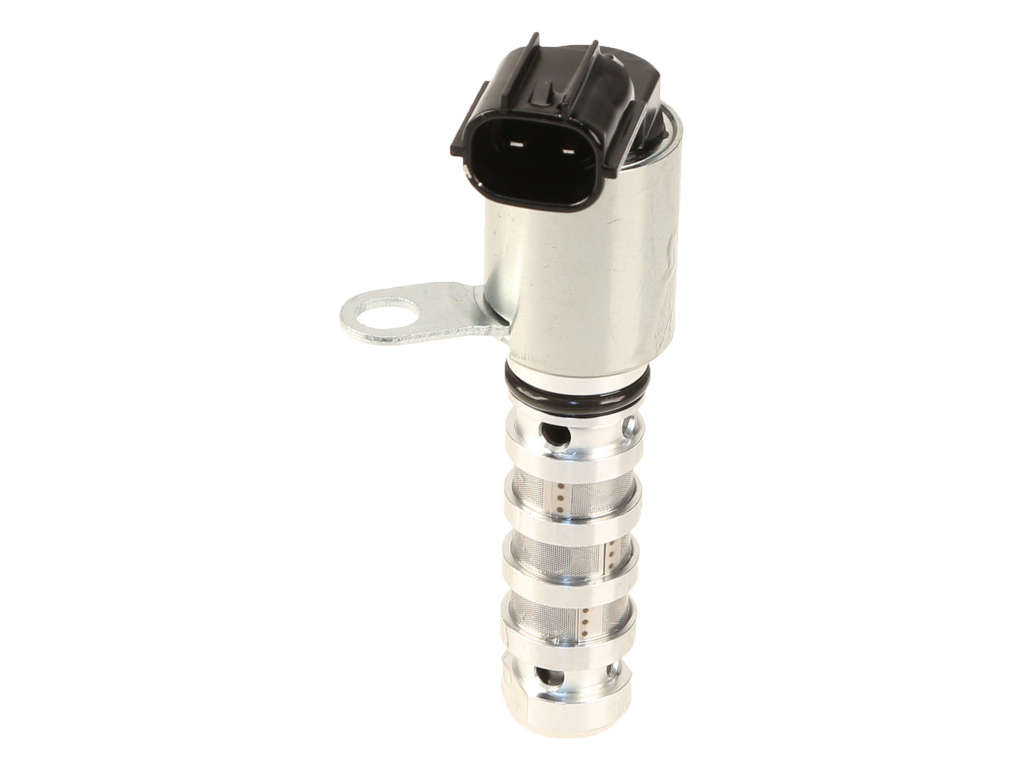
On a 2011-2015 Kia Optima 2.0T, P0013 almost always points to a failed exhaust Oil Control Valve (OCV) or low/dirty engine oil. First, check your oil level and condition. If the oil is fine, replacing the exhaust OCV (Part No. 24375-2G500) is a simple DIY fix, with the part costing between $30 and $80. This code is a serious warning for this engine, often preceding major oil-related failures.
- P0013 on this specific Kia Optima points to an electrical issue with the exhaust camshaft oil control valve (OCV).
- **ALWAYS check the engine oil level and condition first.** Low or dirty oil is the leading cause of this code and a major red flag for the Theta II engine's known issues.
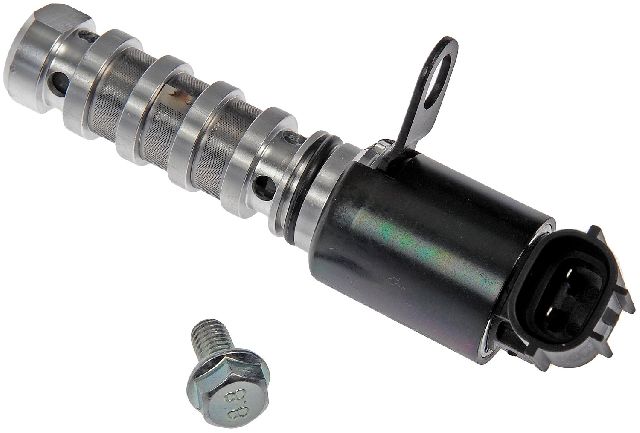
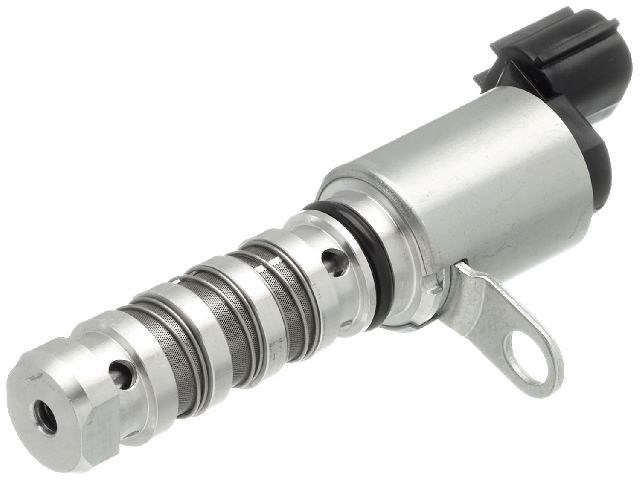
- The most likely required part is the exhaust OCV, OEM part number 24375-2G500. It is an inexpensive and easy part to replace for most DIYers.
- Do not confuse the OCV (actuator solenoid) with the camshaft position sensor; they are different parts.
- If code P1326 is also present, stop driving and contact a Kia dealer immediately, as this signals a high probability of internal engine failure.
What's Unique About the 2011-2015 Kia Optima
The Theta II GDI engine in this Optima has a well-documented history of severe internal problems, often stemming from manufacturing debris that restricts oil flow to the connecting rod bearings. This led to a major recall (NHTSA 17V224) and a lifetime warranty extension for the engine block on many vehicles. Because of this, P0013 is more than a simple component code; it's a critical early warning sign of oil contamination or starvation that can clog the OCV and may precede catastrophic engine failure. Its appearance warrants immediate attention to the engine's oil condition and a check with a Kia dealer for warranty status.
Symptoms You May Notice
- Check Engine Light is on
- Rough idle
- Poor acceleration and loss of power
- Decreased fuel economy
- Engine stalling
- Rattling noise from the engine
- In some cases, fresh oil with new detergents can dislodge built-up sludge, which then clogs the fine mesh screens on the OCVs, causing the codes to appear. This indicates a significant amount of sludge was already present in the engine.
- Replacing the camshaft position *sensor*. P0013 is a circuit code for the actuator (solenoid), not the position sensor. A bad sensor would set a different code, like P0365.
- Replacing the intake ('A') VVT solenoid. P0013 specifically refers to the 'B' camshaft, which is the exhaust side on this engine. The intake solenoid is part number 24355-2G500, while the exhaust is 24375-2G500.
Most Likely Causes
- Low or Dirty Engine Oil 🔴 High Probability The Theta II engine is known for oil consumption and sludge issues, which directly clog the fine mesh screens on the Oil Control Valves, causing them to fail or operate slowly.
How to confirm: Check the engine oil dipstick for a low level or oil that is dark, thick, or has a burnt smell. An oil change is a primary diagnostic step.
Typical fix: Perform an engine oil and filter change using a high-quality full synthetic oil of the correct viscosity (check owner's manual, typically 5W-30 or 5W-40 for the turbo).
Est. part cost: $30-$100 - Failed Exhaust Oil Control Valve (OCV) 🔴 High Probability These solenoids are sensitive to oil contamination and can fail electrically from the stress of operating in a sludged environment. They are the most common component failure for this code.
How to confirm: After confirming oil level is good, test the OCV. Remove the connector and check resistance with a multimeter; it should be between 6.9 and 7.9 ohms. You can also remove the valve and apply 12V to see if the internal plunger moves. Visually inspect the screens for metallic debris.
Typical fix: Replace the exhaust Oil Control Valve. The intake OCV (P/N 24355-2G500) is often replaced at the same time as a preventative measure.
Est. part cost: $30-$80 - Damaged Wiring or Connector ⚪ Low Probability
How to confirm: Visually inspect the wiring harness and connector going to the exhaust OCV for any signs of fraying, corrosion, or loose pins. Oil leaking from the valve cover gasket can sometimes contaminate the connector. Use a multimeter to check for 12V at the connector with the ignition on.
Typical fix: Repair the damaged section of wiring or replace the connector pigtail.
Est. part cost: $10-$30
Rare But Worth Checking
- Failing Powertrain Control Module (PCM): This is extremely rare. All other possibilities, especially the OCV and its wiring, should be exhaustively ruled out before considering the PCM as the cause.
- Timing Chain / CVVT Actuator Mechanical Failure: → Shop Engine Timing Chain In rare cases, especially on high-mileage engines, the timing chain could be stretched or the CVVT phaser on the camshaft itself could be mechanically stuck or failed. This is a much more involved repair.
Diagnosis Steps
- Read the code with an OBD-II scanner and document any other codes present, paying close attention to P1326, P0010, or P0014.
- Check the engine oil level and condition immediately. If it is low, dirty, or overdue for a change, correct this first. A simple oil change can sometimes fix the issue.
- Contact a Kia dealer with your VIN to check for open recalls (like NHTSA 17V224) or warranty extensions related to the engine or KSDS update (PI1803).
- Inspect the electrical connector and wiring going to the exhaust OCV (the 'B' solenoid, typically the one closer to the firewall) for any visible damage, corrosion, or loose connections.
- Disconnect the OCV and use a multimeter to measure the resistance across the two pins on the solenoid. A healthy solenoid should read between 6.9 and 7.9 ohms. An open circuit (infinite resistance) or a short (zero resistance) indicates a failed solenoid.
- If the solenoid resistance is good, check for power at the harness connector. With the key on and engine off, one pin should have 12 volts.
- If wiring and the solenoid test okay, the issue may be a mechanical blockage. Remove the OCV and inspect its screens for sludge or metallic debris. Cleaning is a temporary fix at best; replacement is recommended if debris is found.
- If a new OCV and fresh oil do not resolve the code, the issue could be more severe, such as a timing chain issue, a clogged oil passage, or a rare PCM fault, and may require professional diagnosis.
Parts You'll Likely Need
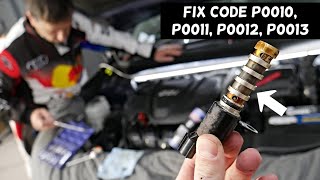
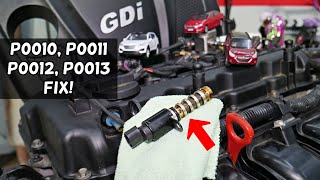
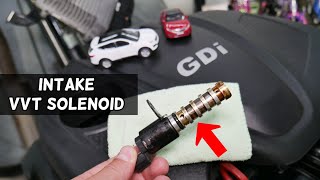
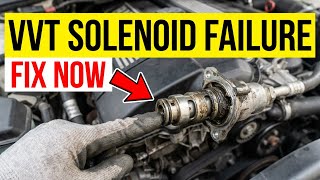
- Exhaust Oil Control Valve (OCV) / VVT Solenoid
(OEM #24375-2G500)— This solenoid is the most common part to fail, either electrically or by getting clogged with contaminated engine oil, directly causing the P0013 code.
Trusted brands: Kia (OEM), Hyundai (OEM), Dorman, Standard Motor Products (SMP)
OEM price range: $60-$90
Aftermarket price range: $30-$75 - Engine Oil and Filter — Low or dirty oil is a primary cause of OCV failure on this engine. An oil and filter change is a critical first step in diagnosis and repair.
Trusted brands: Pennzoil, Mobil 1, Castrol (use OEM-specified full synthetic viscosity)
Aftermarket price range: $30-$100
Related Codes That Often Appear With This One
- P1326 — This is a critical code for the Knock Sensor Detection System (KSDS). If seen with P0013, it strongly indicates internal engine rod bearing wear is happening, contaminating the oil and causing the OCV failure. The KSDS software (from TSB PI1803) was designed to detect these vibrations and put the vehicle into Limp Home Mode (flashing CEL, RPM limited to ~2000) to prevent a crash from engine seizure. Seeing this code almost always means a trip to the dealer is required to check for an engine replacement under the extended warranty.
- P0014 — 'B' Camshaft Position - Timing Over-Advanced. This code relates to the mechanical timing result, while P0013 relates to the electrical circuit. They often appear together when the OCV is stuck or failing mechanically.
- P0010 — Intake ('A') Camshaft Position Actuator Circuit. If the engine oil is heavily sludged, it can clog and damage both the intake and exhaust OCVs at the same time, causing both circuit codes to appear.
Technical Service Bulletins (TSBs) & Recalls
- PI1803: Knock Sensor Detection System (KSDS) ECU Logic Improvement.
- NHTSA 17V224 / SC147: Safety recall for inspecting and replacing the engine due to connecting rod bearing wear.
Platform-Specific Known Issues
- Theta II Engine Failure & Recall 17V224: This engine was subject to recalls and a lifetime warranty extension (e.g., NHTSA Campaign 17V224 / Kia SC147) for engine bearing wear caused by manufacturing debris. This debris restricts oil flow, causing bearing failure, which contaminates the oil with metal shavings. P0013 is often one of the first symptoms of this oil contamination. It is crucial to check with a Kia dealer for any open recalls or warranty extensions on your vehicle's VIN.
- Knock Sensor Detection System (KSDS) Update (PI1803): Many of these vehicles received a software update (Product Improvement Campaign PI1803) that uses the knock sensor to detect early signs of engine failure. If this system detects bearing failure vibrations, it will trigger code P1326 and put the vehicle into a reduced-power 'Limp Home Mode' (flashing CEL, RPM limited to 1800-2000) to prevent catastrophic failure and a potential crash. The presence of P1326 is the primary trigger for a warranty engine replacement.
Mechanic-Grade Diagnostic Values
- Exhaust Oil Control Valve (OCV) Solenoid Resistance — expected: 6.9 to 7.9 Ohms at 68°F (20°C). Failure: A reading of 0 ohms (short circuit), infinite/OL (open circuit), or a value significantly outside the specified range indicates a failed solenoid.
- OCV Harness Connector Voltage — expected: Approximately 12V (Battery Voltage) on one pin with Key On, Engine Off.. Failure: No voltage or significantly low voltage points to a wiring issue, blown fuse (often labeled 'SNSR' or 'SENSOR' in the engine bay fuse box), or an issue with the PCM power supply.
- Scan Tool Live Data: Commanded vs. Actual Cam Angle — expected: At a steady idle, the 'Commanded' and 'Actual' exhaust cam angle values should be nearly identical (within 1-2 degrees).. Failure: A large discrepancy between the commanded and actual values while the OCV is being activated points to a mechanical issue (stuck phaser, low oil pressure) rather than an electrical one.
Scan Tool Commands That Help
- Kia GDS (Global Diagnostic System) or equivalent professional scanner: Actuator Test for CVVT Solenoid — This bidirectional command allows a technician to manually activate the exhaust OCV solenoid while monitoring live data (camshaft position). It is crucial for differentiating between an electrical fault (P0013) and a mechanical problem (e.g., a stuck phaser or clogged oil passage). If the scanner commands the OCV on and the cam angle doesn't change, it confirms a mechanical or hydraulic issue.
Wiring & Ground Locations
- Main Engine/Chassis Grounds — Key grounding points for the Theta II engine include straps from the engine block and cylinder head to the chassis/frame. A specific ground point is often located on the driver's side inner fender near the fuse box.. The PCM, which controls the OCV, relies on clean and tight engine and chassis grounds. A poor ground can cause erratic voltage and unpredictable behavior in the OCV control circuit, potentially mimicking a failed component. Resistance from the ground point to the negative battery terminal should be less than 1 Ohm.
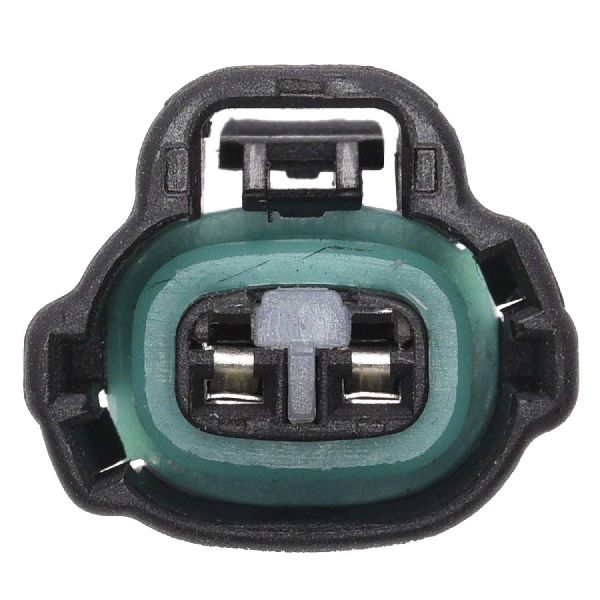
- OCV Connector — On top of the valve cover, connected to the rearmost solenoid (closer to the firewall/exhaust manifold).. This connector is the direct interface for the component. It's exposed to high heat and vibration, and can become brittle. Oil from a leaking valve cover gasket can seep into the connector, causing a short or open circuit that directly triggers P0013.
Real Owner Repair Stories
- User on kia-forums.com (2012 Kia Optima 2.4L GDI (same engine family and VVT system)) — P0013 code, rough idle.
❌ Tried (didn't work) Replaced the exhaust OCV solenoid., Swapped the intake and exhaust OCV solenoids (code remained P0013)., Checked wiring and found it to be okay.
✅ What actually fixed it The user took the vehicle to a dealer who diagnosed a stretched timing chain. Replacing the timing chain and its guides resolved the P0013 code, as the slack was causing the camshaft position to be erratic enough to trigger circuit-related logic faults. - YouTube Comment Section (verified common issue) (2013 Kia Optima 2.4L (Same Theta II engine)) — P0016 code initially, but relevant to VVT system diagnosis.
❌ Tried (didn't work) Replaced timing chain., Replaced crankshaft position sensor., Replaced camshaft position sensor., Replaced intake OCV with an aftermarket part.
✅ What actually fixed it The code persisted after all repairs. The final fix was replacing the new aftermarket OCV with a genuine OEM Kia OCV. The aftermarket part was faulty out of the box, a common issue with non-OEM VVT solenoids on this platform. - NHTSA ODI #11678480 (Kia Soul - Cross-Manufacturer Reference) — A report for a vehicle with the same manufacturer noted that after being diagnosed with codes P0014 and P0013, the camshaft was replaced, though the owner noted the failure persisted after the light was turned off.
OEM Part Supersession History
221002G520, 416Z42GH00→24375-2G500— Standard part evolution and potential internal improvements to address reliability.
Heads up: While older numbers are superseded, using the latest part number (24375-2G500) from an OEM source (Kia/Hyundai) is highly recommended for compatibility and longevity.
Model Year Variations Within This Range
- 2011-2015: The core Theta II 2.0T engine and VVT system remained largely the same through this generation. However, later models (2014-2015) are more likely to have received the KSDS (P1326) software update from the factory or during a service visit, making the appearance of P1326 alongside P0013 more common on these later years.
Diagnostic Flowchart
Other Known Issues on This Vehicle
Issues unrelated to this code that are worth knowing about as an owner of this generation:
- Catastrophic Engine Failure (Rod Bearing Wear) 🔴 High — Very common across the 2011-2015 model range, often occurring under 100,000 miles. Stems from manufacturing debris blocking oil passages. (Ref: NHTSA Campaign 17V224 (Recall SC147); subsequent lifetime engine warranty extension for many VINs.)
- Worn Flexible Steering Coupler 🟠 Medium — Extremely common; results in a noticeable 'clicking' or 'clunking' sound and play in the steering wheel, especially when turning at low speeds or when stopped. (Ref: Kia Customer Satisfaction Program CS1604 extended the warranty for this part to 10 years/unlimited mileage.)
- Panoramic Sunroof Malfunction/Noise 🟡 Low — Commonly reported issue where the sunroof struggles to close, makes grinding noises, or opens again after trying to close. Usually caused by dirty/dry guide rails or worn levers.
- Hydraulic Electronic Control Unit (HECU) Fire Risk 🔴 High — Affects a wide range of Kia/Hyundai models of this era. An electrical short can occur in the HECU, creating a fire risk even when the vehicle is parked and off. (Ref: Kia Recall SC197 / NHTSA 20V-519.)
Used vs. New Parts: Buying Guide for This Vehicle
When a used part is the smart pick: For this specific repair, buying used parts is strongly discouraged. The primary causes of failure are oil contamination and sludge, which are inherent to a used engine's history. A used OCV solenoid is highly likely to be clogged or near the end of its electrical life.
What to inspect on the donor part:
- Not applicable, as used OCVs are not recommended.
OEM-only on this vehicle (don't cheap out):
- Oil Control Valve (OCV) / VVT Solenoid: Aftermarket OCVs have a high failure rate on this platform. Forum and repair database stories frequently report that problems were only solved after a faulty new aftermarket solenoid was replaced with an OEM part. Given the low cost of the OEM part, it is the only recommended option.
- Oil Filter: Use of non-OEM oil filters has been anecdotally linked to VVT problems. The OEM filter contains the correct bypass valve pressure and filter media specifications required by this sensitive engine.
Brands owners have reported issues with on this vehicle:
- All non-OEM brands for the Oil Control Valve (VVT Solenoid). While brands like Dorman or Standard Motor Products are typically reliable, for this specific application on the Theta II engine, community consensus strongly favors OEM-only to avoid repeat failures.
Real Owner Stories
Aggregated from forums and TSBs cited above. Mileages and costs reflect what owners reported in those sources.
2015 Kia Optima 2.0L Turbo — 132000 miles
Symptoms: Car went into limp mode and threw code P1326.
What fixed it: Taking it to a dealership for a new engine under the lifetime warranty.
Source hint: Reddit r/kia - P1326 code experience
2016 Kia Optima
Symptoms: Flashing check engine light, car jerking, and entering limp mode.
What fixed it: KSDS system activation (PI1803) to protect the engine from bearing failure.
Source hint: Reddit r/AskAMechanic - P1326 on a 2016 Optima
2013 Kia Optima — 180000 miles
Symptoms: Clicking and clunking sound with a loose feeling in the steering wheel when turning at low speeds.
What fixed it: Replacement of the flexible steering coupler under TSB/extended warranty.
Source hint: Reddit r/Cartalk - Clicking and loose steering
Related OBD-II Codes
Frequently Asked Questions
Is my 2011-2015 Kia Optima covered by a recall for the engine issues causing P0013?
What does it mean if my Check Engine Light is flashing and I have code P1326 along with P0013?
Can a simple oil change fix a P0013 code on my Optima Turbo?
Which specific part usually fails when P0013 is triggered?
What is the correct electrical resistance for a new Kia Optima exhaust OCV?
Why did P0013 and P0010 appear immediately after I changed my oil?
Helpful Videos

We Have This Part in Stock


The information in this article is provided for general reference and educational purposes only. Vehicle specifications, procedures, and part compatibility can vary by production date, trim level, and region. Always consult your vehicle's factory service manual and verify part numbers before purchasing or performing repairs. Safety-critical components such as airbags, seat belts, and braking systems should be installed by a qualified professional.
- Kia Optima:
- 🧭 Diagnostic Flowchart
- 🎬 Helpful Videos
- 🛍️ Shop This Part
- What's Unique About the 2011-2015 Kia Optima
- Symptoms You May Notice
- Most Likely Causes
- Rare But Worth Checking
- Diagnosis Steps
- Parts You'll Likely Need
- Related Codes That Often Appear With This One
- Technical Service Bulletins (TSBs) & Recalls
- Platform-Specific Known Issues
- Mechanic-Grade Diagnostic Values
- Scan Tool Commands That Help
- Wiring & Ground Locations
- Real Owner Repair Stories
- OEM Part Supersession History
- Model Year Variations Within This Range
- Other Known Issues on This Vehicle
- Used vs. New Parts: Buying Guide for This Vehicle
- Real Owner Stories
- 2015 Kia Optima 2.0L Turbo — 132000 miles
- 2016 Kia Optima
- 2013 Kia Optima — 180000 miles
- Related OBD-II Codes
- Frequently Asked Questions
- 🎟️ Get 5% Off