

P0013 on 2014-2021 Mazda 6 2.5L: Exhaust VVT Solenoid Circuit Fault Causes and Fixes
P0013 on a 2014-2021 Mazda 6 indicates an electrical problem with the exhaust camshaft's oil control valve (VVT solenoid). The most common fix is replacing the solenoid, which is located under the valve cover. Expect to pay $300-$420 for an OEM solenoid and around $150-$250 for labor.
- P0013 specifically points to an electrical circuit problem with the exhaust VVT solenoid, not a mechanical timing issue.
- Always check your engine oil level and condition first, as low or dirty oil is a common cause of VVT system problems.
- The most likely failed part is the exhaust VVT solenoid itself (Part No. PE01-14-420A).
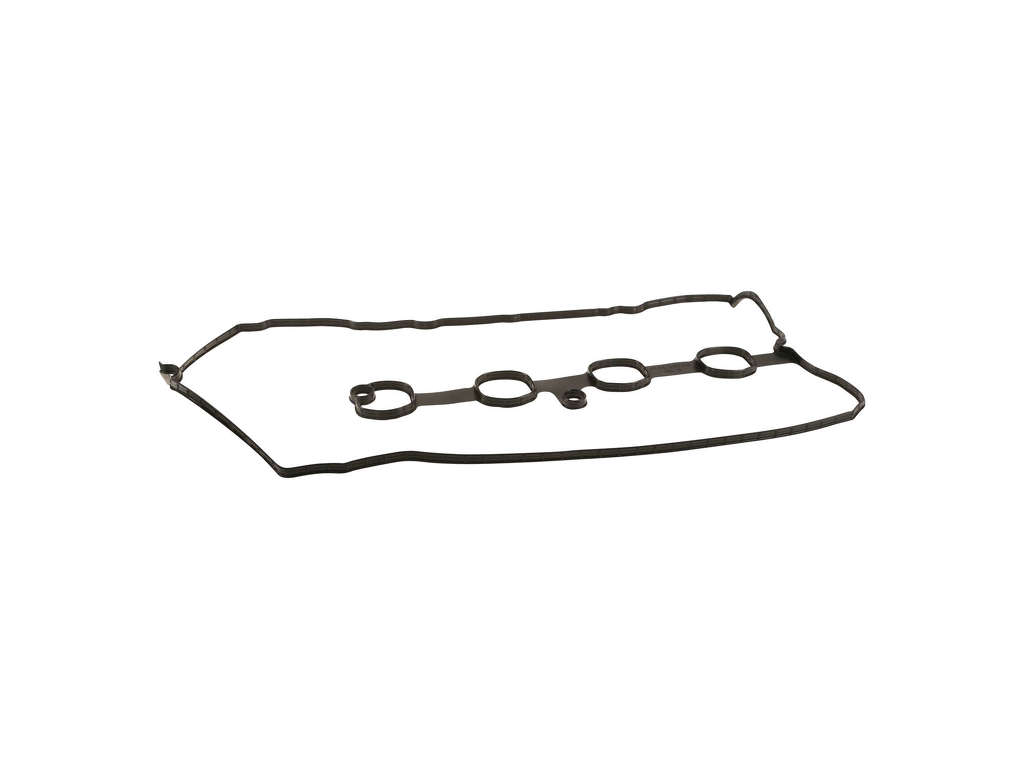
- Repair requires removing the valve cover, so you must also replace the valve cover gasket (Part No. PY01-10-235) to prevent leaks.
- This repair is more complex than on many other vehicles due to the solenoid's location, making the DIY difficulty a 3 out of 5.
What's Unique About the 2014-2021 Mazda 6
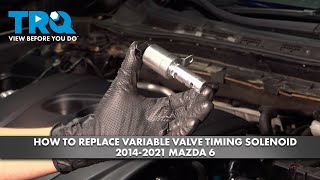
On the 2.5L Skyactiv-G engine, both the intake and exhaust VVT solenoids are located under the valve cover. This design choice makes replacing the solenoid a more involved job than on many other engines where the solenoids are externally mounted and easily accessible. This means the valve cover must be removed, and the valve cover gasket must be replaced as part of the service, increasing labor time and cost. A video from 1A Auto shows this specific replacement process, 🎬 Watch this step-by-step Mazda 6 VVT solenoid replacement video highlighting the need to remove ignition coils and various brackets to access the valve cover bolts and the solenoid underneath.
Symptoms You May Notice
- Check Engine Light is on
- Rough or uneven idle
- Reduced engine power and sluggish acceleration
- Decreased fuel economy
- Engine may hesitate or stall in some cases
- Hard starting, or in rare cases, a no-start condition after a faulty replacement.
- Replacing the camshaft position sensor. P0013 is a circuit code for the actuator solenoid, not the sensor. A bad sensor would typically set a different code (e.g., P0340).
- Replacing the VVT actuator (phaser). The actuator is the mechanical gear on the camshaft. P0013 points to an electrical fault with the solenoid that controls it, not the gear itself. A failed actuator would typically cause timing correlation codes like P0011, P0012, or P0014.
Most Likely Causes
- Failed Exhaust Oil Control Valve (VVT Solenoid) 🔴 High Probability The solenoid can fail electrically due to an internal short or open in its coil windings, or it can become mechanically stuck due to sludge and debris from engine oil.
How to confirm: After checking the wiring, a technician can test the solenoid's resistance with a multimeter. The expected range is typically between 6-12 Ohms. A reading of infinity (open) or near zero (short) confirms failure. It can also be tested for function by applying 12V power to see if the internal plunger actuates with an audible click.
Typical fix: Replace the exhaust VVT solenoid. Since it's under the valve cover, the valve cover gasket must also be replaced.
Est. part cost: $285-$417 - Low or Dirty Engine Oil 🟡 Medium Probability The VVT system is highly dependent on oil pressure and cleanliness. Old, sludgy oil or an oil level that is too low can clog the fine mesh screens on the solenoid, preventing it from operating correctly and potentially triggering a circuit code.
How to confirm: Check the engine oil level on the dipstick and inspect its condition. If the oil is dark, gritty, or below the 'add' line, this is a likely contributing factor.
Typical fix: Perform an engine oil and filter change using the correct viscosity oil (0W-20). Clear the code and see if it returns. This is the cheapest and easiest first step. 🎬 Watch this video on common causes and cheap fixes
Est. part cost: $40-$90 - Wiring Harness or Connector Issue ⚪ Low Probability While less common, the wiring leading to the solenoid can become damaged, or the connector pins can corrode, causing an open or short circuit. Wires can also be damaged from rubbing against the engine block.
How to confirm: Visually inspect the wiring harness leading to the valve cover for any signs of damage, chafing, or melting. Unplug the connector (if accessible before removing the valve cover) and check for corrosion or bent pins. A continuity test from the PCM to the solenoid connector can confirm the integrity of the circuit.
Typical fix: Repair the damaged section of wiring or replace the connector pigtail.
Est. part cost: $10-$50
Rare But Worth Checking
- Powertrain Control Module (PCM) Fault: This is very rare. The PCM's internal driver for the solenoid circuit can fail. This should only be considered after all other possibilities (solenoid, wiring, oil) have been definitively ruled out by thorough testing.
Diagnosis Steps
- Check the engine oil level and condition. If it's low or dirty, perform an oil and filter change, clear the code, and drive the vehicle to see if the code returns.
- Scan the vehicle for any other stored trouble codes to see if other issues are present.
- Visually inspect the wiring harness and connector leading to the exhaust VVT solenoid for any obvious damage.
- Using a multimeter, check for power and ground at the solenoid connector.
- Test the resistance of the VVT solenoid itself. Compare the reading to the manufacturer's specification (typically 6-12 Ohms). An open circuit (infinite resistance) or a short (zero resistance) indicates a failed solenoid.
- If resistance is within spec, you can apply 12V power directly to the solenoid to check if it clicks, indicating mechanical operation.
- If the solenoid and wiring test good, the issue may be a rare PCM fault, which requires more advanced diagnostics.
Parts You'll Likely Need
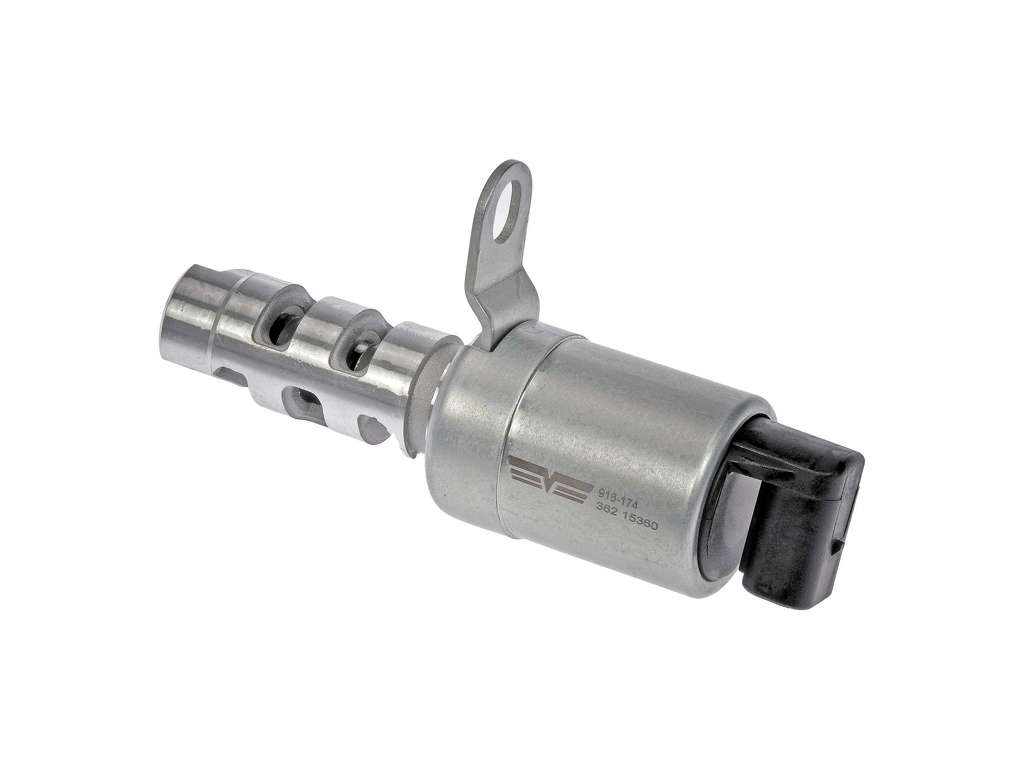
- Engine Variable Valve Timing (VVT) Solenoid / Oil Control Valve (Exhaust)
(OEM #PE01-14-420A)— This is the component that most commonly fails electrically, directly causing the P0013 circuit code. Both intake and exhaust solenoids use the same part number.
Trusted brands: Mazda (OEM), Dorman, Standard Motor Products, Beck/Arnley
OEM price range: $285-$400
Aftermarket price range: $40-$120 - Valve Cover Gasket
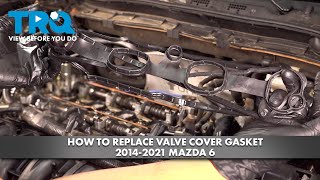
(OEM #PY01-10-235)— This must be replaced when accessing the VVT solenoid, which is located under the valve cover. Reusing the old gasket will almost certainly cause an oil leak. 🎬 See how to replace the valve cover gasket properly
Trusted brands: Mazda (OEM), Mahle, Fel-Pro
OEM price range: $25-$40
Aftermarket price range: $15-$30
Technical Service Bulletins (TSBs) & Recalls
- While no TSB directly addresses P0013 on this platform, related bulletins exist for the Skyactiv engine family. TSB 01-015/15 was issued for some 2015 Mazda 6 models for VVT actuator issues causing P0011/P0012, highlighting that mechanical VVT issues are a known possibility on this engine.
- TSB 01-011/22 was issued for some Skyactiv engines experiencing high oil consumption due to faulty exhaust valve seals, which could indirectly impact VVT performance if oil levels become critically low.
Mechanic-Grade Diagnostic Values
- VVT Solenoid (Oil Control Valve) Coil Resistance — expected: 6.9—7.5 ohms at 20°C (68°F). Failure: A reading of infinite resistance (open circuit) or near-zero resistance (short circuit).
- Live Data Scan Tool PIDs (FORScan or Mazda M-MDS) — expected: Monitor 'VT IN_ACT' (Actual Position) and 'VT IN_DES' (Desired Position). The values should closely track each other as engine RPM is varied between idle and 3,000 RPM.. Failure: A significant and persistent discrepancy between the actual and desired values points to a mechanical or hydraulic issue, whereas a circuit code like P0013 points to an electrical failure preventing any response.
Scan Tool Commands That Help
- Mazda M-MDS or FORScan: Active Command/Actuator Test for the Oil Control Valve (OCV) — This bidirectional command allows a technician to directly order the PCM to activate the exhaust VVT solenoid. If the solenoid clicks and a change is observed in engine performance or live data, it confirms the wiring and PCM driver are functional, pointing towards an intermittent solenoid failure. If it does not respond despite having correct resistance, the solenoid is mechanically stuck.
Wiring & Ground Locations
- Engine Harness Ground — There are several key ground points in the engine bay. One is located on the harness on top of the transmission, and two are on the front of the transmission case. Another critical ground is at the passenger-side motor mount.. A poor ground connection for the engine harness can introduce electrical noise or resistance, potentially causing the PCM to misinterpret the VVT solenoid circuit's status and set a P0013 code.
- PCM Location — The Powertrain Control Module (PCM) is located in the left rear of the engine compartment.. Knowing the PCM location is essential for performing continuity tests on the wiring harness running from the PCM to the VVT solenoid connector to rule out an open or short in the harness.
OEM Part Supersession History
PE01-14-420A→PE01-14-420A— No supersession found. The part number appears to be consistent throughout the vehicle's production run.
Model Year Variations Within This Range
- 2018-2021: For the 2018 model year, the 2.5L Skyactiv-G engine was updated with cylinder deactivation. While the fundamental VVT system and the P0013 code remain the same, the engine complexity is slightly higher. Additionally, a 2.5L turbocharged engine option was introduced, which has a different engine layout but uses similar VVT principles.
Diagnostic Flowchart
Other Known Issues on This Vehicle
Issues unrelated to this code that are worth knowing about as an owner of this generation:
- Infotainment 'Ghost Touch' and Screen Delamination 🟠 Medium — Very common, especially on 2016+ models. Often triggered by heat and sun exposure. The touchscreen registers phantom inputs, making the system unusable. (Ref: Mazda has acknowledged the issue, and a common DIY fix is to disconnect the touchscreen digitizer ribbon cable.)
- Intake Valve Carbon Buildup 🟡 Low — A potential long-term issue for all Skyactiv-G direct injection engines, but Mazda's design is considered more resistant than many competitors. Symptoms like rough idle or misfires may appear after 80,000-100,000 miles, particularly with frequent short trips.
- High-Pressure Fuel Pump (HPFP) Failure 🟠 Medium — More common on early 2014 models, but can occur on others. Often presents with code P0191, causing stalling, hesitation, and loss of power. (Ref: TSB 01-010/14 and 01-004/15 were issued for 2014 models.)
- Sticking 'NOT-P' Position Switch in Shifter Assembly 🟡 Low — Can occur on earlier models, causing the vehicle's accessory mode to stay on after shutting the engine off, leading to a drained battery. Often sets code P081C.
- Increased Oil Consumption (Turbo Models / Some Non-Turbo) 🟠 Medium — Some 2.5T engines and certain non-turbo models have experienced issues with oil consumption, sometimes related to valve seals. (Ref: TSB 01-011/22 addresses oil consumption due to exhaust valve seals on some models.)
Used vs. New Parts: Buying Guide for This Vehicle
When a used part is the smart pick: For this specific repair, using a used VVT solenoid from a junkyard is NOT recommended. It is an electro-mechanical part prone to failure from both electrical issues and oil contamination. The labor involved in replacing it (removing the valve cover) is significant enough that installing a part with an unknown history is a poor risk.
Donor-vehicle mileage cap: roughly under 50000 miles for the part to have meaningful remaining life.
What to inspect on the donor part:
- Verify the donor vehicle was not in a front-end collision.
- Check the donor vehicle's oil cap and dipstick for signs of heavy sludge or 'milky' oil, which indicates poor maintenance or a head gasket failure.
- If possible, test the resistance of the used solenoid before purchase to ensure it is within the 6.9-7.5 Ohm specification.
OEM-only on this vehicle (don't cheap out):
- Engine Variable Valve Timing (VVT) Solenoid
Aftermarket brands forum-validated for this vehicle:
- Standard Motor Products (SMP)
- Gates
Brands owners have reported issues with on this vehicle:
- Dorman (Reviews are often mixed, with some users reporting premature failure or out-of-box issues).
- Unbranded, low-cost parts from online marketplaces.
Real Owner Stories
Aggregated from forums and TSBs cited above. Mileages and costs reflect what owners reported in those sources.
Mazda 6 2.5L Skyactiv-G
Symptoms: The P0013 code appeared without any initial symptoms. After a mechanic replaced the solenoid with a new part, the car suffered severe running issues and a no-start condition.
What fixed it: Reinstalling the cleaned original part temporarily resolved the major symptoms, as the new replacement part was faulty and had triggered a P0014 code.
Source hint: Reddit - r/AskMechanics - "P0013 - New Sensor made me Break down"
Related OBD-II Codes
Frequently Asked Questions
Does TSB 01-015/15 apply to my 2015 Mazda 6 if I have a P0013 code?
Can I just replace the VVT solenoid myself on my 2.5L Skyactiv-G?
Is there a TSB for the high oil consumption I'm seeing alongside VVT issues?
What is the specific resistance I should look for when testing the Mazda 6 VVT solenoid?
Should I use an aftermarket VVT solenoid like Dorman for my Mazda 6?
Could my P0013 code be related to the 'Ghost Touch' screen issue on my 2016 Mazda 6?
Helpful Videos

![How to Fix P0013 Engine Code in 4 Minutes [2 DIY Methods / Only $6.63]](https://img.youtube.com/vi/t8TG_Q7QhvI/mqdefault.jpg)
We Have This Part in Stock


The information in this article is provided for general reference and educational purposes only. Vehicle specifications, procedures, and part compatibility can vary by production date, trim level, and region. Always consult your vehicle's factory service manual and verify part numbers before purchasing or performing repairs. Safety-critical components such as airbags, seat belts, and braking systems should be installed by a qualified professional.
- Mazda 6:
- 🧭 Diagnostic Flowchart
- 🎬 Helpful Videos
- 🛍️ Shop This Part
- What's Unique About the 2014-2021 Mazda 6
- Symptoms You May Notice
- Most Likely Causes
- Rare But Worth Checking
- Diagnosis Steps
- Parts You'll Likely Need
- Technical Service Bulletins (TSBs) & Recalls
- Mechanic-Grade Diagnostic Values
- Scan Tool Commands That Help
- Wiring & Ground Locations
- OEM Part Supersession History
- Model Year Variations Within This Range
- Other Known Issues on This Vehicle
- Used vs. New Parts: Buying Guide for This Vehicle
- Real Owner Stories
- Mazda 6 2.5L Skyactiv-G
- Related OBD-II Codes
- Frequently Asked Questions
- 🎟️ Get 5% Off