

P0013 on 2003-2007 Saturn Ion 2.2L: Exhaust Solenoid Circuit Causes and Fixes
For 2006-2007 Saturn Ions, P0013 almost always means the exhaust camshaft position actuator solenoid has failed. This is a simple, 15-minute DIY fix with a part cost of $25-$60. The OEM part number is 12655421, which has been superseded by 12679100. Note: This code is not applicable to 2003-2005 models as they lack the VVT system.
- This guide applies ONLY to 2006-2007 Saturn Ions with the 2.2L VVT engine.
- P0013 is an electrical circuit code for the exhaust VVT solenoid, not a mechanical timing code.
- The most common fix is replacing the exhaust VVT solenoid (GM P/N 12655421 or 12679100), a simple 15-minute DIY job.
- Always check your oil level and condition first, as dirty or low oil is the primary cause of solenoid failure.
- Swapping the intake and exhaust solenoids is the most definitive way to confirm a bad solenoid.
What's Unique About the 2003-2007 Saturn Ion
The 2003-2007 Saturn Ion model range is split regarding this code. The 2.2L L61 engine in the 2003 through early 2006 models did not have Variable Valve Timing (VVT) and therefore lacks the camshaft actuator solenoids that this code refers to. The VVT system was introduced on the 2.2L L61 engine in late 2006 and 2007 models as part of the 'Gen II' Ecotec update. Therefore, code P0013 is only relevant to these later model years. Misdiagnosing this on an earlier Ion could lead to searching for parts that do not exist on the vehicle.
Symptoms You May Notice
- Check Engine Light is on
- Rough engine idle
- Poor acceleration and engine performance
- Reduced fuel economy
- Engine may hesitate or stall
- Harsh automatic transmission shifting
- Replacing the camshaft position *sensor* instead of the camshaft position *actuator solenoid*. They are different parts with different functions. The sensor reads position, while the solenoid (actuator) controls it.
- Searching for VVT solenoids on a 2003-2005 Ion, which is not equipped with them.
Most Likely Causes
- Failed Exhaust Camshaft Position Actuator Solenoid 🔴 High Probability → Shop Engine Camshaft The solenoids operate in hot engine oil and contain fine mesh screens that can become clogged by sludge or debris from infrequent oil changes, causing them to stick or fail. The internal electronics can also fail from heat and vibration over time, leading to an open or short circuit which directly triggers the P0013 code.
How to confirm: Swap the exhaust solenoid (rear, often with a black connector) with the intake solenoid (front, often gray). Clear the codes and run the engine. If the code changes to P0010 (Intake Camshaft Position Actuator Circuit), the solenoid is faulty. Alternatively, test the solenoid's resistance with a multimeter; it should typically be between 8-13 ohms, with some sources specifying a tighter range of 6.9-7.9 ohms at room temperature. An open circuit (infinite resistance) or short (near-zero resistance) confirms failure. 🎬 Watch: Simple multimeter tests for Ecotec solenoids
Typical fix: Replace the exhaust camshaft position actuator solenoid. It is held in by a single 10mm bolt. 🎬 See this step-by-step solenoid replacement walkthrough It is often recommended to replace both the intake and exhaust solenoids at the same time, as they are subjected to the same conditions and age.
Est. part cost: $25-$60 - Low or Dirty Engine Oil 🟡 Medium Probability The VVT system is hydraulic and relies entirely on clean oil at the correct pressure to function. Sludge or low oil levels will starve the solenoids and cam phasers, causing them to stick or respond slowly, which can lead to circuit and performance codes.
How to confirm: Check the engine oil dipstick. Note the level and the color/condition of the oil. If the oil is low or appears dark, gritty, or sludgy, this is likely a contributing factor.
Typical fix: Perform an engine oil and filter change using the manufacturer-specified grade of oil (5W-30). Clear the trouble codes and see if P0013 returns.
Est. part cost: $30-$70 - Faulty Solenoid Wiring or Connector ⚪ Low Probability
How to confirm: Visually inspect the wiring harness and electrical connector going to the exhaust VVT solenoid. The plastic loom running over the valve cover is known to become brittle and crumble from engine heat, potentially exposing wires. Check for signs of cracked insulation, corrosion in the connector pins, or loose-fitting terminals.
Typical fix: Repair the damaged section of wiring or replace the pigtail connector if it is damaged.
Est. part cost: $10-$30
Rare But Worth Checking
- Faulty Powertrain Control Module (PCM): This is very rare. The PCM's internal driver circuit for the solenoid can fail, but all other more likely causes should be exhaustively ruled out before considering PCM replacement.
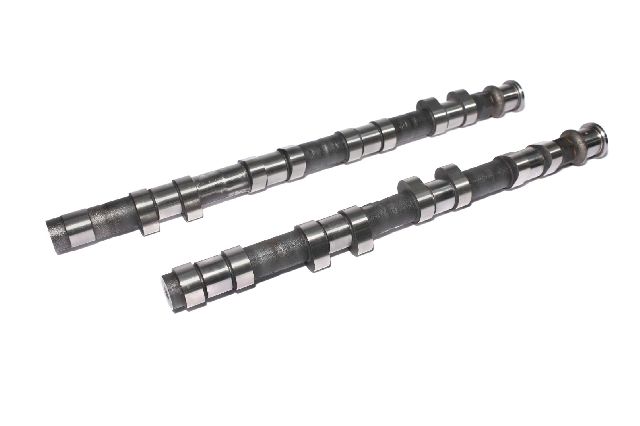
- Spun Camshaft Reluctor Ring: → Shop Engine Camshaft Though it typically sets correlation codes like P0016/P0017, a spun reluctor ring on the camshaft can cause erratic timing behavior. TSB PIP4548F discusses this failure on the Ecotec engine family, which requires camshaft replacement to fix.
Diagnosis Steps
- Verify the model year is a late 2006 or 2007. If it is an earlier model, the code may be erroneous as the hardware is not present.
- Check the engine oil level and condition. If low or dirty, perform an oil and filter change with 5W-30 oil, clear the code, and re-test.
- Inspect the electrical connector and wiring to the exhaust camshaft actuator solenoid (the rear solenoid on top of the valve cover, often with a black connector) for any visible damage, especially brittle loom casing.
- Using a multimeter, check for 12V power at the connector with the key on, engine off.
- Test the solenoid's internal resistance with a multimeter. It should be between 8-13 ohms. An open circuit (infinite resistance) or short (zero resistance) indicates a failed solenoid.
- A definitive test is to swap the exhaust solenoid with the intake solenoid (front, gray connector). Clear the codes and drive the vehicle. If the code returns as P0010, the solenoid you moved to the intake position is confirmed to be faulty.
- If the code P0013 returns after the swap, the problem lies within the wiring harness or the PCM, not the solenoid itself.
Parts You'll Likely Need
- Exhaust Camshaft Position Actuator Solenoid
(OEM #12655421, superseded by 12679100)— This is the most common failure point for a P0013 code on this engine, due to internal electrical failure or clogging from contaminated oil.
Trusted brands: ACDelco (OEM), Delphi, Dorman (p/n 917-216), Standard Motor Products (VVT196)
OEM price range: $40-$70
Aftermarket price range: $25-$50
Related Codes That Often Appear With This One
- P0014 — P0014 indicates 'Exhaust Camshaft Position Timing Over-Advanced'. An electrical circuit fault in the solenoid (P0013) often prevents it from controlling oil flow correctly, causing the camshaft's actual timing to be out of position (P0014). Seeing them together strongly points to the solenoid.
- P0010 — This is the equivalent circuit fault code for the intake camshaft solenoid. If both codes appear together, it may suggest a common problem like severe oil contamination or a shared power/ground issue affecting both solenoids. It will also appear if a faulty exhaust solenoid is swapped to the intake side for diagnosis.
Technical Service Bulletins (TSBs) & Recalls
- PIP4548F: While not for P0013 directly, this TSB for the Ecotec engine family addresses related timing correlation codes (P0016/P0017) caused by a rare failure where the camshaft reluctor ring spins out of position, requiring camshaft replacement.
Platform-Specific Known Issues
- The wiring loom that runs over the valve cover to the solenoids and ignition coils is known to become extremely brittle from engine heat, crumbling and leaving wires exposed. This can lead to shorts or open circuits that trigger P0013.
Mechanic-Grade Diagnostic Values
- Exhaust VVT Solenoid Resistance — expected: 6.9-7.9 ohms at 68°F (20°C). A more general range is 8-13 ohms.. Failure: A reading of infinity (open circuit), near-zero (short circuit), or a wildly fluctuating reading when wiggling the connector indicates a failed solenoid.
- Engine Oil Pressure (for VVT function) — expected: Minimum of 18.85 PSI (130 kPa) at hot idle (oil at 80°C). Some sources for the similar 2.4L engine suggest 50-60 PSI at 1,000 RPM.. Failure: Pressure significantly below the minimum specification can starve the VVT system and trigger codes, even with good solenoids.
- Voltage at Solenoid Connector — expected: With the key on, engine off, one pin should have 12V+ (battery voltage) and the other pin should show near 0V.. Failure: Absence of 12V+ indicates a problem with the power supply fuse or wiring. If 12V+ is present but the solenoid doesn't work, the issue is likely the solenoid itself or the control wire to the ECM.
Scan Tool Commands That Help
- Tech 2 / GDS2 (or equivalent professional scanner): Camshaft Position Actuator Solenoid Active Test / Bidirectional Control — This command allows the technician to manually command the solenoid on and off while monitoring the engine's response. It is a definitive way to test the solenoid's mechanical function and the integrity of the control circuit without removing the part. If the solenoid clicks and the engine RPM changes slightly when commanded, the solenoid and wiring are likely good.
Wiring & Ground Locations
- Exhaust VVT Solenoid Connector — On top of the engine's valve cover, toward the firewall (rear of the engine). It is a 2-pin connector, typically black in color.. This is the direct connection point for the component in question. One pin receives ignition-switched 12V power, and the other is the control line, which the ECM pulses to ground to operate the solenoid. Damage here or corrosion on the pins is a direct cause of P0013.
- G105 — On the lower left rear of the engine, above the starter.. This is a primary engine block ground. A poor connection here can cause a variety of electrical issues for engine-mounted components and sensors, potentially affecting the ECM's ability to properly control or sense the VVT circuit.
- G107 — On the left rear corner of the cylinder head.. This is a critical ground for the cylinder head and components mounted to it. Since the VVT solenoids are mounted in the head, a solid ground connection here is essential for stable operation of the entire VVT system.
Real Owner Repair Stories
- Compilation of multiple owner forums (saturnfans.com, cobaltss.net) and mechanic videos (2007 Saturn Ion 2.2L L61) — Check Engine Light on, rough idle, and hesitation during acceleration.
❌ Tried (didn't work) Performing an oil change sometimes helped temporarily but the code would return, indicating the solenoid itself was failing electrically and not just stuck.
✅ What actually fixed it The owner swapped the exhaust (rear, black connector) solenoid with the intake (front, gray connector) solenoid. After clearing codes, the fault changed to P0010 (Intake circuit fault). This confirmed the original exhaust solenoid was bad. Replacing the faulty solenoid with a new ACDelco part (PN 12679100) and clearing the codes permanently resolved the issue. Many owners choose to replace both solenoids at the same time as a preventative measure.
OEM Part Supersession History
12655421→12679100— Updated design or manufacturer change. GM TSB 17-NA-098 lists 12679100 as the correct replacement part for the exhaust side.12628348, 12646784→12655421 and subsequently 12679100— Earlier revisions of the part used across the Ecotec engine family.
Model Year Variations Within This Range
- 2007 only: For the 2007 model year, the 2.2L L61 engine received a slight power increase and an updated ECU. While the physical parts and causes for P0013 are identical to late 2006 models, the diagnostic thresholds within the newer software may be slightly more sensitive.
Diagnostic Flowchart
Other Known Issues on This Vehicle
Issues unrelated to this code that are worth knowing about as an owner of this generation:
- Faulty Ignition Switch 🔴 High — Extremely common across all 2003-2007 model years. Subject of a major safety recall. (Ref: GM Recalls 14V047000, 14063, 14113. The switch can move out of the 'run' position while driving, causing the engine to shut off and disabling airbags.)
- Sudden Loss of Electric Power Steering (EPS) 🔴 High — Very common across all 2004-2007 model years, with many complaints starting early in the vehicle's life. (Ref: GM Recall 14115 (also related recalls 10023, 14V153000). The electric power steering motor can fail suddenly, making the vehicle very difficult to steer at low speeds.)
- Key Can Be Removed While Not in Park/Off 🟠 Medium — Common issue affecting all 2003-2007 model years, creating a rollaway risk. (Ref: GM Recall 14113D. A defect in the ignition lock cylinder allows the key to be removed when the shifter is not in 'Park' (automatic) or the parking brake is not set (manual).)
- Fuel Pump Module/Line Leaks 🟠 Medium — Affects a large number of vehicles, particularly in regions with road salt. (Ref: GM Recalls 12V459000, 09V419000. The plastic supply or return port on the fuel pump module can crack and leak fuel.)
- Timing Chain Tensioner and Guide Wear (Pre-VVT) 🟠 Medium → Shop Engine Timing Chain — More prevalent on earlier (pre-2005) 2.2L L61 engines due to oiling issues at idle. Less common on the 2006-2007 models which have an improved tensioner design.
- Key Stuck in Ignition 🟡 Low — A common annoyance reported by many owners, often related to the shifter cable or ignition lock cylinder.
Used vs. New Parts: Buying Guide for This Vehicle
When a used part is the smart pick: A used OEM solenoid from a low-mileage donor vehicle can be a very cheap and effective diagnostic tool. If swapping a used part to the exhaust position fixes the code, you've found your problem for minimal cost. However, given new aftermarket parts are inexpensive, many owners opt for a new part for the final repair.
Donor-vehicle mileage cap: roughly under 80000 miles for the part to have meaningful remaining life.
What to inspect on the donor part:
- Inspect the fine mesh screens on the solenoid. They should be perfectly clean and free of any metallic shavings or black sludge.
- The electrical connector should be free of cracks, and the pins inside should be clean and straight.
- Ask for the VIN of the donor car to verify it's from a compatible Ecotec engine.
OEM-only on this vehicle (don't cheap out):
- Powertrain Control Module (PCM) - Should only be replaced with an OEM unit programmed specifically to the vehicle's VIN.
Aftermarket brands forum-validated for this vehicle:
- ACDelco (OEM supplier)
- Delphi (Often an OEM supplier)
Brands owners have reported issues with on this vehicle:
- Unbranded, no-name parts from online marketplaces. While tempting due to very low cost, their internal coil windings and materials often do not meet OEM specifications for heat and vibration tolerance, leading to premature failure. Dorman is a widely available option with mixed reviews; some technicians prefer to use used OEM parts over new Dorman parts.
Real Owner Stories
Aggregated from forums and TSBs cited above. Mileages and costs reflect what owners reported in those sources.
2007 Saturn Ion 2.2L L61
Symptoms: The owner noted the Check Engine Light was on and was concerned about a high dealer quote for a repair that seemed like a simple DIY task.
What fixed it: Replaced the exhaust camshaft position actuator solenoid (the one closer to the firewall).
Source hint: cobaltss.net thread titled 'P0013 Replace CPASV (Camshaft Position Actuator Solenoid Valve)'
2007 Saturn Ion 2.2L L61
Symptoms: The engine experienced harsh automatic transmission shifting and reduced fuel economy.
What fixed it: Performed an engine oil and filter change using 5W-30 grade oil and cleared the trouble codes.
Source hint: Symptoms and typical fixes cited in context
Related OBD-II Codes
Frequently Asked Questions
I have a 2004 Saturn Ion with a P0013 code. Why am I told this code might be erroneous?
Which solenoid do I need to replace for a P0013 code on my 2007 Ion?
Can I just clean the solenoids instead of spending $25-$60 on new ones?
Does the brittle wiring loom on the valve cover affect the P0013 code?
Should I replace both the intake and exhaust solenoids at the same time?
Will an oil change fix my P0013 engine light?
Helpful Videos

We Have This Part in Stock

The information in this article is provided for general reference and educational purposes only. Vehicle specifications, procedures, and part compatibility can vary by production date, trim level, and region. Always consult your vehicle's factory service manual and verify part numbers before purchasing or performing repairs. Safety-critical components such as airbags, seat belts, and braking systems should be installed by a qualified professional.
- Saturn Ion:
- 🧭 Diagnostic Flowchart
- 🎬 Helpful Videos
- 🛍️ Shop This Part
- What's Unique About the 2003-2007 Saturn Ion
- Symptoms You May Notice
- Most Likely Causes
- Rare But Worth Checking
- Diagnosis Steps
- Parts You'll Likely Need
- Related Codes That Often Appear With This One
- Technical Service Bulletins (TSBs) & Recalls
- Platform-Specific Known Issues
- Mechanic-Grade Diagnostic Values
- Scan Tool Commands That Help
- Wiring & Ground Locations
- Real Owner Repair Stories
- OEM Part Supersession History
- Model Year Variations Within This Range
- Other Known Issues on This Vehicle
- Used vs. New Parts: Buying Guide for This Vehicle
- Real Owner Stories
- 2007 Saturn Ion 2.2L L61
- 2007 Saturn Ion 2.2L L61
- Related OBD-II Codes
- Frequently Asked Questions
- 🎟️ Get 5% Off