

P0013 on 2007-2010 Saturn Sky 2.4L: Exhaust Solenoid Causes and Fixes
On a 2007-2010 Saturn Sky with the 2.4L engine, code P0013 almost always means the exhaust camshaft position actuator solenoid has failed. This is a very common, inexpensive, and easy DIY repair, typically costing $25-$50 for the part. Do not attempt to swap it with the intake solenoid; they are not interchangeable.
- P0013 on your Saturn Sky almost certainly points to a bad exhaust VVT solenoid (Part #12655421).
- Before replacing any parts, check your engine oil. Low or dirty oil is a primary contributor to this problem.
- This is a very DIY-friendly repair that requires basic tools and about 30 minutes.
- The exhaust solenoid is located at the top of the engine, toward the rear (firewall side), and has a BLACK electrical connector.
- The intake and exhaust solenoids are NOT interchangeable. Do not swap them.
- Always perform an oil change with full synthetic 5W-30 oil when replacing the solenoid(s) to protect the new parts.
What's Unique About the 2007-2010 Saturn Sky
The 2.4L Ecotec engine, used widely across GM brands including Saturn, Pontiac, and Chevrolet, is well-known for issues with its VVT solenoids. Failure of these components is one of the most common reasons for a check engine light on the Saturn Sky and its sibling, the Pontiac Solstice. The cause is often linked to dirty or low engine oil clogging the small internal passages and screens of the solenoid. The good news is that the parts are readily available and the replacement is very straightforward for a DIY mechanic, with excellent guides available on owner forums.
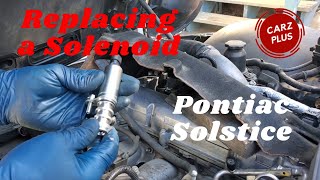
🎬 Watch: A complete walkthrough for replacing your VVT solenoids.Symptoms You May Notice
- Check Engine Light is on
- Rough or unstable idle
- Poor engine performance and sluggish acceleration
- Reduced fuel economy
- Engine may stall at low speeds
- Rattling noise from the engine, particularly on startup
- Replacing the camshaft position SENSOR instead of the actuator SOLENOID. The sensor reads the camshaft's position (codes P034x), while the solenoid controls the timing adjustment (codes P001x).
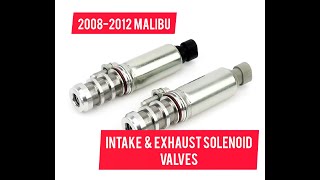
- Attempting to swap the intake and exhaust solenoids. They are not interchangeable and have different part numbers and keyed connectors. 🎬 Watch: Understanding the differences between intake and exhaust solenoids.
Most Likely Causes
- Failed Exhaust Camshaft Position Actuator Solenoid 🔴 High Probability → Shop Engine Camshaft This is a very common failure item on the 2.4L Ecotec engine due to its sensitivity to oil condition and heat cycles. The failure is often electrical within the solenoid itself.
How to confirm: Test the solenoid's resistance with a multimeter. Unplug the connector and measure across the two pins. 🎬 See how to test solenoid resistance with a multimeter. A healthy solenoid should have a resistance between 8 and 13 ohms. Some sources specify a tighter range of 6.9-7.9 ohms at 68°F (20°C). A reading of infinite resistance (open circuit) or a very high reading (e.g., 100+ ohms) confirms a failed solenoid.
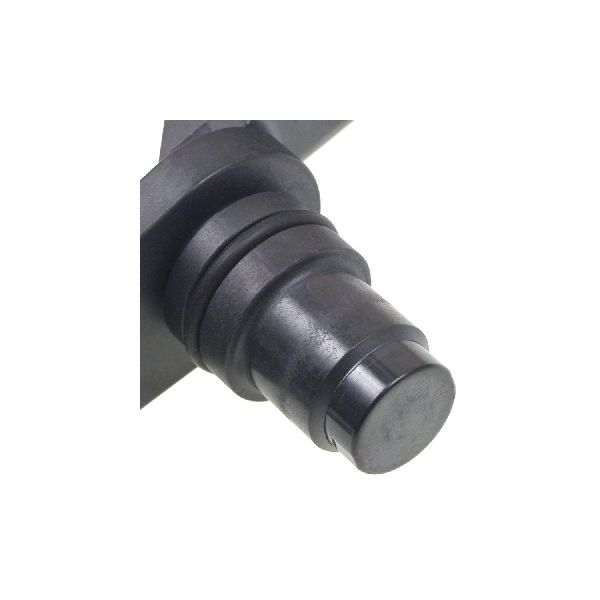
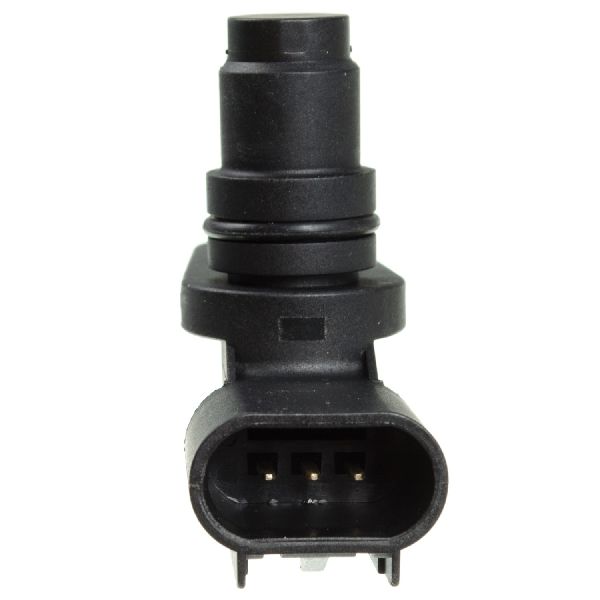
Typical fix: Replace the exhaust camshaft position actuator solenoid (GM Part #12655421). It is held in by a single 10mm bolt and is located on the top of the valve cover toward the firewall (it has a black electrical connector).
Est. part cost: $25-$75 - Low or Dirty Engine Oil 🟡 Medium Probability The VVT system is hydraulic and relies on clean oil at the proper pressure. Sludge or debris can easily clog the fine mesh screens on the solenoids, causing them to malfunction or fail entirely. This is considered the primary root cause of solenoid failure.
How to confirm: Check the engine oil level on the dipstick and inspect its condition. If the oil is low, dark, or sludgy, it needs to be changed.
Typical fix: Perform an engine oil and filter change using the manufacturer-specified grade (full synthetic 5W-30 is recommended). This should be done whenever replacing a solenoid to protect the new parts.
Est. part cost: $30-$80 - Damaged Wiring or Connector ⚪ Low Probability
How to confirm: Visually inspect the black electrical connector and wiring harness leading to the exhaust VVT solenoid. Look for broken wires, corrosion on the pins, or oil contamination inside the connector. The connector has a small locking tab that must be removed before the main release can be depressed.
Typical fix: Repair the damaged section of wiring or replace the connector pigtail.
Est. part cost: $10-$40
Rare But Worth Checking
- Failed Engine Control Module (ECM): This is extremely rare. The ECM should only be considered after all other possibilities, including wiring and the solenoid itself, have been exhaustively ruled out by a professional.
- Clogged VVT Oil Passages: In cases of severe engine sludge, the oil passages within the cylinder head that feed the solenoids can become blocked. This is a more serious issue that may require extensive engine cleaning or repair. A GM TSB (PIP4495E) notes that the orifice for this passage cannot be cleaned without cylinder head removal.
Diagnosis Steps
- Check the engine oil level and condition. Top off or perform an oil and filter change if necessary. This is the most important first step.
- Inspect the electrical connector (black) and wiring for the exhaust camshaft actuator solenoid (rear solenoid) for any signs of damage, corrosion, or loose connections.
- Using a multimeter, test the resistance of the exhaust solenoid. A reading between 8-13 ohms is expected. An open circuit or very high resistance confirms a failed solenoid.
- If the solenoid tests good, the problem is likely in the wiring harness between the solenoid and the ECM, or in rare cases, the ECM itself.
- When removing the old solenoid, carefully inspect its oil screens. If you see metallic debris, this indicates a more serious internal engine problem (like timing chain wear) that will not be fixed by replacing the solenoid.
- Replace the exhaust solenoid if it fails the resistance test. Clear the codes with a scan tool and perform a drive cycle to see if the code returns.
Parts You'll Likely Need
- Exhaust Camshaft Position Actuator Solenoid
(OEM #12655421 (Supersedes 12628348, 12646784))— This is the most common part to fail and directly cause code P0013 on the 2.4L Ecotec engine.
Trusted brands: ACDelco (OEM), Delphi, Dorman (Part #917-216)
OEM price range: $40-$70
Aftermarket price range: $25-$50 - Intake Camshaft Position Actuator Solenoid
(OEM #12655420 (Supersedes 12628347, 12646783))— Often replaced as a pair with the exhaust solenoid as preventative maintenance, since they are subjected to the same conditions. This part causes code P0010. It has a gray connector and is NOT interchangeable with the exhaust solenoid.
Trusted brands: ACDelco (OEM), Delphi, Dorman (Part #917-215)
OEM price range: $40-$70
Aftermarket price range: $25-$50
Related Codes That Often Appear With This One
- P0014 — P0014 ('B' Camshaft Position - Timing Over-Advanced) often appears with P0013 because the electrical fault (P0013) prevents the ECM from controlling the solenoid, causing the camshaft timing to become stuck in an incorrect position, which is then reported as a performance/timing error (P0014).
- P0010 — This is the equivalent circuit code for the Intake ('A') solenoid. Seeing both P0010 and P0013 simultaneously could point to a systemic issue like an oil pressure problem, severe sludge, or a wiring harness issue common to both solenoids.
Technical Service Bulletins (TSBs) & Recalls
- PIP4548E: While not directly for P0013, this GM bulletin addresses related timing correlation codes P0016/P0017. It discusses a rare and severe mechanical failure where the camshaft reluctor ring can spin on the camshaft, causing a mismatch between sensed cam position and actual position. This is an advanced failure and not related to the common solenoid issue that causes P0013.
Platform-Specific Known Issues
- The VVT solenoids on the 2.4L Ecotec engine are a well-documented, high-failure rate item across multiple GM platforms, not just the Saturn Sky.
- Owner Experience: A user on the Chevy HHR Network with P0013 and P0014 noted a drop in MPG, changed the oil, and then replaced both solenoids. The advice given was 'Don't try and clean them. Get new ones(both) and swap them out. It's a simple 20 minute job.' This reflects the common wisdom that replacement is the best and most permanent solution.
Mechanic-Grade Diagnostic Values
- VVT Solenoid Resistance — expected: 8 to 13 Ohms at ~68°F (20°C). A new part may read around 9.8-12.8 Ohms.. Failure: An open circuit (infinite resistance), a short (near 0 ohms), or a very high reading (e.g., 100 Ohms) indicates a failed solenoid coil.
- Scan Tool: Desired vs. Actual Camshaft Position Angle — expected: At idle on a warm engine, both desired and actual angles should be at or near 0 degrees. The actual angle should closely follow the desired angle as RPMs change.. Failure: A significant, persistent difference between the desired and actual angles. The code may set if the actual angle is off by more than 5 degrees for over 10 seconds.
- Solenoid Connector Voltage (Key On, Engine Off) — expected: 12V (Battery Voltage) on the power supply pin.. Failure: No voltage indicates a problem with the wiring or fuse supplying power to the VVT circuit.
Scan Tool Commands That Help
- GDS2 / Tech 2: Camshaft Position (CMP) Actuator Control — This bidirectional command allows a technician to manually command the VVT solenoid on and off. You should hear an audible click from the solenoid and see a change in live data for the camshaft angle. This helps isolate a faulty solenoid from a wiring or mechanical issue.
- GDS2 / Tech 2: CMP Variance Parameter Display — Used to monitor the live degree difference between the camshaft and crankshaft. This is the primary data point for confirming a correlation error (like P0014) that often accompanies the P0013 circuit code. It should be stable at 0 degrees at idle.
Wiring & Ground Locations
- G107 — On the 2.4L Ecotec, this ground is on the lower left side of the engine.. This is a critical engine block ground. A poor connection here can introduce electrical noise or incorrect reference voltages for sensors and actuators, including the VVT solenoids and the ECM itself.
- G105 — Located at the lower left front of the transmission case or left front of the engine compartment.. This is another crucial ground point for the powertrain. A loose or corroded G105 can cause a variety of electrical issues that may manifest as actuator circuit codes like P0013.
- ECM (Engine Control Module) — Located in the left rear corner of the engine compartment.. The control circuit for the exhaust VVT solenoid originates at the ECM. The two wires in the solenoid's connector run directly back to the ECM. Damage to this harness is a possible, though less common, cause of P0013.
Real Owner Repair Stories
- Reddit user on r/AskAMechanic (2013 Chevrolet Equinox 2.4L Ecotec) — Poor acceleration, poor gas mileage, rough idle, strange engine sounds, stalling. Initially threw code P0010.
❌ Tried (didn't work) Replaced spark plugs, engine air filter, performed an oil change. Symptoms remained.
✅ What actually fixed it Initially, replacing both intake and exhaust camshaft solenoids fixed all symptoms for about 300 miles. However, the symptoms returned and the check engine light came back on, this time with code P0013. This indicates the initial fix was temporary and suggests an underlying issue like rapid oil sludging, a wiring problem, or a failing replacement part.
OEM Part Supersession History
12628348→12646784, then 12655421— Standard part evolution for improved reliability and material changes.
Heads up: All superseded parts (12628348, 12646784) are fully replaced by 12655421. Aftermarket cross-references include Dorman 917-216.
Diagnostic Flowchart
Used vs. New Parts: Buying Guide for This Vehicle
When a used part is the smart pick: For this specific repair, using a part from a junkyard is STRONGLY DISCOURAGED. VVT solenoids are a high-failure-rate item, and the cost of a new, quality aftermarket part is very low ($25-$50). The labor to replace it is minimal, but it's not worth the risk of installing a used part that may fail quickly.
What to inspect on the donor part:
- Not applicable, do not buy this part used.
OEM-only on this vehicle (don't cheap out):
- No parts in this specific repair require OEM-only sourcing. Quality aftermarket solenoids are widely available and considered reliable.
Aftermarket brands forum-validated for this vehicle:
- ACDelco (OEM supplier)
- Delphi
- Dorman (e.g., 917-216)
- Standard Motor Products (SMP)
Brands owners have reported issues with on this vehicle:
- No-name, unbranded parts from online marketplaces should be avoided, as quality control can be highly variable. Stick to brands with a known reputation in the auto parts industry.
Real Owner Stories
Aggregated from forums and TSBs cited above. Mileages and costs reflect what owners reported in those sources.
Chevrolet HHR 2.4L
Symptoms: A drop in MPG, along with codes P0013 and P0014.
What fixed it: The owner first changed the oil, then replaced both VVT solenoids. The advice given was 'Don't try and clean them. Get new ones(both) and swap them out.'
Source hint: Owner Experience cited in vehicle_specific_issues from the Chevy HHR Network
Chevrolet Cobalt SS 2.4L
Symptoms: The vehicle was 'feeling sluggish performance' after the P0013 code appeared.
What fixed it: Other owners confirmed the cause was the exhaust solenoid and that the fix was to replace it.
Source hint: Cobalt SS Network - 'Throwing a P0013 code'
Related OBD-II Codes
Frequently Asked Questions
Which VVT solenoid is for code P0013 on my 2007-2010 Saturn Sky?
How can I test the exhaust VVT solenoid to confirm it's bad?
Are the intake and exhaust VVT solenoids interchangeable on this engine?
What is the first thing I should check if I get a P0013 code?
Can I just clean the solenoid instead of replacing it?
What is the GM part number for the correct exhaust solenoid?
Does TSB PIP4548E apply to the common cause of P0013?
Helpful Videos

We Have This Part in Stock



The information in this article is provided for general reference and educational purposes only. Vehicle specifications, procedures, and part compatibility can vary by production date, trim level, and region. Always consult your vehicle's factory service manual and verify part numbers before purchasing or performing repairs. Safety-critical components such as airbags, seat belts, and braking systems should be installed by a qualified professional.
- Saturn Sky:
- 🧭 Diagnostic Flowchart
- 🎬 Helpful Videos
- 🛍️ Shop This Part
- What's Unique About the 2007-2010 Saturn Sky
- Symptoms You May Notice
- Most Likely Causes
- Rare But Worth Checking
- Diagnosis Steps
- Parts You'll Likely Need
- Related Codes That Often Appear With This One
- Technical Service Bulletins (TSBs) & Recalls
- Platform-Specific Known Issues
- Mechanic-Grade Diagnostic Values
- Scan Tool Commands That Help
- Wiring & Ground Locations
- Real Owner Repair Stories
- OEM Part Supersession History
- Used vs. New Parts: Buying Guide for This Vehicle
- Real Owner Stories
- Chevrolet HHR 2.4L
- Chevrolet Cobalt SS 2.4L
- Related OBD-II Codes
- Frequently Asked Questions
- 🎟️ Get 5% Off