

P0014 on 2002-2006 Audi A4 3.0L V6: Causes and Fixes for Over-Advanced Exhaust Cam Timing
On the Audi A4 3.0L V6, code P0014 is most often caused by low or dirty engine oil, or a failing camshaft adjuster solenoid (Part No. 06C109257G). Start by checking your oil and consider an oil change with the correct VW 502 00 spec synthetic oil. If that doesn't work, the solenoid is the next likely culprit, costing around $50-$150 for the part. In rare cases, it can be caused by incorrect timing after a belt service.
- Before buying any parts, check your engine oil level and condition. An oil change with the correct full synthetic oil (VW 502 00 spec) is the most important and often successful first step.
- The most likely part to have failed is the Bank 1 (passenger side) exhaust camshaft adjuster solenoid.
- A simple and effective diagnostic step is to swap the Bank 1 and Bank 2 exhaust solenoids to see if the trouble code moves to the other bank (P0024).
- This engine was only used in the B6 generation A4 (2002-2006), not earlier models.
- Due to this engine's tendency to form oil sludge, sticking to a regular, high-quality oil change schedule is the best way to prevent this code from returning.
What's Unique About the 2000-2006 Audi A4
The AVK 3.0L V6 engine in the B6 generation A4 is known for its potential to develop engine sludge, especially if oil changes are neglected or the wrong type of oil is used. This sludge can clog the very small oil passages and screens that feed the hydraulic camshaft adjusters, leading directly to VVT-related codes like P0014. Unlike many other cars where this code might point straight to a sensor, on this specific Audi, the first and most critical suspect should always be the condition, level, and specification of the engine oil.
Generation note: The specified vehicle range primarily covers the B6 generation of the Audi A4 (2002-2005 Sedan/Avant, 2003-2006 Cabriolet). The AVK 3.0L V6 engine was exclusive to this generation and was not present in the B5 (pre-2002) or B7 (post-2005.5) A4 models.
Symptoms You May Notice
- Check Engine Light is on
- Rough or unstable idle, sometimes described as a 'lope'.
- Reduced engine power and poor acceleration
- Decreased fuel economy
- Engine may be difficult to start, especially after the CEL appears.
- Rattling or knocking sounds from the engine, especially at startup or when the fault occurs
- Replacing the camshaft position sensor first. While it's a possibility, oil issues and the control solenoid are far more common culprits for this specific code on this engine.
- Assuming the timing belt has slipped without checking oil and solenoids first. A timing belt job is expensive and time-consuming, so it's crucial to rule out the simpler, more probable causes.
- Replacing the wrong solenoid. The 3.0L V6 has four VVT solenoids (one for each intake and exhaust cam). P0014 specifically refers to the exhaust ('B') camshaft on Bank 1 (passenger side).
Most Likely Causes
- Low, Incorrect, or Dirty Engine Oil 🔴 High Probability The AVK engine's VVT system is hydraulic and highly sensitive to oil pressure and cleanliness. These engines are also known for oil sludge issues if not maintained with high-quality synthetic oil meeting Audi specifications, which can clog the oil pickup screen.
How to confirm: Check the oil level on the dipstick. Examine the oil's color and consistency. If it's black, thick, or below the minimum mark, it needs to be changed. Check service records for the last oil change and type of oil used.
Typical fix: Perform an engine oil and filter change. Use a high-quality full synthetic oil with a viscosity of 5W-40 or 5W-30 that meets the Audi/VW 502 00 oil quality standard. Clear codes and test drive.
Est. part cost: $60-$100 - Failing Camshaft Adjuster Solenoid (Oil Control Valve) 🟡 Medium Probability → Shop Engine Camshaft This solenoid controls the oil flow to the camshaft phaser. It can become clogged with sludge or fail electrically, causing it to get stuck. The internal screens can also get blocked by debris.
How to confirm: Use a multimeter to test the solenoid's resistance (typically 5-8 ohms for this engine). A more effective method is to swap the Bank 1 (passenger side) exhaust solenoid with the Bank 2 (driver's side) exhaust solenoid. If the code changes to P0024 (Bank 2 Exhaust Camshaft Over-Advanced), the solenoid is faulty. When removed, inspect the small filter screens on the solenoid for sludge or debris.
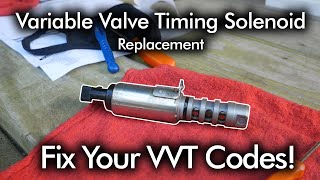
Typical fix: Replace the Bank 1 exhaust camshaft adjuster solenoid. The OEM part number is 06C109257G. 🎬 Watch: How to replace the VVT solenoid on your Audi.
Est. part cost: $40-$150 - Incorrect Mechanical Timing ⚪ Low Probability If a timing belt service was recently performed incorrectly, the exhaust cam on Bank 1 may have been mistimed. Forum users have reported this code appearing immediately after a timing job, sometimes due to difficulty with setting the exhaust cam adjuster correctly with tool T40028.
How to confirm: This requires specialized tools (Audi 3032 cam lock bars, T40026 crank lock pin, T40028 adjuster socket) to lock the crankshaft and camshafts to verify their alignment. This is best done by a professional or experienced DIYer who has performed this job before.
Typical fix: Re-time the engine by correctly aligning the timing belt and properly pre-loading the camshaft adjusters before tightening 🎬 Watch: Complete 3.0L V6 timing belt replacement DIY guide. the sprocket bolts.
Est. part cost: $0 (if no parts are damaged)
Rare But Worth Checking
- Faulty Camshaft Position Sensor (G163): → Shop Engine Camshaft Position Sensor While less common to cause an over-advanced code (it usually causes signal-related codes), a faulty sensor can send incorrect data to the ECM. A user on the Ross-Tech forums chased a similar code (17755) which was ultimately a timing issue, but only after replacing the sensors first. Try swapping it with the Bank 2 sensor to see if the code follows.
- Worn Camshaft Adjuster (Phaser): → Shop Engine Camshaft The mechanical gear itself can fail or leak internally, but this is the least likely and most expensive cause. This is usually a last resort after all other possibilities have been exhausted. It is often replaced preventatively during a timing belt service.
- Clogged Oil Passages / Sludge: Beyond just dirty oil, severe sludge can physically block the oil passages within the cylinder head or the solenoid housing itself, starving the VVT system of pressure. This is a major issue requiring significant engine disassembly to clean.
Diagnosis Steps
- Check Engine Oil: Verify the oil level is correct and the oil is clean. If it's low, dirty, or the wrong type, perform an oil and filter change using a full synthetic 5W-40 or 5W-30 oil meeting VW 502 00 spec. Clear the code and see if it returns.
- Scan Tool Data (VCDS): Use a VAG-COM (VCDS) or similar advanced scan tool. Go to Engine -> Measuring Value Blocks (MVB) -> Group 090, 091, or 092. Monitor 'Camshaft adjustment exhaust bank 1; specified value' vs. '...actual value'. At idle, the actual value should be between -3.0 and 6.0 KW. During a test drive under acceleration, it should switch to 'CS-ctrl ON' and show a value between 16.0 and 25.0 KW. A large, persistent deviation or failure to switch confirms a problem.
- Inspect Solenoid and Connector: Check the wiring and electrical connector for the Bank 1 exhaust camshaft adjuster solenoid for any damage, corrosion, or loose connections. The solenoid is on the front of the passenger-side cylinder head.
- Swap Solenoids: This is a highly effective diagnostic step. Swap the Bank 1 (passenger side) exhaust solenoid with the Bank 2 (driver's side) exhaust solenoid. They are identical parts. Clear the codes and drive the vehicle. If the code returns as P0024 ('B' Camshaft Position - Bank 2), you have confirmed the solenoid is the faulty part. 🎬 See this walkthrough for diagnosing and swapping VVT solenoids.
- Inspect Solenoid Screens: When the solenoid is removed for swapping or testing, carefully inspect its small mesh screens. If they are clogged with black sludge or metallic debris, it's a strong indicator of a larger oil contamination or sludge problem in the engine.
- Test Solenoid: If you don't swap them, you can remove the solenoid and test its resistance with a multimeter (should be around 5.0 to 8.0 ohms). You can also carefully apply 12V to see if the internal plunger clicks audibly.
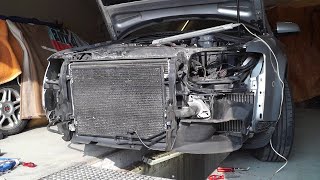
- Check Mechanical Timing: If the solenoid is good and the oil is clean, the next step is to suspect a mechanical timing issue, especially if a timing belt service was recently done. This requires putting the car in the 'service position' (removing the front bumper and lock carrier) to access the timing belt and using special tools (cam lock bars, crank pin) to verify the timing marks. This step is often best left to a professional.
Parts You'll Likely Need
- Camshaft Adjuster Solenoid / Oil Control Valve
(OEM #06C109257G)— This is the most common mechanical part to fail, either by getting clogged with oil sludge or failing electrically. It directly controls the cam timing.
Trusted brands: Genuine Audi/VW, Pierburg (OEM supplier), INA, Bosch
OEM price range: $120-$200
Aftermarket price range: $40-$90 - Engine Oil and Filter Kit (VW 502 00) — Because low or contaminated oil is the #1 cause of this code, an oil change with the correct, high-quality synthetic oil is the most important first step.
Trusted brands: Liqui Moly, Motul 8100 X-cess, Castrol EDGE European Car Formula, Mann-Filter, Mahle
OEM price range: $80-$120
Aftermarket price range: $60-$100
Related Codes That Often Appear With This One
- P0011 — This is the code for Intake Camshaft Over-Advanced on Bank 1. Seeing them together can point to a more systemic issue like low oil pressure or sludge affecting both camshaft adjusters on that bank.
- P0300, P0301, P0302, P0303 — These are random and specific cylinder misfire codes for Bank 1. Incorrect cam timing disrupts the combustion process, leading to misfires on the affected bank.
- 16398 / P0014 — 16398 is the VAG-specific equivalent of the generic P0014 code. It translates to "Bank 1: Camshaft B (Exhaust): Retard Setpoint not Reached (Over-Advanced)". Seeing this in a VCDS scan confirms the P0014 fault.
Technical Service Bulletins (TSBs) & Recalls
- While no TSB was found specifically for P0014 on the AVK engine, Audi TSB 2041097 / 01-16-71 for the later 3.0T engine addresses similar codes (P0011/P0021) by instructing technicians to inspect the filter element on the camshaft adjustment valve, reinforcing the diagnostic principle of checking the solenoid and its screens for debris.
Platform-Specific Known Issues
- The AVK 3.0L V6 is particularly susceptible to oil sludge buildup if maintenance schedules with VW 502 00 certified synthetic oil are not strictly followed. This sludge is a primary cause of VVT system malfunctions.
- The Positive Crankcase Ventilation (PCV) system on this engine can also fail, creating vacuum leaks and contributing to accelerated oil breakdown and sludge formation.
- Accessing the timing components for verification or service requires putting the vehicle into the 'service position,' which involves removing the entire front bumper and lock carrier assembly. This adds significant labor time to what would be a simpler job on other vehicles.
Mechanic-Grade Diagnostic Values
- Camshaft Adjuster Solenoid (N208/N319) Resistance — expected: 5.0 to 8.0 Ω at approx. 20°C (68°F). Failure: A reading outside this range, or an open/short circuit, indicates a faulty solenoid.
- VCDS Measuring Block 090, Field 3 (Camshaft Adjustment, Bank 1) — expected: At idle: -3.0 to 6.0 KW. Under acceleration: 16.0 to 25.0 KW.. Failure: If the value is stuck, does not change with RPM, or is significantly outside the expected range, it points to a fault in the VVT system (solenoid, adjuster, or oil pressure).
- VCDS Measuring Block 090, Field 4 (Camshaft Adjustment, Bank 2) — expected: At idle: -3.0 to 6.0 KW. Under acceleration: 16.0 to 25.0 KW.. Failure: This can be used as a known-good comparison against the faulty Bank 1. If Bank 2 operates correctly while Bank 1 does not, it isolates the fault to Bank 1 components.
Hidden / Shadow Codes Worth Checking
- 16398: This is the VAG-specific fault code that corresponds directly to the generic P0014. The description is "Bank 1: Camshaft B (Exhaust): Retard Setpoint not Reached (Over-Advanced)". (see via This code is visible using VAG-specific scan tools like VCDS (VAG-COM) or OBDeleven.)
Scan Tool Commands That Help
- VCDS (VAG-COM): Engine -> Output Tests -> Camshaft Adjustment Valve (N205/N208) — This test allows you to directly command the camshaft adjuster solenoid to actuate. You should hear an audible click from the solenoid. If there is no click, it indicates a failure in the solenoid itself or its wiring. This is a definitive way to test solenoid function without removal.
Wiring & Ground Locations
- Engine to Chassis Ground Strap — On the passenger side, connected to the front frame rail just behind the secondary air injection pump and then to the engine mount bracket.. A poor engine ground can cause a host of electrical issues, including erratic sensor readings and incorrect solenoid operation. A forum user discovered this cable was missing entirely on their vehicle, which can cause unpredictable electrical faults.
- Ground Connection 12 — In the engine compartment, on the left side (driver's side) firewall.. This is a primary ground point in the engine bay. Corrosion or a loose connection here can affect the Engine Control Module and its related sensors and actuators.
- Camshaft Adjuster Solenoid Connector (Bank 1 Exhaust) — On the front of the passenger-side cylinder head. It is a 2-pin connector.. This is the direct electrical connection to the faulty component. Pin 1 should have battery voltage with the ignition on, and Pin 2 is the ground signal from the ECM. Testing here confirms if the solenoid is receiving the correct power and signal.
Real Owner Repair Stories
- AudiForums.com user 'MHCRRA1' (2002 Audi A4 3.0L AVK) — Persistent P0014 code and hard starting (8 tries to restart) after a major timing belt service and head replacement.
❌ Tried (didn't work) Swapping camshaft position sensors (code did not move)., Completely re-doing the timing belt job from scratch., Thoroughly cleaning the Bank 1 camshaft adjuster., Replacing oil-fed adjuster gaskets and cam end gaskets.
✅ What actually fixed it The user suspected the root cause was the inability to properly use the special tool T40028 to pre-load the exhaust cam adjuster before tightening the cam gear bolts. The tool kept slipping. Another user confirmed that if this pre-loading step is not done correctly, the cam will be out of phase and will set the P0014 code, even if all timing marks appear correct. - AudiForums.com user 'gbmarc' (2007 Audi S8 (different engine, but same solenoid failure principle)) — P0014 code - Retard Setpoint not Reached (Over-Advanced).
❌ Tried (didn't work) The previous owner had a shop replace the camshaft adjuster solenoid just 5 weeks prior to the fault appearing again.
✅ What actually fixed it The owner removed the recently replaced solenoid and tested it by applying 12V; it did not actuate at all. He replaced it with a new aftermarket solenoid ($33) which tested good before installation. After installation, the code was cleared and did not return, and the engine ran more smoothly. This indicates the 'new' part from the shop was either faulty from the start or failed very quickly.
OEM Part Supersession History
06C109257A/B/C/D/E/F→06C109257G— Likely internal improvements to reliability and resistance to oil contamination over the production life of the V6 engines that use this part.
Heads up: All previous versions are superseded by 'G'. When replacing, ensure you are purchasing the latest revision (06C109257G) or a quality aftermarket equivalent from a reputable OEM supplier like Pierburg.
Diagnostic Flowchart
Other Known Issues on This Vehicle
Issues unrelated to this code that are worth knowing about as an owner of this generation:
- Rear Coolant Flange/Pipe Leak 🔴 High — Very common failure item. The plastic becomes brittle from heat cycles and cracks, typically after 60,000-100,000 miles, causing a significant coolant leak at the back of the engine.
- Torque Converter Failure (Automatic Transmission) 🔴 High — A known weak point in automatic transmission models, often leading to code P0741. Symptoms include shuddering and high RPMs at cruising speeds. Failure often requires transmission removal to replace the converter.
- PCV System Failure 🟠 Medium — The PCV valve and associated plastic/rubber hoses are prone to cracking and failing, leading to vacuum leaks, high oil consumption, and can contribute to the formation of oil sludge.
- Coil Pack Failure 🟡 Low — Ignition coil packs are a common failure item, leading to engine misfires (P030x codes). While easy to replace, they can fail intermittently. (Ref: There was a recall for some models, but many failures occur outside of warranty/recall coverage.)
- Front Wheel Arch Rust 🟠 Medium — Common cosmetic and structural issue where rust forms on the front wheel arches, particularly in regions where road salt is used.
Used vs. New Parts: Buying Guide for This Vehicle
When a used part is the smart pick: For this specific repair, buying a used part is generally not recommended. The primary failure component, the camshaft adjuster solenoid, is an electro-mechanical part that is relatively inexpensive to buy new from an OEM supplier. The risk of getting a used solenoid that is already clogged, worn, or near the end of its life outweighs the small cost savings.
Donor-vehicle mileage cap: roughly under 60000 miles for the part to have meaningful remaining life.
What to inspect on the donor part:
- If you must buy used, insist on seeing the part before purchase.
- Inspect the mesh screens for any signs of black sludge, varnish, or metallic particles. If they are not perfectly clean, reject the part.
- Ask for the VIN of the donor car to verify low mileage and check its service history if possible.
- Test the solenoid with a 12V power source to ensure the internal plunger clicks sharply.
OEM-only on this vehicle (don't cheap out):
- While not strictly 'OEM-only', using a Genuine Audi/VW part or one from the direct OEM supplier (Pierburg) for the camshaft adjuster solenoid is highly recommended for reliability.
Aftermarket brands forum-validated for this vehicle:
- Pierburg (often the original equipment manufacturer for Audi)
- Bosch
- INA
Brands owners have reported issues with on this vehicle:
- Unnamed, no-brand solenoids from online marketplaces should be avoided. Forum users have reported these failing quickly, sometimes within weeks of installation.
Real Owner Stories
Aggregated from forums and TSBs cited above. Mileages and costs reflect what owners reported in those sources.
2003 Audi A4 3.0L AVK
Symptoms: Owner reported numerous codes including the VAG equivalent of P0014 (17755) and sought advice on the function of the VVT solenoid assemblies and mechanical timing verification.
What fixed it: Diagnostic discussion confirmed the importance of checking mechanical timing and the VVT solenoid function, noting the engine's sensitivity to oil issues.
Source hint: Ross-Tech Forums: 'B6 A4 - 3.0L - Timing Issues'
2002 Audi A4 3.0L AVK
Symptoms: Persistent P0014 code appearing immediately after a major engine rebuild and timing belt service; owner struggled despite swapping sensors and re-checking timing multiple times.
What fixed it: The issue was linked to difficulty properly using the special tool T40028 on the exhaust cam adjuster during the timing procedure.
Source hint: AudiForums.com: 'P0014 Code after timing job'
2004 Audi A4 3.0L AVK — ~100000 miles
Symptoms: Owner discussion regarding general reliability mentioned vacuum leaks and low oil pressure problems.
What fixed it: Identified clogged oil pickup tube screens and PCV system failures as root causes for VVT-related faults.
Source hint: AudiWorld Forums: 'How reliable is the 3.0L v6 ?'
Related OBD-II Codes
Frequently Asked Questions
Does Audi TSB 2041097 / 01-16-71 apply to my 3.0L AVK engine?
What specific oil should I use in my A4 3.0L to prevent VVT codes like P0014?
I just did a timing belt service and now have a P0014 code. Did I do something wrong?
Can I test the Bank 1 exhaust solenoid without buying a new part?
Is there a specific part number for the camshaft adjuster solenoid on my Audi A4 3.0L?
Why does my A4 3.0L require a 'service position' for timing diagnostics?
Helpful Videos
We Have This Part in Stock



The information in this article is provided for general reference and educational purposes only. Vehicle specifications, procedures, and part compatibility can vary by production date, trim level, and region. Always consult your vehicle's factory service manual and verify part numbers before purchasing or performing repairs. Safety-critical components such as airbags, seat belts, and braking systems should be installed by a qualified professional.
- Audi A4:
- 🧭 Diagnostic Flowchart
- 🎬 Helpful Videos
- 🛍️ Shop This Part
- What's Unique About the 2000-2006 Audi A4
- Symptoms You May Notice
- Most Likely Causes
- Rare But Worth Checking
- Diagnosis Steps
- Parts You'll Likely Need
- Related Codes That Often Appear With This One
- Technical Service Bulletins (TSBs) & Recalls
- Platform-Specific Known Issues
- Mechanic-Grade Diagnostic Values
- Hidden / Shadow Codes Worth Checking
- Scan Tool Commands That Help
- Wiring & Ground Locations
- Real Owner Repair Stories
- OEM Part Supersession History
- Other Known Issues on This Vehicle
- Used vs. New Parts: Buying Guide for This Vehicle
- Real Owner Stories
- 2003 Audi A4 3.0L AVK
- 2002 Audi A4 3.0L AVK
- 2004 Audi A4 3.0L AVK — ~100000 miles
- Related OBD-II Codes
- Frequently Asked Questions
- 🎟️ Get 5% Off