

P0014 on 2017-2024 Audi A4 2.0T: Exhaust Camshaft Timing Over-Advanced Causes and Fixes
On a 2017-2024 Audi A4 with the 2.0T engine, code P0014 is most often caused by a faulty exhaust camshaft adjustment valve (solenoid) or low/dirty engine oil. Before replacing parts, always verify the engine oil level and condition. The solenoid is a common failure point and is a straightforward DIY replacement costing between $40 and $150. In some cases, a clogged oil screen in the camshaft bridge can also be the culprit.
- P0014 means the exhaust camshaft timing is too far advanced.
- The most likely cause is a bad camshaft adjustment valve (solenoid) or old/low engine oil.
- Always check your oil level and condition before buying any parts.
- A simple diagnostic step is to swap the intake and exhaust camshaft solenoids to see if the code follows the part.
- While you can drive with this code, ignoring it can lead to poor performance and potential engine damage, so it should be addressed promptly.
What's Unique About the 2017-2024 Audi A4
The EA888 Gen 3 engine in the B9 A4 uses a sophisticated Variable Valve Timing (VVT) system that is highly dependent on clean oil and precise oil pressure to function correctly. While the fundamental causes for P0014 are similar across many vehicles, the EA888 has specific, well-documented failure points. These include the N205 camshaft adjustment valve (solenoid) and a camshaft bridge (also called a camshaft ladder) which contains a small oil screen that is prone to breaking or clogging. A TSB was even issued by Audi recommending the removal of this screen if the bridge is serviced for any reason. 🎬 Watch: How to install or update the camshaft adjuster bridge. While earlier EA888 engines were known for timing chain tensioner failures, this is a less frequent direct cause for a P0014 code on the Gen 3 engine, though not impossible.
Symptoms You May Notice
- Check Engine Light is on
- Rough or unstable idle
- Reduced engine power and hesitation during acceleration
- Decreased fuel economy
- Engine may be difficult to start
- Stalling at low speeds or when stopping
- A rattling or ticking noise from the engine bay, especially on cold starts
- Replacing the camshaft position sensor when the actual problem is the camshaft adjustment valve (solenoid). Swapping the intake and exhaust solenoids is a key diagnostic step to prevent this unnecessary parts replacement.
- Replacing the entire camshaft bridge when the official procedure per a TSB is often just to remove the problematic screen from the existing bridge.
Most Likely Causes
- Low or Dirty Engine Oil 🔴 High Probability The VVT system is hydraulic and extremely sensitive to oil volume, viscosity, and cleanliness. Low oil levels or sludge-filled oil can impede the function of the camshaft phasers and control solenoids.
How to confirm: Check the engine oil level via the MMI system or dipstick (if equipped). Note the oil's color and consistency. If it's dark, gritty, or below the minimum mark, it needs to be changed. This is the simplest and most important first step.
Typical fix: Perform an oil and filter change using an OEM-spec full synthetic oil (e.g., VW 502 00 or 504 00 spec) and a quality filter. Clear the codes and see if the issue returns.
Est. part cost: $60-$100 - Faulty Camshaft Adjustment Valve (VVT Solenoid) 🔴 High Probability → Shop Engine Camshaft This solenoid, also known as the N205 valve for the intake or N318 for the exhaust, controls oil flow to the camshaft phaser. It's a very common failure item on the EA888 engine. It can fail electronically (open or shorted coil) or mechanically by getting clogged with debris and sticking.
How to confirm: A definitive diagnostic step is to swap the exhaust solenoid with the intake solenoid (they are identical parts). Clear the codes and drive the car. If the fault code changes to P0011 (Intake 'A' Camshaft), the solenoid is confirmed to be faulty. You can also test the solenoid's resistance with a multimeter; it should be between 5-15 Ohms. A user on AudiForums.com confirmed this fix after testing a faulty valve that showed no movement when 12v was applied.
Typical fix: Replace the exhaust camshaft adjustment valve. It is located on the upper timing chain cover and held by a single T30 Torx bolt.
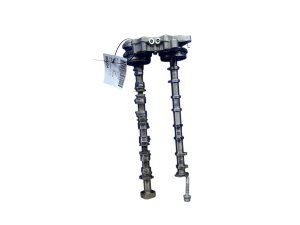
Est. part cost: $40-$150 - Clogged or Damaged Camshaft Bridge Oil Screen 🟡 Medium Probability → Shop Engine Camshaft The camshaft bridge, which holds the adjustment valves, has a small metal screen designed to filter oil. This screen is a known weak point; it can become clogged with sludge or even disintegrate, sending debris into oil passages or starving the VVT system of oil. An official Audi TSB acknowledges this issue.
How to confirm: This is a more involved diagnosis. It requires removing the upper timing cover and the camshaft bridge to visually inspect the screen. If the screen is missing, broken, or clogged, this is likely the cause.
Typical fix: If the screen is damaged, the official Audi recommendation per TSB 2045732/1 is to remove the screen and its housing entirely and not replace the bridge if it's otherwise undamaged. If the bridge itself is damaged, it must be replaced.
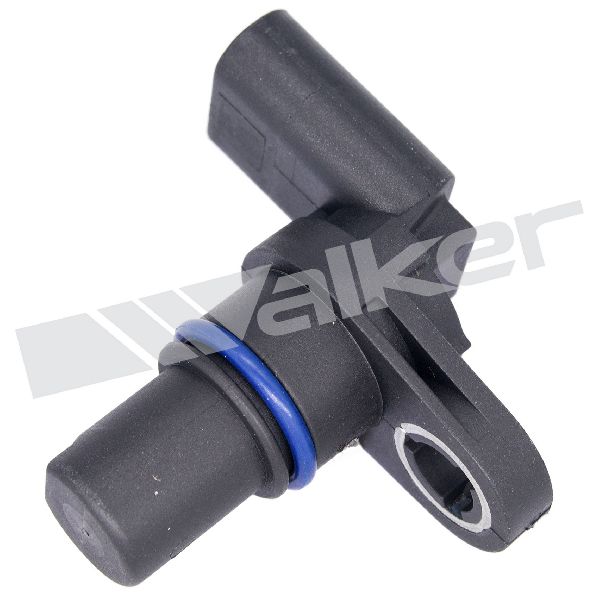
Est. part cost: $150-$300 for a new bridge if needed - Faulty Camshaft Position Sensor (G301) ⚪ Low Probability → Shop Engine Camshaft Position Sensor
How to confirm: This sensor provides the timing data to the ECM. While it can fail, it's much less common than a solenoid failure for this code. A failing sensor often triggers other specific sensor-related codes, like P0341. Swapping the sensor with the one from the intake camshaft is a possible diagnostic step if they are the same part number.
Typical fix: Replace the exhaust camshaft position sensor. It is typically located on the upper timing cover or cylinder head cover.
Est. part cost: $30-$100
Rare But Worth Checking
- Stretched Timing Chain or Failed Tensioner: → Shop Engine Timing Chain While a significant issue on earlier EA888 engines (Gen 1/2), the Gen 3 in the B9 A4 has an improved tensioner design, making this a less common cause. However, on higher mileage vehicles or those with poor oil change history, chain stretch can still occur, leading to timing correlation faults. This is a serious issue often preceded by a rattling noise on cold starts and can lead to catastrophic engine failure.
- Failed Camshaft Phaser (Actuator): → Shop Engine Camshaft The mechanical gear on the end of the camshaft, which is responsible for the actual timing adjustment, can fail internally. This is much rarer than the solenoid that controls it and is a complex, expensive repair requiring removal of the timing chain.
Diagnosis Steps
- Check Engine Oil: Before any other step, verify the oil level is correct and the oil is clean and of the proper VW 502/504 specification. If in doubt, perform an oil and filter change.
- Scan for Other Codes: Use a VAG-compatible scanner to check for any other stored trouble codes that could provide more context.
- Swap Camshaft Adjustment Valves (Solenoids): Locate the intake and exhaust solenoids on the upper timing cover. They are identical. Swap their positions. Clear the codes and drive the vehicle. If the code changes to P0011 (Intake), the solenoid you moved is faulty and must be replaced. This is the most effective and common diagnostic step.
- Test Solenoid Resistance: If swapping is not feasible, use a multimeter to check the resistance of the solenoid. A reading between 5-15 Ohms is typical. An open circuit (infinite resistance) or short (zero resistance) indicates a failed solenoid.
- Inspect Camshaft Bridge Screen: If the solenoid is confirmed to be good, the next step for a persistent code is to inspect the oil screen in the camshaft bridge. This requires removing the upper timing cover for access. Check for a clogged, broken, or missing screen.
- Test Camshaft Position Sensor: If the code still persists, test the camshaft position sensor and its circuit, though this is an unlikely cause.
- Check Mechanical Timing: As a final step, if all other components are verified to be working, a mechanical timing check is necessary. This involves checking the timing chain for stretch and verifying the tensioner's position. This is an advanced procedure best left to a professional or experienced DIYer.
Parts You'll Likely Need
- Camshaft Adjustment Valve (VVT Solenoid)
(OEM #06L109257F (or superseded versions like 06L109257B))— This is the most frequent failure point for VVT-related codes on the EA888 Gen 3 engine. It gets stuck or fails electronically. Both intake and exhaust valves are the same part.
Trusted brands: INA, Pierburg, Genuine VW/Audi
OEM price range: $100-$150
Aftermarket price range: $40-$90 - Engine Oil and Filter Kit — Crucial first step. The VVT system's health is entirely dependent on clean, correct-spec oil.
Trusted brands: Liqui Moly, Motul, Genuine VW/Audi
OEM price range: $80-$120
Aftermarket price range: $60-$90 - Camshaft Adjuster Bridge
(OEM #06H103144K (example, verify by VIN))— Replaced only if its internal oil screen is found to be clogged or disintegrated and has caused damage to the bridge itself. Often, only the screen needs to be removed.
Trusted brands: Genuine VW/Audi
OEM price range: $150-$300
Aftermarket price range: $100-$200
Related Codes That Often Appear With This One
- P0011 — If you have issues with both intake and exhaust timing, you might see P0011 ('A' Camshaft Over-Advanced) alongside P0014. This often points to a systemic issue like low oil pressure, a problem with the camshaft bridge, or a timing chain problem.
- P0341 — This code for 'Camshaft Position Sensor 'A' Circuit Range/Performance' can appear if the sensor itself is faulty or if the mechanical timing is so far off that the sensor's readings are considered implausible by the ECM.
Technical Service Bulletins (TSBs) & Recalls
- Audi TSB 2045732/1 - Recommends that if the screen of the non-return valve in the camshaft bridge is found to be damaged during a repair, the screen housing should be removed entirely. The TSB states the bridge does not need to be replaced if this is the only issue.
Mechanic-Grade Diagnostic Values
- Camshaft Adjustment Valve (N205/N318) Resistance — expected: 5.0 to 15.0 Ohms. Some service literature specifies a tighter range of 6.9 to 7.9 Ohms.. Failure: Infinite resistance (open circuit) or near-zero resistance (short circuit).
- Voltage at VVT Solenoid Connector — expected: Battery voltage (approx. 12.5V) at pin 1 to a known good ground, with ignition on, engine off.. Failure: No voltage or significantly low voltage points to a wiring or fuse issue.
- VVT Solenoid Circuit Wiring Resistance — expected: Less than 1.5 Ohms between the solenoid harness connector (pin 2) and the corresponding ECM connector pin (e.g., T60, pin 20).. Failure: Higher resistance indicates an open or corroded wire.
- Live Data: Camshaft Adjustment, specified vs. actual (VCDS) — expected: The 'actual' value should closely track the 'specified' value, typically within a few degrees.. Failure: A large, persistent deviation between specified and actual values, or an actual value that is stuck, indicates a problem with the solenoid, oil pressure, or phaser.
Scan Tool Commands That Help
- VCDS or OBDeleven: Output Diagnostic Test Mode (DTM) / Output Test — To directly test the function of the N205/N318 solenoid. When activated, you should hear an audible 'click' from the valve, confirming the solenoid's coil and plunger are working.
- ODIS (Dealer Tool): Guided Functions - Timing Chain Adaptation — Service manuals state this should be performed after major engine work like a timing chain replacement or engine rebuild to reset learned values. This is typically not required for a simple solenoid replacement.
Wiring & Ground Locations
- Fuse SB12 — In the fuse holder B, located in the engine bay.. This 15A fuse provides power to the camshaft control valves (N205, N318). A blown fuse will disable VVT operation and can set fault codes.
- ECM Connector Pin — At the Engine Control Module (ECM). The specific pin varies by model year and ECM, but an example is Pin 20 on the T60 connector.. This is the control wire from the ECM to the VVT solenoid. Checking for continuity from this pin to Pin 2 at the solenoid connector is a critical step to rule out a broken wire.
Real Owner Repair Stories
- AudiForums.com user 'gbmarc' (2007 Audi S8 (D3 chassis, different engine but identical VVT solenoid principle)) — P0014 - Retard Setpoint not Reached (Over-Advance).
❌ Tried (didn't work) The previous owner had a shop replace the solenoid 5 weeks prior, but the problem persisted, leading to fears of needing to replace the internal camshaft adjuster (an engine-out job).
✅ What actually fixed it The user removed the recently replaced solenoid and tested it by applying 12V directly to its terminals; the internal shaft did not move at all. He replaced it with a new solenoid (which he tested and confirmed did move with 12V applied) and the code was resolved. This suggests the 'new' part from the shop was either faulty or an incorrect part.
"I Checked Everything" — The Actual Cause
- A common scenario fitting this pattern is when all electrical tests on the VVT solenoid (resistance, voltage, scan tool activation) pass, but the P0014 code persists. In this case, the root cause is often mechanical rather than electrical. The most likely culprit on the EA888 Gen 3 is a clogged or disintegrated oil screen inside the camshaft bridge. This restricts oil flow to the phaser, preventing it from reaching the commanded position, even though the solenoid is functioning perfectly.
OEM Part Supersession History
06K109257A, 06L109257B, 06L109257D→06L109257F (current common revision)— Revisions to improve reliability and performance.
Heads up: There are documented cases where different revisions (e.g., 'F' vs 'D') have different physical dimensions (e.g., 1mm thicker) and are not interchangeable, even if a parts catalog suggests they are. Always confirm the exact part number required for your specific VIN and engine code, and physically compare the new part to the old one.
Model Year Variations Within This Range
- 2017-2024: The primary variation within the B9 generation is the part number for the VVT control valve (solenoid). While many use 06L109257F, earlier or different engine-code variants may use a different revision (like 06L109257D). Using the wrong revision can lead to fitment issues and persistent fault codes.
Diagnostic Flowchart
Other Known Issues on This Vehicle
Issues unrelated to this code that are worth knowing about as an owner of this generation:
- Water Pump & Thermostat Housing Leaks 🔴 High — Very common, often occurs between 40,000 and 80,000 miles. The plastic housing can warp or crack, causing coolant leaks. (Ref: No recall, but updated part revisions exist.)
- PCV Valve Failure 🟠 Medium — Common around 60,000-80,000 miles. Failure of the diaphragm can cause a loud whistling noise, rough idle, lean codes, and increased oil consumption. (Ref: No recall, but it's a well-known failure item with revised parts available.)
- Carbon Buildup on Intake Valves 🟠 Medium — A known characteristic of direct-injection engines. While the dual-injection (MPI+GDI) on many Gen 3 engines helps, it doesn't eliminate the problem entirely. Typically requires cleaning after 80,000-120,000 miles if symptoms like rough idle or misfires appear.
- S-Tronic (DSG) Transmission Mechatronics Issues 🟠 Medium — Can occur between 60,000 and 100,000 miles, manifesting as jerky shifting, delayed engagement, or warning lights. Regular fluid changes are critical. (Ref: Various TSBs exist for specific software updates or repairs.)
Used vs. New Parts: Buying Guide for This Vehicle
When a used part is the smart pick: For this specific fault, buying used parts is generally not recommended. The primary failure items are the VVT solenoid and potentially the camshaft bridge. The solenoid is an electro-mechanical part with a high failure rate and a relatively low cost when new, making a used one a poor value proposition. A used camshaft bridge could be considered if sourced from a low-mileage, well-maintained donor car with no signs of sludge, but the risk of inheriting a clogged screen is high.
Donor-vehicle mileage cap: roughly under 50000 miles for the part to have meaningful remaining life.
What to inspect on the donor part:
- For a camshaft bridge: No visible sludge or varnish in oil passages.
- Ensure the oil screen (if present) is intact and clean.
- No scoring or deep scratches on machined surfaces.
OEM-only on this vehicle (don't cheap out):
- Camshaft Adjustment Valve (VVT Solenoid): Due to the electronic complexity and high failure rate of cheap alternatives, using a Genuine VW/Audi part or one from a known OEM supplier is strongly advised.
- Camshaft Position Sensor: These sensors are critical for engine timing. Aftermarket versions can have incorrect resistance or voltage outputs, causing persistent issues. Stick to OEM or OEM-supplier brands.
Aftermarket brands forum-validated for this vehicle:
- INA: Widely known as an OEM supplier to the VW/Audi group for valvetrain and timing components, including these solenoids.
- Pierburg: Another reputable German brand that is an OEM supplier for many VAG parts.
Brands owners have reported issues with on this vehicle:
- Unbranded, low-cost solenoids from online marketplaces. While some may work temporarily, as noted in one forum story, they often have high premature failure rates and may not meet the precise flow and response characteristics required by the ECM, leading to persistent, difficult-to-diagnose performance issues.
Real Owner Stories
Aggregated from forums and TSBs cited above. Mileages and costs reflect what owners reported in those sources.
2017 Audi A4 2.0T
Symptoms: The owner received a P0014 code and was seeking advice on whether the issue was the sensor or the actuator (solenoid).
What fixed it: The context does not provide the final resolution for this specific Reddit user, but notes it as an active diagnostic case for this model year.
Source hint: Reddit r/AskMechanics - Code P0014
Audi EA888 2.0T
Symptoms: The Check Engine Light was on with a P0014 code. A shop had previously replaced the solenoid, but the code persisted.
What fixed it: The owner tested the replacement solenoid with a 12v source and found it had no movement. Replacing the faulty 'new' solenoid with a functional one resolved the code.
Source hint: AudiForums.com - Camshaft adjuster and P0014 code
2017 Audi A4 2.0T — 73000 miles
Symptoms: While performing preventative maintenance, the owner replaced the PCV valve (oil separator).
What fixed it: Replacement of the PCV valve as a common maintenance item for the EA888 engine platform.
Source hint: AudiWorld Forums - Oil separator (PCV Valve) replacement
Related OBD-II Codes
Frequently Asked Questions
My 2017 Audi A4 has a P0014 code; does Audi TSB 2045732/1 apply to my engine?
Can I swap parts between the intake and exhaust sides to diagnose P0014 on my A4?
What specific oil should I use in my 2017-2024 Audi A4 to prevent VVT issues like P0014?
Is there a specific sensor I should check for the P0014 code on this vehicle?
Where is the N318 Camshaft Adjustment Valve located on my EA888 engine?
Helpful Videos

Used OEM Parts in Stock
New Aftermarket Parts Available

The information in this article is provided for general reference and educational purposes only. Vehicle specifications, procedures, and part compatibility can vary by production date, trim level, and region. Always consult your vehicle's factory service manual and verify part numbers before purchasing or performing repairs. Safety-critical components such as airbags, seat belts, and braking systems should be installed by a qualified professional.
- Audi A4:
- 🧭 Diagnostic Flowchart
- 🎬 Helpful Videos
- 🛍️ Shop This Part
- What's Unique About the 2017-2024 Audi A4
- Symptoms You May Notice
- Most Likely Causes
- Rare But Worth Checking
- Diagnosis Steps
- Parts You'll Likely Need
- Related Codes That Often Appear With This One
- Technical Service Bulletins (TSBs) & Recalls
- Mechanic-Grade Diagnostic Values
- Scan Tool Commands That Help
- Wiring & Ground Locations
- Real Owner Repair Stories
- "I Checked Everything" — The Actual Cause
- OEM Part Supersession History
- Model Year Variations Within This Range
- Other Known Issues on This Vehicle
- Used vs. New Parts: Buying Guide for This Vehicle
- Real Owner Stories
- 2017 Audi A4 2.0T
- Audi EA888 2.0T
- 2017 Audi A4 2.0T — 73000 miles
- Related OBD-II Codes
- Frequently Asked Questions
- 🎟️ Get 5% Off