

P0014 on 2005-2011 Audi A6: Exhaust Cam Timing Causes, VCDS Diagnosis, and Fixes
On the 2005-2011 Audi A6, P0014 is most often caused by low/dirty oil or a faulty camshaft adjuster solenoid. Check your oil level and condition first. If the oil is fine, the solenoid is the next likely culprit. However, be aware that this code can also be the first sign of a very serious and expensive timing chain failure, a known issue on these engines. A VCDS scan of Measuring Block 93 is critical for diagnosis.
- Always check your engine oil level and condition first; it's the simplest and most common cause.
- A rattling noise from the back of the engine on cold starts is a major red flag for a failing timing chain tensioner, a known and very expensive issue on this platform.
- Before buying parts, try swapping the Bank 1 and Bank 2 exhaust camshaft adjuster solenoids to see if the code follows the part.
- If you have access to VCDS or a similar tool, check Measuring Block 93. A phase deviation over -8 degrees points directly to a mechanical timing problem that a new sensor or solenoid will not fix.
- Due to the potential for catastrophic engine damage, P0014 on this specific vehicle should be treated with high urgency.
What's Unique About the 2005-2011 Audi A6
The C6-generation Audi A6 with the 3.2L V6 and 4.2L V8 engines is notorious for issues with its timing chain system. Unlike many engines where timing components are at the front, these engines have their four timing chains, guides, and tensioners at the rear of the engine against the firewall. This means that if the P0014 code is caused by a stretched chain or failed tensioner (a very common problem), the entire engine and transmission must be removed for the repair. This design turns a moderate parts-cost job into an extremely labor-intensive and expensive repair, with owner-reported costs ranging from $6,000 to over $10,000. This makes it critical to properly diagnose the code before assuming it's a simple sensor or solenoid.
Symptoms You May Notice
- Check Engine Light is on
- Rough or unstable idle
- Reduced engine power and poor acceleration
- Engine rattling noise, especially a brief 'chain rattle' for 1-3 seconds on a cold start, coming from the rear of the engine.
- Engine stalling or difficulty restarting when warm.
- Decreased fuel economy
- Knocking or clicking noise from the engine bay.
- Replacing only the camshaft position sensor without checking oil quality or VCDS measuring blocks. The sensor is often just accurately reporting a mechanical problem.
- Assuming the cold start rattle is a minor issue. On these engines, it is a critical warning sign of impending, expensive timing system failure that should not be ignored.
Most Likely Causes
- Low, Old, or Incorrect Viscosity Engine Oil 🔴 High Probability The VVT system is entirely dependent on oil pressure and cleanliness. Long oil change intervals or using oil that doesn't meet VW 502 00 specification can lead to sludge buildup that clogs the small passages in the camshaft adjuster solenoids.
How to confirm: Check the engine oil level on the dipstick and note the color and consistency of the oil. If it is low, black, or sludgy, it needs to be changed. An AudiWorld forum user noted their P0014 appeared after the garage found very dirty oil despite low mileage on the change.
Typical fix: Perform a complete engine oil and filter change using a high-quality synthetic oil that meets Audi's specifications (e.g., VW 502 00) for your engine.
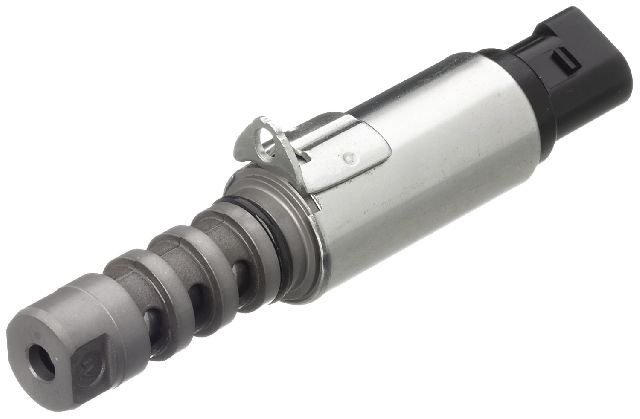
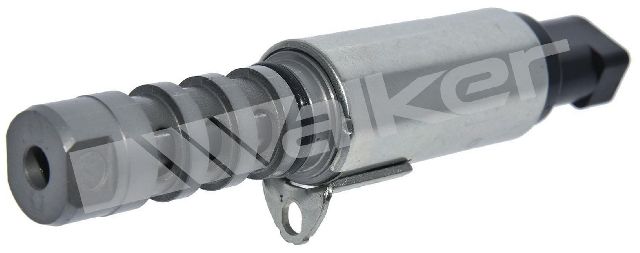
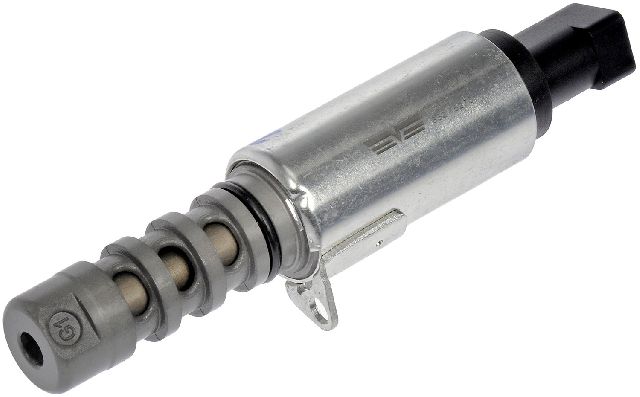
Est. part cost: $80-$150 - Faulty Camshaft Adjuster Solenoid (Oil Control Valve) 🟡 Medium Probability → Shop Engine Camshaft These solenoids can become clogged with oil sludge or fail electrically, causing them to stick in the advanced position. They are a known high-failure-rate item.
How to confirm: Swap the Bank 1 exhaust solenoid with the Bank 2 exhaust solenoid. Clear the codes and drive the vehicle. If the code changes to P0024 (Bank 2), the solenoid is faulty. You can also test the solenoid's resistance with a multimeter; it should be around 5.0-8.0 Ohms at 20°C (68°F).
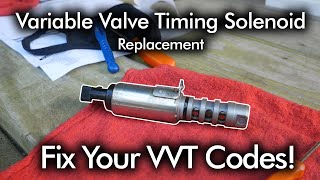
Typical fix: Replace the faulty camshaft adjuster solenoid. 🎬 Watch: How to replace and test your VVT solenoids It is often recommended to replace them in pairs (both exhaust solenoids). Use the latest part number revision available.
Est. part cost: $40-$180 - Failing Upper Timing Chain Tensioner(s) / Stretched Timing Chain 🟡 Medium Probability → Shop Engine Timing Chain The plastic guides on the original timing chain tensioners are a known weak point and can break, or the hydraulic tensioners can lose their ability to hold oil pressure, causing chain slack. This is a widely documented failure on the 3.2L and 4.2L engines.
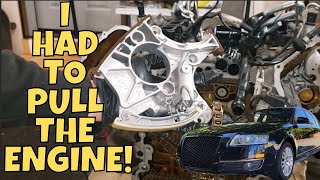
How to confirm: The primary symptom is a distinct rattling noise from the back of the engine on cold starts. A definitive diagnosis can be made using an Audi-specific scan tool (like VCDS) to check Measuring Block 93. A phase deviation value greater than -8° (e.g., -9°, -10°) indicates significant timing chain stretch or tensioner failure and necessitates the full timing job. 🎬 See this walkthrough of the engine removal and tensioner repair Some mechanics become concerned with any value beyond -6°.
Typical fix: This is a major repair that requires removing the engine to replace all timing chains, guides, and tensioners. It is highly recommended to use the updated tensioner parts specified in Audi TSBs.
Est. part cost: $1200-$2500
Rare But Worth Checking
- Faulty Camshaft Position Sensor (G300): → Shop Engine Camshaft Position Sensor While less common for an 'over-advanced' code, a sensor providing an erratic signal can trigger it. It's an easy part to swap for diagnosis. A user on quattroworld.com swapped sensors to rule this out. An AudiWorld user with P0014 and P0366 was advised to check this sensor first.
- Failed Camshaft Adjuster (Phaser): → Shop Engine Camshaft The mechanical gear that actually rotates the camshaft can fail internally, getting stuck in the advanced position. This is less common than solenoid or chain failure but can happen, as discussed in an AudiWorld forum thread where a user contemplated this after other fixes failed.
Diagnosis Steps
- Check Engine Oil: Verify the oil level is correct and the oil is clean and of the proper VW 502 00 spec. If it's low, dirty, or overdue for a change, perform an oil and filter change. Clear the code and see if it returns.
- Scan with VCDS/Advanced Tool: Use a tool like VCDS to check 'Engine' -> 'Measuring Blocks' -> Group 093. Observe the 'Phase Position Bank 1' and 'Phase Position Bank 2' values at idle. A value more negative than -8.0° (e.g., -9.5°) strongly suggests a timing chain/tensioner issue, and you should proceed to step 6. This is the most critical diagnostic step.
- Inspect and Test the Solenoid: Locate the Bank 1 (passenger side) exhaust camshaft adjuster solenoid at the rear of the cylinder head. Inspect the wiring and connector for damage. You can try cleaning the solenoid, but replacement is often necessary.
- Swap Solenoids: Swap the Bank 1 exhaust solenoid with the Bank 2 (driver's side) exhaust solenoid. They are identical. Clear the codes and drive the car. If the fault code changes to P0024 ('B' Camshaft Position - Bank 2), you have confirmed the solenoid is the problem. Replace the faulty solenoid with the latest revision.
- Listen for Cold Start Rattle: If the previous steps didn't solve the issue, pay close attention to the engine sound on the first start of the day after the car has sat for several hours. A 1-3 second rattle from the rear of the engine is the classic sign of failing timing chain tensioners.
- Professional Diagnosis: If a timing chain issue is suspected based on the VCDS readings or cold start rattle, the vehicle should be taken to a qualified independent specialist or dealer for confirmation. This is a severe issue that requires engine removal to fix, with costs often exceeding $6,000.
Parts You'll Likely Need
- Camshaft Adjuster Solenoid (VVT Solenoid)
(OEM #06E109257P (supercedes 06E109257J, 06E109257F))— This solenoid is a common failure point, getting stuck or clogged with oil sludge, directly causing timing deviation codes. It's crucial to get the latest revision, which is 'P' or newer.
Trusted brands: INA (often the OEM supplier), Bosch, Pierburg
OEM price range: $100-$180
Aftermarket price range: $40-$90 - Timing Chain Kit — This is the required fix for the most serious cause of P0014 on these engines: stretched chains and failed tensioners. A complete kit including all four chains, all tensioners, all guides, and necessary seals must be used.
Trusted brands: Iwis (OEM chain manufacturer), Febi, INA
OEM price range: $1500-$2500
Aftermarket price range: $800-$1500 - Camshaft Position Sensor (Bank 1 Exhaust, G300)
(OEM #07L905163C)— Though less common, the sensor itself can fail or be replaced during diagnosis. It's often replaced as a 'while you're in there' part or to rule out a simple fix.
Related Codes That Often Appear With This One
- P0024 — This is the equivalent code for Bank 2 (driver's side). If you swap a faulty Bank 1 solenoid to Bank 2, P0014 will be replaced by P0024, confirming the solenoid is the issue.
- P0366 / P0346 — These codes indicate an implausible signal from the camshaft position sensor on Bank 1. They often appear when timing chain slack becomes severe enough to cause an erratic signal, pointing towards a mechanical timing issue rather than just an over-advanced condition.
- P0300, P0301, P0302, P0303 — Random (P0300) or specific (P0301-P0303) misfire codes for Bank 1 can occur because the incorrect exhaust cam timing disrupts the combustion process in those cylinders.
Technical Service Bulletins (TSBs) & Recalls
- TSB 2039995/1 (March 3, 2015): Addresses 'Engine rattling noises at cold start' for 1-3 seconds. Confirms cause as upper chain tensioners and recommends replacement with 'optimized chain tensioners' (P/N 06E109217AH and 06E109218AJ).
Platform-Specific Known Issues
- Real Owner Story: P0014 leading to Timing Chain Diagnosis: → Shop Engine Timing Chain An owner of a 2008 Audi A6 4.2 on AudiWorld forums reported getting a P0014 code with no initial symptoms other than the Check Engine Light. A local shop quoted $9,000 for a stretched timing chain. The community advised the owner to immediately get a VCDS scan and check Measuring Block 093 for the phase deviation numbers before doing anything else, reinforcing the critical nature of this diagnostic step to avoid unnecessary repairs or misdiagnosis.
- Carbon Buildup on 3.2L FSI Engines: The 3.2L FSI engine is a direct-injection design, meaning fuel is sprayed directly into the cylinder, not over the intake valves. As a result, oil and combustion byproducts bake onto the intake valves, causing significant carbon buildup. This restricts airflow and can cause symptoms like rough idle, misfires, and power loss, which can sometimes be confused with timing issues. Manual cleaning (walnut blasting) is required, typically every 40k-60k miles.
Mechanic-Grade Diagnostic Values
- Camshaft Adjuster Solenoid (N205) Resistance — expected: 5.0 to 8.0 Ohms at approx. 20°C (68°F). Failure: A reading outside this range, or an open/short circuit, indicates a faulty solenoid.
- VCDS Engine Measuring Block 093 - Phase Position — expected: 0 to -7.9 degrees at warm idle.. Failure: A value of -8.0 degrees or more negative (e.g., -9.0, -10.5) is widely considered the service limit, indicating excessive timing chain stretch or tensioner failure requiring replacement.
Scan Tool Commands That Help
- VCDS (VAG-COM): Engine -> Basic Settings -> Group 094 (Intake) or 096 (Exhaust) — This function runs an automated test of the camshaft adjusters. The tool commands the solenoids to activate and measures the system's response, reporting 'Syst. OK' or 'Syst. Not OK'. This can help verify if the solenoid and phaser are mechanically responding to commands, helping to isolate a sticky solenoid or phaser from a wiring issue.
- VCDS (VAG-COM) or ODIS: Output Test (DTM) for Camshaft Adjustment Valve (N205/N318) — This is a simple bidirectional test that directly commands the solenoid to activate. The technician should listen or feel for an audible 'click' from the solenoid. If a click is heard, it confirms the wiring and the solenoid's electrical coil are functional, pointing the diagnosis more toward a mechanical jam or oil flow issue. No click suggests a wiring or electrical failure.
Wiring & Ground Locations
- Engine Ground Strap — There are several key ground points. One important but easily missed ground wire comes from the main harness and attaches to a bolt on the oil filter housing.. A missing or corroded ground at the oil filter housing was reported by an owner to cause various electrical issues after an engine swap. Poor grounding can affect sensor readings and solenoid operation, potentially triggering false timing codes.
- Main Engine Ground — A primary ground point is located in the right side of the engine compartment, near the alternator.. This is a main chassis ground for the engine. Corrosion or looseness here can cause a host of intermittent electrical problems, including erratic sensor data for the camshaft position sensors and inconsistent operation of the VVT solenoids.
Real Owner Repair Stories
- quattroworld.com Forums user 'catamount' (2005 Audi A6 3.2L with 120k miles) — Misfires on Bank 1 (cylinders 1, 2, 3) and a DTC for Camshaft Position Sensor B Bank 1 (G300) Implausible Signal.
❌ Tried (didn't work) Swapping the intake and exhaust camshaft position sensors on Bank 1; the fault did not move, ruling out the sensor itself.
✅ What actually fixed it The user logged measuring block 090 and saw the actual exhaust cam adjustment was stuck at ~10 degrees while the specified value was 0. Suspecting a stuck solenoid based on a TSB, they swapped the Bank 1 and Bank 2 exhaust solenoids. The problem moved to the other bank, confirming a faulty solenoid was the root cause.
OEM Part Supersession History
06E109257F→06E109257J, which was then superseded by 06E109257P— Revisions were likely made to improve resistance to oil contamination and electrical failure.
Heads up: It is critical to use the latest available revision (P or newer) when replacing. While older versions may fit, they are prone to the original failure mode.
Model Year Variations Within This Range
- 2004-2008: Early 3.2L V6 engines often carry the engine code 'BKH'.
- 2009-2011: Later 3.2L V6 engines often carry the engine code 'CALA'. While mechanically very similar, there can be slight differences in software and some ancillary parts. Always confirm parts compatibility with the vehicle's VIN.
Diagnostic Flowchart
Other Known Issues on This Vehicle
Issues unrelated to this code that are worth knowing about as an owner of this generation:
- Intake Valve Carbon Buildup (3.2L FSI) 🔴 High — Extremely common on FSI (direct injection) engines. Typically requires cleaning every 40,000-60,000 miles. Symptoms include rough idle, misfires, and loss of power.
- MMI System Failure 🟠 Medium — Common failure. Can be caused by a failed module in the fiber optic loop (often the amplifier due to water damage), software glitches, or physical damage to the control panel from spills.
- Upper Front Control Arm Bushing Wear 🟠 Medium — A very common wear item. Worn bushings lead to clunking or creaking noises over bumps and can affect alignment. Typically needs replacement around 80,000-100,000 miles.
- Adaptive Air Suspension Leaks (if equipped) 🔴 High — The rubber air springs degrade over time, leading to leaks. This causes the compressor to run excessively and the vehicle to sag at one or more corners, usually after being parked overnight.
- Retracting MMI Screen Mechanism Failure 🟡 Low — The plastic gears in the screen's retracting mechanism can break, causing the screen to get stuck. Also, the wiring harness can fray from repeated motion, causing a black screen.
Used vs. New Parts: Buying Guide for This Vehicle
When a used part is the smart pick: A used camshaft adjuster solenoid or camshaft position sensor can be a cost-effective choice for diagnosis (e.g., swapping to see if a code follows the part) or as a short-term repair, provided it comes from a reputable dismantler with a warranty.
Donor-vehicle mileage cap: roughly under 80000 miles for the part to have meaningful remaining life.
What to inspect on the donor part:
- For a solenoid, check that the electrical connector is free of corrosion or damage.
- Inspect the fine mesh screens on the solenoid; they should be perfectly clean and intact.
- Ask for the VIN of the donor car to verify it did not have known timing chain issues.
- Avoid parts from engines that show signs of heavy oil sludge or coolant contamination.
OEM-only on this vehicle (don't cheap out):
- Timing Chain Kit (Chains, Tensioners, Guides): Never use used timing components. The cost of labor for this job is so high that installing anything other than a new, high-quality kit is an extreme risk.
- Seals and Gaskets: Always use new seals (like the rear main seal) and gaskets (valve cover, etc.) during a timing job. Reusing old ones will almost certainly lead to leaks.
Aftermarket brands forum-validated for this vehicle:
- INA: Often the Original Equipment Manufacturer (OEM) for Audi's solenoids and timing components.
- Iwis: The OEM for the timing chains themselves.
- Pierburg: A reputable OEM supplier for solenoids and valves.
- Febi Bilstein: A well-regarded German aftermarket brand for timing components.
Brands owners have reported issues with on this vehicle:
- Unnamed or 'white-box' timing chain kits from online marketplaces. Many forum users report premature failure of cheap tensioners or guides from no-name brands, leading to a repeat of the entire engine-out repair.
Real Owner Stories
Aggregated from forums and TSBs cited above. Mileages and costs reflect what owners reported in those sources.
2008 Audi A6 4.2L V8
Symptoms: Check Engine Light was on with no other initial symptoms. A local shop quoted $9,000 for a stretched timing chain repair.
What fixed it: The community advised a VCDS scan of Measuring Block 093 to verify phase deviation numbers before proceeding with the $9,000 timing job.
Source hint: AudiWorld forum owner report mentioned in vehicle_specific_issues
2006 Audi A6 3.2L V6
Symptoms: P0014 and P0366 codes present.
What fixed it: The garage found very dirty oil despite low mileage since the last change; a complete oil and filter change is the primary step for sludge-related VVT issues.
Source hint: AudiWorld forum thread '2006-audi-a6-3-2q-codes-p0366-p0014-repair-2962322/'
Related OBD-II Codes
Frequently Asked Questions
My 2006 Audi A6 3.2L has a brief 1-3 second rattle on cold starts; does Audi have a technical fix for this?
Can I use any synthetic oil in my A6 3.2L to prevent P0014 codes?
How can I tell if my P0014 code is just a bad solenoid or a stretched timing chain without pulling the engine?
Is the P0014 code on my Audi A6 related to the carbon buildup issues I've heard about?
If I have a P0014 on Bank 1, can I test the solenoid by moving it to the other side of the engine?
Helpful Videos
We Have This Part in Stock


The information in this article is provided for general reference and educational purposes only. Vehicle specifications, procedures, and part compatibility can vary by production date, trim level, and region. Always consult your vehicle's factory service manual and verify part numbers before purchasing or performing repairs. Safety-critical components such as airbags, seat belts, and braking systems should be installed by a qualified professional.
- Audi A6:
- 🧭 Diagnostic Flowchart
- 🎬 Helpful Videos
- 🛍️ Shop This Part
- What's Unique About the 2005-2011 Audi A6
- Symptoms You May Notice
- Most Likely Causes
- Rare But Worth Checking
- Diagnosis Steps
- Parts You'll Likely Need
- Related Codes That Often Appear With This One
- Technical Service Bulletins (TSBs) & Recalls
- Platform-Specific Known Issues
- Mechanic-Grade Diagnostic Values
- Scan Tool Commands That Help
- Wiring & Ground Locations
- Real Owner Repair Stories
- OEM Part Supersession History
- Model Year Variations Within This Range
- Other Known Issues on This Vehicle
- Used vs. New Parts: Buying Guide for This Vehicle
- Real Owner Stories
- 2008 Audi A6 4.2L V8
- 2006 Audi A6 3.2L V6
- Related OBD-II Codes
- Frequently Asked Questions
- 🎟️ Get 5% Off