

P0014 on 2016-2019 Buick Encore 1.4L LE2: Exhaust Cam Timing Causes and Fixes
On a 2016-2019 Buick Encore with the 1.4L LE2 engine, code P0014 is most often caused by low or dirty engine oil, or a failing exhaust camshaft position actuator solenoid. Checking the oil level and condition is the critical first step. Replacing the solenoid is a common, affordable DIY fix, with the part costing between $25 and $60. In some cases, a more complex mechanical issue with the camshaft reluctor ring, as noted in a GM TSB, could be the cause.
- P0014 on your Encore almost always points to the exhaust side of the VVT system.
- Before buying any parts, check your oil level and condition. An oil change with the correct 5W-30 synthetic oil might fix the problem.
- The most likely failed part is the exhaust camshaft position actuator solenoid (Part No. 12655421), which is relatively inexpensive and easy to replace.
- A simple diagnostic test is to swap the intake and exhaust solenoids to see if the trouble code follows the part, changing from P0014 to P0011.
- Ignoring this code can lead to a rough running engine, poor fuel economy, and potential stalling.
What's Unique About the 2016-2019 Buick Encore
The 1.4L LE2 engine in the 2016-2019 Encore is a direct-injection turbocharged engine that relies heavily on precise oil pressure for its Variable Valve Timing (VVT) system. These engines are known to be sensitive to oil quality and maintenance intervals. While the most common causes are universal (oil issues, solenoid failure), GM has issued a technical service bulletin (TSB 21-NA-268) for this specific engine and vehicle range that points to a potential issue with the exhaust camshaft reluctor wheel orientation, which is a more in-depth mechanical problem than a simple sensor or solenoid failure. This TSB also covers crank/no-start conditions and other related codes like P0017, P0365, and P0366.
Symptoms You May Notice
- Check Engine Light illuminated
- Rough idle
- Engine stalling or hesitation
- Reduced engine power
- Poor fuel economy
- Rattling or ticking noise from the engine
- Engine running rough
- Replacing the camshaft position sensor when the actuator solenoid is the actual problem.
- Replacing the timing chain when the issue is simply low or dirty oil.
- Assuming a major mechanical failure before performing the simple solenoid swap test.
Most Likely Causes
- Low, Dirty, or Incorrect Viscosity Engine Oil 🔴 High Probability The VVT system is hydraulic and highly dependent on oil pressure and cleanliness. Old, sludgy, or incorrect oil can clog passages and prevent the camshaft actuator solenoid from functioning correctly. Owners have reported that an oil change alone can resolve the code if the oil is very dirty or low.
How to confirm: Check the engine oil level on the dipstick and inspect its condition. If the oil is low, black, or sludgy, it needs to be changed.
Typical fix: Perform an oil and filter change using a full synthetic oil that meets GM's dexos1 specification (5W-30 is typical for this engine).
Est. part cost: $30-$80 - Faulty Exhaust Camshaft Position Actuator Solenoid (VVT Solenoid) 🔴 High Probability → Shop Engine Camshaft This solenoid is a common failure point on many modern engines, including the 1.4L LE2. It's an electro-mechanical part that lives in a hot, oily environment and can fail electrically or become clogged with debris, leading to P0014 and sometimes related electrical fault code P0013.
How to confirm: A common diagnostic trick is to swap the exhaust solenoid with the intake solenoid. Clear the codes and drive the vehicle. If the code changes to P0011 (Intake Camshaft Position Timing Over-Advanced), the solenoid is faulty. You can also test the solenoid's resistance with a multimeter; a good solenoid should measure between 8 and 13 ohms, while a bad one may show an open circuit or very high resistance.
Typical fix: Replace the exhaust camshaft position actuator solenoid. It is located on the top of the engine and is typically held in by one bolt.
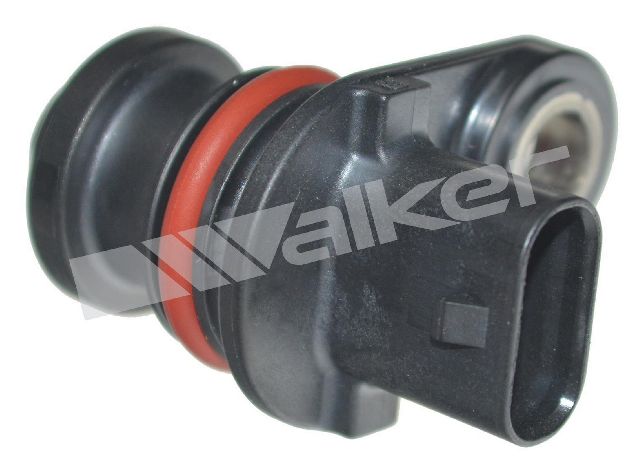
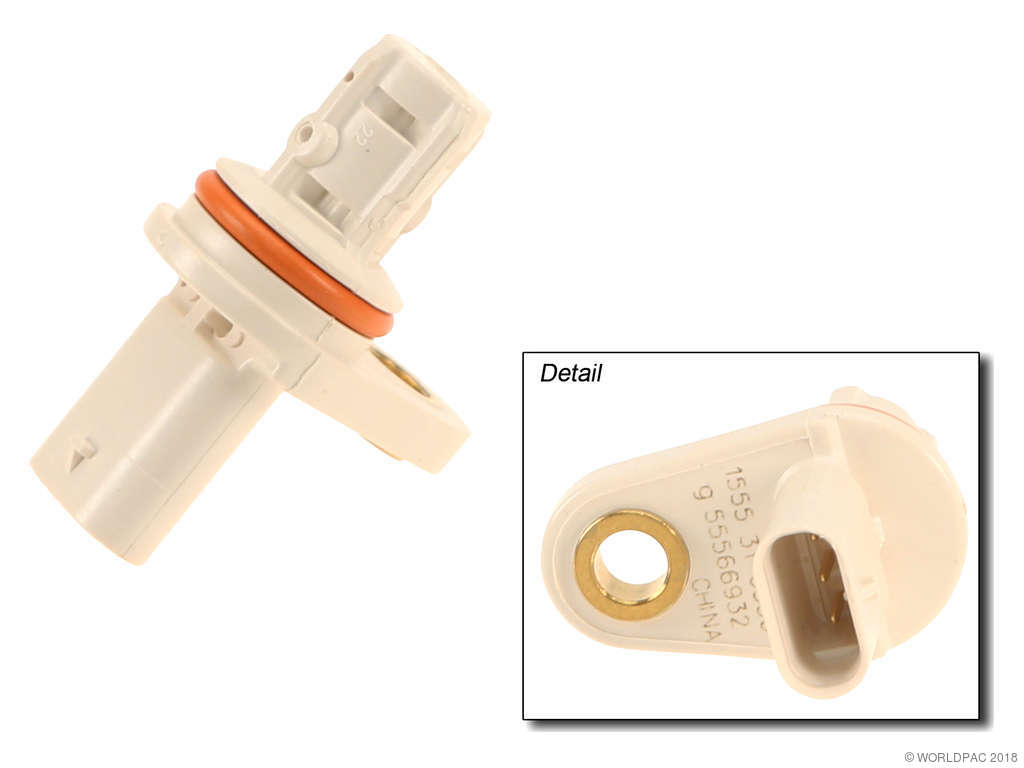
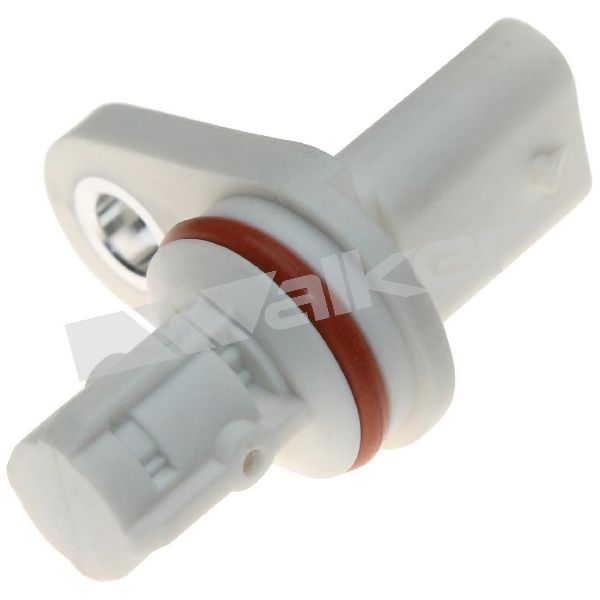
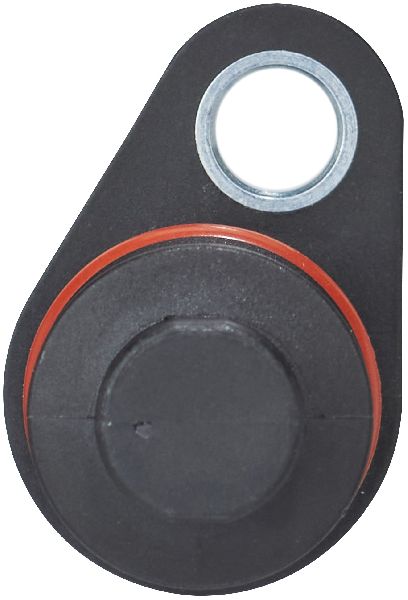
Est. part cost: $25-$60 - Faulty Exhaust Camshaft Position Sensor ⚪ Low Probability → Shop Engine Camshaft Position Sensor While less common than a solenoid failure, the sensor that reads the camshaft's position can fail, sending incorrect data to the ECM. These sensors are known to fail on the 1.4L engine, but typically produce codes like P0340.
How to confirm: Testing requires a scan tool to observe live data or an oscilloscope. Swapping with the intake sensor (if they are the same part number, which they are on this engine, PN 55566932) can also be a diagnostic step.
Typical fix: Replace the exhaust camshaft position sensor.
Est. part cost: $20-$50
Rare But Worth Checking
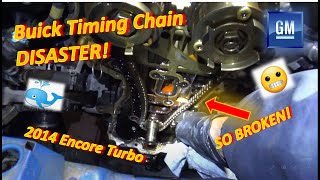
- Stretched Timing Chain or Timing Component Failure: → Shop Engine Timing Chain While less common, a stretched timing chain or broken plastic chain guides can cause camshaft timing to be out of sync with the crankshaft, triggering P0014. This is a more serious and expensive repair. A rattling noise on startup is a key symptom.
- Misaligned Exhaust Camshaft Reluctor Ring: → Shop Engine Camshaft GM Service Bulletin 21-NA-268 specifically mentions that for the LE2 engine, a crank/no-start or MIL with code P0014 can be caused by the reluctor ring on the exhaust camshaft being out of position relative to the camshaft itself. This can happen if the vacuum pump, which is driven by the exhaust cam, seizes and forcibly rotates the reluctor. This requires removing the cam cover to inspect and may require camshaft replacement.
- Faulty Camshaft Phaser (Actuator): → Shop Engine Camshaft The mechanical gear (phaser or actuator) on the end of the camshaft can fail. It can get stuck in an advanced position due to internal debris or a failed locking pin, directly causing a P0014 code.
Diagnosis Steps
- Check Engine Oil Level and Condition: This is the first and most important step. Ensure the oil is full, clean, and of the correct viscosity (typically 5W-30 full synthetic). If in doubt, change the oil and filter.
- Scan for Other Codes: Use an OBD-II scanner to check for other related codes, such as P0013, which would point directly to an electrical fault in the solenoid circuit.
- Inspect Solenoid Wiring: Check the electrical connector and wiring going to the exhaust camshaft actuator solenoid for any damage, corrosion, or loose connections.
- Test the Actuator Solenoid: The easiest test is to swap the exhaust solenoid with the intake solenoid. They are located next to each other on top of the engine. Clear the codes. If the code returns as P0011, the solenoid you moved is bad and needs replacement.
- Test the Camshaft Position Sensor: If the solenoid swap does not isolate the problem, the camshaft position sensor could be at fault. This is less likely but possible.
- Inspect for TSB 21-NA-268 Condition: If other steps fail, especially if accompanied by a crank/no-start, the issue may be the misaligned exhaust camshaft reluctor ring. This requires removing the cam cover for visual inspection, as detailed in the TSB.
- Inspect Timing Components: If all else fails, the issue may be mechanical, such as a stretched timing chain or a problem with the camshaft phaser itself. This is a more complex job and may require professional help.
Parts You'll Likely Need
- Exhaust Camshaft Position Actuator Solenoid
(OEM #12655421 (superseded by 12679100))— This is the most common part to fail or become clogged, directly causing the P0014 code. The OEM part number has been updated several times.
Trusted brands: ACDelco (OEM), Dorman, Standard Motor Products (SMP)
OEM price range: $40-$60
Aftermarket price range: $25-$45 - Intake Camshaft Position Actuator Solenoid
(OEM #12655420 (superseded by 12679099))— Often replaced as a pair with the exhaust solenoid, as they are the same age and subject to the same conditions. Also needed if a diagnostic swap reveals the intake solenoid is also faulty.
Trusted brands: ACDelco (OEM), Dorman, Standard Motor Products (SMP)
OEM price range: $40-$60
Aftermarket price range: $25-$45 - Engine Oil and Filter — Low, old, or incorrect oil is a primary cause of VVT system faults. An oil change is a critical first step in diagnosis and repair.
Trusted brands: ACDelco, Mobil 1, Castrol
OEM price range: $40-$70
Aftermarket price range: $30-$50
Related Codes That Often Appear With This One
- P0013 — P0013 is an electrical circuit code for the same exhaust camshaft actuator solenoid. Seeing P0013 and P0014 together almost guarantees the solenoid or its wiring is the problem, as it indicates both an electrical fault and a resulting performance/timing issue.
- P0011 — This code is for the intake camshaft timing. If you swap the intake and exhaust solenoids for diagnosis, P0014 will become P0011 if the solenoid is bad. If both appear together, it could point to a systemic issue like severe oil sludge or a timing chain problem.
- P0017 — This code indicates a Camshaft/Crankshaft correlation issue. TSB 21-NA-268 lists P0017 alongside P0014 as a possible code when the exhaust cam reluctor ring has shifted, indicating a more serious mechanical timing problem.
Technical Service Bulletins (TSBs) & Recalls
- 21-NA-268: Information on Crank No Start or Extended Crank, Malfunction Indicator Lamp (MIL) Illuminated - DTC P0014, P0017, P0365 and/or P0366 Set. This bulletin details a potential mechanical failure where the exhaust camshaft reluctor ring shifts, requiring inspection and possible camshaft replacement.
Platform-Specific Known Issues
- GM Service Bulletin 21-NA-268 addresses potential issues with the exhaust camshaft reluctor ring being out of phase on the 1.4L LE2 engine, which can cause P0014 along with other codes and crank/no-start conditions. This can be caused by the failure of the cam-driven vacuum pump.
Mechanic-Grade Diagnostic Values
- VVT Solenoid Coil Resistance — expected: 8 to 13 Ohms. Failure: A reading outside this range, or a reading that fluctuates wildly when wiggling the connector, indicates a faulty solenoid. An open circuit (infinite resistance) or a short (near zero ohms) is also a failure.
- VVT Solenoid Connector Voltage (Key On, Engine Off) — expected: 12V (Battery Voltage). Failure: No voltage or significantly low voltage indicates a wiring or ECM issue upstream of the solenoid.
- Exhaust Camshaft Reluctor Ring Alignment — expected: With the camshaft's 2D matrix marking at the 12 o'clock position, a small tang on the reluctor ring should also be aligned at the 12 o'clock position.. Failure: If the tang is not aligned with the 2D matrix marking, the reluctor has spun on the camshaft, requiring camshaft replacement.
Scan Tool Commands That Help
- GDS2 (GM Global Diagnostic System 2): Camshaft Position Actuator Control — This bidirectional test allows a technician to command the exhaust camshaft actuator solenoid to specific positions (e.g., 0-20 degrees) while monitoring the engine's response and the actual cam position on live data. If the engine stumbles or runs rough when commanded, the phaser and solenoid are likely working mechanically. If there is no change, it points to a clogged solenoid, bad phaser, or oil flow issue.
- GDS2 (GM Global Diagnostic System 2): Camshaft Position Actuator Solenoid Test — This function specifically tests the electrical circuit of the solenoid, confirming if the ECM can command it and if the circuit is complete. It helps differentiate between an electrical fault (like a broken wire or bad solenoid coil) and a mechanical/hydraulic problem.
Wiring & Ground Locations
- G103 — On the cowl in the engine compartment, sometimes above the brake booster.. This is a primary ground point for various engine and body control modules. While not directly for the VVT solenoid, a poor ground here can cause erratic behavior from the ECM, leading to incorrect sensor readings and false codes.
- Exhaust Camshaft Position Actuator Solenoid Connector — On top of the valve cover, on the exhaust side (rear side of the engine). It is a 2-pin connector.. This is the direct connection point for testing voltage and resistance of the solenoid. The two pins are for the 12V supply from the ECM and the control signal (duty-cycled ground).
Real Owner Repair Stories
- GM Service Bulletin 21-NA-268 Case (2016-2019 Buick Encore 1.4L LE2 (and other GM models with LE2 engine)) — Crank no start, extended crank, or Check Engine Light with P0014, P0017, P0365, and/or P0366.
❌ Tried (didn't work) Standard diagnostics for no-start conditions., Replacing camshaft position sensors or VVT solenoids without checking mechanical timing.
✅ What actually fixed it Inspection revealed the drive lugs on the vacuum pump were broken and/or the exhaust camshaft reluctor ring had spun out of position. The fix required replacing the exhaust camshaft and the vacuum pump, then locating and removing any metal debris from the engine. - General forum consensus for P0014 (Buick Encore / Chevy Trax / Sonic with 1.4L Turbo engine) — Check Engine Light with P0014, sometimes rough idle.
❌ Tried (didn't work) Clearing the code without taking action (code returns quickly)., Replacing the camshaft position sensor.
✅ What actually fixed it In many documented cases, after confirming the oil level was correct, the owner swapped the intake and exhaust VVT solenoids. The code changed to P0011, confirming the solenoid was bad. Replacing the faulty solenoid (often both as a pair) resolved the issue.
When the Usual Fixes Don't Work
- While the most common fixes are an oil change or solenoid replacement, a significant number of technicians and DIYers have been caught out by the spun reluctor ring issue described in TSB 21-NA-268. In these cases, replacing solenoids and changing the oil provides no relief, and the code P0014 (often with P0017) persists. The root cause is the mechanical failure of the vacuum pump seizing, which then damages the camshaft. This turns a seemingly simple electronic/hydraulic fault into a major mechanical repair requiring camshaft replacement.
OEM Part Supersession History
12655421→12679100 (current as of late 2021)— Standard part revision and improvement by GM. The new part may have improved durability or internal components.
Heads up: The new part is a direct replacement for the old. The old part numbers it replaces include 12578518, 12628348, and 12646784.12655420→12679099 (current as of late 2021)— Standard part revision and improvement by GM for the intake solenoid.
Heads up: This is the intake solenoid, often replaced with the exhaust solenoid. It is a direct replacement for its predecessors.
Diagnostic Flowchart
Other Known Issues on This Vehicle
Issues unrelated to this code that are worth knowing about as an owner of this generation:
- PCV System Failure 🔴 High — Very common. The PCV check valve is integrated into the valve cover and has a high failure rate. Failure can cause oil leaks, high oil consumption, and lean codes (P0171).
- Turbocharger Failure 🔴 High — Common, especially on earlier models. Often caused by clogged oil feed lines or coolant leaks. Symptoms include power loss, smoke from exhaust, and code P0299 (underboost). (Ref: N232395330 - Special Coverage for 2017-2018 models extending warranty for turbo failure to 10 years/120,000 miles.)
- Cooling System Leaks 🟠 Medium — Frequent issue. Plastic components like the thermostat housing, water outlet, and radiator end tanks are prone to cracking and leaking over time.
- Stretched Timing Chain 🔴 High → Shop Engine Timing Chain — Less common than PCV or turbo issues, but a known potential failure. Can be caused by degraded plastic guides or infrequent oil changes, leading to catastrophic engine damage if not addressed.
Used vs. New Parts: Buying Guide for This Vehicle
When a used part is the smart pick: For this specific P0014 code, using used parts is generally not recommended. The primary failure parts (solenoids) are inexpensive new and fail due to internal wear, sludge, and heat cycles, making a used part a significant gamble. A used camshaft could be considered if the reluctor ring issue is confirmed, but the high labor cost of installation makes a new part a safer investment.
Donor-vehicle mileage cap: roughly under 60000 miles for the part to have meaningful remaining life.
What to inspect on the donor part:
- For a camshaft: Verify the reluctor ring is properly aligned per TSB 21-NA-268.
- Check for any visible scoring or wear on cam lobes and bearing journals.
- Ensure the vacuum pump drive tangs are intact and not sheared off.
OEM-only on this vehicle (don't cheap out):
- Camshaft: Due to the precise nature of the reluctor ring and phaser assembly, and the high labor cost involved, using an OEM or OEM-equivalent camshaft is strongly advised to ensure proper timing and function.
Aftermarket brands forum-validated for this vehicle:
- ACDelco (GM Original Equipment is best, Gold/Professional is a good alternative)
- Dorman (Often a reliable choice for solenoids)
- Standard Motor Products (SMP)
- NTK/NGK
Brands owners have reported issues with on this vehicle:
- Unnamed, low-cost 'white box' brands from online marketplaces are frequently reported on forums as being dead-on-arrival or failing prematurely.
Real Owner Stories
Aggregated from forums and TSBs cited above. Mileages and costs reflect what owners reported in those sources.
2016-2019 Buick Encore 1.4L LE2
Symptoms: Check engine light on, engine running rough, and oil was found to be very dirty or low.
What fixed it: Perform an oil and filter change using full synthetic oil meeting dexos1 specifications.
Source hint: Article Context - Common Causes
2017-2021 Chevrolet Trax (1.4L LE2)
Symptoms: P0014 code and identical VVT-related complaints as the Buick Encore.
What fixed it: Replacement of the exhaust camshaft position actuator solenoid.
Source hint: https://www.chevytraxforum.com/threads/p0014-code
2016-2019 Buick Encore 1.4L LE2
Symptoms: Crank/no-start or extended crank, Malfunction Indicator Lamp (MIL) illuminated with DTC P0014.
What fixed it: Inspection of the exhaust camshaft reluctor ring for misalignment and possible camshaft replacement.
Source hint: TSB 21-NA-268
Related OBD-II Codes
Frequently Asked Questions
Does GM Service Bulletin 21-NA-268 apply to my 2016-2019 Buick Encore with the 1.4L LE2 engine?
Can I use any 5W-30 oil in my Encore to prevent VVT codes like P0014?
Is there a simple way to tell if my exhaust VVT solenoid is the problem without buying a new part?
My Encore has a P0014 and won't start; could this be related to the vacuum pump?
Are the camshaft position sensors interchangeable on the 1.4L LE2 engine?
Is the turbocharger failure on my 2017-2018 Encore covered by a special warranty?
Helpful Videos

We Have This Part in Stock


The information in this article is provided for general reference and educational purposes only. Vehicle specifications, procedures, and part compatibility can vary by production date, trim level, and region. Always consult your vehicle's factory service manual and verify part numbers before purchasing or performing repairs. Safety-critical components such as airbags, seat belts, and braking systems should be installed by a qualified professional.
- Buick Encore:
- 🧭 Diagnostic Flowchart
- 🎬 Helpful Videos
- 🛍️ Shop This Part
- What's Unique About the 2016-2019 Buick Encore
- Symptoms You May Notice
- Most Likely Causes
- Rare But Worth Checking
- Diagnosis Steps
- Parts You'll Likely Need
- Related Codes That Often Appear With This One
- Technical Service Bulletins (TSBs) & Recalls
- Platform-Specific Known Issues
- Mechanic-Grade Diagnostic Values
- Scan Tool Commands That Help
- Wiring & Ground Locations
- Real Owner Repair Stories
- When the Usual Fixes Don't Work
- OEM Part Supersession History
- Other Known Issues on This Vehicle
- Used vs. New Parts: Buying Guide for This Vehicle
- Real Owner Stories
- 2016-2019 Buick Encore 1.4L LE2
- 2017-2021 Chevrolet Trax (1.4L LE2)
- 2016-2019 Buick Encore 1.4L LE2
- Related OBD-II Codes
- Frequently Asked Questions
- 🎟️ Get 5% Off