

P0014 on 2013-2018 Cadillac ATS: Causes, Fixes & VVT Solenoid Guide
P0014 on a Cadillac ATS almost always points to a faulty exhaust camshaft actuator solenoid, often due to low or dirty engine oil. Replacing the solenoid is a common, affordable DIY fix, with parts costing between $40 and $80. Always check engine oil level and condition before replacing parts.
- P0014 on a 2013-2018 Cadillac ATS is most likely caused by a failing exhaust camshaft actuator solenoid on Bank 1.
- Before replacing any parts, check your engine oil. Low or dirty oil is a primary cause of VVT system faults.
- A simple and effective diagnostic step is to swap the exhaust and intake solenoids to see if the trouble code follows the part (changes to P0011).
- Replacing the solenoid is a beginner-friendly DIY job that requires basic tools and can be completed in under an hour.
- Always use the correct manufacturer-specified engine oil (Dexos-rated for GM) to prevent VVT system problems.
What's Unique About the 2013-2018 Cadillac ATS

On this generation of Cadillac vehicles with the 2.0T, 2.5L, and 3.6L engines, issues with the camshaft actuator solenoids are well-documented. GM has issued multiple Technical Service Bulletins (TSBs) that guide technicians to inspect the solenoid screens for debris or replace them with updated parts from a different supplier. TSB PIP5096C specifically notes that for certain engines, a replacement solenoid from a different supplier is required to correct a clearance issue, and warns technicians "DO NOT JUST SWAP FROM ANOTHER LOCATION." This indicates a known pattern of specific solenoid issues, making it the most probable cause, often before more severe problems like a stretched timing chain.
Diagnostic Flowchart

Tap your situation to follow the diagnostic path that matches what you're seeing on this vehicle.
Symptoms You May Notice
- Check Engine Light is on
- Rough engine idle
- Engine stalling or hesitation
- Poor acceleration and loss of power, feeling 'sluggish'.
- Decreased fuel economy
- Rattling noise from the engine, especially on startup.
- Replacing the camshaft position *sensor* instead of the camshaft position actuator *solenoid*. The sensor reads the position, while the solenoid controls it. P0014 is a control/performance code, making the solenoid the likely culprit. 🎬 Watch: A quick breakdown of what the P0014 code means.
Most Likely Causes

- Dirty or Failed Exhaust Camshaft Actuator Solenoid (VVT Solenoid) 🔴 High Probability → Shop Engine Camshaft This is a widely documented issue. TSB #PIP5162 specifically instructs technicians to inspect and clean the solenoid screens for debris on 2.0T and 2.5L engines. TSB #PIP5096C, which applies to the 3.6L LFX engine, suggests that for certain engines identified by a sticker, replacing the solenoid with an updated part from a different supplier is the correct fix to resolve a tolerance issue.
How to confirm: First, check the engine oil level and condition. If the oil is clean and full, a common diagnostic is to swap the exhaust solenoid with the intake solenoid on the same bank. Clear the codes and drive. If the code changes to P0011 (Intake Camshaft Position), the solenoid is confirmed to be faulty. However, TSB #PIP5096C explicitly warns against this swap for certain vehicles, recommending outright replacement with a new part. Resistance can be tested with a multimeter; a typical range is 8-12 ohms, though some sources cite a broader 5-15 Ω range.
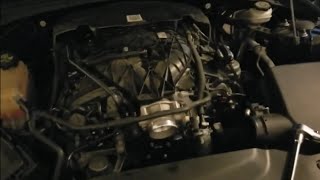
Typical fix: Replace the Bank 1 exhaust camshaft actuator solenoid. A YouTube video for the 2.0T ATS shows this is a 10-minute job requiring only a 10mm socket and a T30 Torx bit. For the 3.6L V6, the exhaust solenoid is the lower of the two on the passenger side cylinder head. 🎬 See how to easily swap these solenoids on the 3.6L V6. Cleaning the screens with brake cleaner is a temporary option, but replacement is the most reliable fix.
Est. part cost: $40-$80 - Low or Dirty Engine Oil 🔴 High Probability The VVT system is operated by oil pressure. If the oil is low, dirty, or the wrong viscosity, the solenoids and phasers cannot operate correctly. TSBs frequently point to debris in the oil clogging the fine mesh screens on the solenoids as a root cause. One owner reported the code was triggered when their oil level was too low to register on the dipstick.
How to confirm: Check the oil level on the dipstick and inspect its condition. If it's low, dark, or sludgy, it needs to be changed.
Typical fix: Perform an oil and filter change using a high-quality, full-synthetic oil that meets GM's Dexos specification (e.g., 5W-30). Clear the code and see if it returns.
Est. part cost: $50-$100 - Stretched Timing Chain ⚪ Low Probability → Shop Engine Timing Chain While less common than solenoid failure, especially on the updated LFX V6 engine, timing chains can stretch over time, particularly with poor oil change history. This causes a mismatch between the crankshaft and camshaft positions that the VVT system cannot correct.
How to confirm: This is a complex diagnosis. A key symptom can be a startup rattle that lasts for a few seconds. A professional technician would use a scan tool to monitor camshaft deviation angles. Definitive confirmation requires a labor-intensive physical inspection.
Typical fix: Replace the timing chain, tensioners, and guides. This is a major repair that is best left to a professional, with costs potentially exceeding $2,000.
Est. part cost: $400-$800
Rare But Worth Checking
- Faulty Camshaft Phaser: → Shop Engine Camshaft The phaser is the gear on the end of the camshaft that is mechanically adjusted by the solenoid. TSB #PIP5162 notes that if cleaning the solenoid and its oil passages doesn't resolve the code, the phaser itself may need replacement. This is a more involved repair.
- Faulty Camshaft Position Sensor: → Shop Engine Camshaft Position Sensor It's possible for the sensor that reads the camshaft's position to fail, but it's rare. A failing sensor would more typically set a sensor-specific circuit code, not a performance code like P0014.
- Corroded or Contaminated ECM Connector: TSB #PIP5790B describes a scenario where coolant or oil can contaminate the ECM connectors, causing corrosion and a wide range of DTCs, including P0014. This would typically be accompanied by multiple other seemingly unrelated codes.
Diagnosis Steps
- Check engine oil level and condition. If low or dirty, perform an oil and filter change with GM Dexos-spec oil, clear the code, and re-test.
- Scan for other DTCs. Note if codes for other camshafts are present, as this can point to a systemic issue like oil contamination or a timing problem.
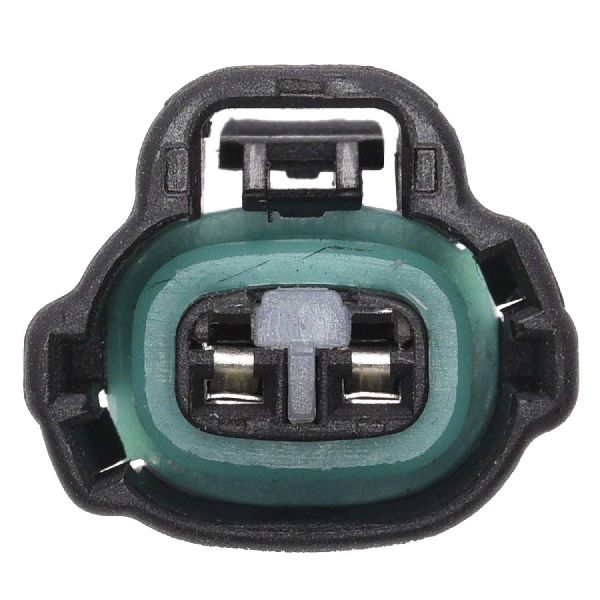
- Inspect the wiring and connector for the Bank 1 exhaust camshaft actuator solenoid for damage, corrosion, or oil contamination.
- A common DIY diagnostic is to swap the exhaust solenoid (P0014) with the intake solenoid (P0011) on the same bank, as they are often identical parts.
- Clear the codes and drive the vehicle. If the code changes to P0011, the solenoid you moved is faulty and needs to be replaced.
- If the code P0014 returns after the swap, the issue is not the solenoid. Per TSB #PIP5162, inspect the solenoid screens for debris and clean them. If cleaning doesn't work, the bulletin suggests blowing out the oil passages in the cylinder head with light air pressure before considering phaser replacement.
- If the problem persists, the issue may be a clogged oil passage, a faulty camshaft phaser, or a stretched timing chain, which may require professional diagnosis.
Parts You'll Likely Need
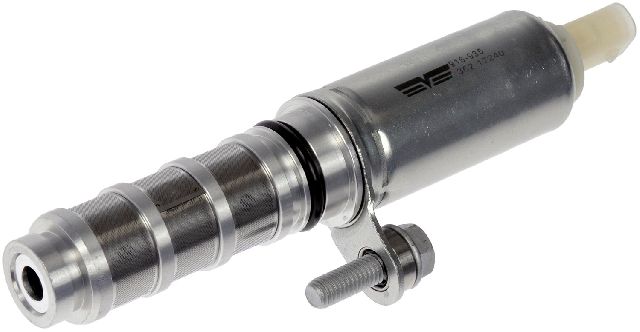
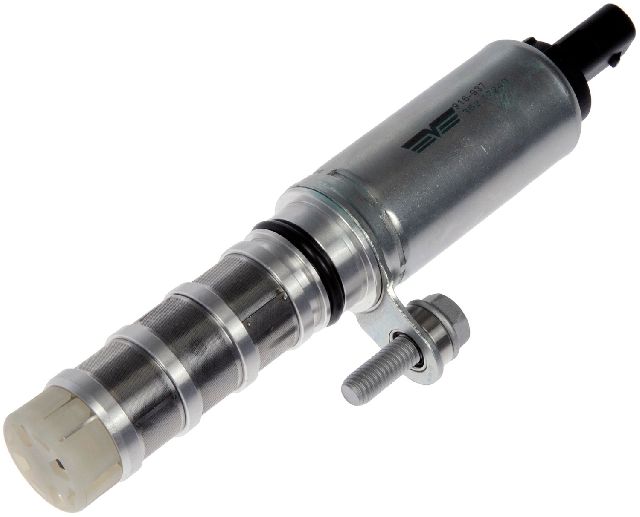
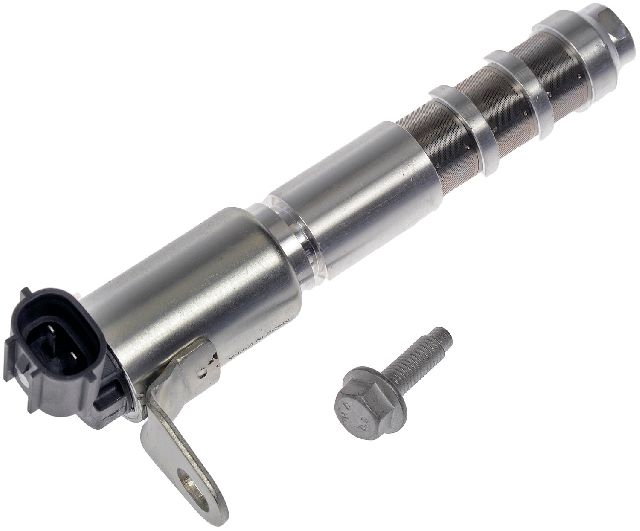
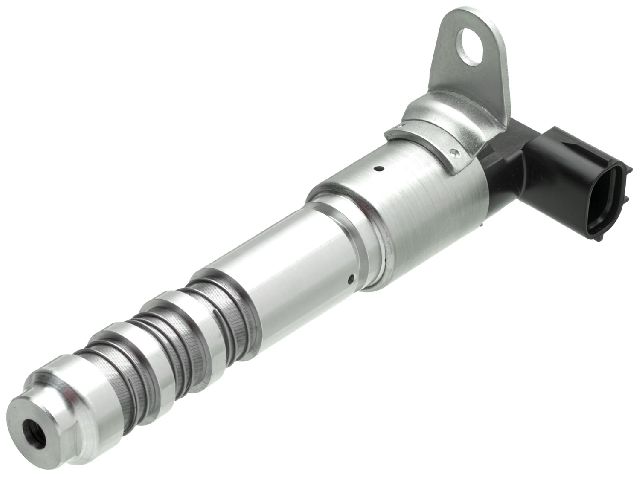
- Engine Variable Valve Timing (VVT) Solenoid
(OEM #12679099 (Exhaust, also used for Intake on some engines), 12662736 (Exhaust, 2.0T))— This is the most common cause for P0014 on this platform, as confirmed by owner experiences and multiple TSBs. The solenoids for intake and exhaust are often identical. For the 2.0T, specific part numbers are 12662737 (Intake) and 12662736 (Exhaust). For many GM engines including the 3.6L, part 12679099 is a common replacement for both intake and exhaust, superseding older numbers like 12655420.
Trusted brands: ACDelco, Delphi, Dorman
OEM price range: $50-$90
Aftermarket price range: $25-$60
Related Codes That Often Appear With This One
- P0011 — Intake Camshaft Position Timing - Over-Advanced (Bank 1). If both P0011 and P0014 are present, it could point to a more systemic issue like low oil pressure or a timing chain problem affecting the entire bank. TSB #PIP5568E was initiated to investigate this exact scenario.
- P0021 / P0024 — These are the equivalent intake and exhaust camshaft codes for Bank 2 (on V6 engines). TSB #PIP5568E notes an investigation into all four codes (P0011, P0014, P0021, P0024) setting together, which strongly suggests a common cause like oil quality or a base timing issue.
Technical Service Bulletins (TSBs) & Recalls
- PIP5568E: Investigation into cause and correction for DTCs P0011, P0014, P0021, P0024 setting together.
- PIP5096C: Information regarding DTCs P0011, P0014, P0021, and/or P0024 and inspection of the engine EUN st
Platform-Specific Known Issues
- TSB #PIP5568E: GM initiated an investigation into the cause of DTCs P0011, P0014, P0021, and P0024 setting together or in pairs, indicating a known potential for multiple VVT system faults.
- TSB #PIP5162: Specifically for P0011 and P0014 on 2.0T and 2.5L engines, this bulletin advises technicians to remove the camshaft solenoids, inspect the screens for debris, and clean them with brake cleaner. If that fails, it suggests blowing out oil passages before replacing the cam phaser.
- TSB #PIP5096C: For vehicles with P0014 and no other drivability concerns (primarily 3.6L LFX), this bulletin instructs technicians to check an engine sticker. If a specific marking is present, the original solenoid should be replaced with a service part from a different supplier to correct a potential manufacturing tolerance issue, and warns against simply swapping solenoids for diagnosis.
- Special Coverage Adjustment #16115: While not for the ATS specifically, GM issued this for the same 3.6L LFX engine in other 2014 models, extending the warranty to 10 years/120,000 miles for sticking exhaust solenoids causing P0014/P0024, showing a known defect with the part.
Mechanic-Grade Diagnostic Values
- Camshaft Position Actuator Solenoid Resistance — expected: 8-12 Ohms. Some sources state a wider acceptable range of 5-15 Ohms.. Failure: A reading significantly outside the expected range, or an open/short circuit (infinite or zero resistance), indicates a failed solenoid.
- Camshaft Position Actuator Solenoid Voltage — expected: The ECM sends a Pulse Width Modulated (PWM) signal, so a simple voltage check is not definitive. A test light connected to the harness should illuminate brightly when the solenoid is commanded ON with a scan tool.. Failure: No power at the connector when commanded, or a dim light, suggests a wiring or ECM driver issue.
- Scan Tool: Desired vs. Actual Camshaft Position Angle — expected: The actual angle should closely track the desired angle as commanded by the ECM under various engine loads and speeds.. Failure: A difference between the desired and actual angle greater than 5 degrees for more than a few seconds will trigger the code.
Scan Tool Commands That Help
- GDS2 (GM Tech Tool) or equivalent professional scan tool: Camshaft Position Actuator / Active Test — This function allows the technician to command the solenoid ON and OFF to verify its mechanical operation and check for response in oil pressure or engine sound. It is used to confirm if the solenoid is physically sticking or if the control circuit is working, without having to remove the part first.
Wiring & Ground Locations
- G104 — For the 3.6L engine, it's on the front of the right cylinder head. For other engines, it's on the lower rear of the cylinder head. This ground is used by ignition coils.. A poor engine ground can cause erratic behavior in various sensors and actuators, including the ignition system which works in concert with valve timing. While not a direct cause, a faulty G104 can create electrical noise and voltage issues that could contribute to control module errors.
- G108 — Located on the left radiator support, often near the driver's side hood hinge area.. This is a primary chassis ground point in the engine bay. A loose or corroded connection here can cause a host of seemingly unrelated electrical issues, potentially affecting the ECM's stability and its ability to accurately control components like VVT solenoids.
Real Owner Repair Stories
- Reddit user on r/MechanicAdvice (Vehicle not specified, but general P0014 diagnosis) — P0014 code present.
❌ Tried (didn't work) Replaced camshaft position sensor., Tested and cleaned the exhaust VVT solenoid, which tested good electrically and operated when power was applied.
✅ What actually fixed it The engine oil level was so low it did not register on the dipstick. Adding nearly 4 quarts of oil to bring the level to the minimum mark was the necessary first step before the code could be properly resolved. - YouTube video by 'Easily Fix' (2014 Cadillac CTS 3.6L V6 at 80,000 miles) — P0011 code (intake side, but same diagnostic principle) with no rough running.
❌ Tried (didn't work) The owner was initially concerned it was a major timing chain or camshaft issue.
✅ What actually fixed it Replaced all four VVT solenoids as a preventative measure, which resolved the code. The video demonstrates the replacement process, noting it's a common failure and an easy DIY job.
OEM Part Supersession History
12655420, 12628347, 12578517→12679099— Standard part evolution for improved reliability and manufacturing.
Heads up: Part 12679099 is a widely used replacement for many GM 4-cylinder and V6 engines for both intake and exhaust solenoids.12655434, 12627117→12662736— Standard part evolution. This part is often specified for the 2.0L and 2.5L engines.
Heads up: While solenoids may look identical, TSBs like PIP5096C warn that specific part numbers must be used for certain applications to correct tolerance issues, and swapping parts for diagnosis is discouraged.
Model Year Variations Within This Range
- 2013-2015: Initially offered with a standard 6-speed 6L45 automatic transmission. The base engine was a 2.5L I4.
- 2016-2019: An 8-speed 8L45 automatic transmission became standard. For 2017, the 2.5L base engine was dropped, making the 2.0L Turbo the standard engine. The 3.6L V6 was also updated from the LFX to the LGX version in 2016, which had different power outputs and internal designs.
Helpful Videos
We Have This Part in Stock


The information in this article is provided for general reference and educational purposes only. Vehicle specifications, procedures, and part compatibility can vary by production date, trim level, and region. Always consult your vehicle's factory service manual and verify part numbers before purchasing or performing repairs. Safety-critical components such as airbags, seat belts, and braking systems should be installed by a qualified professional.
- Cadillac ATS:
- 🧭 Diagnostic Flowchart
- 🎬 Helpful Videos
- 🛍️ Shop This Part
- What's Unique About the 2013-2018 Cadillac ATS
- Symptoms You May Notice
- Most Likely Causes
- Rare But Worth Checking
- Diagnosis Steps
- Parts You'll Likely Need
- Related Codes That Often Appear With This One
- Technical Service Bulletins (TSBs) & Recalls
- Platform-Specific Known Issues
- Mechanic-Grade Diagnostic Values
- Scan Tool Commands That Help
- Wiring & Ground Locations
- Real Owner Repair Stories
- OEM Part Supersession History
- Model Year Variations Within This Range
- 🎟️ Get 5% Off