

P0014 on 2015-2022 Chevrolet Colorado: Causes, Fixes, and VVT Solenoid Replacement
P0014 on a Chevy Colorado most often means the engine oil is low/dirty or the Bank 1 exhaust camshaft actuator solenoid has failed. Start by checking your oil. If the oil is good, replacing the solenoid is a common DIY fix costing $30-$85 for the part. On 3.6L V6 engines, this is the passenger-side exhaust solenoid.
- First, check your oil. P0014 is very often caused by a low oil level or old, dirty oil. An oil change with the correct full synthetic oil may fix the problem.
- The most likely part to have failed is the Bank 1 exhaust VVT solenoid. It's a relatively inexpensive and accessible part for a DIY replacement.
- Before replacing parts, inspect the engine wiring harness on the passenger side of the engine for chafing, as outlined in GM TSB 18-NA-307.
- If you replace the solenoid, consider using an OEM part from ACDelco. If you have the 3.6L V6, it may be wise to replace the solenoids in pairs (both exhaust or both intake).
What's Unique About the 2015-2022 Chevrolet Colorado
The P0014 code is a frequent issue on both the 2.5L I4 and 3.6L V6 engines in the second-generation Colorado. These engines are particularly sensitive to oil level and quality, making regular oil changes with the correct specification oil (dexos1 Full Synthetic) critical to prevent this code. While a faulty solenoid is the most common part to fail, GM has also issued a Technical Service Bulletin (TSB 18-NA-307), updated as recently as April 2023, for these trucks. It warns that the engine wiring harness can chafe on the sharp edge of the camshaft cover or cylinder head, causing a short circuit and triggering P0014 and other related codes.
Generation note: The 2015-2022 year range covers the entire second generation of the Chevrolet Colorado. The 3.6L V6 engine was updated from the LFX to the LGZ in 2017. While they share a core design, they may use different VVT solenoid part numbers. The LGZ is generally considered to have a more robust timing system than the earlier LFX, making stretched chains less common.
Symptoms You May Notice
- Check Engine Light is on
- Engine runs rough or idles poorly
- Reduced engine power and sluggish acceleration
- Engine stalling, especially at idle
- Decreased fuel economy
- Rattling or knocking noise from the engine bay, particularly on startup
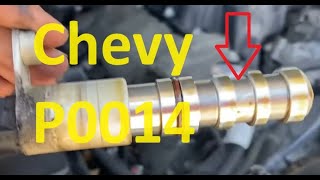
- Stabilitrak light may illuminate on the dash 🎬 Watch: A breakdown of P0014 causes and common fixes.
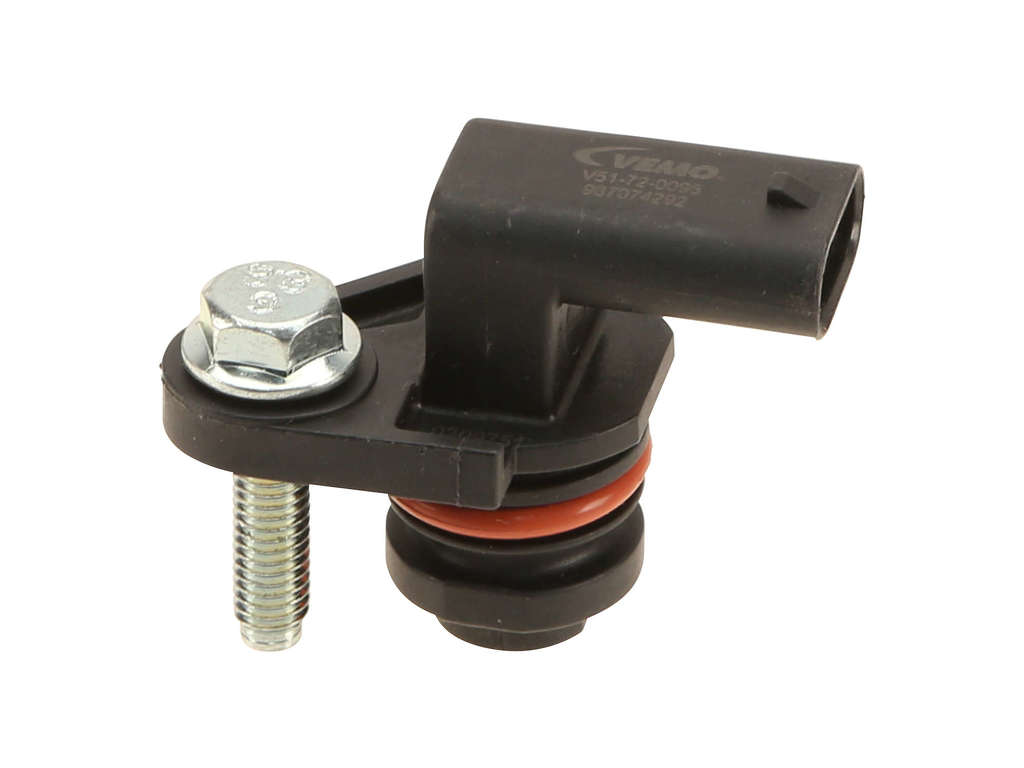
- Replacing the camshaft position sensor. The sensor is usually working correctly by reporting the timing problem; it is rarely the cause of P0014. The issue is with the mechanical control (solenoid, phaser) or oil pressure.
- Replacing the crankshaft position sensor.
Most Likely Causes
- Low or Dirty Engine Oil 🔴 High Probability The VVT system is hydraulically operated and highly sensitive to oil pressure and cleanliness. The 2.5L and 3.6L engines can quickly develop sludge if oil changes are extended or incorrect oil is used, clogging the fine mesh screens on the VVT solenoids.
How to confirm: Check the engine oil level on the dipstick. Inspect the oil's color and consistency. Dark, thick, or gritty oil is a sign it needs to be changed. Many owners report the code appears when the oil life monitor indicates a change is due.
Typical fix: Perform an engine oil and filter change using a full synthetic oil that meets GM's dexos1 specification (e.g., 5W-30). Clear the codes and drive to see if the issue is resolved.
Est. part cost: $40-$80 - Faulty Bank 1 Exhaust VVT Solenoid 🔴 High Probability The solenoid can become clogged with sludge from dirty oil, its internal screens can break, or it can fail electrically. Some owners have found oil has wicked through the body of the solenoid into the electrical connector, causing a poor connection and requiring replacement.
How to confirm: After verifying oil is clean and full, you can test the solenoid. A common and effective DIY method is to swap the exhaust solenoid with the intake solenoid on the same bank (passenger side on V6). Clear the codes. If the code changes to P0011 (Intake Camshaft Position), the solenoid is confirmed as the faulty part.
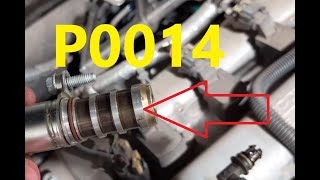
Typical fix: Replace the Bank 1 exhaust camshaft position actuator solenoid. It is located on the valve cover and held in by a single 10mm bolt. 🎬 See this walkthrough for replacing the VVT solenoid.
Est. part cost: $25-$85 - Chafed Engine Wiring Harness 🟡 Medium Probability GM TSB 18-NA-307 specifically identifies an issue where the engine harness rubs against the sharp edge of the camshaft cover or cylinder head, causing wires for the VVT solenoid or cam sensor to short to ground. This TSB applies to 2015-2022 models.
How to confirm: Carefully inspect the engine wiring harness where it runs over and around the Bank 1 (passenger side) valve cover. Pull back the plastic conduit and look for any signs of rubbing, exposed copper wires, or damage. The chafing can be on the engine-side of the harness and difficult to see without moving it.
Typical fix: Repair the damaged wire(s) using appropriate splicing techniques. Then, wrap the repaired area and all potential contact points with woven polyester electrical tape (PET tape) and use zip ties to secure the harness away from the sharp metal edges.
Est. part cost: $5-$20
Rare But Worth Checking
- Stretched Timing Chain: → Shop Engine Timing Chain While more common on earlier 3.6L LFX engines (pre-2017), timing chain stretch can still occur, especially with high mileage or poor oil change history. This is a significant mechanical failure usually accompanied by rattling noises on startup and correlation codes like P0017.
- Failed Camshaft Phaser: → Shop Engine Camshaft The mechanical gear (phaser/actuator) that the solenoid controls can fail or become stuck due to sludge or internal failure. This is a much less common and more expensive repair than a solenoid failure.
- Incorrect or Collapsed Oil Filter: → Shop Engine Oil Filter Adapter Using a low-quality or incorrect oil filter can lead to restricted oil flow or filter collapse, starving the VVT system of the pressure it needs to operate correctly.
- Clogged Cylinder Head Oil Passages: In severe cases of oil sludge, the small oil passages within the cylinder head that feed the VVT phasers can become blocked. TSB 18-NA-307 mentions this as a possibility if other repairs fail. This is a serious issue requiring major engine disassembly to clean.
Diagnosis Steps
- Check Engine Oil: Verify the oil level is full and the oil is clean. If it's low, dirty, or past its change interval, perform an oil and filter change with full synthetic 5W-30 oil meeting the dexos1 standard. This is the cheapest and easiest first step and can sometimes resolve the code on its own.
- Inspect Wiring (TSB 18-NA-307): Before buying parts, carefully inspect the engine wiring harness near the Bank 1 (passenger side on V6) valve cover. Look for signs of chafing against the camshaft cover or cylinder head. Repair any damaged wires and re-secure the harness.
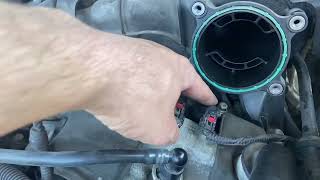
- Inspect Solenoid Connector: Unplug the Bank 1 exhaust VVT solenoid and check for oil inside the electrical connector. Oil wicking through a failed solenoid is a known issue and confirms the solenoid needs replacement.
- Test the Solenoid (Swap Method): A common and effective diagnostic technique is to swap the exhaust solenoid with the intake solenoid on the same bank. They are typically identical parts. Clear the codes and drive the truck. If the code changes from P0014 (Exhaust) to P0011 (Intake), the solenoid is confirmed to be the fault.
- Replace the Solenoid: If the solenoid is determined to be faulty, replace it. It is located on the top of the valve cover and secured by a single 10mm bolt. Lightly lubricate the new solenoid's O-rings with clean engine oil before installation.
- Advanced Diagnosis: If the code persists after these steps, the issue is likely more complex, such as a stretched timing chain, a faulty camshaft phaser, or clogged oil passages in the cylinder head. This may require professional diagnosis with a scan tool to monitor desired vs. actual cam angles.
Parts You'll Likely Need
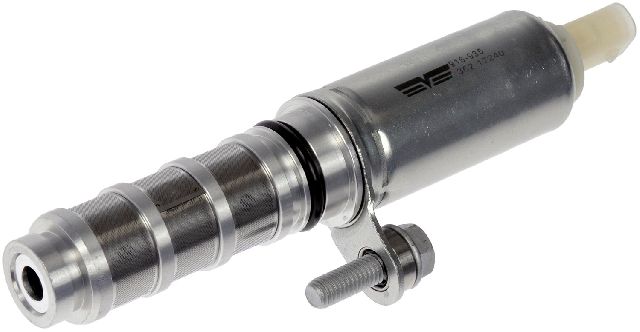
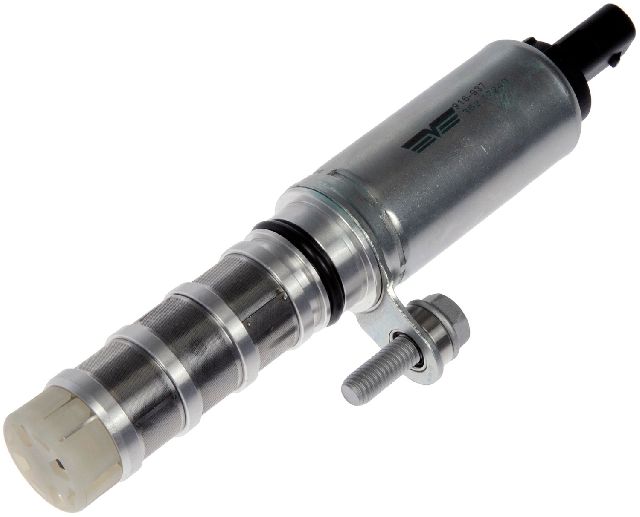
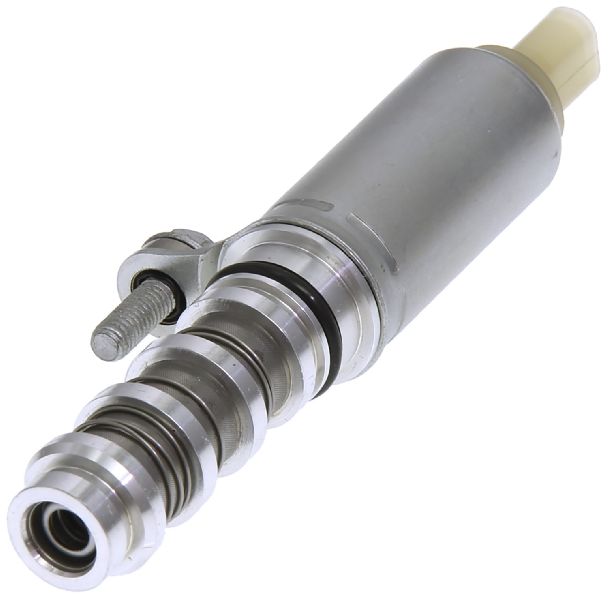
- Engine VVT Solenoid (Camshaft Position Actuator)
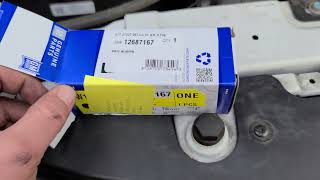
(OEM #12707054 (or superseding part 12732244 for 3.6L LGZ) / 12662737 (for 2.5L LCV))— This is the most common component to fail, either by getting clogged with debris or failing electrically, causing the P0014 code. Part number 12707054 was superseded by 12732244 for many 3.6L applications.
Trusted brands: ACDelco (OEM), Delphi, Dorman, Standard Motor Products
OEM price range: $45-$85
Aftermarket price range: $25-$60
Related Codes That Often Appear With This One
- P0011 — Intake camshaft timing code for the same bank. Can appear if oil issues are affecting both solenoids, or if you swap a bad exhaust solenoid to the intake side for diagnosis.
- P0017 — Crankshaft/Camshaft Correlation error. This code points more strongly toward a mechanical timing issue like a stretched timing chain or a phaser that has jumped a tooth.
- P0024 — This is the same exhaust camshaft timing code, but for Bank 2 (driver's side). If both P0014 and P0024 are present, it strongly suggests a systemic issue like low/dirty oil affecting the entire engine.
- P0365 / P0366 — These codes relate to the camshaft position sensor 'B' circuit. TSB 18-NA-307 lists them alongside P0014 as possible results of a chafed wiring harness, as the sensor and solenoid wires are in the same bundle.
Technical Service Bulletins (TSBs) & Recalls
- 18-NA-307: Lack of Power, Rough Idle, MIL Illuminated - DTC P0014, P0365, P0366, P06A3, P16A1 and/or P16A2 Set. Points to potential wiring harness chafing on the camshaft cover or cylinder head. This TSB covers model years 2015-2022.
- PIP5096C: Relevant to the 3.6L LFX engine family, this TSB notes that for certain codes including P0014, the solenoid should be replaced with a specific service part from a different supplier to resolve a clearance issue, and warns against simply swapping solenoids for diagnosis in this specific case.
- PIP5568E: Acknowledges an investigation into codes like P0011 and P0014 setting together, suggesting it could be a more complex issue than a single solenoid.
Platform-Specific Known Issues
- TSB 18-NA-307: Details a known issue where the engine wiring harness can chafe against the camshaft cover or cylinder head, causing various electrical faults including P0014. The fix involves repairing the wire and securing the harness away from the engine with PET tape and zip ties.
- Oil Wicking into Connector: A common failure mode for the VVT solenoids on these engines is for engine oil to seep through the body of the solenoid and contaminate the electrical connector pins, causing a poor connection or short.
Mechanic-Grade Diagnostic Values
- VVT Actuator Solenoid Resistance — expected: 8 - 13 Ohms. Failure: A reading outside of this range indicates an internal electrical fault in the solenoid.
- VVT Actuator Solenoid Resistance (Alternate Spec) — expected: 6.9 - 7.9 Ohms. Failure: A reading outside of this range suggests the solenoid is faulty. This tighter tolerance may be more accurate for OEM parts.
- Camshaft Position Sensor Signal Circuit Voltage (Key On, Engine Off) — expected: 4.8 - 5.2 Volts. Failure: Voltage outside this range could indicate a wiring issue or a faulty sensor, though the sensor is rarely the cause of P0014 itself.
Scan Tool Commands That Help
- GDS2 (GM Global Diagnostic System 2): Camshaft Position Actuator Output Control — This bidirectional control allows a technician to command the VVT solenoid to specific duty cycles (e.g., 0%, 25%, 50%) while the engine is running. The technician can then observe the 'Camshaft Position Angle Desired' vs. 'Camshaft Position Angle' PIDs to see if the actuator is responding correctly. A lack of response or slow response indicates a problem with the solenoid, oil pressure, or the phaser itself.
- GDS2 (GM Global Diagnostic System 2): Vehicle DTC Information — This function queries all modules on the vehicle for both active and history codes. It can reveal if other modules are reporting related faults that might not be obvious from a generic OBD-II scan, providing a more complete diagnostic picture.
- GDS2 (GM Global Diagnostic System 2): Camshaft Position Correlation Test — This is an automated test function that runs the engine at specific RPMs to verify the mechanical correlation between the crankshaft and all camshafts. A failure on this test strongly points towards a physical timing issue, such as a stretched timing chain or a failed phaser, rather than just a faulty solenoid.
Wiring & Ground Locations
- G104 (Left side of engine) — On the left (driver's) side of the engine block. This is a primary engine ground point.. The Engine Control Module (ECM) and many of its sensors rely on a clean, solid ground connection to the engine block. A loose or corroded G104 can cause erratic sensor readings and unpredictable behavior from actuators like the VVT solenoids.
- G103 (Cowl) — Located at the left rear of the engine compartment on the cowl, often near the brake booster.. This ground point serves the Body Control Module (BCM), Instrument Panel Cluster (IPC), and the Data Link Connector (DLC). While not a direct engine ground, a fault here can cause communication issues with scan tools or lead to other seemingly unrelated electrical gremlins that can confuse diagnosis.
- VVT Solenoid Connector Pins — The two-pin connector on the VVT solenoid itself.. When testing, one pin is the control circuit from the ECM, and the other is the 12V supply. Technicians can check for 12V power with the key on and can also command the solenoid via a scan tool to check for the control signal from the ECM. This directly tests the wiring integrity between the ECM and the solenoid.
Real Owner Repair Stories
- Reddit user in r/chevycolorado (2018 Chevrolet Colorado Z71 3.6L with 60,000 miles) — P0014 code appeared while driving, but with no noticeable change in driving characteristics.
❌ Tried (didn't work) Initially cleared the code, but it returned.
✅ What actually fixed it The user identified through research that the likely cause was the camshaft position actuator solenoid valve and was preparing to replace it. Another user confirmed this is a common fix. - Reddit user in r/chevycolorado (2018 Chevrolet Colorado LT 3.6L) — Intermittent Check Engine Light with code P0014. The light would sometimes clear itself and then return.
❌ Tried (didn't work) An immediate oil change was performed as a first step., The user also considered replacing the serpentine belt and tensioner due to noise, but this was unrelated to the P0014 code.
✅ What actually fixed it The user ordered and planned to replace the VVT solenoid (part number 12732244), which is the confirmed fix for this issue. Another commenter noted they had the same issue and replacing the part resolved it.
OEM Part Supersession History
12707054→12732244— This is a routine part number update by GM. The new part is the current service replacement for the older number.
Heads up: Part number 12732244 is the correct replacement for 12707054 in most 3.6L applications, including the Colorado LGZ. Always verify with a VIN, but they are generally interchangeable.
Model Year Variations Within This Range
- 2015-2016 (LFX) vs. 2017-2022 (LGZ): The 3.6L V6 was updated from the LFX to the LGZ in 2017. While architecturally similar, the LGZ is a 'clean sheet redesign' featuring improved airflow, a more durable timing system, and a variable displacement oil pump. While both can experience P0014 from solenoid failure, the LGZ is considered less prone to the timing chain stretch issues that plagued some earlier LFX engines. The VVT solenoids themselves may have different part numbers between the two engine generations, making VIN verification critical when ordering.
Diagnostic Flowchart
Real Owner Stories
Aggregated from forums and TSBs cited above. Mileages and costs reflect what owners reported in those sources.
2018 Chevrolet Colorado LT
Symptoms: Check engine light came on with code P0014. Owner was looking for the sensor location.
What fixed it: Another user pointed out it's likely the actuator (solenoid) and mentioned checking for oil getting into the harness or referencing the TSB.
Source hint: r/chevycolorado on Reddit: In a thread titled "P0014 on a 2018 LT"
2018 Chevrolet Colorado 3.6L V6
Symptoms: Owner reported getting both P0014 and P0024 codes simultaneously.
What fixed it: Owner was investigating replacing the solenoids and asked if intake and exhaust solenoids were the same part to attempt a DIY repair.
Source hint: r/chevycolorado on Reddit: A user with a 2018 3.6L V6 reported getting both P0014 and P0024 codes
Chevrolet Colorado (General)
Symptoms: P0014 code triggered, often accompanied by rough idle or reduced power.
What fixed it: Owners consistently report success by first changing the oil with Dexos1 synthetic, and if that fails, replacing the Bank 1 exhaust VVT solenoid. The solenoid swap diagnostic trick is also frequently used.
Source hint: ColoradoFans.com: Numerous threads discuss P0014.
Related OBD-II Codes
Frequently Asked Questions
Does TSB 18-NA-307 apply to my 2015-2022 Colorado for code P0014?
I found oil inside the electrical connector of my VVT solenoid. Is this normal?
Can I swap the intake and exhaust solenoids to diagnose P0014 on my 3.6L V6?
What kind of oil should I use to prevent P0014 on my Colorado?
Why is my Stabilitrak light on along with the P0014 code?
Where is the Bank 1 exhaust VVT solenoid located on the Colorado?
Helpful Videos
We Have This Part in Stock


The information in this article is provided for general reference and educational purposes only. Vehicle specifications, procedures, and part compatibility can vary by production date, trim level, and region. Always consult your vehicle's factory service manual and verify part numbers before purchasing or performing repairs. Safety-critical components such as airbags, seat belts, and braking systems should be installed by a qualified professional.
- Chevrolet Colorado:
- 🧭 Diagnostic Flowchart
- 🎬 Helpful Videos
- 🛍️ Shop This Part
- What's Unique About the 2015-2022 Chevrolet Colorado
- Symptoms You May Notice
- Most Likely Causes
- Rare But Worth Checking
- Diagnosis Steps
- Parts You'll Likely Need
- Related Codes That Often Appear With This One
- Technical Service Bulletins (TSBs) & Recalls
- Platform-Specific Known Issues
- Mechanic-Grade Diagnostic Values
- Scan Tool Commands That Help
- Wiring & Ground Locations
- Real Owner Repair Stories
- OEM Part Supersession History
- Model Year Variations Within This Range
- Real Owner Stories
- 2018 Chevrolet Colorado LT
- 2018 Chevrolet Colorado 3.6L V6
- Chevrolet Colorado (General)
- Related OBD-II Codes
- Frequently Asked Questions
- 🎟️ Get 5% Off