

P0014 on 2013-2017 Chevrolet Equinox 3.6L V6: Exhaust Cam Timing Causes and Fixes
On a 2013-2017 Equinox with the 3.6L V6, code P0014 is most often caused by low/dirty engine oil or a failing Bank 1 exhaust camshaft actuator solenoid. An oil change and solenoid replacement are common DIY fixes, with the part costing around $30-$80. In some cases, it can be an early warning of stretched timing chains.
- First, check your engine oil. Low or dirty oil is the #1 cause of P0014 on this engine.
- The most likely failed part is the Bank 1 (rear) exhaust camshaft actuator solenoid. Swapping it with the intake solenoid is a simple, effective way to confirm the failure.
- If you hear a rattling noise from the engine, especially on startup, stop driving and have the vehicle inspected for a stretched timing chain, which is a known and serious issue with this engine.
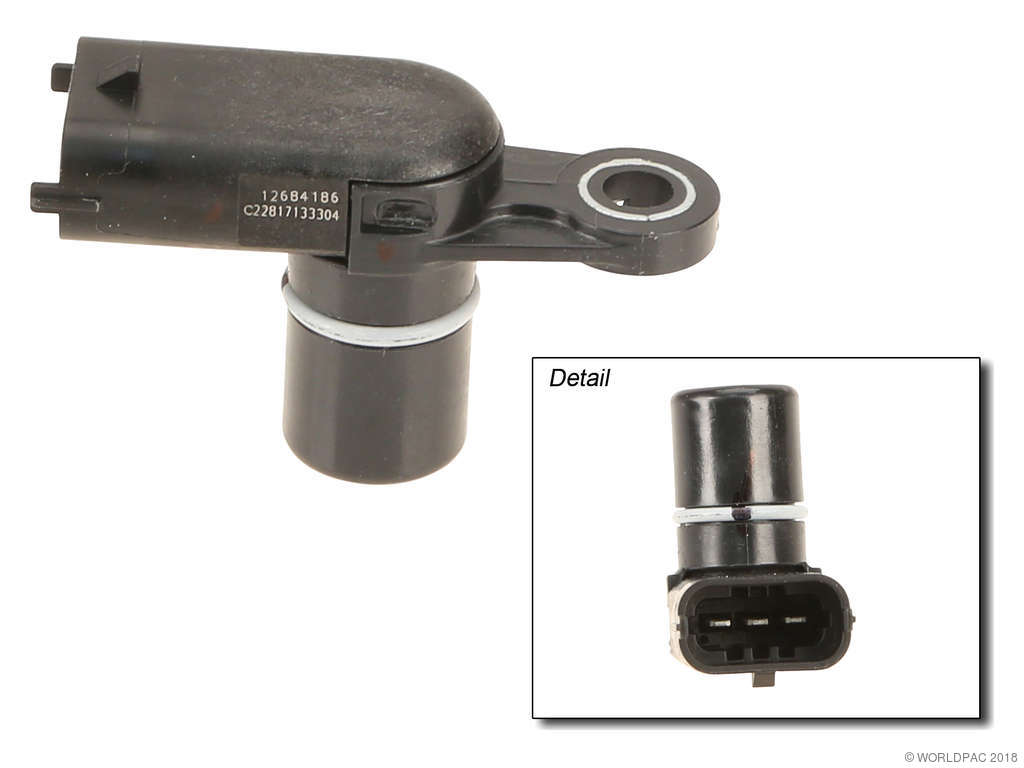
- Do not confuse the camshaft position actuator solenoid with the camshaft position sensor; they are different parts, and P0014 is almost never caused by the sensor.
What's Unique About the 2013-2017 Chevrolet Equinox
The 3.6L LFX V6 engine in the Equinox has a well-documented history of timing-related issues. While an improvement over its predecessor (the LLT), the LFX is still sensitive to oil quality and level, which directly impacts the VVT system. Consequently, P0014 is a common code that can be a simple fix like an oil change or a bad solenoid, but it can also be an early warning for the platform's most notorious problem: stretched timing chains. GM issued TSB PIP5096C for the LFX engine, which identified a batch of camshaft actuator solenoids with internal clearance issues that could cause this code without any other symptoms.
Symptoms You May Notice
- Illuminated Check Engine Light
- Rough, unstable, or low idle
- Engine stalling, especially when coming to a stop
- Hard starting
- Reduced fuel economy
- Decreased engine power and poor acceleration
- Rattling or ticking noise from the engine, especially on startup
- Replacing the camshaft position SENSOR instead of the camshaft position actuator SOLENOID. The sensor's job is to read the cam's position, while the solenoid's job is to move it. P0014 is almost always a problem with the solenoid or the underlying mechanical/hydraulic system, not the sensor.
Most Likely Causes
- Low or Dirty Engine Oil 🔴 High Probability The VVT system is entirely dependent on oil pressure to function. The 3.6L LFX engine can be sensitive to oil condition, and extended oil change intervals can lead to sludge buildup that clogs the small passages in the VVT solenoids and phasers. Low oil level is a very common trigger for this code. NHTSA ODI #11632552 highlights a case where an owner reported the vehicle seemed to be burning oil, resulting in a P0014 code alongside other performance codes like P0191 and P0089.
How to confirm: Check the engine oil level on the dipstick and observe its color and consistency. If the level is low or the oil is dark, gritty, or sludgy, this is the likely cause.
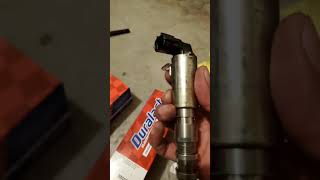
Typical fix: Perform an engine oil and filter change using a full synthetic 5W-30 oil that meets GM's dexos1 specification. Clear the code and drive to see if it returns. This simple step resolves the issue in many cases. 🎬 See: Two quick DIY methods to clear the P0014 code
Est. part cost: $40-$80 - Faulty Exhaust Camshaft Position Actuator Solenoid (Bank 1) 🔴 High Probability → Shop Engine Camshaft These solenoids can fail electronically or become clogged with debris from the engine oil, causing them to stick. GM issued TSB PIP5096C for the LFX engine, which addresses these solenoids having internal clearance issues from a specific supplier, sometimes requiring replacement with an updated part.
How to confirm: A common diagnostic technique is to swap the Bank 1 exhaust solenoid with the Bank 1 intake solenoid. Clear the codes and drive. If the code changes to P0011 (Intake Cam Position), the solenoid is faulty. You can also test the solenoid's resistance with a multimeter; it should be between 8-13 Ohms. TSB PIP5096C specifically warns against this diagnostic swap if the engine has a certain build sticker, as the replacement part is from a different supplier to correct a tolerance issue.
Typical fix: Replace the Bank 1 exhaust camshaft actuator solenoid. It is located on the rear cylinder head (firewall side) and is the lower of the two solenoids. 🎬 Watch: Locate and identify the Bank 1 exhaust solenoid Many technicians recommend replacing all four VVT solenoids (both intake and exhaust on both banks) as a preventative measure.
Est. part cost: $30-$80 - Stretched Timing Chains 🟡 Medium Probability → Shop Engine Timing Chain The GM High Feature V6 engine family is known for premature timing chain wear, often accelerated by oil breakdown from extended change intervals. While the LFX features improved chains over earlier engines, the issue still occurs and can cause camshaft timing to deviate from the commanded position. This is often indicated by other codes like P0008, P0016, or P0017 appearing alongside P0014.
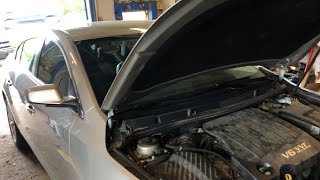
How to confirm: Listen for a persistent rattling or scraping noise from the engine, especially on cold starts. A professional diagnosis involves using a scan tool to monitor camshaft deviation angles. A consistent deviation beyond a few degrees at idle or 2000 RPM indicates a stretched chain. This is a complex diagnosis best left to a professional. 🎬 Watch: A professional walkthrough of Equinox V6 timing issues
Typical fix: This is a major and expensive repair that involves disassembling the front of the engine to replace all three timing chains, the tensioners, and the guides. It is not a DIY job for most people. Repair costs can exceed $1500.
Est. part cost: $300-$700
Rare But Worth Checking
- Faulty Camshaft Phaser: → Shop Engine Camshaft The mechanical gear (phaser) that the solenoid controls can fail internally or become stuck, but this is much less common than a solenoid failure. In a documented case on a 2013 Traverse with the same engine, the phaser was able to move independently of the camshaft, causing timing codes.
- Wiring Harness Issue: The wiring or connector for the VVT solenoid can become damaged, corroded, or contaminated with oil, causing a poor connection. A visual inspection is warranted. NHTSA ODI #11184298 describes a situation where a P0013 fault was addressed, but a P0014 code appeared less than one week later, suggesting persistent electrical or hydraulic issues.
- Slipped Crankshaft Reluctor Wheel: Extremely rare, but TSB PIP3423L (superseded by PIP3423P) notes that the reluctor wheel pressed onto the crankshaft can move, causing timing correlation codes if the chains themselves are found to be in good condition.
Diagnosis Steps
- Check Engine Oil: Verify the oil level is full and the oil is clean. If low, top it off. If old or dirty, perform an oil and filter change with a full synthetic 5W-30 oil meeting the dexos1 specification. Clear the code and see if it returns. This is the most important first step.
- Scan for Other Codes: Use an OBD-II scanner to see if any other codes are present. Codes like P0013, P0011, or P0008/P0017 provide critical diagnostic clues to narrow down the cause.
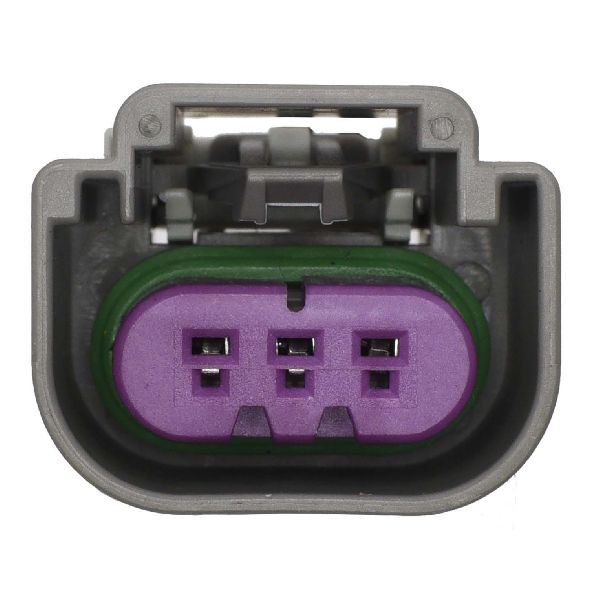
- Inspect Solenoid Wiring: Visually inspect the wiring harness and connector for the Bank 1 (rear) exhaust VVT solenoid for any signs of damage, corrosion, or oil contamination.
- Test the Solenoid: Swap the Bank 1 exhaust solenoid with the Bank 1 intake solenoid. They are identical parts. Clear the codes. If the code returns as P0011, you have confirmed the solenoid is bad. If the P0014 code returns, the problem lies elsewhere. Note: TSB PIP5096C advises against this on certain builds, recommending direct replacement.
- Measure Solenoid Resistance: If swapping is not feasible, unplug the solenoid and measure the resistance across its two pins with a multimeter. A reading between 8 and 13 ohms is expected. An open circuit (infinite resistance) or a short means the solenoid is bad.
- Command Solenoid with Scan Tool: A more advanced diagnostic step is to use a bi-directional scan tool to command the solenoid on and off while monitoring the camshaft angle to see if it responds as commanded.
- Seek Professional Diagnosis: If the oil is good, the solenoid tests okay, and the wiring is intact, the issue is likely a more serious mechanical problem like a stretched timing chain or a faulty phaser. This requires professional diagnosis and repair.
Parts You'll Likely Need
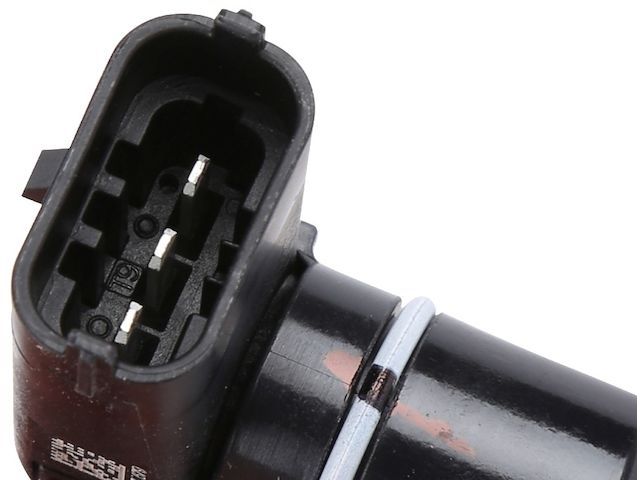
- Exhaust Camshaft Position Actuator Solenoid (Bank 1)
(OEM #12655421, Superseded by 12679100)— This solenoid is the most common part to fail, either by getting clogged with debris or failing electronically, directly causing the P0014 code. TSB PIP5096C suggests an updated part may be required for certain engine builds to correct a tolerance issue. The intake and exhaust solenoids are often the same part number.
Trusted brands: ACDelco, Delphi, Dorman
OEM price range: $50-$90
Aftermarket price range: $25-$60 - Engine Timing Chain Kit — If the code is caused by stretched timing chains, a complete kit with updated chains, guides, and tensioners is required for a permanent repair. This is a known weak point of the GM High Feature V6 engine family.
Trusted brands: ACDelco, Cloyes
OEM price range: $400-$700
Aftermarket price range: $250-$500
Related Codes That Often Appear With This One
- P0011 — This is the equivalent code for the intake camshaft on Bank 1. If both appear, it strongly suggests a systemic problem like low oil pressure or severe oil sludging affecting the entire bank. TSB PIP5096C groups these codes together as having a common cause in faulty solenoids.
- P0013 — This code indicates an electrical circuit fault with the same exhaust solenoid. Seeing P0013 and P0014 together almost guarantees the solenoid or its wiring is the problem.
- P0008, P0017 — These are crankshaft-to-camshaft correlation codes. If P0014 appears with these more serious codes, it is a very strong indicator that the timing chains have stretched and a major mechanical repair is imminent.
Technical Service Bulletins (TSBs) & Recalls
- {'name': 'PIP5096C', 'description': 'Addresses codes P0011, P0014, P0021, and P0024 with no other drivability concerns. It points to a batch of camshaft actuator solenoids with internal clearance issues. It instructs technicians to check the engine EUN sticker and, if an \'A\' is present, replace the solenoid with a new service part from a different supplier rather than swapping it for diagnosis.', 'url': 'https://static.nhtsa.gov/odi/tsbs/2014/SB-10056821-4325.pdf'}
- {'name': 'PIP3423L / PIP3423P', 'description': 'Addresses correlation codes (P0008, P0009, P0016-P0019). Instructs technicians to inspect for loose timing chains but also mentions the rare possibility of a slipped crankshaft reluctor wheel as a cause if the timing chains are confirmed to be good.', 'url': 'https://www.carcomplaints.com/Chevrolet/Malibu/2011/tsbs/tsb-pip3423l.shtml'}
- {'name': 'PIP5191', 'description': 'Addresses a ticking noise on cold start that lasts for a few seconds. The cause is identified as a compressed oil pump pick-up tube seal drawing in air before the pump is fully primed. This is more common on engines with over 50,000 miles and can contribute to oil pressure-related issues.', 'url': 'https://static.nhtsa.gov/odi/tsbs/2014/MC-10124299-9999.pdf'}
Platform-Specific Known Issues
- Premature timing chain stretch is a widely documented problem on the 3.6L LFX engine family, often accelerated by the factory's recommended oil change intervals being too long.
- GM Technical Service Bulletin PIP5096C specifically addresses codes like P0014 on the LFX engine, noting that some original-build solenoids had clearance issues and should be replaced with an updated service part.
- GM Technical Service Bulletin 12-06-01-009F provides detailed instructions for diagnosing and repairing stretched timing chains and lists the updated parts required.
Mechanic-Grade Diagnostic Values
- Engine Oil Pressure at Idle (Hot) — expected: ~30-32 PSI. Failure: Significantly lower pressure can indicate worn bearings, oil pump issues, or severe oil dilution, starving the VVT system.
- Engine Oil Pressure at Cold Start / Higher RPM — expected: 60-70+ PSI. Failure: Failure to build higher pressure with increased RPM points to a serious lubrication system problem.
- VVT Solenoid Control Circuit Resistance — expected: Less than 5.0 Ohms. Failure: Resistance greater than 5.0 Ohms between the solenoid harness connector and the PCM harness connector indicates an open or high-resistance fault in the wiring that needs repair.
Scan Tool Commands That Help
- GDS2 (GM Tech 2 successor): Camshaft Position Actuator Solenoid Test — This bidirectional control allows a technician to command the solenoid on and off while observing the 'Camshaft Position Variance' PID. This directly tests if the solenoid is mechanically responding to electrical commands from the ECM, helping to isolate a stuck solenoid from a wiring or ECM driver issue.
- GDS2 (GM Tech 2 successor): Camshaft Position Control — This function allows the technician to command a specific degree of cam phasing (e.g., 10 degrees) and compare the 'Desired Cam Position' to the 'Actual Cam Position' PID. If the actual value does not match the desired value, it points to a mechanical issue like a stuck phaser, low oil pressure, or stretched chain, rather than just a solenoid fault.
Wiring & Ground Locations
- Bank 1 VVT Solenoid Connector — Bank 1 is the cylinder head against the firewall. The exhaust solenoid is the lower of the two solenoids on that head.. This is the primary connector to inspect for oil contamination, corrosion, or loose pins. The fault is often at the connection point.
- G105 / G106 — These are primary engine grounds typically located on the engine block or cylinder heads, often near the front of the engine on either side.. A poor engine ground can cause erratic behavior in various sensors and actuators, including the VVT solenoids. While not a direct cause, verifying clean and tight grounds is a foundational step in diagnosing any electronic engine code.
Real Owner Repair Stories
- CorvetteForum user (2018 Chevrolet Colorado with 3.6L LGX engine (successor to LFX with similar VVT system), 40k miles) — Check Engine Light came on while cruising at 60 mph.
❌ Tried (didn't work) The owner first took it to a dealer who was too busy, then found another dealer.
✅ What actually fixed it The dealer scanned the truck, confirmed the exhaust solenoid was bad, and replaced it under warranty. The repair took 1.5 hours and resolved the code. - Owner Complaint NHTSA ODI #11535464 — An owner reported that their car keeps throwing a P0014 code. Despite changing the camshaft position sensor, oil, and air filter, the check engine light returned after only 200 miles.
- Owner Complaint NHTSA ODI #11553329 — After experiencing issues, an owner had a code pulled at an auto parts store which stated there was an issue with the exhaust camshaft, leading to a professional diagnostic at a local shop.
OEM Part Supersession History
12655421→12679100— Part update/revision by the manufacturer. Often done to improve reliability or change suppliers.
Heads up: TSB PIP5096C notes that for certain engine builds (identified by an 'A' on the EUN sticker), a specific 'service' valve from a different supplier is required to correct an internal clearance issue. On these engines, swapping solenoids for diagnosis is explicitly advised against; direct replacement with the updated part is the correct procedure.12628348, 12646784→12655421— Earlier revisions of the exhaust VVT solenoid.
Model Year Variations Within This Range
- 2012-2015: TSB PIP5096C specifically calls out 2012-2015 models with the LFX engine as potentially having camshaft actuator solenoids with internal clearance issues from a specific supplier, identified by an 'A' on the engine's EUN sticker. Later models may have received the updated part from the factory.
Diagnostic Flowchart
Other Known Issues on This Vehicle
Issues unrelated to this code that are worth knowing about as an owner of this generation:
- Premature Timing Chain Wear 🔴 High → Shop Engine Timing Chain — Common, especially on engines with extended oil change intervals. Can occur under 100k miles. Less frequent on LFX than earlier LLT engines, but still a significant concern. (Ref: TSB #12-06-01-009F (provides info on updated parts))
- Plugged/Frozen PCV Orifice 🟠 Medium — A known issue where the PCV orifice in the intake manifold can clog or freeze in cold weather, leading to high crankcase pressure and rear main seal failure (oil leak). (Ref: GM Special Coverage 14882)
- Cracked Air Intake Resonator 🟡 Low — The plastic air intake resonator assembly is known to crack from heat and vibration, causing unmetered air to enter the engine and triggering lean codes (P0171/P0174).
- Water Pump Failure 🟠 Medium — Water pumps on the 3.6L V6 are a known failure point, leading to coolant leaks and potential overheating.
- Cold Start Ticking Noise (Oil Aeration) 🟡 Low — A ticking noise for 3-15 seconds after a cold start can be caused by a compressed oil pump pickup tube seal, which allows air into the oil system before it primes. (Ref: TSB PIP5191)
Used vs. New Parts: Buying Guide for This Vehicle
When a used part is the smart pick: For this repair, using a used part is generally not recommended. The primary failure components are the VVT solenoids (an electro-hydraulic part prone to clogging and electronic failure) and the timing chains (a wear item). The cost savings of a used solenoid are minimal compared to the risk of it failing soon after installation.
Donor-vehicle mileage cap: roughly under 40000 miles for the part to have meaningful remaining life.
What to inspect on the donor part:
- If considering a used solenoid, insist on one from a low-mileage, documented running vehicle.
- Inspect the mesh screens on the solenoid; they must be perfectly intact, clean, and free of any tears or debris.
- Avoid parts from engines with visible sludge in the oil fill cap or valve cover area.
OEM-only on this vehicle (don't cheap out):
- Timing Chain Kit: Given the history of premature chain stretch on this engine family, using an OEM (ACDelco) or a top-tier OEM-equivalent timing kit is critical for repair longevity. This is not a job you want to do twice due to low-quality parts.
Aftermarket brands forum-validated for this vehicle:
- VVT Solenoids: ACDelco (OEM), Delphi.
- Timing Chain Kits: Cloyes is a highly regarded aftermarket brand for timing components, often considered equivalent or even superior to OEM in some applications.
Brands owners have reported issues with on this vehicle:
- Unbranded, 'white-box' VVT solenoids and timing kits from online marketplaces. These often have high failure rates and may not meet the precise tolerances required for the VVT system to function correctly. Some users have reported issues with lower-quality aftermarket timing sets having excessive slack right out of the box.
Real Owner Stories
Aggregated from forums and TSBs cited above. Mileages and costs reflect what owners reported in those sources.
2013 Chevrolet Equinox 3.6L LFX V6
Symptoms: Owner was seeking estimates for timing chain and guides repair due to known issues with the High Feature V6 engine family.
What fixed it: Replacement of all three timing chains, tensioners, and guides.
Cost: $1200-$1500
Source hint: chevroletforum.com: 'Estimates on Timing Chain and Guides Repair'
2013 Chevrolet Traverse 3.6L LFX V6
Symptoms: P0014 and P0016 codes present; diagnostic showed the phaser gear moving but the camshaft itself was not moving.
What fixed it: Replacement of the failed camshaft phaser.
Source hint: youtube.com: 'P0014 P0016 code 2013 Chevrolet Traverse (Part-2)' by Daniels Customs
2014 Chevrolet Equinox 3.6L LFX V6 — ~50000 miles
Symptoms: Ticking noise on cold start that lasts for a few seconds.
What fixed it: Replacement of the oil pump pick-up tube seal which was drawing in air.
Source hint: TSB PIP5191
Related OBD-II Codes
Frequently Asked Questions
Does TSB PIP5096C apply to my 3.6L LFX engine if I have a P0014 code?
Can I just swap the solenoids to see if the P0014 code moves on my Equinox?
Is there a TSB for the rattling noise I hear on cold starts?
What oil should I use in my 2013-2017 Equinox 3.6L to prevent P0014?
Is there a specific bulletin for timing chain replacement on this vehicle?
Where is the Bank 1 exhaust camshaft actuator solenoid located on the LFX V6?
Helpful Videos
![How to Fix P0014 Engine Code in 4 Minutes [2 DIY Methods / Only $6.74]](https://img.youtube.com/vi/olrC8UYw9cQ/mqdefault.jpg)
We Have This Part in Stock


The information in this article is provided for general reference and educational purposes only. Vehicle specifications, procedures, and part compatibility can vary by production date, trim level, and region. Always consult your vehicle's factory service manual and verify part numbers before purchasing or performing repairs. Safety-critical components such as airbags, seat belts, and braking systems should be installed by a qualified professional.
- Chevrolet Equinox:
- 🧭 Diagnostic Flowchart
- 🎬 Helpful Videos
- 🛍️ Shop This Part
- What's Unique About the 2013-2017 Chevrolet Equinox
- Symptoms You May Notice
- Most Likely Causes
- Rare But Worth Checking
- Diagnosis Steps
- Parts You'll Likely Need
- Related Codes That Often Appear With This One
- Technical Service Bulletins (TSBs) & Recalls
- Platform-Specific Known Issues
- Mechanic-Grade Diagnostic Values
- Scan Tool Commands That Help
- Wiring & Ground Locations
- Real Owner Repair Stories
- OEM Part Supersession History
- Model Year Variations Within This Range
- Other Known Issues on This Vehicle
- Used vs. New Parts: Buying Guide for This Vehicle
- Real Owner Stories
- 2013 Chevrolet Equinox 3.6L LFX V6
- 2013 Chevrolet Traverse 3.6L LFX V6
- 2014 Chevrolet Equinox 3.6L LFX V6 — ~50000 miles
- Related OBD-II Codes
- Frequently Asked Questions
- 🎟️ Get 5% Off