

P0014 on 2012-2016 Chevrolet Sonic: Causes and Fixes for Exhaust Camshaft Timing
On a 2012-2016 Sonic, code P0014 is most often caused by a faulty exhaust camshaft actuator solenoid, often due to extended oil change intervals. Before replacing parts, always check that the engine oil is clean and at the correct level. A new solenoid costs between $25 and $60 and is a straightforward DIY replacement that often resolves the issue.
- Always check your engine oil level and condition first; low or dirty oil is a primary cause of P0014 on these engines.
- The most common and easiest fix is replacing the exhaust camshaft actuator solenoid (Part #12655421 or #12679100).
- A simple and effective diagnostic is to swap the intake and exhaust solenoids; if the code changes to P0011, the solenoid is bad.
- If the code appears immediately after major engine work, suspect the missing plastic oil sleeve mentioned in TSB PIP4543D.
- If a new solenoid doesn't fix the issue, the problem could be the more expensive mechanical camshaft phaser or a timing belt/chain issue.
What's Unique About the 2012-2016 Chevrolet SONIC
The Ecotec engines in the 2012-2016 Sonic, like many modern GM engines, rely heavily on clean oil and proper oil pressure to operate the VVT system. These engines are known for having the camshaft actuator solenoids fail, making it a very common repair. A Reddit user with a 1.8L Sonic reported the P0014 code appeared while following an 8,000-10,000 mile oil change interval, suggesting these engines are sensitive to oil condition. Additionally, a specific GM Technical Service Bulletin (TSB #PIP4543D) notes that if other engine work was recently performed, a small plastic oiling sleeve for the camshaft actuator may have been missed during reassembly, which will trigger this code.
Diagnostic Flowchart
Tap your situation to follow the diagnostic path that matches what you're seeing on this vehicle.
Symptoms You May Notice
- Check Engine Light is on
- Rough or unstable idle
- Engine stalling or hesitation during acceleration
- Hard starting
- Poor fuel economy
- Rattling or knocking noises from the engine, especially on a cold start
- Severe knocking or lurching at low RPMs, particularly after recent timing belt or engine work
- Replacing the camshaft position *sensor* instead of the camshaft position actuator *solenoid*. The sensor reads the camshaft's position, while the solenoid controls it. P0014 is almost always caused by a control issue (solenoid, oil, phaser) rather than a sensor reading issue.
Most Likely Causes
- Low or Dirty Engine Oil 🔴 High Probability The VVT system is hydraulic and highly sensitive to oil volume and viscosity. Sludge from infrequent oil changes can clog the small passages in the solenoids and actuators. A user on r/ChevySonic noted the P0014 code appeared on their 1.8L with 130k miles while using 8k-10k mile oil change intervals.
How to confirm: Check the oil level on the dipstick and inspect its color and consistency. If it's low, dark black, or sludgy, it needs to be changed. Ensure the correct oil viscosity (e.g., 5W-30 synthetic) is being used.
Typical fix: Top off or change the engine oil and filter. Use the manufacturer-recommended oil weight. Clearing the code and driving may be enough, but often the solenoid remains clogged and requires cleaning or replacement.
Est. part cost: $30-$70 - Faulty Exhaust Camshaft Position Actuator Solenoid 🔴 High Probability → Shop Engine Camshaft This is a very common failure part on GM Ecotec engines found in the Sonic, Cruze, and Trax. The solenoid can get clogged with debris or fail electrically, causing it to get stuck in the advanced position.
How to confirm: A common diagnostic step is to swap the exhaust solenoid with the intake solenoid. They are identical parts. Clear the codes and drive. If the code changes to P0011 (Intake Camshaft Position), the solenoid is confirmed to be faulty. You can also test the solenoid's resistance with a multimeter or apply 12V to see if it clicks.
Typical fix: Replace the exhaust camshaft position actuator solenoid. It is held in by a single E8 or E10 external Torx bolt and is easily accessible on top of the engine.
Est. part cost: $25-$60 - Missing/Damaged Camshaft Actuator Oil Sleeve ⚪ Low Probability → Shop Engine Camshaft This is a specific issue highlighted in TSB #PIP4543D. If recent engine work involved removing the camshaft actuators (phasers), this small black plastic sleeve can be easily lost or forgotten during reassembly, starving the actuator of oil pressure.
How to confirm: This requires removing the camshaft actuator (phaser) to inspect for the presence and condition of the black plastic oil sleeve. This should only be suspected if the P0014 code appeared immediately after a major engine repair.
Typical fix: Install a new camshaft actuator, as the sleeve is typically only available as part of the actuator assembly.
Est. part cost: $50-$100
Rare But Worth Checking
- Stretched Timing Belt (1.8L) or Chain (1.4L): → Shop Engine Timing Chain While less common than a solenoid failure, a stretched timing chain/belt or a failing tensioner can cause the camshaft timing to be off, triggering this code. A user on Reddit with a 1.8L Sonic experienced violent knocking and a P0014 code after a timing belt replacement, suspecting the timing may have been set incorrectly by one tooth. This is a more involved and expensive repair.
- Faulty Camshaft Phaser (Actuator): → Shop Engine Camshaft The mechanical actuator on the end of the camshaft can fail or become clogged, preventing it from adjusting timing correctly. This is often a result of prolonged operation with dirty oil. One owner on SonicOwnersForum reported that after a new solenoid didn't fix the code, the dealer replaced the actuator itself, which solved the problem.
- Incorrectly Installed Oil Filter: → Shop Engine Oil Filter Adapter On engines using a cartridge-style oil filter, if the filter is installed incorrectly or the housing is damaged, it can lead to a loss of oil pressure, which directly affects the VVT system and can trigger a P0014 code.
Diagnosis Steps
- Check Engine Oil: Verify the engine oil level is full and the oil is clean. If low, dirty, or overdue for a change, perform an oil change with the correct viscosity (5W-30 full synthetic) and a new filter before proceeding.
- Scan for Other Codes: Use an OBD-II scanner to check for any other related codes that could point to a broader issue (e.g., P0011, P0016, P0013).
- Inspect Solenoid Wiring: Check the electrical connector and wiring going to the exhaust camshaft actuator solenoid for any visible damage, corrosion, or loose connections.
- Swap the Solenoids: This is the easiest and most definitive diagnostic test. The intake and exhaust solenoids are identical. Swap their positions. Clear the codes and drive the vehicle. If the code returns as P0011 (intake side), you have confirmed the solenoid is the faulty part. If P0014 returns, the problem lies elsewhere.
- Test the Solenoid (Optional): If you have a multimeter, you can remove the solenoid and test its internal resistance (typically 8-13 ohms). You can also (carefully) apply 12V from the battery to its terminals to see if the internal plunger actuates with an audible click. 🎬 See how to perform these simple Ecotec solenoid tests.
- Inspect Mechanical System: If the solenoid is not the issue, the problem is likely more serious. This could involve a clogged/failed camshaft phaser, incorrect mechanical timing (belt/chain), or low oil pressure. These steps are more advanced and may require a professional mechanic.
Parts You'll Likely Need
- Exhaust Camshaft Position Actuator Solenoid
(OEM #12655421 (Superseded by 12679100))— This is the most frequent point of failure for code P0014 on these engines due to clogging or electrical malfunction.
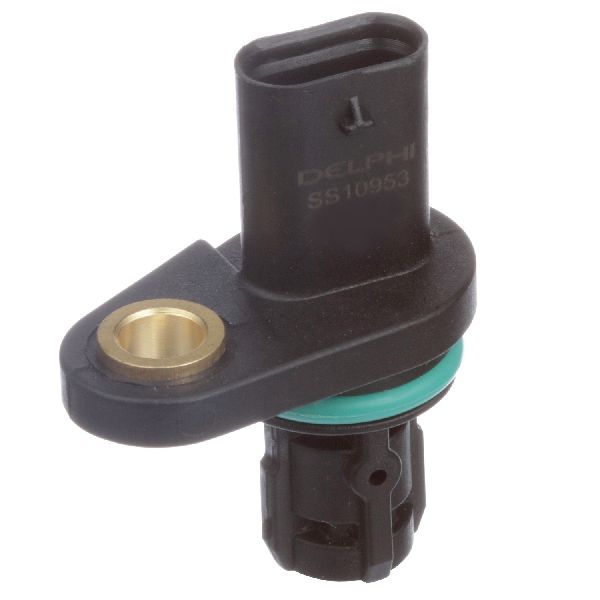
Trusted brands: ACDelco (OEM), Delphi, Dorman
OEM price range: $40-$60
Aftermarket price range: $25-$45
Related Codes That Often Appear With This One
- P0011 — This is the corresponding code for the intake camshaft. If both solenoids are failing or oil is very dirty, you may see both codes. It will also appear if you swap a bad exhaust solenoid to the intake side for diagnosis.
- P0016 / P0017 — These codes indicate a correlation problem between the crankshaft and camshafts. They often appear with P0014 if there is a more serious mechanical timing issue, like a jumped timing belt/chain, or the missing oil sleeve mentioned in TSB PIP4543D.
- P0013 — This code indicates an open circuit in the exhaust camshaft actuator solenoid. It points directly to an electrical failure of the solenoid or its wiring, rather than a performance/mechanical issue.
Technical Service Bulletins (TSBs) & Recalls
- PIP4543D: Provides information about a unique black plastic oil sleeve related to camshaft actuators that can cause codes P0011, P0014, P0016, or P0017 after a repair. It explicitly lists the 2012
Platform-Specific Known Issues
- TSB #PIP4543D: Missing Camshaft Actuator Oil Sleeve: → Shop Engine Camshaft GM issued a bulletin for the 2012-2016 Sonic (and other models) warning that after engine repairs involving the camshaft actuators (phasers), a small black plastic oil sleeve can be missed during reassembly. This sleeve directs oil to the actuator. If missing or damaged, it will cause a loss of VVT control and set codes P0011, P0014, P0016, or P0017. The sleeve is not sold separately and comes with a new actuator.
- Real-World Repair Progression: A documented owner experience on SonicOwnersForum showed a 2012 Sonic 1.8L first throwing code P0014. The dealer replaced the solenoid under warranty, but the code returned 30 days later. The second repair involved replacing the camshaft actuator (phaser) itself, which indicates the solenoid is not always the root cause and failure can progress to the mechanical phaser.
Mechanic-Grade Diagnostic Values
- Camshaft Position Actuator Solenoid Resistance — expected: 8 to 13 Ohms. Failure: A reading of OL (Open Loop/Infinite resistance) or well outside the expected range indicates a failed solenoid coil.
- Camshaft Position Actuator Solenoid Bolt Torque — expected: 53 lb-in (6 Nm). Failure: Over-tightening can crack the solenoid housing; under-tightening can cause oil leaks.
- Scan Tool: Desired vs. Actual Camshaft Position Angle — expected: The 'Actual' value should closely track the 'Desired' value as engine RPM changes. At idle, both should be near 0 degrees.. Failure: A large variance between desired and actual, or an 'Actual' value that is stuck (e.g., at 15-20 degrees advanced) when the 'Desired' is 0, points to a stuck phaser or faulty solenoid.
Scan Tool Commands That Help
- GDS2 (GM Tech Tool): Camshaft Position Actuator Solenoid Control — This bidirectional test allows a technician to command the solenoid to advance or retard the camshaft timing while the engine is running. Observing the 'Desired' vs 'Actual' cam angle PIDs while using this function can confirm if the solenoid and phaser are responding to commands, helping to isolate a sticky mechanical part from an electrical issue.
- GDS2 (GM Tech Tool): Engine Control Module (ECM) Replacement/Programming — If the ECM is determined to be the cause of the fault, it must be prepared for removal using a 'RESET' command before being unplugged. After installing a new ECM, it requires programming and setup procedures via the scan tool.
Wiring & Ground Locations
- Engine Control Module (ECM) — In the engine compartment, located next to the battery, typically mounted to the battery tray.. The ECM is what commands the camshaft actuator solenoid and monitors the camshaft position sensor to determine if the timing is correct. All related wiring terminates here.
- Exhaust Camshaft Position Actuator Solenoid Valve — On the front of the engine (radiator side), mounted into the valve cover. On the 1.8L engine, it is the solenoid on the left when facing the engine from the front of the car.. This is the component that directly controls oil flow to the exhaust cam phaser. Its wiring connector is a primary point of inspection.
- G104 (Ground) — Lower right rear of the engine block. Note: A GM service bulletin (PIC5574A) mentions that the location for G104 in the service information for the US Sonic may be incorrect, and to check for loose connections or improper crimps at this ground.. A poor engine ground can cause erratic behavior in sensors and actuators, potentially leading to incorrect readings or performance issues that could trigger a P0014.
- G105 (Ground) — Under the battery tray on the frame rail.. Service bulletin PIC5574A advises checking this ground for paint or weld slag that could cause a poor connection, leading to various electrical and communication issues.
Real Owner Repair Stories
- Reddit user on r/ChevySonic (2013 Chevrolet Sonic 1.8L) — Violent knocking and lurching when slowing to a stop. The knocking worsens as RPMs drop. Code P0014 was triggered.
❌ Tried (didn't work) The user had just replaced the timing belt, water pump, tensioner, harmonic balancer, valve cover, coil pack, and spark plugs.
✅ What actually fixed it The user suspected the mechanical timing was off by a tooth. During the timing belt job, they noted difficulty installing the camshaft locking tool and had to slightly turn the exhaust cam to make it fit, indicating a potential misalignment. The final fix was to re-verify and correct the mechanical timing. - YourMechanic Q&A (Chevy Sonic with 50,000 miles) — Car running rough, burning smell, and then a P0014 code appeared.
❌ Tried (didn't work) The shop that performed the oil change cleared the code and added more oil, but the light came back on the next day.
✅ What actually fixed it The root cause was an improperly installed oil filter by a quick lube shop, which led to oil leaking out, causing low oil level and likely low pressure. The fix was to correctly install a new filter and top off the oil, though the user was concerned about potential damage from the incident.
When the Usual Fixes Don't Work
- While the most common fix for P0014 is an oil change or solenoid replacement, several owner accounts show these steps failing to resolve the issue. In one case, a Reddit user who had just performed a timing belt service on their 1.8L Sonic developed a P0014 with severe knocking; the cause was suspected to be mechanical timing that was off by one tooth, not the solenoid. In another documented case on a forum, a dealer first replaced the solenoid, but the code returned, and the final fix was to replace the entire camshaft actuator (phaser), indicating a mechanical failure within the phaser itself.
OEM Part Supersession History
12655421→12679100— Standard part number update by GM. The new part is a direct replacement.
Heads up: There are no known incompatibilities; 12679100 is the correct current OEM part number for the exhaust solenoid.12628348, 12646784→12655421— Earlier revisions of the same part.
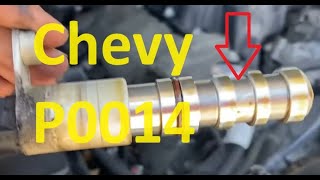
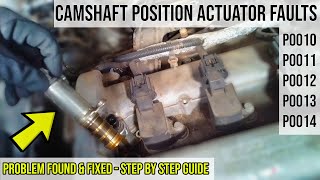
Helpful Videos


We Have This Part in Stock


The information in this article is provided for general reference and educational purposes only. Vehicle specifications, procedures, and part compatibility can vary by production date, trim level, and region. Always consult your vehicle's factory service manual and verify part numbers before purchasing or performing repairs. Safety-critical components such as airbags, seat belts, and braking systems should be installed by a qualified professional.
- Chevrolet SONIC:
- 🧭 Diagnostic Flowchart
- 🎬 Helpful Videos
- 🛍️ Shop This Part
- What's Unique About the 2012-2016 Chevrolet SONIC
- Symptoms You May Notice
- Most Likely Causes
- Rare But Worth Checking
- Diagnosis Steps
- Parts You'll Likely Need
- Related Codes That Often Appear With This One
- Technical Service Bulletins (TSBs) & Recalls
- Platform-Specific Known Issues
- Mechanic-Grade Diagnostic Values
- Scan Tool Commands That Help
- Wiring & Ground Locations
- Real Owner Repair Stories
- When the Usual Fixes Don't Work
- OEM Part Supersession History
- 🎟️ Get 5% Off