

P0014 on 2011-2017 Chrysler 200 3.6L: Exhaust Cam Timing Over-Advanced Causes and Fixes
For the 3.6L Pentastar in a Chrysler 200, code P0014 is most often caused by low/dirty engine oil or a failed exhaust VVT solenoid (oil control valve) on Bank 1. An oil change using the correct viscosity oil and a new solenoid (around $25-$75 for aftermarket) is the most common fix. Ignoring the code can lead to rough running, poor fuel economy, and potentially more severe engine damage over time.
- Code P0014 on your Chrysler 200 3.6L points to the exhaust camshaft on the rear cylinder bank (Bank 1) being timed too far advanced.
- Before buying any parts, check your engine oil. Low, old, or incorrect oil is the most common cause of this issue.
- The most likely failed part is the Bank 1 exhaust VVT solenoid (oil control valve). This is an affordable part and a common DIY fix.
- A simple and effective diagnostic trick is to swap the exhaust VVT solenoid with the intake solenoid on the same bank and see if the code changes to P0010.
- Do not immediately assume a major mechanical failure like a timing chain. The issue is almost always related to the simpler, cheaper components of the VVT system.
What's Unique About the 2011-2017 Chrysler 200
The 3.6L Pentastar V6 is a workhorse engine used across the Chrysler, Dodge, and Jeep lineup, and its VVT system is well-documented. The system is highly sensitive to oil level, quality, and viscosity. Because the engine is used in so many vehicles, parts like the VVT solenoids are widely available and affordable. On the Chrysler 200, the primary challenge is access, as Bank 1 is located at the rear of the engine bay against the firewall, making the solenoids and sensors on that bank harder to reach than on a longitudinally mounted engine (like in a Charger or Wrangler).
Generation note: This guide covers both the first generation (2011-2014) and second generation (2015-2017) of the Chrysler 200 equipped with the 3.6L Pentastar V6. The engine and the causes for this code are consistent across both generations. However, note the oil specification change: 2011-2012 models originally specified 5W-30, while 2013 and later models use 5W-20. Using the correct oil is critical for VVT system function. Later versions of the 3.6L Pentastar (around 2016+) also incorporated Variable Valve Lift (VVL), which is a separate but related system also dependent on oil quality.
Symptoms You May Notice
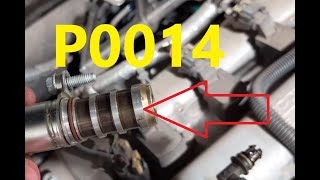
- Check Engine Light is on 🎬 Watch: Understanding the P0014 code and its common causes.
- Rough or unstable idle
- Engine stalling, especially at low speeds or when braking
- Reduced engine power and poor acceleration.
- Decreased fuel economy.
- Rattling or clicking noise from the engine area, which could indicate a simple solenoid issue or a more serious valvetrain problem.
- Replacing the camshaft position sensor when the VVT solenoid is the actual problem. The code P0014 is a performance code, often related to oil flow, which points more directly to the solenoid than the sensor.
- Replacing the timing chain immediately without first checking the oil and VVT solenoids, which are far more common and cheaper fixes.
- Assuming the code is for Bank 2 (front, easier to access) when it is for Bank 1 (rear, against the firewall).
Most Likely Causes
- Low, Dirty, or Incorrect Viscosity Engine Oil 🔴 High Probability The Pentastar's VVT system is hydraulically operated and highly sensitive to oil pressure and cleanliness. Sludge, low oil levels, or using the wrong viscosity (e.g., 5W-30 in a car specified for 5W-20) can impede the movement of the VVT phasers and solenoids. Many owner experiences confirm that an oil and filter change is the first and often most successful step.
How to confirm: Check the engine oil dipstick. Note the level, color, and consistency of the oil. If it is below the 'add' line, dark black, or appears sludgy, this is a likely cause.
Typical fix: Perform an engine oil and filter change. Use a quality full synthetic oil meeting Chrysler MS-6395 specification. For 2011-2012 models, use 5W-30. For 2013-2017 models, use 5W-20. Always use a quality oil filter.
Est. part cost: $40-$80 - Failed Bank 1 Exhaust VVT Solenoid (Oil Control Valve) 🔴 High Probability These solenoids are a common failure point. They can get clogged with debris from dirty oil or fail electrically over time, causing them to stick in one position. Their location on the firewall side of the engine can subject them to higher heat, potentially shortening their lifespan.
How to confirm: The most effective diagnostic is to swap the Bank 1 exhaust solenoid with the Bank 1 intake solenoid. Clear the codes and drive the vehicle. If the code changes to P0010 or P0011 (Intake Camshaft Position codes), the solenoid is confirmed to be faulty. You can also test the solenoid's resistance with a multimeter (typically 7-12 Ohms) or by applying 12V power to see if it actuates (clicks).
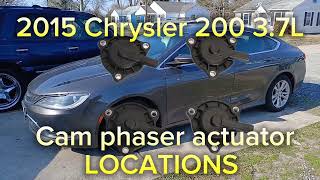
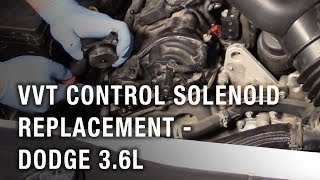
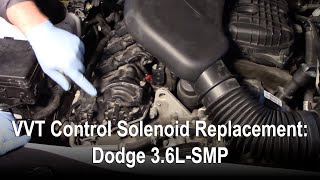
Typical fix: Replace the Bank 1 exhaust VVT solenoid. It is located on the rear cylinder head (Bank 1). 🎬 See this walkthrough for locating and removing Bank 1 solenoids. While cleaning the solenoid with brake or MAF cleaner can sometimes work temporarily, replacement is the recommended permanent fix.
Est. part cost: $25-$75 - Faulty Camshaft Position Sensor ⚪ Low Probability → Shop Engine Camshaft Position Sensor While less common for this specific code (which indicates a performance/timing issue, not a sensor circuit failure), a sensor providing intermittent or inaccurate readings can confuse the PCM and contribute to a timing code. It's more likely to be the cause if accompanied by other sensor-specific codes.
How to confirm: A professional scan tool can graph the sensor's output to check for dropouts. Swapping the sensor with one from another location (if identical) can also help diagnose, but this is less definitive than with solenoids.
Typical fix: Replace the Bank 1 exhaust camshaft position sensor.
Est. part cost: $20-$60
Rare But Worth Checking
- Stretched Timing Chain or Worn Timing Components: → Shop Engine Timing Chain While not the most common cause for an isolated P0014, a stretched timing chain can cause the camshaft timing to be off enough to trigger this code. This is a more serious mechanical issue, often accompanied by rattling noises on startup.
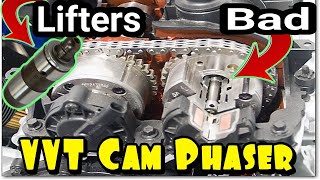
- Failed Camshaft Phaser: → Shop Engine Camshaft The phaser is the mechanical gear that the solenoid acts upon to change cam timing. It can become stuck due to debris or internal failure of its locking pin. This is a more involved and expensive repair requiring removal of the timing cover.
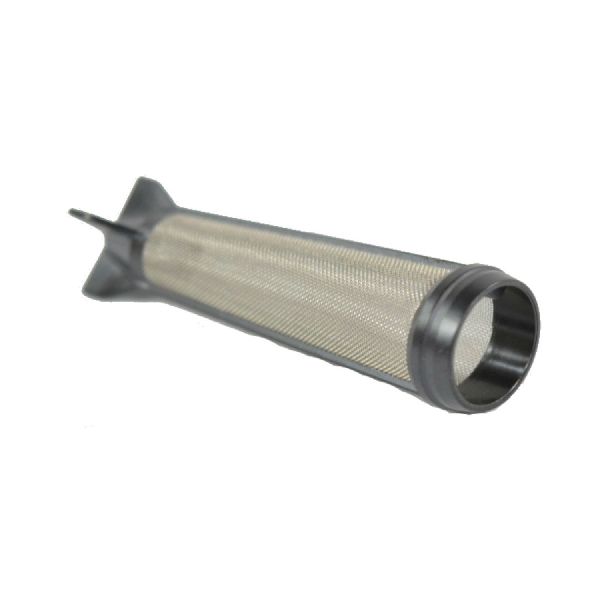
- Clogged Oil Passages: In cases of severe engine sludge from neglected oil changes, the small oil passages leading to the VVT solenoids and phasers can become blocked, starving the system of the oil pressure needed to operate correctly. Some solenoids have small filter screens that can become clogged.
- Failing Rocker Arms / Valvetrain Wear: The 3.6L Pentastar is known for rocker arm bearing failure, which creates the 'Pentastar Tick'. This failure introduces metal debris into the oil, which can clog VVT solenoids and oil passages, leading to codes like P0014. A persistent ticking noise along with this code may point to this more serious underlying issue. 🎬 Watch: How to identify bad rocker arms and cam phasers.
Diagnosis Steps
- Check the engine oil level and condition. If low, dirty, or the wrong viscosity, perform an oil and filter change with the correct full synthetic oil (5W-30 for '11-'12, 5W-20 for '13+). Clear the code and see if it returns. This is the cheapest and most common fix.
- Connect an OBD-II scanner to check for any other related trouble codes.
- Inspect the wiring and electrical connector for the Bank 1 exhaust VVT solenoid. It is on the rear cylinder head. Look for any signs of damage, corrosion, or oil contamination.
- Perform a solenoid swap. Unplug and unbolt the Bank 1 exhaust solenoid and the Bank 1 intake solenoid. Swap their positions. Clear the codes and drive the car.
- If the code changes to P0010 or P0011, the solenoid you moved to the intake position is faulty and needs to be replaced.
- If the P0014 code returns, the problem is not the solenoid. The next steps involve testing the electrical circuit for power and ground and potentially inspecting the camshaft position sensor.
- If you hear a persistent ticking noise, investigate further for potential rocker arm failure, as this is a known issue that can cause oil contamination and lead to VVT problems.
- If all electrical components and sensors check out, the issue may be mechanical, such as a stuck camshaft phaser or stretched timing chain, which typically requires professional diagnosis.
Parts You'll Likely Need
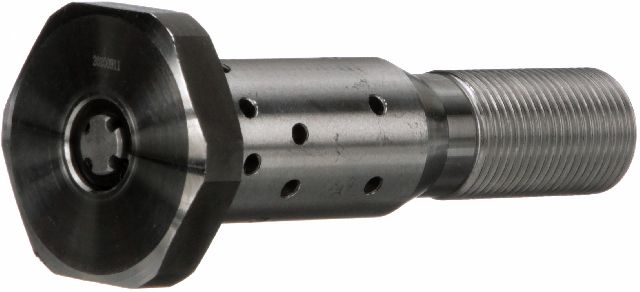
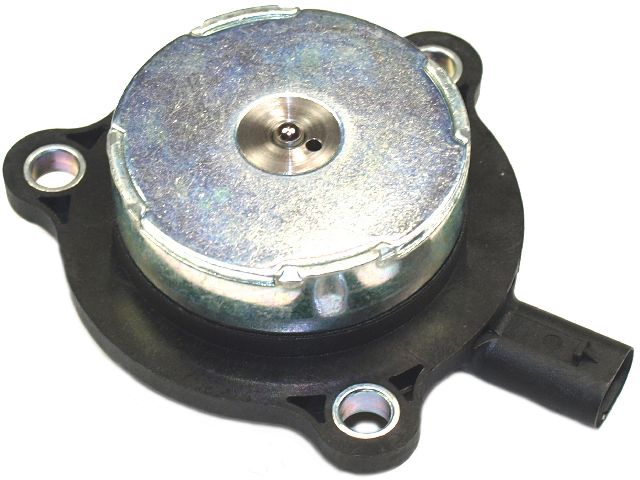
- Variable Valve Timing (VVT) Solenoid / Oil Control Valve
(OEM #05184101AG)— This is the most common part to fail or become clogged, directly causing the over-advanced timing condition.
Trusted brands: Mopar, Dorman (P/N: 917-290), Standard Motor Products (SMP)
OEM price range: $50-$100
Aftermarket price range: $25-$75 - Engine Oil and Filter — Low or contaminated oil is the leading cause of VVT system faults.
Trusted brands: Pennzoil, Mobil 1, Valvoline (Full Synthetic, meeting MS-6395 spec)
OEM price range: $40-$80
Aftermarket price range: $40-$80
Related Codes That Often Appear With This One
- P0013 — This code indicates an electrical circuit fault for the same solenoid (Bank 1 Exhaust). If you see both, it strongly points to a problem with the solenoid itself or its wiring/connector.
- P0010 — This is the intake solenoid circuit code for Bank 1. It may appear if you swap the intake and exhaust solenoids for diagnosis.
- P0017 — Crankshaft Position - Camshaft Position Correlation (Bank 1, Sensor B). This code indicates a misalignment between the crank and the exhaust cam on Bank 1, which can be caused by the same issues as P0014, often pointing towards a more mechanical issue like a stretched chain or failed phaser.
- P0300, P0302, P0304, P0306 — These are misfire codes for the left cylinder head (Bank 2). While not directly related to P0014 (Bank 1), their presence on 2011-2013 models could indicate the notorious left cylinder head issue covered by TSB 09-002-14, suggesting overall engine health may be compromised.
Technical Service Bulletins (TSBs) & Recalls
- TSB 09-002-14 Rev. B: While not for P0014 specifically, this TSB addresses misfires on the left cylinder head (Bank 2, cylinders 2, 4, 6) for 2011-2013 models due to a manufacturing defect. It's a critical TSB for owners of early models to be aware of as it highlights potential engine health issues. An extended warranty (X56) was issued for this, covering repairs for 10 years/150,000 miles.
Platform-Specific Known Issues
- Real Repair Story from Forum: A user on a Chrysler forum with a 2012 Chrysler 200 reported a P0014 code along with rough idling. After replacing both the intake and exhaust VVT solenoids on Bank 1, the code was resolved. The user noted the difficulty in accessing the rear bank solenoids but confirmed it was a manageable DIY job that saved significant labor costs.
- Oil Viscosity Change: It is critical to note that Chrysler changed the oil specification for the 3.6L Pentastar. 2011-2012 models call for 5W-30, while 2013 and later models require 5W-20. Using the wrong oil can directly cause VVT system codes like P0014.
Mechanic-Grade Diagnostic Values
- VVT Solenoid (Oil Control Valve) Internal Resistance — expected: 7 to 12 Ohms. Some sources cite 6.9-7.9 Ohms, while others state 8-12 Ohms. A reading of 9.4 Ohms has been confirmed as good.. Failure: An open circuit (infinite resistance) or a reading significantly outside the 7-12 Ohm range indicates a failed solenoid.
- VVT Solenoid Connector Voltage (Key On, Engine Off) — expected: Battery voltage (approx. 12V) on the power supply pin of the connector.. Failure: No voltage indicates a problem with the power supply circuit from the main relay, a blown fuse, or a wiring issue.
- Engine Oil Pressure (3.6L Pentastar) — expected: Minimum of 5 PSI at hot curb idle. Can be as high as 130-139 PSI on a cold start.. Failure: Pressure below 5 PSI at hot idle indicates a serious lubrication problem (e.g., failing oil pump, severe sludge) that will cause VVT system failure.
- Scan Tool Camshaft Position Actual vs. Desired — expected: The 'Actual' and 'Desired' values for the Bank 1 Exhaust Cam should closely track each other when the VVT system is commanded by the PCM (typically above idle).. Failure: A difference of more than 20 degrees between the desired and actual position will set the P0014 code. A lagging 'Actual' value points to a hydraulic or mechanical issue.
Scan Tool Commands That Help
- Chrysler WiTech or equivalent professional scan tool: VVT Solenoid Actuator Test / Bidirectional Control — This command allows the technician to manually activate the Bank 1 exhaust solenoid while the engine is running. If the solenoid and oil passages are working, activating it should cause the engine to stumble or stall. If there is no change in engine operation, it confirms a fault in the solenoid, a blockage, or low oil pressure.
Wiring & Ground Locations
- (K276) VVT Exhaust Solenoid 1/2 circuit — This is the PCM driver circuit for the Bank 1 exhaust solenoid. The wiring runs from the Powertrain Control Module (PCM), typically at connector C2, to the solenoid on the rear cylinder head.. An open or short in this specific wire will prevent the PCM from controlling the solenoid, leading to timing errors. This identifier is crucial for tracing the correct wire on a factory wiring diagram.
- Battery Negative Ground Cable/Terminal — The main ground cable from the battery terminal to the chassis and engine block.. A corroded or loose battery ground terminal can cause intermittent high resistance, leading to fluctuating voltage supply to the entire engine management system, including the VVT solenoids. This can cause random camshaft slow response or performance codes even when all VVT components are good.
Real Owner Repair Stories
- Reddit user in r/MechanicAdvice (2014 Jeep Wrangler 3.6L (same Pentastar engine)) — Limp mode, traction control light, and P000a-d 'Camshaft Slow Response' codes on all four cams after major service including timing set and phasers.
❌ Tried (didn't work) New cam position sensors, New crank position sensor, New VVT solenoids
✅ What actually fixed it The negative battery cable terminal wasn't clamping tightly, causing intermittent high resistance in the ground circuit. After replacing the faulty terminal clamp and ensuring a solid ground, the codes were resolved. - Reddit user in r/MechanicAdvice (Chrysler 3.6L Pentastar) — Check engine light, metal shavings found in oil during service.
❌ Tried (didn't work) Replacing spark plugs, Replacing a gasket, Replacing two camshafts, Milling the cylinder head
✅ What actually fixed it The underlying issue was a failed rocker arm bearing that destroyed the camshaft. The repair attempts cost over $3,000 and the final recommendation was a new engine, highlighting how a rocker arm failure can cascade into a major expense if not caught early.
"I Checked Everything" — The Actual Cause
- In the context of P0014, the equivalent of a 'smoke test clean' scenario is when an oil change and VVT solenoid replacement/swap do not fix the issue. One documented case involved persistent camshaft timing codes (P000a-d) after replacing all timing components. The root cause was not mechanical or hydraulic, but electrical: a faulty negative battery terminal clamp was creating intermittent high resistance, disrupting the control signals to the VVT system.
When the Usual Fixes Don't Work
- While the most common fixes for P0014 are an oil change or a new VVT solenoid, there are documented cases where these repairs fail to resolve the issue. In one instance, after replacing nearly every timing component, the root cause was discovered to be a poor electrical ground from a faulty battery terminal. In another scenario, recurring VVT issues were a symptom of a much larger problem: rocker arm failure contaminating the entire oil system with metal debris, which required a major engine overhaul, not just a simple solenoid replacement. These cases show that if the simple fixes don't work, a broader diagnostic approach focusing on the electrical supply and mechanical health of the valvetrain is necessary.
OEM Part Supersession History
05184101AG (Mopar)→This part number is still widely referenced and available. Aftermarket equivalents are often used.— N/A
Heads up: Aftermarket part number 916-957 is listed as an equivalent for OEM numbers 53022338AA and 53022338AB, which also fit this application. Ensure any replacement part is specified for the 3.6L Pentastar.
Model Year Variations Within This Range
- 2013-2017: The specified engine oil viscosity changed from 5W-30 (2011-2012) to 5W-20 (2013+). Using the correct oil is critical for proper VVT function.
- approx. 2016+: Later versions of the 3.6L Pentastar engine family introduced Variable Valve Lift (VVL) in addition to VVT. This system uses a different set of solenoids to control rocker arm lift. While a P0014 code still points to the VVT system, the overall valvetrain is more complex and still highly dependent on oil quality and pressure.
Diagnostic Flowchart
Other Known Issues on This Vehicle
Issues unrelated to this code that are worth knowing about as an owner of this generation:
- Cracked Oil Filter Housing / Cooler Assembly 🔴 High → Shop Engine Oil Filter Adapter — Extremely common across all 3.6L Pentastar applications. The plastic housing, located in the engine 'V', becomes brittle from heat cycles and cracks, causing significant oil and/or coolant leaks. (Ref: No official recall, but a widely known design flaw. Aftermarket aluminum housings are a popular permanent fix.)
- Rocker Arm / Lifter Failure ('Pentastar Tick') 🔴 High — Common, particularly on earlier (2011-2016) models. Needle bearings in the rocker arms fail, causing a distinct ticking noise that can progress to misfires and camshaft damage. Often appears between 50,000 and 100,000 miles. (Ref: No recall, but the subject of class-action lawsuits. Repair involves replacing rocker arms, lifters, and sometimes camshafts.)
- Defective Left Cylinder Head (2011-2013 models) 🔴 High — Affected a significant number of early Pentastar engines. A valve guide/seat issue on the left head (Bank 2) would cause loss of compression and misfires (P0302, P0304, P0306). (Ref: TSB 09-002-14 Rev. B and an extended warranty (X56) for 10 years/150,000 miles were issued, though most vehicles are now outside this coverage.)
- Transmission Failure / Harsh Shifting (9-Speed ZF) 🟠 Medium — Common on second-generation (2015-2017) models equipped with the ZF 9HP48 9-speed automatic transmission. Complaints include harsh shifting, sudden lurches, and premature failure. (Ref: Multiple software updates (TSBs) were released to improve shift logic, but hardware issues persist for some owners.)
- Engine Stalling While Driving 🔴 High — Reported on both generations. An NHTSA investigation into 2011-2013 models found that a defective Powertrain Control Module (PCM) could cause the engine to stall at low speeds. (Ref: NHTSA investigation PE12-033, but no widespread recall was issued. Fixes often involved PCM software updates or replacement.)
Used vs. New Parts: Buying Guide for This Vehicle
When a used part is the smart pick: For electronic components like VVT solenoids and camshaft sensors, new aftermarket parts are inexpensive and recommended over used. A used part from a salvage yard is a gamble, as it may have the same sludge or wear issues. A used cylinder head assembly from a low-mileage donor vehicle (<100,000 miles) can be a cost-effective option if the original head is damaged due to severe rocker arm failure.
Donor-vehicle mileage cap: roughly under 100000 miles for the part to have meaningful remaining life.
What to inspect on the donor part:
- For a cylinder head, inspect camshaft lobes for scoring or discoloration.
- If possible, ask to see the oil filter from the donor vehicle to check for metal shavings.
- Avoid parts from engines that show signs of heavy oil sludge or coolant contamination.
OEM-only on this vehicle (don't cheap out):
- No parts for this repair are strictly 'OEM-only', but using a quality Mopar oil filter is often recommended by specialists to ensure correct bypass valve operation.
Aftermarket brands forum-validated for this vehicle:
- Dorman (especially their OE Solutions line)
- Standard Motor Products (SMP)
- Hitachi (often an OEM supplier for Japanese brands, but makes quality parts for many applications)
- A-Premium
- DNJ Engine Components
Brands owners have reported issues with on this vehicle:
- Unbranded, generic VVT solenoids from online marketplaces like Amazon or eBay have a high failure rate and may not resolve the code, as reported by users.
Real Owner Stories
Aggregated from forums and TSBs cited above. Mileages and costs reflect what owners reported in those sources.
2012 Chrysler 200 3.6L V6
Symptoms: Check engine light with P0014 code and rough idling.
What fixed it: Replacing both the intake and exhaust VVT solenoids on Bank 1. The owner noted the rear bank was difficult to access but manageable as a DIY job.
Source hint: vehicle_specific_issues - Real Repair Story from Forum
2015 Chrysler 200 3.6L V6
Symptoms: Recurring oil leak and P0014 code.
What fixed it: Addressing a leak from the oil filter housing, which is a common Pentastar issue that leads to low oil levels and VVT codes.
Source hint: Reddit r/MechanicAdvice
2011-2013 Chrysler 200 3.6L V6 — ~150000 miles
Symptoms: Misfires on the left cylinder head (Bank 2).
What fixed it: Repairs covered under the X56 extended warranty (10 years/150,000 miles) for manufacturing defects described in TSB 09-002-14 Rev. B.
Source hint: TSB 09-002-14 Rev. B
Related OBD-II Codes
Frequently Asked Questions
Does TSB 09-002-14 Rev. B apply to my 2012 Chrysler 200 with a P0014 code?
What oil viscosity should I use in my 2014 Chrysler 200 3.6L to avoid VVT codes?
Can I just clean the Bank 1 exhaust VVT solenoid instead of replacing it?
Where is the Bank 1 exhaust VVT solenoid located on my Chrysler 200?
Could a leak from my oil filter housing cause a P0014 code?
Is there a simple way to confirm the solenoid is bad before buying a new one?
Helpful Videos


We Have This Part in Stock

The information in this article is provided for general reference and educational purposes only. Vehicle specifications, procedures, and part compatibility can vary by production date, trim level, and region. Always consult your vehicle's factory service manual and verify part numbers before purchasing or performing repairs. Safety-critical components such as airbags, seat belts, and braking systems should be installed by a qualified professional.
- Chrysler 200:
- 🧭 Diagnostic Flowchart
- 🎬 Helpful Videos
- 🛍️ Shop This Part
- What's Unique About the 2011-2017 Chrysler 200
- Symptoms You May Notice
- Most Likely Causes
- Rare But Worth Checking
- Diagnosis Steps
- Parts You'll Likely Need
- Related Codes That Often Appear With This One
- Technical Service Bulletins (TSBs) & Recalls
- Platform-Specific Known Issues
- Mechanic-Grade Diagnostic Values
- Scan Tool Commands That Help
- Wiring & Ground Locations
- Real Owner Repair Stories
- "I Checked Everything" — The Actual Cause
- When the Usual Fixes Don't Work
- OEM Part Supersession History
- Model Year Variations Within This Range
- Other Known Issues on This Vehicle
- Used vs. New Parts: Buying Guide for This Vehicle
- Real Owner Stories
- 2012 Chrysler 200 3.6L V6
- 2015 Chrysler 200 3.6L V6
- 2011-2013 Chrysler 200 3.6L V6 — ~150000 miles
- Related OBD-II Codes
- Frequently Asked Questions
- 🎟️ Get 5% Off