

P0014 on 2015-2018 Ford C-MAX: Causes and Fixes for Exhaust Cam Timing
On a 2015-2018 Ford C-MAX, code P0014 is most often caused by low or dirty engine oil, or a faulty Variable Camshaft Timing (VCT) solenoid. Start by checking your oil; if it's clean and full, the VCT solenoid is the next likely part to replace, costing around $30-$80 for the part. The OEM part number is CM5Z-6M280-D.
- P0014 means the exhaust camshaft timing is too far advanced.
- Before buying any parts, check your engine oil. Low or dirty oil is the number one cause.
- The most likely failed part is the exhaust VCT solenoid (OEM# CM5Z-6M280-D), which gets stuck from oil debris.
- Ford's official TSBs recommend trying to clear the solenoid by cycling it with a scan tool before replacing it.
- Replacing the VCT solenoid on this engine requires removing the valve cover, so a new gasket is also needed.
What's Unique About the 2015-2018 Ford C-MAX
The 2015-2018 Ford C-MAX uses a 2.0L Atkinson-cycle four-cylinder engine as part of its hybrid powertrain. This engine design prioritizes fuel efficiency by using a specific valve timing strategy. While the P0014 code is generic, Ford has issued multiple Technical Service Bulletins (TSBs) for this engine family (including SSM 48423 and SSM 47170) that directly address this code. These bulletins highlight that small debris or sludge in the engine oil can cause the VCT solenoid to stick, making it a very common issue across many Ford vehicles with this system, not just the C-MAX. Ford's official recommendation in TSB SSM 48423 is to first attempt to clear the debris by cycling the solenoid 10 times using a diagnostic scan tool (Pinpoint Test HK11) before replacing any parts.
Diagnostic Flowchart
Tap your situation to follow the diagnostic path that matches what you're seeing on this vehicle.
Symptoms You May Notice
- Check Engine Light is on
- Rough idle or stalling
- Hard starting
- Decreased fuel economy
- Poor acceleration or engine performance
- Failing an emissions test
- Rattling noise from the engine
- Replacing the camshaft position sensor. While a sensor can fail, it's more likely to throw a specific sensor circuit code. P0014 points to a mechanical timing issue, most often caused by the VCT solenoid or oil problems, not the sensor that reads the position. Multiple forum users report replacing this sensor with no success in fixing the P0014 code.
Most Likely Causes
- Low, Dirty, or Incorrect Viscosity Engine Oil 🔴 High Probability The VCT system is highly dependent on oil pressure and cleanliness. Ford TSBs SSM 48423 and SSM 47170 specifically mention debris in oil as a cause for VCT solenoid issues. Forum users on Reddit have reported this code appearing when the oil level was extremely low.
How to confirm: Check the engine oil dipstick for level and observe the oil's color and consistency. If it's low, black, or sludgy, it needs to be changed. This is the first and most important diagnostic step.
Typical fix: Perform a complete engine oil and filter change using the manufacturer-specified grade (SAE 5W-20 Synthetic Blend for the 2.0L Hybrid). In many cases, this alone can resolve the code.
Est. part cost: $40-$80 - Faulty Exhaust VCT Solenoid (Oil Control Valve) 🔴 High Probability → Shop Engine Variable Valve Timing (VVT) Solenoid As stated in Ford TSBs, these solenoids are susceptible to sticking due to small debris in the oil. It's a very common failure point for this code across the Ford lineup. The solenoids for intake and exhaust on the 2.0L engine are often interchangeable.
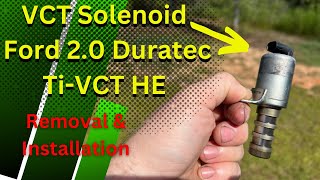
How to confirm: After checking oil, this is the next logical step. The solenoid can be removed and tested for resistance with a multimeter (typically 7-14 ohms) or activated with a 12V source to check for mechanical movement. A professional scan tool can also command the solenoid to check for a response, as recommended in TSB SSM 48423. The solenoids are located under the valve cover. 🎬 See this walkthrough for removing and installing the VCT solenoid
Typical fix: Replace the Bank 1 exhaust VCT solenoid. It's often recommended to replace both intake and exhaust solenoids at the same time. The OEM part number is CM5Z-6M280-D, which has been superseded by CM5Z-6M280-G.
Est. part cost: $30-$80 - Wiring or Connector Issue at VCT Solenoid ⚪ Low Probability → Shop Engine Variable Valve Timing (VVT) Solenoid
How to confirm: Visually inspect the wiring harness and connector leading to the VCT solenoid for any signs of damage, corrosion, or loose connections. Use a multimeter to check for continuity and proper voltage.
Typical fix: Repair or replace the damaged wiring or connector.
Est. part cost: $5-$50
Rare But Worth Checking
- Stretched Timing Chain or Failed Tensioner: → Shop Engine Timing Chain While less common, a stretched chain or bad tensioner can cause the camshaft timing to be physically off, triggering this code. This is a more serious mechanical issue that would likely present with rattling noises, especially on startup.
- Failed Camshaft Phaser: → Shop Engine Camshaft The phaser is the mechanical gear at the end of the camshaft that actually adjusts the timing. It can get clogged with sludge or fail internally, getting stuck in an advanced position. This is a more involved and expensive repair than a solenoid replacement.
Diagnosis Steps
- Verify the code with an OBD-II scanner.
- Check the engine oil level and condition. If it is low, dirty, or the wrong type, perform an oil and filter change. This simple step resolves the issue a surprising amount of the time.
- Inspect the wiring and connector for the Bank 1 exhaust VCT solenoid for any damage or loose connections.
- Using a scan tool, monitor the desired vs. actual camshaft angle for the Bank 1 exhaust cam. Command the solenoid on and off to see if the angle changes. Per TSB SSM 48423, cycle the solenoid 10 times to attempt to clear debris. If it doesn't respond correctly, the solenoid is likely faulty.
- If you don't have a scan tool, you can remove the solenoid (requires removing the valve cover). 🎬 Watch: Step-by-step VVT solenoid replacement on a Ford 2.0L engine Inspect its screens for debris. Test its resistance with a multimeter; a reading outside the 7-14 ohm range indicates failure. You can also apply 12V power to see if the internal plunger moves.
- If the solenoid and oil are good, the issue may be more severe, such as a clogged oil passage, a faulty camshaft phaser, or a problem with the timing chain. At this point, professional diagnosis is recommended.
Parts You'll Likely Need
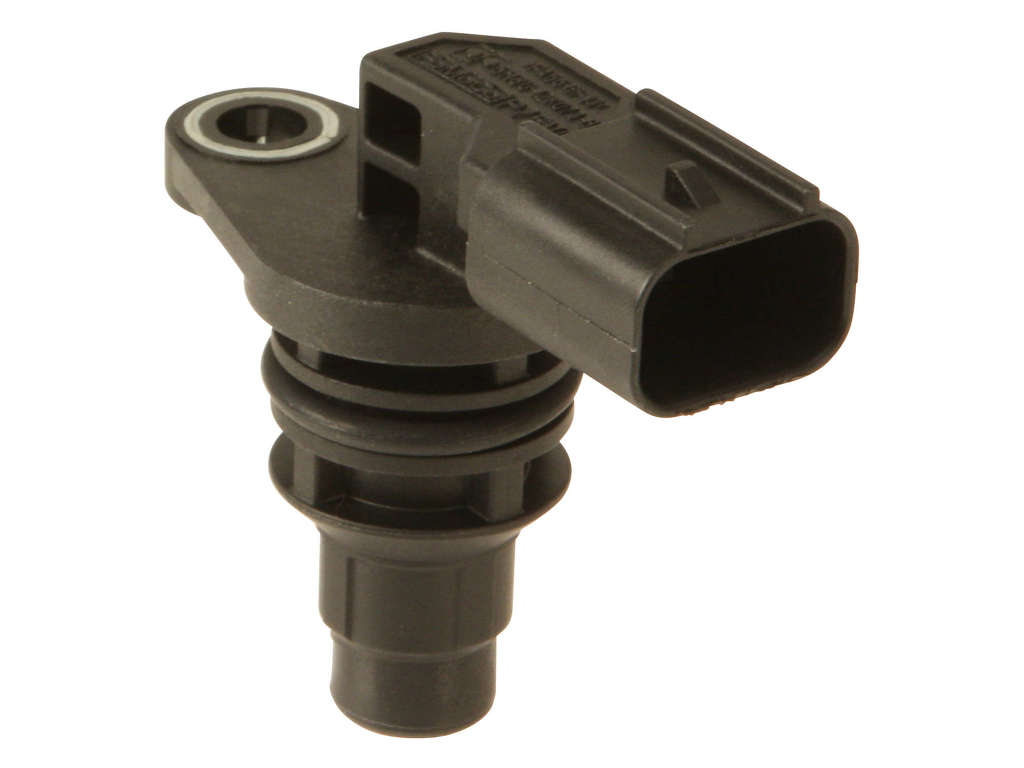
- Variable Camshaft Timing (VCT) Solenoid
(OEM #CM5Z-6M280-D (superseded by CM5Z-6M280-G))— This is the most common cause of P0014 on this vehicle, as documented by Ford TSBs. It gets stuck due to oil debris.
Trusted brands: Motorcraft, Dorman, Standard Motor Products, NGK
OEM price range: $60-$100
Aftermarket price range: $30-$80 - Engine Oil and Filter — Low, old, or incorrect viscosity oil is a primary cause of VCT system faults. An oil change is a critical first step in diagnosis and repair.
Trusted brands: Motorcraft (for filter and oil), Mobil 1, Castrol
OEM price range: $50-$90
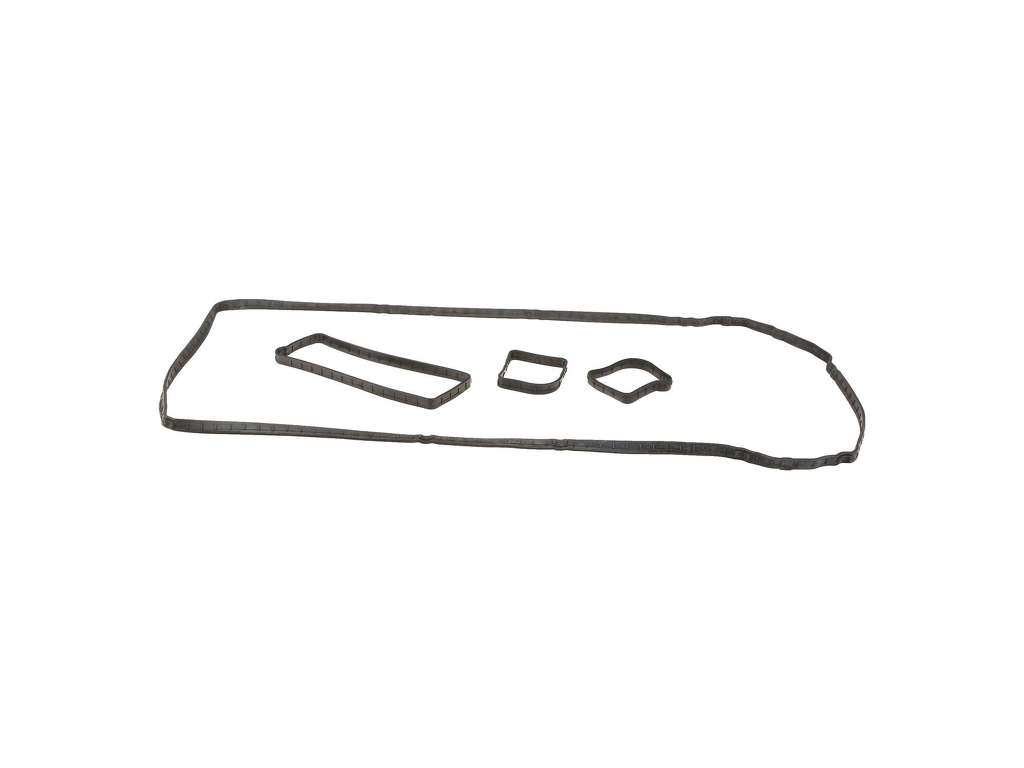
Aftermarket price range: $40-$70 - Valve Cover Gasket — The VCT solenoids are located under the valve cover on the 2.0L Duratec engine, so the gasket must be replaced as part of the job to prevent oil leaks.
Trusted brands: Motorcraft, Fel-Pro, Mahle
OEM price range: $30-$50
Aftermarket price range: $15-$30
Related Codes That Often Appear With This One
- P0011 — This is the corresponding code for the Intake ('A') camshaft on Bank 1. If both appear, it could point to a systemic oil pressure or supply issue affecting both VCT solenoids.
- P0012 — Intake ('A') Camshaft Position - Timing Over-Retarded. The TSBs group these codes together as they all relate to VCT system faults.
- P0015 — Exhaust ('B') Camshaft Position - Timing Over-Retarded. This is the opposite of P0014 and could appear if the solenoid is sticking intermittently.
Technical Service Bulletins (TSBs) & Recalls
- SSM 54366: Grouped P0014 with other VCT codes, indicating a known pattern and directing technicians to use Pinpoint Test HK for diagnosis.
- SSM 48423: Noted that small debris can cause the VCT solenoid to stick, triggering P0014. Recommends attempting to clear the solenoid by cycling it with a scan tool before replacement.
- SSM 47170: An earlier version of the bulletin also pointing to debris causing a sticking VCT solenoid.
Platform-Specific Known Issues
- TSB SSM 48423 and SSM 47170 explicitly state that on some 2015-2020 Ford vehicles, DTCs including P0014 may be present due to small debris causing the VCT solenoid to stick. The bulletins advise performing an oil and filter change and then using a scan tool to cycle the solenoid 10 times (Pinpoint Test HK11) to attempt to clear it before replacement.
- TSB SSM 54366 also lists P0014 among a group of VCT-related codes and refers technicians to pinpoint tests in the official service manual. Pinpoint Test HK is a diagnostic procedure for the VCT system, checking the solenoids, wiring, and PCM.
Mechanic-Grade Diagnostic Values
- VCT Solenoid Internal Resistance — expected: 7 to 14 Ohms. Failure: A reading of 0 Ohms (short circuit) or OL/infinite (open circuit) indicates a failed solenoid.
- VCT Solenoid Connector Voltage (Key On, Engine Off) — expected: ~12V (Battery Voltage). Failure: No voltage on the power supply pin suggests a wiring fault or an issue with the PCM power relay.
- Scan Tool PID: VCT_EXH_ERR (Exhaust Camshaft Timing Error) — expected: Should be near 0 degrees at steady idle/RPM.. Failure: A large, persistent non-zero value indicates a discrepancy between the commanded and actual cam position, confirming the fault.
- VVT System Oil Pressure — expected: Above 20 PSI at idle.. Failure: Pressure below 20 PSI can prevent the VCT phaser from actuating correctly, even with a good solenoid.
Hidden / Shadow Codes Worth Checking
- Mode 6, Test ID $53 (on some models): Monitors misfire counts per cylinder. While not directly a VCT code, a severe timing issue can cause misfires that may be logged here before setting a dedicated misfire DTC. (see via A professional scan tool with Mode 6 capabilities.)
Scan Tool Commands That Help
- Ford IDS (Integrated Diagnostic System): Pinpoint Test HK11 / HK12: VCT Solenoid ON/OFF Command — As per Ford TSBs, this command cycles the solenoid 10 times. It's used to dislodge small debris that may be causing the solenoid to stick before resorting to replacement.
- Ford IDS (Integrated Diagnostic System): Datalogger with VCT PIDs (VCT_EXH_CMD, VCT_EXH_ACT, VCT_EXH_ERR) — To monitor the commanded position, actual position, and the error between them in real-time while driving. This helps confirm if the phaser is physically stuck or not responding to commands.
- Ford IDS (Integrated Diagnostic System): Power Balance Test — While observing the power balance graph, activating the VCT solenoid should cause a noticeable change in engine operation (e.g., rough running). If there's no change, it suggests the phaser is not moving despite the solenoid being activated.
Wiring & Ground Locations
- VCT Solenoid Connector — On top of the valve cover, towards the passenger side of the engine. It is a 2-pin oval connector.. This is the connection point for testing voltage and resistance of the VCT solenoid. Damage or corrosion here will interrupt the signal from the PCM.
- G104 — A primary engine/transmission ground point, often located on the rear of the transmission housing.. A poor engine ground can cause erratic behavior in various sensors and actuators, including the VCT solenoids, leading to intermittent and hard-to-diagnose timing codes.
Real Owner Repair Stories
- YouTube channel 'South Main Auto LLC' (2012 Ford Focus 2.0L GDI (similar VCT system)) — Check Engine Light with code P0014.
❌ Tried (didn't work) A previous shop had incorrectly diagnosed the issue as a faulty PCM.
✅ What actually fixed it Using a scan tool to monitor commanded vs. actual cam position PIDs, the technician observed the PCM was commanding the exhaust cam to move, but the actual position did not change. This confirmed the solenoid was receiving the signal but the mechanical phaser was stuck. The final diagnosis was a failed camshaft phaser.
OEM Part Supersession History
CM5Z-6M280-D→CM5Z-6M280-F, then CM5Z-6M280-G— Part revision and improvement, likely for better resistance to debris and sticking.
Heads up: The latest part number, CM5Z-6M280-G, is the correct replacement for all previous versions. Note that some parts catalogs list this for the 1.0L engine, but it is also used in the 2.0L application.
Helpful Videos

We Have This Part in Stock


The information in this article is provided for general reference and educational purposes only. Vehicle specifications, procedures, and part compatibility can vary by production date, trim level, and region. Always consult your vehicle's factory service manual and verify part numbers before purchasing or performing repairs. Safety-critical components such as airbags, seat belts, and braking systems should be installed by a qualified professional.
- Ford C-MAX:
- 🧭 Diagnostic Flowchart
- 🎬 Helpful Videos
- 🛍️ Shop This Part
- What's Unique About the 2015-2018 Ford C-MAX
- Symptoms You May Notice
- Most Likely Causes
- Rare But Worth Checking
- Diagnosis Steps
- Parts You'll Likely Need
- Related Codes That Often Appear With This One
- Technical Service Bulletins (TSBs) & Recalls
- Platform-Specific Known Issues
- Mechanic-Grade Diagnostic Values
- Hidden / Shadow Codes Worth Checking
- Scan Tool Commands That Help
- Wiring & Ground Locations
- Real Owner Repair Stories
- OEM Part Supersession History
- 🎟️ Get 5% Off