

P0014 on 2015-2021 Ford Edge: Exhaust Cam Timing Over-Advanced Causes and Fixes
On a 2015-2021 Ford Edge, code P0014 is most often caused by low or dirty engine oil, or a failing Variable Camshaft Timing (VCT) solenoid. Start by checking your oil; if it's clean and full, the VCT solenoid is the next likely culprit. This is a well-known issue confirmed by Ford TSBs. Replacing the solenoid costs around $85-$120 for the part.
- P0014 on a Ford Edge means the exhaust camshaft timing on Bank 1 is over-advanced.
- The most common causes are dirty/low engine oil or a faulty VCT solenoid, both of which are relatively simple and inexpensive fixes.
- Always check oil condition first before replacing parts.
- Ford has acknowledged this issue in several Technical Service Bulletins (TSBs).
- Ignoring the code can lead to reduced performance, poor fuel economy, and potential engine damage.
What's Unique About the 2015-2021 Ford EDGE
For this generation of Ford Edge, which uses Ford's Twin Independent Variable Camshaft Timing (Ti-VCT) system, the P0014 code is a well-documented issue. Ford has issued multiple Technical Service Bulletins (TSBs) acknowledging that small debris in the engine oil can cause the VCT solenoids to stick, leading to this and other related timing codes. [SSM 48423, SSM 47170] This makes oil condition and the health of the VCT solenoid particularly critical on these engines. Unlike some other vehicles where timing chain stretch is a primary suspect, on the Edge, the diagnostic path almost always starts with oil and the VCT solenoid.
Diagnostic Flowchart
Tap your situation to follow the diagnostic path that matches what you're seeing on this vehicle.
Symptoms You May Notice
- Check Engine Light is on
- Rough or unstable idle
- Engine stalling, especially at low speeds or when stopping
- Reduced engine power and sluggish acceleration
- Worse than normal fuel economy
- Rattling, ticking, or knocking noises from the engine, especially at idle or on startup
- Replacing the camshaft position sensor when the actual problem is the VCT solenoid or dirty oil. The sensor is accurately reporting a problem, not causing it.
- Immediately assuming a stretched timing chain without first diagnosing the much more common oil and VCT solenoid issues.
Most Likely Causes
- Low or Dirty Engine Oil 🔴 High Probability The Ti-VCT system is entirely dependent on clean engine oil of the correct viscosity to function. Ford's own TSBs (SSM 48423, SSM 47170) directly state that debris or sludge in the oil is a primary cause for the VCT solenoid sticking, which triggers this code. Many owner experiences confirm that an overdue oil change is all it takes to set the code.
How to confirm: Check the engine oil level on the dipstick and examine its color and consistency. If the level is low or the oil is dark, gritty, or sludgy, it needs to be changed.
Typical fix: Change the engine oil and filter using the correct OEM-specified viscosity oil (e.g., SAE 5W-30 for many EcoBoost engines). Clear the codes and test drive.
Est. part cost: $40-$80 - Faulty Variable Camshaft Timing (VCT) Solenoid 🔴 High Probability → Shop Engine Camshaft This is the component directly implicated in the manufacturer TSBs. It's an electro-hydraulic valve that gets clogged with debris or fails electrically, causing it to stick in the advanced position. [SSM 48423, SSM 47170] It is the most commonly replaced part for this code on Ford platforms.
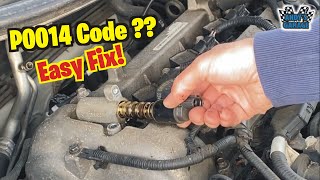
How to confirm: Remove the solenoid and inspect its screens for debris or sludge. It can be tested with a multimeter for correct resistance (typically 6-12 ohms). 🎬 Watch this video for a deep dive into diagnosing P0014. A professional scan tool can command the solenoid to cycle on and off to see if it clicks and affects engine idle (this is part of Ford's recommended 'Pinpoint Test HK').
Typical fix: Cleaning the solenoid with a suitable cleaner is sometimes effective as a temporary measure, but replacement is the more reliable and recommended fix.
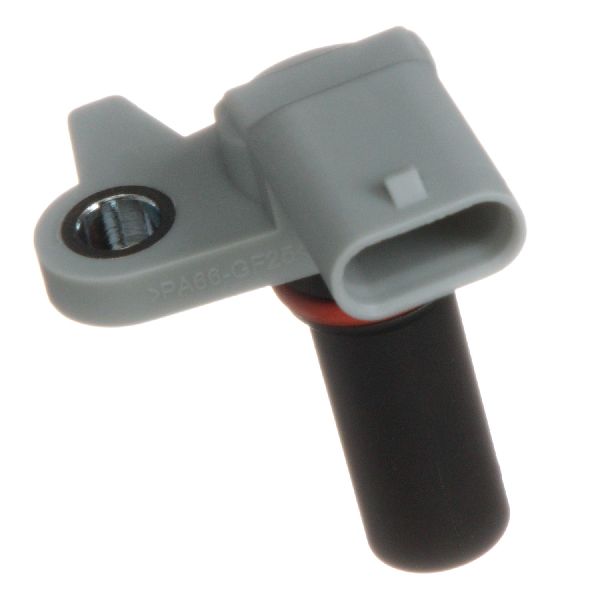
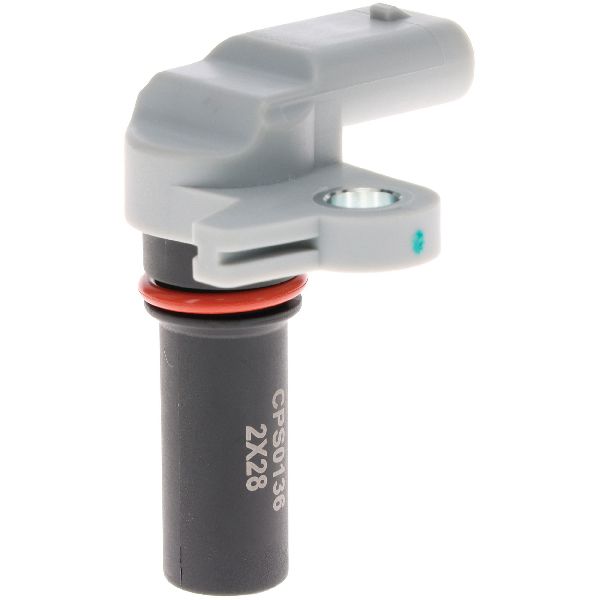
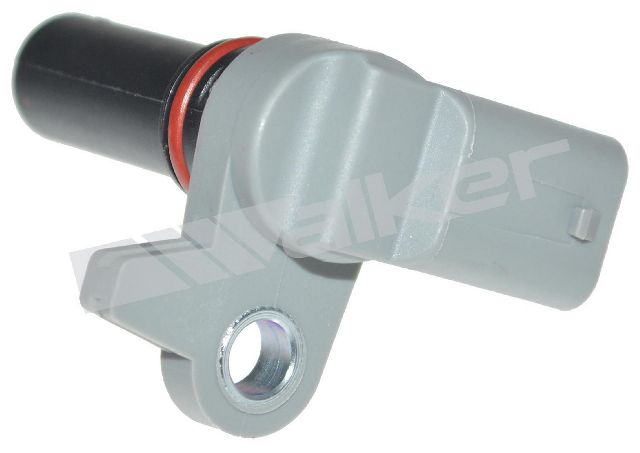
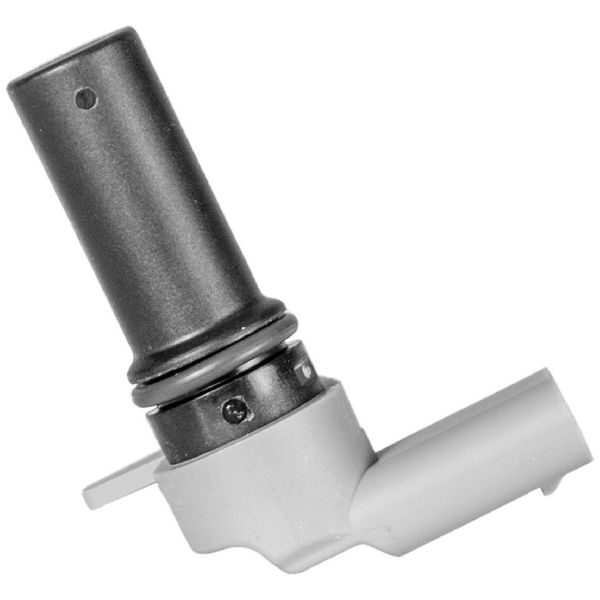
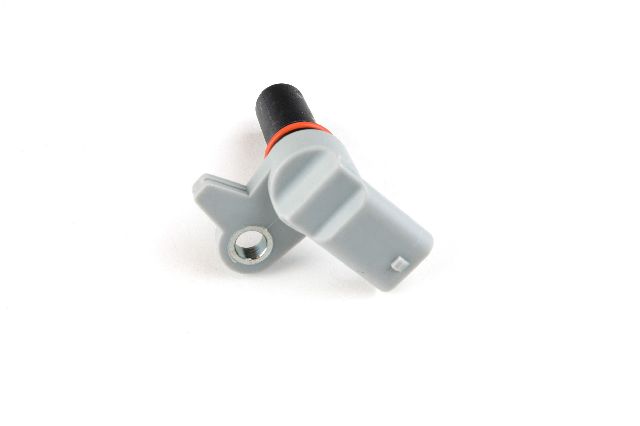
Est. part cost: $85-$120 - Faulty Camshaft Position Sensor ⚪ Low Probability → Shop Engine Camshaft Position Sensor
How to confirm: The sensor is providing the data that sets the code, so it's usually working correctly. However, if the VCT solenoid and oil are confirmed good, the sensor's wiring and signal can be checked with a multimeter or oscilloscope. A failure of this sensor usually triggers its own specific codes.
Typical fix: Replace the Bank 1 exhaust camshaft position sensor.
Est. part cost: $20-$50
Rare But Worth Checking
- Stretched Timing Chain or Failed Phaser: → Shop Engine Timing Chain While less common than oil or solenoid issues, significant mechanical wear can cause timing to be physically out of range. This is a more serious and expensive repair, often accompanied by persistent rattling noises on startup that don't go away. Diagnosis requires checking for timing mark alignment, which is a labor-intensive job.
- Wiring Harness Issues: On some engines, particularly the 2.7L, the engine wiring harness can rub against other components, causing chafing and short circuits that can affect the VCT solenoid's operation. A visual inspection of the harness where it crosses the valve covers is warranted if other diagnoses fail.
Diagnosis Steps
- Verify the code with an OBD-II scanner.
- Check the engine oil level and condition. If low, dirty, or the incorrect viscosity, perform an oil and filter change with manufacturer-specified oil. Clear codes and re-test.
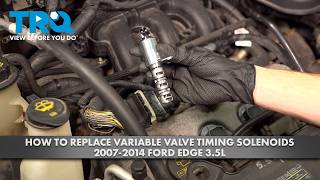
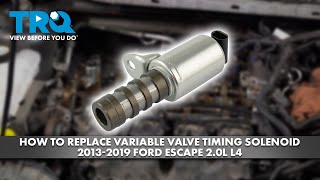
- If the oil is fine, locate the Bank 1 exhaust VCT solenoid. On 4-cylinder engines, it's on the cylinder head. 🎬 Watch: Step-by-step VCT solenoid replacement on the 2.0L engine. On V6 engines, Bank 1 is the bank closer to the radiator. 🎬 See how to access and replace solenoids on V6 models. The exhaust solenoid is typically the rearmost solenoid on the bank.
- Inspect the solenoid's electrical connector for damage, corrosion, or oil intrusion.
- Remove the VCT solenoid (typically a single 10mm bolt). Inspect the small mesh screens on the solenoid for sludge or metallic debris. Clogged screens are a definitive sign of a problem.
- You can attempt to clean the solenoid with mass air flow sensor cleaner or a similar solvent, but replacement is the recommended and more permanent fix.
- Optional: Test the old solenoid's resistance with a multimeter (should be ~6-12 ohms) or apply 12V to see if the internal plunger actuates (clicks).
- If a new solenoid and fresh oil do not resolve the code, the next steps involve more in-depth mechanical diagnosis. This includes checking the camshaft phaser and timing chain for wear and proper alignment, which may require a professional mechanic.
- For 2.7L engines, visually inspect the engine wiring harness for any signs of chafing where it crosses the valve covers.
Parts You'll Likely Need
- Engine Variable Camshaft Timing (VCT) Solenoid
(OEM #CM5Z-6M280-C (For 2.0L Non-Turbo, verify for EcoBoost), BL3Z-6M280-B or 7T4Z-6M280-C (Common for V6 models, verify by VIN))— This is the part most frequently responsible for the code, as it gets clogged with debris from engine oil and sticks, per Ford TSBs. [SSM 48423] The part number varies by engine.
Trusted brands: Motorcraft (OEM), Dorman, Standard Motor Products (SMP)
OEM price range: $90-$120
Aftermarket price range: $40-$80
Related Codes That Often Appear With This One
- P0011 — Intake camshaft timing over-advanced on the same bank. Often caused by the same oil quality issues or a failing intake VCT solenoid.
- P0015 — Exhaust camshaft timing over-retarded on the same bank. Can indicate a VCT solenoid that is sticking intermittently in both directions or has failed entirely.
- P0024 — Exhaust camshaft timing over-advanced on Bank 2 (on V6 engines). If both P0014 and P0024 are present, it strongly points to a systemic issue like old/dirty oil or low oil pressure affecting both banks, rather than a single failed part.
- P0012, P0022 — Over-retarded codes for Bank 1 and Bank 2 intake cams. Seeing all four timing codes (P0012, P0014, P0022, P0024) together is a very strong indicator of severe oil sludging or low oil pressure.
Technical Service Bulletins (TSBs) & Recalls
- SSM 54366: Notes P0014 among a list of VCT codes and refers to specific diagnostic tests.
- SSM 48423: States that P0014 may be due to small debris causing the VCT solenoid to stick.
- SSM 47170: An earlier version of the TSB, also citing debris in the VCT solenoid as a likely cause for P0014.
Platform-Specific Known Issues
- TSB SSM 48423 and SSM 47170 note that for some 2015-2020 Ford vehicles, DTCs including P0014 may be caused by small debris making the VCT solenoid stick. The bulletins advise on diagnostic procedures before attempting major repairs.
- TSB SSM 54366 is a broader bulletin covering 2015-2021 vehicles and lists P0014 among many other VCT-related codes, pointing towards a pinpoint test in the service manual for diagnosis.
- On 2.0L EcoBoost engines, this code can sometimes appear alongside coolant consumption issues, which may point to a more serious head gasket problem outlined in TSB 19-2208, though this is less common than VCT issues.
Mechanic-Grade Diagnostic Values
- VCT Solenoid Internal Resistance — expected: 6.0 - 12.0 Ohms. Failure: A reading outside this range, or an open circuit (infinite resistance), indicates a failed solenoid coil.
- VCT Solenoid Connector Voltage (Key On, Engine Off) — expected: Battery voltage (approx. 12V) on the power supply pin.. Failure: No voltage indicates a problem with the wiring or the fuse in the Battery Junction Box.
- Scan Tool Live Data: VCT Position Error (e.g., VCT_EXH_DIF1 for Bank 1 Exhaust) — expected: Close to 0 degrees at idle, with minor fluctuations.. Failure: Large, erratic fluctuations, or a value that is consistently high and does not respond to changes in desired cam position, points to a sticking solenoid or phaser.
Scan Tool Commands That Help
- Ford IDS, FORScan, or equivalent professional scan tool: VCT Solenoid On/Off State or Duty Cycle Control (part of Pinpoint Test HK) — This bidirectional control is used to command the solenoid to cycle on and off (often 10 times). It helps determine if the solenoid is electrically responsive and can sometimes dislodge small debris, potentially fixing the issue without parts replacement, as recommended in Ford's service bulletins.
Wiring & Ground Locations
- VCT Solenoid Connector — Plugged into the top of the VCT solenoid, which is mounted on the valve cover.. This connector provides power and control signals. Pin 1 is typically the power supply wire (often blue/green) from a fuse in the battery junction box. Pin 2 is the control wire, which the PCM grounds to activate the solenoid. Checking for power at Pin 1 and continuity to the PCM on Pin 2 is a key electrical diagnostic step.
Real Owner Repair Stories
- Ford F150 Forum user (Ford F-150 with 5.0L V8 (Note: Different vehicle, but uses the same Ti-VCT technology and diagnostic principles)) — Rough idle, occasional stalling at stops, and a P0022 code (Bank 2 equivalent of P0014) only after the engine gets very hot.
❌ Tried (didn't work) Initial observation without data.
✅ What actually fixed it The user captured FORScan data showing the Bank 2 intake cam position swinging wildly and being slow to react, while other cams were stable. Forum experts identified this as classic behavior for a failing VCT solenoid. The recommended and confirmed fix was to replace the VCT solenoids on the affected bank with new OEM Motorcraft parts.
OEM Part Supersession History
3L3Z-6M280-EA, 8L3Z-6M280-A→8L3Z-6M280-B— Part revision and improvement by the manufacturer.
Heads up: Some part supersessions may require new electrical connectors (pigtails) to be spliced onto the vehicle's wiring harness. This can introduce a point of failure if not done correctly and can lead to multiple simultaneous fault codes if the issue affects a shared power or ground wire.
Model Year Variations Within This Range
- 2015-2018: These model years offered the 2.0L EcoBoost I4, 2.7L EcoBoost V6, and the naturally aspirated 3.5L Duratec V6. The VCT solenoids and their locations differ between these engine families.
- 2019-2021: After the 2019 refresh, the 3.5L V6 was discontinued. The standard engine became an updated 2.0L EcoBoost I4, and the 2.7L EcoBoost V6 was reserved for the new Edge ST performance model. Diagnostic procedures are similar, but part numbers for the VCT system components will be specific to the engine installed.
Helpful Videos

We Have This Part in Stock


The information in this article is provided for general reference and educational purposes only. Vehicle specifications, procedures, and part compatibility can vary by production date, trim level, and region. Always consult your vehicle's factory service manual and verify part numbers before purchasing or performing repairs. Safety-critical components such as airbags, seat belts, and braking systems should be installed by a qualified professional.
- Ford EDGE:
- 🧭 Diagnostic Flowchart
- 🎬 Helpful Videos
- 🛍️ Shop This Part
- What's Unique About the 2015-2021 Ford EDGE
- Symptoms You May Notice
- Most Likely Causes
- Rare But Worth Checking
- Diagnosis Steps
- Parts You'll Likely Need
- Related Codes That Often Appear With This One
- Technical Service Bulletins (TSBs) & Recalls
- Platform-Specific Known Issues
- Mechanic-Grade Diagnostic Values
- Scan Tool Commands That Help
- Wiring & Ground Locations
- Real Owner Repair Stories
- OEM Part Supersession History
- Model Year Variations Within This Range
- 🎟️ Get 5% Off