

P0014 on 2015-2019 Ford Flex: Exhaust Cam Timing Over-Advanced Causes & Fixes
On a 2015-2019 Ford Flex, code P0014 is most often caused by a sticking exhaust VCT solenoid on Bank 1, frequently due to oil contamination or low oil levels. Replacing the VCT solenoid is the most common fix and is a DIY-friendly job for the front bank (Bank 2), but more involved for the rear bank (Bank 1). An oil change is a critical first step.
- P0014 on a 2015-2019 Ford Flex almost always points to an issue with the Bank 1 exhaust VCT solenoid.
- Before replacing any parts, check your engine oil. Low or dirty oil is a common cause and an easy fix.
- The most likely repair is replacing the VCT solenoid, which is an affordable part and a manageable DIY job.
- Do not immediately suspect a major timing chain or phaser failure; Ford TSBs strongly suggest the solenoid is the primary culprit.
- Swapping the suspect solenoid with a known good one is the fastest way to confirm the diagnosis.
What's Unique About the 2015-2019 Ford FLEX
The Ford Flex, particularly with the 3.5L engine family (Cyclone and EcoBoost), is subject to multiple Technical Service Bulletins (TSBs) related to this exact code. The TSBs from Ford indicate that the VCT solenoids are prone to sticking due to small debris in the engine oil. This is a crucial distinction, as the problem is often the relatively inexpensive solenoid and not a more catastrophic failure of the camshaft phaser or timing chain. Ford's own TSBs even suggest a procedure to cycle the solenoid with a scan tool to dislodge debris before replacement.
Diagnostic Flowchart
Tap your situation to follow the diagnostic path that matches what you're seeing on this vehicle.
Symptoms You May Notice
- Check Engine Light is on
- Rough idle or stalling
- Poor acceleration and reduced engine power
- Decreased fuel economy
- Rattling or ticking noise from the engine, especially on startup
- Hard starting
- Replacing the camshaft position sensor. The sensor is usually doing its job correctly by reporting that the timing is off. The code points to a mechanical/hydraulic problem with the timing system, not an electrical fault with the sensor itself.
Most Likely Causes
- Sticking or Failed VCT Solenoid 🔴 High Probability → Shop Engine Variable Valve Timing (VVT) Solenoid Ford has issued multiple TSBs (SSM 48423, SSM 47170) stating this is a common issue caused by oil debris. The fine mesh screens on the solenoids can become clogged, impeding oil flow and causing the solenoid to stick.
How to confirm: Use a scan tool to monitor desired vs. actual cam angle. Swap the Bank 1 exhaust solenoid with another (e.g., intake or Bank 2 exhaust) and see if the code follows the solenoid's new position. TSB SSM 48423 also recommends using a scan tool to cycle the solenoid 10 times to try and clear debris.
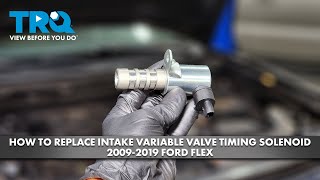
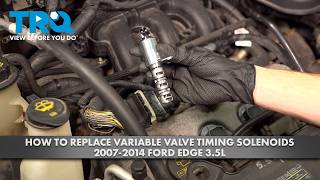
Typical fix: Replace the Bank 1 exhaust VCT solenoid. 🎬 Watch: How to test and fix the P0014 exhaust timing code. Since accessing Bank 1 requires removing the intake manifold, many owners replace both the intake and exhaust solenoids on that bank at the same time.
Est. part cost: $25-$75 - Low or Dirty Engine Oil 🟡 Medium Probability The VCT system is entirely dependent on oil pressure and cleanliness. Extended oil change intervals can lead to sludge and debris that clog the narrow passages and screens of the VCT solenoids. Forum users have reported fixing timing codes simply by performing an engine flush and oil change.
How to confirm: Check the oil level on the dipstick and inspect its condition. If it's low, dark, sludgy, or past the recommended change interval, it's a likely contributor.
Typical fix: Perform an oil and filter change using the correct viscosity oil specified by Ford (typically 5W-30 for the 3.5L EcoBoost). Some owners perform an engine flush before the oil change to help clear sludge.
Est. part cost: $40-$80 - Failed Camshaft Phaser ⚪ Low Probability → Shop Engine Camshaft While less common than a solenoid failure for an isolated P0014 code, the phaser itself can fail or seize in the advanced position due to internal wear or oil starvation. This is a more common issue on higher-mileage EcoBoost engines, often accompanied by a startup rattle. 🎬 See this breakdown of the EcoBoost cam phaser rattle and fix.
How to confirm: This is typically diagnosed after confirming the VCT solenoid and oil are good. Diagnosis often requires an oscilloscope or partial engine disassembly to inspect the timing components.
Typical fix: Replace the camshaft phaser, timing chain, and related guides, which is a labor-intensive job.
Est. part cost: $100-$250
Rare But Worth Checking
- Stretched Timing Chain: → Shop Engine Timing Chain While a stretched chain can cause timing codes, it would more commonly set correlation codes like P0016. However, if wear is just beginning, it could potentially trigger P0014 first. This is a known issue on the 3.5L EcoBoost platform.
- Wiring Harness Damage: Damage or corrosion in the wiring or connector for the VCT solenoid can cause it to malfunction, leading to this code. This should be visually inspected during diagnosis, especially the harness section near the firewall for Bank 1.
Diagnosis Steps
- Verify the engine oil level and condition. If low or dirty, perform an oil and filter change with the correct Ford-specified oil and filter, clear the code, and re-test.
- Use a diagnostic scan tool to read freeze frame data and check for any other stored trouble codes.
- With the scan tool, monitor the PIDs for desired vs. actual camshaft position for Bank 1 Exhaust. An over-advanced reading confirms the issue.
- As per Ford TSB SSM 48423, use the scan tool's functional commands to cycle the Bank 1 exhaust VCT solenoid on and off 10 times. This may dislodge debris and resolve the issue. Listen for a click and watch for a change in engine idle.
- A common and effective test is to swap the Bank 1 exhaust solenoid with the Bank 1 intake solenoid (or the Bank 2 exhaust solenoid). Clear the codes and drive the vehicle. If the code changes to P0011 (intake) or P0024 (Bank 2 exhaust), the solenoid is confirmed to be faulty.
- If the code does not move, inspect the wiring and connector at the solenoid for damage, corrosion, or loose pins. The Bank 1 connector is on the firewall side of the engine.
- If the solenoid and wiring are good, the issue may be with the camshaft phaser or, less likely, the timing chain itself, which requires more advanced mechanical diagnosis.
Parts You'll Likely Need
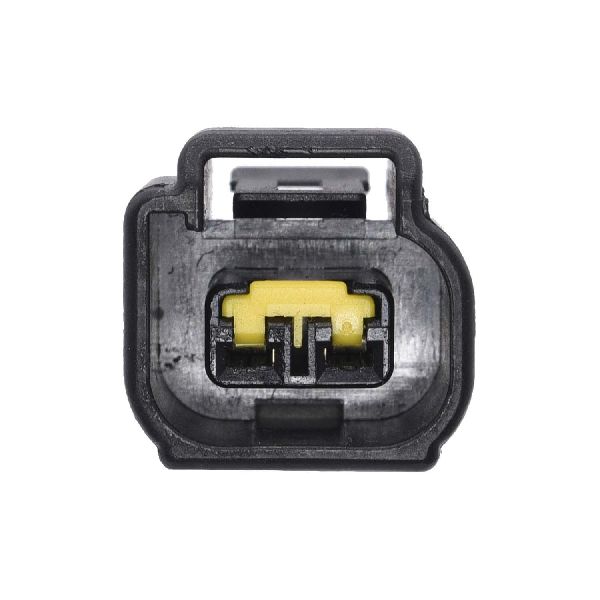
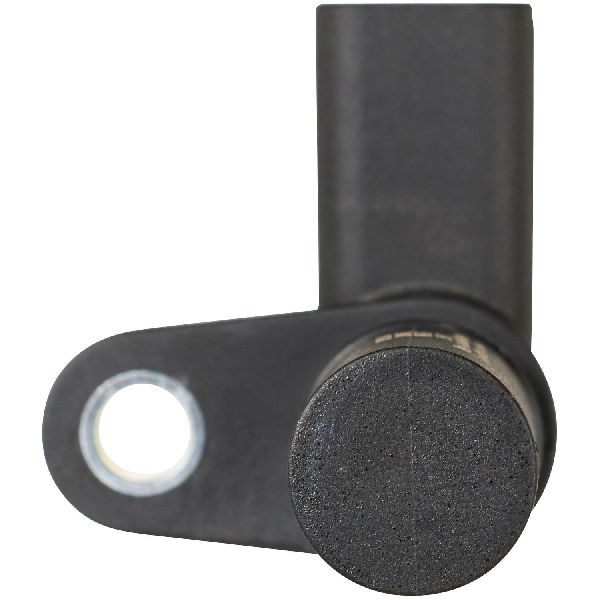
- Engine Variable Camshaft Timing (VCT) Solenoid
(OEM #7T4Z-6M280-C)— This is the most frequent point of failure for code P0014 on this vehicle, as documented by Ford's own service bulletins. It gets stuck due to oil debris.
Trusted brands: Motorcraft, Standard Motor Products, Dorman
OEM price range: $50-$90
Aftermarket price range: $25-$60 - Engine Oil and Filter — Clean oil of the correct viscosity is critical for the VCT system to function. An oil change is a prerequisite for proper diagnosis and a potential fix.
Trusted brands: Motorcraft, Mobil 1, Castrol
OEM price range: $50-$90
Aftermarket price range: $40-$80 - Upper Intake Manifold Gaskets — Required when replacing the Bank 1 (firewall side) VCT solenoids, as the intake manifold must be removed for access. 🎬 Watch: Step-by-step guide to replacing the intake VVT solenoid.
Trusted brands: Motorcraft, Fel-Pro
OEM price range: $20-$40
Aftermarket price range: $15-$30
Related Codes That Often Appear With This One
- P0011 — Intake camshaft timing over-advanced on the same bank (Bank 1).
- P0024 — The same issue (exhaust cam over-advanced) but on the opposite bank (Bank 2).
- P054A — A more specific code indicating a cold start camshaft position timing issue, often related to the same VCT system components.
- P0016 — Crankshaft/Camshaft correlation code, which can appear if timing chain stretch becomes more severe.
Technical Service Bulletins (TSBs) & Recalls
- SSM 48423
- SSM 54366
- SSM 47170
Platform-Specific Known Issues
- Ford Technical Service Bulletin SSM 48423 notes that DTCs like P0014 on 2015-2020 models may be due to small debris causing the VCT solenoid to stick. It specifically recommends attempting to clear the debris by cycling the solenoid with a scan tool before replacement.
- Ford Technical Service Bulletin SSM 47170 reiterates the same issue for 2018 models, pointing to debris as the cause for a sticking VCT solenoid.
- Ford Technical Service Bulletin SSM 54366 directs technicians to a specific pinpoint test (HK) in the service manual for diagnosing a group of VCT codes including P0014, indicating a well-documented problem.
- Access to the Bank 1 solenoids (firewall side) is significantly more difficult than Bank 2 (radiator side), requiring removal of the upper intake manifold. This adds considerable labor time and complexity to the repair.
Mechanic-Grade Diagnostic Values
- VCT Solenoid Internal Resistance — expected: 7.8 Ohms (example from a similar Ford engine). General specs are often 5-15 Ohms.. Failure: A reading of 0 Ohms (short circuit) or infinite/OL (open circuit).
- VCT Solenoid Power Supply Voltage — expected: Battery voltage (approx. 12.0-12.6V) with key on, engine off.. Failure: Significantly lower or no voltage indicates a wiring or fuse issue before the solenoid.
- VCT Solenoid Bolt Torque — expected: 89 in-lbs (approx. 7.5 ft-lbs). Failure: Over-tightening can damage the solenoid or valve cover; under-tightening can cause oil leaks.
Scan Tool Commands That Help
- Ford IDS (Integrated Diagnostic System): VCT Solenoid Duty Cycle PID (VCT_DSD) — To monitor the PCM's commanded duty cycle to the solenoid. If the PCM is commanding a high duty cycle on one bank but the cam angle isn't changing, it points to a mechanical/hydraulic issue (stuck solenoid, bad phaser).
- Ford IDS (Integrated Diagnostic System): VCT Advance Error PID (VCT_ERR) — This PID directly shows the difference between the desired and actual camshaft angle. A persistent error value outside of a few degrees at idle or under load confirms a timing problem.
- Ford IDS (or high-end bidirectional scanner): VCT Solenoid On/Off Command — As mentioned in TSBs, this command manually cycles the solenoid. It's used to test the solenoid's mechanical function (an audible click should be heard) and to potentially dislodge debris causing it to stick.
Wiring & Ground Locations
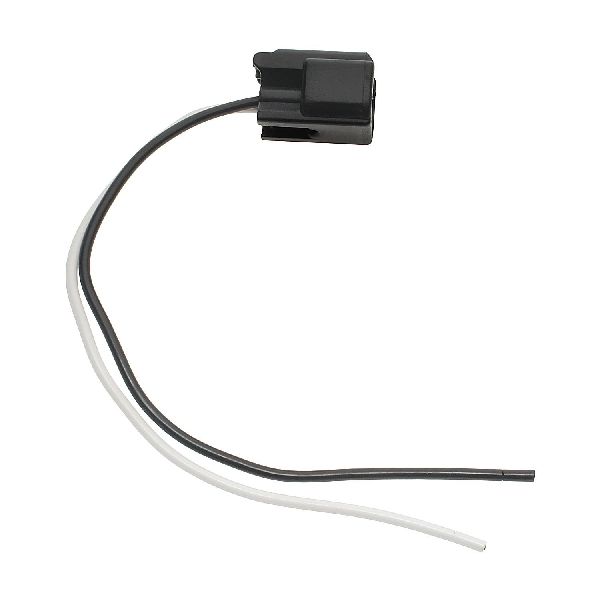
- Bank 1 VCT Solenoid Connectors — On the rear valve cover (firewall side) of the 3.5L V6 engine. Access requires removing the upper intake manifold.. This is the location of the exhaust ('B') VCT solenoid for Bank 1. The connector and its wiring are common points for inspection for damage or corrosion when diagnosing P0014.
- Bank 1 Solenoid Colors (Typical) — On the Bank 1 (rear) valve cover.. On many 3.5L engines, the intake and exhaust solenoids are color-coded. For the rear bank, the exhaust solenoid (related to P0014) often has a gray or white connector, while the intake has a different color. This helps in correct identification during replacement.
Real Owner Repair Stories
- Reddit user, r/MechanicAdvice (2013 F-150 3.5L EcoBoost (engine platform shared with Flex)) — Check engine light with codes P0014, P054A (cold start timing), and P0151 (O2 sensor). Also had the common timing chain rattle on startup.
❌ Tried (didn't work) The owner first had a complete timing chain kit replacement performed for $2900.
✅ What actually fixed it The timing chain job resolved the P0014 code, but codes P054A and P0151 returned after 200 miles. This indicates that while the chain was likely a contributor, the VCT solenoids were also part of the overall problem, as P054A is directly related to their function on cold starts. The story highlights that a full timing job may be necessary but might not resolve all related VCT codes if the solenoids themselves are also faulty.
OEM Part Supersession History
7T4Z-6M280-A, 7T4Z-6M280-AA, 7T4Z-6M280-B→7T4Z-6M280-C— Part revision and improvement by Ford.
Heads up: 7T4Z-6M280-C is the most current replacement for the older versions and should be compatible.7T4Z-6M280-C (Black or Gray connector)→AT4Z-6M280-C (Blue connector)— Updated design for specific applications, often related to exhaust positions.
Heads up: While the base number is similar, the prefix (AT4Z vs 7T4Z) and the connector color (e.g., blue, gray, black) are critical. The solenoids are often position-specific (intake vs. exhaust, bank 1 vs. bank 2) and may have different keyed connectors to prevent incorrect installation. Always verify the correct part number and color for the specific position (Bank 1 Exhaust) using the vehicle's VIN.
Helpful Videos


We Have This Part in Stock


The information in this article is provided for general reference and educational purposes only. Vehicle specifications, procedures, and part compatibility can vary by production date, trim level, and region. Always consult your vehicle's factory service manual and verify part numbers before purchasing or performing repairs. Safety-critical components such as airbags, seat belts, and braking systems should be installed by a qualified professional.
- Ford FLEX:
- 🧭 Diagnostic Flowchart
- 🎬 Helpful Videos
- 🛍️ Shop This Part
- What's Unique About the 2015-2019 Ford FLEX
- Symptoms You May Notice
- Most Likely Causes
- Rare But Worth Checking
- Diagnosis Steps
- Parts You'll Likely Need
- Related Codes That Often Appear With This One
- Technical Service Bulletins (TSBs) & Recalls
- Platform-Specific Known Issues
- Mechanic-Grade Diagnostic Values
- Scan Tool Commands That Help
- Wiring & Ground Locations
- Real Owner Repair Stories
- OEM Part Supersession History
- 🎟️ Get 5% Off