

P0014 on 2012-2018 Ford Focus 2.0L: Exhaust Cam Timing Causes and Fixes
On a 2012-2018 Focus 2.0L, P0014 is almost always caused by low/dirty engine oil or a faulty exhaust VCT solenoid. Start with an oil and filter change using 5W-20 oil; if that doesn't work, the solenoid is the next likely culprit, costing around $30-$90 for the part. Replacement requires removing the valve cover, so it's a moderately involved DIY job.
- P0014 on a 2.0L Focus points to the exhaust camshaft timing being too far advanced.
- Always start with the cheapest and easiest fix: an oil and filter change using the correct 5W-20 oil.
- The most common failed part is the exhaust VCT solenoid. A definitive DIY test is to swap it with the identical intake solenoid and see if the code changes to P0011.
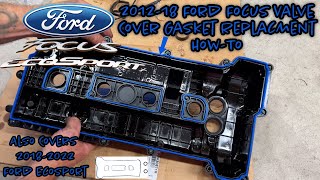
- Replacing the solenoid on this engine requires removing the valve cover, so you must also replace the valve cover gasket.
- If an oil change and solenoid replacement do not fix the code, the problem is likely more serious (timing chain/phaser) and may require a professional mechanic.
What's Unique About the 2012-2018 Ford Focus
The VCT system on the 2.0L GDI Ti-VCT engine in the third-generation Focus is known to be highly sensitive to oil quality and level. Ford has issued multiple Technical Service Bulletins (TSBs), like SSM 48423 and SSM 50067, acknowledging that small debris in the oil can cause the VCT solenoids to stick, triggering codes like P0014. Unlike many other engines where these solenoids are easily accessible, on the 2.0L Focus they are located underneath the valve cover, making replacement a more involved job that also requires a new valve cover gasket.
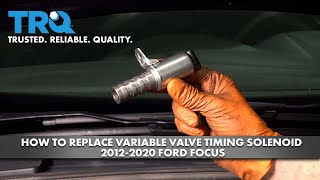
🎬 Watch: Step-by-step guide to replacing the VVT solenoid.Symptoms You May Notice
- Check Engine Light is on
- Rough idling
- Engine stalling or hesitating, especially at low speeds
- Reduced engine power and sluggish acceleration
- Decreased fuel economy
- A rattling or whirring sound from the engine
- Replacing the camshaft position sensor. While a sensor can fail, it typically produces a different set of codes. For P0014, the issue is that the cam is actually in the wrong position, not that the sensor is reading it incorrectly.
- Replacing the PCM. This is a very rare cause and should only be considered after all other mechanical and electrical possibilities have been exhaustively ruled out by a professional.
Most Likely Causes
- Low, Dirty, or Incorrect Viscosity Engine Oil 🔴 High Probability The Ford 2.0L GDI engine's VCT system is hydraulically operated and very sensitive to oil pressure and cleanliness. Ford TSBs confirm that oil debris is a primary cause of VCT issues. Using oil other than the specified 5W-20 can also cause improper VCT operation.
How to confirm: Check the oil level on the dipstick. Note the oil's color and consistency. If it is low, very dark, or past its recommended change interval, it should be replaced.
Typical fix: Perform an engine oil and filter change using the manufacturer-specified 5W-20 synthetic blend or full synthetic oil and a quality filter (e.g., Motorcraft FL-910S).
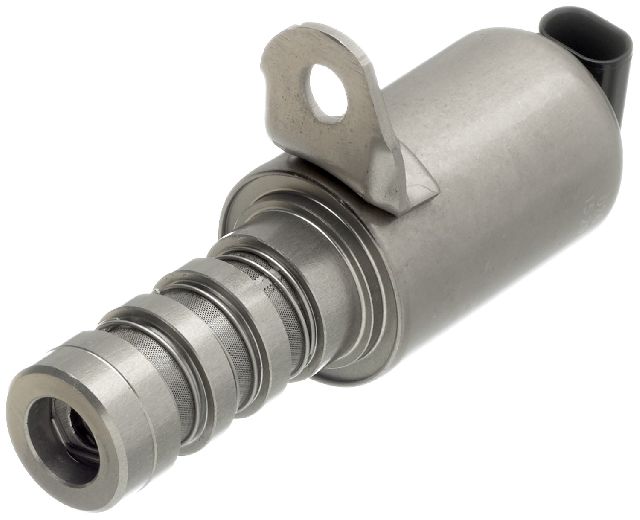
Est. part cost: $30-$70 - Failing Exhaust VCT Solenoid (Oil Control Valve) 🔴 High Probability → Shop Engine Variable Valve Timing (VVT) Solenoid The solenoids can get stuck from oil contamination or simply fail electrically over time. This is the most commonly replaced component for this code after an oil change doesn't resolve the issue.
How to confirm: Swap the exhaust VCT solenoid with the identical intake VCT solenoid. Clear the codes and run the engine. If the code changes to P0011 (Intake 'A' Camshaft Position Timing Over-Advanced), the solenoid is faulty. This is the most definitive DIY test.
Typical fix: Replace the exhaust VCT solenoid. Since it's under the valve cover, the valve cover gasket set must also be replaced. Many owners on forums recommend replacing both solenoids at the same time since the labor is the same.
Est. part cost: $25-$90
Rare But Worth Checking
- Stretched Timing Chain or Failed Phaser: → Shop Engine Timing Chain If an oil change and new solenoid do not fix the issue, the problem may be mechanical with the timing chain or the camshaft phaser itself. This is a more serious and expensive repair that often requires professional service. A stuck phaser was identified as the cause in one detailed diagnostic video.
- Damaged Wiring or Poor Connection: Check the wiring harness leading to the VCT solenoid for any signs of damage, corrosion, or oil saturation in the connector, although this is less common than the solenoid itself failing.
- Faulty Powertrain Control Module (PCM): Extremely rare, but not impossible. In one documented case on a 2012 Focus, a shop replaced the PCM to fix a P0014 after verifying the solenoid and wiring were receiving the correct signals but the cam wasn't moving. This should be the absolute last resort.
Diagnosis Steps
- Read the code with an OBD-II scanner to confirm P0014.
- Check the engine oil level and condition. If it is low, dirty, or the wrong viscosity, perform an oil and filter change with 5W-20 oil, clear the codes, and test drive.
- If the code returns, the next step is to test the VCT solenoid. Since the solenoids are under the valve cover on this engine, the most definitive test is to swap the intake and exhaust solenoids.
- Remove the valve cover. The two VCT solenoids will be visible at the top of the head. The exhaust solenoid is the 'B' solenoid, typically the one on the exhaust manifold side.
- Swap the positions of the two identical solenoids.
- Reinstall the valve cover (using the old gasket for a temporary test is acceptable, but a new one is required for the final repair). Clear the codes and start the engine.
- If the code changes to P0011, you have confirmed the solenoid is bad. Purchase a new solenoid (or a pair) and a new valve cover gasket set for the final repair.
- If the code remains P0014 after the swap, the problem is not the solenoid. The issue lies in the wiring, the cam phaser, or the timing chain system, which may require professional diagnosis.
Parts You'll Likely Need
- Engine Variable Valve Timing (VVT) Solenoid
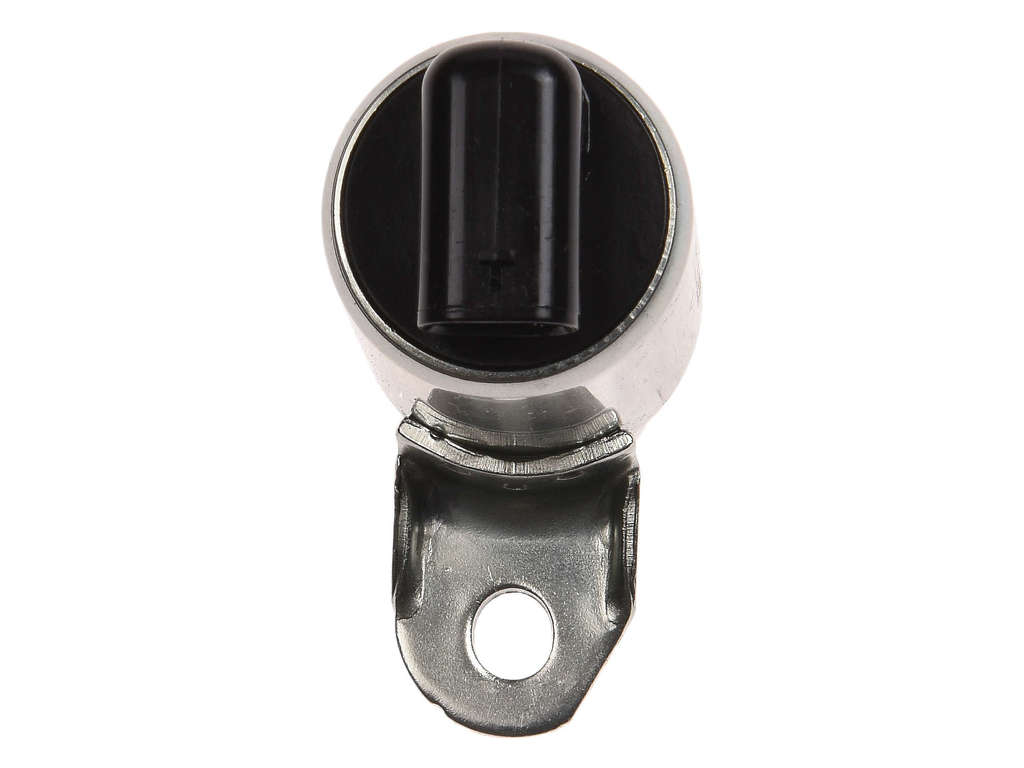
(OEM #CJ5Z-6M280-A / CM5Z-6M280-C)— This solenoid controls oil flow to the cam phaser and is the most common component to fail or stick due to oil debris, causing the P0014 code. The intake and exhaust solenoids are the same part. The part number has been updated over time.
Trusted brands: Motorcraft, Dorman, Standard Motor Products (SMP), NGK
OEM price range: $40-$90
Aftermarket price range: $25-$60 - Valve Cover Gasket Set
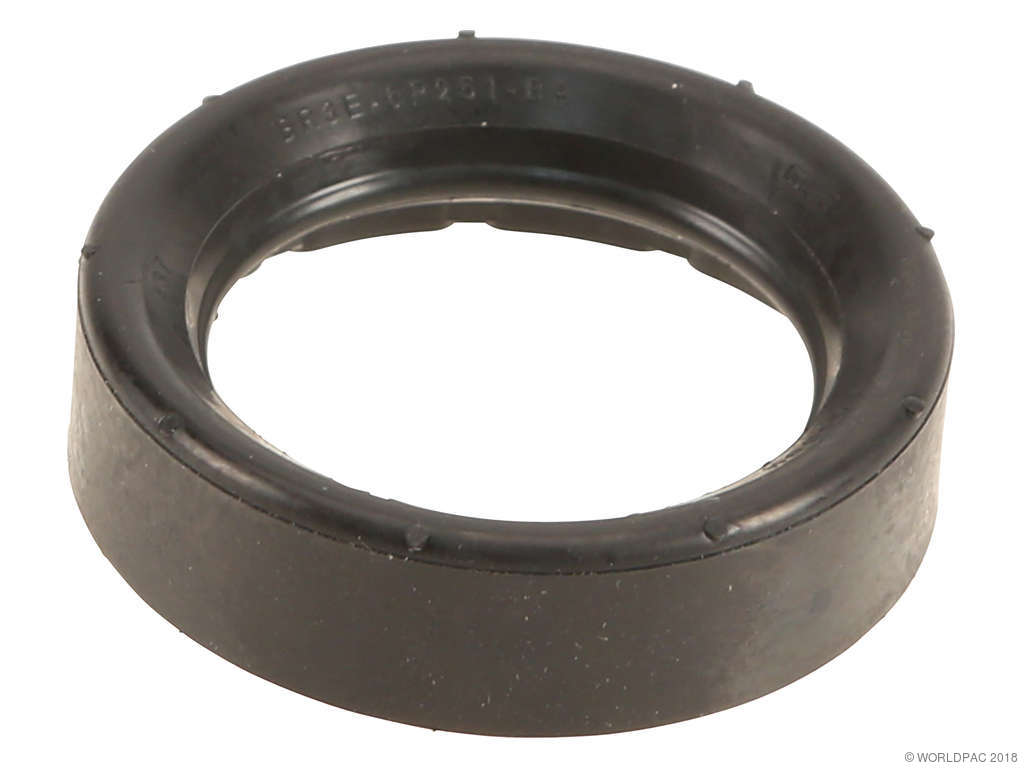
(OEM #CP9Z-6584-A)— Required for the repair because the VCT solenoids are located under the valve cover on the 2.0L GDI engine. The gasket is a one-time-use part and must be replaced to prevent oil leaks.
Trusted brands: Motorcraft, Fel-Pro, Mahle
OEM price range: $30-$50
Aftermarket price range: $20-$40 - Engine Oil and Filter
(OEM #FL-910S (Filter))— Low, dirty, or incorrect oil is a primary cause of the code. An oil change with the correct 5W-20 oil is the first and most important diagnostic step.
Trusted brands: Motorcraft, Mobil 1, Castrol, Bosch (Filter), Wix (Filter)
OEM price range: $40-$70
Aftermarket price range: $30-$55
Related Codes That Often Appear With This One
- P0011 — This is the equivalent over-advanced code for the intake camshaft. If you see both P0011 and P0014, it could point to a systemic issue like very low oil pressure or a timing chain problem affecting both cams. It will also appear if you swap a bad exhaust solenoid to the intake side for diagnosis.
- P0015 — This is the 'Over-Retarded' code for the same exhaust camshaft. Seeing both P0014 and P0015 can indicate a very erratic solenoid or a phaser that is sticking intermittently in both directions.
Technical Service Bulletins (TSBs) & Recalls
- SSM 54366: Notes that some vehicles may exhibit an illuminated MIL with DTCs including P0014 and P0012, and directs technicians to Pinpoint test HK in the Powertrain Control and Emissions Diagnosis (PC/ED) manual.
- SSM 50067: Supersedes SSM 48423. For 2015-2021 vehicles, notes that VCT codes including P0014 can be caused by small debris causing the solenoid to stick. Recommends using a scan tool to cycle the affected VCT solenoid 10 times to attempt to clear the debris before replacement.
- SSM 48423: For 2015-2020 vehicles, states that P0014 and other VCT codes may be caused by small debris causing the VCT solenoid to stick. Advises running a specific diagnostic test (Pinpoint Test HK11) to cycle the solenoid before replacement.
- SSM 47170: An earlier, similar TSB also stating that oil debris can cause the VCT solenoid to stick and recommending an oil change before component replacement.
Platform-Specific Known Issues
- Successful Solenoid Swap and Replacement: A user on focusfanatics.com with a 2012 Focus reported P0014 along with rough idle. An oil change did not fix the issue. They performed the solenoid swap, which caused the code to change to P0011, confirming the solenoid was the culprit. They replaced both solenoids and the valve cover gasket, which resolved all symptoms. This is a classic example of the common repair path for this code.
- Oil Change Doesn't Fix, Points to Solenoid: A Reddit user with a 2014 Focus experienced a whirring sound, reduced acceleration, and code P0014. An oil change at a quick lube shop did not resolve the symptoms or the code, which returned immediately. This experience reinforces that while an oil change is the correct first step, if symptoms are severe or persist, the solenoid is the next highly probable cause.
Mechanic-Grade Diagnostic Values
- VCT Solenoid Internal Resistance — expected: 6.9 to 14 Ohms. A factory specification cites 6.9 to 7.9 ohms, while general testing allows for a wider 7 to 14 Ohm range.. Failure: A reading of OL (open loop/infinite resistance) or near 0 ohms (short circuit) indicates a failed solenoid.
- VCT Solenoid Connector Voltage (Key On, Engine Off) — expected: ~12V (Battery Voltage) on the power supply pin (Pin 1).. Failure: No voltage or significantly low voltage points to a problem in the wiring, fuse, or PCM power relay.
- Scan Tool Live Data: VCT Exhaust Advance Error PID (e.g., VCT_EXH_DIF1, VCTADVERR) — expected: Should be near 0 degrees (+/- 5 degrees) at hot idle.. Failure: A large, persistent value (e.g., 15-30 degrees) that doesn't change with RPM indicates the camshaft is stuck or the phaser is not responding to commands.
- Engine Oil Pressure (Mechanical Gauge) — expected: Minimum 15 PSI at hot idle.. Failure: Pressure below 15 PSI at idle indicates a base oil delivery problem that must be fixed before addressing VCT components.
Hidden / Shadow Codes Worth Checking
- Mode $06, TID:$51, CID:$01 (example): Mode $06 provides raw data from onboard diagnostic monitors. For VCT systems, specific Test IDs (TID) and Component IDs (CID) track the response time and position error of the camshaft phasers. A failing test result here can indicate a borderline component (like a slow-to-respond solenoid) even before P0014 becomes a persistent, active code. (see via A professional scan tool or an app like FORScan that can access and interpret Mode $06 data is required.)
Scan Tool Commands That Help
- Ford IDS (Integrated Diagnostic System) or equivalent professional scan tool: VCT Solenoid Cycle Test (Pinpoint Test HK11) — As recommended by Ford TSBs (SSM 48423, SSM 50067), this function should be used after an oil change but before replacing the solenoid. It rapidly cycles the solenoid 10 times to attempt to dislodge small debris that may be causing it to stick.
- Ford IDS or equivalent professional scan tool: VCT_EXH_CMD (Exhaust VCT Command PID) — During diagnosis, a technician can command a specific cam angle and monitor the VCT_EXH_ACT (Actual) and VCT_EXH_DIF1 (Error) PIDs to see if the phaser responds. If the command is sent but the actual position doesn't change and the error value equals the command, it confirms a mechanical/hydraulic issue (stuck solenoid or phaser).
Wiring & Ground Locations
- G104 — Left side of the engine compartment, sometimes described as being on the left front of the motor compartment or near the battery junction box.. This is a primary ground point for the Powertrain Control Module (PCM) and various engine sensors. A corroded or loose connection at G104 can cause erratic behavior from PCM-controlled components, including the VCT solenoids, leading to phantom codes or incorrect operation.
- VCT Solenoid Connector — Under the valve cover, connected to the top of each VCT solenoid.. Pin 1 is the power supply wire (VPWR), which should have battery voltage with the key on. Pin 2 is the control wire, which is a duty-cycled ground signal from the PCM. Testing voltage and continuity at this connector is key to differentiating a wiring problem from a failed solenoid.
Real Owner Repair Stories
- YouTube user 'South Main Auto Repair LLC' (2012 Ford Focus SE 2.0L) — Check Engine Light with P0014. Vehicle was previously diagnosed by another shop as needing a PCM.
❌ Tried (didn't work) The previous shop's diagnosis of a bad PCM was incorrect.
✅ What actually fixed it Diagnosis using a scan tool and oscilloscope confirmed the PCM was sending the correct duty cycle signal to the exhaust VCT solenoid, but the camshaft position was not changing. The live data PID for exhaust cam error (actual vs. desired) was stuck at a large value (~30 degrees). The definitive diagnosis was a mechanically stuck camshaft phaser or a completely failed VCT solenoid, not a PCM or wiring issue. - NHTSA ODI #11634319 — An owner reported that their vehicle was diagnosed with DTC codes P0012-P0014 and was informed that the vehicle had experienced internal engine failures.
OEM Part Supersession History
CM5Z-6M280-A→CM5Z-6M280-C— Part revision and update by Ford. The -C revision is the current replacement part.
Heads up: The parts are interchangeable. CM5Z-6M280-C replaces the -A version.
Diagnostic Flowchart
Other Known Issues on This Vehicle
Issues unrelated to this code that are worth knowing about as an owner of this generation:
- DPS6 'PowerShift' Dual-Clutch Automatic Transmission Failure 🔴 High — Extremely common on 2012-2016 models. Symptoms include shuddering, hesitation, jerky shifting, and complete failure. (Ref: Multiple warranty extensions (e.g., 14M01, 14M02) and a class-action lawsuit were issued.)
- Sticking Canister Purge Valve 🟠 Medium — Common across 2012-2018 models. Causes rough idle, difficulty starting after refueling, and potential fuel tank deformation. (Ref: NHTSA Recalls 18V735000 and 19V515000 (Ford recall 18S32) were issued to reprogram the PCM and replace the valve if necessary.)
- Failed Passenger-Side Engine Mount 🟠 Medium — The hydraulic-filled passenger side engine mount is known to leak and collapse, typically after 50,000 miles, causing excessive engine vibration and noise.
- Electronic Power Steering Failure 🔴 High — Particularly noted on the 2012 model year, but can affect others. Can result in a sudden loss of power steering assist while driving. (Ref: Subject of numerous complaints and investigations.)
- Faulty Door Latch 🔴 High — A recall was issued for a faulty pawl spring tab in the door latch that could break, preventing the door from latching securely or causing it to open while driving. (Ref: Ford Recall 15S16 / NHTSA Recall 15V246000)
Used vs. New Parts: Buying Guide for This Vehicle
When a used part is the smart pick: Given the high failure rate from internal contamination and the significant labor to access the part (valve cover removal), using a used VCT solenoid is NOT recommended. The cost savings are minimal compared to the risk of installing another faulty or near-failure part and having to repeat the labor-intensive job.
Donor-vehicle mileage cap: roughly under 30000 miles for the part to have meaningful remaining life.
What to inspect on the donor part:
- If buying used is unavoidable, ensure the part is from a low-mileage, documented running vehicle.
- Inspect the solenoid screens for any tears, clogs, or debris.
- Test the resistance with a multimeter before installation; it should be within the 7-14 ohm range.
OEM-only on this vehicle (don't cheap out):
- While not strictly 'OEM-only', forum consensus strongly favors using Motorcraft VCT solenoids over aftermarket brands for this repair due to reported premature failures and inconsistent performance from some aftermarket options.
Aftermarket brands forum-validated for this vehicle:
- Standard Motor Products (SMP)
- NGK/NTK
Brands owners have reported issues with on this vehicle:
- Dorman: Multiple forum discussions across various Ford models report a higher-than-average failure rate or rough idle issues when using Dorman VCT solenoids compared to OEM Motorcraft parts.
Real Owner Stories
Aggregated from forums and TSBs cited above. Mileages and costs reflect what owners reported in those sources.
2012 Ford Focus 2.0L
Symptoms: Check engine light P0014 and a rough idle.
What fixed it: The owner performed a solenoid swap which moved the code to P0011. They then replaced both VCT solenoids and the valve cover gasket.
Source hint: focusfanatics.com user report in vehicle_specific_issues
2014 Ford Focus 2.0L
Symptoms: Whirring sound from the engine, reduced acceleration, and code P0014.
What fixed it: An oil change at a quick lube shop failed to fix the issue; the code returned immediately, indicating a solenoid failure.
Source hint: Reddit r/FordFocus - "Ford Focus Issue (P0014)"
Related OBD-II Codes
Frequently Asked Questions
My 2015 Focus has code P0014; is there a specific procedure Ford recommends before I replace parts?
Can I use any engine oil in my 2.0L GDI engine to clear this code?
Is the P0014 code related to the common 'PowerShift' transmission shudder on my 2012 Focus?
I'm hearing a whirring sound from the engine along with the P0014 code; what is that?
Which VCT solenoid do I need to check for a P0014 code on the 2.0L engine?
Is there a specific oil filter I should use for the Ford Focus 2.0L to prevent VCT issues?
Helpful Videos

We Have This Part in Stock


The information in this article is provided for general reference and educational purposes only. Vehicle specifications, procedures, and part compatibility can vary by production date, trim level, and region. Always consult your vehicle's factory service manual and verify part numbers before purchasing or performing repairs. Safety-critical components such as airbags, seat belts, and braking systems should be installed by a qualified professional.
- Ford Focus:
- 🧭 Diagnostic Flowchart
- 🎬 Helpful Videos
- 🛍️ Shop This Part
- What's Unique About the 2012-2018 Ford Focus
- Symptoms You May Notice
- Most Likely Causes
- Rare But Worth Checking
- Diagnosis Steps
- Parts You'll Likely Need
- Related Codes That Often Appear With This One
- Technical Service Bulletins (TSBs) & Recalls
- Platform-Specific Known Issues
- Mechanic-Grade Diagnostic Values
- Hidden / Shadow Codes Worth Checking
- Scan Tool Commands That Help
- Wiring & Ground Locations
- Real Owner Repair Stories
- OEM Part Supersession History
- Other Known Issues on This Vehicle
- Used vs. New Parts: Buying Guide for This Vehicle
- Real Owner Stories
- 2012 Ford Focus 2.0L
- 2014 Ford Focus 2.0L
- Related OBD-II Codes
- Frequently Asked Questions
- 🎟️ Get 5% Off