

P0014 on 2015-2018 Ford Focus 1.0L EcoBoost: Exhaust Cam Timing Over-Advanced Causes and Fixes
On a 2015-2018 Focus 1.0L, P0014 is most often caused by low or dirty engine oil, or a failing exhaust VCT solenoid. An oil change and solenoid replacement is the most common fix, costing around $50-$150 for parts. However, this code can also be a severe warning of a degrading timing belt or oil pump belt, which are known critical issues on this engine that can clog the oil pump and cause catastrophic failure.
- Always check your engine oil first. Low, dirty, or incorrect oil is the #1 cause of P0014 on this engine.
- The most common failed part is the exhaust VCT solenoid, which is a relatively easy and affordable DIY replacement.
- This code can be a serious warning sign of a failing 'wet' timing belt, a known critical flaw in the 1.0L EcoBoost. Do not ignore it.
- If you hear rattling noises or see an oil pressure warning light, stop driving immediately to prevent engine seizure.
- Use only the Ford-specified 5W-20 oil (WSS-M2C948-B) to minimize the risk of VCT system problems and belt degradation.
What's Unique About the 2015-2018 Ford Focus
The 1.0L EcoBoost engine has a unique and problematic 'wet belt' design, where the main timing belt and a separate oil pump belt run inside the engine, lubricated by engine oil. These belts are known to degrade over time, shedding rubber particles that contaminate the oil. This debris can clog the oil pump pickup screen, leading to oil starvation, or block the fine passages in the VCT solenoids. Therefore, while P0014 is often a simple solenoid issue on other engines, on the 1.0L EcoBoost it can be an early symptom of a much more severe timing belt problem that can lead to catastrophic engine failure. The NHTSA has opened investigations and Ford has issued recalls related to belt failures on these engines.
Symptoms You May Notice
- Check Engine Light illuminated
- Rough or unstable idle
- Engine stalling, especially at low speeds
- Sluggish acceleration and loss of power
- Reduced fuel economy
- A distinct whirring or rattling noise from the engine, especially on cold starts
- Oil pressure warning light may illuminate
- Replacing the camshaft position sensor. The sensor's job is to report the timing, not control it. While it can fail, it is far less common for the sensor to be the root cause of P0014 compared to oil issues or a faulty VCT solenoid.
Most Likely Causes
- Low, Dirty, or Incorrect Viscosity Engine Oil 🔴 High Probability The VCT system is hydraulic and extremely sensitive to oil quality. The engine's 'wet' timing belt is known to degrade, contaminating the oil with rubber particles that clog oil passages and the oil pump pickup screen, causing low oil pressure.
How to confirm: Check the engine oil dipstick. If the oil is below the minimum mark, very dark/sludgy, or it has been more than the recommended interval since the last change, this is the likely cause. The oil must meet Ford's WSS-M2C948-B 5W-20 specification.
Typical fix: Perform an engine oil and filter change using the correct Ford-specified oil and a high-quality filter. This is the essential first step before replacing any parts.
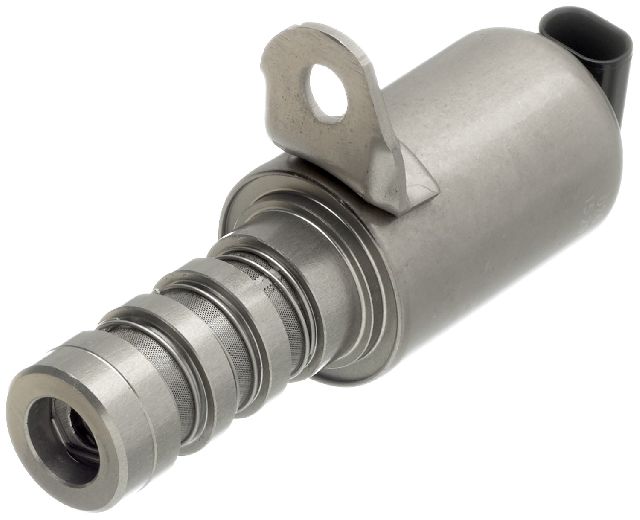
Est. part cost: $40-$80 - Failing Exhaust VCT Solenoid 🔴 High Probability → Shop Engine Variable Valve Timing (VVT) Solenoid The VCT solenoids can become clogged with debris from contaminated oil or fail electrically. Ford has issued multiple Technical Service Bulletins (TSBs) like SSM 48423 and SSM 50067 acknowledging that these solenoids can stick due to small debris. They can also leak oil internally through the electrical connector, causing further issues.
How to confirm: After verifying oil is clean and full, inspect the solenoid's electrical connector for oil. A common diagnostic step is to swap the intake and exhaust VCT solenoids (they are identical) and see if the code changes to P0011. If it does, the solenoid is bad. Before replacing, a technician can use a scan tool to perform pinpoint test HK11 or HK12, which cycles the solenoid 10 times to attempt to clear debris.
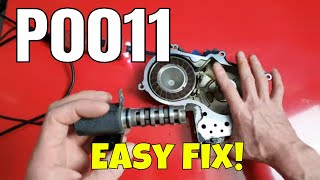
Typical fix: Replace the exhaust VCT solenoid. It is often recommended to replace both the intake and exhaust 🎬 See this walkthrough on how to replace your VVT solenoids. solenoids at the same time.
Est. part cost: $40-$90
Rare But Worth Checking
- Degrading/Stretched 'Wet' Timing Belt: → Shop Engine Timing Chain This is a critical failure point for the 1.0L EcoBoost. If an oil change and new VCT solenoid do not fix the code, or if you have an intermittent oil pressure light, this is a strong possibility. This is a major repair that requires a professional mechanic. The NHTSA is investigating this failure mode on manual transmission models.
- Clogged Oil Pump Pickup Screen: This is a direct consequence of a degrading wet belt. Rubber particles block the screen, starving the engine of oil. This causes low oil pressure, which prevents the VCT system from working correctly and can quickly destroy the entire engine. Diagnosis requires dropping the oil pan for visual inspection.
- Failed Oil Pump Belt Tensioner: On models with an automatic transmission, Ford issued recall 23S64 because the oil pump belt tensioner arm can fracture. This causes the oil pump belt to fail, leading to a sudden and complete loss of oil pressure.
Diagnosis Steps
- Check the engine oil level and condition. If it is low, dirty, or the wrong type, perform an oil and filter change with Ford-spec 5W-20 oil. Clear the codes and test drive.
- If the code returns, inspect the electrical connectors for both the intake and exhaust VCT solenoids. Look for oil inside the connectors, which indicates the solenoid seals have failed.
- Swap the exhaust VCT solenoid with the identical intake VCT solenoid. Clear the codes and drive the vehicle. If the code changes from P0014 to P0011 (intake timing), the solenoid you moved is faulty and must be replaced.
- If the code remains P0014 after the swap, the problem is not the solenoid. Per Ford TSBs (SSM 50067), a technician can use a scan tool to cycle the solenoid to dislodge debris before condemning it.
- If the above steps do not resolve the issue, seek professional service. A mechanic should check engine oil pressure with a mechanical gauge to rule out oil starvation.
- If oil pressure is low, the oil pan must be removed to inspect the oil pump pickup screen for blockage from timing belt debris.
- If oil pressure is good, further diagnosis of the timing system (belt, tensioner, phasers) is required.
Parts You'll Likely Need
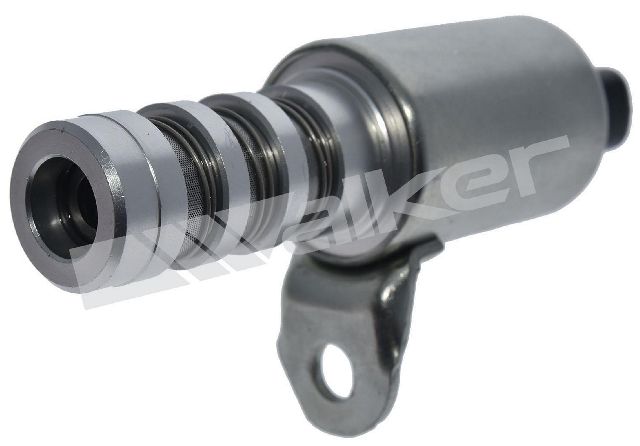
- Engine Variable Valve Timing (VVT) Solenoid
(OEM #CM5Z-6M280-G (supersedes CM5Z-6M280-D, CM5Z-6M280-F))— This is the most common part to fail. It gets clogged with debris from engine oil or fails electrically, causing it to stick in the advanced position.
Trusted brands: Motorcraft, Dorman, NGK, Standard Motor Products
OEM price range: $60-$90
Aftermarket price range: $35-$70 - Engine Oil and Filter — Low, old, or incorrect viscosity oil is the number one cause of VCT system problems on this engine. An oil change is a mandatory first step.
Trusted brands: Motorcraft (5W-20 Synthetic Blend), Motorcraft (FL-910S Filter)
OEM price range: $50-$80
Aftermarket price range: $40-$60
Related Codes That Often Appear With This One
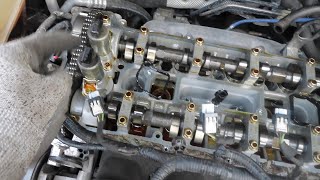
- P0011 — Intake Camshaft Position Timing Over-Advanced. If seen with P0014, it points to a systemic issue affecting both camshafts, 🎬 Watch: A real-world diagnosis of P0012 and P0014 codes. like severe oil contamination or low oil pressure.
- P0012 — Intake Camshaft Position Timing Over-Retarded. A blocked oil pickup strainer from a fragmented timing belt can cause multiple VCT codes as the system struggles with low oil pressure.
- P0016 — Crankshaft/Camshaft Position Correlation. This code indicates a base timing issue. On the 1.0L EcoBoost, seeing P0016 with P0014 is a strong indicator of a stretched or failing wet timing belt.
Technical Service Bulletins (TSBs) & Recalls
- SSM 49821 / SSM 47170 / SSM 48423 / SSM 50067: State that various VCT codes, including P0014, may be caused by small debris causing the VCT solenoid to stick. The bulletins recommend using a diagnostic tool to cycle the affected solenoid 10 times (Pinpoint Test HK11 or HK12) to attempt to clear debris before replacing the part.
- Recall 23S64: A safety recall for automatic transmission models where the engine oil pump drive belt tensioner arm can fracture, leading to a loss of oil pressure and potential engine failure. The fix involves a redesigned tensioner and belt.
- SSM 54366: Notes that some vehicles may exhibit an illuminated MIL with diagnostic trouble codes including P0014, and directs technicians to Pinpoint test HK in the Powertrain Control and Emissions Diagnosis (PC/ED) manual.
Platform-Specific Known Issues
- The 1.0L EcoBoost engine uses a timing belt that runs inside the engine in the oil ('wet belt'). These belts are known to degrade, and the resulting debris clogs the oil pump pickup, leading to low oil pressure and engine failure. VCT codes like P0014 are often the first symptom of this process.
- The NHTSA's Office of Defects Investigation has an open inquiry into timing belt failures on 2015-2018 Ford Focus vehicles with the 1.0L engine (specifically manual transmission models) due to numerous complaints of power loss and engine seizure from clogged oil pickups.
- Ford issued safety recall 23S64 for 2016-2018 Focus models with the 1.0L engine and an automatic transmission due to a faulty oil pump belt tensioner arm that can fracture, causing a loss of oil pressure.
- Manufacturer bulletin SSM 47170 confirms that P0014 and other VCT codes may be due to small debris causing the VCT solenoid to stick, and advises attempting to clear the debris before replacing parts.
Mechanic-Grade Diagnostic Values
- 1.0L EcoBoost Engine Oil Pressure (Mechanical Gauge) — expected: At least 14.5 psi (1 bar) at hot idle; 29-65 psi (2-4.5 bar) at 2,000-3,000 RPM.. Failure: Pressure below 14.5 psi at idle strongly suggests a clogged oil pump pickup screen 🎬 Watch: See what a failing wet belt looks like inside. from a degrading wet belt, even if the oil pressure light is not illuminated.
- VCT Solenoid Internal Resistance — expected: 6.9 - 7.9 Ohms at 68°F (20°C). A broader acceptable range is 7 to 14 Ohms.. Failure: A reading of 0 Ohms (short circuit) or infinite/OL (open circuit) indicates a failed solenoid.
- VCT Solenoid Connector Power Supply Voltage — expected: Battery voltage (approx. 12.0-12.6V) at Pin 1 with Key On, Engine Off.. Failure: No voltage or low voltage points to a wiring issue, blown fuse, or a problem with the PCM power relay.
- Scan Tool PID: VCT_EXH_ERR or VCT Advanced Error — expected: Close to 0° (+/- 5°) during closed-loop operation at a steady RPM.. Failure: A large, persistent deviation from 0° indicates the PCM cannot control the camshaft to its target position, confirming a performance fault.
Hidden / Shadow Codes Worth Checking
- Mode $06, Test ID $53: This is not a DTC, but a system monitor test result that tracks the bank-to-bank timing error for the Variable Camshaft Timing system. A high reading or a 'fail' status can indicate a developing VCT problem before a full-blown DTC is set. (see via A professional scan tool capable of reading Mode $06 data.)
Scan Tool Commands That Help
- Ford IDS (Integrated Diagnostic Software) or equivalent professional scan tool (like FORScan): VCT Solenoid Pinpoint Test (e.g., HK11, HK12) — As described in Ford TSBs, this function cycles the VCT solenoid on and off 10 times. It should be used after an oil change but before replacing the solenoid to attempt to dislodge small particles of debris that may be causing it to stick.
- Ford IDS or equivalent: VCT Solenoid Duty Cycle PID Monitoring — While observing live data, a technician can monitor the duty cycle commanded to the intake and exhaust solenoids. If the PCM is commanding a high duty cycle to the exhaust solenoid with little to no change in the VCT_EXH_ERR PID, it points towards a mechanical or hydraulic issue (clogged solenoid, low pressure) rather than an electrical one.
Wiring & Ground Locations
- Main Engine Ground Strap — Typically runs from the chassis point under the battery tray to the engine or transmission.. A poor main engine ground can cause a variety of erratic electrical issues and incorrect sensor readings. The PCM and its sensors rely on a stable ground reference. While not a direct cause of P0014, checking this ground is a crucial step in diagnosing any electrical fault.
- Cylinder Head Ground Point — A bolting point on the rear, right, lower corner of the cylinder head where a ground wire from the main harness connects.. This is a critical ground point for sensors located on the engine itself. It can be difficult to see and is sometimes forgotten or improperly connected during major engine work, leading to sensor and actuator faults.
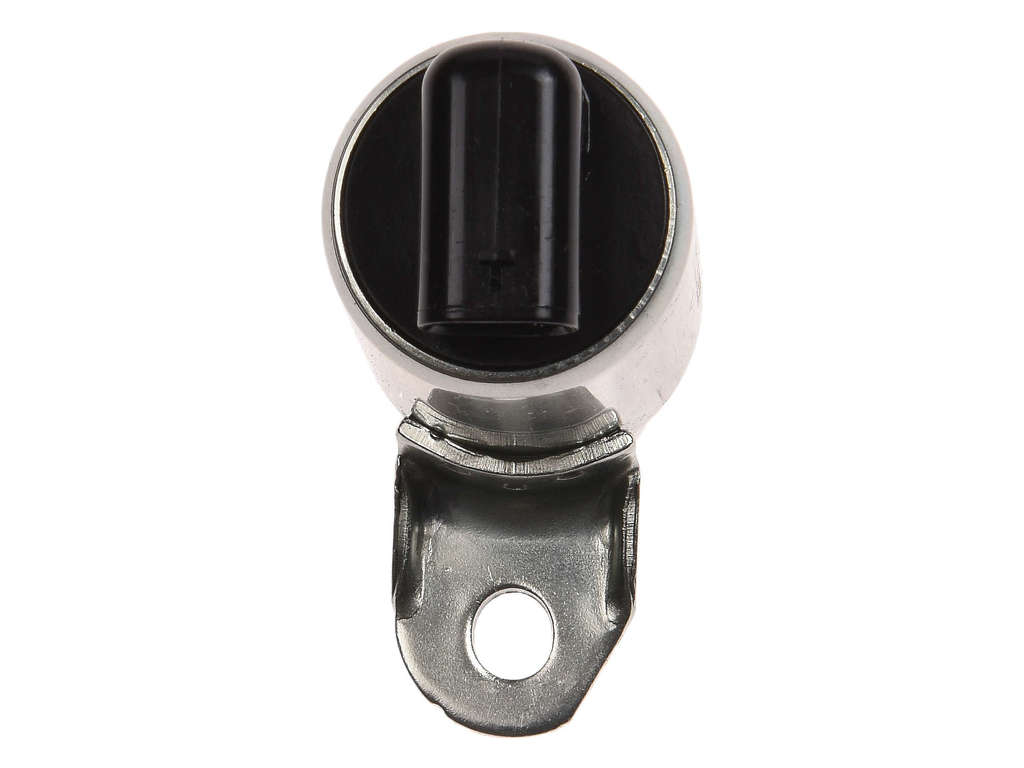
- VCT Solenoid Wiring — The two-wire connector plugs directly into the top of the VCT solenoid on the valve cover.. Pin 1 is the 12V power supply from the PCM power relay, and Pin 2 is the ground-side control wire from the PCM. Testing for voltage at Pin 1 and continuity to the PCM on Pin 2 can isolate a wiring fault from a failed solenoid.
Real Owner Repair Stories
- YouTube channel 'sandy anderson' (2016 Ford Focus 1.0L EcoBoost) — Intermittent oil pressure light, Check Engine Light with codes P0012 (Over-Retarded) and P0014 (Over-Advanced) present simultaneously.
❌ Tried (didn't work) The mechanic did not attempt other fixes first, as the combination of symptoms was a classic indicator of the known major failure.
✅ What actually fixed it The root cause was a fragmented 'wet' timing belt which had clogged the oil pump pickup strainer in the sump. The fix involved dropping the oil pan, cleaning the strainer, and replacing both the main timing belt and the oil pump belt. - Ford Owners Club Forum (cited in Go-Parts article) (2015 Ford Focus 1.0L EcoBoost) — Loss of power, oil light on, engine light on, loss of power braking assist (due to engine stall). Codes included P0015, P0017, and P0300.
❌ Tried (didn't work) Initial diagnosis incorrectly pointed to multiple sensor failures.
✅ What actually fixed it A Ford specialist confirmed the root cause was the oil-immersed 'wetbelt' failure leading to oil starvation. This required a major engine repair involving the timing system and addressing the oil circulation issue. - NHTSA ODI #11634319 — An owner reported that their vehicle was diagnosed by a local dealer with codes P0012-P0014 and was informed that the vehicle had experienced internal engine failures.
"I Checked Everything" — The Actual Cause
- A common diagnostic dead-end for P0014 on this engine occurs when the VCT solenoid passes all electrical tests (resistance is within spec, it clicks when 12V is applied) and an oil change does not resolve the code. The actual cause is often insufficient oil pressure that is still above the low-pressure threshold to trigger the dashboard warning light. This subtle oil starvation prevents the VCT phaser from moving correctly. The only way to confirm this is to bypass the electronic sensor and test the oil pressure directly with a mechanical gauge.
OEM Part Supersession History
CM5Z-6M280-D, CM5Z-6M280-F→CM5Z-6M280-G— Manufacturer revision for improved durability and performance. Later revisions often feature improved internal components or filtering screens to better resist clogging from oil debris.
Model Year Variations Within This Range
- 2015-2018: The 2015 model year refresh introduced minor changes to the 1.0L EcoBoost, including revised coolant hose designs and the addition of a cylinder head temperature sensor. This sensor provides a secondary layer of protection against overheating that earlier models lacked.
- 2016-2018 (Automatic Transmission Only): These models are subject to safety recall 23S64 for a potentially faulty oil pump belt tensioner arm that can fracture, leading to a total loss of oil pressure. 2015 models or any manual transmission models are not included in this specific recall, though they can still suffer from oil pump issues related to the degrading wet belt itself.
Diagnostic Flowchart
Other Known Issues on This Vehicle
Issues unrelated to this code that are worth knowing about as an owner of this generation:
- Oil Pump Belt Tensioner Failure (Recall 23S64) 🔴 High — Affects 2016-2018 Focus models with automatic transmissions. The tensioner arm's joint can fracture, causing the oil pump belt to fail, leading to a sudden loss of oil pressure and engine seizure. (Ref: Recall 23S64)
- Fuel Rail Pressure Sensor/Pump Failure (P0191) 🟠 Medium — Common issue causing stalling, hesitation, and long crank times. Often caused by a faulty Fuel Rail Pressure (FRP) sensor or a worn High-Pressure Fuel Pump (HPFP). (Ref: TSB 18-2361 (notes potential for engine harness chafe))
- Turbocharger Underboost (P0299) 🟠 Medium — Can cause the vehicle to enter 'limp mode' with a significant loss of power. A common cause is a cheap, failed one-way valve in the vacuum pump, which is a simple fix but can be misdiagnosed as a failed turbo.
- Coolant Leaks 🟠 Medium — The 1.0L EcoBoost has been reported to suffer from coolant leaks which can lead to overheating and potential engine damage if not addressed.
Used vs. New Parts: Buying Guide for This Vehicle
When a used part is the smart pick: For this specific repair, using used parts is highly discouraged for any core component. However, a used wiring harness connector (pigtail) from a junkyard can be a cost-effective fix if only the connector is damaged, provided it is in excellent condition.
Donor-vehicle mileage cap: roughly under 80000 miles for the part to have meaningful remaining life.
What to inspect on the donor part:
- For wiring/connectors: Ensure the wiring is flexible, not brittle or cracked.
- Inspect connector pins for any signs of corrosion, moisture, or oil contamination.
- Verify the locking tab on the connector is intact and functional.
- Confirm the donor vehicle did not suffer a front-end collision that could have stressed the engine harness.
OEM-only on this vehicle (don't cheap out):
- Timing Belt ('wet belt')
- Oil Pump Belt
- Oil Pump Tensioner
- Camshaft Phasers
Aftermarket brands forum-validated for this vehicle:
- Motorcraft (for all OEM parts)
- Dorman (for VCT Solenoids)
- NGK/NTK (for VCT Solenoids)
- Standard Motor Products (SMP) (for VCT Solenoids)
Brands owners have reported issues with on this vehicle:
- Unnamed, no-brand VCT solenoids from online marketplaces are a significant risk and often fail prematurely or do not perform to OEM specification, causing the code to return.
Real Owner Stories
Aggregated from forums and TSBs cited above. Mileages and costs reflect what owners reported in those sources.
2016 Ford Focus Turbocharged 1.0L 3-Cylinder EcoBoost
Symptoms: Distinct whirring sound, check engine light on, oil light on, significantly reduced acceleration, and hesitation with shifting gears. The whirring sound increased in pitch and volume during acceleration.
What fixed it: The owner identified the issue as related to the VVT (VCT) solenoid after pulling code P0014, though initial oil changes did not resolve the deeper oil pressure/pickup issue.
Source hint: r/FordFocus thread titled 'ford_focus_issue_p0014'
Related OBD-II Codes
Frequently Asked Questions
Is there a recall for the oil pressure issues causing P0014 on my 2016 Ford Focus 1.0L EcoBoost?
My mechanic says my VCT solenoid is stuck. Is there a specific Ford procedure to fix this without replacing parts?
What specific oil should I use in my 2015-2018 Focus 1.0L to prevent VCT codes?
Why is my 'wet' timing belt causing P0014 and oil pressure lights?
Can I just swap the solenoids to see if one is bad?
Is the NHTSA investigating these engine failures on the Ford Focus?
Helpful Videos
We Have This Part in Stock


The information in this article is provided for general reference and educational purposes only. Vehicle specifications, procedures, and part compatibility can vary by production date, trim level, and region. Always consult your vehicle's factory service manual and verify part numbers before purchasing or performing repairs. Safety-critical components such as airbags, seat belts, and braking systems should be installed by a qualified professional.
- Ford Focus:
- 🧭 Diagnostic Flowchart
- 🎬 Helpful Videos
- 🛍️ Shop This Part
- What's Unique About the 2015-2018 Ford Focus
- Symptoms You May Notice
- Most Likely Causes
- Rare But Worth Checking
- Diagnosis Steps
- Parts You'll Likely Need
- Related Codes That Often Appear With This One
- Technical Service Bulletins (TSBs) & Recalls
- Platform-Specific Known Issues
- Mechanic-Grade Diagnostic Values
- Hidden / Shadow Codes Worth Checking
- Scan Tool Commands That Help
- Wiring & Ground Locations
- Real Owner Repair Stories
- "I Checked Everything" — The Actual Cause
- OEM Part Supersession History
- Model Year Variations Within This Range
- Other Known Issues on This Vehicle
- Used vs. New Parts: Buying Guide for This Vehicle
- Real Owner Stories
- 2016 Ford Focus Turbocharged 1.0L 3-Cylinder EcoBoost
- Related OBD-II Codes
- Frequently Asked Questions
- 🎟️ Get 5% Off