

P0014 on 2013-2014 Ford Fusion 1.6L EcoBoost: Exhaust Cam Timing Causes and Fixes
On a 2013-2014 Ford Fusion with the 1.6L EcoBoost, code P0014 is most often caused by low or dirty engine oil, or a failing exhaust Variable Camshaft Timing (VCT) solenoid. Start with an oil and filter change using the correct synthetic oil; if that doesn't work, the VCT solenoid is the next likely part to replace, costing around $30-$90. This code should be addressed immediately as the underlying oiling issue can also cause a failure of the vacuum pump, leading to a loss of power brakes.
- P0014 on the 1.6L Fusion means the exhaust camshaft timing is stuck in an over-advanced position.
- DO NOT continue driving. There is a documented risk of losing power brake assist on this engine when oil-related codes are present.
- The first and most important step is to check your engine oil. An oil and filter change with the correct synthetic oil may fix the problem.
- The most likely failed part is the exhaust VCT solenoid, which can get stuck due to oil debris. It's an affordable and accessible part to replace.
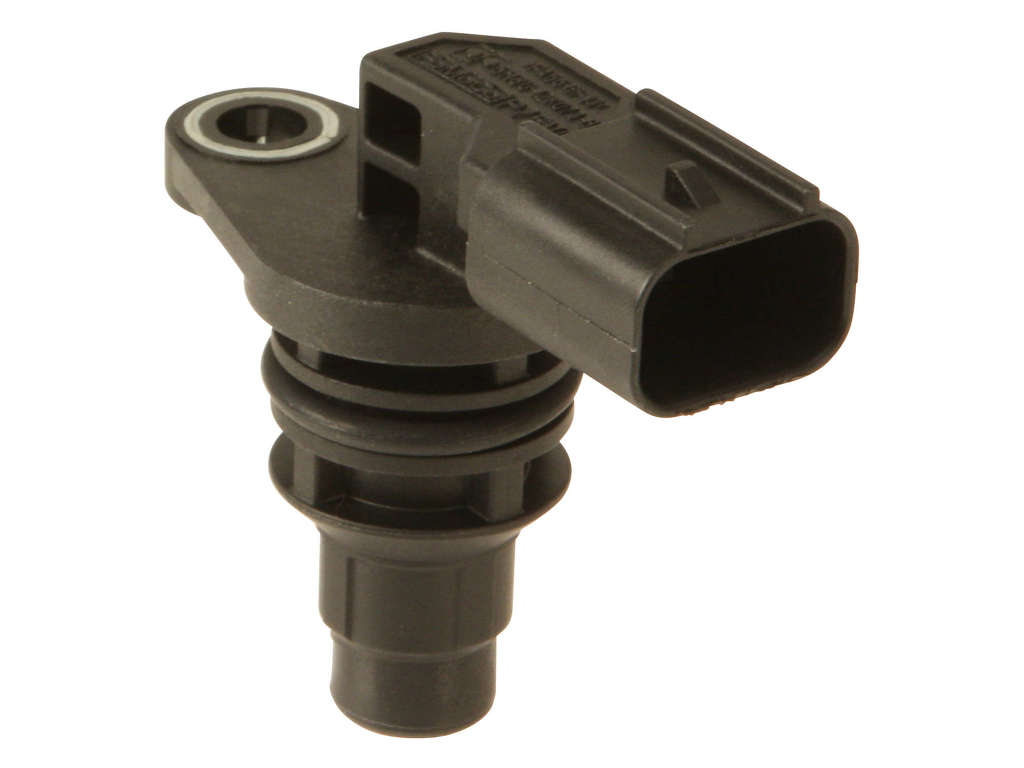
- Do not immediately replace the camshaft position sensor; it is rarely the cause of this specific code.
What's Unique About the 2013-2020 Ford Fusion
The 1.6L EcoBoost engine was only available in the Ford Fusion for the 2013 and 2014 model years. This engine, used across several Ford models, is known to be sensitive to oil quality and level. For this code, Ford has issued technical service bulletins (SSMs 47170 & 48423) noting that small debris in the oil can cause the VCT solenoids to stick, which is a very common cause for P0014. More critically, this engine has a known failure pattern where issues leading to this code, like oil starvation, can also affect the camshaft-driven vacuum pump. A seized vacuum pump can lead to a sudden and dangerous loss of power brake assist.
Generation note: The 2013-2020 Ford Fusion is a single generation (second generation, CD4). However, the 1.6L EcoBoost engine was only offered in the 2013 and 2014 model years. This guide is specific to those two years.
Symptoms You May Notice
- Check Engine Light is on
- Rough idling
- Engine stalling, especially at low speeds
- Hard starting
- Reduced fuel economy
- Rattling noise from the engine
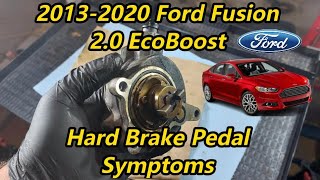
- Hard brake pedal or loss of power brake assist (if oil starvation has also damaged the vacuum pump)
- Replacing the camshaft position sensor. The sensor is almost always doing its job correctly by reporting the over-advanced timing. The fault lies within the mechanical VCT system (oil, solenoid, phaser).
Most Likely Causes
- Low, Dirty, or Incorrect Viscosity Engine Oil 🔴 High Probability The Ti-VCT system is hydraulic and relies on clean oil of the correct weight to function. Sludge or low oil levels prevent the VCT solenoids and phasers from operating correctly. This is the most common cause across all vehicles with VVT and is the first thing to check.
How to confirm: Check the oil level on the dipstick. Inspect the oil's color and consistency. If it's low, black, or sludgy, it needs to be changed. An intermittent P0014 that appears and disappears over months can be a sign of sludgy oil intermittently clogging passages.
Typical fix: Perform an oil and filter change using the manufacturer-specified synthetic oil (check your owner's manual for the correct grade, typically 5W-20 or 5W-30 for this engine).
Est. part cost: $40-$80 - Faulty Exhaust Variable Camshaft Timing (VCT) Solenoid 🔴 High Probability → Shop Engine Camshaft Ford TSBs SSM 47170 & 48423 specifically mention that debris can cause VCT solenoids to stick, leading to timing codes like P0014. It's a very common failure point, with many owner forum posts confirming a solenoid replacement fixed the code.
How to confirm: Unplug the solenoid and test its internal resistance with a multimeter 🎬 See how to test a VVT solenoid using a multimeter.; it should be between 7 and 14 Ohms. You can also apply 12V power to see if the solenoid clicks. A more advanced method is using a scan tool to command the solenoid on and off while observing engine performance. The easiest DIY test is to swap the exhaust solenoid with the identical intake solenoid, clear codes, and see if the code changes to P0011 (intake over-advanced). If it does, the solenoid is bad.
Typical fix: Replace the exhaust VCT solenoid. It is often recommended to replace both intake and exhaust solenoids 🎬 Watch: Step-by-step walkthrough for replacing your VVT solenoids. at the same time. Also inspect the solenoid's O-ring, as a failed O-ring can cause an oil leak in the same area.
Est. part cost: $30-$90 - Stretched Timing Chain or Failed Tensioner ⚪ Low Probability → Shop Engine Timing Chain While less common than oil or solenoid issues, timing chains can stretch over time, causing a persistent timing deviation that the VCT system cannot correct. This is usually a higher-mileage failure.
How to confirm: This is a complex diagnosis. It often involves removing the valve cover to inspect for chain slack or guide damage. A rattling noise at startup that goes away is a classic symptom. An oscilloscope can also be used to compare camshaft and crankshaft signals to definitively diagnose a timing issue.
Typical fix: Replacement of the timing chain, guides, and tensioners. This is a labor-intensive job.
Est. part cost: $200-$500
Rare But Worth Checking
- Failed Camshaft Phaser: → Shop Engine Camshaft The phaser is the mechanical gear at the end of the camshaft that actually does the rotating. It can get stuck in an advanced position due to internal failure or oil blockage, but this is less common than a solenoid failure. Ford refers to these as 'phasers' rather than actuators.
- Clogged Oil Passages: Severe engine sludge from neglected oil changes can block the small oil passages leading to the VCT solenoid and phaser, starving them of the oil pressure needed to operate. This often requires significant engine cleaning or disassembly.
- Failed Camshaft-Driven Vacuum Pump: → Shop Engine Camshaft On the 1.6L EcoBoost, the vacuum pump for the brake booster is driven by the exhaust camshaft. The same oil starvation that triggers VCT codes can cause the vacuum pump to seize or fail, leading to a hard brake pedal. 🎬 Watch: Understanding how oil issues cause hard brake pedal symptoms. In some cases, a seized pump can cause further damage to the engine.
Diagnosis Steps
- Check Engine Oil: Verify the oil level is correct and the oil quality is good. If low, top it off. If old or dirty, perform a full oil and filter change with the correct viscosity oil (e.g., Motorcraft 5W-20 Synthetic Blend). Clear the code and see if it returns.
- Inspect VCT Solenoid Wiring: Check the electrical connector and wiring to the exhaust VCT solenoid for any visible damage, corrosion, or loose connections.
- Test the VCT Solenoid: Unplug the solenoid. Use a multimeter to check the resistance across its two pins. A reading between 7-14 ohms is typical. If it's an open circuit (OL) or has very high resistance, it's bad.
- Swap Solenoids (Best DIY Test): As a diagnostic step, swap the exhaust solenoid with the identical intake solenoid. They are typically interchangeable. Clear the codes and run the engine. If the code changes to P0011 (for the intake cam), you've confirmed the solenoid is the faulty part.
- Clean Solenoid Screens: When the solenoid is removed, inspect its screens for sludge or debris. You can attempt to clean it with brake cleaner and a soft brush, though replacement is often a more reliable fix.
- Check for TSBs: Ford issued TSBs SSM 47170 & 48423, which suggest using a scan tool to run pinpoint test HK11. This test cycles the solenoid 10 times to attempt to dislodge debris before replacing the part.
- Advanced Diagnostics: If the above steps don't resolve the issue, the problem may be mechanical, such as a stretched timing chain or a failing camshaft phaser. This level of diagnosis typically requires professional tools and expertise, such as an oscilloscope to check cam/crank correlation.
Parts You'll Likely Need
- Variable Camshaft Timing (VCT) Solenoid (Exhaust)
(OEM #CN1Z-6M280-B (Superseded by CN1Z-6M280-E, CN1Z-6M280-F))— This solenoid controls oil flow to the cam phaser and is the most common part to fail or stick, causing the P0014 code.
Trusted brands: Motorcraft, Dorman, Standard Motor Products
OEM price range: $50-$100
Aftermarket price range: $30-$70 - Engine Oil and Filter — Low or contaminated oil is the number one cause of VCT system problems. An oil change is the first and most important step.
Trusted brands: Motorcraft (Synthetic Blend), Castrol, Mobil 1
OEM price range: $40-$80
Aftermarket price range: $40-$80
Related Codes That Often Appear With This One
- P0013 — P0013 is 'Exhaust 'B' Camshaft Position Actuator Circuit / Open (Bank 1)'. If you see both, it points strongly to an electrical issue with the VCT solenoid, like a bad coil in the solenoid itself or damaged wiring/connector, rather than a purely mechanical or oil-related problem.
- P0011 — P0011 is for the intake camshaft ('A') being over-advanced. Seeing both intake and exhaust codes together (P0011 & P0014) could suggest a systemic problem like very low oil pressure, incorrect oil viscosity, or a timing chain that has jumped a tooth, affecting both camshafts.
- P0012 — P0012 is for the intake cam being over-retarded. Seeing P0012 and P0014 together is a conflicting set of codes (one cam retarded, the other advanced) and often points to a more serious base timing issue, like a jumped timing chain or incorrect timing after a repair.
Technical Service Bulletins (TSBs) & Recalls
- SSM 47170 & SSM 48423: Ford notes that various VCT-related DTCs, including P0014, may be caused by small debris causing the VCT solenoid to stick. The bulletins advise running a diagnostic test (pinpoint test HK11) to cycle the solenoid 10 times to attempt to clear debris before replacement.
- SSM 54366: A manufacturer service bulletin notes that several Ford and Lincoln vehicles may exhibit an illuminated MIL with P0014, and directs technicians to pinpoint test HK in the Powertrain Control and Emissions Diagnosis (PC/ED).
Platform-Specific Known Issues
- NHTSA ODI #11266426: An owner complaint documented that codes P0012 and P0014 on a Fusion with this engine family were associated with a failed vacuum pump, leading to a loss of power brake assist. This highlights the seriousness of oil-related issues on this platform.
- Vacuum Pump Failure: The 1.6L EcoBoost's vacuum pump is driven by the camshaft and lubricated by engine oil. Oil starvation from sludge or low levels—the same conditions that trigger VCT codes—can cause the vacuum pump to seize or fail, leading to a hard brake pedal.
Mechanic-Grade Diagnostic Values
- VCT Solenoid Internal Resistance — expected: 7 to 14 Ohms. Failure: A reading outside this range, or an open circuit (OL), indicates a faulty solenoid coil.
- VCT Solenoid Connector Voltage (Key On, Engine Off) — expected: Approximately 12V (Battery Voltage) on the power supply pin.. Failure: No voltage suggests a problem with the power supply circuit, fuse, or PCM power relay.
- Scan Tool PID: VCT_ADV_ERR (VCT Advance Error) — expected: Should hover around 0° at idle in closed loop.. Failure: A consistent deviation of more than +/- 5° for an extended period indicates a timing error that the system cannot correct.
- Scan Tool PID: VCT Solenoid Duty Cycle — expected: Should show similar percentages for both intake and exhaust solenoids under similar conditions.. Failure: A significant disparity where the PCM is commanding a much higher duty cycle for one solenoid compared to the other suggests that solenoid is not responding correctly.
Hidden / Shadow Codes Worth Checking
- Mode 6, TID $53: Mode 6 provides non-continuous monitor test results. For Ford, Test ID (TID) $53 often relates to Variable Camshaft Timing (VCT) system monitoring. It can show raw data on how far the camshaft timing deviated from the target during a test cycle, even if it wasn't enough to set a CEL. (see via A professional scan tool (like Ford IDS) or an advanced consumer scan tool with Mode 6 capability (like FORScan).)
Scan Tool Commands That Help
- Ford IDS (Integrated Diagnostic System): Pinpoint Test HK / VCT Solenoid On/Off Command — As per Ford TSBs (SSM 47170, 48423), this command cycles the VCT solenoid 10 times. It's used to attempt to dislodge small debris that may be causing the solenoid to stick before recommending replacement. It's a key diagnostic step to confirm if the solenoid is mechanically stuck or electrically functional.
- Ford IDS (Integrated Diagnostic System): Datalogger with VCT PIDs (VCT_ADV_ERR, VCTDC) — Used to monitor the VCT error angle and solenoid duty cycle in real-time while driving. This helps determine if the timing error occurs under specific conditions (e.g., load, RPM) and if the PCM is attempting to correct it, which is crucial for differentiating between a sticky solenoid and a base timing issue.
- FORScan: VCT Solenoid Duty Cycle Control (VVT_DC_B1) — FORScan, a popular aftermarket tool for Fords, allows for bidirectional control of the VCT solenoids. A technician can manually command the exhaust solenoid duty cycle while the engine is idling to see if it causes a change in engine performance (e.g., rough idle). If there's no change, it points to a stuck solenoid or a clogged oil passage.
Wiring & Ground Locations
- G107 — Left front of the engine compartment on the 2013 Fusion.. This is a primary engine ground. A poor connection at G107 can cause erratic behavior in various engine sensors and actuators, including the VCT solenoids and camshaft position sensors, leading to intermittent and hard-to-diagnose timing codes.
- VCT Solenoid Connector — On the top of the valve cover, near the exhaust camshaft.. The two pins on the connector are for power and ground control. Pin 1 is typically the 12V power supply from the PCM power relay, and Pin 2 is the control line (ground) from the PCM. Testing for voltage at Pin 1 and continuity to ground on Pin 2 are critical electrical checks.
Real Owner Repair Stories
- Go-Parts Forum User (2015 Ford Fusion Energi (2.0L, but same solenoid and diagnostic principle)) — Check Engine Light with code P0014.
❌ Tried (didn't work) An initial oil change did not resolve the code.
✅ What actually fixed it The owner swapped the intake and exhaust VCT solenoids. The code immediately changed to P0011 (intake cam over-advanced), confirming the original exhaust solenoid was faulty. Replacing the bad solenoid with a new part for ~$40 fixed the issue completely. - Reddit User (Ford Fusion (engine not specified, but same code family)) — Persistent P0012 and P0014 codes.
❌ Tried (didn't work) Replaced VCT solenoid, Replaced camshaft actuator (phaser)
✅ What actually fixed it The user concluded the only remaining possibility was a stretched timing chain and was preparing to replace the timing chain and tensioner. This highlights a scenario where the more common fixes do not work, pointing to a base mechanical timing issue. - NHTSA ODI #11266426 — An owner reported receiving P0012 and P0014 codes and pinpointed a destroyed vacuum pump that had no suction, resulting in a loss of brake assistance.
OEM Part Supersession History
CN1Z-6M280-B→CN1Z-6M280-D, then CN1Z-6M280-E, and finally CN1Z-6M280-F— Likely internal design revisions to improve durability and resistance to sticking from oil debris.
Heads up: The newer revisions (-E, -F) are backwards compatible and should be preferred when replacing an older part number (-B, -A, -C).
Model Year Variations Within This Range
- 2014: For the 2014 model year, Ford introduced a new 1.5L EcoBoost engine alongside the 1.6L. The 1.6L was then only available with a manual transmission. The 1.5L engine, which is very similar, uses the same VCT solenoids. This is important for parts ordering, as a 2014 Fusion could have either engine.
Diagnostic Flowchart
Other Known Issues on This Vehicle
Issues unrelated to this code that are worth knowing about as an owner of this generation:
- Engine Coolant Intrusion 🔴 High — A widespread, well-documented issue across 1.5L, 1.6L, and 2.0L EcoBoost engines. A design flaw can cause the cylinder head or block to crack, allowing coolant to leak into the cylinders, leading to misfires and eventual catastrophic engine failure. (Ref: NHTSA Campaign 17V209000 (related to overheating), TSB 19-2346 (for 2.0L), other related TSBs.)
- Shifter Cable Bushing Failure 🔴 High — Common enough to warrant a major safety recall. The bushing attaching the shifter cable to the transmission can degrade or detach, causing a situation where the gear shifter is in Park, but the transmission is not, leading to a potential rollaway risk. (Ref: Ford Recall 22S43 / NHTSA Campaign 22V413000)
- Front Brake Hose Rupture 🔴 High — A significant safety recall was issued for front brake hoses that may rupture and leak brake fluid, causing a sudden increase in brake pedal travel and reduced stopping power. (Ref: Ford Recall 23S12 / NHTSA Campaign 23V162000)
- Engine Overheating and Fire Risk 🔴 High — Primarily affected early 2013 models with the 1.6L engine. A condition of localized overheating could cause the cylinder head to crack and leak oil, creating a risk of fire. (Ref: Ford Recall 13V584000 / NHTSA Campaign 13V584000)
Used vs. New Parts: Buying Guide for This Vehicle
When a used part is the smart pick: A used VCT solenoid is generally not recommended. The failure mode is often internal sticking or clogging from the donor car's oil, which is impossible to see. Given the low cost of a new, quality aftermarket or OEM part ($30-$90), the risk and labor of installing a potentially faulty used part outweigh the small savings.
Donor-vehicle mileage cap: roughly under 60000 miles for the part to have meaningful remaining life.
What to inspect on the donor part:
- If considering a used solenoid, insist on seeing the electrical connector pins for any corrosion.
- Check the small oil screens on the solenoid body for any visible sludge, metal particles, or tearing. Any visible contamination is a major red flag.
- Ask for the donor vehicle's history; a part from a car with documented regular oil changes is a slightly lower risk.
OEM-only on this vehicle (don't cheap out):
- Camshaft Phaser: Due to the precise machining and internal tolerances required for proper operation, aftermarket phasers have a much higher failure rate. For this critical timing component, OEM (Motorcraft) is strongly recommended.
Aftermarket brands forum-validated for this vehicle:
- Dorman (specifically their OE FIX line if available)
- Standard Motor Products (SMP)
- Valeo
Brands owners have reported issues with on this vehicle:
- No-name, unbranded solenoids from online marketplaces often have high failure rates, either out of the box or shortly after installation. Avoid parts with no brand identification or warranty.
Real Owner Stories
Aggregated from forums and TSBs cited above. Mileages and costs reflect what owners reported in those sources.
2014-2019 Ford Fiesta ST 1.6L EcoBoost — 400 miles
Symptoms: Received a P0014 check engine light shortly after installing an AccessPort.
What fixed it: The dealer diagnosed and replaced a faulty Variable Valve Timing Solenoid.
Source hint: fiestastforum.com/threads/400-miles-after-installing-ap-i-received-a-p0014-check-engine-light.2316/
2014-2019 Ford Fiesta ST 1.6L EcoBoost
Symptoms: Code P0014 accompanied by a major oil leak.
What fixed it: Identified a likely failed VCT solenoid O-ring as the source of the leak.
Source hint: reddit.com/r/FiestaST/comments/s15z67/code_p0014/
2014 Ford Escape 1.6L EcoBoost
Symptoms: The vehicle triggered both P0012 and P0014 codes following a recent timing belt service.
What fixed it: Timing-related service issues were identified as the trigger for the camshaft position codes.
Source hint: reddit.com/r/MechanicAdvice/comments/15x0y7g/help_please_need_advise_2014_ford_escape_p0012/
2013-2020 Ford Fusion 1.6L EcoBoost
Symptoms: Codes P0012 and P0014 along with a loss of power brake assist.
What fixed it: The issue was linked to a failed vacuum pump caused by oil-related issues.
Source hint: NHTSA ODI #11266426
Related OBD-II Codes
Frequently Asked Questions
My Ford Fusion is showing P0014; could this be related to the brake pedal feeling hard to press?
Does Ford have any specific service bulletins for P0014 on the 1.6L EcoBoost?
Can I test the VCT solenoid myself before buying a new one for my Fusion?
What kind of oil should I use to prevent VCT issues in my 2013-2020 Fusion?
Is P0014 related to the coolant intrusion recall on the 1.6L EcoBoost?
Helpful Videos

We Have This Part in Stock


The information in this article is provided for general reference and educational purposes only. Vehicle specifications, procedures, and part compatibility can vary by production date, trim level, and region. Always consult your vehicle's factory service manual and verify part numbers before purchasing or performing repairs. Safety-critical components such as airbags, seat belts, and braking systems should be installed by a qualified professional.
- Ford Fusion:
- 🧭 Diagnostic Flowchart
- 🎬 Helpful Videos
- 🛍️ Shop This Part
- What's Unique About the 2013-2020 Ford Fusion
- Symptoms You May Notice
- Most Likely Causes
- Rare But Worth Checking
- Diagnosis Steps
- Parts You'll Likely Need
- Related Codes That Often Appear With This One
- Technical Service Bulletins (TSBs) & Recalls
- Platform-Specific Known Issues
- Mechanic-Grade Diagnostic Values
- Hidden / Shadow Codes Worth Checking
- Scan Tool Commands That Help
- Wiring & Ground Locations
- Real Owner Repair Stories
- OEM Part Supersession History
- Model Year Variations Within This Range
- Other Known Issues on This Vehicle
- Used vs. New Parts: Buying Guide for This Vehicle
- Real Owner Stories
- 2014-2019 Ford Fiesta ST 1.6L EcoBoost — 400 miles
- 2014-2019 Ford Fiesta ST 1.6L EcoBoost
- 2014 Ford Escape 1.6L EcoBoost
- 2013-2020 Ford Fusion 1.6L EcoBoost
- Related OBD-II Codes
- Frequently Asked Questions
- 🎟️ Get 5% Off