

P0014 on 2019-2021 Ford Ranger 2.3L EcoBoost: Causes and Fixes for Over-Advanced Camshaft Timing
On a 2019-2021 Ford Ranger, code P0014 is most often caused by low or dirty engine oil, or a failing exhaust VCT (Variable Camshaft Timing) solenoid. Always check your oil level and condition first; if the oil is fine, the VCT solenoid is the next likely part to replace. The OEM part number is P2GZ-6M280-A, costing around $55. Multiple Ford TSBs confirm this is a known issue caused by oil debris clogging the solenoid.
- First, check your engine oil. Low, old, or incorrect oil is the #1 cause of P0014 on the 2.3L EcoBoost.
- If the oil is good, the exhaust VCT solenoid is the next most likely culprit and is a relatively inexpensive and accessible part to replace.
- Do not immediately replace the camshaft position sensor; it is almost never the cause of this code.
- If a new solenoid and fresh oil don't fix the issue, the problem could be a more serious mechanical issue like a camshaft phaser or timing chain, which requires professional diagnosis.
What's Unique About the 2019-2021 Ford RANGER
The 2.3L EcoBoost engine in the Ranger uses Ford's Twin Independent Variable Camshaft Timing (Ti-VCT) system, which relies heavily on clean, correct-viscosity oil and precise oil pressure. Ford has issued several broad Technical Service Bulletins (TSBs), including SSM 54366 and others like SSM 47170, that cover P0014 for many 2015-2021 vehicles. These bulletins indicate a known pattern of VCT system faults where small debris in the oil causes the solenoid to stick. They recommend a specific diagnostic procedure (Pinpoint Test HK) which includes cycling the solenoid with a scan tool to clear debris before replacing it. This suggests that while a solenoid is a common fix, a systematic diagnosis focusing on oil quality is crucial.
Diagnostic Flowchart
Tap your situation to follow the diagnostic path that matches what you're seeing on this vehicle.
Symptoms You May Notice
- Check Engine Light is on
- Rough or unstable idle
- Engine stalling, especially at low speeds
- Reduced engine power and sluggish acceleration
- Decreased fuel economy
- Rattling or ticking noise from the engine bay
- Hard starting
- Replacing the camshaft position sensor. The sensor is reporting the timing issue correctly; it is rarely the cause of the problem itself. The code indicates a mechanical timing problem, not a sensor circuit fault (like P0340 or P0365).
Most Likely Causes
- Low, Dirty, or Incorrect Viscosity Engine Oil 🔴 High Probability The Ti-VCT system is hydraulic and highly sensitive to oil quality and pressure. Sludge or the wrong oil can clog the small passages and fine mesh screens in the VCT solenoids and phasers. This is the number one cause cited in multiple TSBs and owner forums.
How to confirm: Check the oil level on the dipstick and inspect its color and consistency. Verify that the oil used meets Ford's specifications (WSS-M2C946-B1 for 5W-30 Synthetic Blend). An owner on an F-150 forum with similar codes found an engine flush followed by more frequent oil changes resolved the issue.
Typical fix: Perform an oil and filter change using the manufacturer-specified synthetic oil (e.g., Motorcraft 5W-30 Synthetic Blend) and a quality filter (e.g., Motorcraft FL-910S).
Est. part cost: $50-$100 - Failing Exhaust VCT Solenoid (Oil Control Valve) 🟡 Medium Probability → Shop Engine Variable Valve Timing (VVT) Solenoid The solenoid can get stuck open or become clogged with debris from the oil, preventing it from correctly regulating oil flow to the camshaft phaser. Ford TSBs explicitly state this is a known issue.
How to confirm: You can test the solenoid's resistance with a multimeter (typically 5-15 ohms). 🎬 Watch: How to test and fix the P0014 fault code. A more definitive test is to swap the exhaust and intake solenoids (they are identical parts) and see if the code changes to P0011 (intake over-advanced). A professional would use a scan tool to perform the 'VCT Solenoid Cycle Test' as described in TSBs.
Typical fix: Replace the Bank 1 exhaust VCT solenoid. Cleaning the solenoid with mass air flow sensor cleaner is sometimes a temporary fix but replacement is recommended.
Est. part cost: $40-$80 - Failing Camshaft Phaser ⚪ Low Probability → Shop Engine Camshaft The phaser is the mechanical gear that actually adjusts the cam timing. It can fail internally or get stuck in the advanced position due to oiling issues or wear. While less common than a solenoid failure, it's the next logical step if a new solenoid and clean oil don't solve the problem.
How to confirm: This is an advanced diagnosis. It typically requires using a high-end scan tool to command phaser position and observe the response of actual vs. desired cam angles. A persistent rattling noise on startup can also be an indicator.
Typical fix: Replace the exhaust camshaft phaser. This is a labor-intensive job that also requires replacing the timing components.
Est. part cost: $150-$300
Rare But Worth Checking
- Stretched Timing Chain or Worn Guides: → Shop Engine Timing Chain While less common on newer vehicles, a stretched chain can cause the base timing to be off, leading to correlation codes. This would typically be accompanied by rattling noises, especially on startup.
- Wiring or Connector Issue: Damage to the wiring harness for the VCT solenoid can cause it to malfunction. Check for frayed wires or loose connections at the solenoid connector.
Diagnosis Steps
- Check Engine Oil: Verify the oil level is correct and the oil is clean. If it's low, dirty, or overdue for a change, perform an oil and filter change with the correct Ford-spec oil (Motorcraft 5W-30 Synthetic Blend or equivalent) and a new filter (Motorcraft FL-910S). Clear the codes and see if P0014 returns.
- Inspect VCT Solenoid Wiring: Check the electrical connector and wiring going to the exhaust VCT solenoid for any visible damage, corrosion, or loose connections.
- Test the VCT Solenoid: The easiest DIY test is to swap the exhaust VCT solenoid with the intake VCT solenoid. They are identical and located on the front of the valve cover. Clear the codes. If the code changes to P0011 (for the intake cam), the solenoid is faulty and needs to be replaced. This is a very reliable diagnostic method. 🎬 See this walkthrough for VVT solenoid diagnostics and replacement.
- Professional Scan Tool Diagnostics: A technician would connect a high-end scan tool to monitor commanded vs. actual cam angles. They would also follow the TSB-recommended procedure (Pinpoint Test HK) to cycle the solenoid 10 times to attempt to clear debris before recommending replacement.
- Advanced Mechanical Inspection: If the problem persists after replacing the solenoid, the issue may be with the camshaft phaser or the timing chain itself. This requires more advanced tools and knowledge, including removing the valve cover for a physical inspection of the timing components.
Parts You'll Likely Need
- Engine Oil and Filter
(OEM #Motorcraft 5W-30 Synthetic Blend Motor Oil, Motorcraft FL-910S Filter)— The VCT system is dependent on clean oil at the correct pressure. This is the first and most important step.
Trusted brands: Motorcraft
OEM price range: $50-$80
Aftermarket price range: $40-$70 - Variable Valve Timing (VVT) Solenoid / Oil Control Valve
(OEM #P2GZ-6M280-A)— This solenoid is a common failure point. It gets stuck or clogged, leading to incorrect oil flow and improper cam timing. 🎬 Watch: A step-by-step guide to replacing the VVT solenoid. TSBs confirm this is a known issue.
Trusted brands: Motorcraft, Bosch, Delphi
OEM price range: $53-$80
Aftermarket price range: $30-$60
Related Codes That Often Appear With This One
- P0011 — Intake Camshaft Position Timing - Over-Advanced. If both P0011 and P0014 are present, it could point to a more systemic issue like low oil pressure or a timing chain problem affecting both camshafts. It will also appear if you swap a faulty exhaust solenoid to the intake side for diagnosis.
- P052A — Cold Start 'A' Camshaft Position Timing Over-Advanced. This is a more specific version of the code that points to the issue happening during cold starts, often a strong indicator of oil flow problems or a sticking phaser.
- P0012, P0015, P0022, P0024 — Other VCT-related codes. The presence of multiple timing codes at once strongly suggests a base-level problem like severe oil sludging, low oil pressure, or a timing chain issue, as one user on an F-150 forum experienced.
Technical Service Bulletins (TSBs) & Recalls
- SSM 54366: Addresses a group of VCT-related DTCs including P0014 and points to updated diagnostic procedures in the workshop manual.
- SSM 47170: Notes that VCT DTCs can be caused by small debris causing the solenoid to stick and advises cycling the solenoid to clear it before replacement.
- SSM 46450: Similar to 47170, advises cycling the VCT solenoid via Pinpoint Test HK11 to clear debris before component replacement.
Platform-Specific Known Issues
- TSB SSM 54366: Ford issued this bulletin for a wide range of 2015-2021 vehicles, including the Ranger, that may exhibit P0014 and other related VCT codes. It directs technicians to an updated diagnostic pinpoint test (HK) in the official workshop manual, acknowledging a known issue with the VCT system.
- TSB SSM 47170 / 46450: Older but relevant TSBs also covering P0014 note that small debris can cause the VCT solenoid to stick. They recommend a technician use a scan tool to cycle the solenoid 10 times to try and clear the debris before replacing the part. This reinforces that the issue is often contamination, not outright part failure.
Mechanic-Grade Diagnostic Values
- VCT Solenoid Internal Resistance — expected: 5 to 15 Ohms across the two pins.. Failure: A reading of 0 Ohms (short circuit) or infinite/OL (open circuit) indicates a failed solenoid.
- VCT Solenoid Connector Voltage (Key On, Engine Off) — expected: Approximately 12V (battery voltage) on one of the two pins.. Failure: No voltage suggests a wiring issue or a problem with the PCM's power supply circuit.
- VCT Duty Cycle PID (Scan Tool) — expected: At idle, the duty cycle should be low and relatively stable. During operation, it should change smoothly with engine load and RPM.. Failure: A duty cycle that is maxed out (e.g., 99%) or stuck at 0% while the PCM is commanding changes indicates a problem. A significant difference in duty cycle between banks on a V6/V8 (not applicable to I-4) also indicates an issue.
Scan Tool Commands That Help
- Ford IDS, FORScan, or equivalent high-end scan tool: VCT Solenoid On/Off Test or VCT Solenoid Cycle Test (part of Pinpoint Test HK) — This command is used to manually activate the VCT solenoid. It helps determine if the solenoid is electrically responsive (you can hear it click) and can dislodge small debris, potentially fixing the issue without part replacement, as recommended by Ford TSBs.
Wiring & Ground Locations
- Main Engine Ground — A heavy gauge wire running from the negative battery terminal to the engine block.. A poor main engine ground can cause a host of electrical issues, including erratic sensor readings and improper actuator function.
- Engine-to-Firewall Ground — A ground strap connecting the engine/cylinder head to the vehicle's firewall/body.. This is the primary ground path for the cab and its electronics, including the PCM. A poor connection here can affect the PCM's ability to correctly control the VCT solenoids.
- Driver's Side Kick Panel Ground — Behind the plastic kick panel to the left of the driver's feet. There is a factory grounding point on a metal support structure.. This is a known central grounding point for various interior and body electronics. While not directly for the engine, ensuring it's clean and tight can prevent floating ground issues that may affect the PCM.
OEM Part Supersession History
HL3Z-6M280-A→P2GZ-6M280-A— Part number consolidation and potential design updates across multiple 2.3L EcoBoost platforms.
Heads up: While HL3Z-6M280-A was used on 2018+ 2.3L EcoBoost engines in vehicles like the Mustang, the current recommended part for service across multiple platforms appears to be P2GZ-6M280-A. Always verify the correct part number with a VIN at a dealership to avoid issues.
Model Year Variations Within This Range
- 2019-2021: No significant mechanical variations to the 2.3L EcoBoost engine's VCT system are documented within this specific model year range for the North American Ford Ranger. All years use the same engine and 10-speed automatic transmission. However, PCM software updates may exist and should be checked for by a dealer.
Helpful Videos


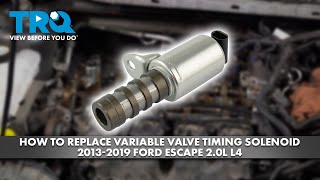
We Have This Part in Stock


The information in this article is provided for general reference and educational purposes only. Vehicle specifications, procedures, and part compatibility can vary by production date, trim level, and region. Always consult your vehicle's factory service manual and verify part numbers before purchasing or performing repairs. Safety-critical components such as airbags, seat belts, and braking systems should be installed by a qualified professional.
- Ford RANGER:
- 🧭 Diagnostic Flowchart
- 🎬 Helpful Videos
- 🛍️ Shop This Part
- What's Unique About the 2019-2021 Ford RANGER
- Symptoms You May Notice
- Most Likely Causes
- Rare But Worth Checking
- Diagnosis Steps
- Parts You'll Likely Need
- Related Codes That Often Appear With This One
- Technical Service Bulletins (TSBs) & Recalls
- Platform-Specific Known Issues
- Mechanic-Grade Diagnostic Values
- Scan Tool Commands That Help
- Wiring & Ground Locations
- OEM Part Supersession History
- Model Year Variations Within This Range
- 🎟️ Get 5% Off