

P0014 on 2004-2011 GMC Canyon: Exhaust Cam Timing Over-Advanced Causes and Fixes
On a 2004-2011 GMC Canyon, code P0014 is most often caused by a faulty exhaust camshaft actuator solenoid or low/dirty engine oil. This is a very common issue for the GM Atlas engine family. Replacing the solenoid is a frequent and accessible DIY fix, costing between $25 and $75 for the part. In some cases, the issue can be a more severe mechanical problem like excessive crankshaft end play.
- P0014 on a 2004-2011 Canyon means the exhaust camshaft timing is too far advanced.
- The most likely fix is replacing the exhaust camshaft actuator solenoid, a simple and inexpensive DIY job.
- Always check your engine oil first; low or dirty oil is a very common cause for this code.
- If the code returns after replacing the solenoid and changing the oil, be aware of a more serious potential issue with crankshaft end play, as documented in a GM TSB.
What's Unique About the 2004-2011 Gmc CANYON

The first-generation GMC Canyon, with its Atlas family of inline engines (I4 and I5), is known for this specific code. The Variable Valve Timing (VVT) system is sensitive to oil quality and pressure. While the camshaft actuator solenoid is a frequent failure point, these engines can also suffer from excessive crankshaft end play, which can mimic the symptoms of a bad solenoid and even lead to engine replacement if not diagnosed correctly, as noted in GM Technical Service Bulletin #PIP3694F. This TSB specifically calls out that if diagnostics for the solenoid don't resolve the issue, measuring crankshaft end play is the next critical step.
Diagnostic Flowchart

Tap your situation to follow the diagnostic path that matches what you're seeing on this vehicle.
Symptoms You May Notice
- Check Engine Light is on
- Rough idle.
- Reduced engine power and poor acceleration.
- Increased fuel consumption.
- Engine rattling or ticking noise, especially at idle.
- Hard starting.
- Engine stalling.
- Replacing the camshaft position sensor. While related, the sensor's job is to report the position. It's usually not the cause of the timing being incorrect, but rather the messenger. A bad sensor would typically set a different code (e.g., P0340).
Most Likely Causes

- Faulty Exhaust Camshaft Actuator Solenoid (VVT Solenoid) 🔴 High Probability → Shop Engine Camshaft The solenoid's fine mesh screens can get clogged with oil sludge or tear over time, impeding its function. It's a very common failure item on these engines, frequently discussed in owner forums and addressed in repair videos.
How to confirm: Remove the solenoid (a single 10mm bolt holds it in) and inspect the screens for debris or damage. You can also test its resistance with a multimeter; it should typically be between 8-12 ohms. A popular diagnostic trick is to swap the intake and exhaust solenoids; if the code changes to P0011 (Intake 'A' Camshaft Position), the solenoid is confirmed faulty.
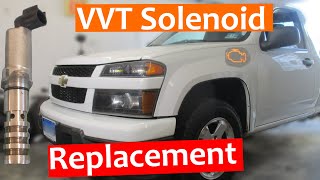
Typical fix: Replace the exhaust camshaft actuator solenoid. This is an accessible part on the top, front of the cylinder head, closer to the exhaust manifold. 🎬 Watch: A step-by-step walkthrough of the VVT solenoid replacement.
Est. part cost: $25-$75 - Low or Dirty Engine Oil 🔴 High Probability The VVT system relies entirely on oil pressure to adjust cam timing. The Atlas engines are particularly sensitive, and old, sludgy, or low oil cannot operate the actuator correctly, making this a primary trigger for P0014.
How to confirm: Check the engine oil level and condition using the dipstick. If the oil is low, black, or sludgy, this is a likely cause.
Typical fix: Perform an engine oil and filter change using the manufacturer-specified oil weight (e.g., 5W-30). An engine flush may be beneficial if sludge is present, but simply changing the oil and filter often resolves the code.
Est. part cost: $40-$80 - Worn Timing Components or Excessive Crankshaft End Play ⚪ Low Probability As highlighted in TSB #PIP3694F, excessive crankshaft end play due to worn thrust bearings can cause P0014 and P0017. The TSB notes that if this is the cause, the end play will be obviously out of spec, sometimes by as much as .050 inches. Stretched timing chains are also a known issue on higher mileage Atlas engines.
How to confirm: This requires a more in-depth mechanical inspection. Crankshaft end play is measured by prying on the crankshaft pulley; specification is 0.0044in - 0.0153in. Checking the timing chain requires removing the timing cover.
Typical fix: If crankshaft end play is excessive, engine replacement is often recommended by GM to avoid issues with bearing debris contaminating the new parts. If the chain is stretched, the timing chain kit (chain, guides, tensioner) must be replaced.
Est. part cost: $400-$800 for a timing kit, $3000+ for an engine
Rare But Worth Checking
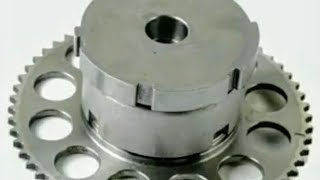
- Faulty Camshaft Phaser (Actuator Sprocket): → Shop Engine Camshaft The phaser itself, which is the gear on the end of the camshaft, can get stuck due to sludge or internal failure. This is less common than the solenoid failing but can happen if oil maintenance is neglected. Symptoms include rattling noises during a cold start.
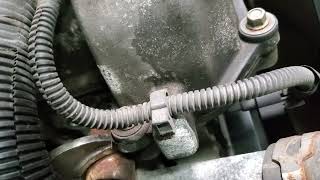
- Loose Crankshaft Balancer Bolt: A video source specific to the 2004-2012 Colorado/Canyon mentions that a loose crankshaft balancer bolt can allow the crankshaft timing gear to move, causing codes P0014 and P0017. This should be checked before tearing into the timing cover. 🎬 See this video for common causes and simple solutions.
- Clogged Oil Passages: Severe oil sludge can block the small oil passages leading to the cam phaser or within the phaser itself, even if the solenoid is clean. This often requires more significant engine cleaning or disassembly to resolve.
Diagnosis Steps

- Read the codes with an OBD-II scanner to confirm P0014 and check for any other codes like P0017 or P0106.
- Check the engine oil level and condition. If it's low, dirty, or overdue for a change, perform an oil and filter change with the correct 5W-30 oil. Clear the code and drive to see if it returns. This is the easiest and cheapest first step.
- Locate the exhaust camshaft actuator solenoid on the top front of the engine, on the exhaust side. It's held in by a single 10mm bolt.
- Disconnect the electrical connector (release the gray or white locking tab first) and remove the 10mm bolt.
- Carefully remove the solenoid, twisting it gently if it's stuck. Inspect the small mesh screens for tears, clogs, or debris. If they are damaged or clogged, the solenoid needs replacement.
- Diagnostic Swap: A reliable test is to swap the exhaust solenoid with the identical intake solenoid. Clear the codes. If the code returns as P0011 (Intake Cam Position), you have definitively proven the solenoid is the faulty component.
- If the solenoid looks clean, you can test its resistance with a multimeter (should be 8-12 ohms) or apply 12V power to see if it clicks, though replacement is often recommended due to the high failure rate.
- If a new solenoid and fresh oil do not fix the code, investigate more serious mechanical issues. This includes checking for a loose crankshaft balancer bolt and measuring crankshaft end play as described in TSB #PIP3694F. This level of diagnosis may require a professional.
- If all else fails, the issue could be with the camshaft phaser itself or a stretched timing chain, which requires significant engine disassembly to inspect and repair.
Parts You'll Likely Need
- Exhaust Camshaft Position Actuator Solenoid
(OEM #12615873)— This is the most frequent cause of P0014. Its screens get clogged or it fails electronically, preventing correct oil flow to the cam phaser.
Trusted brands: ACDelco (OEM), Dorman (e.g., 917-010), Delphi
OEM price range: $40-$75
Aftermarket price range: $25-$50 - Engine Oil and Filter — Low or dirty oil is a primary cause of VVT system faults. An oil change is a critical first step and often the complete fix.
Trusted brands: ACDelco Oil Filter, Mobil 1 5W-30, Castrol GTX 5W-30
OEM price range: $40-$80
Aftermarket price range: $40-$80
Related Codes That Often Appear With This One
- P0017 — This code indicates a 'Crankshaft Position - Camshaft Position Correlation' error. It frequently appears with P0014 because if the exhaust cam is over-advanced (P0014), its position will not correlate correctly with the crankshaft's position, triggering P0017. Both are mentioned together in TSB #PIP3694F.
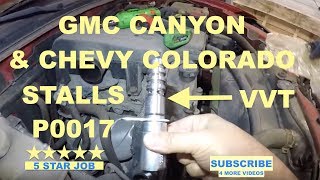
- P0106 — This code for 'Manifold Absolute Pressure (MAP) Sensor Performance' can be stored alongside P0014 if a rough idle is present, as noted in TSB #PIP3694F. The incorrect valve timing can cause erratic vacuum levels in the intake manifold, affecting the MAP sensor reading. 🎬 Watch: How P0017 can cause your engine to stall.
Technical Service Bulletins (TSBs) & Recalls
- PIP3694F: Addresses belt noise, rough idle, and codes P0014/P0017. Recommends inspecting the CMP actuator solenoid and crankshaft end play. States that if end play is excessive, engine replacement is suggested.
Platform-Specific Known Issues

- TSB #PIP3694F addresses P0014 and P0017 on these trucks, pointing to potential excessive crankshaft end play as a root cause, which is a severe mechanical issue. The bulletin advises checking the camshaft actuator solenoid first, but if the problem persists, measuring end play is critical before attempting more complex repairs. GM suggests engine replacement if end play is significantly out of spec (e.g., .050 inches or more).
- The intake and exhaust VVT solenoids are identical and interchangeable on these engines, which provides an excellent no-cost diagnostic step (swapping them to see if the trouble code follows the part).
Mechanic-Grade Diagnostic Values
- Camshaft Actuator (VVT) Solenoid Resistance — expected: 8 to 13 Ohms. Failure: A reading outside this range, or an open/short circuit, indicates a faulty solenoid.
- Voltage at VVT Solenoid Connector — expected: Approximately 12V (Battery Voltage). Failure: No voltage indicates a wiring or PCM issue, not a faulty solenoid.
- Scan Tool Camshaft Angle Data — expected: Desired and Actual camshaft position values should closely match when the engine is running.. Failure: A large discrepancy between desired and actual values, especially when commanding changes with a scan tool, points to a mechanical or hydraulic issue (stuck phaser, low oil pressure).
Scan Tool Commands That Help
- Tech2 / GDS2 or equivalent professional scanner: Camshaft Position Actuator Solenoid Control — This bidirectional test allows a technician to command the solenoid on and off while monitoring the engine's response and live data. It can confirm if the solenoid is physically responding to commands from the ECM, helping to isolate the fault between the solenoid, wiring, or the phaser itself.
Wiring & Ground Locations
- G101 / G106 — G101 is on the lower front of the engine block. G106 is on the front center of the frame cross rail, under the crank pulley. G101 jumpers to G106.. These grounds are critical for the Engine Control Module (ECM). A poor connection at these points can cause erratic behavior from sensors and actuators controlled by the ECM, including the VVT system.
- SP-105 / SP-106 (Splice Packs) — SP-105 is on the driver's side inner fender near the battery/ABS module. SP-106 is on the passenger side inner fender, behind the engine airbox.. These are notorious corrosion points on the Colorado/Canyon platform. While not directly for the VVT solenoid, they ground many critical systems including the EBCM and components of the data link connector. Widespread electrical issues from these grounds can sometimes manifest in unexpected ways.
Real Owner Repair Stories
- 355nation.net forum user (2005 Chevrolet Colorado Z71 3.5L I5) — P0014 and P0017 codes, rough idle, stalling.
❌ Tried (didn't work) Replaced both intake and exhaust VVT solenoids., Performed multiple oil changes., Replaced both camshaft position sensors., Replaced the crankshaft position sensor.
✅ What actually fixed it The crankshaft balancer bolt had backed out, causing the harmonic balancer and the crankshaft timing gear behind it to wobble. This threw off the correlation between the crank and cam sensors. Tightening the bolt to the proper torque specification resolved the codes.
When the Usual Fixes Don't Work
- In one documented case on a platform-mate, an owner replaced both VVT solenoids and camshaft sensors trying to fix P0014 and P0017. The problem was ultimately a loose crankshaft balancer bolt, which allowed the timing gear to have enough play to disrupt the cam/crank correlation. This is a purely mechanical issue that will not be solved by replacing electronic components and highlights the importance of checking the balancer's integrity before assuming a timing chain or phaser issue.
OEM Part Supersession History
12578517, 12589784, 12602516→12615873— Likely design improvements to the internal valve or screens to improve durability and resistance to sludge.
Model Year Variations Within This Range
- 2004-2006: These years used the 2.8L (LK5) and 3.5L (L52) engines.
- 2007-2011: In 2007, the engines were updated to the 2.9L (LLV) and 3.7L (LLR). The 3.7L LLR featured a larger bore and a corrected cylinder head design which had been a problem area on the earlier 3.5L L52. While the VVT system concept is the same, some associated parts may have minor differences. The VVT solenoid part number (12615873) is generally listed for all years, however.
Helpful Videos
We Have This Part in Stock

The information in this article is provided for general reference and educational purposes only. Vehicle specifications, procedures, and part compatibility can vary by production date, trim level, and region. Always consult your vehicle's factory service manual and verify part numbers before purchasing or performing repairs. Safety-critical components such as airbags, seat belts, and braking systems should be installed by a qualified professional.
- Gmc CANYON:
- 🧭 Diagnostic Flowchart
- 🎬 Helpful Videos
- 🛍️ Shop This Part
- What's Unique About the 2004-2011 Gmc CANYON
- Symptoms You May Notice
- Most Likely Causes
- Rare But Worth Checking
- Diagnosis Steps
- Parts You'll Likely Need
- Related Codes That Often Appear With This One
- Technical Service Bulletins (TSBs) & Recalls
- Platform-Specific Known Issues
- Mechanic-Grade Diagnostic Values
- Scan Tool Commands That Help
- Wiring & Ground Locations
- Real Owner Repair Stories
- When the Usual Fixes Don't Work
- OEM Part Supersession History
- Model Year Variations Within This Range
- 🎟️ Get 5% Off