

P0014 on 2005-2009 GMC Envoy: Exhaust Cam Timing Causes and Fixes
On a 2005-2009 GMC Envoy with the 4.2L engine, code P0014 is most often caused by a faulty exhaust Camshaft Position Actuator Solenoid or low/dirty engine oil. Replacing the solenoid is a common DIY fix costing between $30 and $90. Always check your oil level and condition first, as the VVT system is entirely dependent on oil pressure and cleanliness.
- Always check your engine oil level and condition first. A simple oil change can often fix P0014 on the GMC Envoy.
- The most likely failed part is the exhaust Camshaft Position Actuator Solenoid, not the camshaft sensor.
- Replacing the solenoid is a manageable DIY job, but requires moving the power steering pump for access.
- If the code persists after replacing the oil and solenoid, investigate the possibility of a stretched timing chain or the less common crankshaft end play issue described in TSB #PIP3694F.
What's Unique About the 2005-2009 Gmc ENVOY
The 4.2L Atlas LL8 inline-6 engine in the Envoy is well-known for its sensitivity to oil quality and level, which directly operates the VVT system. Consequently, the most common failure point is the Camshaft Position Actuator Solenoid, which gets clogged with oil sludge or debris, leading to timing issues. A specific Technical Service Bulletin (TSB PIP3694F) also warns that in some cases, a worn crankshaft thrust bearing can cause excessive crankshaft movement (end play), leading to false P0014 or P0017 codes. This can be misdiagnosed as a timing chain or phaser problem, when the root cause is the crankshaft physically moving back and forth excessively.
Diagnostic Flowchart
Tap your situation to follow the diagnostic path that matches what you're seeing on this vehicle.
Symptoms You May Notice
- Check Engine Light is on
- Rough idle or stalling
- Reduced engine power and poor acceleration
- Poor fuel economy
- Engine noise, such as rattling, knocking, or ticking
- Hard starting
- Burning gas smell from the exhaust [NHTSA ODI #10458756]
- Engine hesitates or runs erratically at low speeds.
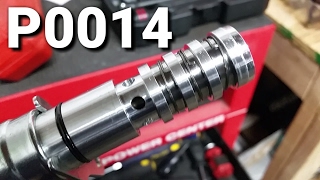
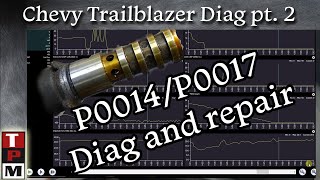
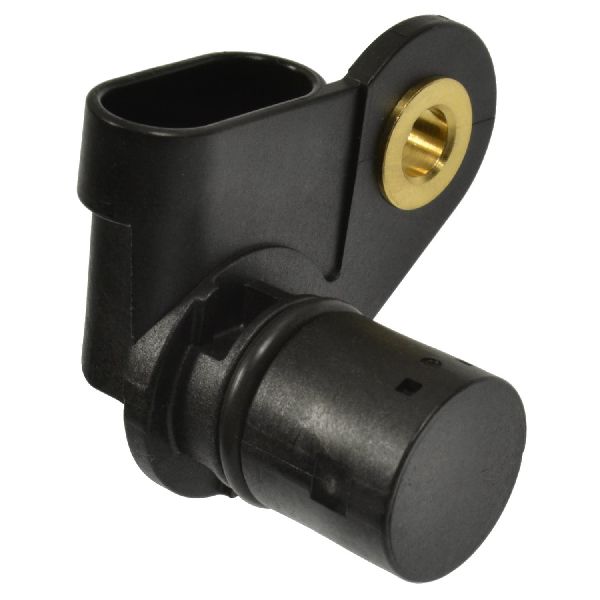
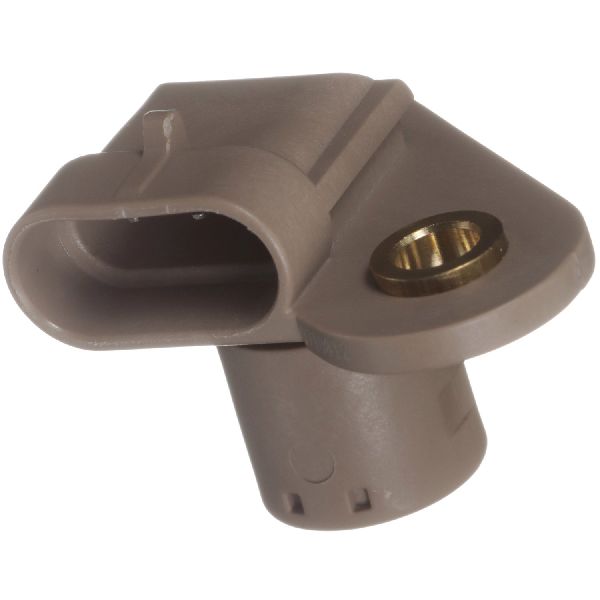
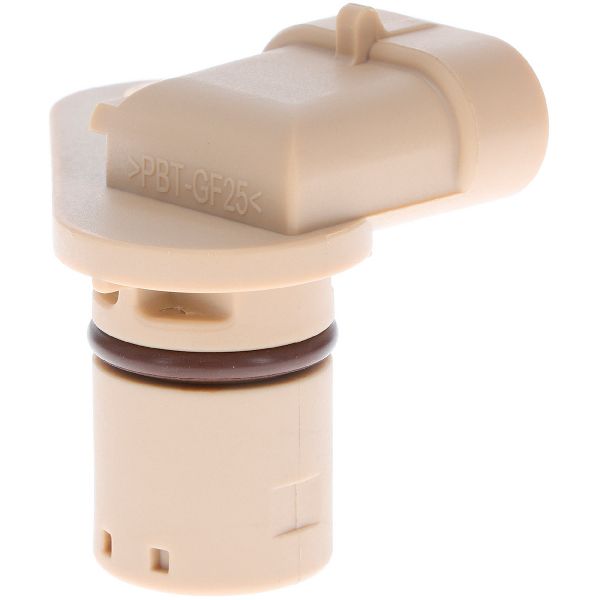
- Replacing the Camshaft Position *Sensor* instead of the Camshaft Position *Actuator Solenoid*. The sensor reads the position, but the solenoid controls it. P0014 is almost always related to the control side 🎬 See this video for common causes and simple solutions for P0014. (solenoid) or a base mechanical issue, not the sensor.
- Assuming a timing chain replacement is needed before thoroughly checking the oil and VVT solenoid, which are far more common and cheaper fixes.
- Replacing the engine due to TSB #PIP3694F without first physically measuring the crankshaft end play to confirm the thrust bearing failure.
Most Likely Causes
- Low or Dirty Engine Oil 🔴 High Probability The VVT system is hydraulically operated by engine oil. The tight tolerances and small screens in the actuator solenoid are easily affected by low pressure or contaminants like sludge.
How to confirm: Check the engine oil dipstick. The oil should be at the full mark and have a clean, amber appearance, not black, thick, or sludgy. A low oil level is a very common trigger for this code.
Typical fix: Perform an engine oil and filter change using the correct viscosity oil (5W-30). This should always be the first step before replacing parts.
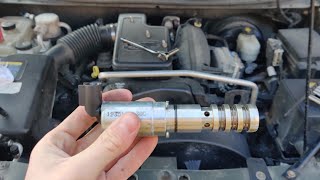
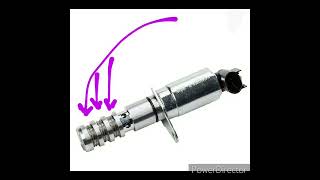
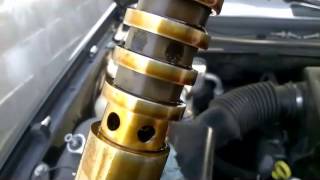
Est. part cost: $40-$80 - Faulty Exhaust Camshaft Position Actuator Solenoid (VVT Solenoid) 🔴 High Probability → Shop Engine Camshaft The three small mesh screens on the solenoid are prone to clogging with oil sludge and debris, restricting oil flow and causing the internal piston to stick. The screens can also tear, sending debris into the camshaft phaser.
How to confirm: Remove the solenoid (one 10mm bolt) and inspect the small metal screens for debris, sludge, or tears. You can also test its resistance with a multimeter or apply 12v power to see if it clicks. The most definitive test is to swap it with the intake solenoid (they are identical on the 4.2L engine). Clear the codes and drive. If the code changes to P0011 (Intake Camshaft Position), the solenoid is confirmed to be faulty.
Typical fix: Replace the exhaust camshaft position actuator solenoid. 🎬 Watch: This easy walkthrough shows you how to replace the solenoid. Cleaning is sometimes a temporary fix, but replacement is recommended for reliability as the solenoid can fail internally.
Est. part cost: $30-$90 - Stretched Timing Chain or Failed Tensioner 🟡 Medium Probability → Shop Engine Timing Chain Over time, especially on higher-mileage engines (over 100,000-150,000 miles), the timing chain can stretch, or the hydraulic tensioner can weaken, causing slack in the chain and affecting cam/crank correlation.
How to confirm: This is a more involved diagnosis. It often presents with a persistent rattling noise from the front of the engine, especially on startup. Confirmation requires removing the valve cover to inspect chain slack and guide condition. This is typically diagnosed after ruling out oil and solenoid issues.
Typical fix: Replace the timing chain, guides, and tensioner. This is a significant labor-intensive repair as the 4.2L is an interference engine, meaning a failure can cause catastrophic damage.
Est. part cost: $200-$600
Rare But Worth Checking
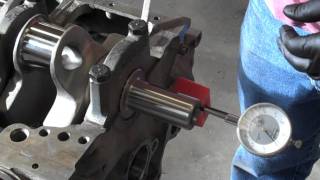
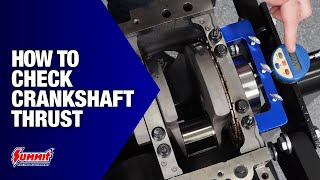
- Worn Crankshaft Thrust Bearing / Excessive Crankshaft End Play: This is a specific issue highlighted by GM TSB #PIP3694F. If P0014 appears with P0017 and engine noise, and solenoid/oil issues are ruled out, the crankshaft end play should be measured by prying the crankshaft back and forth. 🎬 Watch: How to physically check for excessive crankshaft end play. The spec is 0.0044" - 0.0153", but failures are often obviously out of spec at 0.050" or more. Excessive play can cause the crankshaft position sensor to get an incorrect reading, leading to false timing codes. GM suggests engine replacement in this scenario.
- Faulty Camshaft Phaser (Actuator): → Shop Engine Camshaft The phaser itself, which is the gear on the end of the camshaft that the solenoid sends oil to, can fail mechanically or become clogged with debris (especially if a solenoid screen breaks). This is less common than the solenoid but can happen if the engine has been run with dirty oil for an extended period.
Diagnosis Steps
- Check engine oil level and condition. If low, dirty, or the wrong viscosity, perform an oil and filter change, clear the code, and re-test. This is the most critical first step.
- Scan for other trouble codes. Codes like P0017 or P0300 can provide more diagnostic clues.
- Inspect the wiring and connector for the exhaust camshaft position actuator solenoid. Look for damage, corrosion, or oil contamination inside the connector.
- Remove the exhaust VVT solenoid. It is located on the exhaust side of the engine near the front and is held by a single 10mm bolt. Note that the three power steering pump bolts must be removed and the pump shifted aside for clearance.
- Inspect the solenoid's screens for sludge, metal debris, or tears. If debris is found, replacement is highly recommended over cleaning.
- For a definitive test, swap the exhaust solenoid with the intake solenoid (they are identical on the 4.2L engine). Clear the codes and drive the vehicle. If the code changes to P0011 (Intake Camshaft Position), the solenoid is confirmed to be faulty.
- If the code returns and the solenoid is good, check for a wobbling crankshaft harmonic balancer, which could indicate the crankshaft end play issue mentioned in TSB #PIP3694F. Measure end play by prying on the crankshaft pulley and using a dial indicator.
- If all other steps fail, suspect a mechanical timing issue, such as a stretched timing chain or failed phaser, which requires more in-depth mechanical diagnosis, often starting with valve cover removal.
Parts You'll Likely Need
- Exhaust Camshaft Position Actuator Solenoid
(OEM #12615873)— This is the most common failure part for code P0014 on the 4.2L engine. Its internal screens get clogged with oil debris, causing it to malfunction.
Trusted brands: ACDelco (GM OE), Delphi, Dorman (e.g., 917-010)
OEM price range: $50-$90
Aftermarket price range: $30-$60 - Engine Oil and Filter — Low or dirty oil is a primary cause of VVT system faults. An oil change is the first and most important diagnostic step and should be done whenever the solenoid is replaced.
Trusted brands: ACDelco, Mobil 1, Pennzoil
OEM price range: $60-$100
Aftermarket price range: $40-$80
Related Codes That Often Appear With This One
- P0017 — Crankshaft Position - Camshaft Position Correlation (Bank 1, Sensor B). This code often appears with P0014 because if the exhaust cam is over-advanced, it will also be out of sync with the crankshaft. It is a key indicator for the crankshaft end play issue described in TSB PIP3694F.
- P0300 — Random/Multiple Cylinder Misfire Detected. Incorrect camshaft timing can disrupt the combustion process, leading to misfires across multiple cylinders.
- P0106 — Manifold Absolute Pressure/Barometric Pressure Circuit Range/Performance. TSB #PIP3694F notes that a rough idle caused by the P0014 fault can sometimes trigger a P0106 code. [NHTSA TSB #PIP3694F, 11]
- P0013 — Exhaust Camshaft Position Actuator Solenoid Control Circuit (Bank 1). This code points more specifically to an electrical problem with the solenoid (open or shorted circuit), while P0014 points to a mechanical/performance issue (sticking, clogged). They can sometimes appear together.
Technical Service Bulletins (TSBs) & Recalls
- Bulletin #PIP3694F: Addresses engine belt noise, rough idle, and SES light with DTC P0014 and/or P0017. Points to inspecting the camshaft actuator solenoid screens and, critically, measuring crankshaft end play as potential causes beyond the obvious. Suggests engine replacement if end play is excessive.
Platform-Specific Known Issues
- Per TSB #PIP3694F, a rough idle and P0014/P0017 can be caused by excessive crankshaft end play due to a failed thrust bearing. This can mislead a technician into thinking there is a timing chain issue when it is a bottom-end problem requiring crankshaft inspection.
Mechanic-Grade Diagnostic Values
- Camshaft Position Actuator Solenoid (VVT Solenoid) Resistance — expected: 6-12 Ohms between the two pins.. Failure: A reading of 0 Ohms (short circuit) or infinite/OL (open circuit) indicates a failed solenoid.
- Engine Oil Pressure (Mechanical Gauge) — expected: Minimum 12 PSI at 600 RPM (idle); approximately 65 PSI at 3,000 RPM.. Failure: Pressure significantly below these values indicates a worn oil pump, clogged pickup tube, or other internal engine wear, which will starve the VVT system of pressure.
- Crankshaft End Play — expected: 0.0044 to 0.0153 inches.. Failure: A measurement significantly larger than the wear limit (e.g., 0.050 inches or more) confirms thrust bearing failure as described in TSB #PIP3694F.
- VVT Solenoid Connector Voltage — expected: Battery voltage (12V) on one pin with the key on, engine off.. Failure: No voltage suggests a wiring or fuse issue upstream of the solenoid.
Scan Tool Commands That Help
- Tech2 / GDS2 or equivalent professional scan tool: Camshaft Position Actuator control or VVT Solenoid Test — This bidirectional command allows the technician to manually command the solenoid on and off to verify its operation. When activated, a change in engine idle should be noticeable. This helps confirm if the solenoid is responding to commands from the ECM, isolating the issue between the solenoid itself and the wiring/ECM.
Wiring & Ground Locations
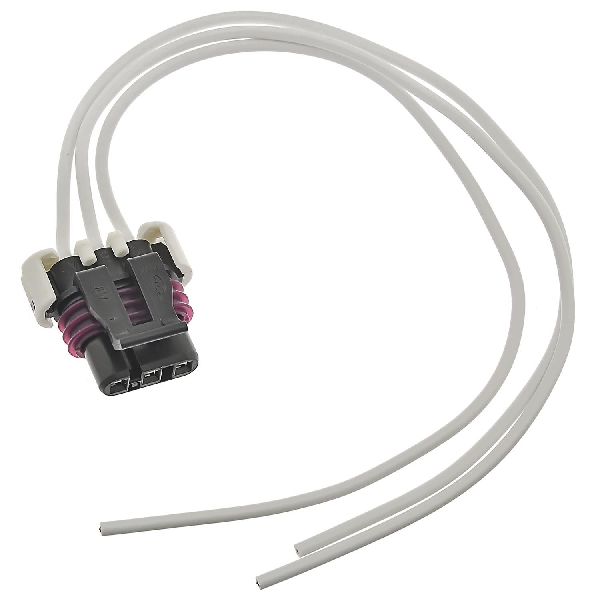
- Camshaft Actuator Solenoid Connector — On the exhaust side (right side) of the cylinder head, near the front of the engine.. This is the direct electrical connection to the faulty component. The two pins are typically labeled A and B. Pin A receives power, and Pin B is the control signal from the ECM. Checking for voltage and ground pulse here is a key diagnostic step.
- G107 / G108 / G109 — Grouped on the lower left side of the engine block.. These are primary engine block grounds. A poor ground connection at these points can cause a host of electrical issues, including erratic sensor readings and incorrect operation of actuators like the VVT solenoid, as the ECM may not have a stable ground reference.
- ECM (PCM) — On the upper left side of the engine for 2005 models, and near the lower left front of the engine for later models.. This is the control module that commands the VVT solenoid. All wiring for the solenoid circuit originates here. A damaged pin or corrosion at the ECM connector could cause a P0014 code.
Real Owner Repair Stories
- Reddit user in r/MechanicAdvice (2007 GMC Envoy, 160k miles) — P0014 code appeared immediately after selling the vehicle, but the engine ran perfectly with no noticeable symptoms.
❌ Tried (didn't work) The user was concerned about a potential timing chain issue due to the code's definition.
✅ What actually fixed it The community consensus pointed strongly to either low/dirty oil or a failing exhaust camshaft position actuator solenoid, advising these as the first and most likely fixes before considering a major repair like a timing chain. The story highlights how the code can appear without drivability symptoms, often triggered by oil condition or a failing solenoid.
OEM Part Supersession History
12568078, 12576768, 12597025, 12602516→12615873— Design improvements to address screen clogging and internal failures.
Model Year Variations Within This Range
- 2005 vs 2006-2009: The physical location of the Engine Control Module (ECM/PCM) changed. On 2005 models, it is located on the upper left side of the engine. On later models, it is near the lower left front of the engine. This is important for technicians tracing wiring issues.
Helpful Videos

We Have This Part in Stock


The information in this article is provided for general reference and educational purposes only. Vehicle specifications, procedures, and part compatibility can vary by production date, trim level, and region. Always consult your vehicle's factory service manual and verify part numbers before purchasing or performing repairs. Safety-critical components such as airbags, seat belts, and braking systems should be installed by a qualified professional.
- Gmc ENVOY:
- 🧭 Diagnostic Flowchart
- 🎬 Helpful Videos
- 🛍️ Shop This Part
- What's Unique About the 2005-2009 Gmc ENVOY
- Symptoms You May Notice
- Most Likely Causes
- Rare But Worth Checking
- Diagnosis Steps
- Parts You'll Likely Need
- Related Codes That Often Appear With This One
- Technical Service Bulletins (TSBs) & Recalls
- Platform-Specific Known Issues
- Mechanic-Grade Diagnostic Values
- Scan Tool Commands That Help
- Wiring & Ground Locations
- Real Owner Repair Stories
- OEM Part Supersession History
- Model Year Variations Within This Range
- 🎟️ Get 5% Off