

P0014 on 2010-2015 GMC Terrain: Exhaust Cam Timing Over-Advanced Causes & Fixes
On a 2010-2015 GMC Terrain, especially with the 2.4L engine, P0014 is most often caused by low engine oil or a faulty exhaust camshaft position actuator solenoid (Part No. 12655421). Always check your oil level first; if it's normal, replacing the solenoid is a common, inexpensive DIY fix that often resolves the issue.
- For the 2010-2015 GMC Terrain with a 2.4L engine, P0014 is very frequently caused by low engine oil due to the engine's tendency to consume oil. Always check the dipstick first.
- The second most likely cause is a failed exhaust camshaft position actuator solenoid, which is an affordable part and simple to replace for most DIYers.
- Do not confuse the actuator *solenoid* with the camshaft position *sensor*; the solenoid is the part that almost always fails for this code.
- If the code is accompanied by a P0017 and/or a rattling engine noise, suspect a more serious timing chain issue that requires professional attention.
- Using the correct specification engine oil (dexos 5W-30) and maintaining regular oil change intervals is critical to preventing this code from returning.
What's Unique About the 2010-2015 Gmc TERRAIN
The 2.4L Ecotec engine used in this generation of GMC Terrain is notorious for excessive oil consumption due to defective piston rings, a condition acknowledged by GM in Special Coverage Adjustments like #14159D and #N192291100. This problem is a direct cause of code P0014, as the VVT system is hydraulic and relies on consistent oil pressure and volume to function. When oil levels drop, the VVT solenoids and phasers can be starved of oil or damaged by sludgy oil, leading to incorrect timing and triggering this code. Many owners face this issue even with regular maintenance due to the underlying engine defect.
Diagnostic Flowchart
Tap your situation to follow the diagnostic path that matches what you're seeing on this vehicle.
Symptoms You May Notice
- Check Engine Light is on
- Engine runs rough or has a rough idle
- Stalling, especially when coming to a stop. [ODI 11221891]
- Hesitation or reduced engine power during acceleration.
- Noticeable decrease in fuel economy (one owner reported a 15% drop).
- Hard starting.
- Rattling, ticking, or slapping noise from the engine, especially on startup. [1, ODI 11360517]
- Replacing the camshaft position *sensor* instead of the camshaft position actuator *solenoid*. The sensor reads the position, but the solenoid is the component that controls oil flow to adjust the timing and is the much more common failure point for this code. [ODI 11221891, 27]
Most Likely Causes
- Low or Dirty Engine Oil 🔴 High Probability The 2.4L Ecotec engine has a well-documented history of excessive oil consumption due to piston ring wear, which starves the VVT system. Sludge from infrequent oil changes can also clog the fine mesh screens on the VVT solenoids.
How to confirm: Check the engine oil level on the dipstick. Inspect the oil's color and consistency for dirt or sludge. Ensure the level is not low.
Typical fix: Top off the oil to the correct level. Perform an engine oil and filter change using a full synthetic oil that meets GM's dexos1 specification (e.g., 5W-30). Address the root cause of oil consumption if necessary, which may fall under GM's Special Coverage Adjustment #14159D.
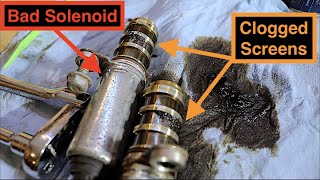
Est. part cost: $40-$80 for high-quality synthetic oil and filter - Faulty Exhaust Camshaft Position Actuator Solenoid 🔴 High Probability → Shop Engine Camshaft These solenoids are a very common failure point on GM Ecotec engines, often getting clogged with debris or failing electronically. TSB #17-NA-098 directly links this part's failure to code P0014.
How to confirm: Swap the exhaust solenoid (rear, black connector) with the intake solenoid (front, gray connector). Clear the codes and drive. If the code changes to P0011 (Intake Cam Position), the solenoid is faulty. Alternatively, test the solenoid's resistance with a multimeter; a good solenoid should read between 8-13 Ohms.
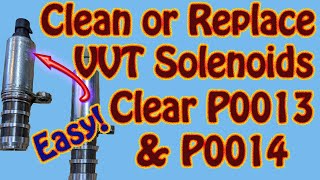
Typical fix: Replace the Bank 1 exhaust camshaft position actuator solenoid (Part No. 12655421). It is highly recommended to replace both the intake (Part No. 12655420) and exhaust solenoids at the same time as a pair. 🎬 Watch: This easy DIY walkthrough shows you how to replace both solenoids.
Est. part cost: $20-$60 per solenoid
Rare But Worth Checking
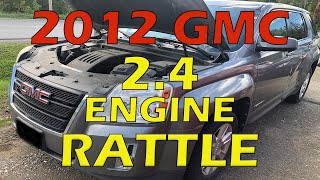
- Stretched Timing Chain or Failed Tensioner: → Shop Engine Timing Chain While less common than oil issues or a bad solenoid, the 2.4L Ecotec is also known for premature timing chain wear, often accelerated by running on low oil. A distinct rattling or slapping noise on startup is a key symptom. 🎬 Listen to what a stretched timing chain sounds like on a cold start. This is a much more serious and expensive repair, often appearing with code P0017. [ODI 11402894] A full timing chain job can cost between $1,200 and $2,700.
- Faulty Camshaft Phaser (Actuator): → Shop Engine Camshaft The mechanical gear that the solenoid controls can fail, getting stuck in an advanced position or clogged internally. This is more complex to diagnose and requires removal of the valve cover and potentially the timing chain for replacement.
- Wiring or Connector Issue: Damage to the wiring harness or a poor connection at the solenoid can mimic a solenoid failure. Always inspect the connector for corrosion, pushed-out pins, or damage before replacing parts.
Diagnosis Steps
- Check Engine Oil: Verify the oil level is full and the oil is clean. This is the most common cause and a free check. Low or dirty oil is a known trigger for this code on the 2.4L engine.
- Scan for Other Codes: Use an OBD-II scanner to see if other codes, like P0013 or P0017, are present to help narrow down the cause.
- Inspect Solenoid Wiring: Check the electrical connector and wiring going to the exhaust camshaft actuator solenoid (the rear solenoid with the black connector) for any visible damage, corrosion, or loose connections.
- Test the Solenoid (Swap Method): The easiest test is to swap the exhaust solenoid with the intake solenoid (the front solenoid with the gray connector). They are identical parts on some model years, but verify first. Clear the codes. If the code returns as P0011, the solenoid you moved is bad and needs replacement.
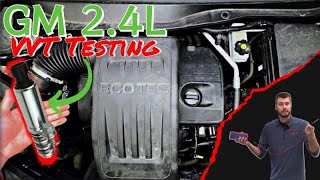
- Test the Solenoid (Resistance Method): Disconnect the solenoid and use a multimeter set to Ohms. A healthy solenoid should have a resistance between 8 and 13 Ohms. A reading of infinity (OL) or near zero indicates a failed solenoid. 🎬 See how to properly test your VVT solenoids using a multimeter.
- Clean or Replace Solenoid: If the solenoid is confirmed bad or highly suspect, replace it. It is best practice to replace both intake and exhaust solenoids as a pair. The old one may be covered in sludge, confirming an oil quality issue.
- Advanced Diagnosis: If the problem persists after replacing the solenoids with good oil, the issue may be a stretched timing chain or a faulty phaser. Listen for a startup rattle. This diagnosis typically requires professional tools and expertise.
Parts You'll Likely Need
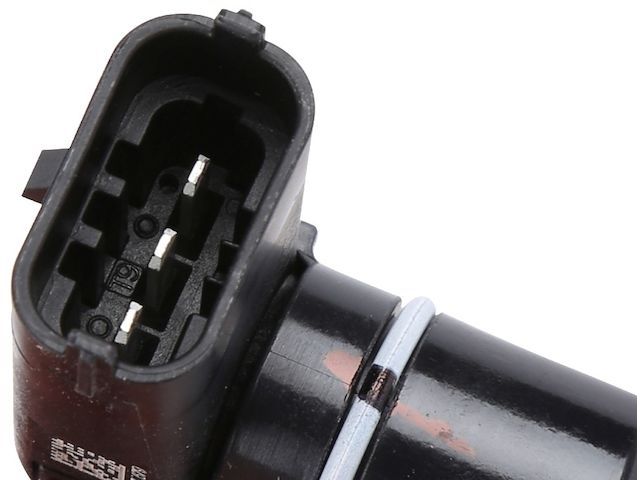
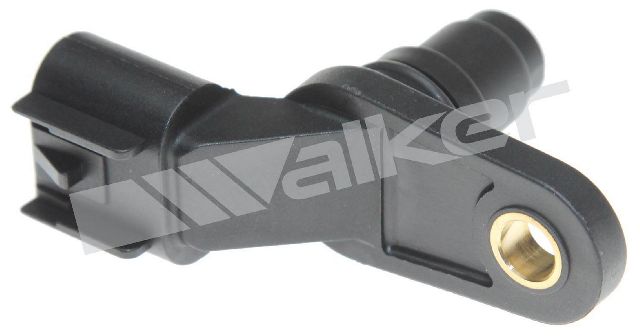
- Exhaust Camshaft Position Actuator Solenoid
(OEM #12655421)— This solenoid controls oil flow to the exhaust cam phaser and is the most common part to fail or clog, directly causing the P0014 code.
Trusted brands: ACDelco (OEM), Delphi, Dorman, Standard Motor Products (SMP)
OEM price range: $35-$50
Aftermarket price range: $20-$40 - Intake Camshaft Position Actuator Solenoid
(OEM #12655420)— Often replaced as a preventative measure along with the exhaust solenoid, as they are subjected to the same conditions and have a similar lifespan.
Trusted brands: ACDelco (OEM), Delphi, Dorman, Standard Motor Products (SMP)
OEM price range: $35-$50
Aftermarket price range: $20-$40
Related Codes That Often Appear With This One
- P0013 — This code indicates an electrical circuit problem (open/short) with the same exhaust camshaft actuator solenoid, while P0014 indicates a performance problem. They often appear together, strongly pointing to a faulty solenoid or its wiring.
- P0011 — This is the equivalent code for the intake camshaft. If both P0011 and P0014 appear, it may suggest a more systemic problem like very low oil pressure, severe oil sludging, or a base timing issue (e.g., timing chain). [TSB #PIP5096C, 4]
- P0017 — This code indicates a correlation problem between the crankshaft and exhaust camshaft positions. When seen with P0014, it is a very strong indicator of a stretched timing chain or incorrect base timing. [ODI 11402894, 21]
Technical Service Bulletins (TSBs) & Recalls
- 17-NA-098: Addresses rough running, hesitation, and stalling with DTCs P0010, P0013, P0011, P0014 due to camshaft position actuator solenoid valve failure.
- PIP5096C: An internal document for technicians that mentions DTCs P0011, P0014, P0021, and/or P0024 and advises inspecting the engine EUN sticker, likely to identify a specific engine build during diagnosis.
- 14159D / N192291100: Special Coverage Adjustments addressing excessive oil consumption on 2.4L engines due to piston ring wear, a root cause of oil-related VVT codes.
Platform-Specific Known Issues
- Excessive Oil Consumption: The 2.4L Ecotec engine in 2010-2013 models is subject to GM Special Coverage Adjustments (e.g., #14159D, #N192291100) for defective piston rings causing high oil consumption, which is a primary trigger for code P0014.
- Timing Chain Wear: Premature timing chain stretching is another known weakness of the 2.4L engine, often exacerbated by running on low oil. This is a major repair that can also cause P0014, often accompanied by P0017.
- TSB #17-NA-098: GM issued this bulletin for 2010-2012 models for rough running, stalling, and codes P0011/P0014 due to camshaft position actuator solenoid valve failure.
Mechanic-Grade Diagnostic Values
- Camshaft Position Actuator Solenoid Resistance — expected: 8 to 13 Ohms. Failure: A reading of infinity (OL), near zero, or a value that fluctuates wildly when wiggling the connector pins indicates a faulty solenoid.
- Camshaft Position Desired vs. Actual Angle (Scan Tool) — expected: The 'Actual' PID should closely follow the 'Desired' PID as engine RPM changes.. Failure: If the actual angle does not change when commanded or is stuck at a certain value (e.g., over 10 degrees off from desired), it points to a problem with the solenoid, phaser, or oil pressure.
- Solenoid Control Circuit Voltage (at ECM connector) — expected: Less than 1 Volt with the key on, engine off, and the ECM connector disconnected.. Failure: Voltage higher than 1V could indicate a short to voltage in the harness.
Scan Tool Commands That Help
- GDS2 (GM Dealer Scan Tool): Output Control - Camshaft Position Actuator Solenoid — This bidirectional command allows a technician to manually activate the exhaust VVT solenoid at idle. A noticeable change in engine idle or a stumbling sound confirms the solenoid is receiving the signal and the camshaft phaser is mechanically capable of moving. This helps differentiate between a wiring/ECM issue and a stuck mechanical component like the phaser itself.
Wiring & Ground Locations
- G103 / G104 — On the cylinder head. On some engines, G103 is on the front of the passenger side cylinder head; on others, a ground strap (G104) is on the left rear corner of the engine.. These are critical engine-to-harness ground points. A loose or corroded ground here can cause intermittent and unpredictable behavior from engine sensors and actuators, including the VVT solenoids and the ECM itself.
- Exhaust Camshaft Actuator Solenoid Connector — On the 2.4L engine, this is the rearward of the two solenoids on top of the valve cover, closer to the firewall. It has a black electrical connector.. This is the direct electrical connection for the component most likely to fail. Inspecting for oil intrusion is critical, as leaking oil can wick up the harness and damage the ECM.
Real Owner Repair Stories
- BobIsTheOilGuy forum user 'gregk24' (2017 GMC Terrain 2.4L with 90,000 miles) — Check Engine Light with code P0014. No engine rattle or starting issues were noted.
❌ Tried (didn't work) The owner maintained a strict 3,000-5,000 mile oil change interval with proper dexos oil, ruling out poor maintenance as a cause.
✅ What actually fixed it The dealer diagnosed and replaced the faulty exhaust VVT solenoid, which resolved the code. The user noted that these solenoids are known to be 'garbage parts that fail, even with great maintenance'. - YouTube channel 'OldSoulMillennial' (2014 GMC Terrain with 100,000 miles) — Check Engine Light with codes P0013 and P0014.
❌ Tried (didn't work) The owner proceeded directly to solenoid replacement based on the high probability of this being the cause.
✅ What actually fixed it Replaced both the intake and exhaust VVT solenoids. The old solenoids showed significant sludge and 'coffee grounds' like debris on the screens upon removal. Replacing both parts cleared the codes.
OEM Part Supersession History
12655421 (Exhaust Solenoid)→12679100— Part has been updated or replaced by the manufacturer. Reasons are not typically published but often involve improvements in materials or design.
Heads up: The new part number (12679100) is the direct replacement for the original and should be fully compatible.12628348, 12646784→12655421— These are older part numbers that were consolidated into 12655421.
Model Year Variations Within This Range
- 2010-2012: The standard V6 engine was a 3.0L (LF1/LFW).
- 2013-2015: The optional V6 engine was upgraded to a more powerful 3.6L (LFX) with 301 hp. The luxurious Denali trim also became available in 2013.
- 2011-2015: The 2.4L four-cylinder and 3.0L/3.6L V6 engines were offered with FlexFuel (E85) capability as an option.
Helpful Videos
We Have This Part in Stock


The information in this article is provided for general reference and educational purposes only. Vehicle specifications, procedures, and part compatibility can vary by production date, trim level, and region. Always consult your vehicle's factory service manual and verify part numbers before purchasing or performing repairs. Safety-critical components such as airbags, seat belts, and braking systems should be installed by a qualified professional.
- Gmc TERRAIN:
- 🧭 Diagnostic Flowchart
- 🎬 Helpful Videos
- 🛍️ Shop This Part
- What's Unique About the 2010-2015 Gmc TERRAIN
- Symptoms You May Notice
- Most Likely Causes
- Rare But Worth Checking
- Diagnosis Steps
- Parts You'll Likely Need
- Related Codes That Often Appear With This One
- Technical Service Bulletins (TSBs) & Recalls
- Platform-Specific Known Issues
- Mechanic-Grade Diagnostic Values
- Scan Tool Commands That Help
- Wiring & Ground Locations
- Real Owner Repair Stories
- OEM Part Supersession History
- Model Year Variations Within This Range
- 🎟️ Get 5% Off