

P0014 on 2006-2010 Hummer H3: Exhaust Cam Timing Causes and Fixes
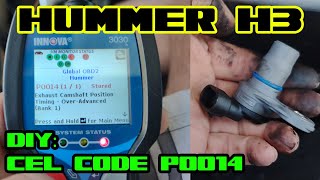
On a 2006-2010 Hummer H3, code P0014 is most often caused by a faulty or clogged exhaust camshaft actuator solenoid. This is an affordable and easy DIY repair, typically costing $25-$60 for the part. An oil and filter change should always be performed with the replacement.
- P0014 on an H3 almost always points to the exhaust camshaft actuator solenoid or the engine oil.
- Before buying any parts, check your oil level and condition. An oil and filter change is a crucial first step.
- Replacing the exhaust camshaft actuator solenoid is a simple, 15-minute DIY job that only requires a 10mm socket.
- The OEM part number for the solenoid is 12615873.
- If P0014 appears with P0017 and a new solenoid/oil change doesn't fix it, the timing chain may be stretched, which requires professional diagnosis.
What's Unique About the 2006-2010 Hummer H3
The Hummer H3, particularly with the Atlas family of inline-5 engines (3.5L and 3.7L), is known for sensitivity in its VVT system. These engines rely heavily on clean oil and proper oil pressure to operate the cam phasers. The camshaft actuator solenoids are a frequent failure point, often becoming clogged with sludge or failing electrically. A well-documented issue is the deterioration of the solenoid's filter screens; these screens can tear, sending debris into the oil passages or causing the solenoid to jam. This is a known issue across platform mates like the Chevrolet Colorado and GMC Canyon.
🎬 See common causes and solutions for these platform mates.Diagnostic Flowchart
Tap your situation to follow the diagnostic path that matches what you're seeing on this vehicle.
Symptoms You May Notice
- Check Engine Light is on
- Rough idle and engine 'chugging'.
- Engine stalling, especially at low speeds or when coming to a stop.
- Poor acceleration and engine hesitation.
- Decreased fuel economy.
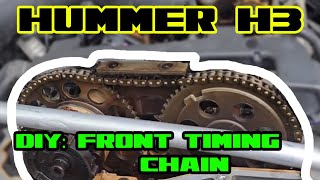
- Engine belt noise or a rattling sound from the front of the engine. 🎬 Watch: How to replace the front timing chain and water pump.
- "Service Stabilizing System" or "Traction Control Failed" messages on the DIC, often accompanied by other codes like P0300.
- Replacing the camshaft position sensor when the actual problem is the camshaft actuator solenoid. The solenoid is the more common failure point and should be the first part replaced after checking the oil.
- Replacing sensors repeatedly when the root cause is a stretched timing chain, especially on higher-mileage vehicles that also present with a P0017 code.
Most Likely Causes
- Faulty or Clogged Exhaust Camshaft Actuator Solenoid 🔴 High Probability → Shop Engine Camshaft The solenoids on these GM engines are highly susceptible to clogging from oil sludge. More critically, the three small filter screens on the solenoid can tear or become dislodged, causing an immediate malfunction and potentially sending metallic debris into the engine's oil passages.
How to confirm: Inspect the solenoid by removing it (one 10mm bolt). Check for debris on the screens, torn or missing screens, or stickiness in the valve's movement. A definitive test is to swap the exhaust solenoid with the identical intake solenoid. Clear the codes and drive. If the code changes to P0011 (Intake Cam Position), the solenoid is confirmed to be faulty.
Typical fix: Replace the exhaust camshaft actuator solenoid and perform an engine oil and filter change to remove contaminants.
Est. part cost: $25-$75 - Low or Dirty Engine Oil 🔴 High Probability The VVT system is entirely hydraulic and requires a specific oil pressure and volume to function. Neglecting oil changes leads to sludge that clogs the small passages in the actuator solenoids and cam phaser, causing them to stick.
How to confirm: Check the oil level on the dipstick and inspect its condition. If it's low, dark, or sludgy, it needs to be changed. Many owner experiences report the P0014 code appearing specifically when oil is low or dirty.
Typical fix: Perform an engine oil and filter change using the manufacturer-specified oil weight. Some owners use an engine flush product before the oil change to help clean passages.
Est. part cost: $40-$80 - Stretched Timing Chain or Worn Guides 🟡 Medium Probability → Shop Engine Timing Chain While less common than the solenoid, the timing chains on the Atlas engines can stretch, particularly after 100,000 miles. This creates slack, causing a correlation error between the crank and cam sensors, which often triggers P0014 along with P0017.
How to confirm: This is an advanced diagnosis. A key symptom is an audible chain rattle at idle that may quiet down under throttle. A mechanic would use a scan tool to monitor cam/crank correlation. If the starter sounds like it's spinning faster than usual with no compression, the chain may have skipped a tooth or broken.
Typical fix: Replacement of the timing chain, sprockets, guides, and tensioner. This is a labor-intensive job often costing over $1,000.
Est. part cost: $200-$500 - Faulty Exhaust Camshaft Position Sensor ⚪ Low Probability → Shop Engine Camshaft Position Sensor The sensor that reads the camshaft's position can fail, but it's far less common than the solenoid that controls it. Owners often misdiagnose the issue by replacing the sensor when the solenoid is the actual culprit.
How to confirm: After confirming the solenoid is good, the sensor itself can be tested. A common DIY method is to swap it with the intake sensor (if they are identical parts) to see if the code changes.
Typical fix: Replace the exhaust camshaft position sensor.
Est. part cost: $20-$50
Rare But Worth Checking
- Excessive Crankshaft End Play: Mentioned in TSB PIP3694F as a severe but possible cause. If a pry bar can move the crankshaft pulley back and forth more than the specification (0.112 - 0.388 mm), it indicates failed thrust bearings. This failure contaminates the oil system with metallic debris, which clogs the VVT system and can lead to catastrophic engine failure requiring replacement.
- Chafed Engine Wiring Harness: GM TSB 18-NA-307 notes that the engine wiring harness can chafe against the edge of the camshaft cover or cylinder head, causing shorts or open circuits. This can trigger a variety of DTCs, including those related to the VVT system, and may cause intermittent issues that are hard to diagnose.
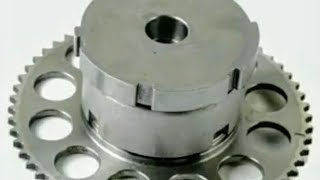
- Sticking Cam Phaser (Actuator): → Shop Engine Timing Gear The cam phaser itself, which is the sprocket on the end of the camshaft, can become stuck due to internal sludge or debris from a failed solenoid screen. This is often difficult to distinguish from a bad solenoid without first replacing the solenoid. An engine flush may help free a sticking phaser.
Diagnosis Steps
- Check Engine Oil: Before any other step, verify the oil level is correct and the oil is clean. If low or dirty, perform an oil and filter change. This alone can sometimes resolve the code.
- Scan for Codes: Use an OBD-II scanner to confirm P0014 and check for other related codes like P0017, P0106, or P0300. Note the freeze-frame data.
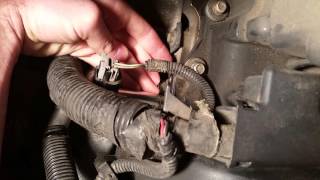
- Inspect Solenoid Wiring: Check the electrical connector and wiring to the exhaust camshaft actuator solenoid for any damage, corrosion, or chafing against the engine block.
- Inspect Solenoid: The solenoid is on the top of the engine, held by a single 10mm bolt. Carefully pull it out and inspect its three screens for tears, metallic debris, or missing sections. A missing screen is a definitive sign of failure.
- Test the Solenoid (Swap Test): The intake and exhaust solenoids are identical. Swap their positions. Clear the codes and drive the vehicle. If the code returns as P0011 (Intake Cam Position), the solenoid is faulty and needs replacement. This is the most reliable DIY diagnostic step.
- Advanced Mechanical Checks: If the solenoid and oil are good, the issue may be mechanical. Listen for timing chain rattle at idle. A professional diagnosis would be needed to check for a stretched timing chain or excessive crankshaft end play as described in TSB PIP3694F.
Parts You'll Likely Need
- Exhaust Camshaft Position Actuator Solenoid
(OEM #12615873)— This is the most frequent cause of P0014. It gets clogged with oil debris or fails electrically, but most notably, its screens are known to tear, preventing correct adjustment of the exhaust cam timing.
Trusted brands: ACDelco (OEM), Delphi, Dorman (P/N: 917-010)
OEM price range: $45-$70
Aftermarket price range: $25-$60
Related Codes That Often Appear With This One
- P0017 — This code indicates a Crankshaft/Camshaft correlation error. It frequently appears with P0014 because if the exhaust cam is over-advanced (P0014), its position will not correlate correctly with the crankshaft's position (P0017). Both codes are mentioned together in TSB PIP3694F and often point to a stretched timing chain or severe solenoid failure.
- P0106 — This code for the Manifold Absolute Pressure (MAP) sensor can be triggered by the erratic engine operation and unstable vacuum caused by incorrect cam timing. TSB PIP3694F also notes this code may appear alongside P0014.
- P0300 — A random misfire code is a common side effect of incorrect valve timing, as the engine's combustion events are disrupted. A faulty VVT system is listed as a potential cause for P0300 on these vehicles.
Technical Service Bulletins (TSBs) & Recalls
- PIP3694F: Addresses rough idle, engine noise, and SES light with DTCs P0014 and/or P0017, pointing to inspection of the camshaft actuator solenoid and crankshaft end play.
- 18-NA-307: Addresses engine wiring harness chafing on the camshaft cover, which can cause various DTCs including P0014.
Platform-Specific Known Issues
- TSB #PIP3694F: General Motors issued this bulletin for H3 models (among others) that show a rough idle, engine noise, and codes P0014 and/or P0017. The bulletin directs technicians to first inspect the camshaft actuator solenoid screens for debris or damage. If the screens are intact, the next step is to check for excessive crankshaft end play, which indicates a severe internal engine problem (worn thrust bearings) requiring engine replacement.
Mechanic-Grade Diagnostic Values
- Camshaft Actuator Solenoid Resistance — expected: 8 to 13 Ohms. Failure: A reading outside this range indicates a faulty solenoid coil.
- Scan Tool Cam Phase Angle Error — expected: Less than 3.75 degrees. Failure: If the difference between the desired and actual cam phase angle exceeds 3.75 degrees for 3 seconds, the DTC P0014 will set.
- Crankshaft End Play — expected: 0.112 - 0.388 mm (0.0044 - 0.0153 in). Failure: Movement significantly above this specification (e.g., over 0.050 in) points to worn thrust bearings, a root cause cited in TSB PIP3694F.
Scan Tool Commands That Help
- Tech2 / GDS2 or equivalent professional scanner: Camshaft Position Actuator Solenoid Control — This bidirectional control allows a technician to command the solenoid from 0% to 90% duty cycle while the engine is running to verify its mechanical response and check for sticking.
- Tech2 / GDS2 / HP Tuners or equivalent: Crankshaft Position Variation Learn (CASE Relearn) — This procedure is required after replacing the crankshaft position sensor to allow the ECM to learn the new sensor's reference marks. Failure to perform this can cause other timing-related codes like P0315 or contribute to inaccurate correlation checks.
Wiring & Ground Locations
- ECM Pin 47 — At the Engine Control Module connector.. This pin (Gray wire, circuit 2198) is the 'CMP Actuator Solenoid High Control'. It can be probed to test for the PWM signal from the ECM, helping to diagnose a wiring or ECM driver issue.
- G102 / G103 / G104 — Various points on the lower left side of the engine block, near the starter.. These are the primary engine block grounds. A loose or corroded ground at these locations can cause unstable voltage references for sensors and actuators, leading to erratic behavior and false diagnostic codes.
Real Owner Repair Stories
- HummerForums user (2006 Hummer H3, 165,000 km) — P0017 and P0014 codes, stalling, rough idle, audible timing chain rattle at idle, oil on top of engine near filler cap.
❌ Tried (didn't work) Cleaned MAF and throttle body, Cleaned and replaced VVT solenoid (screens were intact but had metal shavings), Replaced camshaft position sensors, Used Seafoam in oil and gas, Replaced spark plugs and one corroded coil
✅ What actually fixed it The timing chain was the root cause. The final symptom reported before having it towed was the starter spinning faster than normal with a crank-no-start condition, which is a classic sign of a skipped or broken timing chain. - YouTube user Michael Gamble (2006 Hummer H3) — Poor idle, engine 'chugging', and associated error codes (P0014 implied).
❌ Tried (didn't work) Replacing the VVT solenoid with a cheaper, non-OEM aftermarket part.
✅ What actually fixed it The issue was resolved after replacing the faulty aftermarket solenoid with a new, genuine GM Part (P/N 12615873), highlighting a potential quality difference in parts.
OEM Part Supersession History
12568078, 12576768, 12597025, 12602516→12615873— Standard part evolution and design updates by GM.
Heads up: No known incompatibilities. The current part number 12615873 is the correct replacement for all previous versions.
Model Year Variations Within This Range
- 2006 vs. 2007-2010: The engine was updated from the 3.5L L52 (2006) to the 3.7L LLR (2007-2010). The 3.7L LLR features a larger bore and a revised cylinder head that corrected some valve seat issues. While the VVT system is functionally identical, some components like the valve cover and potentially the phaser itself are physically different and not interchangeable.
Helpful Videos
![How to Fix P0014 Engine Code in 4 Minutes [2 DIY Methods / Only $6.74]](https://img.youtube.com/vi/olrC8UYw9cQ/mqdefault.jpg)
We Have This Part in Stock

The information in this article is provided for general reference and educational purposes only. Vehicle specifications, procedures, and part compatibility can vary by production date, trim level, and region. Always consult your vehicle's factory service manual and verify part numbers before purchasing or performing repairs. Safety-critical components such as airbags, seat belts, and braking systems should be installed by a qualified professional.
- Hummer H3:
- 🧭 Diagnostic Flowchart
- 🎬 Helpful Videos
- 🛍️ Shop This Part
- What's Unique About the 2006-2010 Hummer H3
- Symptoms You May Notice
- Most Likely Causes
- Rare But Worth Checking
- Diagnosis Steps
- Parts You'll Likely Need
- Related Codes That Often Appear With This One
- Technical Service Bulletins (TSBs) & Recalls
- Platform-Specific Known Issues
- Mechanic-Grade Diagnostic Values
- Scan Tool Commands That Help
- Wiring & Ground Locations
- Real Owner Repair Stories
- OEM Part Supersession History
- Model Year Variations Within This Range
- 🎟️ Get 5% Off