

P0014 on 2012-2017 Hyundai Azera 3.3L V6: Exhaust Timing Fixes
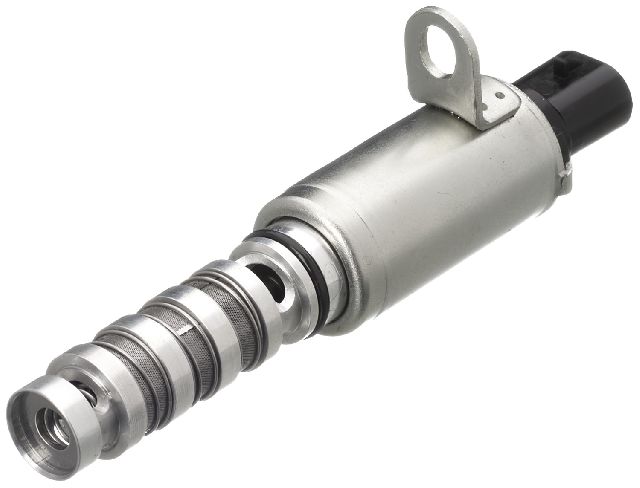
On the 2012-2017 Hyundai Azera, code P0014 is most often caused by low or dirty engine oil, or a faulty exhaust Oil Control Valve (OCV) on Bank 1. An oil change and a new OCV (part #24355-3CAB2) is a likely fix, costing around $40-$90 for the part.
- First, check your oil. Low or dirty oil is the #1 cause of P0014 on this engine.
- The next most likely culprit is a bad Bank 1 exhaust Oil Control Valve (OCV), part number 24355-3CAB2.
- A rattling noise from the engine when you start it cold is a major red flag for a more serious timing chain problem that should not be ignored.
- If you get P0014 and P0024 at the same time, suspect a systemic oil pressure problem, not just one bad part.
What's Unique About the 2012-2017 Hyundai Azera
The Lambda II 3.3L GDI V6 in the Azera is generally a solid engine, but it is sensitive to oil maintenance. This P0014 code often serves as an early warning for oil-related issues. While a simple solenoid or oil change is the common fix, this engine can also suffer from premature timing chain tensioner wear, which can cause a rattling noise on cold starts and eventually lead to this code if not addressed. Hyundai issued TSB 10-EM-006 which details a revised, in-vehicle procedure for replacing these tensioners. Some owners have reported seeing P0014 and P0024 (for Bank 2) together, which strongly points to a systemic oil pressure or contamination problem rather than a single failed part.
Symptoms You May Notice
- Check Engine Light is on
- Rough or unstable idle
- Engine stalling or hesitation, especially when coming to a stop
- Noticeable decrease in fuel economy
- Reduced engine power and poor acceleration
- A rattling or ticking noise from the engine on cold startups
- Replacing the camshaft position sensor. While a sensor can fail, it's much more likely to throw its own specific circuit code or a correlation code. For an over-advanced timing issue, the sensor is usually reporting the problem correctly; it is not the cause of the problem.
Most Likely Causes
- Low or Dirty Engine Oil 🔴 High Probability The CVVT system is hydraulic and extremely sensitive to oil volume, pressure, and cleanliness. Sludge from infrequent oil changes can clog the small passages in the Oil Control Valves (OCVs) and phasers.
How to confirm: Check the engine oil level on the dipstick. Note the color and consistency of the oil. If it is low, black, or sludgy, this is the first suspect.
Typical fix: Perform a complete engine oil and filter change using a high-quality full synthetic oil that meets Hyundai's specifications (e.g., 5W-30). Clear the code and see if it returns.
Est. part cost: $40-$80 - Faulty Bank 1 Exhaust Oil Control Valve (OCV) 🔴 High Probability → Shop Engine Variable Valve Timing (VVT) Solenoid This solenoid is a common failure point. It can become clogged with debris from the oil or fail electrically, causing it to stick in the advanced position.
How to confirm: Swap the Bank 1 exhaust OCV with the Bank 1 intake OCV. Clear the codes and drive the vehicle. If the code changes to P0011 (Intake Camshaft Position Timing - Over-Advanced Bank 1), the OCV is confirmed as the faulty part. You can also test the solenoid's resistance with a multimeter; for the Delphi-made part used in this engine, it should be between 6.7 and 7.7 ohms at room temperature.
Typical fix: Replace the Bank 1 exhaust Oil Control Valve. It is located on the Bank 1 (rear) valve cover.
Est. part cost: $40-$90
Rare But Worth Checking
- Stretched Timing Chain or Failed Tensioner: → Shop Engine Timing Chain While less common than an OCV failure, this is a known issue on the Lambda II engine, especially over 100,000 miles. A key symptom is a distinct rattling noise for a few seconds on a cold start. The original tensioner design can wear, allowing chain slack before oil pressure builds up. In some cases, a weak oil pump failing to build pressure quickly can mimic a bad tensioner and will also be investigated by dealerships. This is a serious mechanical issue that requires immediate attention to prevent catastrophic engine failure.
- Failed CVVT Cam Phaser: → Shop Engine Timing Gear The actuator (phaser) that the OCV sends oil to can fail mechanically. It might get stuck or the internal locking pin can break. This is usually diagnosed after the OCV and oil have been ruled out and is often replaced as part of a larger timing chain service.
Diagnosis Steps
- Check Engine Oil: Verify the oil level is full and the oil is clean. If low or dirty, perform an oil and filter change, clear the code, and drive the vehicle to see if the code returns. This is the most common and cheapest fix.
- Inspect OCV Wiring: Check the electrical connector and wiring to the Bank 1 exhaust OCV for any damage, corrosion, or loose connections.
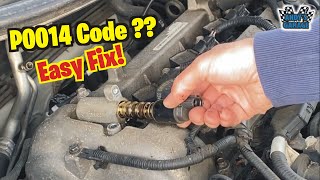
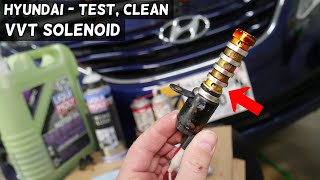
- Test the Oil Control Valve (OCV): Locate the exhaust OCV on the rear valve cover (Bank 1). You can swap it with the intake OCV on the same bank. If the code changes to P0011, the OCV is bad. Alternatively, test the OCV's resistance with a multimeter. It should read between 6.7-7.7 Ohms. 🎬 See how to test a VVT solenoid with a multimeter.
- Clean or Replace the OCV: If swapping confirms the OCV is faulty, replacement is recommended for reliability. Cleaning with brake or MAF cleaner is a temporary option but may not last.
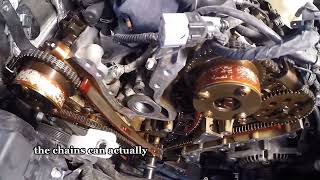
- Listen for Timing Chain Noise: On a cold start, listen for a 2-4 second rattling or clattering 🎬 Listen: Here is what that timing chain rattle sounds like. sound from the front of the engine. If this noise is present, it points towards a stretched timing chain or bad tensioner, which requires professional diagnosis.
- Advanced Diagnostics: If the above steps do not resolve the issue, a mechanic will need to use a scan tool to monitor the commanded vs. actual camshaft angles in real-time. Further diagnosis may involve checking oil pressure and inspecting the timing chain system and cam phasers, which is an intensive job.
Parts You'll Likely Need
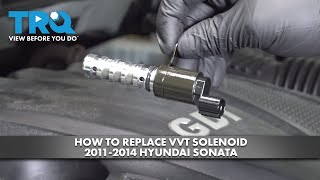
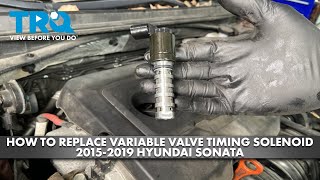
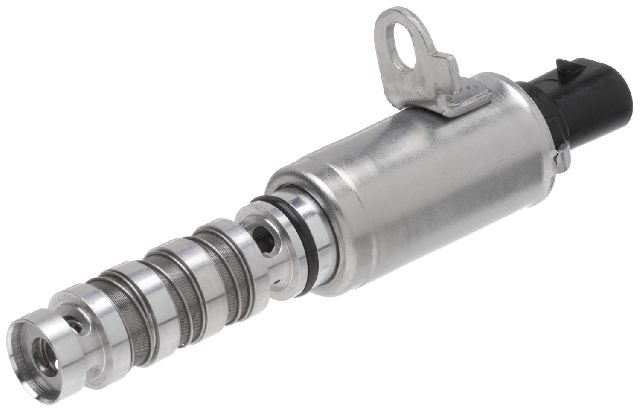
- Engine Variable Valve Timing (VVT) Solenoid / Oil Control Valve (OCV)
(OEM #24355-3CAB2)— This is the most common part to fail for this code, either by getting clogged with sludge or failing electrically. This part is used for both intake and exhaust on various Lambda engines.
Trusted brands: Hyundai (OEM), Dorman (918-008), Standard Motor Products (SMP), Holstein
OEM price range: $70-$100
Aftermarket price range: $40-$70
Related Codes That Often Appear With This One
- P0024 — This is the same 'over-advanced exhaust cam' code but for Bank 2 (front bank). If P0014 and P0024 appear together, it strongly suggests a systemic problem like low oil level, severe oil contamination, or low oil pressure affecting both banks simultaneously.
- P0011 — This is the 'over-advanced intake cam' code for Bank 1. It can appear if a technician swaps the exhaust OCV with the intake OCV during diagnosis to confirm the valve is faulty.
Technical Service Bulletins (TSBs) & Recalls
- TSB 10-EM-006: This Technical Service Bulletin provides a revised service procedure for replacing the timing chain tensioners on 3.3L & 3.8L Lambda engines without removing the engine from the vehicle. This is relevant if a startup rattle is present with the P0014 code.
Platform-Specific Known Issues
- The timing chain tensioners on some Lambda II V6 engines have been known to wear prematurely, causing a rattling noise on startup and leading to timing codes like P0014. TSB 10-EM-006 was released to address the service procedure.
- These engines can be prone to oil consumption or sludge buildup if oil changes are neglected, which can lead to low oil levels or clogged OCVs, triggering this code.
Documented NHTSA Reports
- A manufacturer report (NHTSA ODI #11155108) involving a similar Lambda-equipped vehicle noted that after a P0014 code was retrieved, an inspection required removing the valve cover and front cover to examine the timing system.
- In another instance (NHTSA ODI #11509795), an owner reported a P0014 code where the oil pan and oil filter were found covered in metal shavings, leading to engine failure at 97,000 miles.
- NHTSA ODI #11548744 describes a case where a dealership duplicated the P0014 issue and ultimately determined the camshaft assembly and other components required replacement.
Mechanic-Grade Diagnostic Values
- Oil Control Valve (OCV) Coil Resistance — expected: 6.7 - 7.7 Ω at 20°C (68°F). Failure: A reading outside this range indicates an electrical failure in the solenoid coil.
- Engine Oil Pressure (at operating temperature) — expected: Approximately 1.3 bar (18.8 PSI) at 1000 RPM. Failure: Significantly lower pressure indicates a worn oil pump, clogged pickup tube, or other systemic oiling issue that could cause P0014.
- PCM Live Data - CVVT Fault Trigger — expected: The PCM commands a target camshaft angle and monitors the actual angle.. Failure: The P0014 code is set if the PCM sees a deviation between the target and actual angle of more than 6 degrees for over 2 seconds, and this condition repeats more than 5 times.
Scan Tool Commands That Help
- Hyundai GDS (Global Diagnostic System) or equivalent professional scan tool: OCV Actuation Test — This bidirectional command is used to functionally test the Oil Control Valve after checking its wiring and resistance. The scan tool commands the PCM to energize the solenoid. A healthy system will result in a noticeable change in engine idle (stumbling or stalling) or an audible click from the solenoid, confirming it is mechanically responding to the electrical command.
Wiring & Ground Locations
- PCM Location — Located in the engine compartment, typically on the left (driver's) side rear area.. This is the source of the command signal to the OCV. All wiring checks for the OCV and camshaft position sensor circuits will eventually lead back to the PCM connector.
- OCV Connector — A 2-pin connector directly on the Oil Control Valve solenoid, which is on the Bank 1 (rear) valve cover.. This is where voltage and resistance tests are performed. One pin is for the 12V supply and the other is the control (ground) from the PCM. Applying battery voltage directly to these pins can manually actuate the solenoid for testing.
- GF02 / GF03 — GF02 is at the base of the left 'B' pillar. GF03 is at the base of the right 'B' pillar.. While not exclusive to the CVVT system, these are major chassis ground points. A poor ground connection at these locations can cause a variety of difficult-to-diagnose electrical issues, potentially affecting sensor readings or module operation.
Real Owner Repair Stories
- Reddit user in r/genesiscoupe (Genesis Coupe with Lambda V6 (engine family shared with Azera)) — Engine running very poorly and throwing code P0014 immediately after a full timing chain replacement service.
❌ Tried (didn't work) The mechanic who performed the service initially denied error.
✅ What actually fixed it The consensus from other experienced owners was that the timing was set incorrectly by one or more teeth on the sprockets during the timing chain installation. The P0014 code was a direct result of the mechanical mistiming, not a faulty sensor or solenoid. - Reddit user JustAnotherDude1990 in r/genesiscoupe (Genesis Coupe with Lambda V6) — Codes P0014 and P0011 appeared together.
❌ Tried (didn't work) Initial speculation on OCV failure.
✅ What actually fixed it The user, identified as an experienced community member, stated with 99% certainty that the combination of codes indicated the timing chain had skipped a tooth. The required fix was a full timing chain service including the chain, guides, and tensioners. The user strongly advised to stop driving the vehicle to prevent catastrophic engine failure. - NHTSA ODI #11063653 — An owner reported that their vehicle shifted into gear and made a loud clunk; a mechanic diagnosed the P0014 and P0024 codes as needing engine timing solenoids and camshaft timing components replaced.
- NHTSA ODI #11453941 — One owner noted that their engine started to have a loud knock before throwing codes P0011 and P0014, leading them to change the VVT oil control valve.
OEM Part Supersession History
24355-3CAB2→No supersession found. This part number remains active.— N/A
Heads up: This part number is widely used on Hyundai/Kia 3.3L, 3.5L, and 3.8L Lambda engines from approximately 2011-2019. Some parts catalogs note that for certain 2018+ models, separate intake OCVs are not used, but this does not affect the 2012-2017 Azera.
Model Year Variations Within This Range
- 2012-2017: The Azera received a cosmetic refresh for the 2015 model year, updating the grille, wheels, and interior technology. However, the core powertrain, the 293hp 3.3L GDI V6 (G6DH), and its associated CVVT system remained unchanged throughout the entire 2012-2017 generation.
Diagnostic Flowchart
Other Known Issues on This Vehicle
Issues unrelated to this code that are worth knowing about as an owner of this generation:
- Electronic Parking Brake (EPB) Failure 🟠 Medium — Moderately common. Can occur at various mileages. Often caused by a faulty wire/connector at the rear wheel caliper or a stuck brake mechanism.
- Panoramic Sunroof Rattle/Creaking 🟡 Low — A common complaint among owners. The noise often comes from the seals or the track, especially when the chassis flexes over uneven roads.
- No Sound from Speakers 🟠 Medium — A widely reported issue where the factory amplifier fails, causing a total loss of audio from the infotainment system. This is a known problem across several Hyundai models of this era.
- High-Pressure Fuel Pump (HPFP) Failure 🔴 High — As a Gasoline Direct Injection (GDI) engine, the HPFP can fail, leading to stalling, rough running, and fuel delivery codes like P0148. This is a known weakness in early Hyundai/Kia GDI engines. (Ref: While no specific recall exists for the Azera, a warranty extension (TXX8 / 25-EM-008H) was issued for other models with the same 3.3L engine for related issues.)
Used vs. New Parts: Buying Guide for This Vehicle
When a used part is the smart pick: For the primary suspect, the Oil Control Valve (OCV), buying used is generally not recommended. The part is inexpensive new from aftermarket suppliers ($40-$70) and can fail from internal sludge or electrical fatigue, which is impossible to see. A used part carries a high risk of having the same or impending failure.
Donor-vehicle mileage cap: roughly under 50000 miles for the part to have meaningful remaining life.
What to inspect on the donor part:
- If considering a used OCV, it must be from a verified, running, low-mileage vehicle.
- Inspect the solenoid's mesh screens meticulously. Any sign of metallic debris or thick, black sludge means the part should be rejected immediately.
OEM-only on this vehicle (don't cheap out):
- Timing Chain
- Timing Chain Tensioners
- Timing Chain Guides
- Camshaft Phasers (CVVT Actuators)
Aftermarket brands forum-validated for this vehicle:
- Dorman
- Standard Motor Products (SMP)
- Holstein
Brands owners have reported issues with on this vehicle:
- No specific brands were consistently reported as problematic in search results, but caution is advised with unbranded, generic parts from online marketplaces which may lack quality control.
Real Owner Stories
Aggregated from forums and TSBs cited above. Mileages and costs reflect what owners reported in those sources.
2015 Hyundai Azera 3.3L V6 — 108000 miles
Symptoms: Check engine light with codes P0014 and P0024 despite regular 5,000-mile synthetic oil changes.
What fixed it: Owner planned to replace the VVT solenoids (specifically using a Duralast TS1099) and perform an oil/filter change.
Source hint: Reddit thread titled 'Code P0024 and Code P0014' on r/Hyundai
Related OBD-II Codes
Frequently Asked Questions
Is there a Technical Service Bulletin for the rattling noise I hear on startup in my Azera?
Can I test the Bank 1 exhaust Oil Control Valve (OCV) myself before buying a new one?
Where is the Bank 1 exhaust Oil Control Valve located on the 3.3L V6?
Does the 2012-2017 Azera have any known issues with oil sludge that could cause P0014?
I have a 2015 Azera with 108k miles and regular maintenance; can the OCV still fail?
Could a startup rattle be caused by something other than the timing chain tensioner?
Helpful Videos

We Have This Part in Stock


The information in this article is provided for general reference and educational purposes only. Vehicle specifications, procedures, and part compatibility can vary by production date, trim level, and region. Always consult your vehicle's factory service manual and verify part numbers before purchasing or performing repairs. Safety-critical components such as airbags, seat belts, and braking systems should be installed by a qualified professional.
- Hyundai Azera:
- 🧭 Diagnostic Flowchart
- 🎬 Helpful Videos
- 🛍️ Shop This Part
- What's Unique About the 2012-2017 Hyundai Azera
- Symptoms You May Notice
- Most Likely Causes
- Rare But Worth Checking
- Diagnosis Steps
- Parts You'll Likely Need
- Related Codes That Often Appear With This One
- Technical Service Bulletins (TSBs) & Recalls
- Platform-Specific Known Issues
- Documented NHTSA Reports
- Mechanic-Grade Diagnostic Values
- Scan Tool Commands That Help
- Wiring & Ground Locations
- Real Owner Repair Stories
- OEM Part Supersession History
- Model Year Variations Within This Range
- Other Known Issues on This Vehicle
- Used vs. New Parts: Buying Guide for This Vehicle
- Real Owner Stories
- 2015 Hyundai Azera 3.3L V6 — 108000 miles
- Related OBD-II Codes
- Frequently Asked Questions
- 🎟️ Get 5% Off