

P0014 on 2016-2019 Jaguar XF: Exhaust Cam Timing Over-Advanced Causes and Fixes
On a 2016-2019 Jaguar XF, especially with the 2.0L Ingenium engine, P0014 is almost always caused by a faulty exhaust Variable Valve Timing (VVT) solenoid. This is a known issue addressed by Jaguar TSBs for solenoids made before August 23, 2018. Replacing the solenoid (part #AJ813329, superseded by kit #T4N32636) is the common fix, costing around $50-$150 for the part.
- For the 2016-2019 Jaguar XF, P0014 almost certainly points to a faulty exhaust VVT solenoid, a known issue.
- Before buying parts, check your engine oil level and condition. An oil change with JLR-spec oil can sometimes resolve the issue.
- The most reliable diagnostic is to swap the exhaust and intake VVT solenoids to see if the trouble code moves to the intake camshaft (P0011).
- This is a very DIY-friendly repair, requiring basic tools and about 30-60 minutes of work.
- Per Jaguar's recommendation for this known fault, consider replacing both intake and exhaust solenoids at the same time with the updated parts.
What's Unique About the 2016-2019 Jaguar XF

For the Jaguar XF with the 2.0L Ingenium engine, this code is very frequently tied to a specific manufacturing defect. Jaguar issued Technical Service Bulletins for VVT solenoids made before August 23, 2018, which had insufficient wear resistance in their bushings, causing them to stick. This means that unlike in many other vehicles where P0014 could have a wide range of causes, on this specific platform, the VVT solenoid itself is the primary and highly probable culprit, often making diagnosis straightforward.
🎬 Watch: Understanding the causes and fixes for the P0014 code.Diagnostic Flowchart

Tap your situation to follow the diagnostic path that matches what you're seeing on this vehicle.
Symptoms You May Notice
- Check Engine Light is illuminated (most common and sometimes only symptom)
- No noticeable driveability concerns
- Rough or unstable idle
- Reduced engine power and acceleration
- Decreased fuel economy
- Intermittent code appearance, especially after hard acceleration, that may clear after restarting the engine.
- Replacing the Camshaft Position Sensor. This sensor reads the camshaft's position but doesn't typically cause it to be over-advanced. A faulty sensor would likely trigger a different code related to sensor circuit failure (e.g., P0341).
- Assuming a major timing chain failure. While possible, the VVT solenoid is a far more common and simpler failure point for this specific code on this engine. Always diagnose the solenoid first.
Most Likely Causes


- Faulty Exhaust VVT Solenoid (Bank 1) 🔴 High Probability A known issue acknowledged by Jaguar TSBs (like SSM74160 and JLRTB02023NAS1) for solenoids made before August 23, 2018 due to 'insufficient wear resistance of the VCT solenoid bush'. The specific sub-code P0014-71 points directly to a stuck actuator.
How to confirm: Swap the Bank 1 exhaust VVT solenoid with the Bank 1 intake solenoid. Clear codes and drive. If the code changes to P0011 ('A' Camshaft), the solenoid is confirmed faulty. You can also test the solenoid's internal resistance with a multimeter; it should be between 6.9 and 7.9 ohms. A JLR-approved diagnostic tool can also run a 'Guided Diagnostics' routine to test the solenoids directly.
Typical fix: Replace the faulty VVT solenoid. Per TSB JLRTB02023NAS1, Jaguar recommends replacing both the intake and exhaust solenoids as a pair if they are the older, failure-prone parts. Always check the etched date on the new part to ensure it was made on or after August 23, 2018 (180823xxxxx).
Est. part cost: $50-$150 - Low or Dirty Engine Oil 🟡 Medium Probability
How to confirm: The VVT system is hydraulic and relies on clean oil at the correct pressure. Check the oil level on the dipstick or via the electronic oil monitor. Inspect the oil's condition and check when it was last changed. If the oil is low, dark, sludgy, or not the JLR-specified viscosity, this could be the cause.
Typical fix: Perform an oil and filter change using the correct Jaguar-specified oil (e.g., JLR-spec oil). Reset the code and see if it returns. It is always recommended to clear codes after a repair to give the PCM a fresh start.
Est. part cost: $80-$200
Rare But Worth Checking
- Sticking Camshaft Phaser: → Shop Engine Camshaft The phaser is the mechanical gear that the solenoid acts upon. While less common than solenoid failure, it can get stuck due to oil sludge or mechanical wear, especially on higher-mileage vehicles or if oil changes have been neglected.
- Stretched Timing Chain: → Shop Engine Timing Chain While a 'timing over-advanced' code can suggest a stretched chain, independent Jaguar specialists note that for this specific code on these engines, it is rarely the cause. This should only be suspected if accompanied by significant rattling noises from the rear of the engine, especially on cold starts.
- Damaged VVT Solenoid Wiring: On high-mileage Ingenium engines (e.g., over 80,000 miles), the wiring connectors for the VVT solenoids can become brittle from heat cycles and may crack or fail, leading to an intermittent connection and fault codes.
Diagnosis Steps
- Verify the code with an OBD-II scanner. Check if it is P0014-71, which strongly points to a stuck actuator per TSB SSM74160.
- Check engine oil level and condition. If low, dirty, or overdue for a change, correct this first, clear the code, and drive to see if it returns.
- Locate the Bank 1 VVT solenoids on the front of the engine. The exhaust solenoid is the 'B' solenoid.
- Perform the 'swap test': Swap the exhaust VVT solenoid with the intake VVT solenoid. They are identical parts and each is held by a single bolt.
- Clear the codes and drive the vehicle. If the code changes to P0011 (Intake Camshaft Timing), the solenoid you moved is faulty and needs replacement.
- If the P0014 code returns after the swap, the problem is not the solenoid. The issue may be with wiring, the phaser, or oil passages. At this point, using a JLR-specific scan tool to run the 'Guided Diagnostics' routine is recommended.
- If replacing, it is recommended by TSB JLRTB02023NAS1 to replace both VVT solenoids (intake and exhaust) as a pair if they are the older, pre-2018 style. Ensure the new part has a date code of August 23, 2018 or newer.
Parts You'll Likely Need
- Variable Camshaft Timing (VCT) Solenoid
(OEM #AJ813329)— This is the most common failure part for P0014 on this engine, due to a known manufacturing defect addressed by TSBs. This part number is often superseded.
Trusted brands: Jaguar (OEM), Bosch
OEM price range: $100-$180
Aftermarket price range: $50-$100 - VCT Solenoid (Superseded Part)
(OEM #T4N32636)— This is the updated part number that replaces AJ813329 and is sold for both Ingenium petrol and diesel engines. TSBs recommend replacing solenoids as a pair, and this part may be sold individually or in a kit.
Trusted brands: Jaguar (OEM)
OEM price range: $60-$120
Related Codes That Often Appear With This One
- P0011 — Intake ('A') Camshaft Position Timing Over-Advanced. Often seen if both VVT solenoids are failing, as they are a common failure part and TSBs recommend replacing them in pairs.
- P054A — Cold Start 'B' Camshaft Position Timing Over-Advanced. This code is listed alongside P0014 in TSB SSM74160, indicating a related VVT system fault caused by the same out-of-spec solenoids.
- P000B — 'B' Camshaft Position Slow Response. This is another code related to the VVT system's inability to correctly position the exhaust camshaft, often caused by the same faulty solenoid.
Technical Service Bulletins (TSBs) & Recalls
- SSM74160: Mentions P0014-71 appearing with no driveability concerns. Identifies the cause as VVT solenoids not manufactured to specification and provides a specific date cutoff: parts made before August 23, 2018 should not be used.
- JLRTB02023NAS1: A more detailed bulletin for North America. It explicitly identifies the cause as a faulty VCT solenoid bush on 2018-2020 XF models with the 2.0L Ingenium engine and recommends replacing the solenoids as a pair after running a 'Guided Diagnostics' routine with a JLR tool.
Platform-Specific Known Issues
- TSB JLRTB02023NAS1 and SSM74160 address the Malfunction Indicator Lamp being on with code P0014-71 stored. The cause is identified as 'Insufficient wear resistance of the Variable Camshaft Timing (VCT) solenoid bush' on parts made before August 23, 2018, primarily affecting the 2.0L Ingenium petrol engine.
Mechanic-Grade Diagnostic Values
- VVT Solenoid (Oil Control Valve) Internal Resistance — expected: 6.9 to 7.9 Ohms at 68°F (20°C). Failure: A reading outside this range, or an open circuit, indicates a faulty solenoid. A forum user confirmed a bad solenoid reading 26 ohms while a good one read 7 ohms.
Hidden / Shadow Codes Worth Checking
- P0014-71: 'B' Camshaft Position - Timing Over-Advanced or System Performance Bank 1 - Actuator stuck. This manufacturer-specific sub-code strongly points to a mechanical issue with the VVT solenoid (sticking) rather than a circuit or wiring fault. (see via JLR's dealer-level diagnostic tools (SDD or Pathfinder) or a professional-grade scanner capable of reading manufacturer-specific DTCs.)
Scan Tool Commands That Help
- JLR Pathfinder / SDD: Guided Diagnostics — This is the manufacturer-recommended procedure. When the MIL is on, selecting 'Guided Diagnostics' will walk the technician through a specific test routine for the VCT solenoids to confirm a fault before recommending replacement.
- JLR Pathfinder / SDD: VVT Actuator Test / Functional Test — This is a bidirectional control that commands the VVT solenoid to actuate while the engine is running. A technician can observe live data or listen for a change in engine RPM/sound. If the engine hesitates or stalls, the solenoid is responding; if nothing happens, the solenoid or its wiring is likely faulty.
Real Owner Repair Stories
- JaguarForums.com user 'sicarumba' (Jaguar XF (specific year not mentioned, but with VVT solenoids)) — Malfunction Indicator Lamp (MIL) on, with no other driveability symptoms. Codes P0077-00 and P0026-77 were present.
❌ Tried (didn't work) Initial research and forum browsing.
✅ What actually fixed it The user tested the resistance of the Bank 1 solenoid and found it read 26 ohms, while the working Bank 2 solenoid read 7 ohms. They also noted the faulty solenoid did not 'clack' when a 9V battery was applied. Replacing the faulty VVT solenoid resolved the issue.
OEM Part Supersession History
AJ813329→T4N32636— The original part was prone to premature failure due to insufficient wear resistance in the internal bushing, as noted in TSBs. The new part is the updated, more durable version.T4N32636→JDE41306— Standard part number evolution within the JLR parts system.
Heads up: These parts are generally interchangeable for the application.
Model Year Variations Within This Range
- 2018-2020: TSB JLRTB02023NAS1 specifically calls out the 2018-2020 model years for the XF with the 2.0L Ingenium petrol engine as being affected by the faulty VVT solenoid bush issue. While earlier models (2016-2017) with the same engine can experience the failure, the TSB focuses on this later range.
Helpful Videos
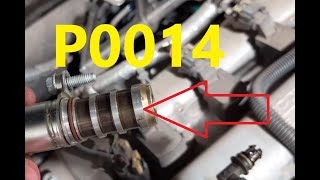
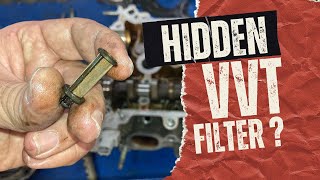
![How to Fix P0014 Engine Code in 4 Minutes [2 DIY Methods / Only $6.74]](https://img.youtube.com/vi/olrC8UYw9cQ/mqdefault.jpg)

Used OEM Parts in Stock
New Aftermarket Parts Available


The information in this article is provided for general reference and educational purposes only. Vehicle specifications, procedures, and part compatibility can vary by production date, trim level, and region. Always consult your vehicle's factory service manual and verify part numbers before purchasing or performing repairs. Safety-critical components such as airbags, seat belts, and braking systems should be installed by a qualified professional.
- Jaguar XF:
- 🧭 Diagnostic Flowchart
- 🎬 Helpful Videos
- 🛍️ Shop This Part
- What's Unique About the 2016-2019 Jaguar XF
- Symptoms You May Notice
- Most Likely Causes
- Rare But Worth Checking
- Diagnosis Steps
- Parts You'll Likely Need
- Related Codes That Often Appear With This One
- Technical Service Bulletins (TSBs) & Recalls
- Platform-Specific Known Issues
- Mechanic-Grade Diagnostic Values
- Hidden / Shadow Codes Worth Checking
- Scan Tool Commands That Help
- Real Owner Repair Stories
- OEM Part Supersession History
- Model Year Variations Within This Range
- 🎟️ Get 5% Off