

P0014 on 2017-2018 Kia Forte: Exhaust Cam Timing Over-Advanced Causes and Fixes
On a 2017-2018 Kia Forte, code P0014 is most often caused by low or dirty engine oil, or a failing exhaust Oil Control Valve (OCV). Always check your oil level first. If the oil is full and clean, replacing the exhaust OCV (Part No. 24375-2E100) is the next logical step and costs around $40-$90 for the part. If P0017 is also present, suspect a more serious internal CVVT phaser failure.
- First, check your engine oil. Low or dirty oil is the #1 cause of P0014 on this car.
- If the oil is fine, the exhaust Oil Control Valve (OCV) is the most likely part to have failed and is relatively easy to replace.
- Be aware that this code can also signify a more serious internal engine problem with the CVVT cam phaser, a known issue on this engine. The presence of code P0017 alongside P0014 strongly suggests this more severe failure.
- A specific Kia TSB (PS461) exists for this exact problem, recommending a scan tool relearn procedure before condemning mechanical parts.
What's Unique About the 2017-2018 Kia Forte
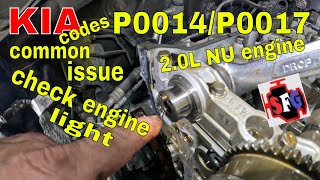
For the Nu 2.0L engine in this Forte, P0014 can be more than just a simple sensor or oil issue. While low oil and faulty Oil Control Valves (OCVs) are common culprits, this engine family has a known, more serious failure mode where a dowel pin on the internal CVVT actuator (cam phaser) can shear off or recess into the camshaft. 🎬 Watch: A breakdown of this common mechanical failure mode This specific mechanical failure often triggers P0014 along with P0017 (Crankshaft/Camshaft Correlation) and requires significant labor to repair. Kia also issued a Technical Service Bulletin (TSB PS461) for the 2017 model year that provides a specific diagnostic relearn procedure before jumping to parts replacement.
Symptoms You May Notice
- Check Engine Light is on
- Rough idle
- Poor engine performance, including hesitation or lack of power
- Reduced fuel efficiency
- Engine stalling, especially at low speeds
- Rattling noise from the engine bay
- Replacing the camshaft position sensor. The P0014 code indicates a mechanical timing performance issue, not an electrical fault with the sensor itself. A bad sensor would typically generate a different code specific to its circuit. Owners often replace this sensor with no change to the fault.
Most Likely Causes
- Low or Dirty Engine Oil 🔴 High Probability The CVVT system is extremely sensitive to oil pressure and volume. Many Kia engines of this era can consume oil between changes, and dirty oil or sludge can clog the small passages in the OCV and phaser.
How to confirm: Check the engine oil dipstick. The level should be at the 'F' mark and the oil should be light brown. Dark, thick, or gritty oil is a problem. Many owner experiences with P0014 begin with finding the dipstick is dry.
Typical fix: Perform an oil and filter change using the correct viscosity oil (check your owner's manual).
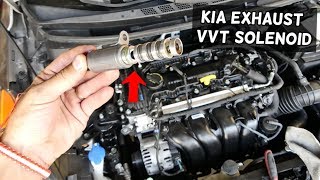
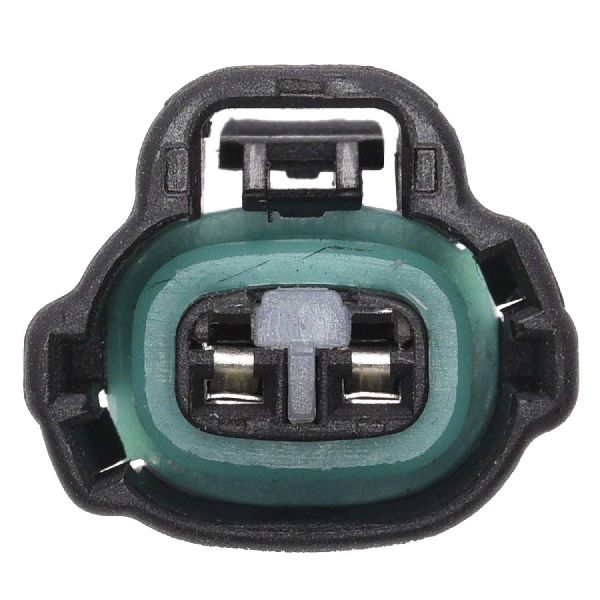
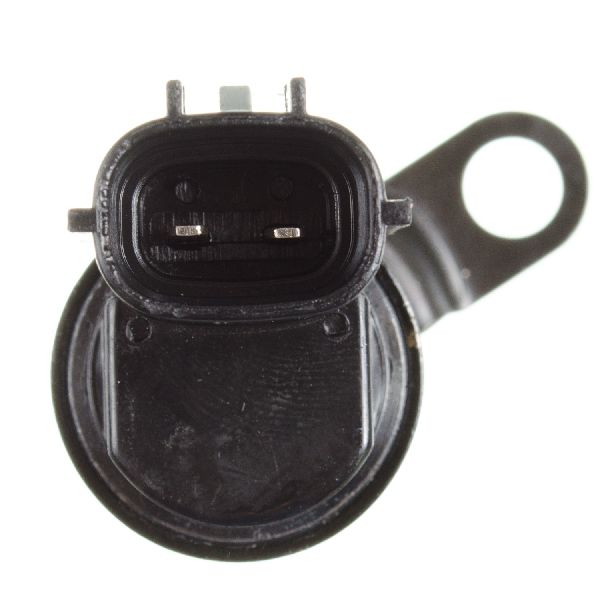
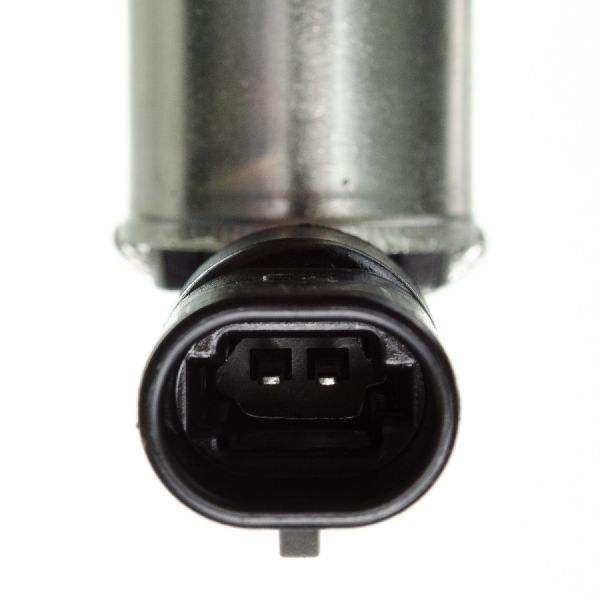
Est. part cost: $30-$60 - Faulty Exhaust Oil Control Valve (OCV/VVT Solenoid) 🔴 High Probability → Shop Engine Variable Valve Timing (VVT) Solenoid This solenoid controls the oil flow to the cam phaser. It's a common failure point, often becoming clogged with sludge or failing electrically. Some technicians report that aftermarket OCVs can cause erratic readings and fail to resolve the code, recommending OEM parts.
How to confirm: After checking the oil, this is the next step. You can test the solenoid's resistance with a multimeter; the target is 6.9-7.9 ohms. A common DIY method is to swap the exhaust OCV with the intake OCV; if the code changes to P0011 (Intake side), the OCV is bad.
Typical fix: Replace the exhaust Oil Control Valve. It is located on the top of the valve cover. 🎬 See this walkthrough on replacing the exhaust VVT solenoid
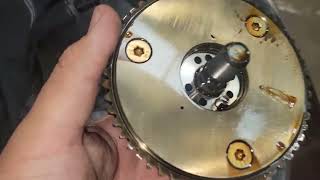
Est. part cost: $40-$90 - Failing CVVT Cam Phaser (Actuator) 🟡 Medium Probability → Shop Engine Timing Gear The Nu 2.0L engine has a well-documented issue where the dowel pin on the exhaust cam phaser can break or recess, causing a loss of timing control. This is a known design flaw.
How to confirm: This is a complex diagnosis usually confirmed after ruling out oil and OCV issues. A mechanic may listen for noise from the timing cover area or remove the valve cover for inspection. This failure almost always sets code P0017 as well. A visual inspection may reveal the phaser can be rotated independently of the camshaft, which should not be possible. A technician may need to extract the broken dowel pin from the camshaft, sometimes by tack welding a bead onto it for grip.
Typical fix: This is a major repair requiring removal of the timing cover, timing chain, and camshaft to replace the CVVT actuator. The broken dowel pin must be extracted from the camshaft. The timing chain and guides are often replaced at the same time.
Est. part cost: $150-$300
Rare But Worth Checking
- Stretched Timing Chain or Failed Tensioner: → Shop Engine Timing Chain While not as common as the OCV or phaser failure on this specific engine, a stretched chain can cause the timing to be physically out of sync with what the sensors report, triggering P0014. This is usually suspected on higher mileage vehicles (>150k miles) or those with poor maintenance history.
Diagnosis Steps
- Check Engine Oil Level and Condition: Pull the dipstick. If the oil is low, top it off, clear the code, and drive. If the oil is old or dirty, perform a complete oil and filter change. This is the most common cause and easiest fix.
- Scan for Other Codes: Check if codes like P0017 or P1326 are also present, as this can point towards a more serious mechanical issue like the phaser failure.
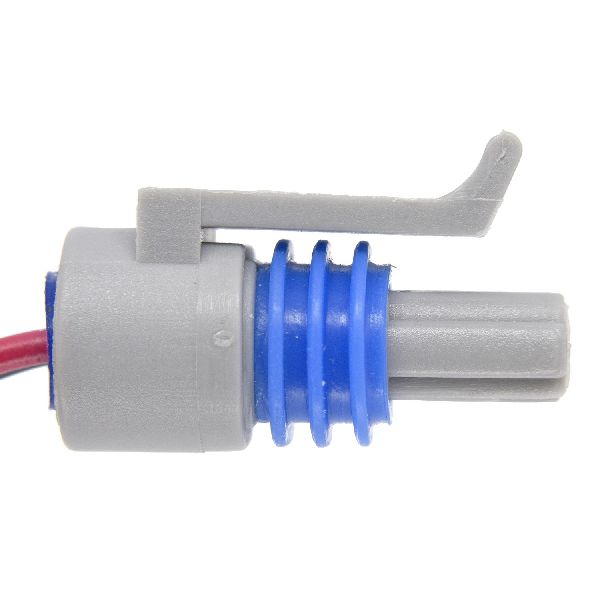
- Inspect the Oil Control Valve (OCV): Locate the exhaust OCV on the valve cover. Check its wiring connector for damage or corrosion. You can remove the OCV to inspect its screen for sludge or debris.
- Test or Swap the OCV: The most effective DIY test is to swap the exhaust OCV with the identical intake OCV. Clear the codes and drive the vehicle. If the trouble code changes to P0011 (Intake Camshaft Position Timing), you have confirmed the OCV is faulty 🎬 Watch: How to solve P0014 codes on a 2018 Forte and needs replacement.
- Follow TSB PS461 Relearn Procedure: If you have access to an advanced scan tool (like the Kia KDS), follow the procedure in TSB PS461. This involves monitoring the commanded vs. actual cam angle while revving the engine to see if they track within 5 degrees of each other. If this procedure fails, it points to a mechanical issue.
- Inspect Mechanical Timing Components: If all else fails, the issue is likely mechanical. This involves removing the valve cover to inspect the CVVT cam phaser for damage (like the sheared dowel pin) and checking the timing chain for stretching. This step is best left to a professional mechanic.
Parts You'll Likely Need
- Exhaust Oil Control Valve (VVT Solenoid)
(OEM #24375-2E100)— This is the most common part to fail for this code after ruling out oil issues. It gets clogged or fails electrically, preventing proper control of the cam timing. Some repair stories indicate aftermarket versions may not perform correctly, making OEM the safer choice.
Trusted brands: Kia/Hyundai OE, Delphi, Dorman
OEM price range: $70-$110
Aftermarket price range: $40-$90 - CVVT Cam Phaser (Actuator)
(OEM #24370-2E020)— This part is replaced when the internal dowel pin shears or it otherwise fails mechanically, a known and common issue on the Nu 2.0L engine that often presents with P0014 and P0017.
Trusted brands: Kia/Hyundai OE
OEM price range: $150-$300
Aftermarket price range: $100-$200
Related Codes That Often Appear With This One
- P0017 — This code indicates a 'Crankshaft Position - Camshaft Position Correlation' error. It frequently appears with P0014 on the Nu 2.0L engine when the CVVT actuator dowel pin fails, causing a significant timing discrepancy between the crank and cam.
- P1326 — This is a Kia-specific code for the Knock Sensor Detection System (KSDS). The engine vibrations and rough running caused by the timing issue of P0014 can be enough to trigger the highly sensitive knock sensor system, especially after the KSDS software update has been performed.
Technical Service Bulletins (TSBs) & Recalls
- PS461 Rev 1 (September 13, 2016): Outlines a diagnostic and relearn procedure using a KDS scan tool for DTC P0014 on 2017MY Forte (YDm) vehicles with the 2.0L Nu MPI engine.
Platform-Specific Known Issues
- A known failure on the Nu 2.0L engine is the shearing of the dowel pin on the CVVT cam phaser, which will cause P0014 and often P0017. This requires a significant teardown to repair.
- Kia issued Technical Service Bulletin PS461 Rev 1 for the 2017 Forte with the 2.0L Nu MPI engine to address P0014, providing a specific scan tool relearn procedure to try before replacing parts.
Mechanic-Grade Diagnostic Values
- Exhaust Oil Control Valve (OCV) Resistance — expected: 6.9 - 7.9 Ohms at 68°F (20°C). Failure: No reading (open circuit) or a reading significantly outside this range.
- Scan Tool: Commanded vs. Actual Exhaust Cam Angle — expected: Difference should be less than 5 degrees.. Failure: A difference greater than 5 degrees while revving the engine from idle to 4000 RPM per TSB PS461.
- Camshaft Bearing Cap Bolt Torque (M6 bolts) — expected: 11.8 - 13.7 N.m (8.7 - 10.1 lb-ft). Failure: Improper torque can lead to camshaft binding or oil pressure issues.
- Camshaft Bearing Cap Bolt Torque (M8 bolts) — expected: 18.6 - 22.6 N.m (13.7 - 16.6 lb-ft). Failure: Improper torque can lead to camshaft binding or oil pressure issues.
Scan Tool Commands That Help
- Kia KDS (or equivalent advanced scan tool): CVVT Relearn Procedure (Data Analysis) — As per TSB PS461, this is a primary diagnostic step after checking oil and before replacing parts. It involves graphing 'Current Position of Exhaust Camshaft' vs. 'Control Camshaft Position Setpoint' and revving the engine to 4000 RPM to see if the system can correct itself.
- Advanced Scan Tool: Actuator Test: Exhaust OCV Activation — To functionally test the Oil Control Valve. When the solenoid is commanded ON with the engine running, the engine should hesitate or stall. If there is no change in engine operation, the OCV is likely faulty or clogged.
Wiring & Ground Locations
- Engine Ground Wire Harness — Main ground strap for the engine assembly. One specific ground wire is noted near the horn, attached with a 10mm bolt.. A poor engine ground can cause erratic behavior from sensors and solenoids, including the CVVT system. The OEM part number for the harness is 91860-B0130.
- GC402 — A ground point referenced in wiring diagrams related to the engine control system. While its exact location isn't specified, common chassis ground points are on the cylinder head, engine block, and near the interior fuse panel.. This is a designated ground path for the Engine Control Module. A fault at this specific point could disrupt the ECM's ability to accurately read sensors or control the OCV solenoid.
Real Owner Repair Stories
- YouTube channel 'Midwest Mechanic' (2018 Kia Forte 2.0L, 112k miles) — Stalling, P0011 and P0014 codes.
❌ Tried (didn't work) Replacing the timing chain set., Using aftermarket (eBay/RockAuto) VVT solenoids.
✅ What actually fixed it The problem was resolved by replacing the aftermarket VVT solenoids with genuine OEM Kia solenoids. The scan tool data showed the aftermarket parts provided erratic readings, while the OEM parts allowed the commanded and actual cam positions to match perfectly. - YouTube channel 'What The Duck Auto' (2018 Kia Forte) — P0014, P0016, P0017 codes, no power ('no oomph').
❌ Tried (didn't work) The video focuses directly on the known failure, implying simpler fixes were ruled out.
✅ What actually fixed it The root cause was a sheared dowel pin on the exhaust cam phaser. The video shows the damaged phaser and the broken pin stuck inside the camshaft. The technician extracted the pin by tacking a small bead of weld onto it and pulling it out with pliers, before replacing the phaser. - YouTube channel '2EZ Everything' (2017 Kia Forte) — Rough running, acceleration issues, P0017 code (often paired with P0014).
❌ Tried (didn't work) Replacing camshaft position sensors.
✅ What actually fixed it After removing the valve cover, the technician discovered the timing chain had jumped time (significant slack). The final fix was a full timing chain and guide replacement, which resolved the correlation code.
When the Usual Fixes Don't Work
- In one documented case, a 2018 Forte with P0014 and P0011 had its timing chain replaced, but this did not solve the stalling and codes. The ultimate fix was replacing newly installed aftermarket VVT solenoids with OEM Kia parts, which immediately stabilized the camshaft timing according to scan tool data. This highlights that even when symptoms suggest a major mechanical issue like timing, a faulty (even if new) electronic component like an OCV can be the root cause.
Model Year Variations Within This Range
- 2017: The 2017 model year marked a significant mid-cycle refresh which introduced the Nu 2.0L MPI engine that is the subject of this article, replacing the previous 1.8L engine.
- 2017-2018: These two model years are mechanically very similar regarding the Nu 2.0L MPI engine and its CVVT system. No significant part or design changes related to P0014 have been noted between them.
Diagnostic Flowchart
Other Known Issues on This Vehicle
Issues unrelated to this code that are worth knowing about as an owner of this generation:
- Engine Failure, Excessive Oil Consumption, and Rod Bearing Failure 🔴 High — Widespread across the Nu engine family, can occur at various mileages (some reports as low as 72,000 miles). Often preceded by knocking noises and high oil consumption. (Ref: Subject of class-action lawsuits (In re: Hyundai and Kia Engine Litigation II) and related warranty extensions for connecting rod bearing failure.)
- Knock Sensor Detection System (KSDS) Limp Mode Activation 🟠 Medium — Very common after the KSDS software update (Recall SC174/Campaign 934) is performed. The system becomes highly sensitive to any engine vibration and can place the vehicle into a low-power 'limp home mode', often triggering code P1326. (Ref: NHTSA Recall 20V750, Kia Campaign 934. The update itself is a recall, but its sensitivity is a subsequent known issue.)
- Ignition Coil Failure 🟡 Low — A common cause for misfires, rough running, and a flashing check engine light, often occurring between 40,000 and 80,000 miles.
Used vs. New Parts: Buying Guide for This Vehicle
When a used part is the smart pick: For this repair, using used parts is generally not recommended. A used Oil Control Valve (OCV) from a junkyard offers minimal cost savings over a new aftermarket part and carries a risk of being clogged or worn. All other potential causes (phaser, timing chain) are wear items that should always be replaced with new parts.
Donor-vehicle mileage cap: roughly under 60000 miles for the part to have meaningful remaining life.
What to inspect on the donor part:
- If sourcing a used OCV, choose a donor vehicle with the lowest possible mileage.
- Check the donor vehicle's oil fill cap and dipstick for signs of heavy sludge, which would indicate the OCV is likely contaminated.
- Avoid parts from vehicles that show signs of a major front-end collision.
OEM-only on this vehicle (don't cheap out):
- CVVT Cam Phaser (Actuator): Due to the known dowel pin failure being a design flaw, only a new OEM part (24370-2E020) should be used. A used phaser has a high probability of failing in the same way.
- Oil Control Valve (OCV): At least one detailed repair story shows that aftermarket OCVs can fail to resolve the P0014 code due to incorrect electronic tolerances. Using a genuine Kia/Hyundai OCV (24375-2E100) is the safest and most reliable option.
Brands owners have reported issues with on this vehicle:
- Unbranded or generic 'eBay' solenoids have been specifically cited as failing to fix the issue and providing erratic scan tool data.
Real Owner Stories
Aggregated from forums and TSBs cited above. Mileages and costs reflect what owners reported in those sources.
2018 Kia Forte 2.0L — 65000 miles
Symptoms: Check engine light with codes P0014 and P0017, engine stalling, and poor acceleration.
What fixed it: The owner suspected a timing chain or phaser issue after replacing both CVVT valves failed to resolve the problem.
Source hint: Reddit - r/MechanicAdvice: 'What might be the root cause of my engine issues with 2018 Kia Forte (~65k miles)?'
2017-2018 Kia Forte 2.0L
Symptoms: P0014 code triggered.
What fixed it: The owner discovered the engine oil was critically low; topping off the oil is the primary step as the CVVT system depends on oil pressure.
Source hint: Reddit - r/kia: 'Fault Code P0014 - Exhaust Camshaft Position Timing'
2017-2018 Kia Forte 2.0L
Symptoms: Persistent P0014 and P0017 codes that remained after replacing solenoids.
What fixed it: Replacement of the broken exhaust CVVT cam sprocket (phaser) due to a failed dowel pin.
Source hint: Reddit - r/MechanicAdvice: '(HELP) persistent P0014 Kia Forte 2.0'
Related OBD-II Codes
Frequently Asked Questions
Is there a specific TSB for the 2017 Kia Forte 2.0L regarding the P0014 code?
Can I test the Oil Control Valve (OCV) myself on my Forte?
Why is my 2.0L Nu engine so sensitive to oil levels?
I have P0014 and P0017 together; does this mean a simple sensor failure?
Should I use aftermarket parts to fix the OCV on my Kia?
What is the 'limp home mode' I keep hearing about for this engine?
Helpful Videos
We Have This Part in Stock


The information in this article is provided for general reference and educational purposes only. Vehicle specifications, procedures, and part compatibility can vary by production date, trim level, and region. Always consult your vehicle's factory service manual and verify part numbers before purchasing or performing repairs. Safety-critical components such as airbags, seat belts, and braking systems should be installed by a qualified professional.
- Kia Forte:
- 🧭 Diagnostic Flowchart
- 🎬 Helpful Videos
- 🛍️ Shop This Part
- What's Unique About the 2017-2018 Kia Forte
- Symptoms You May Notice
- Most Likely Causes
- Rare But Worth Checking
- Diagnosis Steps
- Parts You'll Likely Need
- Related Codes That Often Appear With This One
- Technical Service Bulletins (TSBs) & Recalls
- Platform-Specific Known Issues
- Mechanic-Grade Diagnostic Values
- Scan Tool Commands That Help
- Wiring & Ground Locations
- Real Owner Repair Stories
- When the Usual Fixes Don't Work
- Model Year Variations Within This Range
- Other Known Issues on This Vehicle
- Used vs. New Parts: Buying Guide for This Vehicle
- Real Owner Stories
- 2018 Kia Forte 2.0L — 65000 miles
- 2017-2018 Kia Forte 2.0L
- 2017-2018 Kia Forte 2.0L
- Related OBD-II Codes
- Frequently Asked Questions
- 🎟️ Get 5% Off