

P0014 on 2017-2019 Land Rover Discovery: Causes and Fixes for 'B' Camshaft Timing Over-Advanced
On a 2017-2019 Land Rover Discovery with the 3.0L V6 gas engine, code P0014 is most often caused by a faulty Variable Valve Timing (VVT) solenoid or low/dirty engine oil. A critical first step is to check for any applicable software updates, as a Technical Service Bulletin (TSB) indicates this code can be set erroneously without any mechanical fault. The specific code variant, P0014-71 ('Actuator Stuck'), strongly points to the VVT solenoid as the culprit.
- Code P0014 means the exhaust camshaft on Bank 1 is too far advanced.
- Before buying parts, check your engine oil level and condition. Low or dirty oil is a very common cause.
- A known Land Rover TSB (SSM74161) indicates this code can be set due to a software glitch. Check for available PCM updates.
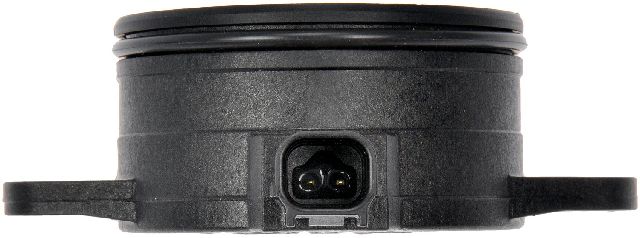
- The most likely failed part is the VVT solenoid (also called an oil control valve), part number LR045390.
- Do not immediately assume a stretched timing chain; diagnose the simpler and more common causes first.
What's Unique About the 2017-2019 Land Rover DISCOVERY

For this generation of Land Rover Discovery with the 3.0L V6 (AJ126 engine), a key consideration is the official manufacturer Technical Service Bulletin (TSB #SSM74161). This bulletin notes that the Malfunction Indicator Lamp can illuminate with code P0014-71 without any noticeable drivability problems. The cause was identified as a batch of VVT solenoids manufactured before August 23, 2018, that did not meet specifications. This makes it crucial to investigate the VVT solenoid as a primary cause, potentially before even suspecting oil-related issues, and to ensure any replacement part is of the newer, corrected batch.
Diagnostic Flowchart

Tap your situation to follow the diagnostic path that matches what you're seeing on this vehicle.
Symptoms You May Notice
- Check Engine Light illuminated
- Rough idle
- Reduced engine power and acceleration
- Poor fuel economy
- Engine may stall in severe cases
- Rattling or knocking noise from the engine
- Replacing the camshaft position sensor. While a sensor can fail, it's more likely to produce a specific sensor circuit code (like P0341). P0014 points to a mechanical or hydraulic timing issue, not typically a sensor reading error.
Most Likely Causes

- Faulty Variable Valve Timing (VVT) Solenoid / Oil Control Valve (OCV) 🔴 High Probability → Shop Engine Variable Valve Timing (VVT) Solenoid TSB #SSM74161 explicitly identifies a batch of VVT solenoids made before August 23, 2018, as being out of specification, causing this code. Another TSB for similar JLR engines, JLRTB02023NAS1, cites 'insufficient wear resistance of the VVT solenoid bush' as a cause for failure. These solenoids can also become clogged with oil sludge or fail electrically.
How to confirm: A Land Rover dealer can check the manufacturing date etched on the solenoid. A DIY method is to swap the Bank 1 exhaust solenoid with the intake solenoid on the same bank. Clear the codes and drive. If the code changes to P0011 (Intake Camshaft Position Timing), the solenoid is confirmed faulty. Resistance can also be checked with a multimeter; while specs vary, common ranges are 6.9-7.9 Ohms or 8-12 Ohms.
Typical fix: Replace the Bank 1 exhaust VVT solenoid with a new part manufactured on or after August 23, 2018. The OEM part number is LR045390.
Est. part cost: $90-$200 - Low, Dirty, or Incorrect Viscosity Engine Oil 🔴 High Probability The VVT system is hydraulically operated and highly sensitive to oil pressure and cleanliness. The AJ126 engine has small oil passages that can be clogged by sludge from extended oil change intervals or using oil that doesn't meet the specific JLR specification (e.g., STJLR.03.5004).
How to confirm: Check the engine oil level and condition. If the oil is dark, gritty, below the 'add' line, or the service interval has been exceeded, this is a likely cause.
Typical fix: Perform an engine oil and filter change using a high-quality, fully synthetic oil that meets Land Rover's specifications, such as Castrol EDGE Professional.
Est. part cost: $80-$150 - Powertrain Control Module (PCM) Software Issue ⚪ Low Probability While TSB #SSM74161 points to a hardware fault, other JLR TSBs for the same engine family (e.g., LTB00562v2 for the 3.0L V6) have addressed timing codes via software updates. It's a possibility if hardware fixes fail.
How to confirm: A Land Rover dealership or qualified independent shop with access to JLR's TOPIx system can check if the vehicle's PCM software is up to date against any applicable bulletins.
Typical fix: Update the Powertrain Control Module software.
Est. part cost: $0-$250 (Labor for update) - Stretched Timing Chain or Faulty Timing Components ⚪ Low Probability → Shop Engine Timing Chain While less common for this specific code than oil or solenoid issues, timing chains can stretch over time, causing a permanent deviation in cam/crank correlation. A rattling noise from the front of the engine, especially on startup, increases the probability of this issue.
How to confirm: This is a complex diagnosis requiring removal of engine covers to physically inspect the timing chain, guides, and tensioners for slack or damage. It is typically investigated after all other causes are ruled out.
Typical fix: Replace the timing chain, tensioners, and guides. This is a labor-intensive job, with independent shop quotes potentially around $2,000 or more.
Est. part cost: $500-$1500+
Rare But Worth Checking
- Failed Camshaft Phaser/Actuator: → Shop Engine Camshaft The mechanical actuator (phaser) at the end of the camshaft can fail internally, getting stuck in an advanced position. This is less common than a solenoid failure and more expensive to fix, as it requires timing component disassembly.
- Clogged VVT Solenoid Filter Screen: Many VVT systems have a small mesh filter screen located in the oil passage leading to the solenoid. This screen can become clogged with sludge, restricting oil flow even if the oil and solenoid are good. It should be cleaned or replaced when servicing the solenoid.
Diagnosis Steps

- Check Engine Oil: Verify the oil level is correct and the oil is clean and of the specified grade (e.g., Castrol EDGE Professional meeting JLR specs). If it's low or past its service life, perform an oil and filter change. Clear the codes and see if P0014 returns.
- Scan for Specific Code Variant: Use a capable scanner to see if the code is the generic P0014 or the specific P0014-71 ('Actuator Stuck'). The -71 variant makes the VVT solenoid the primary suspect.
- Check for TSBs: Specifically reference TSB #SSM74161. If the vehicle was built before late 2018, a faulty VVT solenoid is highly probable. The fix is to replace the solenoid with a part manufactured on or after August 23, 2018.
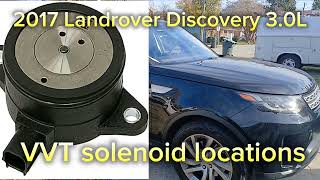
- Inspect VVT Solenoid and Wiring: Locate the Bank 1 (passenger side) exhaust VVT solenoid on the front of the cylinder head. 🎬 Watch: See exactly where all four VVT solenoids are located. Inspect its electrical connector and wiring for damage, corrosion, or loose connections.
- Test the VVT Solenoid: The easiest functional test is to swap the suspect exhaust solenoid with the intake solenoid on the same bank (they are typically identical). Clear the codes and drive. If the code changes to P0011 (for the intake cam), the solenoid is faulty. Alternatively, a scan tool can command the solenoid on and off to check for a response.
- Advanced Mechanical Checks: If all the above steps fail, the problem may be with the timing chain, tensioner, or the camshaft phaser itself. This requires significant disassembly and should be performed by a qualified professional. Listen for a chain rattle from the front of the engine.
Parts You'll Likely Need
- Engine Variable Valve Timing (VVT) Solenoid
(OEM #LR045390)— This solenoid controls the oil flow that adjusts the camshaft timing. It is the most common hardware failure for this code, due to a known manufacturing defect (TSB SSM74161), clogging from debris, or electrical failure.
Trusted brands: Land Rover (Genuine)
OEM price range: $150-$270
Aftermarket price range: $50-$100
Related Codes That Often Appear With This One
- P0014-71 — This is the manufacturer-specific version of the code, meaning 'Actuator Stuck'. It is explicitly mentioned in TSB #SSM74161 and strongly points to a faulty VVT solenoid.
- P054A-00 — Cited in TSB #SSM74161, relates to 'Cold Start 'B' Camshaft Position Timing Over-Advanced Bank 1'.
- P000B-00 — Cited in TSB #SSM74161, relates to ''B' Camshaft Position Slow Response Bank 1'.
- P0341-00 — Cited in TSB #SSM74161, this is a Camshaft Position Sensor 'A' Circuit Range/Performance code, indicating the PCM may be seeing conflicting or unexpected signals from the timing system as a whole.
Technical Service Bulletins (TSBs) & Recalls
- SSM74161: Notes that the Malfunction Indicator Lamp may be on with DTCs P054A-00, P0014-71, P000B-00 and/or P0341-00 stored, but with no driveability concerns. Cause identified as out-of-spec VVT solenoids. The fix is to replace the solenoid with a part made on or after 23/08/2018.
- JLRTB02023NAS1: A TSB for similar JLR engines that also lists P0014-71. It identifies the cause as 'insufficient wear resistance of the Variable Camshaft Timing (VCT) solenoid bush' and recommends replacing both VCT solenoids as a pair.
Platform-Specific Known Issues
- TSB #SSM74161 indicates that for some 2017 models, the Malfunction Indicator Lamp can be illuminated with DTC P0014-71 stored in the PCM without any actual driveability concerns, pointing towards a specific batch of faulty VVT solenoids manufactured before August 23, 2018.
Mechanic-Grade Diagnostic Values
- VVT Solenoid Electrical Resistance — expected: Conflicting sources suggest ranges of 6.9-7.9 Ohms or 8-12 Ohms. A reading outside these ranges, or an open circuit (infinite resistance), indicates a failure.. Failure: A reading significantly outside the 7-12 Ohm range, or infinite resistance.
- VVT Solenoid Connector Voltage — expected: Battery voltage (approx. 12V) with key on, engine off.. Failure: No voltage or significantly low voltage indicates a wiring or PCM issue, not a solenoid failure.
Scan Tool Commands That Help
- JLR Pathfinder: VVT Solenoid Activation / Bidirectional Test — To functionally test the VVT solenoid's mechanical plunger action without removing it from the engine. The scan tool commands the solenoid to actuate, and the technician can observe changes in engine performance or listen for the solenoid's click to confirm operation. This is the manufacturer-preferred method of testing.
Wiring & Ground Locations
- Bank 1 Camshaft Position Sensors — On the AJ126 engine, the Bank 1 (passenger side in LHD) camshaft position sensors are located on the top of the valve cover, near the front of the engine. The VVT solenoids are located on the front face of the same cylinder head, just below the sensors.. Locating the camshaft position sensors provides a clear landmark for finding the correct VVT solenoid ('B' / exhaust) that needs to be tested or replaced for code P0014.
OEM Part Supersession History
LR016405, LR019983, LR042160→LR045390— Part has been updated by the manufacturer, likely to address the defect identified in TSB SSM74161.
Heads up: One parts vendor notes that the updated solenoid (LR045390) may require a new 12 X 14 mm plug connector, part number LR061705, if the vehicle is not already equipped with it. This is a critical check during replacement to avoid a connector mismatch.
Model Year Variations Within This Range
- 2017-2019: The official dealer diagnostic software for these model years is JLR Pathfinder. Earlier models used SDD (Symptom Driven Diagnostics). While both can read codes, Pathfinder is required for full diagnostic and programming functions on 2017 and newer vehicle architectures.
Helpful Videos
We Have This Part in Stock





The information in this article is provided for general reference and educational purposes only. Vehicle specifications, procedures, and part compatibility can vary by production date, trim level, and region. Always consult your vehicle's factory service manual and verify part numbers before purchasing or performing repairs. Safety-critical components such as airbags, seat belts, and braking systems should be installed by a qualified professional.
- Land Rover DISCOVERY:
- 🧭 Diagnostic Flowchart
- 🎬 Helpful Videos
- 🛍️ Shop This Part
- What's Unique About the 2017-2019 Land Rover DISCOVERY
- Symptoms You May Notice
- Most Likely Causes
- Rare But Worth Checking
- Diagnosis Steps
- Parts You'll Likely Need
- Related Codes That Often Appear With This One
- Technical Service Bulletins (TSBs) & Recalls
- Platform-Specific Known Issues
- Mechanic-Grade Diagnostic Values
- Scan Tool Commands That Help
- Wiring & Ground Locations
- OEM Part Supersession History
- Model Year Variations Within This Range
- 🎟️ Get 5% Off