

P0014 on 2013-2019 Land Rover Range Rover: Causes and Fixes for Exhaust Cam Timing
On a 2013-2019 Range Rover, code P0014 is most often caused by low or dirty engine oil, or a failing Variable Valve Timing (VVT) solenoid. An oil and filter change is the first step; if that fails, replacing the Bank 1 exhaust VVT solenoid (part #LR045390, approx. $250-$270 for the part) is the next likely fix. A known batch of faulty solenoids manufactured before August 2018 is a specific cause noted in a TSB.
- Always check your engine oil first. Low, old, or incorrect oil is the #1 cause of code P0014.
- The next most likely culprit is a faulty or clogged VVT solenoid on the passenger-side exhaust camshaft.
- This code is specifically mentioned in Land Rover TSB SSM74161, sometimes appearing with other codes and no noticeable driving issues.
- If an oil change and solenoid replacement don't fix the issue, the problem is likely deeper in the timing system and requires professional diagnosis.
What's Unique About the 2013-2019 Land Rover RANGE ROVER

While P0014 is a generic code, on this generation of Range Rover and its platform mates, it has been specifically documented by Land Rover in Technical Service Bulletin SSM74161. The bulletin notes that P0014 can appear alongside other codes (P054A-00, P000B-00, P0341-00) without any noticeable drivability problems. The cause was identified as a batch of VVT solenoids that were not manufactured to specification. The fix is to replace the solenoid with a part manufactured on or after August 23, 2018. This points to a known component defect rather than just general maintenance issues like old oil.
Diagnostic Flowchart

Tap your situation to follow the diagnostic path that matches what you're seeing on this vehicle.
Symptoms You May Notice
- Check Engine Light illuminated.
- Rough or poor idling, sometimes accompanied by shaking.
- Reduced engine performance and sluggish acceleration.
- Decreased fuel economy.
- Hard starting or stalling, especially at low speeds.
- Rattling or ticking noise from the top of the engine, which may be more noticeable on startup.
- In some cases, no noticeable symptoms other than the Check Engine Light, as noted in TSB SSM74161.
- Replacing the camshaft position sensor before checking the oil quality and VVT solenoid. The sensor is often just accurately reporting a mechanical or hydraulic problem caused by something else.
- Assuming a timing chain replacement is needed without first diagnosing the much more common and cheaper VVT solenoid failure, especially if no chain rattle is present.
Most Likely Causes

- Low, Dirty, or Incorrect Viscosity Engine Oil 🔴 High Probability The VVT system is entirely dependent on clean oil at the correct pressure to function. The AJ126/AJ133 engines have small oil passages for the VVT system that can easily become clogged by sludge from extended oil change intervals or using oil that does not meet the specific JLR specification.
How to confirm: Check the engine oil level and condition. If the oil is low, dark/black, sludgy, or if the service interval has been exceeded, this is the most probable cause. An incorrect oil filter can also cause pressure issues.
Typical fix: Perform a complete engine oil and filter change using a high-quality, fully synthetic oil that meets Land Rover's specifications (e.g., Castrol EDGE Professional). Clear the codes and test drive.
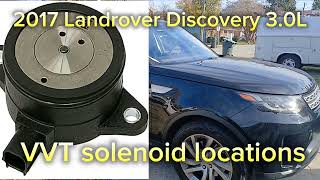
Est. part cost: $80-$150 - Faulty Variable Valve Timing (VVT) Solenoid 🔴 High Probability The solenoid is an electronic actuator that can fail electrically or become clogged with debris, causing it to stick. TSB SSM74161 specifically identifies a batch of solenoids manufactured before 08/23/2018 as being out of spec and causing this code. The Bank 1 exhaust solenoid is located on the passenger-side cylinder head, towards the rear of the engine. 🎬 Watch: See exactly where all four VVT solenoids are located.
How to confirm: A common diagnostic step is to swap the Bank 1 exhaust VVT solenoid with the Bank 2 exhaust solenoid. Clear the codes and drive the vehicle. If the code changes to P0024 (the Bank 2 equivalent), the solenoid is faulty. You can also test the solenoid's resistance with a multimeter (should be 5-15 Ω).
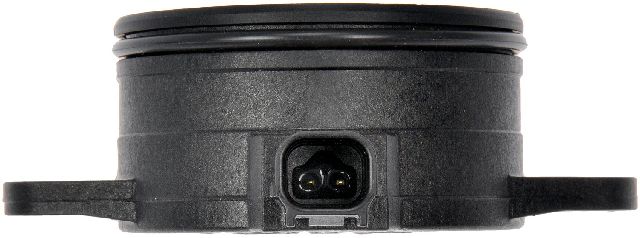
Typical fix: Replace the Bank 1 exhaust VVT solenoid (Part #LR045390). It is highly recommended to also change the engine oil and filter at the same time.
Est. part cost: $230-$270 - Worn Timing Components (Chain, Guides, Tensioners) 🟡 Medium Probability The 5.0L V8 in particular is known for premature wear of its timing chain guides, which are made of plastic and can become brittle. 🎬 Watch: A deep dive into common timing chain guide failures. The tensioners can also fail, causing chain slack. This slack can cause the timing to jump or be consistently out of range, triggering P0014. While less common on the 3.0L V6, it can still occur at higher mileage.
How to confirm: This is a complex diagnosis. Listen for a distinct chain rattle or scraping noise from the front of the engine, especially on a cold start. 🎬 Listen: Compare timing chain noise before and after tensioner repairs. Diagnosis requires measuring timing chain slack, which involves significant engine disassembly and is best left to a professional.
Typical fix: Replace the timing chains, tensioners, and guides. This is a very labor-intensive and expensive job, often costing several thousand dollars.
Est. part cost: $800-$2500+ - Faulty Camshaft Position Sensor ⚪ Low Probability → Shop Engine Camshaft Position Sensor While the sensor that reads the camshaft's position can fail, it is less common than oil or solenoid issues. It often triggers its own specific fault codes (like P0341) in addition to or instead of P0014.
How to confirm: Monitor the sensor's live data with an advanced scan tool. Swap the sensor with the one from the other bank to see if the fault follows the sensor.
Typical fix: Replace the Bank 1 exhaust camshaft position sensor.
Est. part cost: $50-$120
Rare But Worth Checking
- Failed Camshaft Phaser/Actuator: → Shop Engine Camshaft The phaser is the mechanical gear at the end of the camshaft that actually adjusts the timing. It can become clogged with sludge or mechanically fail, getting stuck in an advanced position. This is a significant mechanical repair requiring timing chain removal.
- Damaged Wiring or Connectors: An open or short in the wiring to the VVT solenoid or camshaft position sensor can prevent it from operating correctly. Visually inspect the harness for any signs of fraying, melting, or corrosion, especially near the front of the engine.
- Faulty Powertrain Control Module (PCM): In very rare instances, the PCM itself can be faulty and incorrectly report a P0014 code. This should only be considered after all other possibilities have been exhaustively ruled out by a professional.
Diagnosis Steps
- Check the engine oil level and condition. If low, dirty, or past its service life, perform an oil and filter change with the manufacturer-specified oil (e.g., Castrol EDGE Professional 0W-20 or 5W-20 depending on engine). Clear the code and see if it returns.
- Scan for other fault codes. Note if P054A, P000B, or P0341 are present, as this points towards the specific issue documented in TSB SSM74161.
- Visually inspect the wiring harness and connector for the Bank 1 exhaust VVT solenoid (passenger side, rear) for any damage, corrosion, or loose connections.
- If the oil and wiring are good, the most effective next step is to swap the Bank 1 exhaust VVT solenoid with the Bank 2 exhaust VVT solenoid. Clear the codes and drive the vehicle. If the code returns as P0024 (Bank 2), the solenoid is confirmed to be faulty and should be replaced.
- If the code P0014 returns after the swap, the problem is not the solenoid. At this point, the issue is likely a more complex mechanical problem (cam phaser, timing chain) or a persistent wiring issue that requires professional diagnosis with advanced tools like an oscilloscope.
Parts You'll Likely Need

- Engine Oil and Filter — The most common and simplest cause of VVT-related codes is old, low, or incorrect viscosity oil.
Trusted brands: Castrol EDGE Professional (OEM), Mobil 1, Liqui Moly
OEM price range: $120-$200
Aftermarket price range: $80-$150 - Variable Valve Timing (VVT) Solenoid
(OEM #LR045390)— This solenoid controls oil flow to the cam phaser and is a very common failure point, either by clogging or electrical failure. TSB SSM74161 points to a known manufacturing defect. This part number supersedes LR016405, LR019983, and LR042160.
Trusted brands: Land Rover (Genuine), Standard Motor Products (Aftermarket)
OEM price range: $250-$270
Aftermarket price range: $150-$200
Related Codes That Often Appear With This One
- P054A-00 — Cited together in TSB #SSM74161, indicating a related fault pattern in the VVT system caused by a faulty solenoid.
- P000B-00 — Cited together in TSB #SSM74161, points to a slow response from the 'B' camshaft position, reinforcing a VVT system issue.
- P0341-00 — Cited together in TSB #SSM74161, this code relates to the camshaft position sensor circuit range/performance, suggesting a possible sensor or wiring component to the fault.
- P0011 — This is the equivalent code for the intake camshaft ('A') on the same bank. Seeing both could indicate a more widespread oil pressure or supply issue on Bank 1, or multiple faulty solenoids.
- P0024 — This is the equivalent code for the exhaust camshaft on Bank 2 (driver's side). If this code appears after swapping solenoids from Bank 1 to Bank 2, it confirms the original Bank 1 solenoid was faulty.
Technical Service Bulletins (TSBs) & Recalls
- SSM74161: Addresses an illuminated Malfunction Indicator Lamp with DTCs P054A-00, P0014-71, P000B-00 and/or P0341-00 stored. Identifies the cause as out-of-spec VVT solenoids and advises replacement with parts made on or after 23rd August 2018.
Platform-Specific Known Issues
- TSB SSM74161 - Faulty VVT Solenoid Batch: Technical Service Bulletin SSM74161 was issued for 2016+ models with Ingenium engines but the principle applies to the V6/V8 as well. It notes that DTCs P0014-71, P054A-00, P000B-00, and/or P0341-00 could be stored due to a batch of VVT solenoids manufactured prior to August 23, 2018, that were not to specification. The official action is to replace the solenoid with a newer part.
- 5.0L V8 Timing Chain Guide Wear: → Shop Engine Timing Chain The AJ133 5.0L V8 engine is widely known for issues with its timing chain tensioners and plastic guides. The guides can become brittle and break, and the tensioners can fail to keep adequate pressure on the chain. This leads to chain slack, rattling noises on startup, and timing codes like P0014. This is a major repair if it occurs.
Mechanic-Grade Diagnostic Values
- VVT Solenoid Coil Resistance — expected: 5-15 Ohms. Some sources state a tighter range of 8-12 Ohms.. Failure: A reading of infinite resistance (Open Loop) or very low resistance (e.g., under 2 Ohms) indicates a faulty solenoid coil.
- VVT Solenoid Harness Voltage — expected: Approximately 12V (battery voltage) at one pin with the ignition on, engine off.. Failure: No voltage suggests a wiring issue, blown fuse, or PCM fault upstream of the solenoid.
Scan Tool Commands That Help
- JLR SDD (Symptom Driven Diagnostics): Vehicle Identification, Read DTCs, Live Data Monitoring, Service Functions. — Used for dealer-level diagnostics on models up to 2017. It can read manufacturer-specific codes and access detailed live data streams to observe camshaft requested vs. actual positions. The 'Service Functions' may include routines to test VVT operation.
- JLR Pathfinder: Diagnostic & Programming for 2017+ models. — This is the current dealer software for the L405 Range Rover (2017-2019 models). It provides advanced diagnostic capabilities, including bidirectional control to command the VVT solenoids to activate, helping to isolate a faulty component without swapping parts.
Wiring & Ground Locations
- VVT Solenoid Connector Pigtail — Connects to the VVT solenoid on the valve cover.. The updated VVT solenoid (LR045390) may have a different plug style than the original part, requiring a new pigtail connector, part number LR061705, to be spliced in. This is a critical detail if replacing an older solenoid with the updated version.
- Camshaft Position Sensor Connector — Connects to the camshaft position sensor, also on the valve cover area.. Damage to this connector or its wiring, often from other engine repairs like a serpentine belt failure, can cause erroneous signals and contribute to timing codes. The connector part number is YPC911080.
Real Owner Repair Stories
- landroverforums.com user 'DaytonaRS7' (Land Rover Range Rover (specific year/engine not stated, but context implies AJ V8/V6)) — Serpentine belt broke and damaged wiring connectors on the front of the engine.
❌ Tried (didn't work) Searching for generic replacement pigtails.
✅ What actually fixed it The user needed specific part numbers for the VVT solenoid and camshaft position sensor connectors. The updated VVT solenoid required a new pigtail, part number LR061705. The camshaft position sensor connector was identified as part number YPC911080. This highlights that physical wiring damage is a potential cause and that part updates can require connector changes.
OEM Part Supersession History
LR016405, LR019983, LR042160→LR045390— Part improvement and to address manufacturing defects noted in TSB SSM74161.
Heads up: The updated solenoid (LR045390) may require a new wiring pigtail connector (LR061705) if the original vehicle harness has the older style plug.
Model Year Variations Within This Range
- 2013-2016: These earlier models in the range are more likely to have the original, potentially faulty VVT solenoids that were the subject of TSB SSM74161. They are diagnosed using the JLR SDD software.
- 2017-2019: These later models use the newer JLR Pathfinder diagnostic software. While they may have come from the factory with the improved VVT solenoids, failures can still occur. The diagnostic approach with a dealer tool is different from earlier years.
Helpful Videos

We Have This Part in Stock

The information in this article is provided for general reference and educational purposes only. Vehicle specifications, procedures, and part compatibility can vary by production date, trim level, and region. Always consult your vehicle's factory service manual and verify part numbers before purchasing or performing repairs. Safety-critical components such as airbags, seat belts, and braking systems should be installed by a qualified professional.
- Land Rover RANGE ROVER:
- 🧭 Diagnostic Flowchart
- 🎬 Helpful Videos
- 🛍️ Shop This Part
- What's Unique About the 2013-2019 Land Rover RANGE ROVER
- Symptoms You May Notice
- Most Likely Causes
- Rare But Worth Checking
- Diagnosis Steps
- Parts You'll Likely Need
- Related Codes That Often Appear With This One
- Technical Service Bulletins (TSBs) & Recalls
- Platform-Specific Known Issues
- Mechanic-Grade Diagnostic Values
- Scan Tool Commands That Help
- Wiring & Ground Locations
- Real Owner Repair Stories
- OEM Part Supersession History
- Model Year Variations Within This Range
- 🎟️ Get 5% Off