

P0014 on 2015-2016 Lincoln MKS: Exhaust Cam Timing Over-Advanced Causes & Fixes
On a 2015-2016 Lincoln MKS, code P0014 is almost always caused by low/dirty engine oil or a failing Bank 1 exhaust VCT solenoid. An oil change is the first step. If that doesn't work, the solenoid is the next likely culprit, costing about $30-$80 for an aftermarket part. On the 3.5L EcoBoost, a rattling noise on startup with this code is a strong warning of a more serious timing chain issue.
- P0014 on a 2015-2016 MKS means the exhaust camshaft on the rear cylinder bank (Bank 1) is timed too far advanced.
- ALWAYS check your engine oil first. Low, old, or incorrect oil is the number one cause of this code.
- The Bank 1 exhaust VCT solenoid is the most likely failed part if an oil change doesn't fix the issue.
- Diagnose a faulty solenoid by swapping it with the solenoid from the front bank (Bank 2). If the code follows the part (changing to P0024), you've found the problem.
- Do not immediately replace the camshaft position sensor; it is almost never the cause of this specific code.
What's Unique About the 2015-2016 Lincoln MKS
The VCT (Variable Camshaft Timing) system in these Ford/Lincoln engines is known to be very sensitive to oil quality and level. Manufacturer Technical Service Bulletins (TSBs) specifically mention that small debris in the oil can cause the VCT solenoids to stick, leading to codes like P0014. This makes using the correct specification oil and adhering to regular oil change intervals especially critical for preventing this fault on the 3.7L and 3.5L EcoBoost engines. On the 3.5L EcoBoost specifically, this code can be an early warning for the platform's notorious timing chain stretch and phaser failure, often signaled by a rattling noise on cold starts.
Diagnostic Flowchart
Tap your situation to follow the diagnostic path that matches what you're seeing on this vehicle.
Symptoms You May Notice
- Check Engine Light illuminated
- Rough engine idle
- Poor acceleration or hesitation
- Reduced fuel economy
- Engine noise, such as rattling, ticking, or knocking
- Engine stalling at low speeds
- Replacing the camshaft position sensor. The sensor is accurately reporting the timing error; it is not the cause of the error. The problem lies within the mechanical VCT system (oil, solenoid, phaser, or chain).
Most Likely Causes
- Low, Dirty, or Incorrect Viscosity Engine Oil 🔴 High Probability The VCT system is operated by oil pressure, and Ford/Lincoln TSBs (SSM 48423, SSM 54366) directly link these codes to oil debris causing solenoids to stick. This is the most common and cheapest fix.
How to confirm: Check the engine oil level on the dipstick and inspect its color and condition. If it is low, dark, or past its recommended change interval, this is the likely cause.
Typical fix: Perform an engine oil and filter change using the OEM-specified oil viscosity (e.g., SAE 5W-30 for the 3.5L EcoBoost). Clear codes and drive to see if P0014 returns.
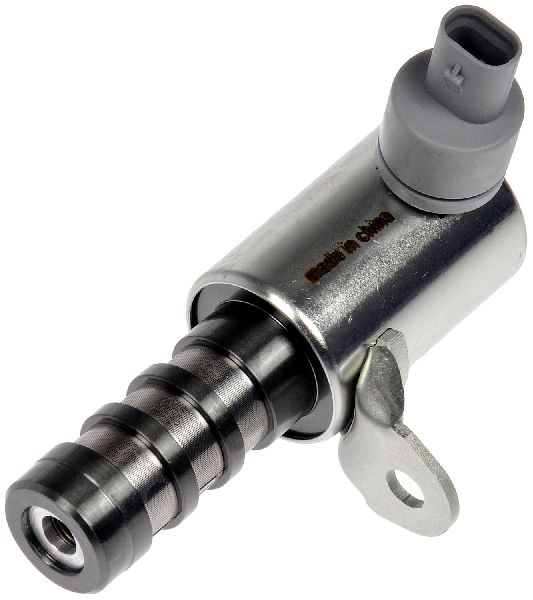
Est. part cost: $40-$80 - Failing Variable Camshaft Timing (VCT) Solenoid 🔴 High Probability → Shop Engine Camshaft As noted in TSB SSM 48423, these solenoids can stick due to small debris in the engine oil, a common issue for this platform. The internal screens can become clogged, or the solenoid can fail electrically.
How to confirm: After an oil change, if the code persists, swap the Bank 1 exhaust VCT solenoid with another solenoid (e.g., Bank 2 exhaust). If the code changes to P0024 (the same fault on Bank 2), the solenoid is confirmed bad. Per TSB 48423, a technician with a capable scan tool can first try cycling the solenoid 10 times to dislodge debris before replacing it.
Typical fix: Replace the Bank 1 exhaust VCT solenoid. 🎬 See this walkthrough for replacing VVT solenoids on Ford engines Bank 1 is the rear bank, closer to the firewall, which can make access more difficult than Bank 2 and may require removing the intake manifold for clearance.
Est. part cost: $30-$80 - Worn Timing Chain or Phasers 🟡 Medium Probability → Shop Engine Timing Chain The 3.5L EcoBoost engine, in particular, is known for timing chain stretch and cam phaser failure at higher mileage, which can cause timing correlation codes. This is often accompanied by a distinct rattling noise for 2-5 seconds on a cold startup.
How to confirm: Listen for a prominent rattle from the front of the engine on a cold start (after the vehicle has sat for 6+ hours). The presence of code P0016 alongside P0014 is also a strong indicator. A definitive diagnosis requires checking for timing chain slack, which is an involved job.
Typical fix: Replace the timing chain, guides, tensioners, and cam phasers. This is a significant and costly repair, often costing thousands of dollars.
Est. part cost: $400-$900
Rare But Worth Checking
- Damaged Wiring to VCT Solenoid: → Shop Engine Variable Valve Timing (VVT) Solenoid Check the wiring harness and connector for the Bank 1 exhaust VCT solenoid for any signs of damage, corrosion, or loose connections before replacing parts.
- Clogged Oil Passages: In cases of severe oil sludging, the small oil passages or screens leading to the cam phasers can become blocked, starving the system of pressure. A user on an F-150 forum reported that multiple VCT codes were resolved by a technician-performed engine flush using ATF to break up sludge that had clogged phaser oil screens, followed by a fresh oil change.
Diagnosis Steps
- Check Engine Oil: Verify the oil level is full and the oil is clean. If low or dirty, perform an oil and filter change with the correct viscosity oil. This is the most common and cheapest fix.
- Scan Tool Analysis: Use a capable OBD-II scanner to monitor the desired vs. actual camshaft position angles for Bank 1 Exhaust. A significant and lagging variance points to a problem. Per TSB 48423, use the scan tool's bidirectional control function to cycle the solenoid 10 times to attempt to clear debris.
- Solenoid Swap Test: Label and swap the Bank 1 exhaust VCT solenoid with the Bank 2 exhaust VCT solenoid. Clear the codes and drive the vehicle. If the code returns as P0024, the solenoid you moved is faulty and needs replacement.
- Inspect Wiring: Check the connector and wiring going to the Bank 1 exhaust VCT solenoid for any breaks, corrosion, or loose pins.
- Test Solenoid (Optional): If you have a multimeter, you can test the resistance of the solenoid. It should typically be between 6.9 and 7.9 ohms. An open or shorted reading indicates a failed solenoid. You can also apply a 12V source to the removed solenoid to see if it clicks open and closed.
- Advanced Mechanical Diagnosis: If the solenoid and wiring are good, listen for a cold start rattle. If present, the issue is likely internal, such as a stretched timing chain or a failing cam phaser, especially on the 3.5L EcoBoost. This requires professional diagnosis.
Parts You'll Likely Need
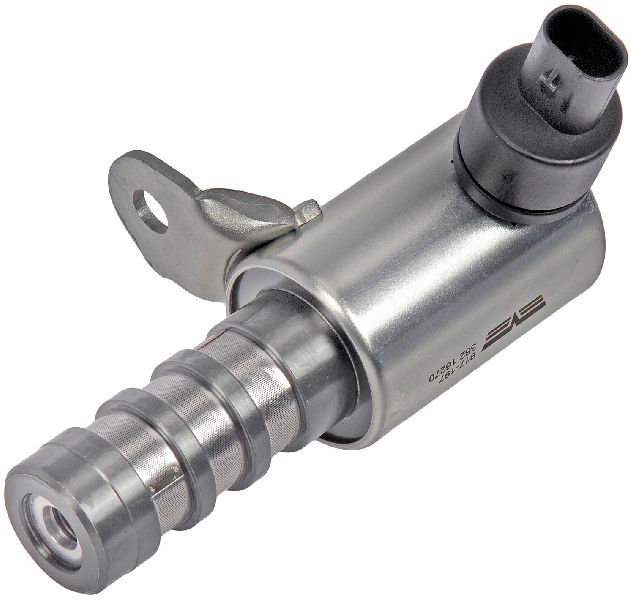
- Engine Variable Valve Timing (VVT) Solenoid
(OEM #7T4Z-6M280-C (supersedes 7T4Z-6M280-A, 7T4Z-6M280-B))— This is the most common part to fail for this code, often due to sticking from oil debris, as noted in manufacturer TSBs.
Trusted brands: Motorcraft, Dorman, SKP
OEM price range: $50-$90
Aftermarket price range: $30-$60 - Engine Oil and Filter — The VCT system is highly dependent on clean oil of the correct viscosity. An oil change is the first and most important diagnostic step.
Trusted brands: Motorcraft, Mobil 1, Castrol
OEM price range: $60-$100
Aftermarket price range: $40-$80
Related Codes That Often Appear With This One
- P0011 — Intake camshaft timing over-advanced on the same bank (Bank 1). If they appear together, it may indicate a broader oil pressure or timing issue affecting the entire bank.
- P0024 — The same exhaust cam over-advanced code, but for Bank 2. If P0014 and P0024 appear together, it strongly suggests a systemic issue like low oil pressure or severe oil contamination affecting the whole engine.
- P0016 — Crankshaft/Camshaft Position Correlation error. This code points to a more serious physical timing misalignment and is a strong indicator of a stretched timing chain, especially if accompanied by a startup rattle.
- P054C — Cold Start 'B' Camshaft Position Timing Over-Advanced Bank 1. This code appearing with P0014 strongly suggests a mechanical or hydraulic issue (solenoid, phaser) that is most apparent during cold starts.
Technical Service Bulletins (TSBs) & Recalls
- SSM 54366 - ELECTRICAL SYSTEM, dated 2025-11-12
- SSM 48423 - POWER TRAIN, dated 2019-12-20
Platform-Specific Known Issues
- TSB Guidance on Sticking Solenoids: TSB SSM 48423 states that for some 2015-2020 Ford and Lincoln vehicles, DTCs like P0014 may be caused by small debris making the VCT solenoid stick. It advises using pinpoint test HK11 with a scan tool to cycle the affected solenoid 10 times to attempt to clear the debris before attempting replacement.
- Difficult Access to Bank 1: On the transverse-mounted 3.7L and 3.5L engines, Bank 1 is located at the rear of the engine bay against the firewall. This makes accessing the Bank 1 VCT solenoids significantly more difficult than Bank 2, sometimes requiring the removal of the upper intake manifold for clearance. 🎬 Watch: How to replace the VVT solenoid on 3.7L engines
- EcoBoost Timing Chain Warning: → Shop Engine Timing Chain On the 3.5L EcoBoost engine, P0014 should be taken more seriously if accompanied by a 2-5 second rattle on cold starts. This combination is a classic symptom of a stretched timing chain or failing cam phasers, a well-known and expensive issue with this engine family.
Mechanic-Grade Diagnostic Values
- VCT Solenoid Internal Resistance — expected: 6.9 to 7.9 Ohms at 68°F (20°C). Some sources state a broader acceptable range of 8 to 12 Ohms.. Failure: A reading of 0 ohms indicates a short, while an infinite reading (OL) signifies an open circuit.
- VCT Solenoid Connector Voltage — expected: Battery voltage (approx. 12.6V key-on-engine-off) at the power supply pin.. Failure: Low or no voltage points to a wiring issue, fuse, or PCM power relay problem, not the solenoid itself.
- VCT Advanced Error PID (via Ford IDS) — expected: Should hover around 0° in closed-loop operation.. Failure: A consistent deviation greater than +/- 5° indicates a timing control problem.
- Engine Oil Pressure at Hot Idle — expected: Minimum of 15 PSI.. Failure: Pressure below 15 PSI at idle can prevent the VCT system from functioning correctly and may cause camshaft oscillation.
Scan Tool Commands That Help
- Ford IDS (or equivalent professional scanner): VCT Solenoid Duty Cycle Command / Actuator Test — As mentioned in TSB SSM 48423, a technician can command the solenoid to cycle on and off (typically 10 times) to try and dislodge debris causing it to stick. This can also be used to verify if the solenoid is responding to commands by listening for a click or monitoring engine performance changes at idle.
- Ford IDS (or equivalent professional scanner): Monitor VCTADVERR (VCT Advance Error) PID — This PID shows the live difference between the PCM's commanded cam angle and the actual reported angle. A value consistently above or below zero (beyond +/- 5 degrees) while driving confirms a timing deviation that is setting the code.
Wiring & Ground Locations
- VCT Solenoid Connector — On top of the valve cover for the respective cylinder bank. Bank 1 (exhaust) is on the rear valve cover, near the firewall.. The two-pin connector provides power and a PCM-controlled ground signal to the solenoid. One pin should have battery voltage with the key on, and the other is the control line from the PCM. Checking for voltage here is the first step in diagnosing an electrical fault.
Real Owner Repair Stories
- F-150 Forum user 'TCK' (2013 F-150 w/ 3.5L EcoBoost, ~110,000 miles) — P0012, P0014, P0022, and P0024 all at once, with a pending P054C. Engine seemed to run fine.
❌ Tried (didn't work) Initial diagnosis was unclear due to multiple codes appearing simultaneously despite a recent timing chain and phaser replacement at 80,000 miles.
✅ What actually fixed it The problem was oil sludging that clogged the variable timing phaser oil screens. A Ford technician performed an engine flush by replacing the engine oil with ATF, running the engine to temperature, then draining the ATF and performing a standard oil and filter change. This cleared the codes. - YourMechanic Q&A (Car with 50,000 miles) — After a botched oil change where the filter was installed incorrectly causing a major oil leak, the engine ran rough and code P0014 appeared.
❌ Tried (didn't work) The shop corrected the filter, topped off the oil, and cleared the code, but the Check Engine Light returned the next day with the same P0014 code.
✅ What actually fixed it The resolution isn't explicitly stated, but the expert suggests the period of low oil pressure from the leak likely caused the VCT system fault. The implied fix is to properly diagnose the VCT system (solenoid, phaser) which was likely damaged or clogged due to the oil pressure starvation event.
When the Usual Fixes Don't Work
- In a case involving a 2013 F-150 with a 3.5L EcoBoost, multiple VCT codes including P0014 appeared at once, even though the timing chain and phasers had been replaced 30,000 miles prior. The common fixes (solenoid or timing components) were not the root cause. The actual problem was severe oil sludging clogging the phaser oil screens. A technician resolved this not by replacing parts, but by performing an engine flush with Automatic Transmission Fluid (ATF) to dissolve the sludge, followed by a fresh oil change. This highlights that in cases of poor maintenance history, internal blockages can mimic component failure.
OEM Part Supersession History
7T4Z-6M280-A, 7T4Z-6M280-B→7T4Z-6M280-C— Standard part revision and improvement by the manufacturer.
Heads up: The latest part number, 7T4Z-6M280-C, is the correct replacement for the previous versions (-A, -AA, -B) for this application.
Helpful Videos
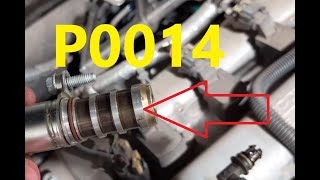
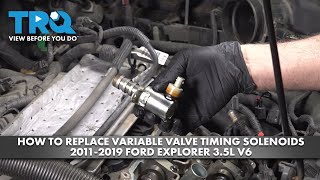
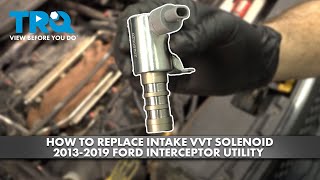
We Have This Part in Stock


The information in this article is provided for general reference and educational purposes only. Vehicle specifications, procedures, and part compatibility can vary by production date, trim level, and region. Always consult your vehicle's factory service manual and verify part numbers before purchasing or performing repairs. Safety-critical components such as airbags, seat belts, and braking systems should be installed by a qualified professional.
- Lincoln MKS:
- 🧭 Diagnostic Flowchart
- 🎬 Helpful Videos
- 🛍️ Shop This Part
- What's Unique About the 2015-2016 Lincoln MKS
- Symptoms You May Notice
- Most Likely Causes
- Rare But Worth Checking
- Diagnosis Steps
- Parts You'll Likely Need
- Related Codes That Often Appear With This One
- Technical Service Bulletins (TSBs) & Recalls
- Platform-Specific Known Issues
- Mechanic-Grade Diagnostic Values
- Scan Tool Commands That Help
- Wiring & Ground Locations
- Real Owner Repair Stories
- When the Usual Fixes Don't Work
- OEM Part Supersession History
- 🎟️ Get 5% Off