

P0014 on 2015-2019 Lincoln MKT: Causes and Fixes for Exhaust Cam Timing
On a 2015-2019 Lincoln MKT, code P0014 is most often caused by a sticking exhaust VCT solenoid on Bank 1 or by low/dirty engine oil. An oil change and a new VCT solenoid (around $30-$70 for the part) is the most common fix. This is a well-documented issue across many Ford/Lincoln vehicles with these engines.
- P0014 on a Lincoln MKT means the exhaust camshaft on Bank 1 is too far advanced.
- The first and easiest step is to check your engine oil. Low or dirty oil is a very common cause.
- The most likely part to fail is the Bank 1 exhaust VCT solenoid, which gets stuck from oil debris. This is confirmed by multiple manufacturer TSBs.
- A rattling noise on startup combined with this code may indicate a more serious stretched timing chain, a known issue on the 3.5L EcoBoost engine.
- Diagnosing by swapping the exhaust VCT solenoids between Bank 1 and Bank 2 is a cost-effective way to confirm a bad solenoid.
What's Unique About the 2015-2019 Lincoln MKT
The 3.5L and 3.7L V6 engines used in the Lincoln MKT and its platform mates (Ford Flex, Ford Explorer, etc.) rely on a hydraulic Variable Camshaft Timing (VCT) system that is highly sensitive to oil quality and pressure. Multiple Technical Service Bulletins (TSBs) from Ford/Lincoln specifically mention that P0014 can be triggered by small debris in the oil causing the VCT solenoids to stick. While this can happen on many engines, it is a well-documented weak point for this particular family of Ford engines, sometimes leading to premature timing chain wear if not addressed.
Diagnostic Flowchart
Tap your situation to follow the diagnostic path that matches what you're seeing on this vehicle.
Symptoms You May Notice
- Check Engine Light is on
- Rough or unstable idle
- Engine stalling, especially at low speeds or when coming to a stop
- Reduced power and sluggish acceleration
- Decreased fuel economy
- Rattling or ticking noise from the engine, particularly on cold startup, which could indicate a timing chain issue
- Replacing the camshaft position sensor when the actual problem is a sticking VCT solenoid or dirty oil.
- Replacing the cam phaser when the issue is only a faulty solenoid or an oil pressure problem.
- Assuming a timing chain replacement is needed without first trying an oil change and VCT solenoid replacement, which are much cheaper and more common fixes.
Most Likely Causes
- Low, Dirty, or Incorrect Viscosity Engine Oil 🔴 High Probability The Ti-VCT system is entirely dependent on clean oil at the correct pressure and viscosity. Sludge or debris from infrequent oil changes is the leading cause of VCT solenoid failure.
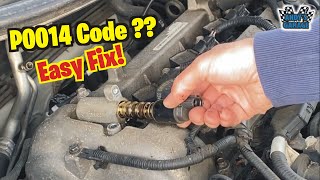
How to confirm: Check the engine oil dipstick for proper level 🎬 Watch: Two quick DIY methods to fix a P0014 code. and inspect the oil's condition. If it is dark, gritty, or past its service interval, it needs to be changed. This is the simplest and most crucial first step.
Typical fix: Perform an engine oil and filter change using the manufacturer-recommended full synthetic oil and a high-quality filter (e.g., Motorcraft FL-500S). Recommended viscosity is typically 5W-30 for the 3.5L EcoBoost and 5W-20 for the 3.7L Ti-VCT.
Est. part cost: $50-$100 - Sticking or Failing VCT Solenoid 🔴 High Probability → Shop Engine Variable Valve Timing (VVT) Solenoid TSBs #SSM 48423 and #SSM 47170 directly state that small debris can cause the VCT solenoid to stick, leading to this code. The diagnostic procedure in the TSB even suggests attempting to cycle the solenoid with a scan tool to dislodge debris before replacement.
How to confirm: A common and effective diagnostic step is to swap the Bank 1 exhaust VCT solenoid with the Bank 2 exhaust VCT solenoid. Clear the codes and drive. If the code changes to P0024 (the equivalent code for Bank 2), the solenoid is confirmed to be faulty. 🎬 Watch: How to diagnose and swap your VVT solenoids.
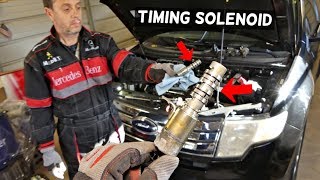
Typical fix: Replace the Bank 1 exhaust VCT solenoid. Given the low cost, many owners replace all four VCT solenoids (intake and exhaust for both banks) as preventative maintenance.
Est. part cost: $30-$70 - Stretched Timing Chain or Worn Cam Phasers 🟡 Medium Probability → Shop Engine Timing Chain The first-generation 3.5L EcoBoost engine is known for timing chain stretch, often exacerbated by extended oil change intervals. This causes a correlation error between the crank and cam sensors that the PCM may interpret as an over-advanced condition.
How to confirm: This is a more involved diagnosis. A key symptom is a distinct 'rattle' for 2-3 seconds on a cold startup. A mechanic can use a scan tool to monitor camshaft deviation PIDs (Parameter IDs). Physical inspection is the ultimate confirmation but requires significant labor.
Typical fix: Replace the timing chain, tensioners, guides, and cam phasers. This is a labor-intensive job often costing thousands of dollars.
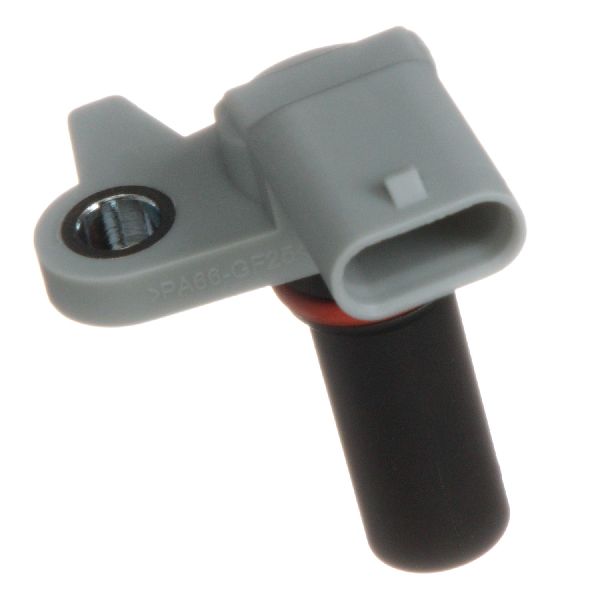
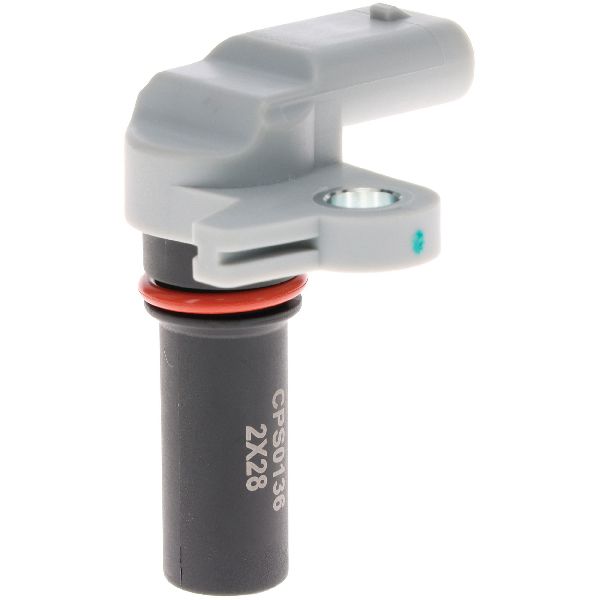
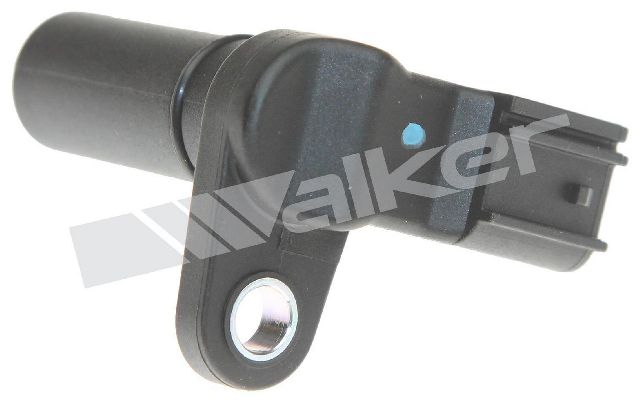
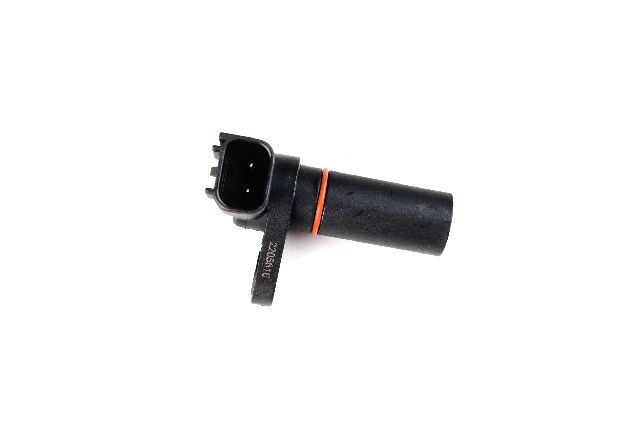
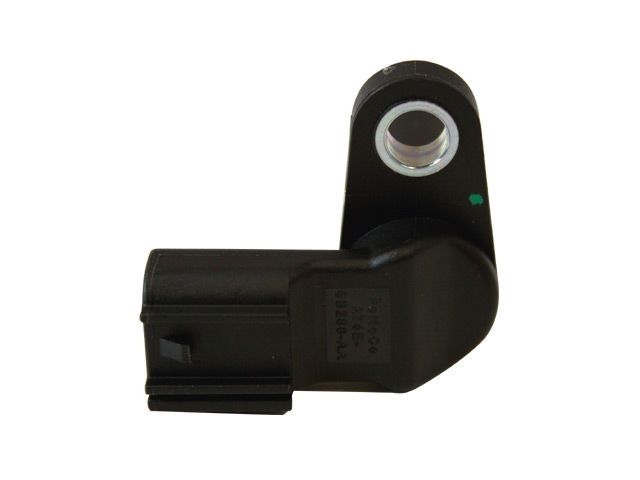
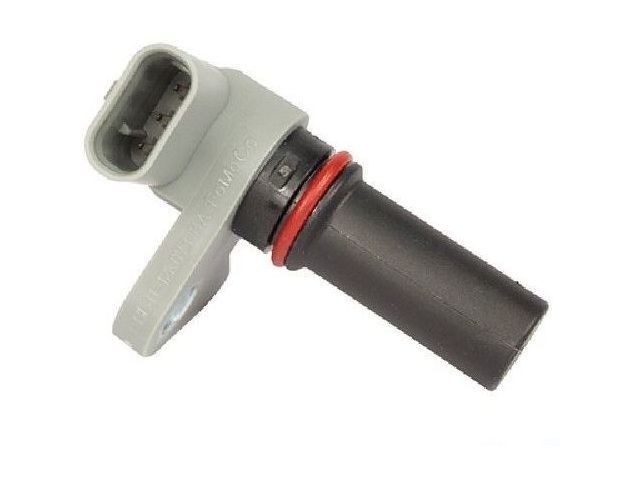
Est. part cost: $400-$900 - Failing Camshaft Position Sensor ⚪ Low Probability → Shop Engine Camshaft Position Sensor While less common than solenoid issues, the sensor that reads the camshaft's position can fail, sending incorrect data to the PCM.
How to confirm: Test the sensor's output with a multimeter or oscilloscope. Swapping it with the sensor from another camshaft (if identical) can also help diagnose the issue.
Typical fix: Replace the Bank 1 exhaust camshaft position sensor.
Est. part cost: $25-$60
Rare But Worth Checking
- Wiring Harness Damage: Check the wiring and connector for the VCT solenoid and camshaft position sensor for any signs of corrosion, fraying, or loose pins. This is especially important on the Bank 1 (firewall side) solenoid, where heat can make wiring brittle.
- Clogged Oil Passages or VCT Phaser Screens: In cases of severe engine sludge, the small oil passages that feed the VCT system can become blocked. A forum user with multiple VCT codes reported a successful fix where a technician used ATF in the oil for a short drive to break up sludge and clean clogged phaser oil screens, followed by an immediate oil change. This is an aggressive, non-standard procedure but highlights the role of internal sludge.
- PCM Fault: This is extremely rare, but the Powertrain Control Module can theoretically fail and produce false codes. All other possibilities should be exhausted before considering the PCM.
Diagnosis Steps
- Verify the engine oil level is correct and the oil is clean. If in doubt, perform an oil and filter change with the correct grade full synthetic oil and a Motorcraft filter. Clear codes and re-test.
- Use an OBD-II scanner to check for any other accompanying trouble codes. Note if codes for other cams are present.
- With a capable scan tool (like FORScan for Ford/Lincoln), monitor the desired vs. actual camshaft position PIDs for the Bank 1 exhaust cam (VCT_EXH_DSD vs VCT_EXH_ACT). A large discrepancy confirms the fault.
- Per TSB 48423, use the scan tool's command function to cycle the Bank 1 exhaust VCT solenoid 10 times to attempt to clear debris. If the code clears and stays away, the issue was likely minor debris.
- Swap the Bank 1 exhaust VCT solenoid with the Bank 2 exhaust solenoid. They are physically identical. Clear the codes and drive the vehicle. If the fault code changes to P0024 (Bank 2 Exhaust), the solenoid is definitively bad.
- If the code does not change, inspect the wiring and connector at the Bank 1 exhaust VCT solenoid and camshaft position sensor for damage, oil contamination, or corrosion.
- If solenoids and wiring are good, the next step is to investigate for more serious mechanical issues like a stretched timing chain or failing cam phaser, which may require professional diagnosis and listening for startup rattle.
Parts You'll Likely Need
- Variable Camshaft Timing (VCT) Solenoid
(OEM #AT4Z-6M280-A (Also listed as AT4Z-6M280-B, check with dealer for latest revision))— This is the most common failure point, as identified by manufacturer TSBs. It gets stuck due to debris in the engine oil. The solenoids are identical for intake/exhaust and both banks on these engines.
Trusted brands: Motorcraft, Dorman
OEM price range: $40-$60
Aftermarket price range: $25-$50 - Engine Oil and Filter
(OEM #Motorcraft FL-500S (Filter))— The VCT system is hydraulic. Clean oil at the correct viscosity is critical for its operation and is the first and most important step in resolving this code.
Trusted brands: Motorcraft (Full Synthetic), Mobil 1, Castrol
OEM price range: $50-$80
Aftermarket price range: $40-$70 - Timing Chain Kit
(OEM #Varies by specific engine, e.g., Motorcraft KT-480)— If the timing chain has stretched, it must be replaced to restore correct engine timing. This is a more intensive and costly repair often associated with a startup rattle.
Related Codes That Often Appear With This One
- P0011 — Intake camshaft timing over-advanced on the same bank (Bank 1). Often points to a systemic issue like oil pressure or a timing chain problem affecting the whole bank.
- P0012 — Intake camshaft timing over-retarded on Bank 1. Can appear with P0014 if the VCT system is behaving erratically, sometimes indicating a more severe oil delivery or sludge issue.
- P054A — Cold Start 'B' Camshaft Position Timing Over-Advanced (Bank 1). This is a more specific version of P0014 that points to the issue occurring during cold starts, often related to oil pressure build-up or phaser issues.
- P0016 — Crankshaft/Camshaft Position Correlation Error. This code indicates a more serious timing misalignment and is a strong indicator of a stretched timing chain, especially if accompanied by a startup rattle.
- P0024 — Exhaust camshaft timing over-advanced on Bank 2. If this appears with P0014, it points to a global issue affecting both banks, such as severe oil contamination, low oil pressure, or a failing oil pump.
Technical Service Bulletins (TSBs) & Recalls
- SSM 48423: Notes that P0014 may be caused by small debris causing the VCT solenoid to stick. Recommends using pinpoint test HK11 to cycle the solenoid 10 times to attempt to clear debris before replacement.
- SSM 54366: References a specific diagnostic pinpoint test (HK) for a group of VCT codes including P0014.
- SSM 47170: An earlier bulletin, superseded by 48423, also identifying sticking VCT solenoids due to debris as a potential cause for P0014 and recommending cycling the solenoid.
Platform-Specific Known Issues
- Technical Service Bulletin #SSM 48423 and #SSM 47170 note that on some 2015-2020 Ford and Lincoln vehicles, DTCs including P0014 may be present due to small debris causing the VCT solenoid to stick. The prescribed dealer action is to first try cycling the solenoid with a diagnostic tool before replacement.
- The 3.5L EcoBoost engine is known to have issues with timing chain stretch, which can manifest as VCT-related codes like P0014. This often presents as a rattling noise on cold startups and is frequently linked to oil change intervals being stretched too far.
Mechanic-Grade Diagnostic Values
- VCT Solenoid Internal Resistance — expected: 5 to 14 Ohms. Failure: A reading of infinity (OL) indicates an open coil, while a very low reading (under 2 Ohms) indicates a shorted coil.
- VCT Solenoid Power Supply Voltage (Key On, Engine Off) — expected: Greater than 10.5 Volts. Failure: Voltage below 10.5V indicates a problem with the power supply circuit from the fuse box.
- VCT Solenoid Control Circuit to PCM Resistance — expected: Less than 5 Ohms. Failure: Resistance greater than 5 Ohms indicates excessive resistance or an open in the control wire between the solenoid connector and the PCM.
- VCT Solenoid Control Circuit to Ground Resistance — expected: Greater than 10,000 Ohms. Failure: Resistance less than 10,000 Ohms indicates a short to ground in the control circuit.
Hidden / Shadow Codes Worth Checking
- Mode 6 PIDs: VCTADVERR, VCT_INT_DIF, VCT_EXH_DIF: These are not separate trouble codes but specific Parameter IDs (PIDs) viewable on an advanced scan tool like FORScan or Ford's IDS. They show the real-time difference in degrees between the PCM's desired camshaft angle and the actual measured angle. A healthy system should show a value near zero degrees at steady RPM. (see via A scan tool capable of reading Ford-specific live data or Mode 6 test results.)
Scan Tool Commands That Help
- FORScan, Ford IDS, or equivalent bidirectional scanner: VCT Solenoid On/Off State or Duty Cycle Command — This command, mentioned in TSB 48423, allows a technician to manually cycle the VCT solenoid. It is used to dislodge small debris that may be causing the solenoid to stick. It's also used during diagnosis while monitoring live data PIDs (like VCT_EXH_ACT) to confirm if the solenoid is physically responding to PCM commands.
Wiring & Ground Locations
- VCT Solenoid Connector — On the front of the valve cover for each respective cylinder bank. Bank 1 is near the firewall.. The connector has two pins. One receives 12V+ with the ignition on from a fuse in the engine compartment fuse box. The other is the control wire that the PCM pulses to ground to actuate the solenoid. Checking for voltage here is a primary diagnostic step.
- G103 / G104 — Common Ford engine grounds. G103 is often on the lower right front of the engine, while G104 is on the rear of the left fender apron.. A poor engine ground can cause erratic behavior in various sensors and actuators, including the VCT system. A voltage drop test from the ground point to the negative battery terminal is a valid diagnostic step if multiple electrical issues are present.
Real Owner Repair Stories
- Ford F150 Forum (2013 Ford F-150 w/ 3.5L EcoBoost engine, ~110,000 miles) — Check Engine Light with codes P0014 and P0024 appearing simultaneously, along with P0012, P0022, and P054C. Engine seemed to run fine with only a slight rough idle.
❌ Tried (didn't work) The owner was concerned about a major timing job or other expensive repairs due to all four VCT codes appearing at once.
✅ What actually fixed it The problem was diagnosed by a Ford technician as oil sludging that clogged the variable timing phaser oil screens. The technician performed a non-standard cleaning procedure by replacing the engine oil with ATF, running the engine to operating temperature, and then immediately performing a standard oil and filter change. This aggressive cleaning cleared the sludge from the phaser screens and resolved all codes.
"I Checked Everything" — The Actual Cause
- While not a smoke test issue, a common diagnostic dead-end occurs when an oil change and VCT solenoid swap do not fix the P0014 code. In these cases, the root cause is often internal engine sludge within the oil passages of the cam phasers themselves, which are not serviceable separately. The standard repairs fail because they don't address these internal blockages.
OEM Part Supersession History
AT4Z-6M280-A→AT4Z-6M280-B— Standard part revision and improvement by the manufacturer.
Heads up: The AT4Z-6M280-B solenoid is used across the 3.3L, 3.5L, and 3.7L engines and is identical for intake/exhaust positions on both banks, making it highly interchangeable within this platform.
Model Year Variations Within This Range
- 2015-2019: No significant variations related to the P0014 code exist within this model year range for the Lincoln MKT. The 3.5L and 3.7L engines and their VCT systems remained consistent. The TSBs issued by Ford cover the entire date range and beyond, indicating the potential for sticking VCT solenoids is a persistent characteristic of the system design rather than a year-specific defect.
Helpful Videos
![How to Fix P0014 Engine Code in 4 Minutes [2 DIY Methods / Only $6.74]](https://img.youtube.com/vi/olrC8UYw9cQ/mqdefault.jpg)
We Have This Part in Stock

The information in this article is provided for general reference and educational purposes only. Vehicle specifications, procedures, and part compatibility can vary by production date, trim level, and region. Always consult your vehicle's factory service manual and verify part numbers before purchasing or performing repairs. Safety-critical components such as airbags, seat belts, and braking systems should be installed by a qualified professional.
- Lincoln MKT:
- 🧭 Diagnostic Flowchart
- 🎬 Helpful Videos
- 🛍️ Shop This Part
- What's Unique About the 2015-2019 Lincoln MKT
- Symptoms You May Notice
- Most Likely Causes
- Rare But Worth Checking
- Diagnosis Steps
- Parts You'll Likely Need
- Related Codes That Often Appear With This One
- Technical Service Bulletins (TSBs) & Recalls
- Platform-Specific Known Issues
- Mechanic-Grade Diagnostic Values
- Hidden / Shadow Codes Worth Checking
- Scan Tool Commands That Help
- Wiring & Ground Locations
- Real Owner Repair Stories
- "I Checked Everything" — The Actual Cause
- OEM Part Supersession History
- Model Year Variations Within This Range
- 🎟️ Get 5% Off