

P0014 on 2015-2018 Lincoln MKX: Exhaust Cam Timing Over-Advanced Causes and Fixes
On a 2015-2018 Lincoln MKX, code P0014 is most often caused by low or dirty engine oil, or a failing Variable Camshaft Timing (VCT) solenoid. An oil change with the correct viscosity oil is the first step. If that doesn't work, the Bank 1 exhaust VCT solenoid is the next likely part to replace. On the V6 engines, Bank 1 is the firewall side, making access more difficult than Bank 2. An aftermarket solenoid costs around $30-$80.
- P0014 means the exhaust camshaft on Bank 1 (firewall side) is too far advanced.
- The most likely cause is dirty/low engine oil or a sticking VCT solenoid, a known issue cited in Lincoln TSBs.
- Always start diagnosis with an oil and filter change using the correct oil type.
- Do not immediately replace the camshaft position sensor; it is rarely the root cause.
- Replacing the VCT solenoid is a common and effective fix if an oil change doesn't resolve the issue.
What's Unique About the 2015-2018 Lincoln MKX
For this generation of Lincoln MKX with either the 3.7L Cyclone or 2.7L EcoBoost V6 engine, the VCT system is known to be sensitive to oil quality and condition. Multiple Technical Service Bulletins (TSBs) from Ford/Lincoln directly state that P0014 and related codes can be caused by small debris in the engine oil, which causes the VCT solenoids to stick. Ford specifically recommends a diagnostic procedure (Pinpoint Test HK11) where a scan tool is used to cycle the solenoid multiple times to dislodge debris before component replacement is authorized. This makes an oil and filter change a more critical first diagnostic step than on many other vehicles.
Diagnostic Flowchart
Tap your situation to follow the diagnostic path that matches what you're seeing on this vehicle.
Generation note: The 2015 model year is the final year of the first-generation Lincoln MKX, which came standard with the 3.7L V6 engine. The 2016-2018 models mark the second generation, offering the 3.7L V6 as the base engine and the 2.7L EcoBoost V6 as an option. The P0014 code and its common causes apply to all engines available in this year range, as both the 3.7L and 2.7L engines utilize Ford's Ti-VCT (Twin Independent Variable Camshaft Timing) technology.
Symptoms You May Notice
- Check Engine Light is on
- Rough idle or stalling at low speeds
- Reduced engine power and sluggish acceleration
- Decreased fuel economy
- Rattling noise from the engine, especially on startup
- Hard starting
- Replacing the camshaft position sensor. The sensor is usually reporting the timing problem correctly; it is not the cause of the problem.
- Replacing the camshaft phaser before thoroughly diagnosing the VCT solenoid and oil condition. The solenoid is a much more common and cheaper failure point.
Most Likely Causes
- Low, Dirty, or Incorrect Viscosity Engine Oil 🔴 High Probability The VCT system is operated by engine oil pressure. TSBs #SSM 48423 and #SSM 47170 directly link this code to small debris in the oil causing the VCT solenoid to stick. EcoBoost engines, in particular, can degrade oil more quickly, making them sensitive to oil condition.
How to confirm: Check the oil level on the dipstick and inspect its color and consistency. If the level is low or the oil is dark, gritty, or past its service interval, it needs to be changed. Many owners on forums report the code appears when an oil change is due and disappears immediately after.
Typical fix: Perform an engine oil and filter change using the manufacturer-specified oil viscosity (e.g., SAE 5W-30 for the 3.7L and 5W-30 Synthetic Blend for the 2.7L EcoBoost). This is the universally recommended first step.
Est. part cost: $40-$90 - Failing Variable Camshaft Timing (VCT) Solenoid 🔴 High Probability → Shop Engine Camshaft As noted in TSBs, these solenoids are susceptible to getting clogged or stuck from oil debris. The internal screens can get blocked, or the solenoid can fail electrically over time.
How to confirm: After an oil change, if the code persists, you can test the solenoid. A common DIY method is to swap the Bank 1 exhaust solenoid with the Bank 2 exhaust solenoid (radiator side) to see if the trouble code follows to the other bank (e.g., P0024). You can also test its resistance with a multimeter (typically should be 5-15 ohms) or use a scan tool to command it on and off and watch for a change in engine idle.
Typical fix: Replace the Bank 1 exhaust VCT solenoid. On these V6 engines, Bank 1 is against the firewall, which can make access more challenging than Bank 2, potentially requiring removal of the upper intake manifold.
Est. part cost: $30-$80 - Damaged Camshaft Phaser ⚪ Low Probability → Shop Engine Camshaft The phaser is the mechanical gear that actually adjusts the cam timing. It can fail mechanically by getting stuck or having its internal locking pin break, though this is less common than a solenoid failure. This is a more prevalent issue on the 3.5L EcoBoost, but can still occur on the 3.7L and 2.7L.
How to confirm: This is a more advanced diagnosis. It typically requires removing the valve cover to inspect the phaser and timing components. A mechanic might use an oscilloscope to analyze cam/crank sensor patterns, looking for slow response or incorrect positioning that doesn't correlate with VCT solenoid commands.
Typical fix: Replace the camshaft phaser, which is a labor-intensive job that also requires replacing the timing chain and other related components.
Est. part cost: $150-$400
Rare But Worth Checking
- Stretched Timing Chain: → Shop Engine Timing Chain While less common than a solenoid issue, a stretched timing chain can cause correlation errors between the crankshaft and camshafts, leading to this code. This is usually accompanied by a rattling noise on startup, particularly on cold starts.
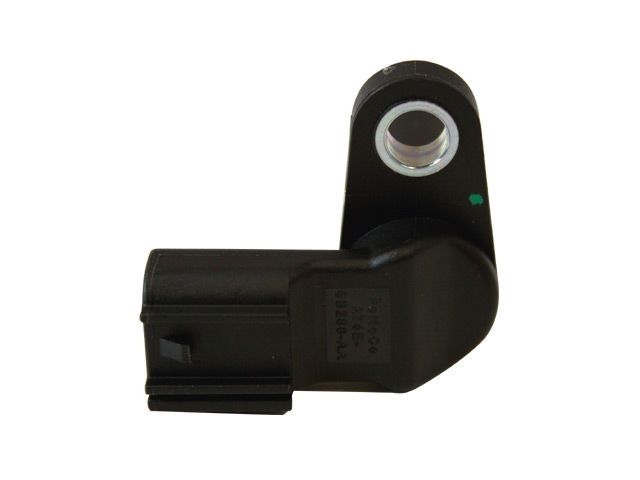
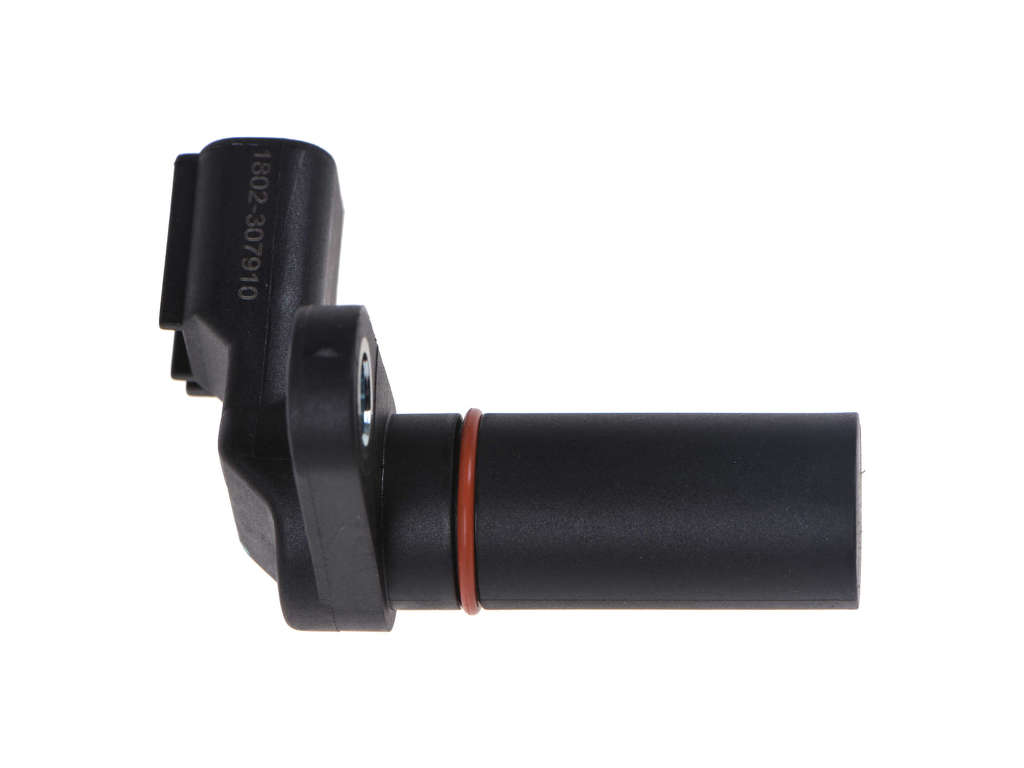
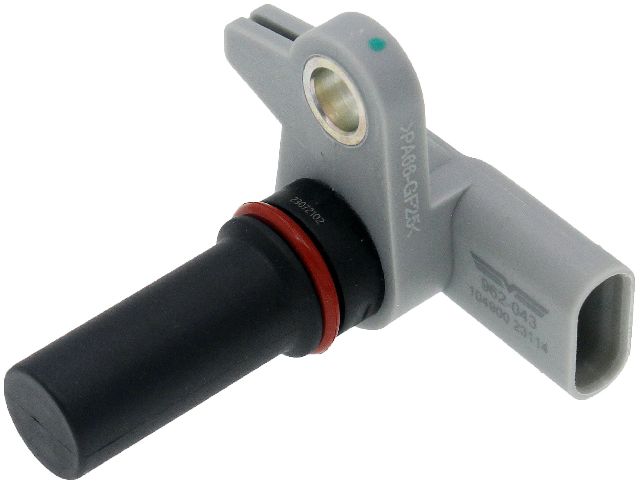
- Faulty Camshaft Position Sensor: → Shop Engine Camshaft Position Sensor The sensor itself can fail, but it's more likely to trigger a specific sensor circuit code (like P0345 or P0349) rather than a timing performance code like P0014. It's often misdiagnosed as the primary cause.
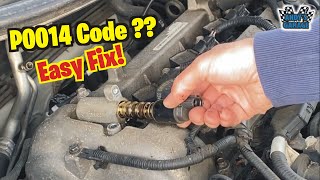
- Powertrain Control Module (PCM) Error: This is extremely rare and should only be considered after all other mechanical 🎬 Watch: A helpful walkthrough on fixing a P0014 code and electrical possibilities have been exhaustively ruled out. Sometimes wiring harness issues can mimic a PCM fault.
Diagnosis Steps
- Check Engine Oil: Verify the oil level is correct and the oil is clean. If low, dirty, or overdue for a change, perform an oil and filter change with the correct grade oil (e.g., Motorcraft Synthetic Blend 5W-30) and clear the code.
- Scan Tool Analysis: Use an OBD-II scanner to check for other codes. Use a tool like FORScan to monitor live data PIDs for desired vs. actual camshaft position for Bank 1 Exhaust (VCT_EXH_CAM_ACT B1) and the error PID (VCT_EXH_ERR B1). A large, persistent error value points to a problem.
- Perform VCT Solenoid Self-Test: Per Ford TSBs, use a capable scan tool to run the VCT solenoid test (often found under Pinpoint Test HK). This cycles the solenoid 10 times to attempt to clear any internal debris.
- Swap Solenoids (Diagnostic Test): A cost-effective test is to swap the Bank 1 exhaust VCT solenoid with the Bank 2 exhaust VCT solenoid (on the radiator-side valve cover). Clear the codes and drive the vehicle. If the code returns as P0024 (for Bank 2), the solenoid is confirmed to be faulty.
- Test Solenoid and Circuit: If the code does not move, inspect the wiring and connector for damage. Unplug the solenoid and measure its resistance with a multimeter; it should be between 5 and 15 ohms. Check for 12V at the connector with the key on.
- Inspect Timing Components: If all of the above check out, the issue may be mechanical. This requires a more in-depth inspection of the timing chain, tensioners, and camshaft phaser, which may require professional service. A key symptom pointing to this is a persistent cold-start rattle.
Parts You'll Likely Need
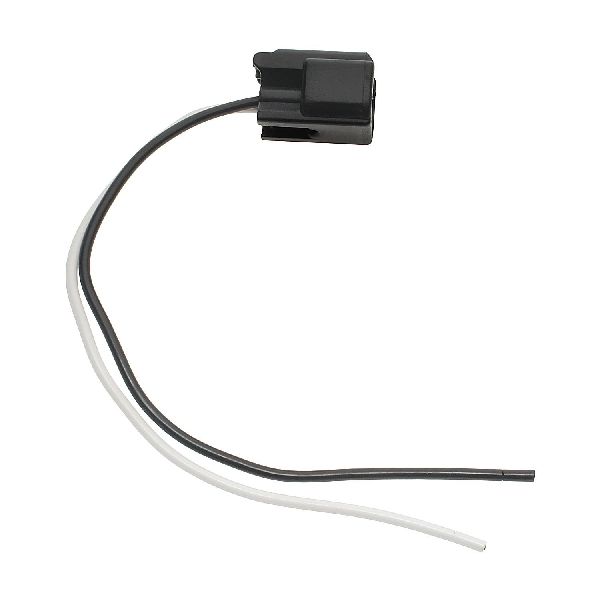
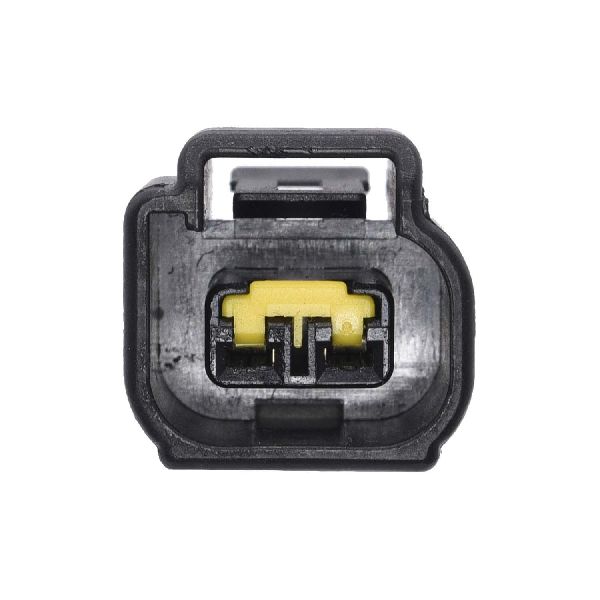
- Variable Camshaft Timing (VCT) Solenoid (Bank 1 Exhaust)
(OEM #7T4Z-6M280-C (For 3.7L V6) or FT4Z-6M280-B (For 2.7L V6). Part numbers can be superseded; always verify with VIN.)— This part is the most common point of failure for this code on this platform, often due to sticking from oil debris, as noted in manufacturer TSBs.
Trusted brands: Motorcraft, Dorman, Standard Motor Products
OEM price range: $60-$120
Aftermarket price range: $30-$80 - Engine Oil and Filter
(OEM #Motorcraft FL-500S (Filter for both engines))— Dirty, low, or incorrect viscosity oil is a primary cause of VCT system malfunctions and code P0014.
Trusted brands: Motorcraft, Mobil 1, Castrol
OEM price range: $50-$100
Aftermarket price range: $40-$90
Related Codes That Often Appear With This One
- P0011 — Intake camshaft timing over-advanced on the same bank (Bank 1). If both appear, it could point to a base timing issue or oil pressure problem affecting the entire bank.
- P0024 — Exhaust camshaft timing over-advanced on Bank 2. If seen with P0014, it suggests a problem common to both banks, like severe oil contamination or low oil pressure affecting the entire engine.
- P0016 — Crankshaft Position - Camshaft Position Correlation (Bank 1, Intake). This code appearing with P0014 points more strongly towards a base mechanical timing issue like a stretched or jumped timing chain, rather than just a faulty actuator.
Technical Service Bulletins (TSBs) & Recalls
- SSM 54366: Notes that various 2015-2021 Ford/Lincoln vehicles may exhibit P0014 and other VCT codes, directing technicians to specific diagnostic tests in the PC/ED manual.
- SSM 48423: States that P0014 on 2015-2020 models may be due to small debris causing the VCT solenoid to stick and advises diagnosis (Pinpoint Test HK11) before attempting repairs.
- SSM 47170: An earlier version of the same bulletin, also pointing to debris in the oil as a cause for a sticking VCT solenoid and recommending cycling the solenoid to clear it.
Platform-Specific Known Issues
- TSB #SSM 48423 and #SSM 47170 all indicate that P0014 (and other VCT codes) can be caused by small debris in the oil causing the VCT solenoid to stick. The prescribed first action is often a scan tool-actuated solenoid cleaning cycle before replacement.
Mechanic-Grade Diagnostic Values
- VCT Solenoid Internal Resistance — expected: 5.0 - 15.0 Ohms. Failure: A reading of 0 Ohms (short) or infinite/OL (open circuit) indicates a failed solenoid coil.
- VCT Solenoid Connector Voltage — expected: ~12V (Battery Voltage) on the power supply pin with Key On, Engine Off.. Failure: No voltage suggests a wiring issue, blown fuse, or PCM power relay fault.
- Scan Tool PID: VCT Advanced Error (e.g., VCT_EXH_ERR B1) — expected: Should be close to 0° (+/- 5°).. Failure: A large, persistent value that does not correlate with desired position changes indicates a sticking solenoid or phaser.
- Engine Oil Pressure at Hot Idle — expected: Minimum 15 PSI.. Failure: Pressure below this threshold may be insufficient to properly operate the VCT phasers, potentially causing timing codes.
Hidden / Shadow Codes Worth Checking
- Mode 6, Test ID ($A2 - $AF): Ford uses Mode 6 data to monitor non-continuous systems like misfires and component performance. While specific Test IDs for VCT timing can vary, a technician can use a capable scanner to view the raw data counts for camshaft timing tests. High counts or values outside the min/max threshold can indicate a problem before a DTC is set. (see via A professional scan tool or advanced DIY software like FORScan with Mode 6 capabilities.)
Scan Tool Commands That Help
- Ford IDS, FORScan: VCT Solenoid On/Off State or Duty Cycle Control — As per TSBs, this bidirectional command cycles the solenoid 10 times to dislodge small debris. This can potentially fix a sticking solenoid without requiring replacement and is a key diagnostic step before authorizing a new part.
- Ford IDS, FORScan: Monitor PIDs: VCT_EXH_CAM_DS1 (Desired Cam Angle) vs. VCT_EXH_CAM_ACT1 (Actual Cam Angle) — Used during diagnosis to see in real-time if the camshaft's actual position is matching what the PCM is commanding. A significant and persistent lag or deviation points to a mechanical or hydraulic issue (solenoid, phaser, oil pressure).
Wiring & Ground Locations
- Power Distribution Box Fuses — Located in the engine compartment on the driver's side.. Contains fuses and relays for the Powertrain Control Module (PCM), which provides the switched ground signal to operate the VCT solenoids. A fault here could cut power or control to the entire system.
- Main Chassis Ground — A primary ground lug is located on the passenger side strut tower, to the right of the battery.. A poor engine or chassis ground can cause erratic behavior in electronic components, including sensors and the PCM. This can lead to incorrect readings and false codes. Verifying this ground is clean and tight is a crucial step in any electrical diagnosis.
Real Owner Repair Stories
- Reddit r/MechanicAdvice user (Generic vehicle, but user is experiencing intermittent P0014) — Check engine light with code P0014 comes on for a few hours and then disappears for months. Noticed it happens when slightly past due for an oil change.
✅ What actually fixed it The strong implication from the user's observation and the advice given is that the intermittent code is directly related to oil condition. An oil change is the presumed fix for the sludgy bits temporarily clogging the VCT solenoid screens. - YouTube channel 'Andy's Garage' (Kia Rio 1.6L (demonstrating a generic P0014 fix)) — Check Engine Light with code P0014.
✅ What actually fixed it The fix was twofold: performing an engine oil and filter change, and removing and cleaning the VVT (VCT) solenoid. The solenoid's filter screen was visibly covered in 'gunk and dirt,' which was cleaned off with mass air flow sensor cleaner before reinstallation. The code was cleared and did not return.
When the Usual Fixes Don't Work
- While an oil change and VCT solenoid replacement are the most common fixes, some owners have found these steps did not resolve the issue. In cases involving the 3.7L engine, the root cause was discovered to be a failing internal water pump leaking coolant into the oil, creating sludge that repeatedly fouled the VCT system. For some 2016-2017 2.7L EcoBoost models, the underlying problem was not the solenoid itself, but excessive oil consumption and contamination caused by defective cylinder head valve guides, an issue covered by Ford TSB 19-2384. In these instances, replacing the solenoid is only a temporary fix until the true root cause is addressed.
OEM Part Supersession History
FT4Z-6M280-A→FT4Z-6M280-B— Standard part revision/update by the manufacturer.
Model Year Variations Within This Range
- 2016-2017: 2.7L EcoBoost engines built between April 1, 2016, and January 1, 2017, may have defective cylinder head valve guides, leading to excessive oil consumption and related DTCs. This creates a specific vulnerability for oil-related codes like P0014 in vehicles from this production window.
Helpful Videos
We Have This Part in Stock


The information in this article is provided for general reference and educational purposes only. Vehicle specifications, procedures, and part compatibility can vary by production date, trim level, and region. Always consult your vehicle's factory service manual and verify part numbers before purchasing or performing repairs. Safety-critical components such as airbags, seat belts, and braking systems should be installed by a qualified professional.
- Lincoln MKX:
- 🧭 Diagnostic Flowchart
- 🎬 Helpful Videos
- 🛍️ Shop This Part
- What's Unique About the 2015-2018 Lincoln MKX
- Symptoms You May Notice
- Most Likely Causes
- Rare But Worth Checking
- Diagnosis Steps
- Parts You'll Likely Need
- Related Codes That Often Appear With This One
- Technical Service Bulletins (TSBs) & Recalls
- Platform-Specific Known Issues
- Mechanic-Grade Diagnostic Values
- Hidden / Shadow Codes Worth Checking
- Scan Tool Commands That Help
- Wiring & Ground Locations
- Real Owner Repair Stories
- When the Usual Fixes Don't Work
- OEM Part Supersession History
- Model Year Variations Within This Range
- 🎟️ Get 5% Off