

P0014 on 2015-2020 Lincoln MKZ: Causes and Fixes for Exhaust Cam Timing
On a 2015-2020 Lincoln MKZ, code P0014 is most often caused by dirty engine oil or a failing Variable Camshaft Timing (VCT) solenoid. Start by checking your oil level and condition; an oil change may resolve the issue. If not, the next likely culprit is the Bank 1 exhaust VCT solenoid, which costs around $30-$80 for an aftermarket part. On V6 models, Bank 1 is the bank of cylinders closer to the firewall, which can make access more difficult.
- P0014 on your Lincoln MKZ means the exhaust camshaft timing on Bank 1 is too far advanced.
- The most likely cause is dirty engine oil or a faulty VCT solenoid, as confirmed by Ford/Lincoln TSBs.
- Always start your diagnosis with an oil and filter change using the correct oil type.
- If an oil change doesn't fix it, the Bank 1 exhaust VCT solenoid is the next part to inspect and likely replace.
- Ignoring this code can lead to poor engine performance, bad fuel economy, and potential long-term engine wear.
What's Unique About the 2015-2020 Lincoln MKZ
For this generation of Lincoln MKZ and related Ford vehicles with EcoBoost or Cyclone V6 engines, the VCT system is known to be sensitive to oil quality and debris. Multiple Technical Service Bulletins (TSBs) from Ford explicitly state that small debris can cause the VCT solenoids to stick, leading to codes like P0014. Ford even issued a specific diagnostic procedure (Pinpoint Test HK11) that involves cycling the solenoid with a scan tool to dislodge debris before recommending replacement. This makes regular oil changes with the correct specification oil especially critical for preventing this specific fault.
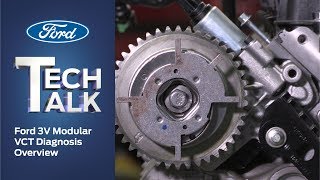
🎬 Watch: Ford technicians explain the VCT system and diagnostic steps.Diagnostic Flowchart
Tap your situation to follow the diagnostic path that matches what you're seeing on this vehicle.
Symptoms You May Notice
- Check Engine Light is on
- Rough idle or stalling
- Poor acceleration and loss of power
- Decreased fuel economy
- Rattling or knocking noise from the engine
- Replacing the camshaft position sensor before checking the oil condition or testing/cleaning the VCT solenoid.
- Replacing the cam phaser (a major repair) when the actual problem is a simple and inexpensive VCT solenoid or dirty oil.
Most Likely Causes
- Low, Dirty, or Incorrect Viscosity Engine Oil 🔴 High Probability The VCT system is hydraulically operated by engine oil. The TSBs for this vehicle (SSM 47170, SSM 48423) directly link timing codes to debris in the oil causing VCT solenoids to stick. Many owner experiences confirm that an oil and filter change is the first and often successful step.
How to confirm: Check the oil level on the dipstick and inspect its color and consistency. If the oil is dark, gritty, or below the 'add' line, it needs to be changed. The issue can occur even if the oil isn't visibly dirty, as small contaminants can clog the solenoid screens.
Typical fix: Perform an engine oil and filter change using the manufacturer-specified grade of oil (e.g., Motorcraft Synthetic Blend 5W-30 for the 2.0L EcoBoost). Clear the codes and drive to see if the issue is resolved.
Est. part cost: $60-$100 - Failing Variable Camshaft Timing (VCT) Solenoid 🔴 High Probability → Shop Engine Camshaft As noted in TSBs SSM 47170 and SSM 48423, these solenoids are susceptible to sticking due to small debris from engine oil. The internal screens can become clogged, or the solenoid itself can fail electrically.
How to confirm: After an oil change, if the code persists, the solenoid can be tested. A capable scan tool can command the solenoid on and off to check for response (Pinpoint Test HK11). It can also be removed and tested for resistance with a multimeter (typically 5-15 ohms). Often, owners will clean the solenoid with brake or MAF cleaner as a first step.
Typical fix: Replace the Bank 1 exhaust VCT solenoid. On the 2.0L I4, it is on the top of the valve cover and easily accessible. On V6 engines, Bank 1 is the rear bank (firewall side), and replacement may require removing the intake manifold for access, making the job significantly more complex.
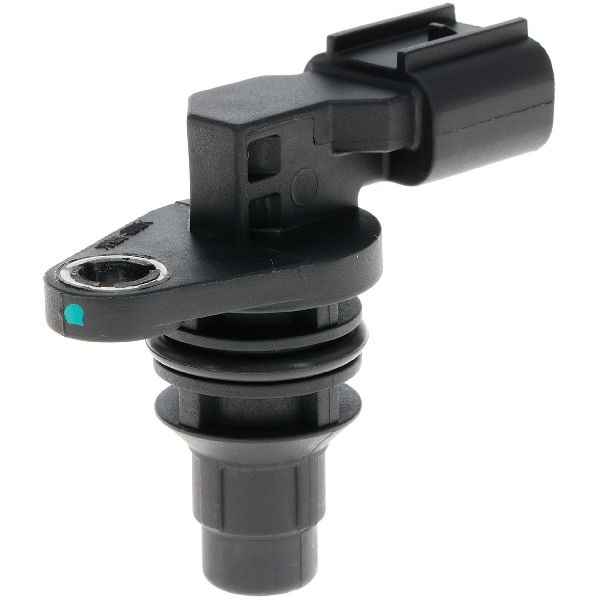
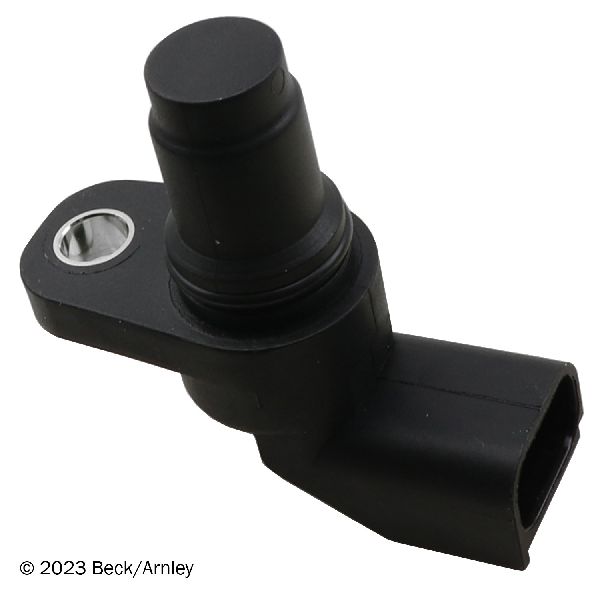
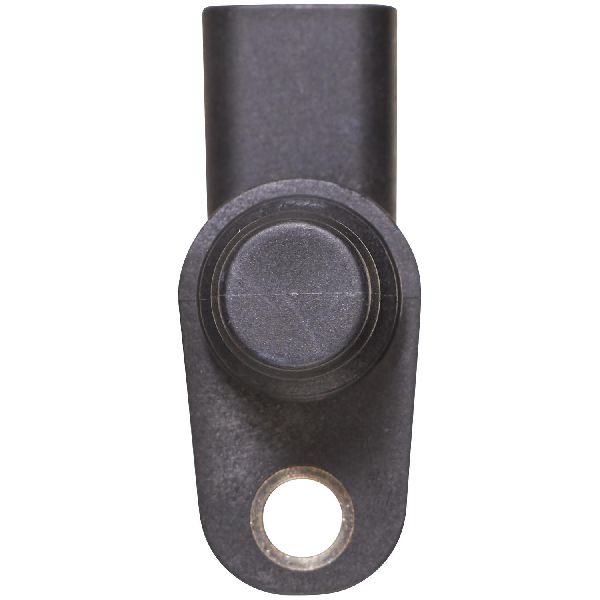
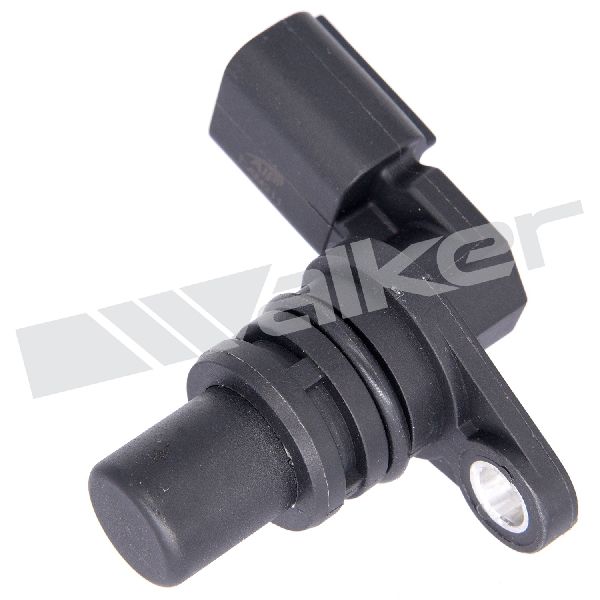
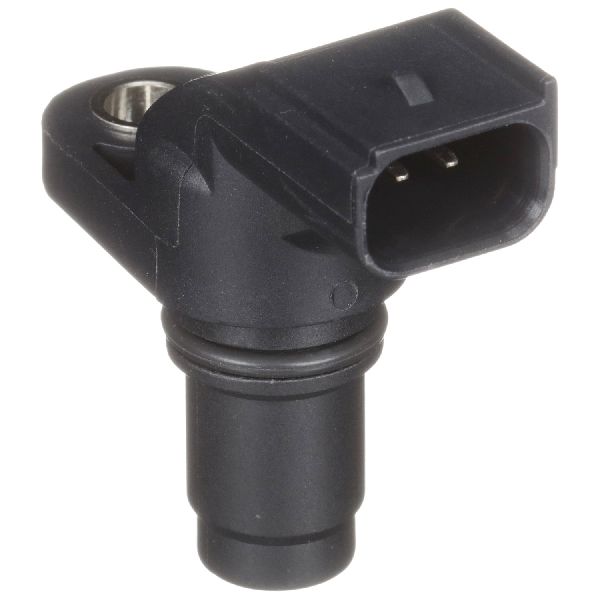
Est. part cost: $30-$80 - Faulty Camshaft Position Sensor 🟡 Medium Probability → Shop Engine Camshaft Position Sensor
How to confirm: The sensor provides the position data to the PCM. If the sensor is failing, it can send incorrect signals. This is less common than a solenoid failure and may be accompanied by other sensor-specific circuit codes. In some forum cases, users replaced the sensor only to find the P0014 code remained, pointing back to the solenoid or oil.
Typical fix: Replace the Bank 1 exhaust camshaft position sensor.
Est. part cost: $20-$60
Rare But Worth Checking
- Stretched Timing Chain or Failed Cam Phaser: → Shop Engine Timing Chain This is a more serious mechanical issue. It's less likely than oil or solenoid problems but can occur, especially on higher-mileage vehicles. This repair is significantly more complex and expensive and would likely be accompanied by rattling noises.
- Damaged Wiring or Connectors: A visual inspection of the wiring harness going to the VCT solenoid and camshaft position sensor should be performed to rule out any obvious damage, corrosion, or loose connections. The plastic connectors can become brittle from heat and break, causing a poor connection.
Diagnosis Steps
- Check Engine Oil: Verify the oil level is correct and the oil is clean. If it's low or past its service interval, perform an oil and filter change with the correct Motorcraft-specified oil. This is the most common fix. Clear the code and see if it returns.
- Scan for Other Codes: Check for any other related trouble codes that could provide more clues (e.g., codes for Bank 2, intake cams, or sensor circuits).
- Inspect Wiring: Visually inspect the wiring and connector for the Bank 1 exhaust VCT solenoid and the camshaft position sensor for any signs of damage or corrosion. The connectors can become brittle with heat and fail.
- Test/Clean the VCT Solenoid: Per Ford's TSB, use a capable scan tool to command the solenoid on and off 10 times to attempt to clear debris (Pinpoint Test HK11). Alternatively, remove the solenoid, clean the screens with a suitable cleaner, and test its resistance with a multimeter (spec is often 5-15 ohms). Reinstall and check if the code returns.
- Replace the VCT Solenoid: If cleaning and testing fail, replace the Bank 1 exhaust VCT solenoid. This is the next most likely solution.
- Test the Camshaft Position Sensor: If the solenoid is known to be good, the camshaft position sensor could be providing faulty data. Test its circuit and signal according to the service manual.
- Inspect Mechanical Timing: If all electronic components are working correctly, the issue may be mechanical. This involves inspecting the timing chain for stretching and the cam phaser for damage, which is a complex job best left to professionals.
Parts You'll Likely Need
- Variable Camshaft Timing (VCT) Solenoid
(OEM #AT4Z6M280A (For 3.7L V6), 7T4Z6M280A)— This part directly controls oil flow to the cam phaser and is cited in TSBs as being prone to sticking due to debris. It is the most frequent point of failure for this code.
Trusted brands: Motorcraft, Dorman, Standard Motor Products (SMP)
OEM price range: $50-$100
Aftermarket price range: $30-$80 - Engine Oil and Filter
(OEM #Motorcraft FL-500S (Filter for 2.0L/3.7L/3.0L))— Dirty, low, or incorrect viscosity oil is a primary cause of VCT system faults. An oil change is the first and most crucial step in troubleshooting.
Trusted brands: Motorcraft (Synthetic Blend or Full Synthetic), Mobil 1, Valvoline
OEM price range: $70-$120 (for oil and filter)
Aftermarket price range: $50-$90 (for oil and filter) - Camshaft Position Sensor
(OEM #AT4Z6B288A (For 3.7L V6))— Though less common than the solenoid, a failing sensor can send incorrect timing data to the PCM, triggering the code.
Trusted brands: Motorcraft, Standard Motor Products (SMP), Bosch
OEM price range: $30-$60
Aftermarket price range: $15-$40
Related Codes That Often Appear With This One
- P0011 — Intake camshaft timing over-advanced on the same bank. They share the same VCT system and are often caused by the same underlying oil pressure/quality issues.
- P0015 — Exhaust camshaft timing over-retarded on the same bank. This indicates the opposite problem but points to the same components (solenoid, phaser, oil).
- P0024 — Same issue as P0014 (exhaust cam over-advanced), but on Bank 2. Seeing both codes together strongly suggests a systemic problem like oil quality or pressure.
Technical Service Bulletins (TSBs) & Recalls
- SSM 47170: Notes that VCT solenoids may stick due to small debris, causing various timing-related DTCs including P0014. Recommends cycling the solenoid with a scan tool before replacement.
- SSM 48423: Repeats the information from SSM 47170, indicating this is a persistent issue across several model years and reinforcing the diagnostic procedure.
- SSM 54366: References a specific pinpoint test in the service manual for diagnosing a range of VCT codes, directing technicians to a standardized procedure.
Platform-Specific Known Issues
- TSB Guidance on Sticking Solenoids: TSB #SSM 47170 and #SSM 48423 note that some vehicles may exhibit P0014 due to small debris causing the VCT solenoid to stick. The recommended first step is not replacement, but to use a scan tool to cycle the solenoid 10 times to clear it.
- Bank 1 Location on V6 Engines: On the transverse-mounted 3.7L and 3.0L V6 engines, Bank 1 is the cylinder bank located against the firewall. This makes accessing the exhaust VCT solenoid and camshaft position sensor for Bank 1 significantly more difficult than for Bank 2 (radiator side), often requiring removal of the upper intake manifold.
- Real-World Repair Story: On the GMTNation forum, a user with a P0014 code on a similar VVT system reported that their VVT solenoid was the cause. Two of the three filter
Mechanic-Grade Diagnostic Values
- VCT Solenoid Resistance — expected: 5 to 15 Ohms between the two pins.. Failure: A reading outside this range, or an open circuit (infinite resistance), indicates a failed solenoid.
- VCT Solenoid Connector Voltage — expected: Battery voltage (~12V) at the power supply pin with key on, engine off.. Failure: No voltage suggests a wiring or fuse issue upstream from the solenoid.
- VCT Solenoid Ground Check — expected: No continuity (infinite resistance) between either pin and the metal body of the solenoid.. Failure: Any continuity indicates the solenoid is internally shorted to ground.
- VCT Solenoid Actuation Test — expected: An audible click when 12V power is briefly applied to the solenoid's pins.. Failure: No click suggests the internal plunger is mechanically stuck.
Hidden / Shadow Codes Worth Checking
- Mode 6, Test ID for VCT: Ford vehicles use Mode 6 data to show results from non-continuous monitor tests before a DTC is set. While specific Test IDs for VCT systems (like Test ID $53 for misfires) are not universally documented, a professional scan tool can access this data to see if the cam timing is approaching its failure threshold. (see via A professional-grade OBD-II scanner with Mode 6 capabilities.)
Scan Tool Commands That Help
- FORScan / Ford IDS: Misfire Monitor Neutral Profile Correction — This procedure, also known as a crank relearn, should be performed after replacing a crankshaft position sensor or performing major timing work. It corrects the correlation between the crank and cam signals, and failure to perform it can sometimes lead to timing-related codes.
- Ford IDS / Capable Scan Tool: VCT Solenoid On/Off Command — As per Ford TSBs, this bidirectional command cycles the solenoid rapidly. It should be used as a diagnostic step to dislodge small debris that may be causing the solenoid to stick before replacing the part.
Wiring & Ground Locations
- VCT Solenoid Connector — Plugged directly into the top of each VCT solenoid, which is located on the valve cover.. The plastic connector and its locking tab are known to become brittle from engine heat and can break during removal. A broken or loose connector will cause an intermittent or total loss of signal to the solenoid, triggering timing codes.
- VCT Solenoid Wiring — Runs from the PCM to the valve covers.. The circuit typically consists of a 12V power supply wire and a ground wire that is pulse-width modulated by the PCM. A short or open in either wire will prevent the solenoid from operating correctly.
Real Owner Repair Stories
- Ford F150 Forum user 'TCK' (2013 F-150 3.5L EcoBoost, ~110,000 miles) — P0014, P0012, P0022, and P0024 all appeared at once. Engine seemed to run fine with no noticeable roughness.
❌ Tried (didn't work) The user had previously replaced the timing chain and phasers at 80,000 miles, so those were not the immediate cause.
✅ What actually fixed it The problem was diagnosed as oil sludging clogging the VCT phaser oil screens. A Ford technician performed an engine flush by replacing the engine oil with Automatic Transmission Fluid (ATF), running the engine to operating temperature, then draining the ATF and performing a standard oil and filter change. This cleared the codes.
OEM Part Supersession History
AT4Z-6M280-A→AT4Z-6M280-B (per some aftermarket sellers)— Standard part revision or change in manufacturer.
Heads up: AT4Z-6M280-A is the widely confirmed OEM part for the 3.5L/3.7L engines in this vehicle range. While a 'B' revision may exist, ensure any replacement is specified for your exact engine, as VCT solenoids for other Ford engines (like 5.0L V8 or older 3-valve engines) are physically different and will not work.
Helpful Videos
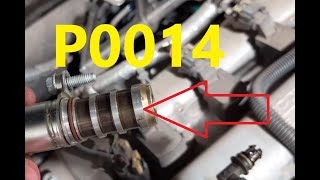
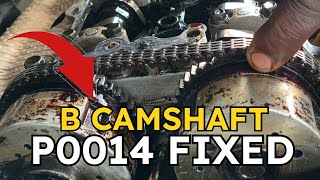
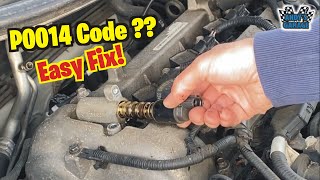
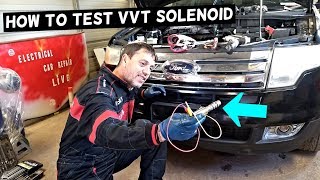
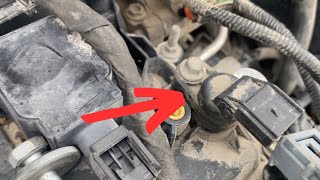
![How to Fix P0014 Engine Code in 4 Minutes [2 DIY Methods / Only $6.74]](https://img.youtube.com/vi/olrC8UYw9cQ/mqdefault.jpg)

We Have This Part in Stock


The information in this article is provided for general reference and educational purposes only. Vehicle specifications, procedures, and part compatibility can vary by production date, trim level, and region. Always consult your vehicle's factory service manual and verify part numbers before purchasing or performing repairs. Safety-critical components such as airbags, seat belts, and braking systems should be installed by a qualified professional.
- Lincoln MKZ:
- 🧭 Diagnostic Flowchart
- 🎬 Helpful Videos
- 🛍️ Shop This Part
- What's Unique About the 2015-2020 Lincoln MKZ
- Symptoms You May Notice
- Most Likely Causes
- Rare But Worth Checking
- Diagnosis Steps
- Parts You'll Likely Need
- Related Codes That Often Appear With This One
- Technical Service Bulletins (TSBs) & Recalls
- Platform-Specific Known Issues
- Mechanic-Grade Diagnostic Values
- Hidden / Shadow Codes Worth Checking
- Scan Tool Commands That Help
- Wiring & Ground Locations
- Real Owner Repair Stories
- OEM Part Supersession History
- 🎟️ Get 5% Off