

P0014 on 2009-2010 Pontiac G5: Exhaust Cam Timing Fixes
On a 2009-2010 Pontiac G5, code P0014 is most often caused by a faulty exhaust camshaft actuator solenoid or low/dirty engine oil. Replacing the solenoid is a simple, low-cost DIY fix, often costing under $40 for the part and taking less than 30 minutes.
- Always check your engine oil level and condition first. An oil change is the cheapest and easiest first step.
- P0014 on the G5 is most likely a bad exhaust camshaft actuator solenoid, part number 12655421.
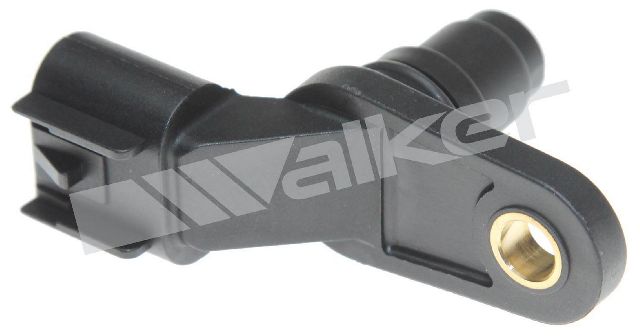
- Do not confuse the actuator solenoid with the camshaft position sensor; they are different parts.
- Replacing the solenoid is a very simple DIY job that requires only basic tools and can be done in under 30 minutes.
- A rattling noise on startup along with this code could indicate a more serious timing chain issue that needs attention.
What's Unique About the 2009-2010 Pontiac G5
The 2.2L Ecotec engine in the Pontiac G5, and its platform mates like the Chevy Cobalt, is known for having issues with its camshaft actuator solenoids. These components are extremely sensitive to oil quality and pressure, and can become clogged with sludge or debris from infrequent oil changes, leading to timing-related codes like P0014. Thankfully, replacing these solenoids is a very common and straightforward DIY repair for G5 and Cobalt owners, often documented in owner forums.
Diagnostic Flowchart
Tap your situation to follow the diagnostic path that matches what you're seeing on this vehicle.
Symptoms You May Notice
- Check Engine Light is on
- Rough idle or stalling
- Poor engine performance and acceleration
- Decreased fuel economy
- Rattling noise from the engine, especially on startup
- Engine won't start in severe cases
- Hard shifting from the transmission, as the ECU may enter a limp mode
- Replacing the camshaft position SENSOR instead of the actuator SOLENOID. The sensor reads the camshaft's position, while the solenoid controls the timing adjustment. P0014 is almost always related to the solenoid or oil, not the sensor.
Most Likely Causes
- Faulty Exhaust Camshaft Position Actuator Solenoid 🔴 High Probability → Shop Engine Camshaft These solenoids are a well-documented common failure item on the 2.2L Ecotec engine due to becoming clogged with oil sludge or failing electronically. This is the most frequent fix discussed in owner forums for the P0014 code.
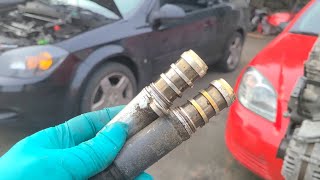
How to confirm: Swap the exhaust solenoid (rear) with the identical intake solenoid (front). Clear the codes. If the code changes to P0011 (Intake Camshaft Position), the solenoid is bad. You can also test the solenoid's resistance with a multimeter; it should be between 8-13 ohms. 🎬 Watch: How to test and fix the P0014 fault code. A user on Reddit with a similar GM engine noted they cleaned their solenoid and tested it by applying power to see if it clicked.
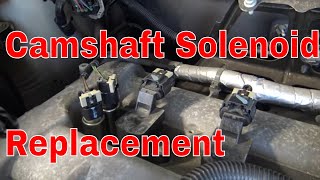
Typical fix: Replace the exhaust camshaft position actuator solenoid. It is held in by a single 10mm bolt and is easily accessible on top of the engine after removing the plastic engine cover. 🎬 See this step-by-step solenoid replacement walkthrough for Ecotec engines.
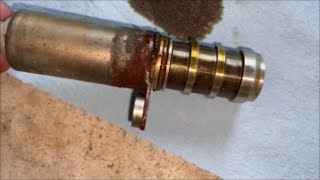
Est. part cost: $20-$50 - Low or Dirty Engine Oil 🔴 High Probability The VVT system is entirely dependent on clean oil and proper oil pressure to function. Ecotec engines can be sensitive to infrequent oil changes, leading to sludge that clogs the tiny screens on the solenoids and internal oil passages. A user on the Cobalt SS Network forum with a P0014 code was advised that an oil change was the first step, and they noted their last change was 12 months prior.
How to confirm: Check the oil level on the dipstick and inspect its condition. If the oil is low, dark, or sludgy, this is a likely contributor. One owner on a forum reported a P0014 code appeared when their oil level was so low it didn't register on the dipstick.
Typical fix: Perform an engine oil and filter change using the correct viscosity oil (5W-30). This is the first and cheapest step you should take before replacing any parts.
Est. part cost: $30-$70 - Stretched Timing Chain or Failed Tensioner ⚪ Low Probability → Shop Engine Timing Chain While less common than solenoid failure for this specific code, the Ecotec engine's timing chain and tensioners can wear over time, causing a rattling noise on startup and leading to timing correlation codes like P0016/P0017, but sometimes P0014 can appear as well.
How to confirm: Listen for a distinct rattling or slapping noise from the front of the engine for a few seconds on a cold start. This repair is complex and usually requires professional diagnosis to confirm. TSB PIP4716F provides a procedure to differentiate this noise from other engine accessories.
Typical fix: Replace the timing chain, guides, and tensioner. This is a labor-intensive job.
Est. part cost: $150-$300
Rare But Worth Checking
- Faulty Camshaft Phaser (Actuator Gear): → Shop Engine Camshaft The mechanical gear on the end of the camshaft can fail or get stuck, but this is much less common than a solenoid failure. This is usually diagnosed after the solenoid and oil have been ruled out.
- Wiring Issue to the Solenoid: The wiring harness or connector for the solenoid can become damaged or corroded, causing an open or short circuit. A visual inspection and multimeter test can confirm this. A user on Reddit with both P0013 and P0014 found that even after replacing the solenoid, the code returned, suggesting a potential wiring or PCM issue in their case.
Diagnosis Steps
- Check the engine oil level and condition. Top off or perform an oil change if it's low or dirty. Use the recommended 5W-30 oil.
- Clear the code and drive the vehicle to see if the code returns. An oil change alone can sometimes fix the issue.
- If the code returns, locate the two VVT solenoids on the top of the engine cover. The exhaust solenoid is the one closer to the rear (firewall).
- Swap the exhaust solenoid with the intake solenoid. They are identical parts. Clear the codes and drive again.
- If the code changes to P0011, you have confirmed the solenoid you moved is faulty. Purchase and install a new one.
- If the P0014 code returns after the swap, the problem is not the solenoid. Inspect the wiring and connector to the exhaust solenoid for damage, chafing, or oil contamination.
- If wiring is good, consider removing and cleaning both solenoids with brake cleaner before buying new parts. If the problem persists, it may be more complex, such as a clogged oil passage, a faulty camshaft phaser, or a timing chain issue, which may require professional diagnosis.
Parts You'll Likely Need
- Exhaust Camshaft Position Actuator Solenoid
(OEM #12655421 (may be superseded by 12679100))— This is the most common part to fail and directly cause the P0014 code on the 2.2L Ecotec engine. Note that the intake and exhaust solenoids are identical, and the intake part number is 12655420 (superseded by 12679099). They are often sold as a pair.
Trusted brands: ACDelco, Delphi
OEM price range: $40-$60
Aftermarket price range: $20-$40 - Engine Oil and Filter — Low or contaminated engine oil is a primary cause of VVT system faults and should be the first step in any repair.
Trusted brands: ACDelco, Mobil 1, Pennzoil
OEM price range: $40-$70
Aftermarket price range: $30-$50
Related Codes That Often Appear With This One
- P0013 — This code indicates an electrical circuit problem with the same exhaust camshaft actuator solenoid. Seeing them together strongly points to a failed solenoid or a wiring issue.
- P0011 — This is the equivalent code for the intake camshaft ('A'). If you see both P0011 and P0014, it could indicate a systemic issue like very low/dirty oil affecting both VVT solenoids, or a more serious timing chain problem.
Technical Service Bulletins (TSBs) & Recalls
- PIP4716F: A diagnostic procedure for a startup rattle noise that may occur alongside DTC P0014. It helps differentiate between a timing chain issue and an issue with a belt-driven accessory.
Platform-Specific Known Issues
- Real Owner Repair Story: A user on the Chevy Cobalt Forum reported getting code P0014. Another member advised that if an oil change didn't fix it, the exhaust camshaft actuator solenoid needed replacement. The member provided instructions: 'Goes towards the back of the motor. Single 10mm bolt and removing the connector, then just twist and pull up. Lube up the seals on the new one and drop it in. 10 minutes max.' This is a typical experience for this repair.
- TSB Clarification: Technical Service Bulletin PIP4716F is often mentioned with these codes, but it's important to understand its purpose. The TSB addresses a "short, sharp rattle noise from the front of the engine at start up" which may be accompanied by codes like P0014. Its primary purpose is to help a technician diagnose the *source* of the rattle by having them remove the drive belt to see if the noise disappears (indicating an issue with an accessory like the power steering pump) or remains (indicating a more serious timing chain issue). It is a diagnostic aid for the noise, not a direct repair procedure for the P0014 code itself.
Mechanic-Grade Diagnostic Values
- VVT Solenoid Electrical Resistance — expected: 8 to 13 Ohms. Failure: A reading outside this range, an open circuit (OL), or a very high reading (e.g., 72 kOhms) indicates a failed solenoid.
- Scan Tool: Desired vs. Actual Cam Angle — expected: The 'Actual' angle PID should closely follow the 'Desired' angle PID as engine RPM and load change.. Failure: The ECM sets the code when the 'Actual' angle deviates from the 'Desired' angle by more than 8-9 degrees for a sustained period. If the 'Actual' value is stuck at 0 while the 'Desired' value changes, the phaser is not moving.
- VVT Solenoid Voltage Supply — expected: Battery voltage (~12V) at the power supply pin of the solenoid's connector with the key on, engine off.. Failure: No voltage indicates a wiring or fuse issue upstream of the solenoid.
Scan Tool Commands That Help
- GM Tech2 / GDS2 or equivalent: Camshaft Position (CMP) Actuator Control — Use this bidirectional test at idle to command the exhaust VVT solenoid ON and OFF. A healthy system will cause the engine idle to become rough or stall when the solenoid is commanded on. If the engine RPM does not change, it confirms a fault in the solenoid, oil passages, or the mechanical phaser itself, helping to isolate the problem.
Wiring & Ground Locations
- ECM (Engine Control Module) — Located in the left-front of the engine compartment.. The ECM is what controls the VVT solenoid and interprets the signals from the camshaft position sensor. All relevant wiring terminates here.
- G107 — On the upper front, right side of the engine block, near the exhaust.. This is a critical engine ground point. A loose or corroded connection here can cause erratic signals from engine sensors, potentially leading to false trouble codes.
- G105 — On the lower left front of the transmission case.. This is another primary ground for the engine and transmission control systems. Ensuring it is clean and tight is a fundamental step in diagnosing electrical issues.
- VVT Solenoid Connector — On top of the valve cover, rear solenoid (closer to firewall). The exhaust solenoid connector is typically black, while the intake is gray.. This is the connection point for testing voltage, resistance, and inspecting for damage or oil contamination that could cause P0013 or P0014.
Real Owner Repair Stories
- ScannerDanner Forum (2009 Chevy Cobalt 2.2L Ecotec) — P0011 and P0014 codes appearing after a 10-mile drive. Scan tool showed a variance between desired and actual cam angles.
❌ Tried (didn't work) Oil was full and new., VVT solenoids had been recently replaced.
✅ What actually fixed it The owner had previously replaced the timing chains. Upon inspection, the screens on the *new* VVT solenoids were clogged with debris, presumably from the timing chain job. Cleaning the debris off the new solenoids resolved the issue, highlighting that residual contamination in the engine can clog replacement parts and cause the code to return.
OEM Part Supersession History
12655421→12679100— Part has been updated by the manufacturer. The new part number replaces several older numbers, likely for inventory consolidation and design improvements.
Model Year Variations Within This Range
- 2009: Per TSB #PIP4469F, Ecotec engines built prior to August/September 2009 may have residual block machining debris or head casting sand from the factory. In rare instances, this could cause VVT codes (P0011, P0014, P0016, P0017) and hesitation on very low-mileage vehicles.
Helpful Videos


We Have This Part in Stock



The information in this article is provided for general reference and educational purposes only. Vehicle specifications, procedures, and part compatibility can vary by production date, trim level, and region. Always consult your vehicle's factory service manual and verify part numbers before purchasing or performing repairs. Safety-critical components such as airbags, seat belts, and braking systems should be installed by a qualified professional.
- Pontiac G5:
- 🧭 Diagnostic Flowchart
- 🎬 Helpful Videos
- 🛍️ Shop This Part
- What's Unique About the 2009-2010 Pontiac G5
- Symptoms You May Notice
- Most Likely Causes
- Rare But Worth Checking
- Diagnosis Steps
- Parts You'll Likely Need
- Related Codes That Often Appear With This One
- Technical Service Bulletins (TSBs) & Recalls
- Platform-Specific Known Issues
- Mechanic-Grade Diagnostic Values
- Scan Tool Commands That Help
- Wiring & Ground Locations
- Real Owner Repair Stories
- OEM Part Supersession History
- Model Year Variations Within This Range
- 🎟️ Get 5% Off