

P0014 on 2006-2010 Saab 9-3 2.8L V6: Exhaust Cam Timing Over-Advanced Causes and Fixes
On the Saab 9-3 2.8L V6, code P0014 is most often caused by low/dirty engine oil, a failing exhaust camshaft actuator solenoid, or a stretched timing chain. While the solenoid is a ~$60 part and an easy DIY fix, this engine is known for premature timing chain failure, which is a major repair costing over $2000. For many owners, this failure is a matter of 'when,' not 'if'.
- P0014 on a Saab 9-3 2.8L V6 means the exhaust cam timing on the rear bank is too advanced.
- Always check the oil level and condition first; low or dirty oil is a common cause.
- The next logical step is to test or replace the Bank 1 exhaust VVT solenoid, a relatively inexpensive part.
- Be aware that this engine has a notorious and well-documented issue with stretching timing chains. If a new solenoid and fresh oil don't fix the code, a very expensive timing chain job is the most likely solution.
- If code P0017 is also present, stop diagnosing and assume the timing chains have failed.
What's Unique About the 2006-2010 Saab 9-3
The Saab 2.8L V6 (B284), a GM-designed LP9 engine, is infamous for a significant design flaw: premature timing chain stretching, often accelerated by the original long oil change intervals. While P0014 on other vehicles might just be a simple sensor or solenoid, on this specific engine it is a strong indicator of a possible timing chain issue, which is a very complex and expensive repair. Upgraded, strengthened timing chain kits from aftermarket suppliers like Speedparts are available specifically to address this known flaw. Therefore, diagnosis must be taken seriously, as it could be a simple fix or a sign of impending major engine work.
Symptoms You May Notice
- Check Engine Light is on
- Rough or unstable idle
- Engine stalling, especially when slowing down
- Reduced engine power and sluggish acceleration
- Hard starting
- Increased fuel consumption
- Rattling or whining noise from the engine, especially on startup or from the timing cover area
- Replacing the camshaft position sensor when the actual problem is the actuator solenoid or a mechanical timing issue.
- Replacing only the VVT solenoid when the underlying cause is a stretched timing chain. The code may disappear temporarily but will return as the mechanical timing deviation is too large for the system to correct. A Reddit user experience highlights replacing both the VVT solenoid and crankshaft sensor for P0014 and P0017, but the problem persisted, indicating the root cause was the timing chain itself.
Most Likely Causes
- Stretched Timing Chains 🔴 High Probability → Shop Engine Timing Chain The B284 engine has a well-documented history of premature wear and stretching across its three timing chains, which directly causes timing deviation codes like P0014. GM issued TSB 12-06-01-009D for this engine family regarding timing chain service kits to address this widespread issue.
How to confirm: A mechanic can use a scan tool (like a Tech 2) to compare desired vs. actual camshaft angles. A significant, persistent deviation that doesn't resolve with solenoid replacement points to the chains. A physical inspection is the ultimate confirmation, but it is 🎬 Watch: How a mechanic diagnoses a stretched timing chain. extremely labor-intensive.
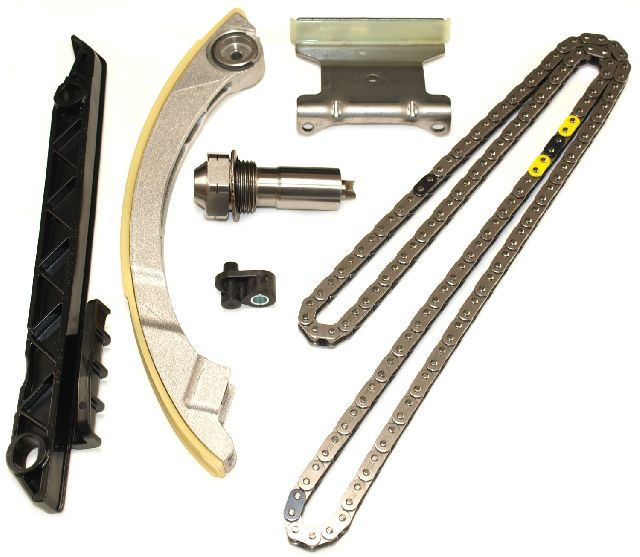
Typical fix: Replace all three timing chains, all guides, and all tensioners. This is a major engine-out or subframe-down service. Using an 🎬 See this walkthrough of the complex timing chain replacement process. upgraded, strengthened aftermarket kit is highly recommended.
Est. part cost: $250-$500 for a quality aftermarket kit. - Low or Dirty Engine Oil 🔴 High Probability The camshaft phasing (VVT) system is hydraulic and extremely sensitive to oil pressure and cleanliness. Sludge or low oil levels will starve the system, preventing the phasers from operating correctly and causing timing codes. This is the most common trigger for P0014 across all vehicles.
How to confirm: Check the oil level on the dipstick. Check the oil's condition and service history. If the oil is low, dark, or sludgy, or if the oil change is long overdue, this is a likely contributor.
Typical fix: Perform an oil and filter change using a high-quality full synthetic oil of the correct viscosity (typically 5W-30 Dexos approved). Clear the codes and see if the problem returns.
Est. part cost: $60-$100 for oil and a filter. - Faulty Exhaust Camshaft Position Actuator Solenoid (VVT Solenoid) 🟡 Medium Probability → Shop Engine Camshaft These solenoids control oil flow to the cam phasers. They can become clogged with debris from dirty oil or fail electrically, causing them to stick in one position. The filter screens on them can also break off and cause issues.
How to confirm: You can remove the solenoid (located on the top of the valve cover for Bank 1) and inspect its screen for debris. It can be tested with a multimeter (resistance should be 6-12 ohms) or by applying 12V to see if the internal plunger actuates. Swapping the exhaust solenoid with the intake solenoid on the same bank is also a good diagnostic trick; if the code changes to P0011 (intake cam), the solenoid is bad.
Typical fix: Replace the Bank 1 exhaust camshaft position actuator solenoid.
Est. part cost: $40-$80 for an aftermarket solenoid, $100-$150 for OEM.
Rare But Worth Checking
- Failing Camshaft Position Sensor: → Shop Engine Camshaft Position Sensor This sensor reads the camshaft's position. While less common to fail than the solenoid, a faulty sensor can send incorrect data to the ECM, triggering the code. It's worth considering if other steps don't resolve the issue. The OEM part number is 12608424.
- Worn Camshaft Phaser (Actuator Gear): → Shop Engine Camshaft The mechanical gear on the end of the camshaft can fail internally, but this is much less common than chain or solenoid issues. This is typically a last resort diagnosis and would be replaced during a full timing chain job.
- Low Oil Pressure: Beyond just a low oil level, a failing oil pump or clogged pickup tube can cause system-wide low oil pressure, which would starve the VVT system and trigger this code. This would usually be accompanied by an oil pressure warning light.
Diagnosis Steps
- Check Engine Oil Level and Condition: Verify the oil is full and clean. If it's low or past its service interval, perform an oil and filter change with the correct full synthetic oil. Clear the codes and test drive.
- Inspect VVT Solenoid: If the code returns, locate the Bank 1 (firewall side) exhaust VVT solenoid. Inspect the wiring and connector for damage.
- Test the Solenoid: Remove the solenoid and check the screen for metal shavings or sludge. You can test its function by applying 12V to its terminals to see if the internal piston moves. A common diagnostic step is to swap it with the intake solenoid on the same bank. Clear codes and drive. If the code changes to P0011, the solenoid you moved is faulty.
- Replace Solenoid if Faulty: If the solenoid is confirmed bad, replace it, clear codes, and test drive.
- Advanced Scan Tool Diagnosis: If the oil is good and the solenoid is working, use a professional scan tool (like a GM Tech 2). According to the Saab WIS, a technician can command the Camshaft Position Actuator from 0 to 20 degrees. The 'Camshaft Position Variance' parameter should be less than 2 degrees. If the variance is higher, it points to a mechanical timing issue (chains/phaser).
- Professional Confirmation for Timing Chains: If the scan tool data points to a mechanical fault, the cause is very likely a stretched timing chain. This requires professional confirmation before committing to the major repair.
- Verify Oil Pressure: If timing components are confirmed to be good, a mechanic should perform a mechanical oil pressure test to rule out a failing oil pump.
Parts You'll Likely Need
- Exhaust Camshaft Position Actuator Solenoid (VVT Solenoid)
(OEM #12615613)— This is a common failure point that gets clogged or fails electrically. It's one of the first and cheapest parts to replace during diagnosis.
Trusted brands: ACDelco, Dorman (917-219), SKP, Standard Motor Products
OEM price range: $100-$150
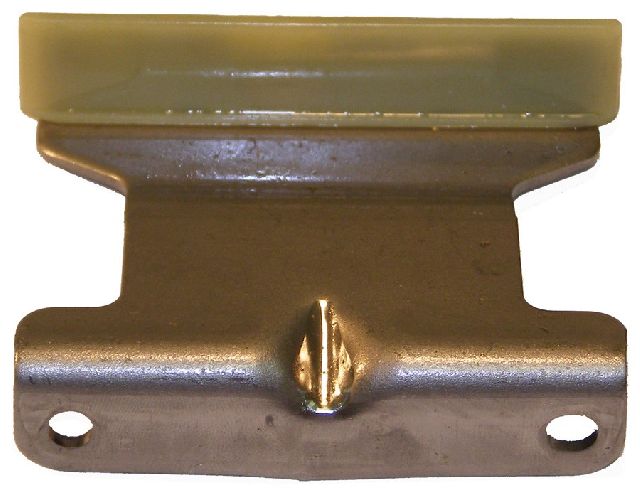
Aftermarket price range: $40-$80 - Engine Timing Chain Kit — This is the most probable major cause of P0014 on the B284 engine due to a known issue with premature chain stretching. A full kit is required for the repair, as detailed in GM TSB 12-06-01-009D.
Trusted brands: Cloyes (9-0753S for 2007.5+), Melling, eSaabParts, Speedparts (strengthened roller-type chain kit)
OEM price range: $400-$600
Aftermarket price range: $250-$500 - Camshaft Position Sensor
(OEM #12608424)— While less common than the solenoid, this sensor can fail and send incorrect data to the ECM. It's a potential cause if a new solenoid and clean oil don't resolve the code.
Trusted brands: Bosch, ACDelco, NTK/NGK, Standard Motor Products
OEM price range: $50-$80
Aftermarket price range: $25-$50
Related Codes That Often Appear With This One
- P0011 — Intake camshaft timing code for the same bank. If you swap the intake and exhaust solenoids for diagnosis, P0014 may be replaced by P0011.
- P0017 — Crankshaft Position - Camshaft Position Correlation (Bank 1, Exhaust). This code specifically indicates a mismatch between the crank and cam sensors. If you see P0014 and P0017 together, it almost certainly confirms a stretched timing chain.
Technical Service Bulletins (TSBs) & Recalls
- Timing Chain Service Kits for High Feature V6 Engine: → Shop Engine Timing Chain This GM bulletin details comprehensive timing chain service kits for the HFV6 engine family. It is issued for conditions setting codes like P0008, P0016, P0017, etc., which are directly related to stretched timing chains. It confirms this is a known issue across the engine platform.
Platform-Specific Known Issues
- The 2.8L Turbo V6 (B284) is widely known in the Saab community for premature timing chain failure. The original chains can stretch, causing timing codes like P0014 and P0017, often starting around 80,000-120,000 miles, though it can happen earlier.
Mechanic-Grade Diagnostic Values
- Camshaft Position Actuator Solenoid Resistance — expected: 5-15 Ω. Failure: A reading outside this range indicates a faulty solenoid.
- Camshaft Position Actuator Solenoid Control Circuit Voltage (Ignition ON, Engine OFF) — expected: Should not illuminate a test lamp connected to ground. A voltage of 1.5-4.5V is normal due to the pull-up design.. Failure: If the test lamp illuminates, it indicates a short to voltage in the control circuit.
- Engine Oil Pressure (Automatic Transmission, Oil at 50-80°C) — expected: Idling in 'D': 3.7 - 4.1 bar (54 - 59 PSI). Idling in 'R': 5.7 - 6.6 bar (83 - 96 PSI).. Failure: Pressure significantly below these values indicates a problem with the oil pump, pickup tube, or excessive bearing clearance, starving the VVT system.
- Camshaft Position Variance (Live Data) — expected: Less than 2 degrees.. Failure: A variance greater than 6 degrees for more than 10 seconds will set the DTC. A persistent high variance that cannot be corrected by the VVT system points to a mechanical timing issue (stretched chain).
Scan Tool Commands That Help
- GM Tech 2 / Saab WIS: CMP Actuator Solenoid Valve ON/OFF Command — This bidirectional control allows a technician to manually activate and deactivate the solenoid while monitoring the circuit's voltage response or listening for an audible click from the solenoid, confirming electrical function.
- GM Tech 2 / Saab WIS: Command Camshaft Position Actuator (0 to 20 degrees) — This function commands the cam phaser to move through its range of motion while observing the 'Camshaft Position Variance' on live data. If the actual position doesn't follow the commanded position, it indicates a hydraulic (oil pressure/blockage) or mechanical (stuck phaser, stretched chain) problem.
Wiring & Ground Locations
- ECU Ground — A ground wire is attached to one of the four 10mm bolts holding the ECU in its bracket, located on the driver's side of the engine bay.. A poor ECU ground can cause erratic behavior and incorrect readings from various engine sensors, including the camshaft position sensor, potentially triggering false codes.
- Camshaft Actuator Solenoid Connector — On top of the valve cover for the respective cylinder bank. Bank 1 (the bank with this fault) is against the firewall.. This is the primary connection point for testing the solenoid's resistance and control circuit voltage. The wiring harness in this area can become brittle from heat, leading to connection issues.
Real Owner Repair Stories
- Reddit user in r/MechanicAdvice (Vehicle with P0014 and P0017, likely GM platform) — Engine management light on, rough running.
❌ Tried (didn't work) Tested both intake and exhaust camshaft position sensors, confirmed they were working., Swapped camshaft position sensors; codes did not change., Removed, cleaned, and tested both VVT solenoids with a 9V battery; both actuated., Swapped VVT solenoids; codes did not change., Checked the camshaft reluctor ring alignment and corrected a slight misalignment.
✅ What actually fixed it The user was still diagnosing, but after all electrical and accessible components were ruled out, the persistent P0017 code strongly suggested the root cause was a stretched timing chain, which they had not yet inspected.
OEM Part Supersession History
12615613→12636175— Standard part revision by the manufacturer (General Motors).
Heads up: The new part number is a direct replacement for the old one.
Model Year Variations Within This Range
- 2006-2007 vs 2008-2010: The timing chain design and camshaft phasers were changed starting in the 2008 model year. The Saab WIS documentation shows different procedures and special tools for the 'old version' (2006-2007) and 'new version' (2008+) B284 engines, such as using tool EN-46105 for the old version vs. EN-48383 for the new version during camshaft service. This means timing chain kits are specific to the year range and not interchangeable.
Diagnostic Flowchart
Real Owner Stories
Aggregated from forums and TSBs cited above. Mileages and costs reflect what owners reported in those sources.
2006 Saab 9-3 Aero 2.8L V6 — 100000 miles
Symptoms: Owner experienced warning signs of timing chain issues and sought advice on the inevitability of the failure.
What fixed it: Planning for a major timing chain replacement service due to the known premature wear on the B284 engine.
Source hint: Reddit r/saab: '100k mile '06 93 Aero. Worth planning for timing chain?'
Saab 9-3 2.8L V6
Symptoms: Progression from an initial P0014 code to multiple related codes including P0017 and P0011.
What fixed it: Community diagnosis pointed directly to replacing the stretched timing chains.
Source hint: SaabCentral Forum: P0014, P0017, P0011 - Timing chain?
GM High Feature V6
Symptoms: Persistent P0014 code symptoms.
What fixed it: Replaced the camshaft actuator solenoid and performed an oil change to clear the code.
Source hint: GMTNation: 'How long Does symptoms of P0014 go away after changing cam shaft solenoid'
Related OBD-II Codes
Frequently Asked Questions
Does GM TSB 12-06-01-009D apply to my 2006-2010 Saab 9-3 2.8L V6?
At what mileage do the timing chains typically fail on the B284 engine?
I have a P0014 code on my 9-3 Aero. Should I replace the timing chains immediately?
How can I test if the VVT solenoid is causing the P0014 code on my 2.8L V6?
What scan tool data should a mechanic look at to confirm a stretched timing chain on my Saab?
Are there other vehicles that share this exact timing chain issue with the Saab 9-3?
Helpful Videos
We Have This Part in Stock


The information in this article is provided for general reference and educational purposes only. Vehicle specifications, procedures, and part compatibility can vary by production date, trim level, and region. Always consult your vehicle's factory service manual and verify part numbers before purchasing or performing repairs. Safety-critical components such as airbags, seat belts, and braking systems should be installed by a qualified professional.
- Saab 9-3:
- 🧭 Diagnostic Flowchart
- 🎬 Helpful Videos
- 🛍️ Shop This Part
- What's Unique About the 2006-2010 Saab 9-3
- Symptoms You May Notice
- Most Likely Causes
- Rare But Worth Checking
- Diagnosis Steps
- Parts You'll Likely Need
- Related Codes That Often Appear With This One
- Technical Service Bulletins (TSBs) & Recalls
- Platform-Specific Known Issues
- Mechanic-Grade Diagnostic Values
- Scan Tool Commands That Help
- Wiring & Ground Locations
- Real Owner Repair Stories
- OEM Part Supersession History
- Model Year Variations Within This Range
- Real Owner Stories
- 2006 Saab 9-3 Aero 2.8L V6 — 100000 miles
- Saab 9-3 2.8L V6
- GM High Feature V6
- Related OBD-II Codes
- Frequently Asked Questions
- 🎟️ Get 5% Off