

P0014 on 2008-2009 Saturn Astra: Exhaust Cam Timing Causes and Fixes
On a 2008-2009 Saturn Astra, code P0014 is most often caused by a faulty exhaust camshaft position actuator solenoid, which is often clogged by old or dirty oil. An oil change and replacing the solenoid is a simple DIY job that costs around $30-$60 for an aftermarket part. Swapping the intake and exhaust solenoids can quickly confirm the diagnosis.
- P0014 on your Astra means the exhaust camshaft timing is too far advanced, most likely due to an oil-related issue.
- The number one cause is a faulty or clogged exhaust VVT solenoid. Swapping it with the intake solenoid is a free and effective diagnostic test.
- Always start by checking your oil. A simple oil change with the correct 5W-30 grade oil can sometimes fix the problem on its own.
- This car has a unique plastic sleeve on the camshaft actuator that can go missing during repairs, which will cause this code. Be aware of this if you've had recent engine work done.
- The issue is shared with the 1.8L Chevrolet Cruze and Sonic, making their forums a valuable resource for repair stories.
What's Unique About the 2008-2009 Saturn ASTRA
The Saturn Astra is a rebadged Opel Astra H from Europe, so its 1.8L Ecotec engine (often a Z18XER or similar variant) has specific quirks not common to other GM vehicles in North America. A key issue, highlighted in GM Technical Service Bulletin #PIP4543D, involves a unique black plastic oil sleeve between the camshaft and the actuator (phaser). If this sleeve is missing or damaged, often after a previous repair like a cylinder head or cam actuator replacement, it will disrupt oil flow and trigger timing codes like P0014, even if all other parts are working correctly. This issue is also common to its platform mates, the Chevrolet Cruze and Sonic.
Diagnostic Flowchart
Tap your situation to follow the diagnostic path that matches what you're seeing on this vehicle.
Symptoms You May Notice
- Check Engine Light is on
- Rough idle or stalling at low speeds
- Poor acceleration and sluggish performance
- Decreased fuel economy
- Rattling or ticking noise from the top of the engine
- Engine hesitation or surging under load.
- Replacing the camshaft position sensor. While related, the sensor's job is to report the position. A faulty sensor would typically trigger a different code specific to the sensor circuit itself (e.g., P0340-P0344). Swapping the intake and exhaust sensors is a valid diagnostic step, but they are rarely the cause of a P0014 performance code.
Most Likely Causes
- Faulty Exhaust Camshaft Position Actuator Solenoid 🔴 High Probability → Shop Engine Camshaft These solenoids are a known failure point on GM Ecotec engines, often getting clogged with oil sludge over time, which restricts oil flow and causes them to stick.
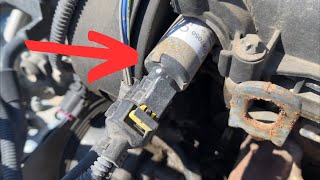
How to confirm: Swap the exhaust solenoid with the identical intake solenoid. They are located next to each other on the top of the engine. Clear the 🎬 See this walkthrough on locating and replacing the solenoids codes and run the engine. If the code changes to P0011 (Intake Camshaft Position), the solenoid is confirmed to be faulty. You can also test the solenoid's resistance with a multimeter (typically 8-13 ohms) or by applying a 12V source to see if it actuates with an audible click.
Typical fix: Replace the exhaust camshaft position actuator solenoid. It is highly recommended to replace both intake and exhaust solenoids at the same time as a pair, and to perform an oil change simultaneously.
Est. part cost: $30-$60 - Low or Dirty Engine Oil 🟡 Medium Probability The VVT system is entirely dependent on hydraulic pressure. Old, sludgy, or incorrect viscosity oil can clog the tiny passages in the solenoids and cam phasers, causing them to respond slowly or get stuck.
How to confirm: Check the oil level on the dipstick and inspect its color and consistency. If it's low, dark, or sludgy, it needs to be changed. In some cases, simply topping off low oil can make the code disappear immediately.
Typical fix: Perform an engine oil and filter change using the manufacturer-recommended 5W-30 synthetic oil that meets the DEXOS 2 specification. This is the first and most important step in troubleshooting.
Est. part cost: $30-$70 - Faulty Camshaft Phaser (Actuator) ⚪ Low Probability → Shop Engine Camshaft While less common than solenoid failure, the mechanical phaser gear itself can fail internally, getting stuck in an advanced position. This is a more significant mechanical failure, sometimes preceded by rattling noises.
How to confirm: This is difficult to confirm without definitively ruling out the solenoid and oil issues first. Diagnosis requires a professional to check timing marks, potentially with an oscilloscope, and actuator response using a scan tool.
Typical fix: Replace the exhaust camshaft phaser. This is an involved job that requires removing the timing belt, valve cover, and using special tools to lock the camshafts.
Est. part cost: $80-$150
Rare But Worth Checking
- Missing Camshaft Actuator Oil Sleeve: → Shop Engine Camshaft According to TSB #PIP4543D, these engines use a unique black plastic sleeve between the camshaft and actuator to direct oil. If a previous repair was done (e.g., head gasket, cam replacement) and this part was lost or not reinstalled, it will cause DTCs P0011, P0014, P0016, or P0017. This part is not sold separately and is only available as part of a new camshaft actuator assembly.
- Worn Timing Belt or Tensioner: → Shop Engine Timing Chain The 1.8L Ecotec engine uses a timing belt. If the belt is stretched, has jumped a tooth, or the tensioner is weak, it can cause the camshaft timing to be erratic. This would often set correlation codes like P0016 or P0017 along with P0014.
- Oil Leaking into ECU/ECM Connector: A peculiar issue noted on Opel/Vauxhall forums is that failing camshaft solenoids can leak oil through their electrical connector pins. Over time, capillary action can draw this oil all the way down the wiring harness and into the main Engine Control Unit (ECU/ECM) connector, causing a variety of erratic engine codes, including P0014.
Diagnosis Steps
- Check the engine oil level and condition. An oil and filter change with the correct 5W-30 oil is the recommended first step and may resolve the issue alone.
- Scan for any other trouble codes to see if P0014 is appearing alone or with others like P0011, P0016, or P0017.
- Inspect the wiring and connector for the exhaust camshaft actuator solenoid for any damage, loose connections, or signs of oil wicking into the harness.
- The easiest way to test the solenoid is to swap it with the intake solenoid. They are identical and located next to each other on top of the engine. Clear the codes, drive the car, and see if the code returns as P0011. If it does, you have confirmed the solenoid is bad.
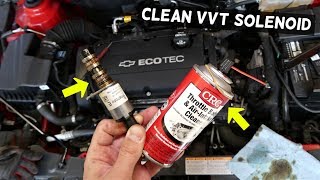
- If the code remains P0014 after the swap, the problem lies elsewhere. Remove the exhaust solenoid again and inspect its small screen filters for sludge or debris. Cleaning it may provide a temporary fix but replacement is recommended. 🎬 Watch: How to clean your VVT solenoids for a quick fix
- If timing components are suspect, a more advanced diagnosis would involve using a scan tool to command the VVT solenoid on and off while monitoring the camshaft angle to see if it responds correctly.
- If recent engine work was performed, investigate the possibility of a missing actuator oil sleeve as described in TSB #PIP4543D.
- If all else fails, the camshaft phaser (actuator) itself may be faulty, which would require a timing belt job to replace.
Parts You'll Likely Need
- Camshaft Position Actuator Solenoid
(OEM #55567050 (supersedes 12992408))— This is the most frequent failure point for P0014. It gets clogged with oil debris and fails to correctly regulate oil flow to the cam phaser.
Trusted brands: ACDelco (GM Genuine), Delphi, Dorman
OEM price range: $50-$90
Aftermarket price range: $30-$60 - Engine Oil and Filter — Clean oil of the correct viscosity (5W-30) is critical for the VVT system to function. An oil change is a required first step and may resolve the issue on its own.
Trusted brands: Mobil 1, Castrol, Valvoline
Aftermarket price range: $30-$70 - Exhaust Camshaft Phaser (Actuator Gear)
(OEM #55567048 (or 12992410))— If the solenoid and oil are good, the mechanical phaser itself may have failed. This is a less common but more involved repair.
Trusted brands: ACDelco (GM Genuine), INA, Aftermarket kits
OEM price range: $100-$180
Aftermarket price range: $60-$120
Related Codes That Often Appear With This One
- P0011 — This is the equivalent code for the intake camshaft ('A' Camshaft). If both P0011 and P0014 appear, it strongly points to a systemic issue affecting both VVT solenoids, such as low/dirty oil or incorrect oil viscosity.
- P0016 / P0017 — These codes indicate a correlation issue between the crankshaft and camshaft positions. If seen with P0014, it strongly suggests a base timing problem, such as a stretched timing belt, a failing phaser, or the missing oil sleeve mentioned in TSB #PIP4543D.
- P0171 — This code indicates the engine is running too lean. While not directly related, a timing issue can affect the engine's air/fuel mixture and efficiency, sometimes triggering this code alongside timing codes.
Technical Service Bulletins (TSBs) & Recalls
- PIP4543D: Mentions that codes P0011, P0014, P0016, or P0017 can set after engine repair due to a missing camshaft actuator oil sleeve. This TSB applies to the 1.6L and 1.8L engines in the Saturn Astra and its platform mates.
Platform-Specific Known Issues
- TSB #PIP4543D highlights that DTCs P0011, P0014, P0016, or P0017 can be set after a repair if a small, black plastic oil sleeve is missing from between the camshaft and the actuator. This sleeve is crucial for directing oil and is only available with a new actuator.
- Owners on European forums (Astra Klub Polska) have noted that failing solenoids can leak oil through the electrical connector, which can travel down the harness and contaminate the main ECU connector, causing various faults.
Mechanic-Grade Diagnostic Values
- Camshaft Position Actuator Solenoid Resistance — expected: 8 to 13 Ohms. Failure: A reading that is significantly higher (into the kilo-ohms) or shows an open circuit (infinite resistance) indicates a failed solenoid. Some known-good solenoids may read as high as 20 Ohms.
- Engine Oil Pressure Switch Activation Point — expected: 0.3 to 0.55 bar (4.4 to 8.0 PSI). Failure: This is not a direct test for P0014, but indicates the minimum pressure threshold for the low oil pressure warning system. Consistently low oil pressure will starve the VVT system and cause timing codes.
Scan Tool Commands That Help
- Tech2 / GDS2 or equivalent professional scan tool: Live Data Monitoring of Camshaft Position — After confirming oil level and solenoid resistance are good, a technician can use a scan tool to command the VVT solenoid to advance or retard the timing. By monitoring the 'Desired' vs 'Actual' camshaft position PIDs, they can determine if the mechanical phaser is physically responding to the command or if it is stuck.
Wiring & Ground Locations
- G101 (example identifier) — Main ground for the underhood fuse box and left headlight, located near the left headlight assembly.. A poor or corroded ground at this location can cause a voltage drop to the entire underhood fuse box, which powers the ECU and its outputs. This can lead to erratic behavior of sensors and actuators, including the VVT solenoids, potentially triggering false P0014 codes even if the components themselves are good.
- VVT Solenoid Connector — Two 2-pin connectors on top of the valve cover, one for each solenoid.. The VVT solenoid is a 12V DC, 2-pin actuator. One pin receives the control signal from the ECU, and the other is power or ground. A common failure is for engine oil to wick through the solenoid's internal seal and contaminate these pins, causing a short or poor connection.
Real Owner Repair Stories
- YouTube channel 'DIYDaly' (2017 Vauxhall/Opel Astra 1.6L Petrol (similar engine family and VVT system)) — Intermittent Check Engine Light with codes P0011 and P0014.
❌ Tried (didn't work) The owner went straight to the solenoids based on common issues.
✅ What actually fixed it Both VVT solenoids were replaced. The root cause was internal failure of the solenoids, allowing engine oil to seep through the electrical pins and contaminate the connectors, causing an electrical fault. Cleaning the connectors and replacing both solenoids resolved the issue.
When the Usual Fixes Don't Work
- While swapping the VVT solenoids is a primary diagnostic step, it is not a guaranteed solution. In a documented case on an Opel forum for a 2009 Astra with the Z18XER engine, a persistent P0014 code remained on the exhaust side even after replacing the sensors, replacing the exhaust solenoid, and swapping the intake and exhaust solenoids. This indicates that when the simple fixes fail, the problem is likely more severe and expensive, pointing towards either a mechanically failed camshaft phaser (requiring a timing belt job) or a fault within the Engine Control Unit (ECU) itself.
OEM Part Supersession History
12992408→55567050— Standard part revision, likely for improved reliability or material changes. The new part is coated to help protect against corrosion.
Helpful Videos
We Have This Part in Stock


The information in this article is provided for general reference and educational purposes only. Vehicle specifications, procedures, and part compatibility can vary by production date, trim level, and region. Always consult your vehicle's factory service manual and verify part numbers before purchasing or performing repairs. Safety-critical components such as airbags, seat belts, and braking systems should be installed by a qualified professional.
- Saturn ASTRA:
- 🧭 Diagnostic Flowchart
- 🎬 Helpful Videos
- 🛍️ Shop This Part
- What's Unique About the 2008-2009 Saturn ASTRA
- Symptoms You May Notice
- Most Likely Causes
- Rare But Worth Checking
- Diagnosis Steps
- Parts You'll Likely Need
- Related Codes That Often Appear With This One
- Technical Service Bulletins (TSBs) & Recalls
- Platform-Specific Known Issues
- Mechanic-Grade Diagnostic Values
- Scan Tool Commands That Help
- Wiring & Ground Locations
- Real Owner Repair Stories
- When the Usual Fixes Don't Work
- OEM Part Supersession History
- 🎟️ Get 5% Off