

P0014 on 2009-2010 Saturn VUE: Exhaust Cam Timing Over-Advanced Causes and Fixes
On a 2009-2010 Saturn VUE with the 2.4L engine, code P0014 is most often caused by a faulty exhaust camshaft position actuator solenoid or dirty/low engine oil. The 2.4L Ecotec engine family is known for oil consumption issues, which can starve the VVT system of oil. Replacing the exhaust solenoid (Part No. 12655421, superseded by 12679100) is a common, affordable DIY fix, costing around $25-$60 for the part.
- P0014 on a Saturn VUE means the exhaust camshaft timing is too far advanced.
- The most likely cause is a simple one: low/dirty engine oil or a bad exhaust VVT solenoid. Always check your oil first.
- For the 2.4L engine, a great DIY diagnostic is to swap the intake and exhaust solenoids to see if the code changes to P0011, which confirms a bad solenoid.
- A rattling noise from the engine on startup is a critical symptom mentioned in a TSB; if you hear this, the problem could be a more serious timing chain issue that requires professional diagnosis.
- Replacing a VVT solenoid is an easy, affordable repair you can likely do yourself in under an hour.
What's Unique About the 2009-2010 Saturn VUE
The 2009-2010 Saturn VUE uses the common GM 2.4L Ecotec engine, which heavily relies on clean, full oil for the VVT system to function. These engines are widely known for issues with excessive oil consumption, which can lead to low oil levels, sludge, and subsequent clogging of the camshaft position actuator solenoids. This issue is so prevalent in the Ecotec family that it was the subject of GM Special Coverage Program 14462. Furthermore, a GM Technical Service Bulletin (TSB #PIP4716F) directly links this code to a potential start-up rattle, pointing towards more significant issues like worn cam actuators (phasers) or stretched timing chains, which are also documented problems on these engines.
Diagnostic Flowchart
Tap your situation to follow the diagnostic path that matches what you're seeing on this vehicle.
Symptoms You May Notice
- Check Engine Light is on
- Rough or unstable idle
- Engine stalling at low speeds or when stopped
- Poor acceleration and loss of power
- Decreased fuel economy
- A short, sharp rattle from the engine on startup, especially a cold start
- Hard starting
- Replacing the camshaft position sensor. While a sensor can fail, it is much less common than a solenoid failure for this code. A bad sensor will typically trigger a different set of codes related to the sensor circuit itself (e.g., P0341, P0366).
Most Likely Causes
- Low or Dirty Engine Oil 🔴 High Probability The VVT system is hydraulic and extremely sensitive to oil pressure and cleanliness. The 2.4L Ecotec engine is known for consuming oil, making low oil levels a frequent cause for this code. Sludge from neglected oil changes can easily clog the small passages in the actuator solenoids.
How to confirm: Check the engine oil dipstick for low level and inspect the oil's color and consistency. If it is dark, thick, or below the 'add' line, this is the likely starting point.
Typical fix: Perform an engine oil and filter change using the manufacturer-specified oil viscosity (typically 5W-30).
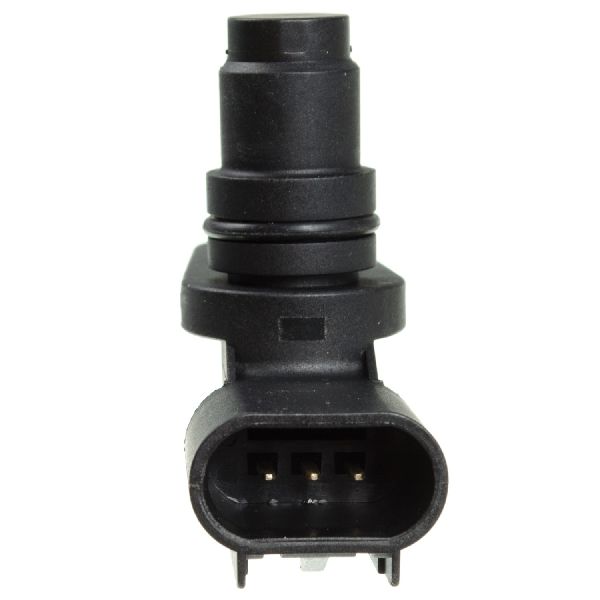
Est. part cost: $30-$70 - Faulty Exhaust Camshaft Position Actuator Solenoid 🔴 High Probability → Shop Engine Camshaft These solenoids are a very common failure point on GM Ecotec engines. They get clogged internally by debris, the internal screens can tear, or they can fail electrically, causing an open or short circuit.
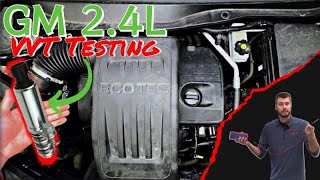
How to confirm: After checking the oil, swap the exhaust solenoid (black connector, rear position) with the intake solenoid (grey connector, front position). If the code changes to P0011 (Intake Camshaft Position Timing), the solenoid is faulty. You can also test the solenoid's resistance with a multimeter; a good solenoid should read between 8 and 13 ohms. 🎬 Watch: How to test the VVT actuator solenoid with a multimeter A reading that is very high (megaohms) or bounces erratically indicates a failure.
Typical fix: Replace the exhaust camshaft position actuator solenoid. It is often recommended to replace the intake and exhaust solenoids as a pair, as they are the same age and subject to the same conditions.
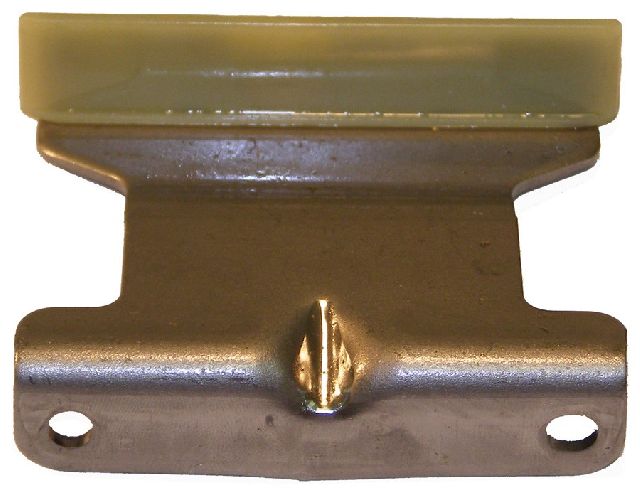
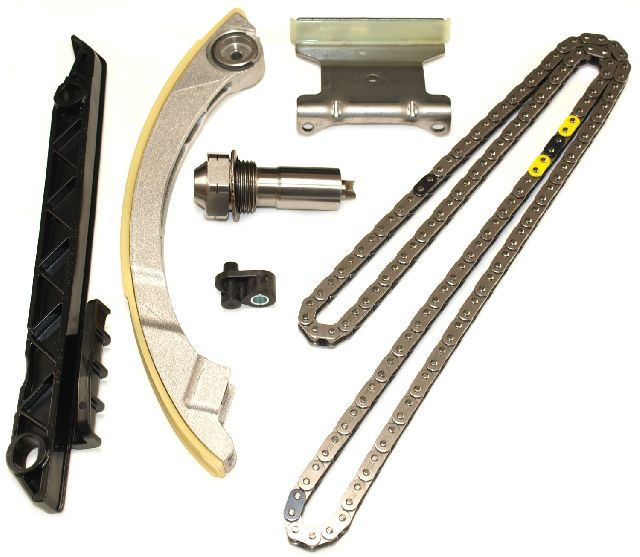
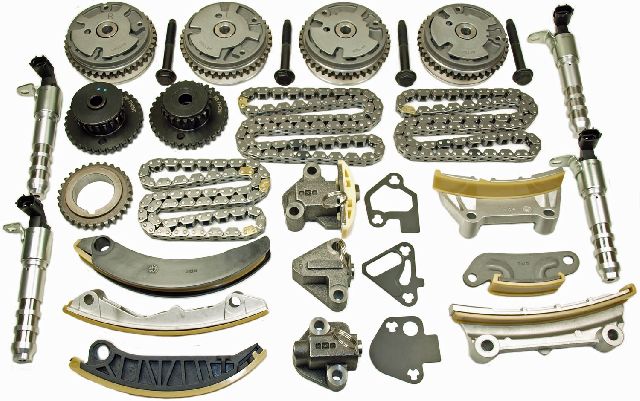
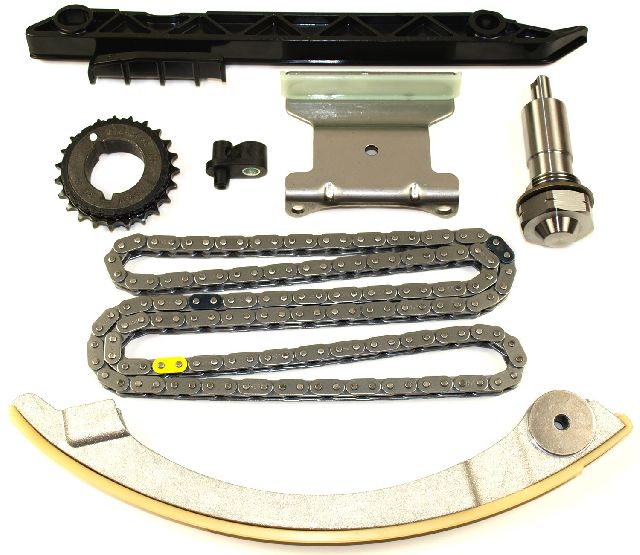
Est. part cost: $25-$60 - Stretched Timing Chain or Failed Tensioner 🟡 Medium Probability → Shop Engine Timing Chain The Ecotec and GM V6 engines can be prone to timing chain stretch over time, especially with poor maintenance or chronic low oil levels. The TSB for this vehicle explicitly connects P0014 with a startup rattle, a classic sign of a loose chain.
How to confirm: Listen for a distinct rattling or buzzing sound from the front of the engine for 2-5 seconds on a cold start. This is an advanced diagnosis that typically requires a professional mechanic to physically inspect the chain's tension.
Typical fix: Replace the timing chain, tensioners, and guides. This is a significant and labor-intensive repair, often costing over $1,000.
Est. part cost: $150-$400 for a kit - Failed Camshaft Phaser (Actuator) ⚪ Low Probability → Shop Engine Camshaft The TSB mentions that the mechanical actuators (phasers) on the end of the camshafts may fail to park correctly, causing noise and codes. Failure is less common than the solenoid but can happen, especially if a timing chain issue is also present.
How to confirm: This is difficult to confirm without ruling out the solenoid and timing chain first. A professional mechanic may use a scan tool to command and observe phaser response. Often diagnosed during a timing chain replacement.
Typical fix: Replace the camshaft phaser, which is often done during a timing chain replacement job.
Est. part cost: $50-$150
Rare But Worth Checking
- Clogged Oil Control Valve (OCV) Filter: → Shop Engine Variable Valve Timing (VVT) Solenoid
Diagnosis Steps
- Check Engine Oil: Verify the oil level is correct and the oil is clean. If low or dirty, perform an oil and filter change with the correct viscosity oil (5W-30), clear the code, and see if it returns. This is the most critical first step.
- Inspect Solenoid Wiring: Check the electrical connector and wiring to the exhaust VVT solenoid (black connector, rear of the valve cover) for any damage or loose connections.
- Swap VVT Solenoids (2.4L Engine): A simple and effective test is to swap the positions of the intake (front, grey connector) and exhaust (rear, black connector) VVT solenoids. They are identical parts. Clear the codes and run the engine. If the code changes to P0011 (intake timing), you have confirmed the solenoid you moved is faulty.
- Test Solenoid Resistance: If a swap isn't possible or desired, use a multimeter to test the resistance across the two pins of the exhaust solenoid. A good solenoid should read between 8-13 ohms. An open circuit (infinite resistance) or a wildly fluctuating reading indicates a bad solenoid.
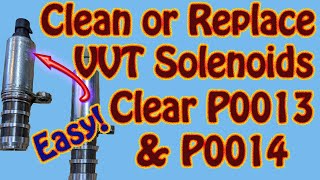
- Clean or Replace Solenoid: You can attempt to clean the solenoid's screens with brake or mass air flow sensor cleaner, but replacement with a new, quality part is the most reliable fix. If the solenoid was confirmed bad, replace it. It's recommended to replace both solenoids at the same time. 🎬 See this walkthrough for replacing the intake and exhaust solenoids
- Listen for Timing Chain Noise: If the code persists, listen carefully during a cold start for a 2-5 second rattle. If this noise is present, the timing chain or actuators are the next suspect.
- Professional Inspection: If a timing chain issue is suspected, the vehicle should be taken to a professional for confirmation, as this is a complex internal engine repair that requires special tools. 🎬 Watch: Step-by-step guide for an Ecotec timing chain replacement
Parts You'll Likely Need
- Exhaust Camshaft Position Actuator Solenoid
(OEM #12655421 (Superseded by 12679100))— This is the most common part to fail, causing the P0014 code by getting stuck, clogged, or failing electrically.
Trusted brands: ACDelco (GM Genuine), Dorman, Delphi
OEM price range: $40-$60
Aftermarket price range: $25-$45 - Intake Camshaft Position Actuator Solenoid
(OEM #12655420 (Superseded by 12679099))— Often replaced as a pair with the exhaust solenoid, as they are the same age and subject to the same conditions. A failing intake solenoid can cause code P0011.
Trusted brands: ACDelco (GM Genuine), Dorman, Delphi
OEM price range: $40-$60
Aftermarket price range: $25-$45 - Timing Chain Kit — If the timing chain has stretched or the guides have failed, a full kit including the chain, guides, tensioner, and sometimes sprockets is required for the repair.
Trusted brands: ACDelco (GM Genuine), Cloyes, Melling
OEM price range: $250-$400
Aftermarket price range: $150-$250
Related Codes That Often Appear With This One
- P0011 — Intake Camshaft Position Timing Over-Advanced. Often appears if both VVT solenoids are failing or if there is a base timing issue like a stretched chain affecting both cams.
- P0013 — Exhaust Camshaft Position Actuator Solenoid Circuit Malfunction. This points specifically to an electrical problem with the solenoid (the part itself or its wiring), while P0014 points to the resulting timing performance issue.
- P0016 / P0017 — Crankshaft/Camshaft Position Correlation. These are serious codes indicating the timing between the crankshaft and one of the camshafts is out of sync, often caused by a stretched timing chain. The TSB specifically lists these codes alongside P0014.
Technical Service Bulletins (TSBs) & Recalls
- PIP4716F
- 08-06-01-011K
- 14462 (Special Coverage Program)
Platform-Specific Known Issues
- NHTSA Technical Service Bulletin #PIP4716F notes that 2009-2010 Saturn VUEs may exhibit a short, sharp rattle from the engine at startup, which can be accompanied by DTCs P0011, P0014, P0016, or P0017. The bulletin suggests this may be an issue with the cam actuators not parking correctly, requiring replacement and inspection of the solenoids for debris.
- The 2.4L Ecotec engine in the VUE is part of a larger family of GM engines known for excessive oil consumption. This can lead to chronically low oil levels, which is a primary trigger for VVT-related fault codes like P0014. Owners should check oil levels frequently, even between scheduled changes.
- Technical Service Bulletin 08-06-01-011K applies to the 3.6L V6 engine option and lists P0014 as a potential code related to camshaft end play. If the camshaft end play is excessive, it can cause timing correlation issues.
Mechanic-Grade Diagnostic Values
- VVT Actuator Solenoid Resistance — expected: 8 to 13 Ohms. Failure: A very high reading (megaohms), an open circuit (infinite resistance), or a reading that bounces erratically when wiggled indicates a failed solenoid.
- VVT Solenoid Connector Voltage (Key-On, Engine-Off) — expected: Battery voltage (approx. 12V) on one pin, ground on the other.. Failure: No voltage indicates a wiring issue, blown fuse, or ECM driver problem.
- Scan Tool Live Data: Desired vs. Actual Camshaft Position — expected: At idle, the actual position should closely match the desired position (often near 0 degrees of advance).. Failure: A large discrepancy between the desired and actual values, or the actual value being stuck at a high degree of advance, points to a problem with the solenoid, phaser, or oil flow.
Scan Tool Commands That Help
- GDS2 / Tech2 or equivalent professional scan tool: Camshaft Position Actuator Control — This bidirectional command allows a technician to manually command the VVT solenoid on and off or to a specific duty cycle. While observing live data for camshaft position, the technician can verify if the solenoid is electrically functional and if the mechanical phaser responds to the oil pressure changes. This is a definitive test to isolate a faulty solenoid from a mechanical phaser or oil flow problem.
Wiring & Ground Locations
- G106 — On the engine, at the left front top corner.. This is a primary engine ground point that serves the Engine Control Module (ECM). A loose or corroded connection here can cause erratic sensor readings and incorrect operation of actuators like the VVT solenoids.
- ECM Connector X2, Pin 73 — This is the ground pin for the ECM itself on the larger of the two main connectors.. A poor ground connection directly at the ECM pin can cause the module to misinterpret data and send incorrect commands, potentially triggering false P0014 codes. Verifying this ground is essential in diagnosing persistent electronic issues.
Real Owner Repair Stories
- YouTube channel "OldSoulMillennial" (2016 Chevy Equinox 2.4L (same engine and VVT system)) — Check Engine Light with code P0014 and P0366, and a 'change oil' warning on the dash.
❌ Tried (didn't work) The owner purchased new VVT solenoids, but the technician diagnosed the issue before installing them.
✅ What actually fixed it The diagnosis stopped when the technician found the engine was extremely low on oil and the oil filter was full of metal debris. The root cause was identified as a severe internal engine issue (likely timing chain or bearing failure) causing oil contamination and starvation, which in turn caused the VVT system to set the code. The fix would be a major engine repair or replacement, not just a solenoid.
OEM Part Supersession History
12655421→12679100— This is a common GM part number update. The new part is considered a direct replacement for the original. The supersession chain also includes older numbers like 12578518, 12628348, and 12646784.
Model Year Variations Within This Range
- 2009-2010: There are no significant mechanical or electrical differences reported between the 2009 and 2010 model year Saturn VUEs with the 2.4L engine that would affect the diagnosis or repair of a P0014 code.
Helpful Videos
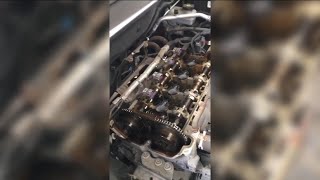
We Have This Part in Stock


The information in this article is provided for general reference and educational purposes only. Vehicle specifications, procedures, and part compatibility can vary by production date, trim level, and region. Always consult your vehicle's factory service manual and verify part numbers before purchasing or performing repairs. Safety-critical components such as airbags, seat belts, and braking systems should be installed by a qualified professional.
- Saturn VUE:
- 🧭 Diagnostic Flowchart
- 🎬 Helpful Videos
- 🛍️ Shop This Part
- What's Unique About the 2009-2010 Saturn VUE
- Symptoms You May Notice
- Most Likely Causes
- Rare But Worth Checking
- Diagnosis Steps
- Parts You'll Likely Need
- Related Codes That Often Appear With This One
- Technical Service Bulletins (TSBs) & Recalls
- Platform-Specific Known Issues
- Mechanic-Grade Diagnostic Values
- Scan Tool Commands That Help
- Wiring & Ground Locations
- Real Owner Repair Stories
- OEM Part Supersession History
- Model Year Variations Within This Range
- 🎟️ Get 5% Off