

P0014 on 2012-2015 Subaru Impreza: Exhaust Cam Timing Over-Advanced Causes and Fixes
On a 2012-2015 Subaru Impreza, code P0014 is most often caused by low or dirty engine oil, or a failing exhaust Oil Control Valve (OCV) on Bank 1 (passenger side). An oil change with 0W-20 synthetic oil and/or replacing the OCV (Subaru Part No. 10921AA241, around $95-$150) is the most common and effective fix.
- Code P0014 on a 2012-2015 Impreza points to the exhaust camshaft timing on the passenger side being too far advanced.
- The most likely cause is low or dirty engine oil. Always check your oil and perform an oil change first.
- If an oil change doesn't fix it, the next most common culprit is a faulty Oil Control Valve (OCV) for the passenger-side exhaust cam.
- Replacing the OCV is a manageable DIY job for many home mechanics and is much cheaper than addressing mechanical timing components.
- Ignoring this code can lead to poor engine performance, bad fuel economy, and potential long-term engine damage.
What's Unique About the 2012-2015 Subaru IMPREZA
The 2012-2015 Impreza uses the FB20 engine, which features a Dual AVCS system that adjusts both intake and exhaust camshafts. This system is highly dependent on clean engine oil of the correct viscosity (0W-20) to function properly. As a result, these engines are particularly sensitive to oil maintenance, and many P0014 issues can be traced directly back to the oil's condition or level. Sludge can clog the micron-level passages in the OCVs, impeding their function. Subaru acknowledged this sensitivity in TSB 02-132-12R, which addresses AVCS-related DTCs and notes that contamination in the OCV or camshaft sprocket is a possible cause. 🎬 See a breakdown of common P0014 causes and fixes. Unlike older EJ-series engines famous for their banjo bolt filters, the FB20 engine has small mesh filters located internally between the cam carrier and the cylinder head, which can become clogged and are much harder to service.
Diagnostic Flowchart
Tap your situation to follow the diagnostic path that matches what you're seeing on this vehicle.
Symptoms You May Notice
- Check Engine Light is on
- Rough or unstable idle, sometimes described as a "lumpy" idle
- Poor acceleration and loss of power
- Decreased fuel economy
- Engine stalling at low speeds
- Rattling or knocking noise from the engine, especially on startup
- Hard starting
- Replacing the camshaft position sensor first. While possible, a faulty OCV or oil issue is far more likely. The sensor is usually doing its job by correctly reporting the over-advanced timing.
- Assuming a major timing chain failure immediately. Always start with the simplest and most common causes: oil level/condition and the OCV solenoid.
- Searching for AVCS banjo bolt filters to clean. The FB20 engine does not use the same filtered banjo bolts for the AVCS oil supply as the older EJ series engines; the filters are internal to the head/cam carrier assembly.
Most Likely Causes
- Low, Dirty, or Incorrect Viscosity Engine Oil 🔴 High Probability The AVCS system uses oil pressure to actuate the cam phasers. Sludge or low/thin oil can clog the small passages in the Oil Control Valves (solenoids), preventing proper operation. The FB20 engine specifically requires 0W-20 synthetic oil.
How to confirm: Check the oil level on the dipstick and examine its color and consistency. If the oil is dark, gritty, or below the 'low' mark, this is a likely cause. Many owners and mechanics report that an oil change is the first and often successful step.
Typical fix: Perform an engine oil and filter change using the manufacturer-recommended 0W-20 synthetic oil. Some owners recommend an engine flush if significant sludge is suspected.
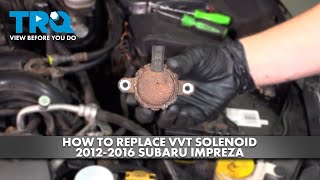
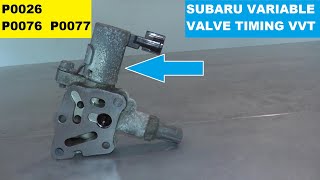
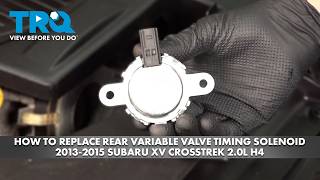
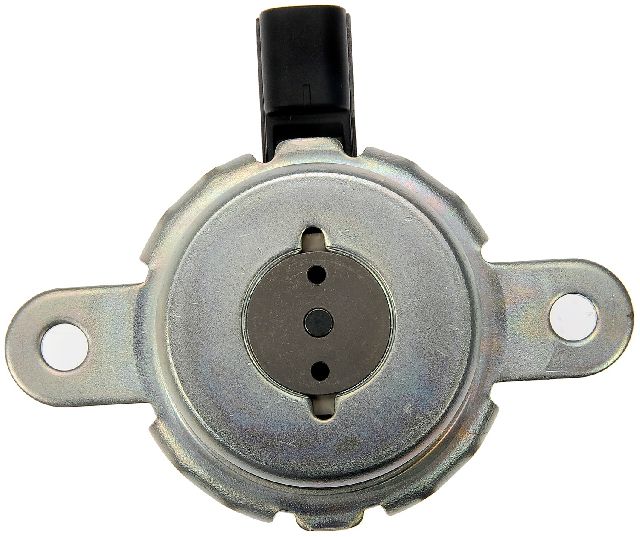
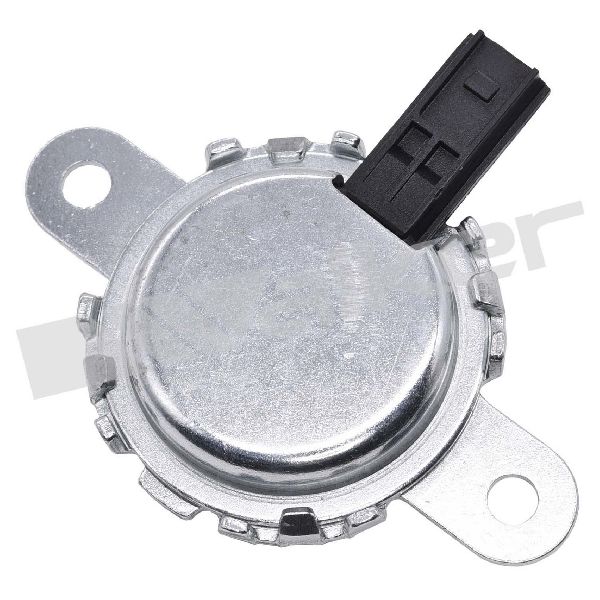
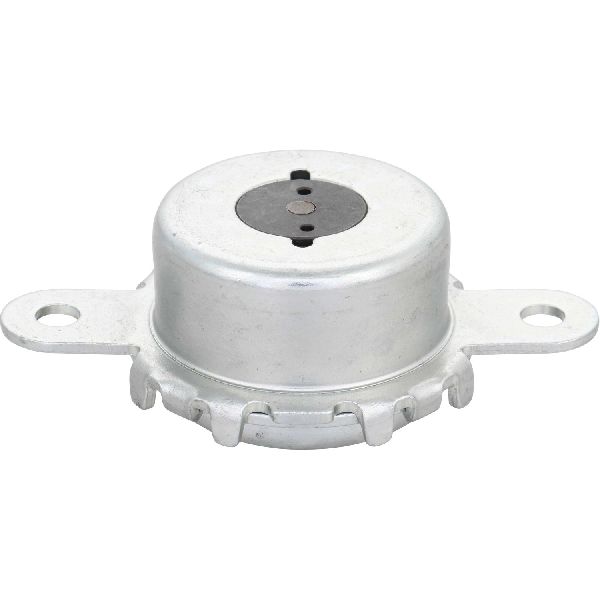
Est. part cost: $40-$80 - Faulty Bank 1 Exhaust Oil Control Valve (OCV) / VVT Solenoid 🔴 High Probability → Shop Engine Variable Valve Timing (VVT) Solenoid The OCV is an electronic solenoid that can get clogged with debris from dirty oil or fail electrically over time, causing it to stick in the open/advanced position. Subaru issued TSB 02-132-12R which outlines a diagnostic procedure specifically for AVCS-related codes, pointing to the OCV as a primary suspect.
How to confirm: Remove the solenoid (located on the front timing cover for the passenger-side exhaust cam) and test its resistance with a multimeter (typically 6-12 ohms). A more definitive test is to swap it with the identical solenoid from Bank 2 (driver's side), clear the codes, and see if the code changes to P0024 (the Bank 2 equivalent). If oil is found inside the electrical connector, the OCV has failed internally and must be replaced.
Typical fix: Replace the Bank 1 exhaust Oil Control Valve. The part is held by a single 10mm bolt and is accessible after removing the airbox.
Est. part cost: $70-$150 - Worn or Sticking Camshaft Phaser (AVCS Sprocket) ⚪ Low Probability → Shop Engine Camshaft The phaser itself can fail mechanically, getting stuck in an advanced position. This is less common than an OCV failure but is the next logical step if an oil change and OCV replacement do not solve the issue.
How to confirm: This is difficult to confirm without ruling out oil and OCV issues first. TSB 02-132-12R suggests that if swapping the OCVs doesn't move the fault code, the camshaft sprocket is the likely culprit. Advanced scan tools can monitor commanded vs. actual cam angle to spot a non-responsive phaser.
Typical fix: Replacement of the camshaft phaser/sprocket, which is a labor-intensive job involving removal of the timing cover.
Est. part cost: $150-$300
Rare But Worth Checking
- Stretched Timing Chain or Failed Tensioner: → Shop Engine Timing Chain While not common, a stretched chain can cause the mechanical timing to be off, leading to this code. This would likely be accompanied by rattling noises, especially on startup, and may be suspected if a dealership recently performed timing work.
- Faulty Camshaft Position Sensor: → Shop Engine Camshaft Position Sensor It's more likely for a bad sensor to throw its own specific code, but it can occasionally provide incorrect data that leads to a P0014. This is often misdiagnosed as the first part to replace.
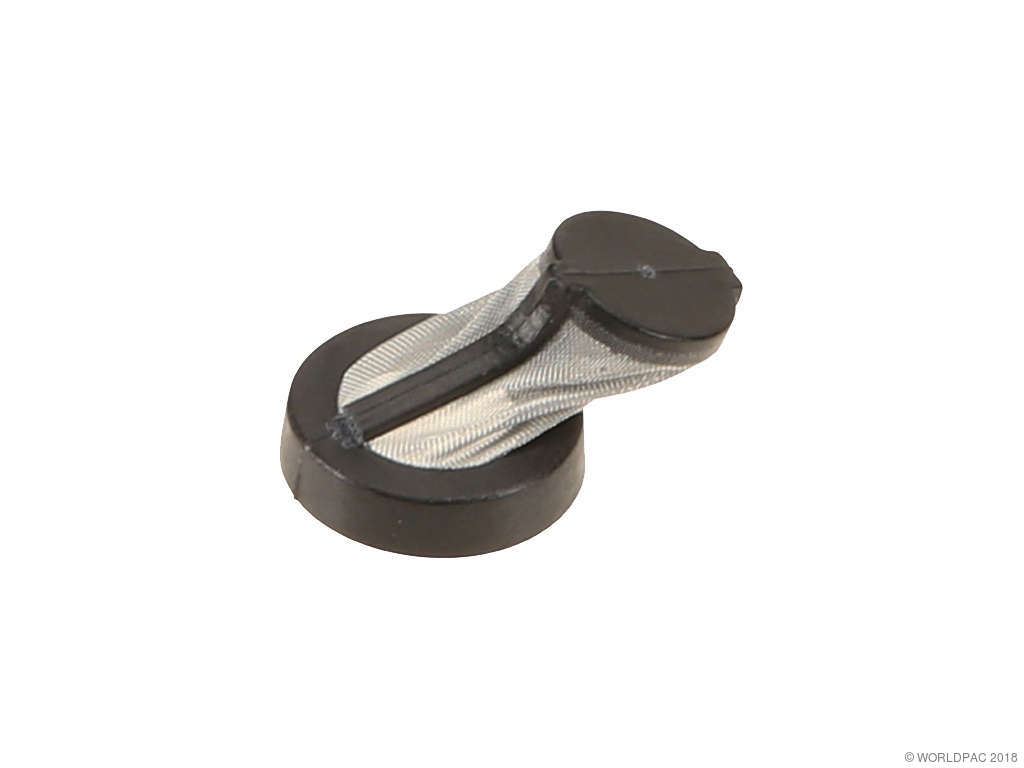
- Clogged Internal Oil Passage Filters: In cases of severe engine sludge or debris, tiny mesh filters located in oil passages between the cylinder head and cam carriers can become blocked, starving the AVCS system of pressure. This is a complex repair and is often overlooked as many technicians are used to the banjo bolt filters found on older EJ engines, which this FB20 engine does not have.
Diagnosis Steps
- Check Engine Oil: Verify the oil level is full and the oil is clean. If it's low, dirty, or past its change interval, perform an oil and filter change with the correct 0W-20 synthetic oil. Clear the code and drive to see if it returns. This is the most common fix.
- Inspect OCV Wiring: Check the electrical connector and wiring to the Bank 1 (passenger side) exhaust OCV for any damage, corrosion, or loose connections. Crucially, check for engine oil inside the connector itself, which indicates the OCV has failed internally and is leaking through the pins.
- Test the OCV Solenoid: The easiest test is to swap the Bank 1 exhaust OCV with the Bank 2 (driver's side) exhaust OCV. They are identical parts. Clear the codes and drive. If the code changes to P0024 (the Bank 2 equivalent), the OCV is faulty and needs to be replaced. Remember to replace the O-ring when swapping.
- Active Test (Optional): If you have an advanced scan tool like the Subaru Select Monitor (SSM), command the solenoid on and off while monitoring the live data for 'Camshaft Advance - Bank 1 Exhaust' to see if it responds correctly. The AVCS system is only active when coolant temperature is above approximately 70°C (158°F).
- Check Mechanical Timing: If the above steps don't resolve the issue, the problem may be mechanical, such as a faulty cam phaser/sprocket as indicated by TSB 02-132-12R, clogged internal oil filters, or more rarely, a stretched timing chain. This is a more complex diagnosis and may require professional help.
Parts You'll Likely Need
- Exhaust Oil Control Valve (OCV) / VVT Solenoid
(OEM #10921AA241)— This solenoid is the most common component to fail or get clogged, directly causing the over-advanced timing condition. It is a known issue addressed by Subaru.
Trusted brands: Subaru (OEM), Denso, Dorman
OEM price range: $95-$150
Aftermarket price range: $70-$120 - Engine Oil and Filter
(OEM #Oil: SOA427V1315 (Idemitsu 0W-20), Filter: 15208AA15A)— Low or dirty oil is a primary cause of all AVCS-related fault codes on this engine.
Trusted brands: Idemitsu (OEM supplier), Mobil 1, Pennzoil
OEM price range: $50-$90
Aftermarket price range: $40-$70
Related Codes That Often Appear With This One
- P0011 — This code is for 'A' (Intake) Camshaft Position Timing Over-Advanced on the same bank (Bank 1). If both appear, it could point to a more systemic oil pressure or supply issue on that side of the engine, or a problem with the timing chain on that bank.
- P000A / P000B — These codes indicate slow response from the intake or exhaust camshaft position actuator on Bank 1. They are also AVCS-related and point to similar causes like oil flow problems or a failing OCV.
- P0024 — This is the equivalent code for Bank 2 (driver's side). Seeing both P0014 and P0024 simultaneously strongly suggests an oil-related issue (low level, dirty, wrong viscosity) affecting the entire engine, rather than two independent component failures.
Technical Service Bulletins (TSBs) & Recalls
- 02-132-12R: DIAGNOSIS AND REPAIR FOR AVCS-RELATED DTCS P000A, P000B, P000C, P000D, P0011, P0014, P0021 AND P0024
Platform-Specific Known Issues
- The provided NHTSA Technical Service Bulletin (TSB) #02-132-12R, titled 'DIAGNOSIS AND REPAIR FOR AVCS-RELATED DTCS...', confirms that Subaru has specific diagnostic procedures for this family of codes, including P0014. The TSB explicitly states that contamination in the OCV or camshaft sprocket is a likely cause and provides a flowchart for diagnosis: swap the OCVs side-to-side, and if the code does not follow the swapped valve, the camshaft sprocket is the likely faulty component.
- A Reddit user with a 2012 Impreza reported having P0014 along with P0011, P000A, and P000B, and found that replacing the passenger side VVT solenoids did not fix the issue, highlighting that sometimes the problem can be more complex than a single solenoid.
Mechanic-Grade Diagnostic Values
- Oil Control Valve (OCV) Solenoid Resistance — expected: 6-12 Ohms. Failure: A reading significantly outside this range, or an open/short circuit, indicates a failed solenoid coil.
- AVCS Live Data - Commanded vs. Actual Cam Angle — expected: The actual angle should closely track the commanded (desired) angle when the engine is warm and under varying load.. Failure: A large discrepancy between commanded and actual angle, or an actual angle that is stuck and unresponsive, points to a fault in the OCV, phaser, or oil supply.
- AVCS System Activation Temperature — expected: System is inactive at cold start. Becomes active when engine coolant temperature exceeds ~70°C (158°F).. Failure: Attempting to diagnose AVCS response on a cold engine will yield no results, as the system is intentionally off.
- OCV Solenoid Duty Cycle — expected: Varies based on ECU command to control oil flow. Can be monitored with an advanced scan tool.. Failure: A high duty cycle with no corresponding change in cam angle may indicate a stuck solenoid or clogged oil passage.
Scan Tool Commands That Help
- Subaru Select Monitor (SSM) or equivalent advanced scan tool: AVCS Actuator Active Test / VVT Solenoid Duty Control — To manually command the OCV solenoid to operate while the engine is running. This allows a technician to observe the camshaft's response on live data to confirm if the solenoid and cam phaser are mechanically capable of moving.
Wiring & Ground Locations
- Main Engine Ground — Bolts onto the top starter motor bolt, connecting the engine block to the chassis wiring harness.. A poor engine ground can cause erratic behavior in all engine sensors and actuators, including the camshaft position sensors and OCV solenoids, leading to false or intermittent codes.
- OCV Solenoid Connector Pin 1 — Pin 1 of the two-pin connector on the Oil Control Valve.. On many Subaru models, Pin 1 is the power supply (B+) wire. This is critical information for accurately testing for voltage at the solenoid or performing a resistance check.
- Ground Point Gb-4 / Gb-6 — Gb-4 is located at the center of the dash; Gb-6 is at the left end of the dash.. These are interior ground points for various modules. While less likely to be the primary cause, a fault here could affect the Body Integrated Unit or ECM, which controls the AVCS system.
Real Owner Repair Stories
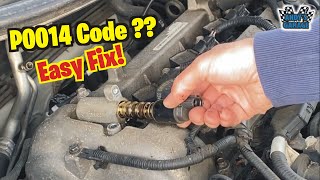
- Andy's Garage - YouTube (Vehicle with P0014 (not specified as Impreza but demonstrates the universal fix)) — Check Engine Light with code P0014.
❌ Tried (didn't work) Initial diagnosis pointed towards timing components.
✅ What actually fixed it The VVT solenoid was removed and found to be extremely dirty and covered in gunk. The solenoid was thoroughly cleaned with mass air flow sensor cleaner, an oil and filter change was performed, and the code was cleared. The fix was successful and the code did not return. - Reddit r/XVcrosstrek (2013 Subaru Crosstrek (uses same FB20 engine)) — Initially P000A, which changed to P0011 after replacing the OCV.
❌ Tried (didn't work) Replacing the Oil Control Valve (OCV) did not solve the underlying issue and resulted in a different AVCS code.
✅ What actually fixed it The discussion identified the likely cause as clogged mesh screen filters. Crucially, it was noted that on the FB20 engine, these filters are not in banjo bolts (like older EJ engines) but are located internally between the cam carrier and the cylinder head, requiring more extensive disassembly to access and clean.
OEM Part Supersession History
10921AA240→10921AA241— Likely an internal revision to improve reliability or address a known failure mode, such as internal oil leakage.
Heads up: The updated part 10921AA241 is a direct replacement for 10921AA240. Per TSB 02-157-18R, OCVs with a date stamp of '17159' (159th day of 2017) or higher are the improved design.10921AA230→10921AA240 or 10921AA241— Likely an earlier revision for the first model years of the FB20 engine.
Heads up: While 10921AA230 is listed for 2012 Imprezas, the newest part (10921AA241) is the correct service replacement.
Model Year Variations Within This Range
- 2012-2014 vs 2015: The 2015 model year marked a mid-generation 'facelift' which may have addressed some initial quality issues from the 2012-2014 models. Engine suppliers also appear to make a distinction in compatibility between 2012-2014 and 2015-2016 FB20B engines, though the specific mechanical differences are not detailed.
Helpful Videos
We Have This Part in Stock


The information in this article is provided for general reference and educational purposes only. Vehicle specifications, procedures, and part compatibility can vary by production date, trim level, and region. Always consult your vehicle's factory service manual and verify part numbers before purchasing or performing repairs. Safety-critical components such as airbags, seat belts, and braking systems should be installed by a qualified professional.
- Subaru IMPREZA:
- 🧭 Diagnostic Flowchart
- 🎬 Helpful Videos
- 🛍️ Shop This Part
- What's Unique About the 2012-2015 Subaru IMPREZA
- Symptoms You May Notice
- Most Likely Causes
- Rare But Worth Checking
- Diagnosis Steps
- Parts You'll Likely Need
- Related Codes That Often Appear With This One
- Technical Service Bulletins (TSBs) & Recalls
- Platform-Specific Known Issues
- Mechanic-Grade Diagnostic Values
- Scan Tool Commands That Help
- Wiring & Ground Locations
- Real Owner Repair Stories
- OEM Part Supersession History
- Model Year Variations Within This Range
- 🎟️ Get 5% Off